

 Apple Podcasts
 Spotify
 100th Episode Show - Part 1 (Preserving Pool History, One Story at a Time)
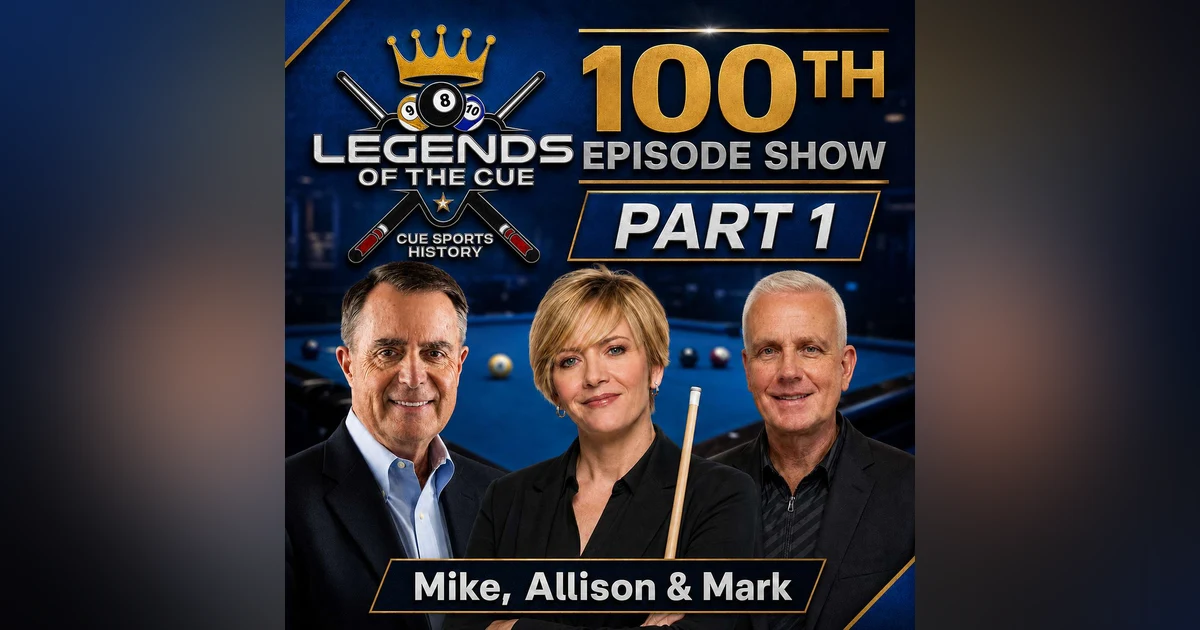

In this special milestone episode of Legends of the Cue, co-hosts Mike Gonzalez, Allison Fisher, and Mark Wilson look back on the first 100 episodes of their podcast and reflect on how a simple idea became a growing oral history of cue sports.
What began as a conversation after a pool clinic evolved into a mission: to preserve the voices, memories, struggles, triumphs, and personalities of the greatest players and influencers in pool, billiards, snooker, and cue sports history. Allison and Mark share what they hoped the podcast might become, while Mike reflects on learning the game and discovering the extraordinary human stories behind the legends.
This episode revisits some of the unforgettable guests who have helped shape the show, including Mike Panozzo, Mike Massey, Billy Incardona, Keith McCready, John Schmidt, Nick Varner, Kelly Fisher, Shaun Murphy, George Ashby, Mitch Laurance, Pat Fleming, LoreeJon Ogonowski-Brown, Gerda Hofstatter Gregerson, Mary Kenniston, and others. The hosts discuss the emotional depth, humor, resilience, and grit that have emerged across these interviews.
They also explore how cue sports have evolved over the decades, from the gambling culture of old-school poolrooms to televised events, streaming, social media, modern equipment, template racks, carbon fiber shafts, and the global growth of the game.
Part 1 of this 100th Episode Special is a celebration of the people, places, and stories that make cue sports so compelling. It is also a tribute to the champions and characters whose lives deserve to be remembered in their own words.
Give Allison, Mark & Mike some feedback via Text.
Follow our show and/or leave a review/rating on:
Our website: https://www.legendsofthecue.com
Apple Podcasts: https://podcasts.apple.com/us/podcast/legends-of-the-cue/id1820520463
Spotify: https://open.spotify.com/show/4Za0IMh2SeNaWEGUHaVcy1
Music by Lyrium.
About
"Legends of the Cue" is a cue sports history podcast featuring interviews with Hall of Fame members, world champions, and influential figures from across the world of cue sports—including pocket billiards, snooker, and carom disciplines such as three-cushion billiards. We highlight the people, places, and moments that have shaped the game—celebrating iconic players, memorable events, historic venues, and the brands that helped define generations of play. With a focus on the positive spirit of the sport, our goal is to create a rich, engaging, and timeless archive of stories that fans can enjoy now and for years to come.
Co-hosted by WPA and BCA Hall of Fame member Allison Fisher and Mosconi Cup player and captain Mark Wilson, Legends of the Cue brings these stories to life—told in the voices of the game’s greatest figures.
Join Allison, Mark and Mike Gonzalez for “Legends of the Cu...
Mike Gonzalez
Cheers and welcome to a special edition of Legends of the Cue and Allison Fisher. Here we are looking back on our first 100 episodes of our podcast. How did we get here?
Allison Fisher
I absolutely have no idea. How about you, Mark? Can you believe that we've done 100 already?
Mark Wilson
Well, you know, 100 sounds like a lot, but it still seems so fresh and unique and interesting. And I try to get better with every episode. So, but it's a learning evolution. And, you know, it all started like this. Mike Gonzalez came to our pool clinic and he described that he does podcasts and PGA golf. And Ali says we should do it for pool. And all three of us laughed. And that was the end of that. And we continued on with our lesson. And then seven months later, Mike asked us, Are you guys still interested? And that's how we really got here, as I recall.
Allison Fisher
That's absolutely correct. And he he said, Well, I know nothing about pool players or pool, really. And we said, Well, you could learn it. And boy, by gosh, he's learned it, hasn't he? Can you believe it?
Mark Wilson
Yeah. Well, he's really improving. I've got to say that.
Allison Fisher
He's really improving. He's amazing. I think we're glad we've got him, Mark, right?
Mike Gonzalez
I I guess the question is, have I achieved Subhorrible yet? Well.
Allison Fisher
You've gone way above and beyond.
Mike Gonzalez
Well, uh guys, I I gotta tell you personally, for me, it has been an absolute blast and honored to work with you guys. Uh I'm sure when we got started, you all had some expectations in your mind of where we might go with this. Mark, what were you thinking at the time when we got started?
Mark Wilson
Well, anything that adds to the history of this, the the you know, capture unique uh perspectives, the grit that goes along with the hard work. So I think that's oftentimes found missing in life for people that don't really understand pool. They think it's more just natural ability. So I guess that's what what I wanted was the unique stories.
Allison Fisher
And I love the human interest aspect, you know, what makes a champion, their background, their beginnings, you know, what they've been through in their life to get them that far, and what drives them, you know, and how they feel about their success at the end of it all.
Mike Gonzalez
Yeah.
Allison Fisher
So it's it's all about the human connection.
Mike Gonzalez
Yeah. Well, when we started this, you know, we simply wanted to preserve the stories of the great players and influencers of Q Sports. And let's be honest, we put a logo together, and what we said on the logo on the bottom was pool history. And we've sort of evolved and said, no, no, there's there's plenty of great stories in Caram Billiards and in Snooker. And let's capture some of those stories as well. And so we're really focused more on Q Sports history. And so here we are now, a hundred episodes later. For our listeners, this episode is not going to be about just one legend, it'll be more about the incredible journey through the game's history that we've taken our listeners through and that all of our guests have taken us through. So it's been a real joy to probably do 25, I would say, some odd interviews across a hundred episodes. By the time our listeners listen to this, they will have heard probably episode 100 and 101 featuring Hall of Famer and publisher and owner of Billiards Digest, Mike Pinozo.
Allison Fisher
Yeah, he was a great guest. It was very interesting to see the other side, you know, from from a player and and Mike being involved in the industry for so long as a writer and publisher, um, bringing out one of the great magazines. And he's got to know everyone throughout the ages. He's been around a long time, and I think that was really important to capture. And yeah, he's just his knowledge is fantastic, and he knows every side of the sport. So he was a really terrific guest to have on.
Mike Gonzalez
Yeah. I asked you about uh kind of what was in your mind, what you thought about uh when we first got started. As you look back just on these interviews we've done, Allie, uh what's most surprised you about the podcast journey we've been on so far is has there been anything that's come up in these interviews or discussions that uh sort of surprise you, maybe unexpected?
Allison Fisher
Aaron Ross Powell I think just some of the backgrounds of some of the people. You know, Mike Massey, you know, coming from a lot of poverty, I think. A lot of people don't know that. Billy and Cardone had a great story. There's there's so many great stories. And just not everyone, you know, not wasn't easy really. I don't think anything was easy for most of our guests. And I think that's the part that's intriguing and we all like to hear because you want to know what made them successful, how did they do it? What were they feeling? How did they keep going? All those things make for a great story, and that that's what I find interesting.
Mike Gonzalez
Yeah, yeah. And Mark, of course, you've known a lot of these people for an awfully long time. Pool's been your life for the better part of your last 50 years at least. What have you most enjoyed about hearing some of these stories?
Mark Wilson
Well, I would parallel what Allie said, the the path that everybody took to get to the same place. And it was so interesting from such diverse backgrounds and and maybe not singular motivations, you know, different perspectives. I came at it from an athletic background, and others came from it, you know, like in Keith McCready's case, out of necessity, the only way you could get by, or or some of the other players. And then, you know, but they all developed a passion, the same passion. And Nick Varner always says it like this boy, you're sick, but I got the same illness. You know, just talking about that he loves pool. So and uh that definitely came out in his interview.
Mike Gonzalez
Yeah, yeah. The the thing that strikes me, and and I I get that a lot from you two as you react to some of these interviews after we're done with them, is uh we're hearing stories that maybe people haven't heard before, or certainly the two of you had not heard before about some of our guests. Yeah, right. Very yeah.
Allison Fisher
It's been very surprising. The gambling, the ways to make ends meet, you know, the family life. Just so many different stories, you know, and different backgrounds, but it's all fascinating.
Mike Gonzalez
Yeah, I I sort of compare and contrast the the guest list that we have on the pool show with the guest list we have on our golf podcast. Little different cast of characters. Particularly in terms of the start they got in life. As you said, Allie, many of our guests have had a tough, tough start in life. I think of McCready, I think of uh John Schmidt, just a couple in particular that had really tough stories starting out.
Allison Fisher
But I love their attitudes too. You know, they they tell their story, but the but John Schmidt, for example, is such a funny guy. I really enjoy interacting with him, chatting with him, listening to him. He's so funny and he's self-deprecating. We all know that about John. But he's it's so funny and touching. And you know, a lot of these guests have, you know, reduced me to tears in their stories. And I think that's you know, for the listeners out there, that is what you want. You want to you want thought-provoking, you want emotions, and uh I think all of our guests have given us a little something different.
Mike Gonzalez
Yeah. Mark, as well as you know some of these folks, is is there a guest you can think of that perhaps revealed a side of themselves that you had really not seen before?
Mark Wilson
And certainly with Allison that I didn't I wasn't aware of her upbringing, was always curious, I guess. And then I knew Schmidt because we've been together quite a bit. Nick Varner certainly, you know, that he's one of the few college-educated pool players out there, and that uh he didn't really think that he was good until he got to college. He just thought he was regular. You know, and I thought that was amusing. You know, to I don't think I'm really very good. That's not really my niche in life. I'm gonna go on and do something else with engineering or he was a golf property. Yeah. Yeah. Exactly. And as far as the emotion goes, even some of the people that we interviewed got into tears at times, you know, or were tearful and you could feel it, you know. So I think that's a really a testimonial to the product you've produced, Mike, is that it does portray that.
Mike Gonzalez
Aaron Powell Yeah, I think there are some emotional moments. And you know, we we we don't step on those too often, you know, we just kind of let those happen. They're organic. The the emotion sometimes is raw as you have people reflect on times in their life that maybe they haven't spent a lot of time thinking about lately. And boy, I I I've got to believe our listeners really appreciate learning that side of certain of our guests, don't you think?
Allison Fisher
No doubt. Absolutely no doubt at all. I mean, uh we get to see we obviously people are listening to our podcasts. We get to see people because we're here on camera as well, which we are recording and will release at other times. But we get to see the raw emotions, and it really it chokes me up a lot when we're doing this.
Mike Gonzalez
Yeah. We'll talk a little bit later about some of the more poignant, emotional, funny moments, but let's just think about our own personal recollections of some of these interviews. I'm gonna put you on the spot. It may be unfair to ask you to pick one, right? And I'll I'll I'll phrase it this way it's either favorite guest or favorite interview, which keeps it a little less personal, but is there one that stands out to either one of you?
Allison Fisher
For me it's Sean Murphy. I think because I've known Sean since he was a young boy, and he's about 13 years old, I think, when I first met him, and and obviously I'm very familiar with Snooker because that's what I grew up with. And to hear his story from when he grew up with money, then didn't have any money because his parents had made a bad decision, and then it all came down to him doing well in his career and his drive and his practice and the funny stories and how he articulated it all down to the competing at the highest level, the the hill to get there, the going up the hill to get there, and then the mental side of the sport, you know, you know, they've a lot of these players on the snooker tour have talked about mental health and he brought that up. He talked about his divorce, his kids. You know, we went everywhere with him and I he articulated it so well. And I really, really enjoyed that interview.
Mike Gonzalez
Yeah, how about you, Mark?
Mark Wilson
Well, I completely concur with Allie on that, Sean, and it would be very easy for me to say Justin Bergman, because he's kind of like my kid. But I I have drawn so much from every one of these that uh it would be uh hard. I'd be hard pressed to say I like this one more than this one, because they were all so interesting to me for just what I said before, the background they came at it from.
Mike Gonzalez
Yeah. Yeah. I don't know. I suppose if I were forced to pick one just because I had so much fun and we had three different sessions with him, that'd be Billy and Cardona. Because for anybody that puts in the time to listen to Billy's entire interview, you're gonna hear about a whole cast of characters that you might have heard their names, but you didn't know anything about them. And as I told Billy when we finished up about how important it was that he'd tell those stories, we may not talk about some of these players again in any of our interviews. And they deserve mention. And they're, you know, they're they were big-time players back in their day. And so, and the fact that he was so darn funny. I mean, I I my cheeks were hurting, you know, laughing. And I love the energy at age 82 or whatever he brought to that storytelling, because he's a great storyteller. So I I I I suppose I'd pick one. Uh you know, other favorites for me probably would be uh like you with Justin, Mark, uh George Ashby, who was a great three-cushion champ, just happened to be from my hometown, and I used to watch him play when I was a kid. And uh I just I just love the understated humility of the guy. Uh and and you know, some of the life struggles he shared with us. Kelly Fisher was an absolute.
Allison Fisher
That was the one that cracked me up the most, Kelly. Because obviously she's like a sister to me and a very, very good friend, and I know her so well. And she just cracked me up. I laughed. I think that's the hardest I've laughed on on the in on an interview. Yeah. It's the way she tells it. And and going back to Billy, I loved that interview. Uh having listened to it again after the fact that we did it. His voice is something that, you know, we listened to on AcuStat's videos along with the great Grady Matthews and the commentating and the funny wit between them both, the sarcasm and you know, listening to what he thought about all these players of yesteryear that, you know, a lot of these new players don't even know, haven't heard of. And you're right, it's so important to capture this.
Mike Gonzalez
Yeah, yeah. And you know, you you mentioned acustats, and and you can't but not mention Pat Fleming and the what he's contributed to capturing the history of the game through his Acustats uh videos. And and uh anyway, I I I I enjoyed Mitch Lawrence very well. Didn't know Mitch. People asked me via comments when when I said he's an upcoming guest, and they said, was he a pool player? Well, no, but uh he was a pretty important actor, American actor, and a longtime broadcaster in pool. And the more I look back at some of these old videos, and I I was mentioning Allison watching uh one of maybe your first uh world championship. And was it the microphone?
Allison Fisher
He interviewed national. My first national was in 1995. Mitch interviewed me at the end, and that was the first time my dad saw me play pool, and he was in the audience, so that was a really special memory for me that tournament.
Mike Gonzalez
And he was on camera too.
Allison Fisher
Yeah, eventually got him to come down. He was so shy, my dad. I was waving him down, he wouldn't come down, and eventually he did, and he's all I have a picture of him or video of him dressed in a nice suit and tie.
Mike Gonzalez
Yeah.
Allison Fisher
That's exactly how I remember him.
Mike Gonzalez
Yeah. Well, anyway, you know, one of the things that's come up across all these interviews is is how the game's evolved in a number of ways, right, uh, over the years. And of course, Mark, you go back with pool a little bit longer than Allison. Allison, you know, kind of starting in the 95 time frame when you came over. You learned the game a few years before that. But just hearing more about how the the sport evolved from what was the sport of the day, straight pool back in the day, evolving to nine ball is just one example. So the games, the popular games that uh people are learning and playing have changed. But what other what other sort of shifts in in pool and changes have we seen and talked about?
Mark Wilson
Okay, well, uh naturally I grew up in the era when it was gambling only, but uh that that's kind of a misnomer. It gives people the wrong idea. And what it was, there were only two tournaments a year, and one of them you almost couldn't get into, and another one was seemed fictional. It was a long ways away. So, but every day you had competition, and the gambling wasn't so much about money as it was about the uh uh the possibility of putting it all on the line to see which one of us is a faster gunfighter. And so it was challenging and interesting and fun, and then you kind of built your reputation and your stature amongst the other pool devotees in your area, and then you challenged yourself further, and it was there was some honor to it. It was a bit different than people think. It's actually more honorable then than it is today in terms of uh the respect and uh what what it meant to people because there's not so much things back then pulling at your time. You didn't have 150 channels of TV or casinos and all this. So it was it was really a pretty cool thing, and and but a lot of people didn't understand it. And and even my high school friends, they'd always say, Come on, why are you going to the pool room? We're gonna go out and get some beer or get some girls, let's go, you know. And I'd go, No, because I'm trying to work on my backswing, and then they'd be upset. So finally I'd say, Look, we never get girls, or I would go. And we just end up drinking terrible beer, you know. So uh anyway, but I I saw a beauty that others didn't recognize, and uh I just knew that someday this was gonna be a big thing. Pool was gonna be a big thing.
Mike Gonzalez
Yeah. Well, pool, by the way, uh 60s, 50s, 60s into the 70s, was very much a USA-dominated sport for the most for the most part. Allison, you and Ava and Goethe and others were quite instrumental, at least on the women's side, of shifting world power away from the US as as sort of the power base for pool in terms of quality of play, to no, it's uh it you you sort of leveled the playing field and maybe went beyond that.
Allison Fisher
Well, I had a completely different background. So I didn't grow up playing pool, I grew up playing snooker and watching it on television. It was very much a gentleman's sport. Quite chauvinistic too in the time that I was growing up in it. But I did get onto a table when I was a kid, and then eventually I went into my first snooker room, which had multiple tables in it, when I was a 13-year-old, and I was like, I couldn't believe it, because I was just was used to that one table setup in a pub. So I got really hooked quickly, but I was always having played lots of sport at school, I was always competitive. So for me it was about just getting better and better and better and improving, you know, quickly. So I learned a lot from watching it. I had a great couple of coaches when I was young and uh travelled through tournaments, you know, quite solidly to eventually winning one. Once you get that taste of winning one, then it's sort of in your blood, I think. Once you know you can, then you can repeat. And so when I came over to America in '95, obviously I'd never gambled in my life, so I wasn't used to seeing that environment. For me, it was about hosting trophies. I was always the the person who wanted to compete. And I put a little timeline on my first victory of six months, and it happened very quickly for me. So all my fundamentals and all the work that I put in in my snooker career started to pay off in my pool career, really.
Mark Wilson
Yeah.
Allison Fisher
That's when it really came to light and fruition for me. And just a wonderful journey. It was just the players, the game. I love the game. It was very different to Snooker, you know. It's a snooker, you're rewarded for your points that you make in pool. It was you miss a nine, you lose a you know, you can lose a game. Yeah, yeah. So it's totally different dynamic and much faster. But I really enjoyed that.
Mike Gonzalez
Yeah. And and Mark, you you've witnessed a lot of change in the game. Let's talk about the equipment aspects, you know, the changes you've seen in playing conditions, the tables, the instruments you use to play the game, uh, the environments you play in, different technology of of of things, even even just a simple change that we heard from John Schmidt being so important in his long run of using a different type of chalk.
Mark Wilson
Mm-hmm. Yeah, and the shoes that he wore. You know, you you watch your sport and it's antiquated and run down, and people don't respect it, but you see a beauty there that's beyond what you expect, and you hope that someday, much like with the evolution of golf clubs and tennis rackets, that it gets to pool. And you would see, you know, those evolutions take place and see the players play better, and maybe even sometimes make the distances on golf courses obsolete because they were just too effective. And so finally it's arrived in pool, you know, and you have carbon fiber shafts that clearly are superior, and you have various other, you know, chalks and the cloth standardization and the equipment, how tight the rails are compared to the old days when maybe you had T-rail tables that anchor into the side of the slate rather than through the bottom. And so you get uniformity, which gives you a consistency degree, which pushes the sport forward. So it's you know, I love seeing that part of it. I would say as far as new things, I think the very best thing is because we shifted from straight pool into nine ball, the template racking is that that that creates a fairness that was not in existence. And sometimes the unscrupulous would be kind of when you shake hands before the match, it would be, may the best racker win. You know, and that that type of thing. And where then what it should be is you know what the Europeans had. They treated it like a sport, an athletic and encounter, you know. Yeah, yeah. That's that's kind of where I see it at.
Mike Gonzalez
Yeah. Allie, across all of our interviews, of course, we always get into how these players in particular came to learn the game, how they were exposed to the game. And, you know, we we've gone from the early people learning through observation and the one or two books that might have been around, no television necessarily to watch matches. And then we evolved through TV, the ups and downs of TV, and and so not just how people learned, how people got exposed, but how people saw competition. A lot of that has all changed with technology and so forth, hasn't it?
Allison Fisher
Yeah, when I first came over, I was fortunate enough to get on ESPN a lot. So we were on television, so you could watch matches. And my learning might have come from books from Robert Byrne or the 99 Critical Shots by Ray Martin and uh Phil Capel was prominent in his books too. And so that was how I was learning a little bit, and obviously from some players. But now, wow, when it hit streaming, people thought, Oh, nobody's gonna watch. But streaming has taken off, people do watch it around the globe. Social media has taken off, so people have seen the benefit in making YouTube channels, posting. social posts could be a shot, how to play this shot. It's all over the internet. So there's no reason not to be able to get good these days, I think. And consequently we're seeing people of young kids, nine, ten years old, who are pool players and actually look really good at the table. I saw a little snooker player yesterday, nine years old, and just randomly scrolling through the internet. Yeah. And it's amazing in other countries. They used to watch it on ESPN used to play in other countries all over the world. And now it's on streaming and then we've got other people involved, our promoters in the sport, obviously doing their own things too, which I'm sure we're going to talk about in a minute.
Mike Gonzalez
Yeah. Yeah. Well let's let's get into uh some of our favorite moments if we can and we'll try to jog everybody's memory because we've had a lot of content. You know, across 100 episodes we've now released, that's probably 50 hours of content. So that's a lot to remember in terms of the conversations we've had, but there's a lot in there. Let's start with just funniest funniest moment, funniest guest. What what comes to mind the biggest chuckles?
Allison Fisher
There's no doubt for me it's Kelly Fisher and the vegetable line. If you haven't heard that interview you need to hear that because this is before she came to America and she was struggling to make ends meet and she ended up working in a vegetable factory and failed because she's so OCD as she put it getting the pips out the peppers, the seeds out the peppers that they fired her, I think, from that job. But my God, I've never laughed so much in my life.
Mike Gonzalez
Yeah I I would I would tend to agree. That's got to be number one. We put a little short video out which we've never done just about that little segment and we had so many wonderful comments from people about that. Of course hilarious. Kelly too we'll we'll hear from her later about how much fun she had but oh my was that I I had tears in my eyes. I was laughing so hard. Yeah yeah how about you what what what do you what comes to mind in terms of funny hilarious?
Mark Wilson
I think I think really you know the John Schmidt description of living downstairs of a crack house and the people he's renting with owe him thousands of dollars and he's despondent about losing all his money and he's eating cereal flicking cockroaches out of the cereal and then later that week winning the U.S. Open So I think that was his description and the way he tells it because you had to live it to have that type of ability to I I I was highly amused by that. I thought that was interesting. Lori John being a juvenile delinquent with her bathroom escapades just you know just you don't you don't see that side of these players very often so I found that interesting but really everybody's had some kind of moment that was pretty humorous.
Mike Gonzalez
Yeah. I mean Ali with the ladies we had some funny ones right with uh Gerda. Weren't we supposed to go to Japan yesterday? Oh yeah.
Allison Fisher
We were sitting there I remember sitting down and I I was on a Sunday afternoon and then it just struck me because this was the internet we weren't really on the internet really I don't know we booked our tickets we went to a local travel agent and it just struck me that I think we're supposed to be in Japan on a Sunday we'd left we missed the flight. I looked at a ticket and then it said we were supposed to leave Saturday to get to Japan Sunday. We'd missed the flight to rearrange all try and get hold of Japan to let them know we weren't coming that day it was terrible. I've never done that again after that but my gosh some some of the things that happened jumping in the wrong rental car was that Ava? That was Ava and Lori John wasn't it they they grabbed a rental car, got in it and even the driving was different wasn't it the Yeah yeah yeah probably one was a stick and one was an automatic and they got to from A to B and then realized they're in the wrong car.
Mike Gonzalez
Yeah. I remember that I remember when they did that we've j we've had a million of those a million of those so let's let's let's kind of flip hats now and get a little bit more serious in terms of some of the emotional interview moments we've had what comes to mind for for either of you mark what comes to mind in terms of just emotions when you hear people tell sides of when they finally conquered something or they had success I I thought that was really interesting to hear.
Mark Wilson
And then you can see you know people reflect back on things they haven't thought about in a long time such as you suggested that sometimes that evoked emotion and so I don't know that there's one point moment that stands out but uh certainly a lot of interesting moments that came along why don't you why don't you reflect back just on our discussion we had with Jeanette Lee which by the way people will not have heard this interview we've done it already.
Mike Gonzalez
It will be released sometime after we release this episode commemorating our first 100 episodes but it surely stands out because the early part of that interview was quite emotional as she reflected back on her early upbringing in Brooklyn.
Mark Wilson
Right, how tough it was and then you know how people assured her that she'd never be any good and that she had physical impediments to conquer as well and and then always the female part of the side of our interviews there's always the male chauvinistic attitude that you have to deal with that oftentimes goes overlooked for most people but nonetheless is real. Yeah. So how about you Allie?
Allison Fisher
Well I think it's been really interesting because I think there's been tears for most of our guests don't you s wouldn't you say I think men and women I think I think most everyone has had a reflection where it's made them tearful whether it's loss of loved ones or regrets or whatever it memories have popped up in their mind when they've talked through their life story. Mitch talking about his brother I think and and just he's a v he's a genuinely emotional guy anyway, isn't he? Which is kind of wonderful to be around.
Mike Gonzalez
Right, yeah. Yeah.
Allison Fisher
Th there were just lots of them I think uh Mike Pinoz you mentioned about his mum when he reflected about his parents his mother and then one another one that people wouldn't have heard yet was Jurgen Sandman coming up I know in a landslide when he lost his house he lost everything and but not only that the people around him the loss of lives around him and him and his wife and maybe a few others survived.
Mark Wilson
Yeah.
Allison Fisher
And I think that was really very emotional. Thank you for listening to another episode of Legends of the Cube. If you like what you hear wherever you listen to your podcast including Apple and Spotify please follow subscribe and spread the word give our podcast a five star rating and share your thoughts. Visit our website and support our Paul History project until our next golden break with more Legends of the Cube so long everybody
Pool Player
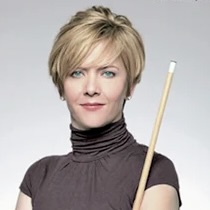
In cue sports, greatness usually comes in one language: the discipline of repetition, the quiet courage to keep showing up, and the ability to perform when everything is on the line. Allison Fisher, MBE speaks that language fluently, and has for decades, on two continents, across two different games. Known worldwide as “The Duchess of Doom,” Fisher is more than one of the most decorated champions in history; she is a standard of professionalism and composure, the rare athlete whose excellence has been sustained long enough to become part of the sport’s cultural DNA.
As co-host of "Legends of the Cue", Fisher brings what most interviewers can’t: lived experience at the highest level, paired with the emotional intelligence to draw out the stories behind the trophies. The podcast’s mission is to preserve pool’s heritage and elevate its best voices, and Fisher is uniquely suited to that work, because she has been a central figure in modern cue-sport history both as a competitor and as a respected ambassador for the game.
Roots: England, family, and the first spark
Born in Cheshunt, Hertfordshire, just north of London, Allison’s early life was shaped by movement and adaptation—by age four her family relocated to Thames Ditton, Surrey, and at eleven they moved again to Peacehaven, East Sussex, where much of her youth unfolded. Her earliest love of cue sports began not in a formal academy but in the everyday magic of discovery: watching "Pot Black" on television with her father and feeling something click. That fascination evolved in… Read More
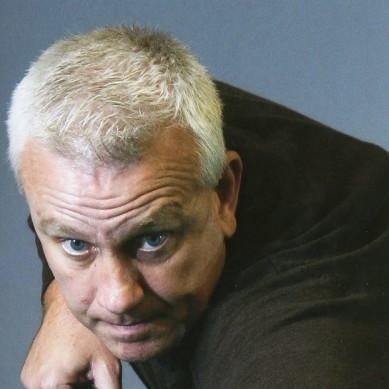
Mark Wilson is one of American pocket billiards’ most respected “complete professionals”, a high-level competitor, Mosconi Cup closer, international team captain, broadcaster, and master teacher whose life in pool has always been anchored by discipline, dignity, and a deep belief that the game deserves to be presented at its very best. Today, many fans know him as a co-host of "Legends of the Cue" alongside Allison Fisher and Mike Gonzalez, but Mark’s story stretches back decades, through smoky poolrooms, cross-country road trips, pressure-cooker arenas, and collegiate classrooms, always driven by the same idea: if you love the game, you owe it your best.
Born and raised in Moline, Illinois, Mark grew up on the banks of the Mississippi River in a working-class household and was a sports-first kid, especially baseball, long before pool captured him. He graduated high school in 1973 and attended Blackhawk College to play baseball, while also pursuing studies aimed toward law school (including three years of Latin, an early hint of the seriousness and mental structure he would later bring to cue sports). But as he tells it in the "Legends of the Cue" series, pool’s pull became impossible to ignore, and the path he’d mapped in academics slowly gave way to the life he truly wanted at the table.
By 1975, Mark had become a professional pool player, entering an era when there was no steady, modern “tour” economy, and many players stitched together a living through regional tournaments and action. He describes that period with clear-eyed hones… Read More