

 Apple Podcasts
 Spotify
 Allison Fisher - Part 2 (Early World Snooker Titles)
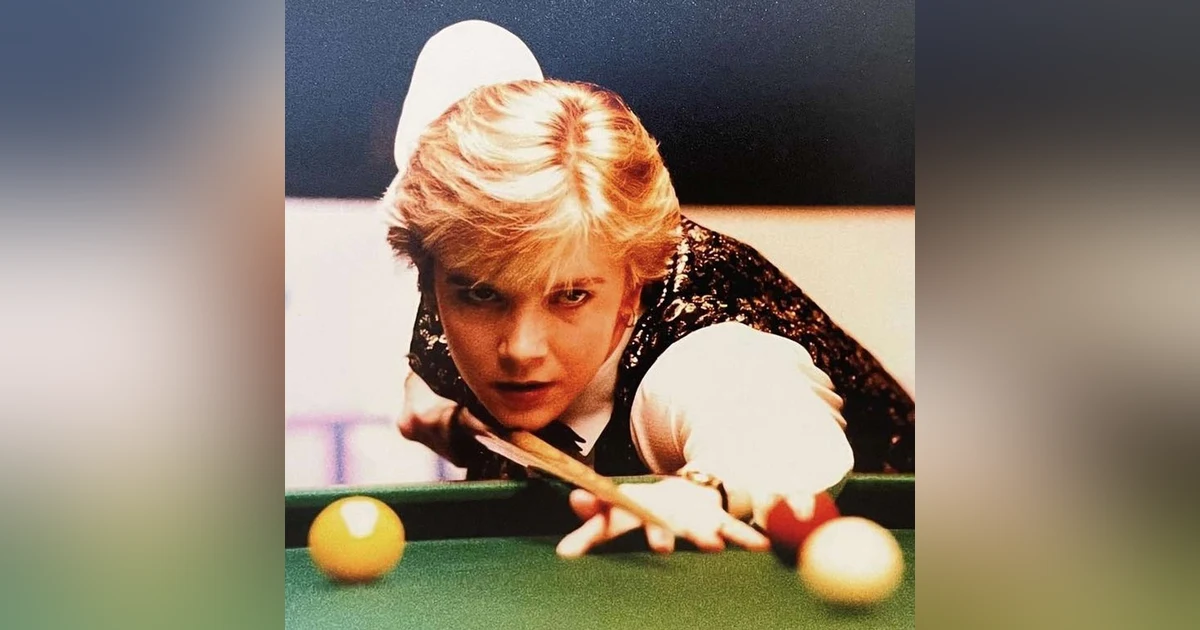

In this compelling second installment of our five-part conversation with World Snooker and Billiard Hall of Famer Allison Fisher, we dive into the powerful personal journey that shaped her into one of the most decorated cue sport champions in history.
Allison opens up about her early life in England, painting a vivid picture of her upbringing, her parents’ profound influence—both inspiring and complex—and how a dramatic family shift ultimately set her on a path to greatness. From backyard tetherball showdowns with her father to her relentless determination to prove doubters wrong, we uncover the grit and resilience behind her success.
Listeners are treated to behind-the-scenes stories from Allison’s early snooker days, including her historic matchroom experience playing against the top male players in the world—Steve Davis, Stephen Hendry, Jimmy White, and more. She candidly reflects on the challenges of competing in a male-dominated sport and the mental toughness required to not just belong—but to win.
Allison also shares insights into her breakthrough sponsorship as a teenager, her early media appearances, and what it meant to represent women in cue sports on the biggest stages, from TV studios to packed snooker halls. With honesty, wit, and humility, she recounts legendary victories, character-building losses, and the impact of iconic figures like Barry Hearn.
This episode is rich with storytelling, history, and inspiration—whether you’re a fan of snooker, pool, or the journey of a pioneer who never stopped pushing boundaries.
Subscribe and follow Legends of the Cue to hear the next chapter in the remarkable life and career of Allison Fisher—“The Duchess of Doom.”
Give Allison, Mark & Mike some feedback via Text.
Follow our show and/or leave a review/rating on:
Our website: https://www.legendsofthecue.com
Apple Podcasts: https://podcasts.apple.com/us/podcast/legends-of-the-cue/id1820520463
Spotify: https://open.spotify.com/show/4Za0IMh2SeNaWEGUHaVcy1
Music by Lyrium.
About
"Legends of the Cue" is a cue sports history podcast featuring interviews with Hall of Fame members, world champions, and influential figures from across the world of cue sports—including pocket billiards, snooker, and carom disciplines such as three-cushion billiards. We highlight the people, places, and moments that have shaped the game—celebrating iconic players, memorable events, historic venues, and the brands that helped define generations of play. With a focus on the positive spirit of the sport, our goal is to create a rich, engaging, and timeless archive of stories that fans can enjoy now and for years to come.
Co-hosted by WPA and BCA Hall of Fame member Allison Fisher and Mosconi Cup player and captain Mark Wilson, Legends of the Cue brings these stories to life—told in the voices of the game’s greatest figures.
Join Allison, Mark and Mike Gonzalez for “Legends of the Cu...
So before we get back to some of your accomplishments and record, uh let's have you talk a little bit about m uh about your folks, uh your father Peter, your mother Christine, what'd your dad do?
Allison FisherOh, that's a loaded question.
Mike GonzalezUm for a living.
Allison FisherYeah, I know. Well, it's a little loaded, and we can we can do what we want with this, but you know, I don't lie about anything. So he started out, he was in the Marines when he was a young man of 17, I think. He joined the Marines. So he's a Royal Marine, and then when he came out of the Royal Marines at around 20 years old, I think it was, not 100% sure, but he became a police officer, and he worked for the Metropolitan Police Force in London, and he was a detective, and he used to catch, you know, robbers and burglars, and and then he got promoted to the pawn squad, Scotland Yard pawn squad. And unfortunately, at a certain time in that era, they were accepting bribes, and at that point my dad was in that era of accepting bribes and got caught and went to prison. And he went to prison for about he had got a three-year sentence, he wouldn't tell on his co-workers, and he got a three-year sentence and it was all in the front newspapers and television. So my mum became like the boss of the family, and she did a great job raising three of us. So my dad was uh sentenced to three years and he did 18 months, and then he came back, which is where the course of life changed for me because we moved to Sussex for a new start. Obviously, he was no longer in the police force, and he ended up he worked, my mum taught him bookkeeping, and he worked for my uncle in a factory, and then later in life, my uncle got rid of him because he I think he ended up employing another relative, and then my dad worked for a local newspaper delivering newspapers for the rest of his life. So it was interesting. What's interesting about that? My dad wasn't very vocal, you know, he was about certain things, but kind of quiet and pessimistic sometimes, but really good with me. He he tried to make me I can tell you a few stories actually, but I think he lived through me a bit, and I was and I'm probably very single-minded, probably because of him. You know, he was an only child growing up, I wasn't an only child, but I just think his life with the work that he did and his commitment early on is probably similar to my road in some ways. And if that hadn't have happened to him, I wouldn't have got the chance that I did because the fact that we moved created my chance. So that's how I got into playing snooker, and I think he lived through me a little bit like that. You know, I was a little tomboy, so we played football together. I used to kick a ball against a wall for hours on end when I was younger. It was, you know, I was learning, you know, to ball control and things like that. I used to love it. And my dad played a lot of games. We played tether ball together in the back garden, and I'd get red in the face, you know, because I was wanting to win at everything that I did.
Mike GonzalezI can't imagine that.
Allison FisherSo but it was a again, that part was a turning point for me. And I think he put a lot into my success in some ways. And we had this rapport, you know, he used to take me to tournaments, I might lose in the first round, we'd drive home in silence. He knew he learned me not to talk until I was ready to talk, you know, don't criticize me till you know I was a teenager growing up and typical teenager. Now I'm going through it with my kids.
Mike GonzalezYeah.
Allison FisherUm, but yeah, it was just an interesting thing that happened. My mum, so my mum worked at the Milk Marketing Board in England. She she always worked, and um, she was probably a bookkeeper there. And then when we moved to Sussex, was a bookkeeper again, accountant, worked for a few different companies. But again, they gave their time and their money to me, and my dad, you know, was getting by at that point, and my mum had lost obviously my dad's pension, everything was gone, so it became a bit of a different world, I think. And I think my dad in the beginning of that, when I was teenager, was struggling with it a little bit because yeah, I imagine that his identity changed, you know, from a proud Marine police officer to then you know what happened to him. It was hard probably being a father too, because the respect changes. You know, he's been away from us for 18 months, he can't just come back in and roll the roost either. So everything changed. But again, I benefited in in a lot of ways.
Mike GonzalezWell, you mentioned one thing that uh you thought you took from your father. Can you think of other personal traits that you either took from your mum or your dad?
Allison FisherI'm a mix of them both. I think my mum my mum's personality, I think, of how she gets on with people, and she's so positive. You know, she's such a positive person, as is my brother Dave. And then my dad was always pessimistic in a in a way that he didn't want to it won't nothing would be upsetting, I think, if he was pessimistic.
Mike GonzalezYeah.
Allison FisherI think he would used to hide behind if he was watching me play, he'd hide behind I could yeah, I would kind of glimpse him sometimes, but he was not I wouldn't always see him. But I've got a funny story, Mark and Mike. I'm I'm gonna fast forward a little bit. I'm playing Stephen Hendry, you know, Stephen Hendry's one of the greatest players of all time. Oh yes dominated the 90s of Snooker as a seven-time world champion and one of the best in the world ever. And I'm playing him, and I'm 4-0 down at the interval. So we take a break, and my dad, I don't know what got into him, but he's like, You're I'm gonna use an expletive. Well, we can beep it out, can't we? Yeah, we we can do whatever you want. He said, You're playing fing crap, right? So I turned around to him and I said, Here's fing cue, you go out and do it. Right But he got me so riled up that I went back out there with a you know, and I made a hundred and thirty-three break clearance and I looked over at my dad, you know, all stubborn. I have some of that, and I could see a little tear rolling down his cheek. And that was that's how he got me going. He used to I try and treat me like a guy, I suppose, because you know, sometimes you're a girl and being all oh, I can't do it, you know. I give you know, I want to give up. And he used to try and push me into being more mentally strong. Let's just put it that way. So he he brought out some of the good things. But I'm I'm a mix of them both, definitely. I'm cook I can be quiet and have my quiet time, like my dad, you know, yeah was a little quiet. I wish he was a bit more. I wish I'd asked him more, and I wish he'd answered more, because he was he didn't talk about his past, you know. But I think you can learn from a lot of things like that.
Mike GonzalezYeah. Well, let's talk a little bit about uh your record and and we'll we'll combine some of the snooker pool uh just for numbers for our listeners. 91 professional wins, including 80 national titles and 15 world titles, four of which were in doubles, I believe. I I believe you turned snooker professional in 1985 at age 17, is that correct?
Allison FisherYes. Do you want me to talk about it?
Mike GonzalezSo what's involved in turning professional? We asked that question of uh of Mark the other day.
Allison FisherWell, to me, it's making a living from something. Um at the time, I used to play in the Pro Am Tour around London and other tournaments, obviously throughout the country, on the women's tour as well. And there was a guy at a tournament who came up to myself and my dad at the time and he said, I'd like to sponsor you. His son played Snooker. And we said, Oh, okay, we'll have a talk about that. So he came over to the house and he owned he was a partner in a computer company in Welling in Kent, which was about an hour and a half away. And um they offered me, I think it was a hundred pounds a week, a car, and I think probably my entry fees for tournaments. So it was a good sponsorship at the time, and that allowed me to play full-time. So that was me playing full-time. I think I went to college two days a week through a youth youth training scheme when I left school, and that was just to earn a I think you've got about £20, it covered my driving lesson. So I was using that to learn how to drive, and they gave me a sponsored car. And um, so I used to travel up to Kent probably two or three days a week to play in a snooker club for however many hours, six hours, and then go home. And then practice at home on the other days, and then play in tournaments at weekends. So that allowed me the ability to be a full-time player at that point.
Mike GonzalezYeah, yeah. So snooker, 18 titles. Um you'll have to 80.
Allison FisherIt's that's written wrong, 18 on your thing, over 80.
Mike GonzalezOver 18?
Allison Fisher80, 80.
Mike GonzalezOh no, I was just talking about snooker titles. Was it 80 snooker titles? Yeah. I need to do my homework then.
Allison FisherThat's all right. It's just you found it somewhere it's not written correctly.
Mike GonzalezWell, maybe. So so I'm not even gonna I'm not even gonna give these numbers. I'm gonna ask you for the numbers. You had X number of individual world championships in Snooker.
Allison FisherI had seven individual world ladies' championships. I had four mixed doubles, one with Stacy Hilliard, sorry, one female doubles, and then three with Steve Davis. I had the pleasure of partnering Steve Davis.
Mike GonzalezYeah, yeah. So we're gonna go through uh every one of those 80 plus titles. Uh uh, we probably won't. We'll have to batch a few of them together. But at some point, and I don't know when this was in your career, you have to tell us. I I think you signed on with Barry Hearn and Match Room Sports uh for a period of time. Is that right?
Allison FisherYes, I did. Um, so I thought it'd be an opportunity. It didn't turn out to be the it was good and bad. It wasn't as good as I expected it to be, but it was great in so many other ways. So I got a lot of notoriety. He put me in as the warm, we call it the warm-up act before the pros. So in they had the matriam league, you get the top professionals in Snooker playing the matroom league. I think they still have a league to this day, but anyway, Steve Davis, Stephen Hendry, Jimmy White, John Parrot, Mike Hallett of the day, Neil Folds, and a couple of others, Dony Trago. Anyway, all these top players, and I would be the warm-up act. So what I would do, I would be the female who came along as a obviously a world women's champ, playing the local amateur champion, which was always a man, one game warm-up, one game of snooker. So I got in front of hundreds and sometimes maybe several hundred people because they'd come to watch the pro players as an audience. So I got used to being in front of an audience at a young age. That was tremendous for me. So I would do the warm-up act, and some days I would make some there was one day, Mark, where I hit a hundred break in my one game, and Jimmy Wyatt was playing Hendry that night, and he said, if I win the highest break, I'll give you the magnum of champagne that I get. Oh. Well, of course, Hendry won the highest break. But he had eight games to play it in, right? Right anyway, that was kind of funny, but I'm like, damn, the one time he doesn't win it and I don't get it. Um but uh so the following year, Matt Trume invited me to be one of those pro players, which was enormous. So you got points for winning, drawing, and you know, obviously you didn't get anything to be lost. I ended up about middle of the league. I ended up taking Jimmy White to 4-4. I lost to Hendry, but I still knocked in a hundred break. I lost to Parrot, but I still knocked in a hundred break, which is a massive thing to do. I beat Neil Folds, who was one of the top players at the time. I beat Mike Hallett, one of the top players at the time, and I beat Tony Drago, who you know went into pool as well. And they did not like it one bit. The chauvinism in the sport was unbelievable. They really didn't take it very well at all. Fold's better, but Hallett did not take that well, and then Drago was like, that must have been the best you've ever played in your life.
Mike GonzalezThere you go.
Allison FisherYou get both sides of the coin. A man might find it hard to play a woman, but a woman finds it hard to play a guy, too. It's not a one-way street, you know, because you know at the end of the day there's gonna be a load of excuses, win or lose.
Mike GonzalezWell, you know, you think about the um the role of gender in sports and and where else were women competing against men? Not many places.
Allison FisherI mean, I was I was if I likened myself to anyone, it would have been when Annika Soremston played. Didn't she play in a play a guy, play in an open tournament?
Mike GonzalezShe did, yep, she sure did.
Allison FisherYeah. And that was me, really. That was I that's what I was doing at the time. And some things were good and some things were bad, and psychologically it wasn't easy either. Either way, I don't think it's easy for the men or the women, but I wanted to be as good a player as I could be, and I was the top of the women's game, and I just wanted to play. You know, when I was that kid playing, I didn't think about gender. I was playing the best in the central club. My granddad used to say, you'll never be better than Richard Barrett, who was the best player in the local pub at the time. And I said to him, Well, why not? And he couldn't answer me. Of course, I became better than Richard Barrett, but my granddad, even at the time, you know. Yeah. But one thing I will say is my parents were never like that. You know, when I was saying I want to be a professional snooker player, they didn't say you can't. Well, there's nobody doing that, there's no female doing that. I was watching the men on TV and I said, That's what I want to do. So in my career's education class at school, I was asked, What do you want to do when you leave school? And I said, I want to be a professional snooker player. And the teacher said, Yeah, but what do you really want to do?
Mark WilsonYeah. Yeah. You know one thing. This all speaks to the internal grit that you have. Because for most people, if your father said in the middle of a crucial match that you're playing crap, people would back off, reject it, uh, not have the fight to persist and just wilt at that point, especially coming from your father. So it really speaks to what makes Allison Fisher there is that determination and that, like you said, maybe a little bit of stubbornness too.
Allison FisherYeah, you're you're definitely right. Because I mean, there are times when you do wilt. I'm not going to say I've never done that either. But you're definitely right there. If you look back, I was stubborn and I did have a lot of grit, and I did want to win and prove it. I wanted to prove him wrong.
Mark WilsonNo, you're a special person. Uh most people don't have that.
Allison FisherYeah, I've thank you.
Mike GonzalezLet's come back to Matchroom a little bit. A couple things. One, Barry Hearn, founder of Matchroom Sports. Uh, you now have Matchroom Pool. Tell us a little bit about Matchroom, how instrumental they were in promoting sport back then.
Allison FisherWell, they had one of the best players of all time. Barry Hearn was a former accountant, I believe, and owned a snooker club, and he stumbled upon Steve Davis one day as a I think 16, 17, 18-year-old. And boy, what a fine that was, because he ended up sponsoring him, and then Steve became one of the best players ever to play the game in the 80s, and that made Barry wealthy in his own right. But not only that, Barry opened the doors, he had that charisma and that confidence to do anything. So here he had this best player of all time, the beginning of his career, and Barry was a businessman, he just was natural, naturally gifted. Whatever he touched turned to gold, and so he created match room. He eventually got into boxing, darts, and every other sport that there is now. The match room, they're a production company, you know, they're not solely he he also probably part owns World Snooker. They had him back after years of running it because they were failing miserably. And Barry Hearn came back and made it golden again, you know, created a good tour for everyone. And if he demands something, he usually gets it. So he just is that my ass touch. And um a lot of these sports should be very thankful that they have somebody like that at the helm of the ship, who still to this day is he may have you know pulled back a little because he's I don't know how old he is at this point. I know his 70s, I don't know if he's late 70s or what, but he's still a very fit, enthusiastic, enigmatic personality. He's just to be around him is incredible. The energy that you get from him. He if he walks into a room, you know he's there, and he demands, you know, the room in a lot of ways. He's a centre-of-the-room person. That's what you need running the sport.
Mike GonzalezDon't you both think we'll end up talking about match room sports and match room pool as we uh continue with these interviews?
Allison FisherI think so. They're definitely there for sure.
Mike GonzalezAnd perhaps even have Barry Hearn on. Uh I had a note to myself, Allie, and I don't remember where I heard this from, but uh my note is Mike, ask Allie about Robbo.
Allison FisherRobbo used to be Steve Davis's driver. So he probably on the side he was betting on Steve. I'm sure all these guys around Steve Davis at the beginning were betting on him because they could see what Steve Steve was known as the nugget, you know, among all his friends and um these people around him in this in this club that he played at the Matroom Club in Essex, and that that um Barry Hearn owned, I believe. And um yeah, Robbo was Steve's sidekick, took him everywhere, it was always by his side. Did you you met him, didn't you, Mark?
Mark WilsonI didn't, but I've read a lot about him and I heard a lot of great stories. He was a scoundrel, kind of a guy, that would, you know, no, a rounder that would go in bed on horses and things like that, and he saw talent Steve. Steve won the experience, and Robo won the income. So he would take him in bed in various clubs on matches, and then that kind of led him into a driver's job with Matthew and taking Steve around.
Allison FisherHe became Steve's chauffeur, so it was always with him 24-7.
Mark WilsonYeah.
Allison FisherBut he was a good he was a great personality. I remember him with his London accent, you know, Cockney accent.
Mark WilsonRight.
Allison FisherAnd a nice guy, really nice guy.
Mark WilsonOne of the things that I remember about Allison Fisher was that uh I used to study Snooker because I'm always fascinated by the uh how pristine it is, and that was very drawn to it. We just don't have snooker tables here, but I think I would have gone into Snooker had I had the opportunity. And uh I used to read Snooker magazines, and so at some point, and I don't know, you must have been pretty young, but Allison had a manager, and there was an ad in the magazine that said that uh Allison would come to your club and then they had a fee. But if your house pro beats her, then they either cut the fee in half or waive the fee, right? Wasn't that it?
Allison FisherYeah, what it was it was a challenge. It was a because Mandyfish used to that said, Well, my dad at some point managed me for a little bit, poor guy, and we used to charge 500 pounds if I
Mike Gonzalezbeat the club so it'd be nine games of snooker and I had to win obviously five five or more games and if I won I got the five hundred pounds and if I lost I think I got 250 so that's half the fee and that's and I won everything I won everything that I did so that was good that was successful but it was a good way to promote oh I loved it when I read it I thought what an innovative idea I mean it's it's I would say it's more difficult to do in pool and snooker you know you make the points you win there's so much luck involved in pool that's not an easy task I don't think unless you're playing tons of games where it sort of comes in your favor but to play nine games of pool against somebody and well that's a lot quicker you know snooker's a lot slower yeah I think it's more difficult especially you never gave up a pound in that uh no I kept my poons in my pocket that's great well let's let's go on if we can because we've got a lot to cover let's go on to women's world snooker championship number two it was only the following year in 1986 so you win two in a row this was uh also same place break snooker club in England um over a Canadian lady and I'll butcher her name but I'll Sue Lamaish yeah Sula Mesh there you go very well very well done I knew her name was going to come up because that was I think that was a couple of years before that I'd lost to her because I didn't know her.
Allison FisherYou know this some sometimes psychologically if you don't know a player you've never heard of them there can be a little bit of fear because you're not really sure and I think my coach at that time had said oh she's you know fair player and I think that got in my head before I even started but um I played her again and then I I one-handedly I think was it 5-0?
Mike GonzalezIt was five zero five zero yeah yeah I was I was became a much better player a lot stronger player a lot more consistent and high run of 84 and Mark you'll appreciate this I think at this point Alison had not lost to a woman player in two years remarkable yeah well you know I mean uh she's a talent then there's a reason she's the uh feature of our show so well she this uh and I don't know if it's as true in Snooker or Poole you both can answer this as it would be in golf you know we've we've done as as I've mentioned before 107 of these interviews with great golfers on one of the podcasts and uh invariably we talk about not just the first win but we talk about validating that first win right so here you are validating with a second world championship how important is that in your sport?
Allison FisherWell to me it's very very important because it's easy not easy but once you've won one to retain a title shows the mettle I think in somebody wonder so to speak so I think to retain titles is was my goal after that of course once once you win something it's great to win it but to retain it is you've got the target on your back all the time then haven't you? So the retaining's more important than the winning sometimes.
Mike GonzalezYeah. So you go back to back you um um you you lost in the semifinal I think the following year um in the Isle of Wight anything you'd want to say about that one I lost to Amory Farron I think right I gotta take your word for it.
Allison FisherYeah I think so I don't know I I remember the place and I remember we had a hurricane that year as we left there all the trees were falling over and I won something else that well in that place but I lost in that and that was a you know I was probably gutted to lose that but um you know Anne Marie was a good player too she was a one of the strong contenders and I don't know I don't know I don't really recollect much about the feeling of it but I'm sure it's very disappointed.
Mike GonzalezWell Mark uh you know just for the record she goes win win loses uh to to Anne Marie as she recalls so what does she do the next two years and beating this same lady in the finals win win it's one thing to get to the top it's quite another thing to stay at the top so you gotta have some grit for that. Yeah so eight 88 89 so now by 89 she's got four individual championships in five years a 6-1 win over Anne Marie and then a 6-5 win over Anne Marie so uh you get back at her huh yeah that that one where we went on the the final game was a tough one wasn't it i i think i remember that one i don't remember much about being in the match but you know the relief at the end i think when you've won on that final game i remember my parent parents always there did you ever play at the crucible no i didn't i went to the crucible but i never played really gutted because i think the year after i left they took it to the crucible i see and uh what talk about a few of the venues that you got to play in that were historic or fun or interesting or well I think any snooker club in England back then was amazing because you you'd walk in and you might Willie Thorne's snooker centre was always magical to me we had usually the I think the UK championships there and Willie Thorne was a great snooker player and he he would often turn up at these events he was the guy who made the most 147s he used to break the balls and you know go for 147s at the maximum break all the time and a great character Willie was he passed away a couple of years ago um and he was also a commentator and unfortunately he was an addicted gambler too I think he won a lot of money and lost a lot of money in his time and his brother Malcolm Thorne ran the snooker club but it was always magical walking in there and I remember just the counter on the left a sitting area on the right and then you'd walk around the corner and you'd had a room full of snooker tables which to me was always magical to walk into a snooker club.
Allison FisherIt didn't matter what the club was when you saw all those tables laid out Mark it was like heaven you know oh yeah I can imagine all you know mostly kept up back in those days too I don't know what it is now because I haven't walked into one for years but absolutely brilliant and just the feeling that that it that conort rooms in Worthing that I went to for the kids' club it had a certain smell to it that I can remember to this day that you know I remembered it from that and then walking up the stairs it had like a spiral staircase and you walked up to another snooker room and then that individual room and then the big clubs like you mentioned earlier one in Sullyhole in Birmingham breaks there and then there was a breaks in London. So there were chains of snooker clubs as well that were really good but I did go into the crucible to watch and I bumped into Mick Hucknell from Simply Red. I was in the elevator with him in the lift as we say back home and he was like who do you want to win? I couldn't believe that Mick Hucknell was talking to me lead singer of Simply Red in the eight the 80s band a very big one back then and I said well I want Jimmy to win because he's never won it I said but Steven's probably gonna win it and he was he was there with Stephen Hendry which I didn't know I thought he'd have been there with Jimmy because he's you know from that neck of the woods but anyway it was like it was great great times because it attracted all these people into the sport too these famous celebrities watching it Gary Lineker the famous soccer player lots of great celebrities love Snooker too how about the Tower Circus did you ever play there? No that wasn't a venue for Snooker there was the I forget what it was called that there was a famous hotel in Blackpool where all the pro tournaments were played that I played every year at which I didn't really enjoy it was very what's the word there was no atmosphere I forgot the name of the hotel it's escaping me but we all went there for pro tournaments and it just was four white walls and a snooker table you know barely anyone watching it was just not atmospheric at all. It wasn't the Imperial hotel was it no don't think so I feel like it began with L but I can't remember it.
Mike GonzalezOh well so we're in we're in 1989 you got four world titles under your belt just for our listeners to give them an appreciation for what the money was like in women's professional snooker what would you be grossing a year in uh in pounds?
Allison FisherNot a lot for winning a national tournament you'd probably win about 250 pounds which is probably a few hundred four hundred dollars and then for winning a world championships hmm probably a thousand to five thousand pounds I don't really it varied a little bit not much not enough to really keep a roof over your head so so where did where were you parking your Bentley? Yeah exactly I didn't have a Bentley did I mark did I mark who knows what car I had I used to have sponsored cars that usually have my name splashed all over them so there was no privacy at all but it were sponsored cars it got me from A to B. Look who's coming down the street yeah exactly it's good and bad um so yeah and I like I said I had that sponsor at 17 so that helped a lot because it I I got a flat in nearer to to Kent well in Kent nearer to where I was playing so that helped I'm I bought my first house when I was 19 but I don't even know how I afforded that to this day and uh left home at 19 years old to be out on my own. So quite young really but I felt felt I was very mature at the time like you do. And very ambitious yes yeah very ambitious I mean I never strayed from my I suppose I had all these goals in mind. I used to play in these tournaments across England and some international ones we had and then I was playing the match room league and so I was there was a lot going on for me.
Mike GonzalezAnd then I was doing lots of lots of media lots of interviews because I was a top female player in a man's world so that became a thing so I was sort of the ambassador of the women's game if you like well let's talk about some of those media appearances shall we let's go back to age 14 being on the swap shop with Noel Edmonds.
Allison FisherThat was what in that was a very famous show. Every Saturday morning if you were you know in your youth you would watch it had a you know variety of different things on it but I was on there with um Ray Reardon who was a famous snooker player he looked like Dracula his name was Dracula I think he had the fangs and the black hair and um great guy from Wales and a multi-world snooker champion and he set me up this shot to play and this was live television and my whole school was probably watching it they were informed that I was going to be on it that weekend. Yeah. And I could not get this shot to save my life but boy would I keep going at it. They kept coming back to me I remember that and I'm like why did I listen to him to play that particular shot that I'd never played before on new cloth you know very difficult shot but I always look back at these things and laugh because I think they're character building that's what we always used to say at least it's character building yeah you know making you feel like an idiot well like you relating uh these uh these events where you had a chance to play in front of hundreds and just to get that experience right yeah I mean amazing the first time I ever played in front of a crowd I played John Spencer who was another world champion I mean I had these amazing times I really wished I had soaked it all in back then that's the thing that you wish you don't realise what you've done until later on in life and I went to this the Connort Club in Worthing the 1117 Club and I didn't realise it was a big to-do I thought I was going there to play John in just a little practice match you know just nobody watching and it was full of it was an evening event with all the parents and a big crowd in there a hundred or so in this small little room there quite an atmosphere and I played John and played quite well I think and so I had ex very very good experiences at a very young age that were shaping what was to come but I didn't realise it at the time.
Mike GonzalezYeah and one of those would have been on the Terry Wogan show.
Allison FisherNow that that was a thing back in the day that was a very very very big talk show back in the day the Terry Terry Wogan was a host he used to be on radio and then he went to TV and he was one of the big TV people of the time and to get on that show was a very big deal.
Mike GonzalezIt'd be like being on Johnny Carson and the it would be it would be yes and a thing was to touch Terry's knee every guest did that it was like a thing so I was teaching him how to play snooker or how to hold the cue and then I bent down and touched his knee and I said no you've got to straighten up that leg and I was touching his knee it was just a thing you know and all the audience laughed but it was a again another wonderful thing in my life that I did you know to meet people like that and be on these shows because millions of people would have tuned into that yeah I'll I'll just tick off of uh uh some others then you can comment on the ones that you like but uh question of sport on BBC you're on there a number of times Body Matters Big Break yeah and Steve Davison Friends well the Steve Davison Friends was a very big deal to me because it was a full interview Steve had his own show at the time on television he was because he was a big celebrity Steve Davis in fact he was so boring they called him Steve interesting Davis that was his nickname Barry Hancoined that for him we'll make him Steve and they made a puppet out of him you know like Saturday Night Live type thing where we had a Muppet like a puppet show Saturday night live type of thing and they made a skit on Steve Davis you know so that's how famous he was and um I went on Steve Davis and Friends so I was one of the guest appearances on that and it was about a 45 minute interview.
Allison FisherSo wonderful and my dad passed away in 2001 of lung cancer but I just got on that Steve Davis and Friends right before that so he got to see it. So really nice um question of sport I was obviously at the top of my sport and doing what I did and was invited onto that so that was people from all walks of sport were on that top people in their get in their fields and it was a quiz show and then I was on uh Big Break which was a big TV snooker show you know clear as many points as you can in a certain amount of time and it had guests answering questions and they would be um doubled up with a snooker player and uh John Virgo and a guy called um I think it was trying to think of his name Jim Davidson was the host he was a famous TV personality and then John Virgo was a famous snooker personality. So John would do a trick shot in between each break and we would be doing trying to get as many points as possible for our show our people on there from the public who would answer their questions.
Mike GonzalezSo lots of great experiences a lot of fun too thank you for listening to another episode of Legends of the Q. If you like what you hear wherever you listen to your podcasts including Apple and Spotify please follow us, subscribe and spread the word give our podcast a five-star rating and share your thoughts visit our website sign up for our newsletter and support our Pool History project until our next golden break with more Legends of the Q so long everybody
Pool Player
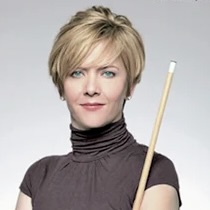
In cue sports, greatness usually comes in one language: the discipline of repetition, the quiet courage to keep showing up, and the ability to perform when everything is on the line. Allison Fisher, MBE speaks that language fluently, and has for decades, on two continents, across two different games. Known worldwide as “The Duchess of Doom,” Fisher is more than one of the most decorated champions in history; she is a standard of professionalism and composure, the rare athlete whose excellence has been sustained long enough to become part of the sport’s cultural DNA.
As co-host of "Legends of the Cue", Fisher brings what most interviewers can’t: lived experience at the highest level, paired with the emotional intelligence to draw out the stories behind the trophies. The podcast’s mission is to preserve pool’s heritage and elevate its best voices, and Fisher is uniquely suited to that work, because she has been a central figure in modern cue-sport history both as a competitor and as a respected ambassador for the game.
Roots: England, family, and the first spark
Born in Cheshunt, Hertfordshire, just north of London, Allison’s early life was shaped by movement and adaptation—by age four her family relocated to Thames Ditton, Surrey, and at eleven they moved again to Peacehaven, East Sussex, where much of her youth unfolded. Her earliest love of cue sports began not in a formal academy but in the everyday magic of discovery: watching "Pot Black" on television with her father and feeling something click. That fascination evolved in… Read More