

 Apple Podcasts
 Spotify
 Allison Fisher - Part 3 (From Snooker Glory to Pool Dominance)
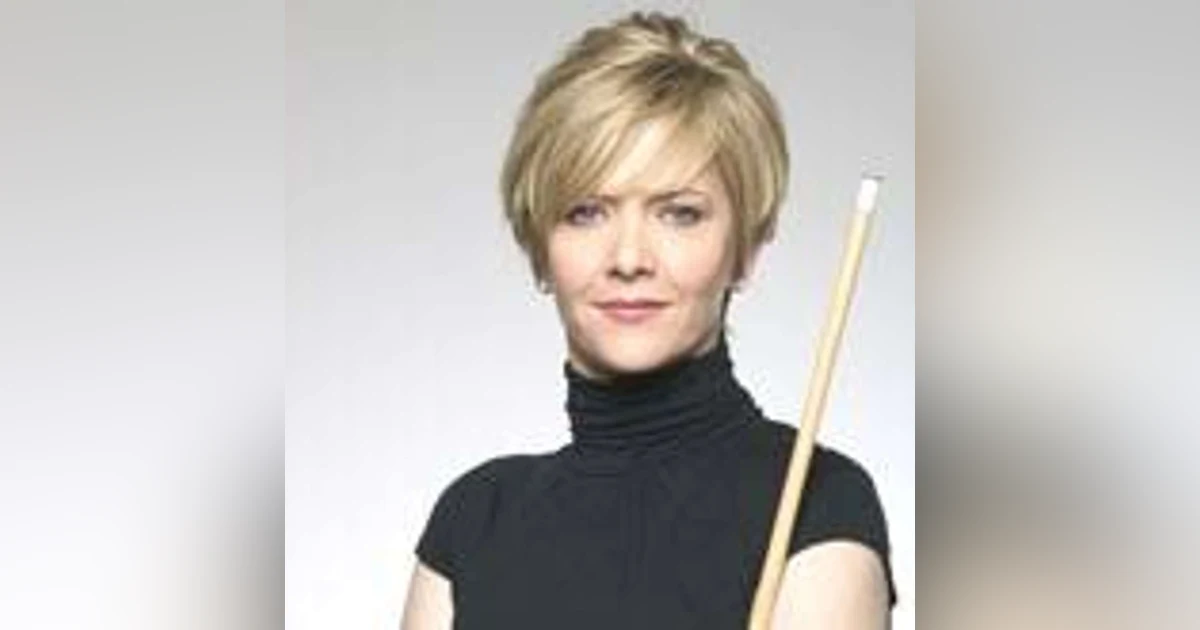

In Part 3 of our compelling five-part series with Hall of Famer Allison Fisher, we explore the pivotal years that marked her transition from snooker stardom in the UK to international dominance in pool. We dive into the stories behind Allison’s record-setting moments, including her iconic first century break by a woman on television and her multiple World Championship titles—moments that built the foundation of her legendary status.
We follow Allison through her memorable doubles and mixed doubles triumphs with greats like Steve Davis, and her bittersweet victories over fierce rivals like Karen Corr and Stacey Hillyard. But it was in 1995, after a disheartening experience at the Women’s World Championship in India, that Allison made the bold decision to leave snooker behind and chart a new course in the U.S.
With candid insight and trademark humor, Allison recounts how a chance meeting with a sponsor and early support from Cuetec helped launch her American journey. Her adaptation to the subtleties of pool—from banking and kicking to understanding throw—unfolds in real time, including her surprise first win just two weeks into the WPBA Tour. She also reflects on her early days learning from legends like Grady Matthews and competing against the best women in the world.
Join us as the “Duchess of Doom” begins to forge a new legacy, one shot at a time, and redefines what it means to be a champion on both sides of the Atlantic.
Subscribe and stay tuned for Part 4 as Allison Fisher continues her remarkable story—only on Legends of the Cue.
Give Allison, Mark & Mike some feedback via Text.
Follow our show and/or leave a review/rating on:
Our website: https://www.legendsofthecue.com
Apple Podcasts: https://podcasts.apple.com/us/podcast/legends-of-the-cue/id1820520463
Spotify: https://open.spotify.com/show/4Za0IMh2SeNaWEGUHaVcy1
Music by Lyrium.
About
"Legends of the Cue" is a cue sports history podcast featuring interviews with Hall of Fame members, world champions, and influential figures from across the world of cue sports—including pocket billiards, snooker, and carom disciplines such as three-cushion billiards. We highlight the people, places, and moments that have shaped the game—celebrating iconic players, memorable events, historic venues, and the brands that helped define generations of play. With a focus on the positive spirit of the sport, our goal is to create a rich, engaging, and timeless archive of stories that fans can enjoy now and for years to come.
Co-hosted by WPA and BCA Hall of Fame member Allison Fisher and Mosconi Cup player and captain Mark Wilson, Legends of the Cue brings these stories to life—told in the voices of the game’s greatest figures.
Join Allison, Mark and Mike Gonzalez for “Legends of the Cu...
Let's go back to nineteen ninety-one now, because uh you're gonna win your first World Masters women's doubles title with Stacey Hilliard. Um 6'2 over Karen Korr. Her from Northern Ireland, and perhaps we'll have her on the show sometime. And uh we've heard this name again, Anne-Marie.
Allison FisherOh yeah, they were partnered up, yeah. That makes sense. Yeah. Anne-Marie is from up in Nottingham and Karen obviously from Northern Ireland, but lived in England up in the north of England. And then Stacey and myself, even though we were rivals, we became friends a bit later on, but um great rivals in the beginning, and we partnered each other and that I I didn't feel like we could lose partnering each other because we were two of the you know, one and two in the world, probably at the time.
Mike GonzalezYeah.
Allison FisherAnd that was a good partnership.
Mike GonzalezSo Yeah, and then later that year, I think you would have won the uh mixed doubles championship with Steve Davis.
Allison FisherAlways a play. I always learned from Steve. Steve the thing about the very top players like Stephen Hendry, Steve Davis, John Parrot, was they were were respectful of me as a player, and they treated me like one of them, so to speak, in the sense of I'd sit next to Steve and I would I didn't feel intimidated at all, and I didn't feel like he was disinterested. If I looked over at some of the other men partnering the other women, I could see they weren't really that bothered. You can see that sometimes in doubles, anyway, whether you're the same sex or whether you're opposites playing together. But he was to you know, he was into it and did his best, and that made me perform my best because in that I had the my first century break by a woman on TV, partnering Steve, so that was a big deal, and that's there's the one that you see on YouTube now. That's the first ever century by a woman on television.
Mike GonzalezYeah, yeah. You won uh you won over Jimmy White, and then you also won a uh another mixed doubles championship that same year, uh playing with Steve over uh Stephen Hendry and Stacey Hilliard.
Allison FisherYeah, well he was like I said, he was a great partner, and I would ask him things. We'd chat in between and you know, like about practice and how what he does when he practices, and he he would say, I would only take one thing into practice. You know, today it might be I'm not gonna play with any side spin, I'm just gonna use vertical axis of the ball. You know, he would try and try and give me pointers like that, um, and that when you're in a match, you can only think about one thing, you can't have multiple things going through your head. And I told you the other day, and Mark mentioned it, the emphasis on winning the first game of a match. That was Steve Davis's big thing, and I don't know what his percentages were in his career, but that was a massive thing for Steve Davis winning that first game.
Mike GonzalezI have to ask you this. Did you feel at all bad in 1991 beating Karen Korr for another women's world snooker championship on her 22nd birthday?
Allison FisherNo. These yes and no answers now.
Mike GonzalezYeah, yeah. These will go quick. These will go quick. Stick with us.
Allison FisherYeah, no, not at all.
Mike GonzalezLittle 103 run was the first century baked by a woman in the history of this championship.
Allison FisherGood.
Mike GonzalezThat wasn't a yes or no.
Allison FisherYeah, no, I mean I I I broke records and that it's always wonderful to be the first. And Stacy um actually made the first ever Century by Woman in competition, which was a league match in her hometown of Bournemouth. So I was gutted about that. I always wanted to be the first one to break the hundred, but she beat me to it. I think she was 15 at the time.
Mike GonzalezYeah.
Allison FisherBut I was the first to do it on TV, so I'll take that.
Mike GonzalezYeah, well, Mandy Fisher uh played in this event four days after becoming a mother. That's pretty impressive.
Allison FisherNot bad, eh? I've I'll tell you what, I've played Laurie John when she was heavily pregnant, about due in New York, playing pool, and I was it was two against one. It's not fair. Certainly kept her weight forward, Mark. Yeah, yeah.
Mike GonzalezUh this would have been about the time I think that uh Matroom came along, right? In terms of the invitation to um to play in that league.
Allison FisherYes, and and they did the women's world championship too.
Mike GonzalezYeah.
Allison FisherSo the money went up. They got Trust House 40, which was a big hotel chain to sponsor it, and I think the money went up to a lot more to the winner, 20,000 maybe to the winner. So a couple of times we did have big money like that, but that was it.
Mike GonzalezYeah. Well, let me mention just a few other world championships. You can comment on these as you wish, but as we said at the top, we probably are not going to have time to talk about all 80 plus of your wins worldwide. But uh you won the women's title again, uh, struck a title in 1993 over Stacey. Um, and uh I I guess you were the defending champion because for some reason they didn't contest that in 1992. What was that all about?
Allison FisherI don't know why they didn't, but they didn't hold a world championships in 92. I'm not sure. I can't really recollect. Maybe it was a lack of sponsorship. I'm not really sure.
Mike GonzalezYeah. And then they probably threw you guys a curveball because in '94 you went off to New Delhi for this championship.
Allison FisherYeah, we went to India. My dad came with me on that trip, and um, it was a great, really, really good trip. Five-star hotel, really nice, sponsored by a gin company, and because I remember it very well being there and the trophy and everything. And, you know, India, what a place. What they would do is play down to the final eight and then take those eight over to India. So that was the first time there, and it was a big eye-opener, you know, watching cows in the middle of the road, a sacred creature, and um going to a country that's poverty stricken, yet you're in a nice hotel, so it's like two different worlds, either very rich or very poor. Um went to s I got to see the Taj Mahal, you know, I went on trips to to see things, and um it was a great experience that first one. And I ended up winning the tournament, and wonderful. We had a great time.
Mike GonzalezYeah, so I'm gonna fast forward now uh probably a year or so hence, yeah. This after seven or eight more additional titles uh uh of note. And um you played again in the women's world stucker championship uh held in India. Uh a little different experience that year, and you came away from that uh with a with a feeling.
Allison FisherYeah, that was the end for me. Um so I qualified for the last eight in the early part of the it's probably right April, and we were supposed to go back to India, I think, in May, maybe a month later. So I was very ready, I was very prepared and ready. And then months went by where they were prolonging it, you know, it wasn't being held. So I kind of went through the summer and lost a bit of interest because I was one of those who G, you know, got ready for a tournament and then was mentally prepared, and I was kind of losing interest and lack of motivation. And I think part of it was I couldn't see the next five years, you know. What was I I don't want to be on this train still doing the same thing, and I couldn't see the future, and I went over to India and they weren't they weren't even prepared. My mum came with me on that trip. We had such a great trip the one before that. We stayed not a nice hot it wasn't as nice a hotel. It was the venue wasn't even prepared, it was a room with no air conditioning, it was like 120 degrees. They put a red sheet up around the room and then hung up an air conditioner, and it was just a lack of planning and preparation on matroom's part. And during that tournament, I was in the semi-final, I got through no, I was in the semi-final, I turned round to my mum and I just said, You're never gonna see me play snooker again and that was it.
Mike GonzalezAnd that was it.
Allison FisherIt was weird, but that was what happened. I said I can't, I don't want to do it anymore. And I that was the day I quit. I lost in the tournament, came home, found out how to go on the pool tour. It didn't quite work exactly like that, but it felt like that.
Mike GonzalezThat was Yeah, so help us with the sequence of events, you know, because it it it probably wasn't I'm done with snooker, oh now I gotta think about what I'm gonna do, I gotta learn how to play pool, you know.
Allison FisherYeah, what you're saying is how did the pool come about, even and it was really like I played it a couple of times. In fact, if you cast mine back to 1988, I think it was, we did a challenge. Steve Mizerac and Ava Lawrence, Ava Matire at the time, came to England and Stephen Hendry and myself um played in a mixed doubles challenge of pool, straight pool, nine ball, and snooker. Of course, Ava recollects that we didn't we didn't play snooker because there was no point. It was just a one-sided, you know, she'd never played it before. Ms. Ratt lost to Hendry, of course. And then I beat Ava at nine ball and and she might have won the straight pool or vice versa. So it was just a made-for-tv challenge and which went over to America, was shown in America, and I didn't really think much more of it playing pool. And then in 1992 I entered a tournament in Munich, which was a bit random really. But I I don't know why I did it, I can't re recollect why it happened. But I decided to play in it, and I said to Stacy, why don't you come with me? And this was a lot of money we were out laying, much more than we played in a snooker tournament. So I can't I can't remember why we did it, but we did it, and we went to Munich and I met everyone. I met that was my first meeting of Goethe, Hofstetter then, Gregison now, Ava, Laurie John, Robin, Vivian. I met all these great players from around the world that I'd never even heard of actually. And these were the top and the top European pool players at the time. And and the men as well, the men were there, top men in the world. So it was a really big deal, it was called the Munich Masters, and I was blown away by how it was put on, it was just such a pro professional event. And the prizes were you got trophy, probably, I don't really re recollect that, but you've got a Blaupoint pen, a nice pen, German pen, and then you got a nice gold silver, I think it was, um, key ring thing. So just really nice gifts that are very unusual. And um I came in third, and Stacy ended up winning it. We borrowed cues the day before we left to go there. Wow and we ended up coming first and third, and we were over the moon. I had a great time with all the people, really enjoyed the people, and then went back to England and carried on playing snooker. I wasn't ready for like a transition at that point. Then, Mark, we played the Moscone, the 1994 Moscone, didn't we? And then I met uh Jeanette and Vivian, and they said, Vivian, so why don't you come over to America and play the tour? You know, we've got a good tour going, and she regretted that after that. But anyway, we've got this really good tour going, and Mike Massey had said the same to me, you know. I'd met Mark Mike Massey, you know, in different places, and for some reason, you know, we were playing some snooker and poor stuff. So he said, Come over, there's a great tour in America, you should be a part of it. And I hadn't really thought much about it, but it was starting to sort of become more in the forefront of my mind because I couldn't see where I was going in snooker. I didn't see more years of this going on, and you know, and I had a mortgage to pay, and it I basically I walked into my mother and I said, I've got 11 world snooker titles and nothing to show for it. You know, it was wasn't really going anywhere for me. So I said, I'm thinking about going to America, and she said, She used an expletive, she never she very rarely swears, maybe a bit more in her old age. You must be out of your mind. And I said, Why? And you she couldn't really answer it, but anyway, that's what happened. Um but prior to that, right before that, I played in an event at the I think it was at the Worthing Centre, so it's along the coast near where I live, and it was an invitation of eight. I've still got a photo of it, top eight or top six men in the world, snooker players, and myself, being you know, local and uh top female, and we had local sponsors. It was a raise money for charity event. And one of my my sponsor of that event was a glazing company in Brighton owned by a guy called Phil Collins, not the singer Phil Collins, but a guy called Phil Collins, and he was my sponsor in that event. Anyway, we got talking towards the end of the event, and he said, I'd like to sponsor you. I'm like, wow, that's wonderful. My dad and my brother, who'd had a little few too many tipples in the green room, said, Yeah, we've heard that before, and I'm like, Oh gosh. Which we had heard it a lot before, nothing came to fruition. But I took his number down, you know, I and I called him and we arranged a meeting. And my dad said, Yeah, nothing's gonna come of it being the pessimist. Anyway, I went to meet with Phil and I said, Look, Phil, I've got this interest in going to America to play on the and he said, Well, I really want to sponsor you in Snooker, you know, to stay here and play Snooker. And I said, But yeah, I've just I really want to try going to America. And he said, Well, all right, I'll support you in it, I'll give you a year and I will pay your airfare and entry fee in hotels. And he gave me a credit card, and but not immediately then. I went home to my dad with a thousand dollar check, right? A thousand pound check, and I said, Look at that. And I, you know, I was like showing it to my dad who couldn't believe it because you know we didn't think anything would come to fruition. And this guy ended up sponsoring me and my first year on tour, and I went back after a year and I met with him and uh gave him his credit card back and said, Thank you very much, it was really helpful. But I'll stand on my own two feet now, and it was really good. And QTEC sponsored me before I went to America, they knew what I was gonna do. I went to Beijing in 1994 to play a pool match and some snooker, and um my first introduction mark to Americans was um Joanne Mason Parker, Old Strickland and Mike Massey. Think about that, yeah. That was quite a team, and um, you know, I'd never heard of Earl, or and I'm now meeting Earl for the first time, and I'm like, whoa. Mike Massey, of course, and then Joanne Mason Parker was quite confident too. And um, so we played in this pool match, and I didn't even know you could jump the ball because it was unheard of in Snook, and I put her in this Snook, and I thought, I've got her now, and she jumped out of it, and I'm like, wait a minute, what's that? What are you allowed to do in this game? So, anyway, that happened. But but on that meeting, a guy from Europe who represented QTEC in Europe took me over there and I got a sponsorship from QTech, and they got hold of me for a three-year contract before I got to America. So that's how that happened. So I was already sponsored coming to America by QTech.
Mike GonzalezYeah. So before we get you moving to America, you you brought it up and we we talked about it a little bit with Mark, but we should talk about it in your story too, and that's the fact that you were invited to play in the inaugural Moscone Cup in 1994. That's pretty cool.
Allison FisherAbsolutely. If I think about it now, what the Moscone Cup has become, do you know don't you wish we knew what it would have been back then? It was uh an incredible atmosphere, but um the very first one, and they allowed two women on it from from either side. There was Vivian and Jeanette and Francisca Stark from Germany on my side, and I hadn't really played, I'd I'd I'd dabbled at Paul a little bit before that, but not really significantly. And um yeah, it was a great experience. I r I saw a picture the other day, Mark, of the waistcoats that we were wearing.
Mark WilsonUh-huh.
Allison FisherYou were covered in the American flag waistcoat, and we had some stars, so it was blue and gold, like blue waistcoat with gold stars on it. It was funny looking back all those years ago. But I used to love that waistcoat.
Mike GonzalezUh-huh. Almost looked like you could have been um you you could have been representing the European Union. Yes, exactly.
Allison FisherThat's exactly how it looked. That was the idea, I think. But anyway, it was um good fun, good experience. Nice to meet the American players, because that was the first time I'd met them. Some of the men, I think. I'd met some of them in Munich. And I can't remember what yeah, Munich was before that, but yeah, so that was good.
Mike GonzalezYeah, it's too bad that uh after that year they discontinued having the women participate. And I think, you know, if you look at the future of the Moscone Cup and and how America has fared lately, they might benefit from mixing it up a little bit.
Allison FisherYeah, I don't I'm not really sure what to think of it, really. Because I think men should have their event, the team event, you know, and I think you could go either way with that. If you had the women in it, it adds a little something extra, and the women, you know, are good players, you get you you'd have some solid matches both ways now, I think for sure. Um, but it's also nice for the men to do their own thing, and there's no reason why the women shouldn't have their own type of cup, you know, uh that is similar to that.
Mike GonzalezI think they should have a big women event like they do the Moscone Cup. I think that uh that they should have a big mixed event to feature both. And uh I'm just wondering, Mark, whether the Moscone Cup ought to move just just like the the Writer Cup had to evolve from the United Kingdom really playing the United States to Europe playing the United States. I wonder if they'd be better off US and Europe versus the East, the way Pool's going.
Mark WilsonMm-hmm. I well, you know, I have my opinions too, but the women bring so much to the party that for the proliferation of the sport, it's gonna that's an untapped market for the most part, to having women involved, and they're certainly capable that they can beat anybody. So uh I I I'd love to see them re-included.
Mike GonzalezYeah, yeah. Well, anyway, pretty cool. You don't happen to recall anything about what happened in the last match or the last shot, do you, Ellie? What about Mark?
Allison FisherMark making the nine ball to win it.
Mike GonzalezYeah, something like that.
Allison FisherWell, I've joined Mark's team now. We teach together, so he's the winner, and I'm just I'm on his coattails now.
Mike GonzalezYou know, you you mentioned about uh for both of you, don't you wish you knew what this event was going to become? We've talked to probably, I don't know, 60 Wyder Cup players over the years that have played in just about every Wyder Cup that ever happened. And they all have the same thing. You know, they're playing the first one, the second one. They had no idea what what was going to become of the Writer Cup.
Allison FisherWell, I think the other thing is it's always special to be the ones who first did it, too. I'll, you know, I'll take that. Um you're setting the tone for something, and uh it's becoming an amazing event, and it is a shame that they stopped women participating in it, but um, it certainly evolved into a huge event.
Mike GonzalezYeah. All right, we're back in 1995. You tell your mom, I'm going to the US.
Allison FisherYou know, I look back on it and I think somebody said to me a few years later, you know, isn't it? It's interesting that your parents let you come over. And I and I started to think about it, and I said, You let me come over. You know, I got a little upset about it that you let me go. You kicked me out, basically. You know, the thing is I got a one-way ticket over. Now, why did I get a one-way ticket? Firstly, probably probably because it was cheap and I couldn't afford the return. But secondly, because I went over to Canada initially. So I was invited onto the WPBA tour. My first tournament was in Charlotte, North Carolina. My second one was going to be in Florida a week later. I went to Toronto to stay there because they played snooker and pool. So I knew I've always got my snooker there, but nothing else. And I stayed with friends there because previous to that, since being a late teenager to up until the point I went to Canada to stay for a bit. I did lots of exhibitions in Canada as a snooker player. So I was there every year playing snooker. So I was very familiar with a lot of people and places. So I felt very comfortable there. So I did that and I went and stayed with Friends Anne. I went to my first tournament in Charlotte, North Carolina. And I ended up staying. I played in the event, I lost to Ava through a little bit of ignorance and Jeanette. I lost to Jeanette because of a push out, I think. And then Ava was I just didn't see the shot on the table, like a two or three ball combo that was obvious, and I didn't see it. So it's a little bit of new to it, you know. But as soon as I walked into that room in Charlotte, I knew I belonged there. That's the point. I think this is it for me. I like it here, this is what I'm gonna do. The people were really nice, the players were very inviting, and the tour was run very professionally. That was my takeaway from that. And then they invited me to stay on because we had the tournament in Florida the next week. So I stayed in Charlotte, I didn't go back to Canada, I stayed in Charlotte, and then for that week I was training with them, so I was getting familiar, more familiar with the game, and then we all drove down together in a minibus. It was Laurie John, Robin, Gerd and myself, um Kelly Oyama. I don't know if there was anybody else. It might be Ava, of course. Yeah, I think that was it. Anyway, I'm I'm with a bunch of the top players, so I'm learning a lot along the way. Well, we get to Florida and ended up winning the tournament, which was unbelievable. I ran a six-pack with Laura Smith, and I didn't know at the time. I I don't know if it was six was a record or seven was a record of break and runs. And I didn't know, so I'm run I'm playing Laura. Laura had beaten me, put me into the losers bracket, I think, and I played her again, and that wasn't going to happen again. So I'm I run my six pack, and then I have a sort of a half shot of the one and I play safe.
Mark WilsonThat's cool.
Allison FisherAnd I looked back, and every mum's like, Why didn't you go for the one? I said, What are you talking about? I said, But it was a record, you might have run out of the match. I said, Oh, I didn't realise. Anyway, but it was quite funny looking back. It was a killer instinct, though, like you're I'm not gonna let you win a game, Laura. Um, so anyway, I won the tournament, and but it took me about a year or so to call myself a pool player. To me, I was still a snooker player, playing pool, not really knowing a lot of the things, like the banking kicking. You know, I was a shot maker for sure. Yeah. Coming from a 12 to a nine foot. So I wasn't afraid to go for anything. And yeah, just learned a lot along the way and had a great time doing it.
Mike GonzalezWell, it's fair to say, uh, Mark, I think that uh she could call herself a pool player today.
Mark WilsonYeah, absolutely. I'm proud to know her just because the it's the winningest woman player of all time. And to that point, right before Allison Fisher was Gene Belukas, who you know we all thought would just dominate forever, but then maybe some disinterest, and then Allie came in and then just uh uh assumed command and has held that uh mantle ever since.
Mike GonzalezJust looking at the record uh for our listeners, I I've my notes say 79 plus wins. I don't know how exactly how many wins you know, probably on the on the pool side.
Allison FisherI've hit I think I've hit over the 80 marks. I've won a few more tournaments since them, since I've been written.
Mike GonzalezAll right. Four WPA World Nine Ball titles. Allie was the top-ranked player, except for maybe a a couple of months from 1996 to 2007. Uh pretty significant. We go back to that first win. Uh, we're talking about the 1995 Viking Q's Charlotte Classic at Mothers Billiards. Does that place still exist?
Allison FisherNo, Mothers doesn't. It it um a light rail system is there in Charlotte now, so it it unfortunately isn't there and it hasn't been there for many years, but what a great room it was. Kelly Oyama and Wesley Oyama owned it. Kelly was a player on tour, and um it had a great atmosphere. The front side was more of the general public playing at the back side of it was more of the I suppose the gamblers and the um people who took it seriously. So I would go on a back corner table. I always like to go in a corner because I'd like to be away from everyone and just get on with what I wanted to do.
Mike GonzalezYeah, yeah. And then you mentioned uh toddling down to Florida the the the next week you win the McDermott Hughes Orlando Classic. So it didn't take you too long. It was your first win in two weeks on the tour.
Mark WilsonYeah.
Mike GonzalezUm So I I guess uh we'd both be interested in learning how you came to really understand the subtleties of Pool versus Snooker, because you had years and years to develop and learn from a lot of great players. Uh now you're kind of taking a crash course here in a game that's not quite as familiar to you.
Allison FisherYes. I beat Jeanette in the final, I think, of that one. So I wasn't didn't, you know, I obviously always had the I had a lot of experience and I had um desire. I might not have played all the right shots, you never know if you look back. I don't know if I played all the shots the right way, probably didn't, because in snooker you you use a lot of stun and draw shots and pull as more spins, and you know, you're not doing that so much in snooker. Which I think the new cloths at the time suited that type of game for me, so it was quite good. Um so I was quite comfortable, but I I knew that like maybe kicking, I didn't have an education in that, and I didn't the banking and when to do this or that, you know, the right shots, using the side pockets versus corners, when to do that. So there were certain things I would think differently about. I'll give you a really good example of that that I probably wouldn't wouldn't play today, is I was playing Robin Dodson in the ESPN Ultimate Challenge, and this was to get into the final and I think we were down to the last rack, so it was Hill Hill, and that the nine ball was about a diamond away from the corner pocket, right hand corner pocket, and a diamond towards the t you know, centre of the table, so quite away from the pocket, and I had a ball in hand shot and I shot the one onto the nine. I took ball in hand and aimed the one that was at the other end of the table, so it was about a more than a half ball cut, probably, to play the one nine combo, other end of the table, and it went in. I won on that. Now, would I play that shot now? Probably not. But what a crazy shot. I mean, it was that's what I saw, you know. I thought, oh, I'm gonna do that, and queuing straight and everything. And if I get right behind it and put it in line, it should go in. There was no question, you know, in my mind. Now I'd be like, ooh, no, that's a you know, that's a really tough shot. You've got throw, you've got, you know, sometimes too much information can lead to poor decisions.
Mike GonzalezYeah. Well, I think that's what you know, Mark that came through a little bit when we talked about the kids from Lindenhurst, the younger kids, no fear. They might try stuff like that. And then as you gain experience, you realize, oh, there's a little risk involved in that kind of shot.
Mark WilsonYeah, I suppose some of that. Uh but uh with Allison, she's got the straight stroking mechanics and the super confidence, so it doesn't look as bad as it would to those of us that don't possess the super straight mechanics, you know.
Allison FisherSo that's very sweet of you, Mark. But if you would probably hide your eyes if I played that and you were my coach and I got down to shoot that.
Mark WilsonWell, that's just an experience. I mean, it wouldn't be something I'd be ashamed of. I the the the stroke mechanics is where I'd say, okay, now this girl, pure dynamite, she can do it, you know, and now we just gotta guide her a little bit on some of her decision making.
Allison FisherYeah, that's true.
Mike GonzalezHow much of your learning then? Because we're we're talking about still 1995, so you think about the technology that was involved and what was available in terms of learning tools. There there probably still wasn't a whole lot of video. Uh we were either reading stuff out of books, and there weren't a whole lot of books yet, really, at that time. That's true. Or you were learning through observation. How did how did you learn observation?
Allison FisherAlso, I was alongside Goethe at the time at Mothers and Ava and some you know decent players in who played in the pool room. So a lot of observation. But Goethe knew a lot because she had trained with um oh gosh, Jorgen Sandmann, Jurgen from Sweden, who's now in the WPA on the board of that, he'd be an interesting guy to have on this actually. Um but Jurgen had taught her a lot because he did training camps with juniors and and different players, so she learned a lot of drills and things like that. So anyway, from when I first came over, I'm shooting a spot shot, so putting the ball on the spot, cue all up in the bulk area. And I'm noticing even though I'm making the ball, it's hitting the right edge of the pocket, you know, and I'm thinking, that's you know, why is it not going in the centre of the pocket? Because I'm a snooker player, I'm playing centre of the pocket. I said, Girl, why is my ball not going in the centre of the pocket? She said, because it'd throw and I said, What's throw? So she taught me what throw was, and I had no idea because we didn't talk about that in snooker, we got a lighter ball, and that was never really talked about, the transfer of you know, English or throw. So I never knew anything about that. So that was interesting. I had to learn that, and aiming differently, either hitting the ball firmer for no friction or spinning the ball a bit. So, you know, just little things like that made a big difference. So I actually actually learned that from another player and learned a lot of other things, I think, from other players and watch him.
Mike GonzalezWould would you force them to just tell you what's going through their mind and what they're thinking about as they approached every shot or or not?
Allison FisherNo, I think people came with information really. Um I wish I'd met Mark then. That would have been fun to have met Mark, but then he had only run ten balls at that point, I think. No, I'm joking. But it would have been great to have had a mentor in Paul that I didn't have. I didn't have the only time I really can say somebody hand on heart that taught me a lot at around that time was Grady Matthews, the professor of Paul. And what was interesting about Grady was, you know, I was about 1997 or 98, so I've been here a little while. He walks into Mother's Billiard Parlour in a nice suit, he comes marches over to me, Alison Fisher. My name is Grady Matthews. I would like to do a tour with you, Battle of the Sexes. I'll make sure you get paid, and we decide, you know, discuss what the fee was going to be, and we will do 31 appearances east of the Mississippi. That was it, right? We took a couple of pictures together, and he sure enough, he put it together, and we probably did 21 shows in about 30 days, something like that. It was done pretty quickly. And in between our evening shows, which was uh two races to seven, and then we'd play people and it you know, some trick shots. What an experience because sometimes we'd be at the table during the day and he'd show me, teach me about kicking and stuff. So I learned a lot and I I put it into practice. I played at the Superbillied Expo, and I remember Gene Belukas was watching who I got to know over time. And I kicked this shot and it was like almost in the centre of the table. It was a real low percentage, but I kicked it and played it safe on the end rail. So it kicked into the side the side rail and then landed on the top rail, and it went exactly as planned. I measured it the way he said, and you know, it was just it's fantastic to do something that you would have would have had no clue at before, and somebody's taught you something, and then it comes off in a tournament situation. So I owe a lot to Grady for those little lessons in between.
Mike GonzalezI'm sure you learned a lot over those 30 days.
Allison FisherOh, we don't I learned a lot about Grady. Some of it's not repeatable.
Mark WilsonYeah, he's not for public consumption.
Allison FisherHe was a colorful fellow, but he was a great guy too. You know, I really enjoyed my time with him.
Mark WilsonOne of the most unique aspects of Grady was his capacity to just get up and extemporaneously speak or give a speech or like a welcome type of thing to the uh I I was present for your show in St. Louis, which it was at Billiards on Broadway, and I was the host pro at a game room, and I I just I thought we got to support this. So I sold 20 or 25 tickets and we all went as a group and and supported Allie and Grady. And I think you beat him that night too.
Allison FisherI might well have beat him that night. He used to, you know what's funny, Mark, about those nights? Whenever I was getting ahead of him, he'd put his hand in his pocket and start jangling his change when I was playing him. Or he would walk out, middle of the game, to the restroom, and I'd be like, Where are you going? That's not the rule, and he'd off he'd gone. You know, you'd you just it was so funny watching him do these things, these little tricks.
Mike GonzalezThank you for listening to another episode of Legends of the Q. If you like what you hear, wherever you listen to your podcasts, including Apple and Spotify, please follow us, subscribe, and spread the word. Give our podcast a five-star rating and share your thoughts. Visit our website, sign up for our newsletter, and support our pool history project. Until our next golden break with more Legends of the Queue, so long, everybody.
Pool Player
In cue sports, greatness usually comes in one language: the discipline of repetition, the quiet courage to keep showing up, and the ability to perform when everything is on the line. Allison Fisher, MBE speaks that language fluently, and has for decades, on two continents, across two different games. Known worldwide as “The Duchess of Doom,” Fisher is more than one of the most decorated champions in history; she is a standard of professionalism and composure, the rare athlete whose excellence has been sustained long enough to become part of the sport’s cultural DNA.
As co-host of "Legends of the Cue", Fisher brings what most interviewers can’t: lived experience at the highest level, paired with the emotional intelligence to draw out the stories behind the trophies. The podcast’s mission is to preserve pool’s heritage and elevate its best voices, and Fisher is uniquely suited to that work, because she has been a central figure in modern cue-sport history both as a competitor and as a respected ambassador for the game.
Roots: England, family, and the first spark
Born in Cheshunt, Hertfordshire, just north of London, Allison’s early life was shaped by movement and adaptation—by age four her family relocated to Thames Ditton, Surrey, and at eleven they moved again to Peacehaven, East Sussex, where much of her youth unfolded. Her earliest love of cue sports began not in a formal academy but in the everyday magic of discovery: watching "Pot Black" on television with her father and feeling something click. That fascination evolved in… Read More