

 Apple Podcasts
 Spotify
 Allison Fisher - Part 4 (Shifting Gears, Finding Greatness)
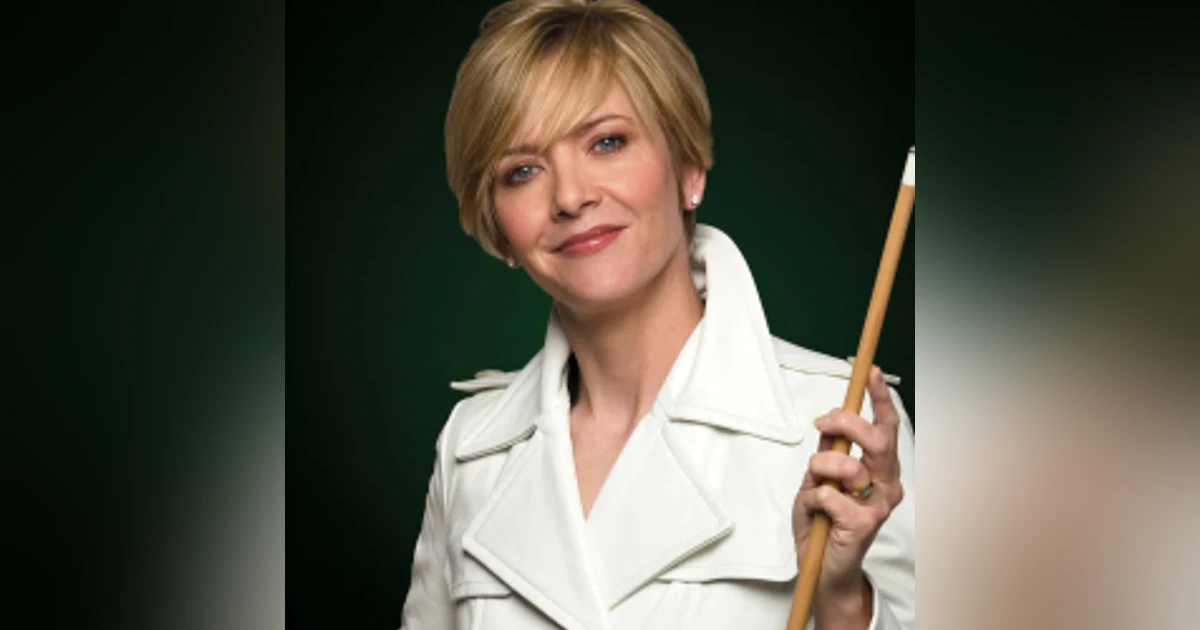

In the fourth installment of our exclusive five-part conversation with Hall of Fame legend Allison Fisher, the “Duchess of Doom” takes us deeper into the pivotal chapter of her remarkable journey—from reigning queen of women’s snooker in the UK to chasing a new challenge across the Atlantic in the world of professional pool.
With candor and clarity, Allison shares the emotional and professional crossroads that led her to leave behind a dominating career in snooker to test her skills against the best in the U.S. pool scene. We explore the boldness behind that decision, the cultural and competitive differences between the two worlds, and the self-belief that fueled her transformation from UK icon to global cue sports phenomenon.
Listeners will gain a front-row seat to the early trials and eventual triumphs Allison experienced as she carved out her place on the WPBA Tour—ultimately becoming one of the most decorated champions in pool history. Through insightful conversation with her co-hosts, she reflects on the mindset shift required, the trail she blazed for women in the sport, and the pressure of maintaining dominance at the highest level.
This episode offers not only a look at Allison Fisher's technical brilliance, but also the resilience, ambition, and quiet tenacity that define her enduring legacy in cue sports. It’s a portrait of a competitor who never settled, always evolved, and changed the game on two continents.
Join us for this inspiring continuation of an extraordinary life in sport, as we celebrate the moments that shaped a true legend.
Give Allison, Mark & Mike some feedback via Text.
Follow our show and/or leave a review/rating on:
Our website: https://www.legendsofthecue.com
Apple Podcasts: https://podcasts.apple.com/us/podcast/legends-of-the-cue/id1820520463
Spotify: https://open.spotify.com/show/4Za0IMh2SeNaWEGUHaVcy1
Music by Lyrium.
About
"Legends of the Cue" is a cue sports history podcast featuring interviews with Hall of Fame members, world champions, and influential figures from across the world of cue sports—including pocket billiards, snooker, and carom disciplines such as three-cushion billiards. We highlight the people, places, and moments that have shaped the game—celebrating iconic players, memorable events, historic venues, and the brands that helped define generations of play. With a focus on the positive spirit of the sport, our goal is to create a rich, engaging, and timeless archive of stories that fans can enjoy now and for years to come.
Co-hosted by WPA and BCA Hall of Fame member Allison Fisher and Mosconi Cup player and captain Mark Wilson, Legends of the Cue brings these stories to life—told in the voices of the game’s greatest figures.
Join Allison, Mark and Mike Gonzalez for “Legends of the Cu...
Well no, I mean I in Snooker that just does not exist. I was shocked when I came over here at what people would do to to try and win. It really opened my eyes.
Mike GonzalezWho was the worst?
Allison FisherI can't say names.
Mike GonzalezWe can always edit out.
Allison FisherAll right. Well, let's just say that they were married to men on tour. Oh, there we go. All of them. All three of them.
Mark WilsonWe are the dregs of uh England, you know that.
Allison FisherSo it expands.
Mike GonzalezIt happens though, doesn't it? And uh, you know, sometimes the fan doesn't realize it.
Allison FisherYeah, I mean it's yeah, you're right.
Mike GonzalezI I think it's is it less today than it was before?
Allison FisherWell, yeah, because you're wise to it too. Yeah, I think it definitely is less, the players of today. But boy, there's some obvious things that people do, and it's like, wow, shame on them.
Mark WilsonThe class indignity of Snucker didn't translate, and but it was also sort of good because it got you mentally tough.
Allison FisherYeah.
Mark WilsonAnd there was you know, specific players on the men's pro tour that, like, if you engaged with Strickland while he played, because he was used to being combative and somewhat negative, that he would just murder you because he plays agitated every day. You don't feel saying, you know.
Allison FisherI did get very mentally strong. Not from here, I mean I was mentally strong from Snooker, because you have to be at that game too. Yeah, you know. But I had so much experience from that career that I always felt like Snooker was my apprenticeship for my poor career. I always called it that. Whereas in one career I worked really hard and won a lot of events, but maybe didn't make a lot of money. In this career, I came over at the right time when it was really big on ESPN and you know, made a really good name for myself. So I was here at the height of it, which was wonderful.
Mike GonzalezSo from the time you came over, Allie, um how long before you kind of reflected back and said, Okay, right move.
Allison FisherOh, it was very quickly first tournament. You know, I have to just reflect. I sat on a plane with a cue in a case, wondering what I was doing. You know, the reality when I was sitting on the plane of like I'm going to another country, no idea what's going to happen with a cue in a case. And I got there, and obviously I told you I went into the room in Charlotte and felt at home straight away. And I won, I think twelve hundred dollars for coming in ninth. That was more money than I was winning in a snooker tournament for winning it. So to me, it was a right decision right off the bat.
Mike GonzalezYeah. And how long did it take you to settle into where you knew you were gonna make home?
Allison FisherUh immediately, pretty much, because after Florida we had the world championships in Taiwan. So I think I went, I don't know what where I what I did. I think Kelly Oyama invited me to stay with her for a while. So that was a person who owned Mother's Billiard Parlour. So I think I stayed there. Then we went to Taiwan. I came third in the world championships. Now that was crazy in itself. I was my first time of playing a World Pool Championships. I finished third, and that the guy, Phil Collins, came over to watch it, the one who sponsored me. And then going back the next tournament in America after that was the WPBA Nationals, a huge event, 20,000 to the winner. Well, came back from Taiwan and stayed in LA with a few of the girls. I think there was a house, I think Peg Lebman, who was a big part of our tour, then I think she had rent was renting a house from a friend or staying in lodging in a house and had a few of us stay there. So that happened, we all stayed together, and then my dad flew over from England, and I moved into a hotel then with my dad, and we hung out. And this was the first time he'd been in America and to watch me play Paul as well. Yeah. And so he came over and he was all in his suit and everything, and we he watched me play the Nationals and I ended up winning it, and I won the $20,000. And then you in the mat in the match before the final, I played uh Robin Dodson, and I broke the balls, Mark, and everything was perfect. And in my mind, I'd run out the rack, and I shot the one ball, then I shot the three, and Steve Tipton goes foul, and I'm like, What? What'd I do? He said, You haven't shot the two yet. So I gave ball in hand, but it didn't get to me. You know, that was the thing I think people would think I'd get flustered over it, but I sort of sat and laughed in my chair at how silly I was, and that was probably the first time on national TV on ESPN, but anyway, and then I played in the final and I was about to play a safety shot on Laurie John, and then suddenly I saw a three-ball combo to win the tournament, and it was right there, it was sitting there, and I played that three-ball combo and won the tournament. And you know, my dad always sat at the back, of course, and it was just nice to have him there, and he came eventually came down. I was beckoning him down to come and hug me, but eventually came down. He was very proud. So it's really lovely to have my dad there to see that.
Mike GonzalezYeah, yeah. Um, so you brought this up about shooting the wrong ball. Did that ever happen again?
Allison FisherOh, I've done some funny things since, actually. I think even within last year, I picked for whatever reason, I picked up the nine ball thinking it was a cue ball. Brittany had passed me the cue ball, but put it on the table, and I was just studying this shot, and suddenly I picked up the nine ball thinking it was a cue ball because I saw that white stripe on it. I'm like, what am I doing? Yeah, a couple of times I made some silly errors or mental errors.
Mike GonzalezCheck your prescription. I tell you, on that one.
Allison FisherEmbarrassing.
Mike GonzalezMark, have you done that before?
Mark WilsonOh shoot the wrong ball, or yeah, of course. Missed with ball in hand.
Allison FisherNo, we've all done that.
Mark WilsonYeah, it's uh all kinds of things. But I mean, that's just part of playing your whole life. Everything happens at some point.
Mike GonzalezYeah, yeah. Yeah, I think I saw a recent video of somebody like Jason Sashaw or something, just pick up the cue ball, even though it wasn't ball in hand.
Allison FisherYeah, I mean, you just have mental brain mistakes sometimes.
Mark WilsonNo, one time Irving Crane was playing the big straight pool match, and uh he he missed the shot, and then just with this cue, just put the object ball back where it was and moved the cue ball back like he was practicing and tried again right in the middle of the match. Now he was older and maybe he gotten a little bit outled or something, but uh, and you know, it was just uh so I I mean of course anything can happen.
Mike GonzalezYeah. Well, I learned a lesson, and I'm sure this has happened to you, but I was playing a shot uh to it was a jump shot to make the nine, right, to win the game. And I executed the jump and I made the nine and thought I'd won the game, right? So I just swept the other balls to the end of the table, and my opponent says, Oh no, the seven ball you were jumping over moved. And most in the crowd said, No, no, it didn't move. And there was one guy on my team that said, Mike, it moved. I said, Okay, lost my game. I'm never gonna sweep the balls again. Yeah, yeah.
Allison FisherYeah, I mean, there's rules very strict now in some tournaments too, that if you you have to wait till all balls stop rolling, even the cue ball. So you make a ball. I was playing Han Yu in the World Ten Ball in New Zealand last year. She's a little girl from China, lady from China, and um she missed the eight ball. We're playing ten ball and I think what was it? I can't remember what it was. She picked up just put the balls on the table because there was only the ten left. You know, it's like a ball in hand situation or something like this where she failed. And she just threw the balls on to rack up the next game, and she ended up losing two games because of that. They took a game away and gave me another game.
Mark WilsonThat's fairly common, though.
Allison FisherYeah, I mean it's it is the rules, you're not allowed to move touch any balls if there's any movement, or you don't give up a game, you get you know, a game against you penalized.
Mark WilsonAnd the reason is that uh they don't want the audience to lose track of you're just conceding balls and the audience gets lost, and then they they just don't want that. So it's it's the image that that rule's been around for a little bit.
Mike GonzalezYeah, yeah. So let's come back to your record uh on the WPBA tour. Now we're gonna talk about uh your first full year. And Mark, uh, I don't know about you, but but uh I find the fact that she wins eight WPBA events in her first full year is rather impressive.
Mark WilsonYeah, the most remarkable. Yeah. It really set the tone of we knew she's good and that we've seen her before, but you don't think she's gonna assert herself and dominate, especially, you know, like she's saying, Robin Dodson, top player. Uh I don't I don't think Jean was still playing at that point, was she?
Allison FisherShe wasn't playing.
Mark WilsonOkay, but but Jeanette was formidable, and then there was there was other top players too. There was Lori John, there were Lori Champeau. I don't know if did you ever know her? Was she out of the scene before you?
Allison FisherI think she was out of the scene.
Mark WilsonOkay, but there was still other many other top player girls.
Allison FisherAva was one of the top ones, wasn't she? Ava 100%. Yeah, Lori John, Vivian. So I became number one within 11 months, that's what it was. I got to the number one spot in 11 months, which was great. So within a year, and I couldn't believe it really how well I was doing. But my goal was to win a tournament within six months, and I did it within two weeks. So once I got on that little streak, it's again knowing that you can.
Mike GonzalezYeah, yeah. I think you won the Oldhausen LA Classic in 1996 that began a a run of eight straight wins across 96 and 97. Again, rather impressive. And you know, you you relate that to the men's side. Has that ever has that ever happened, Mark?
Mark WilsonClosest it was probably Nick Varner. Um he won one year where we had 21 events, he won 11 of them. And in the past, it'd always been somebody win two or three, and then the couple other guys too, and then it would go scattered because fiercely competitive.
Allison FisherYeah, definitely.
Mark WilsonVery hard to dominate like that.
Allison FisherYeah.
Mike GonzalezYeah. Yeah, I ran across that stat as I was doing the research for our talk with Nick next week on the program. And uh 11 out of 22, not bad, but uh to win eight straight like that, I guess by now you're thinking, okay, I I kind of got this nine ball thing figured out, I guess.
Allison FisherLoving it. I think what it and it always has been to me. I've been I can't believe that I've been living in America longer than I lived in England, first of all, because it's 30 years now. And it's all been like a fairy tale to me because I've enjoyed every moment. The people have been so welcoming, the fans, I mean, everyone across the board, people I've taught, you know, friendships. It's just been really wonderful. You can't knock the weather over here either, compared to England, but but everything in general has been a pleasure, really. It's been like Marx's. I couldn't have had a better life, really.
Mike GonzalezWell, educate me, if you will. Certainly educate our listeners as it relates to the different disciplines of pool contested by the women professionals. Was it almost exclusively nine-ball throughout the the beginning of your career, or were there the occasional eight-ball, 14-1 straight pool competitions?
Allison FisherWell, it was almost exclusively nine-ball, but then there was one US Open straight pool event, and uh it was at the Roseland Ballroom in New York City, and my sponsor at the time, Janet Schimmel, who was my QTEC sponsor, she she owned the company JS Sales, who uh sold QTEC throughout the States. Anyway, she said, You've got to go in that. And I said, Well, I don't even play straight pool, I don't know how to play it. I said, It's not really my game, I'm not really comfortable, Janet. And she said, Look, just go in it for me. I said, All right. So I landed in New York, and you know Stu Matana, um Mark, right?
Mark WilsonOh, 100%.
Allison FisherYeah, so Stu is a great player, he's a he's a great guy who lives in New York, loves poor, everything to do with it. And anyway, I'm at the tournament practice and he was showing me some shots, you know, that I wouldn't have known in straight pool. Just little, you know, safeties or how to go into the pack at a certain situation, and I didn't know these things. So we just did a crash course. So I get to the I got I made I was I made a 66 break, I think, in one of the matches, and I was gutted because I was really in a flow and I missed missed the ball, but anyway. And then I played Lori John in the final, and sure enough, those shots were coming up that he taught me that we did the crash course in, and that helped me win, and then I won the US Open straight ball, and what a beautiful event it was. It was put on by Black Billiards, and they they refurbish pool tables out of New York, you know, all these wonderful old Brunswicks and you know, very old equipment, beautiful. And um, it was a black tie event. It everyone looked at the park because when you look back in some of these events, you see that it's like, wow, look at the audience watching the dress code, even and uh it was a magnificent event at the Roselind Borum, and um yeah, I ended up winning it. I didn't expect to, but I was so happy that Janet put me in it.
Mark WilsonYeah, that would be a a a a discipline that you would excel at because of you know it's not it's not so much it's more about control of the cue ball because in nine ball you can get either angle, you can get an inside or outside angle, but a lot of times in straight pool you have to be on the right angle. You can't just settle for something. And once you got onto that, and then like you know, having Stu show you a few of the nuances and the moves safety-wise around the rack, it that's gonna be devastating, you know. It's so it's not so much firepower supreme, it's control.
Allison FisherTrue. And like I said, we when we talked yesterday, that was the first time I saw Siegel playing 2K and how he bent his cue and snapped it in half. So it was quite an event, a lot of drama.
Mike GonzalezYeah. That was the event, huh?
Allison FisherThat was the event.
Mike GonzalezYeah, so what about uh opportunities over the years to play bank pool or one pocket?
Allison FisherNot really, only in a low in a pool room where people would say, Do you want to play one pocket? And I've said not really got an interest in it. Because I used to hear that it would looking at it now, it'd probably be good, but they used to say it'd probably screw up your short game, you know, because it's quite a jabby little some of these little shots that they play in one pocket. I don't know, I don't know if it would have or not, but to be honest with you, I liked nine ball quick and exciting. I come from Snooker, which was a very you know, slower game, and I didn't want to go back into you know that long sort of thinking game. I was enjoying something new, so I think I just was in that mindset as well.
Mark WilsonYeah, with nine ball, your shots are numbered for you, Allie. You don't have to come up with it in straight pool, you gotta imagine and create.
Allison FisherOh, I loved straight pool. I enjoyed that, and I think I would have got into that if that was if if that was those were the tournament, if that's what we were playing, I probably would have been become a very good straight pool player. But I wasn't really interested in one pocket or bank bank pool wasn't really practiced a thing then when I was here anyway.
Mark WilsonYou would have to move to Kentucky.
Allison FisherYeah, exactly.
Mike GonzalezSo you probably both have views on this, you know, as as we talked to the golfers and talked about being multi-sport athletes, they often uh would uh uh they'd be concerned about the kids nowadays just being singularly focused on a sport and not developing their whole body, their whole mind, their whole game, if you will. What about with pool? I mean, how do you look at it in terms of excelling at a particular aspect or or certain pool game? Do you think that players would benefit from having some skills in the various disciplines?
Allison FisherI think so. I think definitely, but there needs to be more of those tournaments. However, on saying that, I've been at tournaments where they've had one pocket being played in the background, and these matches take two and three hours. And I don't think, from a public point of view, if people don't play it, they're not going to be as interested, even though it's a good skill set. So if you're not exposed to it and you don't need to play it, I'm not really sure how I feel about that. But I think everyone has their strengths and weaknesses, and drills of different sorts can help you through all of that.
Mark WilsonYeah, a lot of times people's attention span won't support uh those prolonged games, and and so I I do think the transitional skills that come from snooker apply to pool, and then also uh billiards on the billiard table. There's there's little things there that, but most people don't have the appetite, and a lot of the information died with my great-grandfather. It's just not played, you can't hardly find those things. So, and that was one of the things that brought the Filipinos over here. They did have that background in one, just 15-ball rotation pool. That's one of it, but also the billiard side of it. Balk line billiards, carum billiards, three cushion billiards, one cushion, two cushion. And uh I I hadn't been exposed to it either, and it was also perhaps a bit uh immature and impatient. And I'm thinking, billiards, are you kidding me? Only when I get old would I that when you can't hit the pocket, that's what you do.
Allison FisherYou know, I mean you know what's interesting. I went to Singapore to teach um the Singapore players for the Southeast Asian games, and in those games, Ephraim was playing carom for his country. So the other Filipinos were playing maybe nine-ball and ten ball, and Ephraim was doing the carom three-cushion.
Mike GonzalezYeah, yeah. There is a lot that's uh I I I you know as a kid I I've probably mentioned this to both of you. They had the uh three-time US uh three-cushion champion George Ashby uh ran the little pool hall where I grew up. And I would just sit there and watch him play three-cushion. And and I wish I could go back in time and and do that some more, knowing what I know now about pool, and how to apply what I would see them do on that table to the game of pool. Yeah, right.
Allison FisherWell, one of my rivals in pool, who I used to love playing till she left the tour, was Guy Yung Kim from Korea. Now, she grew up playing three-cushion, her father got on three-cushion table, so she was an expert on that, and one of the finest kickers on the women's tour that I ever played. We used to have some great safety battles. I would kick back, she would play kick back, she would kick back. We had some epic battles, and I used to love playing her because she was an aggressive shot maker too. Um, but she was my favourite player to play on tour. Now she's playing in three-cushion tournaments all the time in Korea because they're they're massive money now for women, so she's that's all she's doing. So it's it's good for the game, definitely good for your game.
Mark WilsonShe was a real crowd pleaser here in the US too, because uh the audience loves her. She's fast, she's cute, she plays great, she's cheerful.
Allison FisherAnd she wore a heart on her sleeve, which was good, you know, the expressions.
Mark WilsonVery compelling. My wife loved her.
Allison FisherYeah, she was great, great player.
Mike GonzalezSo we get back to your record, uh, and we're we'll go back to '96 because we we probably need to have you talk about your first WPA World Nine Ball Championship. This was in Sweden.
Allison FisherOh, I remember that. That was my favourite world championship win. And the reason being it was a class event. It was put on really well. But what I really loved about it was the long races. I think we started at races to nine and went up to races to thirteen. And a longer match is going to suit, I think, the better player. So you can get comfortable, you know, you can get into it. But that was my favourite world championship, my first one.
Mark WilsonWas that the one in Borling?
Allison FisherYes.
Mark WilsonOkay, yeah, I was there.
Allison FisherI played uh Helena in the final. Did you you remember that? I do the venue. It was really nice, wasn't it? Yeah, it was very well.
Mark WilsonWe even went to uh restaurants with uh Helena while we were there. And then do you remember who won the men's?
Allison FisherNo.
Mark WilsonHa interesting. Ralph Sukay beat Tom Storm in the finals eleven zero.
Allison FisherReally?
Mark WilsonYeah, it was the most uh both have played phenomenal all week, but Ralph was just on fire.
Allison FisherI've probably got a picture of it somewhere. Yeah, yeah, no doubt. Um I should have remembered that 'cause I can see the cover on billiard digest in my head.
Mike GonzalezIt's interesting when you go back through your record, you look at uh the sponsors of some of the events. I mean, most of all of these were were WPBA events, but uh McDermott's in the name, Brunswick's in the name, Oldhouse Oldhausen, QTech, um Viking.
Allison FisherWhat we did back then on our tour was we put all the different parts out to bid. So we weren't dominated by one table or dominated by one queue. Everyone had a fair chance to bid for the tournament, and whoever got the highest bid was the queue sponsor or the table sponsor for that event, which was a great idea.
Mike GonzalezSo, what tables were you guys typically playing on during this era, 19 mid-90s, let's say?
Allison FisherWe played Brunswick's Imperial, Connolly, and I think Recreational Factory Warehouse had one. Let me just think. So Connolly, Olhausen, Brunswick. I don't think Diamond were in the mix back then. They weren't in the mix.
Mark WilsonThere was a table made by Kestel, I believe it was.
Allison FisherNo, it was it was Casson. They sponsored people.
Mike GonzalezThey sponsored, that's right. K-A-S-S-O-N.
Allison FisherCorrect.
Mike GonzalezYeah.
Allison FisherSo Casson, Connolly, Olhausen, Brunswick, Imperial. Those were Yeah.
Mike GonzalezYeah. So I see in your record uh a few times this ESPN Ultimate Nine Ball Challenge. Tell you, tell us a little bit about that event.
Allison FisherGod, that was the biggest money in pool at the time. It was um, I think it was 40,000 to the winner and 20,000. There was another prize. I can't remember how we did it, but 60,000 total, and I won it twice. And um the time I lost, when I beat the very first one where I beat uh Robin Dodson with that 1-9 combo, I got into the final and I played Vivian and I lost 7-5, and I was absolutely gutted because a couple of shots I played like a snooker player, I didn't play like a pool player because it was still new to me. Instead of going three rails, I went two rails. I'll explain it later. But I played the shots incorrectly, and it cost me anyway. I lost, and that was the time when the top finishing woman got to play the top finishing man, which I would have played CJ. And I loved playing guys because I come from playing snooker, and I think I would have beaten him. I honestly, in my in my heart, I think I would have beaten him. Um, anyway, they played, I think they played for an extra 20,000, but I would have I would have relished that. I was gutted I didn't play that match.
Mike GonzalezSo that's a one talking about CJ Wiley. Yeah, and Mark, you would have uh spent a little time with CJ over the years, I'm sure. Oh, definitely, yeah.
Mark WilsonHe's a Missouri boy. I remember when he was just a young boy, he'd come to the tournaments, and um, and then he I don't know exactly how he evolved, but he ended up in Dallas, Texas, and made quite a name for himself, became a high-level pro player, not quite as high as he thinks he was, but he normally refers to himself as this really just me and Mike Siegel and Buddy Hall. I'm like, okay, slow down there a little bit there. But he was a great player, no doubt about it. And then he's a fantastic storyteller. I I watch his videos that just laugh throughout all of them. It is so comical. And but he exudes self-confidence and he was a great player.
Mike GonzalezSo yeah, yeah. Um as we said at the top, we're not gonna be able to talk about all these wins, but uh you win the world championship in in 1996. So what do you do? Do you come to my old hometown as Chi Town, and in the next year you go back to back?
Allison FisherChicago, right? So I that was a great I remember winning that one. I think Johnny won the world that year, maybe next to me. But um, yeah, I remember winning that one. That was a great venue too. We played in a hotel in Chicago, and I had my nice Jack Justice case, I remember that. And um, yeah. Again, doing the back-to-back is nice, isn't it? Because it's not the one-hit wonder and retaining titles is always great.
Mike GonzalezWell, how about back to back to back?
Allison FisherYeah, that was a record too. That was a big one for me because nobody had one three in a row. So that was really nice too. Robin held two in a row, and I think that was it. And then so I came in and made it three.
Mike GonzalezYeah, that was in Taiwan. I mean, did you feel the pressure of trying to do something no one had ever done before?
Allison FisherYeah, but I think pressure in a good way, it just depends how you look at it, doesn't it? I mean, I it makes you more determined sometimes. You can feel pressure and fold, or you can feel pressure and really focus. So I think I was just really good at focusing and dealing with pressure, if you like, maybe not taking it as pressure and just as the challenge. So everything's how you look at it and how you feel about it. And uh Taiwan, I'd been over to the Mway Cup. I I was I was familiar with Taiwan over the years. I've been there many times. The people were really lovely um following us, the fans, and um we played in stadiums, it was amazing. When we used to play in Taiwan, it thousands of people, but if you missed, they'd be laughing. It was the most unnerving place, and you know, you would be like, What they that's awful. They're laughing at me missing, and it made you feel like so small, but you had to end up laughing at it because it's you know, to them, it's just they're what they're watching a game and they think it's funny when you miss, and we're like folding, like, oh my can't believe this. It's certainly again character building. Yeah, once you know what to expect, you know how to deal with it.
Mike GonzalezShare with our listeners um a little bit about your first pool cue and then how your cues evolved because you probably made a few changes during your career.
Allison FisherWell, my f well you mean from snooker to pool, or do you mean just what who who made your first pool cue?
Mike GonzalezYour up you know, Q-Tech.
Allison FisherI came over from England directly with QTEC, and it was a fiberglass-coated cue. And the first one I used was an L Strickland Q, funnily enough, because they obviously didn't have my brand out at the time. So I was using O'Scue, I still have it, I still have the Qs that I used. So I had a full-length 58-inch fibreglass-coated queue with L Strickland's signature, and then eventually they made my own line, and I got mine down to 56 inch, which is what I use today. Um, so I was with Q-Tet for 16 years, and I probably only had four or five cues in that time, I think. And they developed as time went by because then Predator developed a um 314 shaft, and then I got Qtet to do a low deflection shaft. And then they did the 360, I think it was called. The R360. So yeah, so that developed over time.
Mike GonzalezSo when did uh players make the switch to carbon fiber shafts?
Allison FisherThat's been recent years. That's I'm not sure how many years it's been, but I've probably been using one for three or four years. And they've been out a little bit longer than that. But back in the day, Q-Tech did the um was it graphite, wasn't it? It was the idea, but it was made of graphite. And now the carbon fibre's become a big thing. And it I'll tell you what, it's added some points on people's games. Certain people who maybe didn't have the strength or the ball pocketing skill, it's changed their game, it's taken them up a level because it's much less deflection and it's easier to move the ball around. So there's pros and cons to everything, I think. The feel of wood is different and the vibration of wood in your hand is different. Um, but the carbon fibre makes it a little more of an equal playing field.
Mike GonzalezYeah, probably much like golf, you know, when the big bertha came out uh with the big headed drivers, then you went to, you know, different shaft technology. The players all talk about uh going to a metal-headed wood. And just probably like pool, there were people that were early adopters of the new technology, and probably those that says, uh, I'm gonna wait a little while on this stuff.
Allison FisherSame with tennis rackets. Anything involves. Tennis rackets used to be wood until they changed. So everything involves, and the balls have changed, the cloth has changed, there's there's you know, lots of changes.
Mike GonzalezYeah. Mark, you stuck with wood, didn't you?
Mark WilsonI do, but I do believe now uh the carbon fiber is better in some ways in terms of the performance characteristics, but not the feel. And so because I don't compete, I just still stick with wood. But I do think finally our sports backwards, so we're the last ones. So tennis rackets evolved, golf clubs evolved, and then now finally pools getting to the point where we're starting to make some tangible growth. And you mentioned Big Bertha, that kind of calls to mind this. Uh, Viking Q was one of the first major Q manufacturers in the United States that were uh prolific. And so uh the partners of that, the owners of that, were Dick Helmstedter and Gordy Hart. And they Gordy's hard to get along with, so they had a falling out and set one separate ways, and then there was Helmstedter Qs and Adams Cues made by him. He moved to New York, he then moved to Japan, and then he started designing golf clubs, and he's the one that designed the Big Bertha golf club and shifted completely in the golf and let his cube business go after that.
Mike GonzalezYeah. Well, that was uh, of course, uh Callaway and and uh Eli Callaway, who was the founder of that company. We're gonna be interviewing on our golf podcast his son, because they just came out with a book about Eli Calloway and his history. So we'll we'll kind of tell the history, I'm sure, of Big Birth and so forth. But it's come up a lot and it's got a lot of parallels to the game of pool in terms of adopting different technologies.
Allison FisherAs it should.
Mike GonzalezSo uh you're coming off WPA World Nine Ball Championship number three. We've skipped over a whole lot of wins, but in 1998, as I counted, you won more times than than uh Mr. Varner won with his 11 victory year. So what what's going through your mind? What's going through what's happening in your life? How are you feeling about pool and your decision at this point?
Allison FisherWell, I'm in my prime, I think, and um just enjoying it all. And and I felt that if I went in a tournament, as long as I don't do anything silly, I should win it. You know, as long as I don't be complacent, which I learned a lot about that in my snooker career too, you know, complacency. So I thought as long as I treat everyone with respect, play the right shots, you know, then good results happen. And you know, and I worked today, I'm still doing my practicing in Mother's Billiard Parlour on my corner table. So that didn't change. So I was doing all the right things to do well.
Mike GonzalezThank you for listening to another episode of Legends of the Q. If you like what you hear, wherever you listen to your podcasts, including Apple and Spotify, please follow us, subscribe, and spread the word. Give our podcast a five-star rating and share your thoughts. Visit our website, sign up for our newsletter, and support our Pool History Project. Until our next golden break with more Legends of the Q, so long, everybody.
Pool Player
In cue sports, greatness usually comes in one language: the discipline of repetition, the quiet courage to keep showing up, and the ability to perform when everything is on the line. Allison Fisher, MBE speaks that language fluently, and has for decades, on two continents, across two different games. Known worldwide as “The Duchess of Doom,” Fisher is more than one of the most decorated champions in history; she is a standard of professionalism and composure, the rare athlete whose excellence has been sustained long enough to become part of the sport’s cultural DNA.
As co-host of "Legends of the Cue", Fisher brings what most interviewers can’t: lived experience at the highest level, paired with the emotional intelligence to draw out the stories behind the trophies. The podcast’s mission is to preserve pool’s heritage and elevate its best voices, and Fisher is uniquely suited to that work, because she has been a central figure in modern cue-sport history both as a competitor and as a respected ambassador for the game.
Roots: England, family, and the first spark
Born in Cheshunt, Hertfordshire, just north of London, Allison’s early life was shaped by movement and adaptation—by age four her family relocated to Thames Ditton, Surrey, and at eleven they moved again to Peacehaven, East Sussex, where much of her youth unfolded. Her earliest love of cue sports began not in a formal academy but in the everyday magic of discovery: watching "Pot Black" on television with her father and feeling something click. That fascination evolved in… Read More