

 Apple Podcasts
 Spotify
 Allison Fisher Announces Parkinson’s Diagnosis & Retirement from Competitive Pool
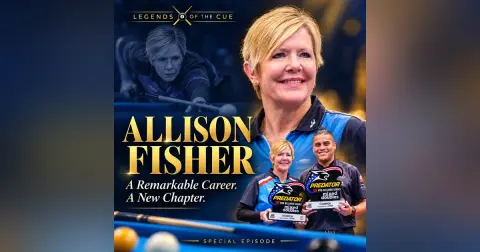
Key Takeaways
- Cue sports legend Allison Fisher announced her Parkinson's disease diagnosis, which she received in July 2025.
- Fisher has officially retired from competitive pool play due to the physical challenges and symptoms of the disease, concluding a legendary four-decade career.
- Despite stepping away from competition, Fisher remains deeply involved in the sport through coaching, commentary, and co-hosting the Legends of the Cue podcast.
- Her final competitive appearance in Jacksonville proved to be an unforgettable farewell, highlighted by winning the Predator Pro Billiards Series Jax Mixed Doubles Open gold with Jesus Atencio and earning bronze in the women's World Nine Ball Championship.
- Fisher's partner, Dee, and her family provided vital emotional and medical support as she navigated the initial shock and acceptance of her diagnosis.
Allison Fisher shares a personal announcement: her Parkinson’s disease diagnosis and her decision to retire from competitive pool. In this special episode of Legends of the Cue, Allison joins fellow host Mike Gonzalez for an honest, emotional conversation about change, family, and her enduring love for the game.
Diagnosed in July 2025, Allison opens up about the symptoms that led her to seek answers, the shock of receiving the news, and the private challenges behind her absence from tournament play. She reflects on the grief of stepping away from competition after four decades and the support of her partner, Dee, her mother, and close friends as she begins a new chapter.
Then comes the story behind an unforgettable farewell. Allison revisits her final competitive event in Jacksonville, where she partnered with Jesus Atencio to win The Predator Pro Billiards Series Jax Mixed Doubles Open gold and earned bronze in the women’s World Nine Ball Championship. With most spectators unaware of her diagnosis, every match carried a significance they could not see. From a surprise arrival by Dee to the joy of standing on the podium, Allison reveals what those moments truly meant.
There is laughter here, too: friendships, fierce rivalries, and the shared experiences that make the billiards community feel like family.
Allison also discusses finding connection with others living with Parkinson’s, her hopes for raising awareness, and why teaching, commentary, and preserving cue sports history through this podcast remain central to her life.
Her competitive career has ended, but her involvement in pool continues with purpose, gratitude, and plenty of stories still to tell.
Listen as one of the sport’s greatest champions shares this news in her own words, thanks the fans and sponsors who have supported her, and looks ahead to what comes next, both within the game she loves and beyond the tournament arena.
Give Allison, Mark & Mike some feedback via Text.
Follow our show and/or leave a review/rating on:
Our website: https://www.legendsofthecue.com
Apple Podcasts: https://podcasts.apple.com/us/podcast/legends-of-the-cue/id1820520463
Spotify: https://open.spotify.com/show/4Za0IMh2SeNaWEGUHaVcy1
Music by Lyrium.
About
"Legends of the Cue" is a cue sports history podcast featuring interviews with Hall of Fame members, world champions, and influential figures from across the world of cue sports—including pocket billiards, snooker, and carom disciplines such as three-cushion billiards. We highlight the people, places, and moments that have shaped the game—celebrating iconic players, memorable events, historic venues, and the brands that helped define generations of play. With a focus on the positive spirit of the sport, our goal is to create a rich, engaging, and timeless archive of stories that fans can enjoy now and for years to come.
Co-hosted by WPA and BCA Hall of Fame member Allison Fisher and Mosconi Cup player and captain Mark Wilson, Legends of the Cue brings these stories to life—told in the voices of the game’s greatest figures.
Join Allison, Mark and Mike Gonzalez for “Legends of the Cu...
Frequently Asked Questions
Why did Allison Fisher retire from competitive pool?
Allison Fisher retired from competitive pool following her Parkinson's disease diagnosis in July 2025, which affected her physical control, stamina, and ability to compete at her expected high standards.
What was Allison Fisher's final tournament?
Allison Fisher's final competitive event was in Jacksonville, where she partnered with Jesus Atencio to win the Predator Pro Billiards Series Jax Mixed Doubles Open gold and claimed a bronze medal in the women's World Nine Ball Championship.
Is Allison Fisher still involved in cue sports?
Yes, while Fisher has retired from competitive play, she remains active in the billiards community through teaching, commentary, and co-hosting the Legends of the Cue podcast.
Mike Gonzalez
Welcome to another edition of Legends of the Cue and Allison Fisher. Today's episode will be a little bit different. It's personal and it's important. This will be Alli, our co-host, our friend, and one of the greatest champions Cue Sports has ever known, sharing something in her own words with the people who've supported her for decades. Alli, thank you for trusting us with this moment.
Allison Fisher
Well, thank you, Mike. It's never an easy thing to do when you're talking about yourself. But uh it's it's big news, and I think I want people to hear it from me because it is my story, part of my story, part of my story, not my story.
Mike Gonzalez
Allie, I'd like to start simply. Um, what do you want your fans to know coming straight from you?
Allison Fisher
Well, it's a big one and uh not an easy one to share, but uh the fact that I have Parkinson's disease, I got diagnosed in July of 2025. And um, you know, it's a it is a big deal, and I think this last year I've sort of been coming to terms with it. It's been very difficult, and uh, you know, you get diagnosed, and then it's like, whoa, what now? You know, what's the next step? So I think this last year I've been coming to terms with the disease, what it means to me, what it means to my family, what it means to my career. And uh yeah, it hasn't been an easy ride, I have to say.
Mike Gonzalez
So what does that mean in terms of uh playing going forward?
Allison Fisher
Well, sadly, it means that I have retired from competitive play. It doesn't mean I've retired from the game or the sport because I love that. It's been part of my life forever, you know, since I was seven years old as a little girl picking up a queue. Um, but it does mean that I've decided to retire from competitive play, which is the thing that I always loved. So that's been the hardest part for me.
Mike Gonzalez
Yeah. Well, thank you for saying it clearly, and I know how much your supporters will appreciate hearing it from you. Why now and why here?
Allison Fisher
Well, firstly, Legends of the Cue is a our little project, and uh it's something I'm really happy to be a part of, and it means obviously even more to me now, the fact that I've left the sport of competitive play, that I get to still be a part of the sport, still keep those stories going, um, the history of the game, and also I I really enjoy people's stories, hearing it from their mouths and their trials and tribulations and their successes, and you know, the joy that the game gives them from all walks of life, from all parts of the world, is really a joy to me and uh, you know, it gives everyone hope, I think.
Mike Gonzalez
Yeah. And in terms of the timing of why now?
Allison Fisher
Um because it is going to go public in the billiard world through billiards digest, I decided to do that article. It took me a long time, um, but I decided to let it out because I think it's time. I haven't been competing for a long time, and I think people have been wondering why I'm not on tour. And I think it's important just to be honest about it, and I think it's going to be a relief to me, actually, just that people know. And um, yeah, not easy, but the right thing to do.
Mike Gonzalez
Yeah, yeah. So let's just get back to Parkinson's as a condition for our listeners who may have loved ones that uh have this or or perhaps suffering from it themselves. When did you first notice something wasn't quite right?
Allison Fisher
Well, I know that people will know this through my not playing in tournaments, but I was having some arm issues, some achiness in my arms, and I thought, well, you know, there was no particular reason for that. But I was getting very stiff in the upper arms, it'd start one side and then both sides, and you know, and I would take ibuprofen for it and, you know, think it was a um just a muscle issue, like basitis, tendinitis, muscles, and that's what I was thinking. So I went to the doctor about it, and I did notice that I had a little tremor in my left hand. And the doctor said, Well, and I was thinking still, you know, muscle issue, I'm not able to compete, I'm hurting, can't get my arm in the right position. And so we kind of looked at it like that. So I went to physical therapy, did that for quite a while. Then I went to an orthopedic doctor, and they looked at my arm, and we did an MRI of my neck and my shoulder, and he was going to give me an injection, a cortisone injection in my neck. But then you and I got talking, and you mentioned a neurologist that you knew, a retired one, Dr. Robert Werren, and um you got me in touch with him, and I just talked with him about it, and he said, Well, you know, if there's a tremor there, there's a good chance it's neurological. So he said, Send me that disc of the neck that your doctor's wanting to put an injection in. And I did that, and he got the MRI of my neck, and nothing. He said, There's nothing wrong with your neck, don't do it. So he also got me in touch with a doctor, Dr. Fleming in Charlotte Neurology, and um I went for my first appointment, so that's how it all unfolded, really.
Mike Gonzalez
And so uh, as you mentioned, diagnosed about last July. What was your first reaction when you got that news?
Allison Fisher
Well, first of all, I went into the appointment with Dee, my partner, and um she's a physician assistant, so she's got medical background, and she was asking me questions on the way there. We, you know, she knew some of the things that were going on. And we arrived and we went in there, sat down, and Dr. Fleming came in with an assistant, somebody who's learning and student, and um we did some tests that they do the the finger touching, the tapping of the fingers, re reciting the months backwards, the walk down the hallway, and then they disappeared for not long and then they came back and they said, Um, we're pretty much certain you've got Parkinson's disease, and that was just devastating. I mean it was It wasn't like life altering. Excuse me. But in that moment it changed everything because Um Should have brought my tissues with me. Should have thought of that.
Mike Gonzalez
I've got some here, but I think you pass them through the screen, will you?
Allison Fisher
Uh Let me try, let me try this. It was really devastating, but I just sat there in shock actually initially. I didn't, you know, start crying or anything. I just sat in shock. And and then they said, What you're feeling, and of course one of the symptoms of Parkinson's is apathy. Which has carried me through my career, but I was obviously, you know, in that moment I was just I just said I'm shocked.
Mike Gonzalez
Yeah.
Allison Fisher
Um it's a lot to take in. And um and being one of those people to hold a lot of emotion in, I think, you know, I'm not w we walked out of the room once I got diagnosed and with Dee and we were checking out. And it was once we sort of the doors opened to leave the building, and I just wrote down then. And um And I just apologized. I said, I'm so sorry.
Mike Gonzalez
Well, there's certainly nothing to apologize for, but uh you know, now you're faced with uh not just digesting this and digesting it fairly quickly, but then you gotta go home and share it with family as well, don't you?
Allison Fisher
Yeah, well that's that the initial reaction was that and she said, Don't worry, no, we've got this and she's always been like that. So we went home and I you know, my first thing was my mum I went into the room, told her and broke down a course. My mum's very strong So she just held me and uh And then um the kids so Pearson came in and he said what's wrong and I just told him and he I don't think he really got it. He said, Well, how can you get over it? You know, and then that's the hard part that you can't So D took the kids upstairs and just explained everything medically and the diagnosis So that they would have a really good understanding of what was happening.
Mike Gonzalez
Yeah.
Allison Fisher
So that was the first thing really was everyone knew and that was the hard part was breaking the news and uh and then I think my mum is one of those people who she's very present. She's eighty-six now, and she's one of those people who just gets on with life type of thing, you know. Everyone who knows her knows that about her. She's very spirited and very positive. She's an amazing woman. And um and I think she was in a bit of denial in the beginning too, didn't really kind of grasp what was going on. Same for me. It was all new to me.
Mike Gonzalez
Yeah, sure.
Allison Fisher
You know, I'm a lot like my mum in that sense, being very present and not really thinking too deeply about what was happening. Obviously Dee knew, which was the hard part because medically she works in in dermatology, so she sees Parkinson's patients a lot doing what she does. She happens to see them. So she sees the progression of the disease at different age groups, you know, and I wasn't really thinking about those things. What you have to understand is I can feel sorry for myself for having it, but you've got to also feel for the person who's got to live with it too, who's your partner, or part of your group, your little family group, and they have to go through a lot and they have to hide a lot of stuff sometimes emotionally. So there's that side of it too, and I think this last year has been about looking at the full picture. It's been about mourning not playing. It's like it's grief, isn't it? It's you go through the grief, you all the stages. The stages of grief. You mourn that you're not what you once was, that you're not gonna play again. I mean it's listen, I could play, but I don't want to be less than I was.
Mike Gonzalez
Mm-hmm. Yeah.
Allison Fisher
Which I'll talk about in a bit. Um you're letting go of something and your ego as well. The ego's a part of that. So you have to learn to let go of things that you once you know was pre very prevalent in your life and easy to do, something that was very easy to do, it becomes more difficult. So you move into another chapter. But so that the this last year has been about that, really, the family, taking more quality time of my family, doing things that I love to do, um, finding new things that I love, hobbies, interests. This podcast, for example, is something that we love. So it's it's just diverting, diversifying into something new, really, and accepting that, the acceptance.
Mike Gonzalez
So after dealing with the news of the diagnosis, um did you play much subsequently?
Allison Fisher
Well, I did actually get out my queue again in August, and I think it was November, December. So in August I played in a WPBA event in Colorado, and that was the first time after diagnosis, so it was only a month after. And I ended up, I think I finished fourth in the tournament. I lost to um Margaret Feffelova and Pia Filler. But during the tournament, you know, obviously I could feel my tremor, so it was a very difficult time because I knew what was going on, nobody else knew. Um, my mum was with me, of course. She yeah, I drag around to a lot of events, and um, yeah, that was very tough. You know, I was in tears. I think after I lost one of the matches, I w I left the building and I was very tearful. But there was one point during a match I felt very emotional. Um, but couldn't really let it out, but it was very tough because I feel the shake going on and I know that I'm not in control of what I used to be in control of. You know, I used to be in control of everything, my mind, my body, and so that was a really new experience for me, and I wasn't quite ready for that. Not that you probably ever get ready for it, but you know, initially. And then I played in a tournament, the Dr. Paul tournament, the end of year, WPBA National Championship. And I went in there, I don't know why I did, but I went in there with a a cue and I had a little thing on the end, and I don't know why I did that, just felt right at the time. Maybe it was I felt like it was helping things. So I wasn't quite used to that, but I played and I lost to Brianna Miller. I had so many chances, and it was like my mentally I beat myself up. I sat there feeling sorry for myself. I wasn't competing, I was sitting there feeling sorry for myself. I had a terrible attitude. I was shaking, I was not in the right mindset to compete. I probably shouldn't have been there with that mindset. And then I lost another match, and it was just I turned actually I turned around to my friends who were great supporters, Mary and Kevin and their friends. Um and I just turned around to my mum and I said, I'm not gonna play anymore, this is it, this is the last one for me because I can't do it. You know, I can't do it like I used to, so I don't want to do it. So I felt like that was the last one, but then the World Championships was around the corner and I just thought to myself, I would really like to play in one more world championships. I really would. I'd like to just do that and the Predator Pro Series had a World Nine Ball Championships in Jacksonville and a mixed doubles. I thought, hmm. Maybe I could do both. And um and then I was thinking about I I was inundated with doubles requests, it's quite funny because I thought about Jesus, Jesus Atencio, and I thought he lives in Charlotte. I've we've never played, it was ironic. I met Jesus in Puerto Rico and he always seemed a bit intimidating because he had his man bun and you know and I thought, I wonder what he's like. But he came over to me in in uh Puerto Rico the year before or two years before even. I thought he's a really nice guy, what a lovely person. Anyway, he came to my mind and I thought, I wonder what he'd be like to partner with. He just seems like so nice, and you know. So I thought, I'm gonna give I think I texted him. I said, Hey, you know, are you going to Jacksonville? Would you like to partner up in doubles? And he he was absolutely, yeah, so he was immediate, yes. Right after that, Jason Shaw contacted me. I said, Sorry, I'm taken. I had a few different ones. I had some overseas players, I can't remember exactly who was, but I had about three or four. And um and I was kind of smiling to myself, thinking, Well, you know, I've picked a partner here and this is gonna be fun. Yeah. No idea what we're gonna do, but let's do it. Yeah. And so that's how that happened.
Mike Gonzalez
Yeah. Yeah. And so off you go to Jacksonville and and while there, uh convenient enough uh because you're close to the mail clinic in Jacksonville, which is where Dr. Warren was chief of neurology uh on that campus. And uh uh you were then uh had another appointment arranged to sort of get a confirmatory diagnosis while you're there. So just take us through what you experienced there. You know, and we got together for dinner with your mom and Doc Warren, and and then next morning you've got to you've gotta rush off and and uh and and go to May, and then eventually get back to the venue and start competing.
Allison Fisher
So we drove down, my mum and me drove down to Jacksonville. It was about a six-hour trip, I think it is. And we met with you, didn't we? We met with you and your wife and Dr. Warren and his wife.
Mike Gonzalez
Yeah, I mean I just happened to be down there for a little treatment myself.
Allison Fisher
So Yeah, I know. And it's we're all falling apart, aren't we? But um so we went to dinner, which was lovely to meet him, first of all. But during that dinner we took, you know, talked to obviously about my symptoms and everything, and then he suggested medication, I think, but he said, talk to Dr. Wheatie tomorrow. Uiti, I think is is how you pronounce it, Uwe. And so the next morning I thought I had my appointment all booked up. So I go there and they said we don't have you on the agenda. No, I have a I have a match at two o'clock. My first match with Jesus was at two. And so I go to the Mayo at 9.30 a morning, I think the appointment was scheduled for. And I said, Well, I did have an appointment, I don't know what happened here. And then they we did the insurance thing, then I left, they said no, there's no appointment. So I left, and then I called Dr. Ware and I said, It doesn't seem they've got my appointment. So he called the Mayo clinic, I think got involved. I went back, there was still an issue, I left again. Then finally, Dr. Wheaties's assistant called me and said, We're gonna see you right now. So I went back. Luckily, I was ten minutes, five minutes away. Well, it's a big kerfuffle that morning, but by the time I got in, he spent a good hour with me and I'm watching the clock. He's being so kind to me, and you know, we're talking through my diagnosis and confirming it and issues and medication and stuff, and I'm looking at my watch thinking I've got to get out of here because I've got my first match coming up.
Mike Gonzalez
Yeah.
Allison Fisher
Well, I floored it out of there. We decided I'm gonna start medication, but I didn't start medication until January. It was after the tournament. So I floored it back to the hotel, literally, changed, and then went straight down to my doubles match. That was my first match, was my doubles match with Jesus. So I get to the table and you were there, weren't you? I think we came to watch. Yeah. And I was a bit flabbergasted. It's pretty getting my cues out, and yeah, and I know, and we'd never played together. And so doubles is a different animal, and I hadn't played in a while, and Jesus had no idea what was going on with me, and and I never shared that with him actually. So there we are playing the first match, and I don't know if you remember the we I think we won the first set, but at the end of the second set, I took too long on a shot and got called a time foul, and I was just shooting a nine ball. And the shot clock counted down, and I I don't know why I snoozed it. And anyway, it was a foul, and I think that gave up the second set. I never felt like we were going to lose the third set, but it was just silly on my part. So I felt comfortable with Asus and the way we were playing together. But again, it was 2 1. You obviously don't want to go to shootouts in these matches. And then after that, I played, I think, a singles and I lost my singles first round um in a shootout, I believe. So that was very disappointing because I felt like by then I was actually playing a little bit better, but I still lost, which is something you can do in those short races. It's quite easy to do because it's only races to four. So anyway, that was that. So that was the first day of play. And then we go into more play and more play and more play. So we progress further and further. And my gosh, Hadus and me, we just caught a gear. It was just really fun.
Mike Gonzalez
Yeah.
Allison Fisher
Playing with him. He was like the perfect partner for me because we were just he's very light hearted, he's very intense. He should be intensio, not attensio.
Mike Gonzalez
As most Latins are.
Allison Fisher
Yeah. Yeah. But you I could relax with him too at the same time. You know, and he's what an incredible player. I just saw how good he was as well. And there were some fantastic moments in those matches that I'll never forget. You know, they were really unbelievable. So as we go through that tournament, we beat Aloysius, yeah, and his partner Sylviana Lou, and you know, he's on fire at that point. You know, we saw how good he ended last year or played through the year. Um, great player. And plus I was familiar with Aloysius from teaching in Singapore for three months, years ago, several years ago. So I was very aware of him. Um, and then we had uh the fillers, the killer fillers, Pierre and Joshua. Um we played, who else we played? A Chinese Anu and her partner, they were fantastic in the quarterfinals. Anyway, we got some great matches in there, terrific opponents, and then we came to the semi-finals, and we played Jason and Savannah. And Jason, and I'm sort of in my seat thinking, well, he he asked after I had partnered with Azus, he contacted me to partner with me, and here we are on opposite sides.
Mike Gonzalez
Yeah.
Allison Fisher
But that was an interesting match because I came off of a five-hour match with Lusar Saar in a women's event, and I looked up at Hey Zeus and I said, When do we start playing? He looked at his watch and I said, It's 7 30, isn't it? He went, Yeah. I said, I'll just go to the restroom, eat half a banana or whatever, come back, and we got on and played. We we lost the first set, I think it was close. Anyway, I gotta tell the story. He went to the bathroom, I went to the bathroom, and Jason was singing something. I'm I'm not even gonna say it all out loud, but he was singing something to himself that got Jesus fired up. It was a Moscone cup tune, that's all I'll say.
Mike Gonzalez
Okay.
Allison Fisher
Anyway, it got Jesus fired up, and I could see that. And in that second set, I'll never forget Jesus had this ten ball down the rail, and the cue balls on the back the top rail, ten balls past the side pocket. Really tough cut. And he got down, he did his warm, you know, looking at it, having a look at it, got down, and he shot that ten and he fired it into the corner pocket, and he and he just said, That's how you do it, something like that, because he was so fired up. And I just jumped out my chair and was hugging him because it was like one set each. And we come we'd both come with some really good shots in that second set. I played a long temble bank, I think, just lots of things going on. And um the third set, in the first game, Jason made an sc he'd scratched, made an error, and it's like I could see the blood drain out of him. I watched it and I could I said to Jesus, I sat in the chair and I said, We've got them. Just keep doing what we're doing and uh keep the focus. And I said, We've got them now. And sure enough, we did. And I'll never forget Jesus finished with a 110 combo. It wasn't an easy combo. And I jumped out my chair, and I tell you what, that was the most fun I've had in a tournament ever, probably. Because you have a partner. Yeah, you're doing it together, it's teamwork, and I wasn't used to that. And I've partnered Shane before, and I've partnered Mika a long time ago, and um but this was just the dynamic, the timing. We were just a perfect pair in the right time in the right moment. And then we played um Denny Chow in the final great player with her partner, and um we ended up winning that match, and I'll never forget some of the jump shots Jesus played in that were just incredible. I couldn't believe it. I he would point to something like he's gonna jump an inch or something and catch the top of the ball, and I'm like, okay then you go ahead.
Mike Gonzalez
Good luck with that.
Allison Fisher
Yeah, and he did he would do it, and I'm like, blown away, absolutely blown away. He's the best jumper I've ever seen. Got us out of jail many times.
Mike Gonzalez
Yeah.
Allison Fisher
But but also I just want to say that during that tournament, so I was still in the singles whilst playing doubles, and they're ever such long days. We would start at nine in the morning and finish at eleven at night, and then I would go to the luckily there was a place in that hotel, I'd have some salmon and vegetables every night. It you know, it had a little marketplace where you could every night would be my dinner at eleven o'clock, and then I'd go to bed, try and get a good night's sleep, and then onward the next day. But you'd just push through, but Dee contacted me. I contacted Dee the morning I'd I was coming through the women's bracket, but it's a lot of pool to play, especially, you know, with my diagnosis and you know, it just wasn't easy. I wasn't the fittest I've ever been either. You have to be pretty fit to play those tournaments because of the matches, the races. And um so I was scheduled to play in the women's, which is a long way back if you lose in the first round, and I said to D I think I might pull out of the women's the world championships and just focus on the doubles because I'm having fun in that and I feel like I could put more energy into that. And then she said to me, No. She said, You know, and I know that this is probably your last event. So you should go out, give it your everything, enjoy it, and make the most of every moment. And um she said, And by the way, I'm going hunting, so you won't be able to contact me. And I said, Alright, okay. So I went back down and I was playing Lorry John, I think, and I can't remember what stage, it was probably the 32 stage or whatever. And I thought, okay, I'll give it my all. So I played the first set. And I was playing well, I was in the right mindset. And then and as I walked out the door, Dee walked in. So she had flown down secretly to Jacksonville and I burst into tears.
Mike Gonzalez
The hunting diversion.
Allison Fisher
The hunting diversion. I fell for it as well. I did, I burst into I got very emotional, went, took my break, came back, and I was just over the moon, really, that she was there. And so it just gave me a new energy, you know, and something to fight for. You know, the fact that she was there alongside me. And so we just did it game by game. But pri prior to that, I will say this. I was in the match arena on one of my matches, maybe my second match in the losers bracket, second or third, playing the girl from Norway, who's a very nice person that I've talked to before at Amsterdam, no, in New York at one of the clubs there. And um anyway, I had such a bad attitude. I sunk back into that bad attitude of I don't want I didn't want to be on the TV table. I did not want to be exposed early in the tournament. I know you have to go there later in the tournament, there's no choice. But I wanted to be in the background, I did not and I'm like that sometimes early in the tournament. I don't want to be on the TV table, especially with what I was going through though, because I was not having a good moment at that point. I really didn't care. I mean, I was making mistakes, I wasn't focused, I wasn't really caring. And then at the last minutes in that match, I thought, come on, and I just pulled myself up and made that ball to win the game, disgusted really with my attitude, disgusted with the way I played. And I knew I needed to do something, you know, because that's just not on. And but I really didn't want to be out there, and I'm sure the commentators were having a hard time in that match because they're probably thinking, oh, she's like not really there, or not, you know, any good anymore. Probably, and probably people watching thought that too. And I did too. Doesn't help if you're thinking that as well.
Mike Gonzalez
Sure, yeah.
Allison Fisher
But obviously you've got to change your attitude and at least fight, and that's where you go back to ball by ball. But so I came out of there, went into another match, probably played a bit better in that, and the doubles was picking me up a little bit too. And then as I said, I got into the Laurie John match, played well in that. Then I was gonna play Sophia Maas to get into the final sixteen. I knew she's a tough little player, she's a junior, but I know Sophia really well, and I just I just decided in that match I'm gonna play really smart, not take any silly chances, just play super smart, which is what I did, and I won that match. And then you get into the final sixteen, and it's a redraw that they take the loser's bracket and they randomly draw them into the winners' bracket. And I saw Kelly sitting with my mum, I think, at one point. Because we're very good friends, Kelly and me. We're like sisters, but obviously on the table we want to win. And she didn't say anything to me, but she knew that we'd drawn each other. I didn't know. Because and she didn't tell me because I think I had another doubles match to play, and so I didn't want to think about that anyway. Anyway, the end of the night, I go up to my room and I've found obviously find out Kelly and me have to play in the final sixteen. And I know Kelly feels like she can win the world championships in the and I'm not thinking about winning the world championships, but she's playing really well, and obviously getting some great results, and one of the top players at that moment. Well, we play our match, and it was in the morning, and I think she won the first set, I won the next set, I think I won the third set, I think she won the fourth set, and it went to the final set. But I'm f feeling f alright, you know, I'm feeling like I'm playing alright, I feel alright. I stayed present, she missed a couple of balls, I missed a couple of balls. But I always watch people, you know, I watch and I can sense when they're under a bit of pressure or their body language, or and I know Kelly very, very well. And uh we I know she's watching me, and I know I'm watching her. So it's a fun mental game, but it's enjoyable. That that side of the sport's really enjoyable. We're all watching each other at all times, really, is what the case is. And um so anyway, I ended up winning the match, and she tells me the story. So after the match, she's always a great and very generous person in defeat, the same as I am at Shake of Hands and wish you well. But you know, we're all gutted when we lose, some more times than others. So she goes, she she wears these pointy shoes, and she goes up to her room, and she's so mad at losing that she kicks a box and a box sticks to her foot. So she's walking around with this box on her foot, and I can and she said that broke the ice. She said, That just made me laugh. She's so mad she kicks it so hard that this box is stuck to her pointy shoe, and that cracked me up. But you know, she's anyway, that these are the things that we do behind closed doors that people don't see, but they're funny.
Mike Gonzalez
Yeah.
Allison Fisher
But anyway, so I beat her, and obviously I'm going through the tournament. I played Lu Sarsar next round. I think he was a great player, she's a multi-world champion. In fact, I watched her win her first world championships when she was 16 years old, she beat Karen Korr in the final. She came out as a 16-year-old and ran a six-pack right off the bat. And I'm like, whoa, this girl can play, and she's 16.
Mike Gonzalez
Yeah.
Allison Fisher
We better all watch out. Anyway, she's a three-time world champion, I think. She ended up winning it a few more times. And I'm playing her. Anyway, somehow I ended up beating her. So now I'm into the semi-final. I couldn't believe it. And I see Kelly that night. She'd had a little tipple, obviously. She was out of the tournament. A couple of tipples.
Mike Gonzalez
She did remember you remember. A couple of little tipples.
Allison Fisher
But she she was so lovely. She came I I was just there wanting to get my salmon and go to bed ready for the next day. Because I was exhausted.
Mike Gonzalez
Yeah.
Allison Fisher
It was exhausting. And so she's she's just so generous, you know. She just uh was saying, You played so well, you know, you're the greatest player. She said, With everything that you're going through to still come out and do that was just incredible, and she was so lovely. And I'm saying, Kelly, I just want to go to bed Tell me tomorrow. No. No, but she's lovely, and she's so, like I said, a great friend and and a great supporter, and it's wonderful to have people like that in your life. And anyway, she's amazing and still doing wonderful things in the sport. But anyway, so I went to bed and next day I played so so and that night we'd won doubles. Yeah. We won the doubles. So I went to bed absolutely. We won the doubles, elated, couldn't be any happier, really. It was I was over the moon. I had that trophy in the room, I woke up to it the next day and was over the moon. Go out to the semi-finals and just there was I just had no gas left in the tank. I feel gutted really because I felt like I felt like the queue didn't belong to me. You know, it's just one of those matches where you don't feel comfortable with your positional play, the table didn't nothing felt right. And um I'm playing a great player, So. So Socio from Korea, she's a great player. And um she ended up winning the world championships actually. She beat Christina Takac in a great final, it went to a shootout, it was amazing. But I was a bit unhappy with that performance. But by God, when the medal presentation came at the end, to stand on the podium with the gold medal with Jesus was one thing in the doubles. That was a magical moment. But then to walk out winning a bronze medal with everything that was going on in the background and knowing that that was my last event, I was so proud just to get up there.
Mike Gonzalez
And you know, the people in the crowd, your followers, your fans, your friends, most of whom not knowing the circumstances. Awesome.
Allison Fisher
Yeah, it was it was really incredible. And I never said anything. The only people who knew, obviously, was Kelly. Um only really not many people at all knew. It's been very private. Close friends. Um Yeah, it was amazing just standing there because nobody after every interview, they they give little interviews, Predator, after each match. And it was I was struggling to hold it together. I was kind of suggesting it was probably, you know, I'm not sure how much longer I'm gonna be doing this kind of thing. I was sort of letting the cat out of the bag a bit, but not really. And it I got emotional in a couple of the interviews. I was struggling to hold it in because I knew what was going on, but nobody else did. And then one of the people behind the scenes, I said, I don't know where I'm getting this from, where it's all coming from. She said, Oh, it's just muscle memory, and I'm like, you know, people say that it is a little bit of muscle memory, but gosh, with everything that was going on, it was like they had no idea.
Mike Gonzalez
Yeah. Wait, was there a more satisfying moment for you in your recent competitive history than what you experienced in Jacksonville?
Allison Fisher
No. I haven't felt like that in years, to be honest with you. Um because I've you've got to realise I've been competing for four decades. Every decade has had its own thing. And I obviously I had a prime. I had a point in time when I would play and I would probably be the favourite at tournaments and I've always been dangerous throughout the time that I've played. But I was very dominant at a certain period of time. And then as you get older, as you know, you get life experiences, things that these young players haven't even had in their lives yet, relationships, deaths, you have to things going on in your in your life that chip away. And and also you want to pay attention to different parts of your life. You know, at one point you're dedicated to one thing, and you really have to be dedicated to the sport, I think, to travel as much as you have to, to put aside moments, you know, to dedicate yourself to it. It is it is literally an eat, breathe and sleep sport. You have to live to be a better player every day. And um as you get older that becomes less naturally, it has to be. That can't be everything that you do in your life. And so you have to put focus and energy in other parts of your life and for for good reason, you know, because they're just as rewarding.
Mike Gonzalez
Yeah.
Allison Fisher
So yeah, so that's kind of where it's that's why it was special for me, because I knew all my focuses were different.
Mike Gonzalez
Yeah, yeah. And I suppose uh if that was your swan song, pretty special way to go out.
Allison Fisher
And that's what I thought about. I thought it's good to sort of it was a drop the mic moment.
Mike Gonzalez
Yeah, it really was.
Allison Fisher
It was like, well, here I am, I'm still on the podium at what was it, fifty-seven years old at that point. And um that's amazing to be there at that at that standard with the players now and to win the doubles was just really, really special.
Mike Gonzalez
Yeah, yeah. So if we reflect back on how we opened, uh the second thing you shared with your fans was the fact that you are retired. So tell us a little bit about uh when you say retired, what do you want people to understand about that word?
Allison Fisher
It doesn't mean I'm retired from the sport. So things I enjoy, the podcast is a really big priority in my life, what we do here. I really enjoy that. Preserving the poor history of people's lives. Um I really enjoy teaching, that's another major thing that I enjoy commentating, so be involved in that. Um just my life is still involved in poor. You know, I haven't left it completely, and I probably never will, as long as I can, you know, as long as I have the ability to do what I do, I'll always be around it because it's given me so much. You know, the sport really gives you more than you'll ever know.
Mike Gonzalez
Yeah.
Allison Fisher
So I really enjoy I've enjoyed the people and the places and the events, everything about it. So still involved. And another thing I want to say is another hard thing was to approach my sponsors. I have sponsors that you know I'm supposed to compete for, and they have been amazing in support. Once they knew what was going on, which some of them have been just recently. Camue, Brunswick, and Fort Worth Billiards have been amazing.
Mike Gonzalez
Yeah. Yeah. So back to uh back to what you're dealing with then. What have you learned about Parkinson's and what would you want people to know about the condition, living with Parkinson's or supporting someone who's been diagnosed with this condition?
Allison Fisher
Well, Parkinson's is a neurological disease. So it's in the brain. It affects your central nervous system, it affects movement. Everyone's at different stages, and some some people are going to get affected more than others. Some people have it very bad, some people it might be minor. Um, but it's something where the brain production of dopamine goes down, which controls obviously motor and non-motor stuff that goes on. And for me, at the moment, it's a tremor in my left hand, and the natural swing in my left arm is not there as it once was. And it is progressive, it gets worse. There isn't a cure at the moment. There are trials that are going on, some are in stage three, which is a good thing. Um, so that's what I'm hoping for, that there'll either be trials or some cure one day, obviously. Um that's what anyone hopes for. But it's I'm gonna read some of the stuff the slowness of movement, rest in tremors, limb stiffness, trouble with balance, these are things that happen in the motor skills. Non motor, for some people, can be elusive. Delusions, anxiety, depression, loss of mental clarity, constipation, bladder control. So these are some of the symptoms of Parkinson's, well, these symptoms of Parkinson's. So it's not a fun journey. Um and some of the things, the reason maybe I didn't diagnose myself a little bit sooner too, was they cross over into menopause.
Mike Gonzalez
Okay.
Allison Fisher
So that's something to think about too. When you think, oh, I've got these menopausal symptoms, that that's could be the early signs of something else. So that was where I was having a bit of a problem thinking, Oh, this oh, this feels like menopause, but it wasn't. And maybe it was menopause as well.
Mike Gonzalez
Yeah.
Allison Fisher
So I was getting a double whammy there, basically.
Mike Gonzalez
Well, yeah. Uh but you know, ad advice to your listeners, I guess, would be listen to your body and do something about it.
Allison Fisher
Yeah, the tremor for me was a big one. The arm movement, my left side wasn't moving like a natural swing, it was staying still. Um, the gait changes in the way you walk. I don't think mine's changed a lot, it might have changed a bit though. So just things that you're aware of. Mental clarity, of course, but again, as you age, that isn't always there anyway. When I say, Oh, I forgot what I was gonna say, loads of people do that you know, as you get older. So again, it's hard to is it this or is it that?
Mike Gonzalez
Yeah. Yeah.
Allison Fisher
Um mood, you know, like it says, depression, apathy, things like that, you know, again, menopause.
Mike Gonzalez
Yeah, yeah.
Allison Fisher
It's like, wow, it does cross over, so it's hard. I've probably had it longer than I really realized I had it.
Mike Gonzalez
Or in in in dealing with it, do you feel some because of, you know, you're a very public person in the Q Sports world, uh, do you feel some responsibility to do something uh relative to Parkinson's?
Allison Fisher
Aaron Powell Well, something that's helped me, and I'm sure you won't mind me saying, but there there's a lady called Mary Rakin, she was Mary Raken on our tour, Mary Raken Tam now. She married Daniel Tam. Lovely, lovely couple. And I was going through my Facebook one day and I noticed that Daniel had said I've got Parkinson's, and I was like, whoa. But he'd hid it for six years, he didn't come out and say it. And I reached out to him immediately and I said, Daniel, I just want you to know you're not alone. I've been diagnosed with it too. And that just opened the floodgates of being able to talk to somebody, and we constantly now are in contact with what it's meant to us, how it's affecting our lives, we pick each other up, hey, how are you doing? Send pictures to each other of holidays or family. And we really express ourselves and how we're really feeling that sometimes you can't say to just anybody because they don't really understand it. So somebody c try and connect with somebody who's maybe going through the same things as you because that really means a lot that you can just be honest if you're having a bad day. Another thing that comes with Parkinson's is anxiety. I was never really an anxious person, but now I feel a bit more anxious, I'm noticing it more. So, you know, awareness is a big thing, but also reaching out into your community of people because I think the more I talk about this and the more it gets out there, people are either gonna get diagnosed or they find their community. You can go to a YMCA and go to what they call rock steady boxing classes for coordination because you need balance and coordination, you need to work on that with Parkinson's. You need to work out, you know, something I need to do more of. You need to work out your body to change the neurological pathways in your brain. Just stay as fit and as active as long as you can. So these are big things that you learn, and you learn that from you don't want to bury your head in sand. You really need to reach out on the internet to the community. The Parkinson's Foundation and the Michael J. Fox Foundation are the two big ones for Parkinson's that are legit. One thing that Dr. Uiti at the Mayo Clinic said, he said, in your age group, oh actually Dr. Fleming said it to me in Charlotte, in your age group, you'll be looking for that secret cure. You'll be looking on the internet, what can I do? But he said, those two foundations are the legitimate ones who are going to be honest and give you, let you know when trials are on, give you all the information that you need. Just reach out to those two organizations. So important to know that because we all think, oh, stem cell therapy, if I do this or what and I was about to do that, spend a load of money doing some stem cell stuff, and Dr. Warren said, don't do it. You're just spending a lot of money for no cure. You know, so just got to wait for those trials to come along and keep pushing and raise money for the awareness of Parkinson's. It affects over a million people in the US alone. And so that's a lot of people getting it. And they don't know the origins. Some of it is genetic. They say environmental. What does that mean? They say the insecticides, herbicides, pesticides, but nobody knows for sure what it is.
Mike Gonzalez
Yeah. Yeah.
Allison Fisher
So Yeah.
Mike Gonzalez
Well, uh I suspect a lot of good is gonna come from you sharing your story today.
Allison Fisher
Well, thank you, and I hope so. And I I intend to do some things on my social media page, you know, towards the awareness side of it. And uh, you know, I'll just talk about what's going on, what I've gone through. I'm gonna get Daniel on it with me so we can share our stories. And uh, you know, hopefully it helps a lot of people. But if not, you know just talking about Parkinson's, but everything else that goes on. One thing my mum that I admire about my mum is she's very aware of her body. She's many years ago she had a quadruple bypass. I think it was in her 70s, but she knew something was wrong. She wasn't getting diagnosed by the heart doctors. She did all these tests and they said, You're fine, you're fine. And then she said, I'm not fine. And then one young doctor listened to her and asked her more questions, and then they did um an angiogram, I think it was, and they found that she was 99% blocked in all her arteries. So, you know, but it was through her persistence. So listen to your body because it will tell you what's going on.
Mike Gonzalez
Yeah.
Allison Fisher
And sometimes you have to have second opinions on things, because sometimes doctors can't di pinpoint diagnosis because they're bre very broad, a regular doctor. You know, the doctor says, yeah, that could be neurological to shake. The tremor is definitely a neurological thing. You think it's a trap nerve, you think it could be a muscle thing, but it's not. It's a neurological thing. So pay attention.
Mike Gonzalez
Yeah. Yeah. Well, partner, uh, thank you. Uh thank you for trusting me to do this with you. We love you. Of course, Mark and I uh are privileged to share our podcast journey with you, and I hope we can do this for a long, long time together. I'll leave it uh to you to share the final word.
Allison Fisher
Well, thank you, Mike. I've firstly about the podcast. I love it. I love what we do, I love you as a friend, and obviously Mark as well. Um, so that's really it's healing for me, I think, doing it too. It's it's still being involved in the billiard billiard world, and I really enjoy the fun of it and uh and the seriousness of it too, because obviously there's some sentimental stories out there too that people have told us. So we're learning by the human experience, so that's something I really enjoy. Um, I want to thank everyone that's followed me in my career and my fans because the energy that you get from people is something that you can't buy, you can't change, you know, that just is uplifting. It means so much to the sponsors, to the supporters, to the people who move the sport forward. It's been a real privilege for me to perform my God-given talent to the world and show it to our community.
Mike Gonzalez
Thank you for sharing.
Allison Fisher
Thank you. Thank you for listening to another episode of Legends of the Cue. If you like what you hear, wherever you listen to your podcast, including Apple and Spotify, please follow, subscribe, and spread the word. Give our podcast a five-star rating and share your thoughts. Visit our website and support our Paul History project. Until our next golden break with more Legends of the Queue, so long, everybody.
Pool Player
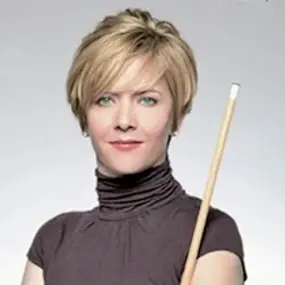
In cue sports, greatness usually comes in one language: the discipline of repetition, the quiet courage to keep showing up, and the ability to perform when everything is on the line. Allison Fisher, MBE speaks that language fluently, and has for decades, on two continents, across two different games. Known worldwide as “The Duchess of Doom,” Fisher is more than one of the most decorated champions in history; she is a standard of professionalism and composure, the rare athlete whose excellence has been sustained long enough to become part of the sport’s cultural DNA.
As co-host of "Legends of the Cue", Fisher brings what most interviewers can’t: lived experience at the highest level, paired with the emotional intelligence to draw out the stories behind the trophies. The podcast’s mission is to preserve pool’s heritage and elevate its best voices, and Fisher is uniquely suited to that work, because she has been a central figure in modern cue-sport history both as a competitor and as a respected ambassador for the game.
Roots: England, family, and the first spark
Born in Cheshunt, Hertfordshire, just north of London, Allison’s early life was shaped by movement and adaptation—by age four her family relocated to Thames Ditton, Surrey, and at eleven they moved again to Peacehaven, East Sussex, where much of her youth unfolded. Her earliest love of cue sports began not in a formal academy but in the everyday magic of discovery: watching "Pot Black" on television with her father and feeling something click. That fascination evolved in… Read More