

 Apple Podcasts
 Spotify
 Chris Melling - Part 2 (Becoming a World Champion)
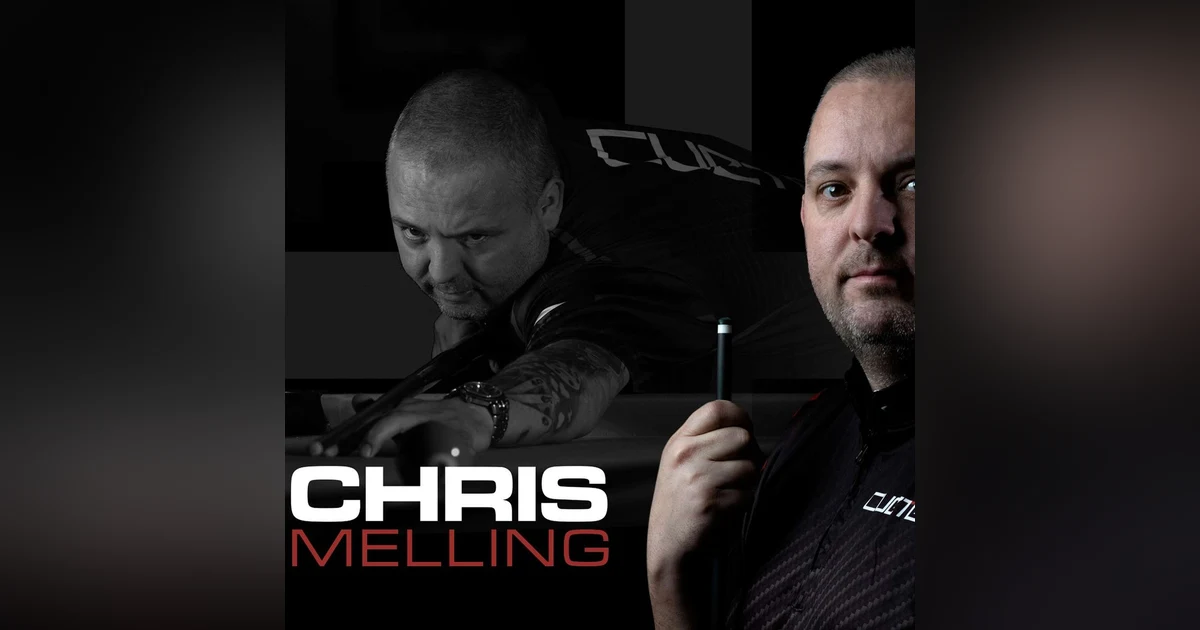

Chris Melling had the talent. Now he had to prove he could beat the best. In Part Two of our Legends of the Cue conversation, Chris takes us inside his rise from promising young professional to one of the greatest English eight-ball players of his generation—and shares plenty of unforgettable stories from life on the road along the way. We begin with Chris’s longtime friendship with Darren Appleton. The two future champions traveled, practiced and competed together as young players, and Chris...
Key Takeaways
- Chris Melling shares colorful and humorous road stories from his early career, including traveling, practicing, and playing pranks alongside fellow cue sports champion Darren Appleton.
- Melling breaks down the core technical and equipment differences between English eight-ball and American pool, highlighting the tighter pockets, smaller balls, and dramatic cue ball behavior on bar tables.
- Reflecting on winning his first WEPF World Eightball Championship in 2001 against Rob McKenna, Melling discusses the emotional breakthrough and the importance of shifting from overconfidence to disciplined match-by-match focus.
- In an exceptionally candid moment, Melling opens up about his personal struggles with depression and grief following a wave of devastating losses in his family and friend circle, emphasizing the critical importance of seeking professional mental health support.
- By rewatching historic career highlights—such as his world championship victories—Melling actively generates positive energy to help manage his mental health and stay grounded in his achievements.
Chris Melling had the talent. Now he had to prove he could beat the best.
In Part Two of our Legends of the Cue conversation, Chris takes us inside his rise from promising young professional to one of the greatest English eight-ball players of his generation—and shares plenty of unforgettable stories from life on the road along the way.
We begin with Chris’s longtime friendship with Darren Appleton. The two future champions traveled, practiced and competed together as young players, and Chris recalls the pranks, road trips and outrageous moments that came with their close friendship. Some stories have to be heard to be believed.
Chris then explains what it really meant to be a professional English pool player in that era: the prize money, exhibitions, sponsorships, after-hours gambling and the relentless competition against players such as Mick Hill, Darren Appleton, Jason Twist and Gareth Potts.
He also gives American pool fans a fascinating lesson in the differences between English eight-ball and American pool—from smaller balls and tighter pockets to the dramatically different behavior of the cue ball.
Then comes the breakthrough.
Chris looks back on defeating Rob McKenna 11–10 to capture the 2001 WEPF World Eightball Championship, including the emotional moment his mother joined him after the victory. He recalls defeating snooker legend Steve Davis in nine-ball and continuing to pursue professional snooker while simultaneously becoming one of pool’s dominant players.
By 2003, Melling was even better. He defeated Jason Twist 11–7 for his second World Eightball Championship and remembers producing a nearly flawless performance in one of the fastest world finals ever played.
World champion. World number one. And still looking for the next challenge.
Part Two captures Chris Melling as his extraordinary natural ability became championship greatness.
Give Allison, Mark & Mike some feedback via Text.
Follow our show and/or leave a review/rating on:
Our website: https://www.legendsofthecue.com
Apple Podcasts: https://podcasts.apple.com/us/podcast/legends-of-the-cue/id1820520463
Spotify: https://open.spotify.com/show/4Za0IMh2SeNaWEGUHaVcy1
Music by Lyrium.
About
"Legends of the Cue" is a cue sports history podcast featuring interviews with Hall of Fame members, world champions, and influential figures from across the world of cue sports—including pocket billiards, snooker, and carom disciplines such as three-cushion billiards. We highlight the people, places, and moments that have shaped the game—celebrating iconic players, memorable events, historic venues, and the brands that helped define generations of play. With a focus on the positive spirit of the sport, our goal is to create a rich, engaging, and timeless archive of stories that fans can enjoy now and for years to come.
Co-hosted by WPA and BCA Hall of Fame member Allison Fisher and Mosconi Cup player and captain Mark Wilson, Legends of the Cue brings these stories to life—told in the voices of the game’s greatest figures.
Join Allison, Mark and Mike Gonzalez for “Legends of the Cu...
Frequently Asked Questions
Who did Chris Melling defeat to win his first WEPF World Eightball Championship?
Chris Melling defeated Rob McKenna 11-10 to capture his first WEPF World Eightball Championship in 2001.
What are the main differences between English eight-ball and American pool?
English eight-ball features a smaller seven-foot table, tighter pockets, smaller colored balls (yellows and reds instead of solids and stripes), and a lighter cue ball that reacts differently on stun and stop shots.
How many World Eightball Championships has Chris Melling won?
Chris Melling won his second World Eightball Championship in 2003 by defeating Jason Twist 11-7, following his breakthrough victory in 2001.
What led Chris Melling to explore multiple cue sports disciplines?
Melling possessed exceptional natural talent and a love for the challenge of adapting his cue action and mental approach across snooker, English eight-ball, and American pool.
Mike Gonzalez
So your name came up a lot as we mentioned when we interviewed Darren. He was quite nice to you. Sometimes. But you've got to give us your craziest Darren Appleton story from Dina Kidd.
Allison Fisher
I know. I think I I think didn't you say this one at the Hall of Fame induction of Darren Appleton? I absolutely ruined him.
Chris Melling
You did, didn't you? So what happened? I could tell you a million stories about Darren.
Allison Fisher
I bet you we can have a few. We don't have to have one.
Chris Melling
So basically, I I first met Darren's dad when I was, I think I was 19. And he wasn't like anybody's normal dad. He was like effing and Jeffin, and didn't didn't mix his words at whatsoever. And I was like, well, this is different to my mum and dad. Because my mum and dad never swore in front of me. Never. But obviously his parents are completely different. So they used to look after me like their own son. I used to stay at Darren's for weeks at a time to practice with him. And we'd stay over at his house. I remember one particular day he did an exhibition up in the northeast of England. So he drove up and he had um a Ford Orion. It was a I think it was a B reg. So he was too tired to drive back. So he said to me, Will you drive back? So I said, Yeah, of course I will. Now, this is how good my memory is. I can remember every detail of Darren's where he used to live, his postcode, his date of birth, his middle name, everything. So I used to memorize all that. And then I was driving back from Northampton and he fell asleep. So I thought, I'll put my foot down a little bit. So I was I was going quite I can't really say how quick I was going, but I was going quite quick. And uh we ran out of petrol. So we pulled over the side of the road, he's woke up, he's going, as you know, Darren, can be a little bit feisty. So he's going mad with me, like, what do you think you're doing? Blah blah blah. I'm really sorry. So we had to get the recovery to pick us up, and we got the recovery truck, he took us back to his house. His dad stood at the door. Well, his dad were effing and blinding and calling us every n every name you can think of. So that was like my first introduction to Darren's dad. But the worst one he ever did to me was I will born you, it's disgusting.
Allison Fisher
So we might have to edit this one, we don't know yet. We might know you.
Chris Melling
So I'll be I'll be careful with my words. So me and Darren was in, I think it was Dubai, a place called Fajera playing the World Eight Ball Championships, and I was playing Roberto Gomez. Now, Darren just got beat, so I'm obviously over in Dubai, it's just so oh Fajera, it's just so warm. And uh Darren had got beat, and I'm sharing a room with Darren. So we used to play jokes on each other all the time from being kids. So I'd stay at his house and he'd put uh pins in my bed. So I'd get in bed and they'd just stick straight into me and I'd be jumping out of my skin. But as soon as you put your hand down to jump, because it's jumping in your leg, you're sticking in your leg. You put it in your hand then, and you jump in again, then it goes in your other hand, and it's like, how many do you put in this bed, by the way? Because I've no idea. So he used to do things like that. So we used to play jokes on each other. So um this particular day, Darren was playing, so I I went to the toilet in Darren's room, because we had a we had like a parting door between our bedrooms. So I went to the toilet and didn't flush it, just as a bit of a joke. So Darren's come back, unbeknown to me, Darren's lost. Well, Darren's like one of the worst losers in the world. He's like terrible. The first ten minutes said he's alright. So I've gone, I've gone out, I'm having some food. So I've come back into the room, and there's Darren's things out there, but I've got a message on my phone saying, Good luck, mate, hope you win. P.S. Just gone to Thailand. So I'm like, okay, because there was an event in Thailand. So I thought, okay, mate, thanks a lot. See you when I get there in a couple of days. So I've got in the shower, gone to get ready, puts my clothes on, puts my shoes on. Thought, hmm, that doesn't seem right. Something wrong there. So I'm like, what the hell's this? So I picked, I've picked the shoe up, and I obviously the black shoes and they're not cheap. So I'm like, what the hell's in that? So I don't know what it is. I popped my nose close to it, and then I realise what it is. So I'm like, oh my god. So I'm like, and it's the only pair of shoes I've got with me to play in. I've got flip-flops, I've got trainers, I've got sneakers, but I've only got one pair of shoes. No, no. So I've had to put the shoe, this is no way of a lie, I've had to put the shoe under the tap in the sink and get whatever I could out of it. Obviously, then my shoe, then my shoe is absolutely wet through. But I've got to play Roberto Gomez on television. So I'm walking round, I've walked round to go play Roberto, and all you can is because obviously my feet are wet through, but I had no choice to play. But that isn't that is the worst thing he did to me. That is terrible. Shame on you. Shame on you, dude. We always play jokes, and you know, like obviously what what he's gone through, you know, over the past few years is just it's amazing how he's he's got through it, to be fair. You know, obviously, I don't know if you're aware, but he was he was dead for 45 minutes. You know, and obviously to somebody I mean I play a bit of a joke with him when I see him, as he knows, and as most people know, we're we're good mates, close now as we used to be. Um, but you know, I I'd always say, Well done, or how you doing, and things like that. And um I always said to him, Um, how's things? and he'll say, Still breathing, and he just made it just makes a bit of a laugh about it. Um people ask me about him sometimes when I do exhibitions, and um say you know, he was dead for 45 minutes. How come he hasn't got brain damage? And I always turn around and I say, Well, you can only get brain damage once.
Allison Fisher
Yeah, exactly. I knew that was coming.
Chris Melling
I just have a bit of a joke with him, you know what I mean? But obviously I don't mean any harm.
Allison Fisher
Yeah, no.
Chris Melling
Oh, that's great.
Allison Fisher
It's good that you have that camaraderie and you know, we're able to laugh at things like that. Okay, so you started competing on the professional English eight ball circuit at about 15 or 16. What did professional really mean in that era?
Chris Melling
Well, like I said, they I think it was 17 when I joined it, but you had to finish in the top 64 to turn professional. So I ended up getting in the top 64 in my first season, which entitled me to be a professional. You didn't have to take it, but I did because I wanted to test myself against the best players. Again, the likes of Darren and Mick Hill and Twist and Brewer, Lee Kendall, people like that. So I I wanted to test myself against the best to see how good I could actually be. But I think the word these days, in my opinion, the word professional gets thrown about too much. So for me, a professional makes a living from playing pool, whether that be winning tournaments, doing exhibitions, endorsements, sponsorship, whatever that may be, that is a professional. There's a lot of people that run around saying they're professional when they're a car salesman or they're working a McDonald's or you know, so to me the word professional would be that you know, you that's the only thing you do.
Allison Fisher
Yeah. And how much how much money could a young player realistically make?
Chris Melling
Uh well I th back then. I think back then it w it wasn't much money for winning the professional pool series. So I think the winner was like two and a half thousand pounds of each one. I think there was there was roughly about I'd say about twenty events. So you'd have you'd have a tour weekend, which there would be six of them, and then you'd probably have about fourteen professional events that was all around the country. But then you'd have your exhibitions, you if you were lucky enough you'd get the sponsorship. So I think I think if you played like you could play the world championships, which is ten thousand for the winners potentially you could earn I'd say around thirty to forty thousand pounds, but you'd have to be one of the top players to do that.
Allison Fisher
So at these events, were there money matches or after hour games that form part of the education?
Chris Melling
Yeah, yeah, yeah. There was there was a lot um there was a lot of gambling after after the tournament finished. It wouldn't be for massive amounts of money, like not like obviously in America where they play for hundreds of thousands. And we we play for like maybe a couple of hundred or a couple of thousand sometime, depending who the player was. And but I I didn't really play that many money matches to be honest, I'd just play the tournaments, and then that I'd practice with Darren and Mick. We might play for £20 just to put an edge on the on the practice. Because obviously you the key that I always got told when I was younger, and I got told this by Stephen Endre, he always said play like it means nothing when it means everything, and play like it means everything when it means nothing. So obviously what he meant by that was obviously playing in practice out like it would be a world final. So don't go for the shots that you wouldn't go for and play the same way. Um and I always remember that, and that's how that's how I used to treat it.
Mike Gonzalez
Yeah, interesting. Uh Chris, uh, at this point in your young life, I think you had just played primarily snooker in English pool, right? English eight ball. So for our American or I would say American pool listeners, let's say, describe for them what English eight ball is all about, how that differs from some of the other games they may be familiar with.
Chris Melling
Yeah, so the the English eight ball compared to American eight ball would be a seven-foot bar table, let's say, uh, with smaller pockets on the English pool table, but smaller balls. So the solids would be, let's say, yellows, to be seven yellows instead of seven solids, and uh the stripes would be seven reds, and then the eight ball. So it's very similar game, but the pockets were a little bit tighter, but also the cue ball smaller, which is is kind of the main difference, really, because when you play a stun shot on a an English pool table or stop shot, it'll draw back because it's a lighter cue ball. So to be able to play certain shots at English pool, you'd have to be able to practice for some time to be able to get used to that. I mean, there was talk of Justin Bergman coming over or maybe Shane to play some English pool uh on the ultimate pool circuit, but I generally think they've struggled because they've never done it. Obviously, they're great players, you know, without a shadow of a doubt. And but when you try to do it on a a table on pockets with balls that you never used, it's a complete different game.
Mike Gonzalez
Yeah. And has size and weight of the cue ball relative to the other balls changed over the years?
Chris Melling
They're they're a lot smaller than the American pool balls. I think they're something like two and a quarter, I think they are.
Mike Gonzalez
I thought I thought Darren had mentioned that even with size being the same, sometimes depending on where you go, you might have a lighter ball, a lighter cue ball than the other balls. Yeah, yeah, yeah. But I didn't know if that was the same size or different sizes as well.
Chris Melling
Yeah, that's right. I mean, sometimes when you play a snooker, the light light ball can be lighter. Yeah, well originally the the cue ball used to have a little cage inside the cue ball. So when it came through with the coin up, it would recognise that that ball was a cue ball, it'd come back out. Where obviously if it was an object ball, it'd get stuck in the tray, let's say. Um but yeah, uh the tables were, you know, very similar to the American pool tables, uh the bar tables, but just smaller pockets. Yeah smaller balls and a smaller object ball. That was the main difference.
Mike Gonzalez
Well, I I know my co-hosts know this. I learned it from personal experience trying to play English eight ball, and I discovered that my American cue was no good. I needed that smaller tip.
Chris Melling
Yeah, it was uh the American pool cues are way too big, to be honest, to use on that on an English pool table. Yeah, yeah, or or playing snooker for that matter.
Allison Fisher
You mentioned uh obviously Darren and you and Mick Hill. Mick Hill never came over to play American pool, did he? Just stuck to Hayball and English pool. Is that right?
Chris Melling
Yeah, he he he did play a little bit. He played on the IPT back in I think was it 2006 when that was on or something? And uh he played on that and he qualified through and he did quite well to be honest. I think he ended up about twenty twenty-first or something in the rankings. For me, Mick would be the the best English eight ball player that I've ever seen or played against.
Allison Fisher
Right.
Chris Melling
Um he's won six world titles, he's won everything else for his to win. He's he was he he just never played a bad game. He always his his B game was as good as most people's A game. Right. But you know, over the past few years he's kinda gone different directions. He's he's got into property development, he's living in the Philippines and the Thailand a lot, so uh I think he's just kind of slowed down a little bit, to be honest.
Allison Fisher
Yeah, okay.
Mike Gonzalez
Yeah just curious. You mentioned as a youngster, you used the word cocky, you didn't think that was appropriate, but you were certainly confident in your abilities and felt at some points you're just never gonna miss, never gonna lose. At 19, you reached the semifinal of the World Eight Ball Championship feeling almost unbeatable, then lost. And you've described that, I think, before in other interviews as a lesson in confidence versus overconfidence. What happened there?
Chris Melling
Yeah, well, I'd I'd won the quarterfinal, and what happened with the English pool world championships was up to the quarterfinal, you'd play on a seven-foot bar box table, let's say, like the tables behind me. But then when you got on television, they put you on an eight-foot table, same size pockets, just a bigger table. Now, obviously, with the snooker background that I had, that was perfect for me. You know, they could have made it ten foot or twelve foot, it would have been even better. But it changed to an eight-foot table, and I used to just think nobody can beat me on this table, and because I I'd knew I wasn't going to miss anything, and I ended up playing the quarterfinal. I think I beat Keith Brewer, I think it was in the quarterfinal, and I lost to Terry Hunt, I think it was in the semi-final. And I'd never actually lost to Terry at that point in my career, and I just thought, I'm playing a guy who's never beat me. I'm definitely favourite on a bigger table, and I just thought there's no way I can lose. And it I ended up losing. Sorry, I didn't lose to Terry Hunt. I lost I beat Terry Hunt in the quarterfinal, I think it was. And then I lost who did I lose to now? I can't remember who I lost to. In the or I lost to Carl Morris in the semi-final, and he ended up I think he ended up winning it in in the in the final. But yeah, it was just again Carl was a player that I had I had a huge record over. Um I don't think Carl's beat me for up to now, probably about eight years. Um he just struggles against me for some reason. I don't yeah. I think it's I think it's his mind games that don't work anymore.
Mike Gonzalez
So w what what'd you take away from that experience? Was there a takeaway for you in terms of approach to matches?
Chris Melling
Yeah, because what what I used to do is I'd look at the draw and I'd think, well, I'll beat him. I'll beat him, I'll beat him, I'll beat him, I've only got him to beat in the front title. And uh and it would just it were just pure confidence that I had in myself. And uh yeah, obviously that comes back to bite on the the bottom, let's say, and uh I just kind of thought after that, you know what, just take each match as it comes, don't look too far forward, because every game's different and with a game of pool, you can when you're playing a good player, you can get beat by anybody and you and you can beat anyone.
Allison Fisher
So around 2000, you entered the professional snooker ranks. Was snooker the ultimate dream, or was it always one branch of a broader Q sports career?
Chris Melling
I think it was the ultimate dream, to be honest. Um like I said, I I watched all the the old faces play in the 80s, you know, your Alex Higgins, your Jimmy Whites, your your your Steve Davis is coming into your Stephen Hendries, your John Higgins, is people like that. And I used to think, do you know what? I I can do what they're doing. And I could in practice, I was doing it in practice, but then when you get on the main circuit where the tables are completely different, the miles faster, the miles more responsive. And I got on the main circuit, but back then you only had one year, and you had to win five matches to get any prize money. So you play somebody from around uh uh your ranking, and I remember playing a guy called uh Robin Hull. I don't know if you remember.
Allison Fisher
Yeah, from Finland, was he?
Chris Melling
From Finland, yeah. And Robin actually Robin actually made more centuries than anybody in one of the years that I played him, and Darren and Mick both came to watch me, and I beat him 5-0 in about 50 minutes with that cue I was talking about. But I think I got up to I think it was 61 in the world provisionally at one point in in my snooker career, but I just wasn't dedicated enough. Like I said, when I was younger, I was playing eight to ten hours every single day, mixing it with pool and snooker. But I was earning a career, earning good money playing pool, and then I was going into a sport with snooker where I had to win five matches to get any prize money. Um, but then obviously Barry Earn took over later on in in Snooker life, made it where you've got to win one match to get into the money. Um, but obviously then there was so many youngsters that were just coming through, so many Chinese that was coming through, and yeah, it was it was my own fault. I just wasn't dedicated enough.
Allison Fisher
Yeah, I was gonna say, how different was the daily discipline from English Paul?
Chris Melling
Well, I did I just I didn't practice as much as I should have done to be honest. And I had the perfect opportunity. I had the likes of Simon Bedford, Jason Prince, James Watana, Peter Lyons, Joe Johnson, Paul Hunter. I used to practice with all these, but I was one of them that if you watch me on a practice table, you'd be like, yeah, he's he's he's good, but he's not he's not that standard. But then when I play a match I'm completely different. I think it's because something was on the line. And I remember once playing Jason Prince, who I used to practice with. Um I think Jason got up to 30 odd in the world at Snook at one point, and we used to practice together, and I'd never beaten him in practice, it was unbelievable. And I played him in the World Championships, and I was 7-2 up after the first session. And I remember Simon Bedford came up to me. Um I actually got beat uh 10-8, and Simon Bedford came up to me and he showed me the text message what Jason sent him, and Jason just sent him a message saying, You cannot believe how good this kid is. I've practiced with him for two years, he can't beat me, and then all of a sudden he's playing the match and he he doesn't miss. And I just I think I missed about two balls in the first nine frames. I just played unbelievable against him. But then I again I lost my concentration, ended up getting beaten. Then that puts it down on you because it's the world championships and it's the biggest event of the year. Um but then obviously American Pool came along, so I was playing that as well.
Allison Fisher
So did you ever feel pressure to choose one game permanently, or did you like dabbling in all the different Q sports?
Chris Melling
I I just enjoyed playing all the other Q sports. Uh I I remember once I played up in Harriger, sorry, I played in Bradford at a pool event, and then when I'd finished I had to go to Harriger to play, they called it like uh challenge tour, where you had to finish, I think it was top four in the world or something.
Mike Gonzalez
So, question for Allie and Mark, I guess, you know, Chris just mentioned American pool, will yet to be talked about that. We haven't even talked about hay ball, so we've talked about now four different disciplines that we're going to touch on in Chris's career. What goes through your mind as you think about a player transitioning from one to the other, to the other, to the other, different conditions, different equipment, different rules, different skills required? What goes through your mind in terms of maintaining those four disciplines at a professional level at the same time?
Allison Fisher
Massive talent is what he's got. Absolutely incredible talent and feel for the game. And like he said, a lot of confidence. Confidence goes a long way. You know, if you feel good in any of those sports, that's hard to beat. But the natural talent that he has to adapt his coup action to the different conditions is incredible. That's what comes to my mind.
Mark Wilson
Yeah. How about you, Mark? I I think, you know, the mental toughness to not give in, say, oh, I should just isolate this, so I feel that, and you know, it's that embrace the suck type of thing that I'm just gonna excel at everything, whatever I do, whatever cue I pick up and whatever game we're playing on, whatever table is fine. If you can if you can get that type of positivity for it, then maybe it's doable. But I think for most people they would give in and say, I should just specialize.
Mike Gonzalez
Never felt the the urge to just focus on one. You enjoyed them all.
Chris Melling
Yeah, I love the challenge of them all, to be honest. Like like Mark said there, I think it was drilled into me from a young age, or I learned it from others that you never give in. And a prime example of that would be when I found out my mother had cancer and her mother died from cancer. So it was kind of like I knew the inevitable, I knew what was going to happen, or you think you know what's gonna happen, and then she never complained about anything, she never wanted for anything, and obviously I would try to be there as much as I can. And I went through a stage in my career where uh not so long ago, a couple of years ago, where I'd been out with some friends, couldn't explain to you why, and I which there's quite a few people who who know me close to me know what happened, and I don't mind saying it because if I can stop somebody else from being in that situation, then I'd like to think I've I've done my job. So what happened with me was I'd been out one night, yeah, I was drunk, I'd had a few too many with my friends at home, and I came home, I'd got some food, I watched TV, and then I went upstairs, I looked in the mirror, and for no reason whatsoever I I just thought I've had enough. I just thought that's me, I'm done. I I what is my purpose? You know, I'm I'm trying my best at everything that I do. You know, a relationship had failed not so long before that. And I just thought, you know, doing what I do for a living, travelling the world, you know, I d I didn't have what I wanted to have, which was a family around me. So within, I'd say about roughly about a year, my mother had died of lung cancer and brain cancer. My dad had three strokes, uh, my missus was pregnant, she lost a kid in a car crash, the car went upside down three times. My manager dropped dead in a heart attack in front of me. Oh gosh. My best mate died in a car crash. And then my my other mate died with a heart attack in front of me, and that was all in six months to a year.
Allison Fisher
That's unbelievable.
Chris Melling
So when I looked back, I hadn't I don't think I'd ever processed all that because I was so busy playing pool all the time or snooker, whatever I was doing. So I don't think I ever had a chance to process what had happened and and grieved properly, let's say. So I uh I'd like I said I'd gone upstairs, gone to the bathroom, just looked in the mirror and I thought, what's my purpose? Well why am I here? Why is all this happening? What have I done to deserve all this? And then I picked some tablets up, there was about a 20 or 30. Uh I looked in the mirror and I just thought, that's me, I'm done. And I I run the tap, I picked the tablets up to put in my like literally that close, and I dropped them in the sink. I just thought, what are you doing? What on earth are you doing? And what went through my mind was my mother and some of my friends didn't have that choice. They did what they could to get through the battles that they were facing, and I'm sat there thinking, I have got that choice, what what am I doing? And she wouldn't want me to be doing something like this. So I basically dropped the tablets down the sink. I then realised I'd got quite bad depression. I had that for three months, something like that. I was going to pool tournaments and one of one of the referees who I I've known for a long, long time, snooker referees, uh Trisha. I don't know if you know Trisha, she does all the snooker in the English pool. I've known her probably 20 years, and she came up to me and she said, Are you okay? And I I wasn't even speaking or doing anything. And I said, No, I'm not. And she's she took me around the corner and asked me, and I just burst out crying because I didn't want to be in that situation. But I couldn't find a way out of it, and that's that's when I ended up going to see somebody to tell people about it, um, to you know, try and understand why I was feeling like that, because I I didn't realise how anybody could ever feel like that because life's great, in my opinion.
Allison Fisher
Yeah.
Chris Melling
And then it just honestly, I out of nowhere, I it just completely hit me and I'd I'd had enough. And I was literally seconds away from probably doing something I'd regretted forever.
Mike Gonzalez
Well, thank thanks for sharing that. It takes a lot of courage to do that. And and you you're right, I think you will help people who listen to this story who perhaps are having the same feelings because this affects a lot of people in our society. Uh, I remember Sean Murphy being very candid about his personal experience with mental health and getting help. And I think at the time we all talked about there not being that sort of network of help normally in the pool world. Uh perhaps in England you found that, which is wonderful. Others perhaps wouldn't find that sort of healing community around them, but uh we're so happy you did. Uh did you recognize at some point months later, you mentioned about three months, did you recognize a day or a a week when you said, okay, I think I've got that now in the rearview mirror?
Chris Melling
Yeah, well, like I said, I actually went to see somebody about it, and uh me and Mark Selby was actually talking about it because I know Mark really well with good friends, and uh he'd been going through the same, to be honest. Um so we we spoke about things, uh not into too much detail, but obviously just saying, you know, how are you our things, you know, are you are you beating you demons type of thing. But also like I had I had family members that are gone through it as well.
Mike Gonzalez
Yeah.
Chris Melling
So it kind of like, well, how do I get through this? And the only way I was kind of dealing with it, well, I was drinking, not excessively, but then when I go out drinking, I'd just get really upset and then just sat in a corner and cry on my own. And I'm like, what am I doing here? Do you know? And then like I said, I went to see somebody and they said, Look, you've got to try and forget the negative energy and use the positive things that go through your mind and things that you've done in your life. So a lot of the things what I do is I actually watch videos back of when I've won events to give myself positive energy and memorize you know things that have happened in my career, you know, the positive results. So, like the other the other week I posted a video on on social media on my Facebook where I won the world championships against a guy called Rob McKenna. My mum actually came on and gave me a kiss on on in the main arena. Yeah, I've only ever watched that four times in my life, yeah. Uh, because I find it so hard to watch it. Yeah. But then when I watched it, I was like, wow, why why aren't I kept looking at this all the time? Yeah. So yes, I I use that as positive energy now.
Mike Gonzalez
Yeah. Well, thanks for sharing that. And speaking of that win, back in 2001 at age 22, you won your first UEPF World Eight Ball Championship. You beat Rob 11-10 in the finals. What else do you remember about that uh experience?
Chris Melling
Well, what what was funny was Rob was a two-time world champion at the time, and I think Jason Twist was a two-time world champion. So everybody thought when it comes to the big table on the television, Chris is favourite. Because I literally the bigger the table, the better it was for me. And I remember Rob coming up to me at the bar and I was only drinking coke, and he came up to me and he went, You're gonna win tomorrow, aren't you? This was the night before. And I went, What do you mean? He says, You're gonna beat me tomorrow, aren't you? Just playing mind games. And I just turned around to him and I went, Of course I am. You've no chance. And I just thought, see how you like it. I was at the age then where I knew how to play mind games too. So he went away, I went away, and the day after it came to ten all, and my most memorable moment of that match was at ten all, and it you can have a look on YouTube, I break off, and I think I popped two balls, and the commentators like, oh look at the I think it was like look at the yellows. And uh I remember just looking up the crowd and laughing, and it was like it's ten all in a world final, my first ever world final. I'm at the table, there's so much pressure on me, and I all I can do is laugh because I'm just thinking, well, I'm thinking, how on earth can I miss these? And uh but then when I look back, I think, what an idiot I would have looked if I had missed them.
Allison Fisher
Oh funny!
Chris Melling
But luckily I didn't, I cleared up. Oh, that's rimming with confidence.
Allison Fisher
I love that.
Mark Wilson
That same year you reached the last 16 of the WPA World Nine Ball Championship in Cardiff and beat Steve Davis. What did that run reveal about your ability to transfer to the larger table?
Chris Melling
Yeah, so it it felt great really, obviously, playing in the World Nine Ball Championships. I think it was sponsored by Admiral. Um, and you had to finish, I think it was top three in your group. And I believe in my group that there was Tom Storm, Mike Valentine, Quinton Han, um Fong Pang Chow, me, and who was the other one now? There was another top top player, I think it was.
Allison Fisher
I bet you can remember his phone number.
Chris Melling
I ended up winning the group, and then I won my last 64 match uh against a guy called Sandor Tot from Hungary, and then I played Steve Davis or Jimmy White, they ended up drawing each other in the last 64. So I knew whatever happened, I was gonna be on TV. Because obviously Jimmy and Steve are the the top two pulls for match group. So um I played Steve, and obviously Steve had beat um Efren before that in in a tournament, so I knew he knew how to play, but I thought if we can get to the tactical side of the game and the break and the jumping, I think I'll get him. But obviously I didn't play a great deal at the time, so I remember thinking I think I went uh six to up against him, and he came back and it ended up eight all and he missed the ball up the cushion. I think it might have been the six ball or seven ball, and uh I played a really good shot where I cut the ball in the corner and I went back and forth from the the long rail, both long rails, which I could have scratched if I didn't hit it right. Obviously, there's a lot of pressure on me, and I couldn't have landed any better if I tried. Uh, ended up winning that match, and then obviously did an interview, and then I did another interview with Sid Waddell, who was uh one of the all-time great um commentators, uh especially at Darts. He actually said to me a couple of days before, How are you getting on, lad? Who are you here supporting? And I was like, I'm playing, mate. He's like, Oh, who are you playing? Who are you playing? And then obviously it transpired that he he was doing the commentary on my game. So that's one of the greatest memories I have of obviously having the honour of Sid commentating on my game. He's a great guy.
Allison Fisher
Great, great guy.
Mark Wilson
You won the WEPBF World Eight Ball Championship again in 2003, defeating Jason Twist 11-7, and reached the world number one ranking. Were you a better player than in 2001?
Chris Melling
Uh yeah, definitely a better player than 2001. I think obviously having more experience. And what was crazy about that game is we had had three television events, so we had the European uh Masters, the International Masters, and the World Championships. There was the three signature TV events, and I actually beat Jason in all three finals. Um so I was the only guy that's ever won all three TV events in the same year. A special honour, obviously, playing Jason in in all three finals as well. What I remember most about that though was um I think I was I think I was 9-5 up before I missed a ball. Um that was the first ball I missed was in the 15th frame. And the f I think the final was the quickest final in history. It took uh 46 minutes for 18 frames.
Allison Fisher
Wow. Wow that's incredible.
Mike Gonzalez
Holy smokes. So where where where would you place yourself amongst uh Mick Hill, Gareth Potts, Darren Ableton, and some of the other great British table players?
Chris Melling
I get asked this a lot during exhibitions, and um I always say Mick is the best in my eyes, uh he's the greatest of all time, the GOAT. Then I would put um I'd put Gareth second, I'd put Darren third, Tom Cousins fourth. I never really put myself in the in the equation, I let everybody else make their decision on that. Obviously I know deep down how good I can play, and how when I was at my best, I I did think I was unbeatable. You do get through stages where or you do get to stages in matches or your career where you just go there and it just becomes natural, and you know, even before entering the ball, you know you know you're gonna win. Um and I had that the last time I had that was last year, and I was I was with my ex-girlfriend in I in Blackpool playing a tournament, and I was out until six o'clock in the morning, and I don't normally drink at events, but because she'd come over from Ireland, I thought we'd best go out for a couple, and a couple led to another couple, to another couple, till six o'clock in the morning, and I played a guy called Cole Bedford, who's one of one of the best pros, brilliant young player, and I beat him seven nil in sixteen minutes, and he never potted a single ball. Well, he did, he potted one of mine actually, and then and then the and then the match after I played a guy called Carlo Donahue, and that was literally two hours later, and I beat him seven nil in thirty.
Mike Gonzalez
Oh my word. This is the day you got up at six a.m. Yeah. Or or or we're up till six a.m.
Chris Melling
Yeah, but but I've done it before though, you know, where not where I've necessarily been drinking, but when I when I won the Derby City Classic, I played from ten in the morning till five in the morning and never had any never had any food because you was playing match after match. Obviously, you get the rebys and you you're playing the banks and you're playing the nine ball, you're playing the one pocket, you're playing all kinds of different games. Uh and I was eight-two down. I think Mark might have been commentating on that final. I was I was eight-two down in the final and beat him nine-eight.
Mike Gonzalez
So I I have to ask you this question. Did you ever do a Kelly Fisher?
Allison Fisher
He probably didn't know what she did. God, what did she do? I actually don't know. So she had so much to drink one night, right? That she went to bed and she had a match the next day in the morning. And then when she woke up at about three in the afternoon, she goes, I missed my match. And Kim Shaw was rooming with her, said, No, you didn't, Kelly. You won three nil. She didn't remember it. She got up, played the match, won the match, went back to bed and didn't remember playing.
Chris Melling
I can believe that with Kelly, to be honest. No, she's she she's a great woman, is Kelly. And I have done something very similar, and it was a long time ago where oh, what was he called? The the young Wonder Kid, uh Wu Ching from uh Taipei. So I'd gone to the Philippines for my first time ever. Darren had asked me to go, and I was there with Mark Grey, Boise, Daryl Peach, and it was the first night, and I'd got in about quarter past eight in the morning. We didn't know it was it was pure daylight, you know, sunshine in your eyes, was drunk, and I was playing Wu Cha Ching at ten o'clock live on television, and it and he beat me 7.10. And I actually snooked myself on the eight ball to beat him. Oh my and I was completely gone. I don't even remember seeing a ball.
Allison Fisher
Oh good lord. And he recently won the highest prize in pool, didn't he?
Chris Melling
Yeah, 1.2 million, I think it won. Yeah, 1.2 million pounds, I think it was. Unbelievable. I mean the prize money over there is ginormous, but unless you're, in my opinion, unless you're living over there and playing that game day in, day out, that I don't think you can beat them top Chinese boys and girls to be talked about that.
Allison Fisher
Thank you for listening to another episode of Legends of the Cube. If you like what you hear, wherever you listen to your podcast, including Apple and Spotify, please follow, subscribe, and spread the word. Give our podcast a five-star rating each day of thoughts. Visit our website and support our four history projects. Until our next golden break with more Legends of the Cube.
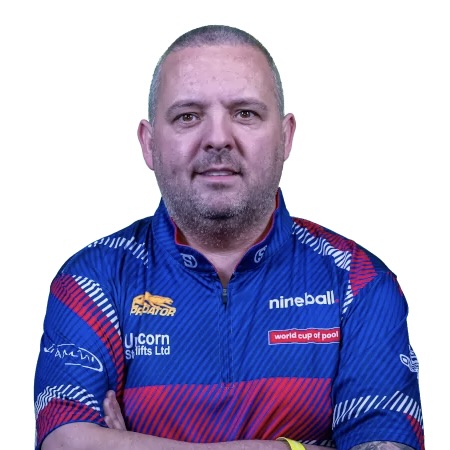
Pool Professional
Few players in the history of cue sports have demonstrated the versatility of England’s Chris Melling. Known throughout the game as “The Magician,” Melling has competed at an elite level in English eight-ball, American pool, Chinese eight-ball and professional snooker, building a career distinguished by world championships, Mosconi Cup triumphs, spectacular shot-making and remarkable longevity. Ultimate Pool has described him as one of the rare players to have competed professionally across multiple cue-sport disciplines, and at 47 he remains an active professional.
Christopher Melling was born on January 27, 1979, in Keighley, West Yorkshire, England. His fascination with cue sports began almost immediately. In our Legends of the Cue conversation, Chris recalled playing on a tiny pool table at about three years old before graduating to the local pub table. At nine, after winning a small doubles competition with a neighbor, that neighbor persuaded Chris’s parents to let him take the youngster to a local snooker club. Melling soon became consumed by the game. By age twelve he had compiled his first century break in snooker; by fourteen, he had made his first 147.
Those achievements were built on extraordinary commitment. Melling remembers practicing after school until the club closed and spending virtually entire weekends at the table. His working-class parents made enormous sacrifices to support him, paying table time and expenses so their only child could pursue his passion. Pool and snooker also provided refuge during a childhood in which Chris was fre… Read More