

 Apple Podcasts
 Spotify
 Chris Melling - Part 1 (From Keighley Kid to Cue-Sports Pro)
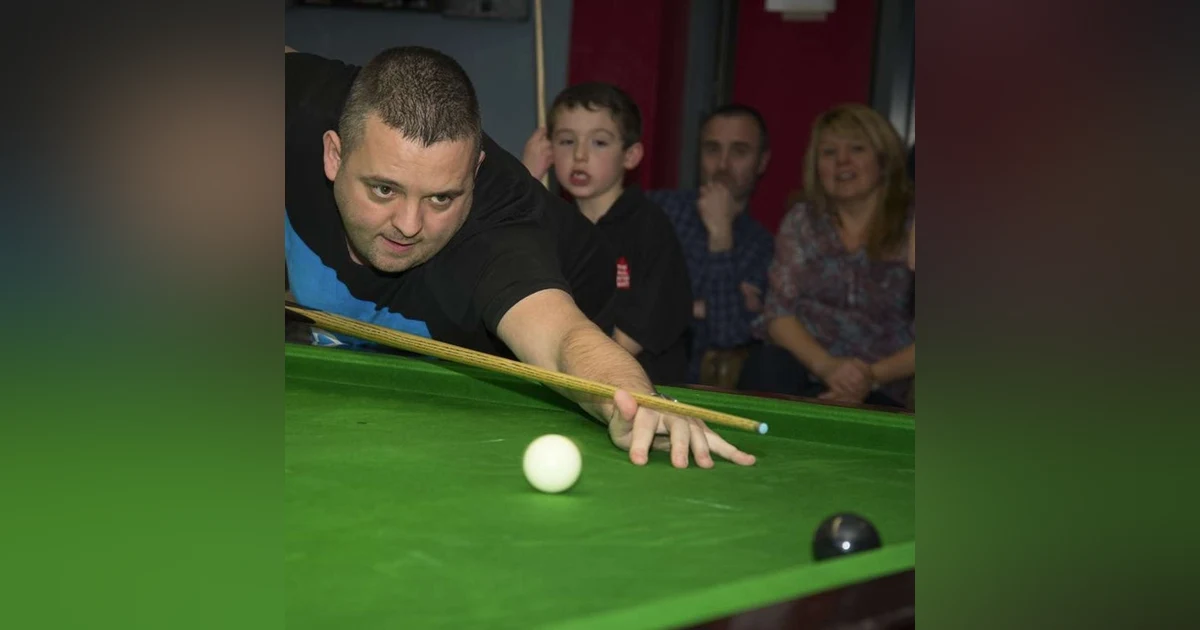

Key Takeaways
- Chris Melling grew up in Keighley, West Yorkshire, escaping schoolyard bullying by spending countless hours practicing snooker and pool.
- Melling's parents made extraordinary financial sacrifices, spending around £200 a week to support his table time and development from childhood into his early twenties.
- Renowned as 'The Magician,' Melling developed a unique ability to transition seamlessly across multiple cue sports disciplines, including snooker, English eight-ball, and American nine-ball.
- His prodigious natural talent led to incredible early milestones, including making his first century break at age twelve and his first 147 maximum break at fourteen.
- Melling candidly discusses his youth, overcoming early gambling struggles, and the foundational friendships and rivalties with fellow top players like Darren Appleton and Mick Hill.
Long before Chris Melling became known around the pool world as “The Magician,” he was a working-class kid from Keighley, West Yorkshire, who found both a refuge and a calling in a local snooker club.
In Part One of our Legends of the Cue conversation with one of the most naturally gifted and versatile cueists of his generation, Chris takes us back to the very beginning. He recalls playing on a tiny pool table as a three-year-old, spending Saturday afternoons in the pub with his father, and the neighbor who recognized something special in the young Melling and introduced him to a full-size snooker table.
What followed was remarkable. Chris made his first century break by age twelve and his first 147 at fourteen, practicing virtually every available hour while his parents made extraordinary financial sacrifices to support his dream.
But his childhood story is about much more than prodigious talent. Chris speaks candidly about being bullied at school and how the snooker club became his escape. He discusses his extraordinary memory and ability to recognize patterns and angles, offering fascinating insight into the mental processes behind some of the seemingly impossible shots that would later earn him his famous nickname.
Chris also opens up about his youthful gambling problems, the family members who supported his career, his memorable stint playing on a ladies’ pool team at age ten, and his rapid rise through the English junior ranks.
The episode closes with the young Melling traveling and practicing alongside future champions Darren Appleton and Mick Hill and earning his place among the professional English eight-ball players.
This is the origin story of Chris Melling: the family, sacrifice, adversity, confidence and thousands of hours at the table that created “The Magician.”
Give Allison, Mark & Mike some feedback via Text.
Follow our show and/or leave a review/rating on:
Our website: https://www.legendsofthecue.com
Apple Podcasts: https://podcasts.apple.com/us/podcast/legends-of-the-cue/id1820520463
Spotify: https://open.spotify.com/show/4Za0IMh2SeNaWEGUHaVcy1
Music by Lyrium.
About
"Legends of the Cue" is a cue sports history podcast featuring interviews with Hall of Fame members, world champions, and influential figures from across the world of cue sports—including pocket billiards, snooker, and carom disciplines such as three-cushion billiards. We highlight the people, places, and moments that have shaped the game—celebrating iconic players, memorable events, historic venues, and the brands that helped define generations of play. With a focus on the positive spirit of the sport, our goal is to create a rich, engaging, and timeless archive of stories that fans can enjoy now and for years to come.
Co-hosted by WPA and BCA Hall of Fame member Allison Fisher and Mosconi Cup player and captain Mark Wilson, Legends of the Cue brings these stories to life—told in the voices of the game’s greatest figures.
Join Allison, Mark and Mike Gonzalez for “Legends of the Cu...
Frequently Asked Questions
Who is Chris Melling?
Chris Melling, famously known as 'The Magician,' is a highly versatile and naturally gifted professional cue sports player from the UK, known for winning world titles in English eight-ball, major nine-ball championships, and competing on the snooker circuit and Mosconi Cup teams.
What are Chris Melling's career achievements in cue sports?
Melling is a two-time WEPF World Eight Ball champion, a winner of major international nine-ball titles including the China Open and Derby City Classic, and a two-time Mosconi Cup winner who earned MVP honors in 2012.
How did Chris Melling get started in snooker?
After playing on a small toy table as a toddler and practicing in pubs with his father, a neighbor noticed his potential at age nine and introduced him to a local snooker club, sparking a daily practice routine that fueled his rapid rise.
What equipment does Chris Melling traditionally prefer?
Melling famously used a lightweight 12.5-ounce old ash billiard cue with an eight-millimeter tip for all cue sports disciplines, a preference that baffled many professional peers who found the flexible cue nearly impossible to use.
Mike Gonzalez
Welcome to another edition of Legends of the Cue and Mark Wilson. We have another visitor from the United Kingdom today.
Mark Wilson
I'm thrilled to have today's guest who is world lead as the player, but what fascinates me is his enthusiastic spirit and his cheerful character. He embodies my personal mantra of relentless positivity.
Allison Fisher
Our guest is one of the most naturally gifted and adaptable queuists of his generation. Chris Melling became a two-time WEPF World Eight Ball champion, won major titles in an international nine ball, starred for Europe in two-winning Mosconi Cups and earned MVP honors in 2012. He competed professionally in snooker and later returned to win again on the Ultimate Poor stage. Known throughout the game as the Magician, Chris has spent a lifetime making the difficult look it easy. Welcome, Chris. Thank you for joining us on Legends of the Cue.
Chris Melling
Sure. Thanks everyone. Really happy to be here and uh looking forward to today's u interview.
Mark Wilson
All right, I'll start it off. Chris, when people call you one of the most naturally gifted all-around cueists the game has ever seen, what do you think they understand correctly and what do they miss?
Chris Melling
I think a lot of it's to do with obviously being able to switch between games. Um I used to use the same queue to to play all the cue sports, which was uh a Verizon Watts old billiard cue, which weighed 12.5 ounces and was an eight millimeter tip. I could literally bend the queue from you know about a foot from the top of the queue where the ferrule was, it'd bend a foot and wouldn't snap. And uh I just I I used to play all the time. I used to play snooker English pool, practice every single day, and a lot of the snooker players, including uh the late great Paul Hunter, Tony Drago, Jimmy White, they've all tried that queue and all they've all turned around and said, How on earth do you use it? Nobody can use it, and unfortunately had that queue stolen, so I had to use another one. But I've always been fairly comfortable at uh picking a queue up and getting used to it fairly quickly. I mean I won the Derby City 9 bowl queue with with sorry, the Derby City 9 bowl classic with a with the queue that I picked up when I arrived at the Derby. I'd never used it in my life and I won I won the Derby City 9 bowl.
Allison Fisher
Wow, wow, wow, wow.
Mark Wilson
Was the queue that was stolen made out of ash?
Chris Melling
Yeah, it was an old ash queue and like I said it was twelve and a half ounces. It was very, very light. And to to the general public or somebody who, even a professional, if they tried to use it, like said Jimmy and and Paul Hunter and Drago, they they tried to use it and they couldn't put a ball with it. And it was just a case of you know me being used to it, and you you you you know yourself, it it it feels like part of your arm, um, and it just becomes natural to to everything that you do.
Allison Fisher
It's crazy. Before we go back to the beginning, Chris, how would you describe the player and the person you are today?
Chris Melling
Uh I'd say I'm pretty much the same person as I've always been. I never changed from whatever I've achieved or earned in the game. I think I'll always be like that. I live in the same house that I've always lived in. Like I lost I lost my mother years ago, and I've only got my dad, so uh I basically stay with my dad when I'm in the country, but I'm out of the country that often. I'm basically lived out of a suitcase, but I've got the same friends I've always had since school, and more, because obviously you you kind of attract more friends and more subtests that you get. But yeah, I'm just just the same person, same house, same friends.
Allison Fisher
That's lovely. So, what still excites you when you walk into a tournament room?
Chris Melling
I think it's the respect for me that you get. Obviously, from you know, I was saying to Mark earlier that every time I go in a room I'm asked for a picture or an autograph, and even in my local club, you know, there was a guy who just walked up to me an hour ago and said, Oh, nice to meet you, Chris. I've always wanted to meet you. You know, a lot of people come up to me and ask me how to do certain shots, how to come out snookers, because obviously I've I've made that many escapes, kick shots, and and obvious and obviously everybody thinks it's a a luck, but I mean, yeah, there is luck in it, but there is a system, you know, a momentum in madness. Yeah. So yeah, I just just I really enjoy it. I like I enjoy the pressure. I think pressure is something that you can't teach. I think you either you either can handle it or you can't handle it. It's just one of those things.
Allison Fisher
Do you feel like you've still got something left to prove?
Chris Melling
Yeah, definitely. I'd I'd love to win one of the match room events, obviously, whether that be a world championship or a US Open. I was a little bit unfortunate that when I did win the Derby City Classic the year after, they changed it to a match room ranking event, and I won it the year before. So I've been a little bit unfortunate, but yeah, I've not I've not really won that many big American pool events, major ones. I won the China Open, obviously, won a c a Eurotour and a World Pool series and a few other events around America. Um, but I've never won like a US Open or something like that, really. So I'd I'd like to win one of them.
Mike Gonzalez
Get to it. So, Chris, as as we talked about a little bit earlier, we're here to tell your life story, and of course, that that takes us all the way back to your very beginning childhood uh growing up in uh West Yorkshire. So tell us a little bit about your hometown, what kind of place it was like growing up, and then tell us a little bit about your your mum and dad as well.
Chris Melling
Yeah, um well I started started playing pool on a a small table that was about two feet long, three feet long when I was three years old, and obviously progressed when I was nine into playing on a a regular size, say, bar table, like an English pool table, which is behind me. I used to play in the pub on a Saturday afternoon with my dad. And my dad wasn't really a player, so I used to play with his friends and my mum used to do the shopping. So we'd have three or four hours in the pub and I used to play a bit of darts and things like that. And this particular day it was my next door neighbour who said, Do you want to play doubles with me? Obviously, I was a young kid, didn't really know how to play. I knew how to hold a queue and pot a ball, but we played doubles and we ended up winning the tournament, which I've actually still got the trophy at home. And that that was in 1987, that was. Sorry, 1988, sorry. Uh and he just said to me, Dad, Would you mind if I take Chris to the local snooker club? Because I think he's got some potential to be a really good player. So my my mum and dad agreed to that. I went down, played, played the event that they had at the snooker club. I think I lost in the second round, but then I used to practice there every day. And by the time I was uh twelve year old, I made my first century break at snooker. And then by the time I was 14, I made my I made my first 147. So I just it just it just started from there, and I I remember That's amazing. I remember my mum and dad used to come down on Friday at tea time around six o'clock. I used to have a bill for obviously practicing on the tables, the you know, the table time and the uh Coca the Coca-Cola and the salt and vinegar crisps. And uh I remember it used to be around £200 a week, which is about $300 at the time for me to be there all week. But my mum always used to say, I know you're safe, I know you're not getting into trouble, you're not doing what a lot of other children do at that age, whether that be drinking in the park or causing havoc, or I mean where where I live is quite a rough place. Um you didn't used to be as rough, but it has become like that. And yeah, there's you know it could have gone a different way to be honest, but I'm glad I chose chose this route.
Mike Gonzalez
Yeah. Well how how about just before even getting exposed to pool and snooker? Tell us a little bit about your small town, what did you do as a kid, other sports, and and then let's get in a little bit about what your dad did to afford your 200 pound a week habit.
Allison Fisher
That's a heavy load.
Chris Melling
Yeah, it it's strange really, because my dad was uh my dad's retired now, but he was a motor mechanic. He worked for Ford, and so he was like uh they call it a transit specialist, and but he could fix any car basically. Anything with four wheels he could fix. Mum used to work in uh the Nat West Bank, answering answering calls and sorting people's uh money issues out and things like that. So they just had regular jobs, regular parents, you know, working class people. So um when I was young, I was believe it or not, I was very skinny. I was small, skinny, blonde hair, and I used to get picked on a lot of schools, so I got bullied throughout my whole childhood. And that's half the reason and I probably didn't go in the park with my mates and mess about and cause havoc. I was at the snooker club because that was kind of my escape. So I used to come down here and practice, and I used to love it, you know. From a monda a Monday to Friday I would play from four o'clock in the afternoon until uh eleven when the club shut, and then on the weekend I would play from tenam until midnight, and I did that up to being twenty-two years old from nine.
Allison Fisher
Wow.
Mike Gonzalez
So what aspect of snooker really hooked you, really grabbed you?
Chris Melling
I think it was the fact it was on television a lot, obviously in the eighties was mainstream sport in the UK, and I used to watch the likes of Steve Davis, Jimmy White, Dennis Taylor to when he beat Steve Davis in the final 1817, I think it was 1985. Um, and then the year after was one of the local snooker players, Joe Johnson, where he beat um Steve Davis in the final. So I think that's where I it really gripped me. I remember watching the final with Steve Davis and Dennis Taylor, and obviously through the years I've now become friends with these people. So uh yeah, really fortunate. I just I don't know it, I just loved the size of the table, the noise when you hit the back of the pocket. Um it just it was just such a challenge because when I played pool, I I I generally thought, well, this is easy. You know, this how can you miss on these pockets? Meaning English pool, because American pool didn't really exist. I think there was a there was a challenge every year with Steve Misrack and Steve Davis, I think it was, where they played once a year, they played nine-ball pool, I believe, and snooker. And uh I think Steve Misrak actually beat him. So uh I I just used to love watching it, and I obviously see um there used to be a show called Question of Sport, with the the the odd snooker players on that as well. And um yeah, I just I just love the challenge of playing on a bigger table and testing myself, really.
Mark Wilson
Tell us something about your earliest childhood memories away from Q sports.
Chris Melling
Uh well the ear the the one that stood out for me, like I said, I I used to get bullied at school. That did have an effect later on in life, which I'll go into later on. You know, I'm I I'm not gonna lie about anything, I'll I'll tell you exactly what happened. But one of the earliest memories at school was I used to get bullied by this this one guy who was bigger and ho and older than me. And uh he actually he used to take my dinner money off me every day, and it it it didn't beat me up every day, but it'd you know, he'd kick you or punch you or mess about. And I I used to come home and my mum was saying if you had a good day at school, yeah, not too bad. But obviously, your mother and father can pick up on things when they're not right. And my dad said, What's wrong? I said, Nothing, dad, nothing. Just something's wrong. So when I was young, my mum always used to say, Walk away, you're a bigger man. My dad always used to say, not the out of them, which that's my dad, you know what I mean? But if you met if you met my dad, he's he's like five foot seven, he's he's skinny, but he's just a real quiet person, but he's got that like little man syndrome where he just goes crazy when he's just you know the the stories that I've heard about my dad throughout the years from my uncles and his friends, and I'm like, There's no way my dad my dad was lying and I says, I'm telling you, you can't believe how bad he was. But yeah, I think so throughout school I used to get that all the time, and then they realised that I I was quite good at pool. So I used to play a little bit of rugby football, things like that. And uh this particular day I was getting on the bus for school, and this guy actually started punching me while I was waiting for the bus. It was the same guy. So uh I told my dad what had happened, and when we got to school I beat him up, and I won't go into too much detail, it wasn't like a proper beating that you might see on the streets these days, but as a kid it was a beating. So um I got dragged the mum and dad got dragged into school. The teacher, I think they called him Mr. Rossa, and uh we came into school, my dad had been working night, so he didn't finish till like four in the morning, and we'd gone up to school at like eight, and the first thing the heaters turned around to my dad and my mum, and he said, Do you not care about your child? Which was like a a red rag to a bull to my dad. And um my dad just stood up and he grabbed him by the tie and he started choking him by the tie. And he said, I've just come up here after having three hours' sleep. He says, Do you think I don't care about my son? And he said to my mum, he used to come in mum Ellie, he said, Ellie, get your bag, Chris, get up now, we're leaving. And he threw the head teacher back in his chair because he was pulling him out of his chair by his tie, was kind of choking him. And then he threw him back into his chair, and that as a child that was like I didn't know my dad was like that, because I'd never seen that. And then I basically got suspended, I think it was for two months at school. Um, went back and everything was alright. I never got bullied again after that. Um I just wish I'd have done it earlier.
Allison Fisher
That's awful that they did that, it's horrible, and it's horrible how kids treat other kids sometimes. Yeah, but I think But anyway, it's good that you did that.
Chris Melling
Yeah, but I think I think a lot of it's a learning curve, so like me as a person now, and I think I've always been I always treat people nicely, I'm always got a smile on my face, and I don't do things I'm not supposed to do away from the table, which I know some players do, which I'm not gonna mention names because that wouldn't be right, but yeah, I've I'm a pretty straight person, I I do everything by the book. Uh but yeah, nothing's ever perfect, you know. You do make mistakes. Um it was um two months ago I smashed my cue on the table after I had a a roll-off on the table, which I've never done in my life. Yeah, just to build up of emotion and stress and will to will to ch will to win.
Allison Fisher
Yeah.
Mark Wilson
Do you think you were always competitive by nature in all sports?
Chris Melling
Yeah, 100%. Um whatever I've done, I've always wanted to be the best. Either that be, you know, playing rugby playing football, hookah pool, nine ball, Chinese pool. That's wh whatever it is, I've always wanted to be the best. Um at school was I was probably the top three or four in the school at mathematics. Um and only recently I found out that I've got a form of autism, which is to do with um it's called a savant autism. It's where so like you know, like the Rain Man, where he I I couldn't like throw a box of matches on the floor and tell you how many's still in the box, like he did. But but like with numbers and memory of directions, postcodes, anything like that, I'm very good at remembering, remembering these things. And uh I was talking to a guy and his wife uh in America at the last Ultimate Pool event, and I was telling them the same thing. They went, No way. I said, if you tell me your phone number, I'll remember it forever. And they're like, No way, no way. And the day after he asked me the number and I told him. I was like, I can't believe we can do that. It's just but so yeah, and I think that's a lot to do with obviously you know, when I come out of snookers at pool on the t on the t on the table to pop the balls, I think that's a memory of that. Because if I've done it once, I kind of know how to do it again without thinking about it too much.
Allison Fisher
Yeah.
Mike Gonzalez
I think it could be the subject of a complete podcast. Just, you know, this topic and what you just shared with us, Chris. And it probably does explain your genius, the fact that you you have you've been there done that a million times, different angles, different shots, different whatever situations. And you probably are recalling that subconsciously, remembering how you executed it, where others are like, hmm, not sure I've seen this before.
Chris Melling
Yeah, it's weird. And I I've always been like that since school. I've always been very good at at memory. There used to be a program in England, um, I don't know if Alice Nell remember it called called Countdown, where you used to have the numbers and the letters with the consonants and what have you. And I used to be able to do the math question when when he couldn't do it. And it was like, how am I doing that? And it was just so natural to me. Um But yeah, I mean, obviously it's I don't really use it to my advantage, I guess, unless I'm on a pool table, to be honest.
Allison Fisher
I bet you know every penny you've got and where you spend it.
Chris Melling
I know I'm I I know when I've just spent a lot. I just bought a new car yesterday where that's cost me a fortune.
Allison Fisher
Good for you. Good for you. Right. You said uh just to take you back a little bit in time, that you said that your parents bought you that small table when you were about three years old. What do you actually remember about that table and those first games on it?
Chris Melling
Well, it wasn't so much that I could remember the the the small table, I could remember the the seven-foot table that they bought me. Um I I was about seven or eight years old, I think it was. My bedroom was on the second floor of our house. Um and they'd bought me this table. Obviously, you couldn't really wrap the snooker table up, so they bought it about a month before Christmas, and they would never let me play in it. And uh I used to sneak up when they used to go to the pub, and I'd I I I used I used to play in it and then obviously take all the chalk off the queue, put the queue back in the rack on the on the wall. But it was just like, you know, pub cues with the screw on tips and things like that. So that that that was my main memory, but I also remember about three years after that, I had the same table in my house and I was at home and my grandma was babysitting me again. My mum and dad put it out on the Saturday night, and I remember hearing this your almighty bang. Didn't know what it was. So I went upstairs and the ceiling had collapsed, the roof, and it gone s straight through the middle of my table, smashed it to pieces. No, no. So I I never actually got that replaced. Um I just used to go down to the snooker club and play every single day, every minute that I could.
Allison Fisher
Was there a moment when adults realised that you were seeing angles differently from other children?
Chris Melling
I think so, yeah. I it was a case of I think a lot of it was because I'm so fast, or I was even quicker when I was younger. Put put a few pounds on since then. So uh Yeah, I was I was really, really quick around the table and I used to see the clearances that other people couldn't see. And I think a lot of that were to do with I I used to lose the white a lot, so I had to play these stupid trick shots of ball because I used I used to lose positions, so I think that was a lot to do with it, to be honest.
Mike Gonzalez
Yeah, I think just that that that gift you have of uh visualizing patterns that perhaps you experienced before, that's just part of it, isn't it? Because you still have to control your cue ball to use what's in your mind when you see that pattern, isn't it?
Chris Melling
You do, yeah, and obviously on the American pool tables they have the diamonds on the top of the table to help you do either the diamond system, the mirror image system, or or your own personal system. So what I do is I use the diamond system, the mirror image system, and my own personal memory, and divide it all by three, and I hit the middle of the three. So obviously I hit numbers number two basically. And obviously, depending what table you're playing, on whether the table's brand new, uh where the cushions slide and pla play soft, you have to aim either a ball higher or a ball lower, depending how the table plays. But when you go into a snooker table or an English pool table or an A-ball table, they don't have them. So I have to visually see them diamonds on the table. Obviously, when you've got a short clock on you, it's it's so difficult, but which is where I think having the memory of where to aim previously, I think that helps me.
Mike Gonzalez
Yeah, I I I there's no question, I'm sure it does. Uh so guys, uh Chris mentioned that uh played across all four disciplines with a 12 and a half ounce Q eight millimeter tip. This is about what it looks like right here, if you can see.
Allison Fisher
No, I think it's a little more like this.
Mike Gonzalez
And this is probably a little smaller than the than the table you grew up on, Chris.
Chris Melling
It wasn't it wasn't much smaller, I could assure you. It's so it's so weird that you show me that cue there because one of my um friends who I'm sure you've heard of Allison, um he passed away a couple of years ago, JS and Twist.
Allison Fisher
I don't know, no, I don't know.
Chris Melling
It was a two-time World Eight Ball champion. He won it in 2000, I won it in 2001, he won it in 2002, and I won it in 2003. And he actually had a cue in his case like that for when they used to play the touch-up shots. Because obviously if you've got a shot, really you actually banned it because the the queue was too small.
Mike Gonzalez
That's crazy. Well, I want to take you back to a couple things you mentioned quite quickly as you progressed through your early career in terms of some some accomplishments. One was uh mentioning at an early age your neighbor taking you to the local snooker club, and and within not too much time, I guess you had that that break of 68 on a full-size table. What do you remember about that day? Who was in the room? What kind of reaction would you have gotten at that young age?
Chris Melling
Well, it was I was playing um the owner of the club, like said there was Harold and Ann, which was Glenn's parents, and Glenn, who won the clubs. One of them three was always in the club and they all played. Uh and he also had a brother called Mark, um, and he he was a very he was sent at snooker. So I learned a lot off them, and I used to play Harold and he used to give me 40 star, and Harold would have been 60 odd years old at the time. Uh and he and he used to beat me a lot, and then all of a sudden I started beating him, and I gave him start. Um and that was who I got the sixty eight break against and it was actually in the league game, which we used to play one frame on a Thursday night. But yeah, it it was mad really because when I was young they used to allow me to play in the league, but I was never allowed to play the away games because I was under eighteen. But then obviously and in in England you get an handicap where there might be a guy off 40 and you might be minus 20 so you'd have to give him 60 start and all they'll do is pull the club safe and you can't win. So eventually I they let me play when I was I think I was 17 they let me play the away games and there'd only ever been I believe three or four centuries ever in the league and I think I made nine in one season. Wow which is only one frame snooker yeah and um yeah I won everything that year absolutely everything the the doubles the singles the league the cup the all the I breaks and then they banned me because they banned you how old were you at this point? Did you say 17. Seventeen? Yeah because because I was I was obviously too young and then I got on the main snooker circuit when I was twenty two and they banned me again because I was professional and then when I was I think twenty-five they let me back on the snooker circuit I won everything again I was playing off minus forty eight so I was literally giving 80 star every single match and I still won everything and uh they back they banned me again saying I was too good. That's unbelievable isn't it you know those early accomplishments as a kid uh in particular did it dawn on you at the time about how special that was yeah I think so because obviously like I said Glenny won the club he was a brilliant player you know one of the top players in the UK and but it was it was different rules so it was more tactical they called them EPA rules and it was more touch up shots and like one frame could go on for like two hours so you couldn't like watch that on television because it was just it was horrible to watch. But then when they changed the rules it became more attacking and then I started to become better than Glenn better than Mark and all all the players in town so I used to play for the team Keith Keith Lee they called them so we'd play like play like an interleague then you'd go down to Great Yarmouth and all the interleague champions would play each other and so I used to go down there and I think that's where I first got noticed because there was like me, Darren, Mick Hill, Shane Appleton, Andy Richardson people like that and we we was all like you know getting a name for ourselves and I think that's where I first really got noticed.
Mike Gonzalez
Yeah so tell us a little bit again about the support from your family. How important was that uh what sort of sacrifices were they making to allow you to do what you wanted to do as a as a young man.
Chris Melling
Passively I mean I I couldn't thank my family enough. Like I said my mum and dad were spending around £200 a week and if you take into consideration mum and dad's mortgage was £450 a month and they was paying me they was giving they was giving me £200 a week to play. And it worked out obviously around £1000 per year and they did that from me being nine uh nine years old to £21 so they spent roughly £1200 for me to be able to do what I do. So when I became successful let's say and earned a decent living and things like that I bought my dad a car you know like my grandma used to say to me spend a bit save a bit spend a bit save a bit because I uh I got addicted to gambling when I was young spent a fortune absolute fortune on what sports you name it anything you name you name it I went from getting up in the morning going to the bookies betting on horses dogs and then in an evening going to the casino and it just got it just got a grip on me and I ended up getting myself into £49,000 of a debt um which I didn't have and I was gonna go bankrupt that my mum said look you know just w work it off you know you can get an IVA which would last for seven years and then it'd be finished but then you'd have a a pretty bad record and so I just said no I'll pay it it's my fault I've got myself in the situation so I basically phoned up all the banks who I owed money to and the credit cards and I said look I can't afford to keep paying this interest can I get a break on the interest and I'll I'll pay what I can fortunately enough for me I got myself out of it. Yeah but the I think the gambling was massive as a youngster and I think I think it's just a general consensus in a pool and snooker club that they play cards, they play darts, I play dominoes I just think it's it's something that is part of of the snooker and pool world. It's I mean you've only got to look at America and they call it American hustling I mean that's basically you know hustling and playing for money which I think I think is a part of it. Do I think it determines you're a better player if you beat somebody for money no I don't think that whatsoever. I think I think tournament wise it says everything because you've got to have stamina you've got to be able to produce them goods match after match under massive amounts of pressure because you don't know what's going on in somebody's life. My mum and dad gave me literally everything they had um to put me in the position I'm in today and I could never thank them enough and I I always tell my dad and my mum obviously my mum passed away but I always say on social media I I wouldn't be in the position I'm in. But also my my great grandma my middle name is actually named after my great granddad so I was called my middle name's William which I don't like to say right lot because I don't like it. But my granddad was called William and I never my great granddad I never met him he died two months before I was born so my great grandma thought I was a reincarnation of my granddad so so she used to she was ninety-eight when she passed away but she would literally give me everything and I think she had 31 grandchildren but I wa but I was I was a favourite because because I was the oldest so she gave me everything. It's a lot yeah and as a youngster obviously that used to help I I I could never thank them enough but I always remember going to Vegas when I was 21 my first time and it's a bit of a funny one because they used to have the I think it's the is it the APA they have in at the Riviera I believe. Riviera and I went over and there was a team event so we'd we we'd actually fixed our team so we didn't even play in a league but Lee Kendall had made up made up this league in England. There was no we didn't we didn't even play it was all it was all amateurs and the the tea the team was me Darren Appleton Mick Hill Cowboys and Andy Rich and Andy Richardson and Lee Kendall so we've gone over there thinking we're all pros in England we're gonna wipe the floor with these guys and we actually lost in the final but the funny thing well I said I look back and it was funny but obviously at the time it wasn't man I took £2000 with me as a 21 year old and got there and I blew the lot in the first night on the fruit machines and I lost a lot which is common with Vegas isn't it really a lot of people I lost everything so uh I had to ring my mum and say look if any chance you can send me some money I've I've blown it all but but but after that I never I never did it again. Yeah.
Allison Fisher
Yeah that habit so at 21 you were gambling and uh you had that debt and everything that you got rid of did you stop gambling or did you how did you come out of it?
Chris Melling
I I reduced it all I still have a gamble now I had a gamble last night on the rugby. Not not a big big bet but a flutter a flutter yeah I actually won so I actually won one and a half thousand last night on the rugby do you I'm pretty clued up with the rugby to be fair because I what it's my favourite sport I watch it all the time. Yeah yeah obviously where I live it's rugby league so I'm well into it um but I used to like I said I used to bet thousands honestly thousands but I don't I don't do it anywhere near as much so I haven't been in a casino in the UK for 15 years maybe I just stopped myself from going in them all. I don't have any online betting accounts the only thing I I do is I'll say to my mate can you put me that on and he'll put me the bet on and that's it but yeah I just I just cut it all out because it it it kind of takes over you a little bit and you don't when when the money's not in your hand it doesn't seem real it just feels like monopoly money but obviously when you've got that cash in your hand it's totally different.
Mike Gonzalez
Yeah by the way I love your middle name I have a little grandson named William he he goes by Liam but uh I think it's a great name.
Chris Melling
Of course it is Will yeah yeah we'll call you we'll call you Liam the rest of the interview what do you well there's a there's a few names that go with William All right Mark so at 10 you won the ladies division when you were 10 years old yeah would you care to illuminate us yeah so when when I was Christine that was what my mum and dad were going to call me I think if I'd have been a girl there you go yeah I um when I first joined the club I couldn't play for any of the men's teams and like I said they they they wouldn't allow me to go in the away pubs and clubs and to be honest I was I was quite cocky when I was younger. I just I just believe in myself that's all it was I just I just thought no matter what I go for I'm never gonna miss no matter who I play I'm never gonna lose to man I don't think it was really cocky I think it was more just a belief in myself and I think you need that belief in anything that you do that you you're gonna be the best and nobody's better than you so the only team that would take me on was the ladies' team so I ended up playing for this ladies' team and I actually won the player of the year at 10 years old but I was playing against senior men so the whole team that I played for was a ladies' team but was playing against men but we actually won the league and uh three three of the women that played actually played county for West Yorkshire so we had a we had a really good team to be honest.
Mike Gonzalez
That's great.
Chris Melling
Still got the trophy man I still got the trophy at home yeah I've actually got a picture and I could actually send you the picture actually we should use that as one of one of the podcast pictures yeah you wouldn't think it was me I've got short curly hair blonde skinny yeah totally different to I am now yeah if it's you with the picture that'll be perfect we'll absolutely use it.
Allison Fisher
Yeah Allie I just wanted to help you into the English junior circuit who was that person and what did the opportunity change for you?
Chris Melling
Well what it was I I played um my first ever junior tournament was the West Yorkshire Junior Championships and I actually won it. So that in turn got me uh into the English junior championships sorry the North of England junior championships which I ended up winning that that was in Carlisle in the north of England and straight after that that got me into the English junior championships which I won that and then they changed the rules to world rules which is all as tacking rather than defence and I had two weeks to learn the rules and I lost in the final of that which then got me in the world junior championships which was the same rules what we were just playing and I won that so my first five events I won four of them and lost in the final of the other and one of the guys who was um I th I'm sure he was called Dave and he turned round to me and he said look I'd like you to play on the circuit and I was like what circuit I I never even knew there was a circuit. Darren Appleton actually looked after me I used to travel around with Darren he took me everywhere because he was a little bit older and he could drive um so I played on that when I was 17 and then obviously when I passed my driving test I used to drive in we used to take it in turns and then Mick Hill came on the scene. Us three had always travel and practice together. So the first year I finished in the top 64 in the rankings which allowed me to turn professional and then the year after I actually I think I beat Darren in the final of a professional event or the tour. So that was my first ever professional win and I think that was I think it was 2000 I think it was well it had been before 2000 it would have been it would have been 98 or 99 I think it was I think we're 98 thank you for listening to another episode of Legends of the Cube.
Allison Fisher
If you like what you hear wherever you listen to your podcast including Apple and Spotify please follow subscribe and spread the word give our podcast a five star rating our website for our five stars golden break with more legends
Pool Professional
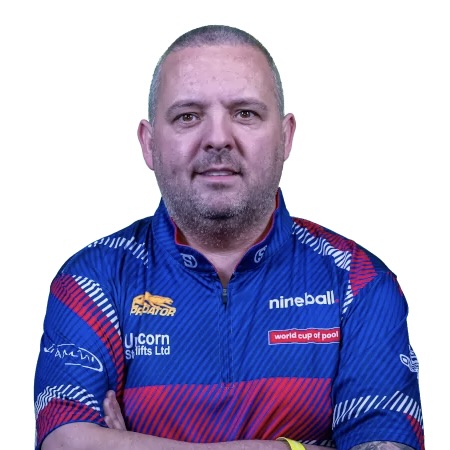
Few players in the history of cue sports have demonstrated the versatility of England’s Chris Melling. Known throughout the game as “The Magician,” Melling has competed at an elite level in English eight-ball, American pool, Chinese eight-ball and professional snooker, building a career distinguished by world championships, Mosconi Cup triumphs, spectacular shot-making and remarkable longevity. Ultimate Pool has described him as one of the rare players to have competed professionally across multiple cue-sport disciplines, and at 47 he remains an active professional.
Christopher Melling was born on January 27, 1979, in Keighley, West Yorkshire, England. His fascination with cue sports began almost immediately. In our Legends of the Cue conversation, Chris recalled playing on a tiny pool table at about three years old before graduating to the local pub table. At nine, after winning a small doubles competition with a neighbor, that neighbor persuaded Chris’s parents to let him take the youngster to a local snooker club. Melling soon became consumed by the game. By age twelve he had compiled his first century break in snooker; by fourteen, he had made his first 147.
Those achievements were built on extraordinary commitment. Melling remembers practicing after school until the club closed and spending virtually entire weekends at the table. His working-class parents made enormous sacrifices to support him, paying table time and expenses so their only child could pursue his passion. Pool and snooker also provided refuge during a childhood in which Chris was fre… Read More