

 Apple Podcasts
 Spotify
 Darren Appleton - Part 1 (From Pontefract to Professional Pool—The Making of “Dynamite”)

Key Takeaways
- Darren 'Dynamite' Appleton developed his fiery competitive spirit and intense will to win from his working-class upbringing and boxing background in Pontefract, West Yorkshire.
- English 8-ball provided the foundational tactical skills, safety play, and touch needed for Appleton's eventual transition and success in American pool.
- Financial limitations in professional English pool, where top players struggled to make a lucrative living, ultimately pushed Appleton to switch disciplines to pursue greater opportunities.
- Appleton earned his famous nickname 'Dynamite' at age 18 from a Wakefield pool room owner, reflecting his fierce and aggressive temperament when facing defeat.
- Unlike some hybrid players who split focus across multiple cue sports, Appleton believed in entirely committing to one discipline at a time to reach the highest professional level.
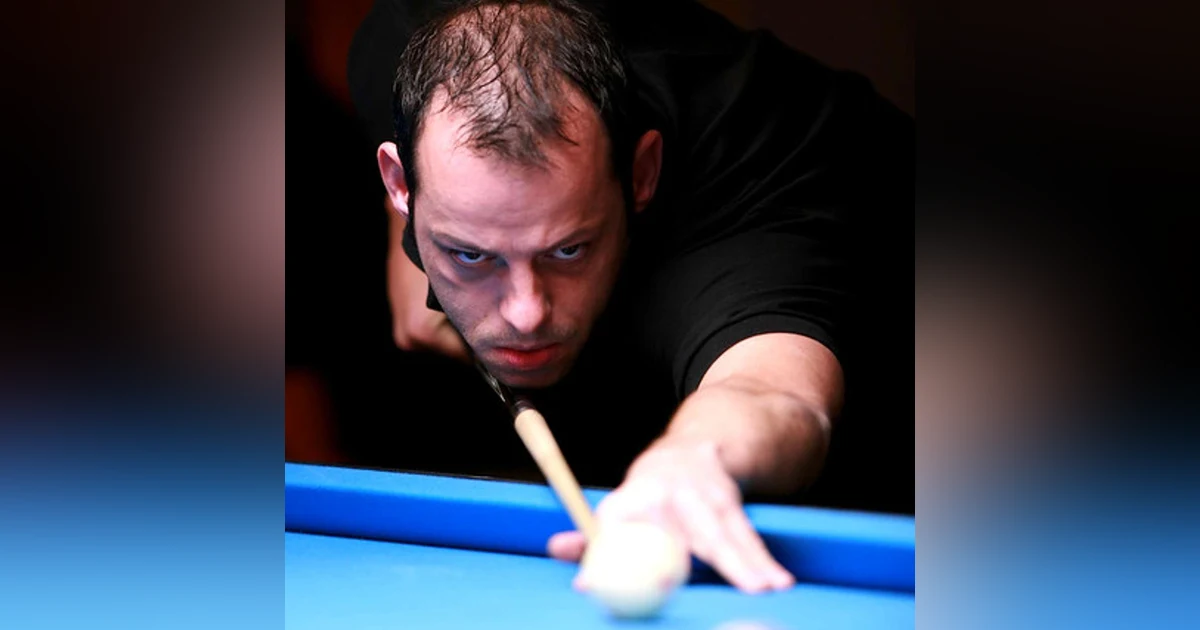
Before Darren “Dynamite” Appleton became a multiple world champion and BCA Hall of Famer, he was a fiercely competitive kid growing up on a council estate in Pontefract, West Yorkshire. In Part 1 of this five-part Legends of the Cue interview, Appleton takes Mike Gonzalez, Allison Fisher and Mark Wilson back to the beginning of a remarkable cue sports journey.
Darren explains how a childhood shaped by working-class values, football, boxing and family competition forged the mentality that later made him one of pool’s most relentless winners. He shares the story behind the nickname “Dynamite,” reflects on his father’s influence as a boxing coach and recalls the sights, sounds and unmistakable atmosphere of English pub pool in the late 1980s and early 1990s.
The conversation explores the distinctive demands of English 8-ball: the smaller table, nap cloth, lighter cue ball, tactical exchanges and competing rule sets. Darren also discusses the limited financial opportunities available to professional English pool players and why that reality eventually encouraged him to seek a larger stage.
Along the way, he remembers learning from his cousin Andy Appleton, competing with his brother Shane, leaving football and boxing behind, winning major junior and amateur events at his first attempts and developing the practice habits that separated him from other talented players. His intense hatred of losing became both a burden and a competitive advantage.
This opening episode is the origin story of a pool legend—a candid look at family, ambition, sporting obsession and the moment Darren Appleton decided that pool would not simply be a pastime, but his life. He also considers what might have happened had snooker offered more opportunities in his youth, and why pool’s one-on-one nature captured the competitive thrill he once found in the boxing ring and on the football pitch.
Give Allison, Mark & Mike some feedback via Text.
Follow our show and/or leave a review/rating on:
Our website: https://www.legendsofthecue.com
Apple Podcasts: https://podcasts.apple.com/us/podcast/legends-of-the-cue/id1820520463
Spotify: https://open.spotify.com/show/4Za0IMh2SeNaWEGUHaVcy1
Music by Lyrium.
About
"Legends of the Cue" is a cue sports history podcast featuring interviews with Hall of Fame members, world champions, and influential figures from across the world of cue sports—including pocket billiards, snooker, and carom disciplines such as three-cushion billiards. We highlight the people, places, and moments that have shaped the game—celebrating iconic players, memorable events, historic venues, and the brands that helped define generations of play. With a focus on the positive spirit of the sport, our goal is to create a rich, engaging, and timeless archive of stories that fans can enjoy now and for years to come.
Co-hosted by WPA and BCA Hall of Fame member Allison Fisher and Mosconi Cup player and captain Mark Wilson, Legends of the Cue brings these stories to life—told in the voices of the game’s greatest figures.
Join Allison, Mark and Mike Gonzalez for “Legends of the Cu...
Frequently Asked Questions
How did Darren Appleton get the nickname 'Dynamite'?
A local pool room owner in Wakefield named Ralph Winfield gave Appleton the nickname at age 18 because of his fiery, intense temperament and absolute hatred of losing.
What are the main differences between English 8-ball and American pool?
English 8-ball is played on a smaller seven-foot bar table with nap cloth, smaller object balls, and traditionally a lighter cue ball, requiring precise tactical play and touch.
Why did Darren Appleton switch from English pool to American pool?
Appleton made the switch primarily for financial reasons, as professional English pool offered very limited prize money and earnings compared to the opportunities available in American pool.
Did Darren Appleton ever play professional snooker?
No, while Appleton played local league snooker and practiced to improve his fundamentals, he never pursued snooker professionally because it required a grueling six-to-seven-hour daily commitment and offered few tournament opportunities during his youth.
Mike Gonzalez
Welcome to another edition of Legends of the Cue and Mark Wilson. Tell us a little bit about the Hall of Famer we have with us today.
Mark Wilson
When it comes to optimum stroke delivery technique, today's guest sets the standards. I often mention this to all my students. It's a very simple and compact stroke that greatly enhances consistency.
Allison Fisher
He is actually one of the greatest cueists in my opinion to ever play the game, having won world championship titles in many disciplines. We're very lucky to have a Hall of Famer here. Fellow countryman, Mr. Darren Appleton. Welcome, Darren. Thanks for having me on. Thank you. Thanks for coming on.
Mike Gonzalez
Yeah, good morning, Darren. We've been looking forward to this for a while. I've been I've been seeing you a lot on Facebook lately. You got a lot going on, don't you?
Darren Appleton
Yeah, well, you can get paid for Facebook these days, so it's good. But yeah, once you get monetized, I think, oh, I should be posting a lot more. Uh where I was sort of on a period where I've sort of just been a little bit lazy in life. So I'm thinking I'm making more effort to post more uh content out there. And yeah, so I'm been busy with that really and trying to learn a little bit more about technology.
Mike Gonzalez
Well, uh offline you'll have to tell us about this monetization stuff because that's one thing we really haven't pursued. But anyway. Yeah. So I I guess quick question before we get into your early life, because we want to kind of take you back to where you were born and your your days of youth. You picked up the the nickname dynamite. You can tell us a little bit about the origin of that. But uh is that referring to your temper or your temperament?
Darren Appleton
Probably a little bit above. Uh yeah, it's definitely uh I'm a very fiery player, let's say, a fiery character, really. Especially when I was younger. When I were younger, I I hated losing. I still don't like losing now, but as you get older, you you uh wind down a little bit, you start to accept it a bit easier. Otherwise, you go totally insane. But when you're younger, you just think you're invincible. And uh I come from a boxing family, and uh I was really into my football, you guys call it soccer. Uh so I always had that competitive edge. And then uh so I think it really came from the boxing side. I was one of those people when I got hit in the ring, I'd just go mental. My my my my sort of uh tactics went it my tactics went out the window. Let's say I was like a bull in a horn in in a shop, and I I just went mentally. So yeah, sometimes that hurt me and sometimes it benefited me. Uh but it I think it definitely helped me who I was on the pool table. Didn't always have the best temperament, sometimes lose my head a little bit. Uh but I think if I didn't have that, I wouldn't have had the success I had. So it was sort of uh you take me how you see me, really. Uh I think uh rather people rather like me or they don't really. I'm sort of that character.
Mike Gonzalez
So who came up with the name for you, Dynamite?
Darren Appleton
Uh Dynamite came when I was about 18 years old. There was a uh the pool room owner in Wakefield in West Yorkshire. Allison will know Wakefield in West Yorkshire, so it's very close to Leeds, which is like a major city in England. Uh so yeah, that's with pull room when I I first started playing, and at 18 years old, I was sort of like the man to be uh in the area. But again, because of my fiery temperament, the pool room owner he started calling me Dynamite, and it and it it it had just stuck down in Dynamite Appleton, and uh so that's so that's how it started, really. So a friend of mine called Ralph Winfield named me Dynamite, so that it it just stuck where I'm a big believer that somebody should give you a nickname and not make it up yourself, which a lot of players do. Yeah. I think it's better when it comes from someone else, and then you're not sort of like forcing it, and it it comes natural. So I mean I think I think it's the perfect nickname for me anyway.
Mike Gonzalez
Well, good. I was just gonna ask you that, but I don't need to now because we've talked a lot about nicknames, haven't we, Alison? And I think more people don't like them than like him, would you say?
Allison Fisher
I like his nickname though, I think it fits him, and it's a great it's a great nickname. I mean I'm not overstruck on mine, but what you can do. Good type of person I am.
Darren Appleton
You like slowly kill them, don't you?
Allison Fisher
Slow death. I should be the anaconda, Ali the Anaconda, then shouldn't I?
Darren Appleton
There you go.
Allison Fisher
I'm onto something new.
Darren Appleton
There you go. That's as much to do, right? I always I always feel y you've had two.
Allison Fisher
Well, yeah, I've been many things in my time, but they never really stuck. That was the only one that stuck, I think.
Mark Wilson
It seems that people that are closer to you Darren call you Daz as well.
Darren Appleton
It's just short for Darren, it's like an English thing. So people who are called Darren are Daryl, usually you they just shot it out, and they're just shoting it down to Dazzle. Yeah. So yeah, it's mainly Darrell's or uh Darren.
Mark Wilson
I always took it as Dazzler.
Allison Fisher
He is a bit of a dazzler, isn't he?
Darren Appleton
Yeah. Daryl features the dazzler.
Allison Fisher
That's that's true. You became a world champion and on different tables, different disciplines. What quality in the game travelled with you everywhere on those different tables, do you think? What was your main quality?
Darren Appleton
Probably my will to win, really, I think. Yeah. I think it's the grit. Yeah, the grit and the determination. I think coming from English pool gave me a great head start going into American pool because I had that winner's mentality. So I even though I started from scratch, I didn't feel like I was starting from scratch because I had the basics. I was I was a good tactical player, I could hold my own it anyway. Uh so it was all about coming into American pool, especially. It was all about learning the the kicking side of the game and the percentage side of the game. And obviously the break and uh jumping, so that just came with time. But obviously the basics were there, and uh my basic safety play was there. Where I think if you come from snooker, I think you had to learn the safety a lot more than let's say an English pool player. English eight ball player. Because we we English eight ball, obviously, it's a small area, you've got to have a good touch, uh, your cue ball's gotta be good, and tactically you've got to be pretty good, and that was my strength, really, English pool. So I went into American pool and just kept the game very simple.
Allison Fisher
Yeah, definitely.
Mike Gonzalez
Why don't you take us back to uh West Yorkshire as a lad? Uh some of your earliest memories growing up there.
Darren Appleton
Well, back in the eighties, well, I was born in 76. In the 80s it was difficult, wasn't it, with the uh with the coal mines and uh the strikes and everything else. So and uh yeah, we were go going through tough times really as a country, but me as a family, I mean I I come from nothing really. We come from a council estate which is like owned by the government. Uh so yeah, my parent my mother worked in a sewing machine factory, and then she had a lot of health issues uh during my teens, which she overcame and then sort of like relapsed uh with mental disorders and that, so that wasn't easy. And my father was a welder, he also was a boxing coach. Uh so and he did a lot of mechanics with the cars and that, so he he did a bit of everything, he's a bit a bit of a DIY man. Uh so yeah, in but in the 80s, as Allison would know, it was very difficult those times, you know what I mean. Uh I mean the country was sort of like struggling, a lot of politics at times, a lot of uh like a lot of uh protests and all that stuff, a lot of fighting. Uh so yeah, it wasn't easy, but I had I had a good childhood. I mean you you you make the best of what you've got. So when I was a a kid growing up, it was all about going outside, playing soccer, uh rugby, even a game of pool here and there, boxing and all that stuff. So you you didn't have phones back then, you know what I mean? Where and computers. I mean if you had a la uh if you had a computer back then, you were very lucky to have a computer. It was sort of like the start of computers, really. So I just grew up living outside, uh get up to no good really, just hanging around with with with a lot of friends and girls and all that stuff, and uh just uh yeah, misbehaving. I'd sort of get like uh arrested a few times for like pinching sweets and the shops and that. But that's what you did as a kid back then. It was like just take whatever you can. We aren't been been too too bad of a boy, let's say. So yeah, and then so that's how it how you grow up, really. Obviously, you guys know as well. So in the 80s and 90s, it wasn't easy. So, but I look back to those times and look how kids are grown up now, I I wouldn't change it for the world, really. I mean, if I could go back and relive that childhood, I'd be very happy. And uh the only thing I'd regret really is not doing more at school. School wasn't for me, really. Uh because I think once once once I got to 13, 14 years old, because I was pretty talented at at soccer, because that's what I thought I would do, and all my friends from school thought I would have made it as a soccer player. Uh, but then I started boxing. Uh so then I I knew I'd do probably one of those two, and then I started playing pool seriously at around 15, 16, because because my cousin was a professional pool player, Andy Appleton. Uh number four, number five in the world at English pool. So I always had a little bit of interest just because of him, and I'd go to a few exhibitions and watch him. So I played a little bit, but never really. And it it felt good, like the cue felt good in my hand the first time I ever picked it up. But I know but I was so so in love with soccer, I just couldn't see myself being a pool player really at 14-15. Uh so at that time I I knew I'd be into sports even when I left school. I thought there's defin I'm definitely not going to be a nine till five man where you're working in a in a warehouse or something like that. So I sort of put school on the back burn, I just never had any interest in it. I hated going to school. I started skiving so that I could play more soccer, and then at 15 years old, that's when I got introduced to pull properly, and then you I started playing locally, and then it just evolved from there very quickly. Uh so I just knew at 15, 16 that that that school wasn't for me, and I I just focused on my on my sporting ability, really.
Mike Gonzalez
Yeah, so you were exposed to it at a little younger age, just not that seriously, I guess. You might have picked up a cue at age 12 or something, but didn't play that much until 15 or 16.
Darren Appleton
Yeah, I was like probably like six, seven, eight years old. My brother got tailed for Christmas. Well, it was just for fun. But I knew I c I could play straight away, but uh but I just love soccer so much, and that's what I want to do. It was only until I got to 15 then you realised that soccer's a very difficult sport to make it, especially back in those days there was very few scouts about compared to now, where it's everywhere now. So just get recognised back in those days it was very difficult. I I remember going to the Bobby Charlton School in Manchester. Allison will know a guy called Bobby Charlton, he's like probably England's greatest ever soccer player, really. Uh so that's what you would have to do, you'd have to go to the Bobby Charlton school with thousands of kids there, just trying to get picked out, maybe 10-15 people. So the chances of getting picked out were very slim, and that didn't work out. So uh I got to 15 and then uh started playing local league. Started playing local league. I got asked to play for a local pub team because just because one day I was in there with my brother Shane, who was a really good pool player, also, and the landlord spotted us and he says, Oh, uh, you two guys can play. Do you do you want to play in our pool team? So I didn't really think anything of it at the time. I think, well, I'm not really interested, but but we went back the following week and I thought, yeah, look, let's give it a go, and that's when it all started. Like as soon as I played that first competitive real real league match, that that was it. It was like it was like it was like one-on-one. So like it brings the boxing into play. It brings like when I like when I played soccer, I was a striker, so I I'd always want to score the goals. So when you're one-on-one with a keeper and all that, so it's sort of the same sort of feeling, and just the sound of the balls and the back in those days, as Alison will know, like you you go in a pub in England back in the in the late 80s, early 90s, it was just full of smoke. Smoke and uh it's true, everywhere's full of soccer. So even the smell was great, you know what I mean? And that you could smell like the the salt and vinegar uh uh crisp, like you you you call on chips, where like cheese and onion crisps and all that stuff, you you you could smell everything. And it was just an addiction, you know what I mean. Obviously, you're on the streets all the time, so to be able to go into a pub and and uh play like a competitive pool game, it was just amazing. And back in those days we had we had solids and stripes on the English pool tables, and then later it became uh reds and yellows. And yellows, yeah. Yeah.
Allison Fisher
I like reds and yellows better, it's just easier to see everything, isn't it?
Darren Appleton
Now they've changed it again. It's like it's like a burgundy stripe colour for the reds, and the yellows of uh the yellows are yellow, but but they're all numbered now as well. Where back in those days the balls were never numbered. Unless you play solids and stripes.
Mike Gonzalez
Yeah, so I've got a I've got a set of reds and yellows at home, but Alison, we've heard this term now a few times here with Darren. English eight ball for a lot of our American listeners who may not have that familiarity with the differences and the nuances of that game. Why don't you and Darren kind of explain for us what English eight ball's all about?
Allison Fisher
Well, firstly it's a smaller table, right?
Darren Appleton
Yeah, seven foot. It's a bar table, basically.
Allison Fisher
It's a bar table. It's like a small snooker table, isn't it?
Darren Appleton
Yeah, it's like an half-size snooker table, really. Yeah, the the pocket cuts the same. It's a bit cheaper made. The table's a lot cheaper than a snooker table. Uh like snooker tables can be up to what six, seven, eight thousand, Allison.
Allison Fisher
Yeah, probably.
Darren Appleton
Uh where English pool table really you can get one for like maybe a thousand dollars easily, you know what I mean? So and the main cloth is the same as a snooker cloth, right? So it's a nap cloth, nap cloth, smaller balls, and the cue ball is lighter than the object ball. Where now they changed it now where it's the same weight as the object ball, but it's still smaller than the object ball, so it's a bit weird. Oh, that's interesting. Well, I haven't played it for a long time. So when I do play like the odd, the odd rack, let's say, which is very occasional, you know, I think, oh, this is weird. When I played and had the success, if uh the cue ball was lighter than the object ball, and the reason for that is that the cue ball would come out at a separate end of the table. Yeah, okay. So when you're paying for the table, yeah, you're putting money in the table. They just did it for that reason, so that and then people couldn't steal the cue ball and all that stuff. Uh so yeah, that's that's how the game is. Obviously, there's different sets of rules, there's a lot of different sets of rules, a little bit like American eight ball, where you got BCA, APA, VNE, uh, where they all have different sets of rules, don't they? Which doesn't make any sense to me at all. But everybody likes to take just to to put their own spin on the game. And that's really been our downfall, I think, when I look at the game now. And English pool's the same. There's a lot of politics, a lot of different sets of rules. There's at least three different sets of rules at professional level, never mind at amateur level. Uh so if you go to a local bar and you ask the the the guy in the bar what rules do you play, they'll probably look at you stupid. Like, what do you think? Yeah, exactly. I agree.
Allison Fisher
Yeah.
Darren Appleton
For him, he'll probably think it's like two shots carry. So if you make a foul, you get two shots. So if you miss, you get to stay at the table, which is obviously a little bit crazy. But then there's another rule where you don't have that rule get get getting two shots carry. So there's different sets of rules, and the rules are completely different to American eight ball rules. So yeah, it's quite confusing, isn't it? And uh you sort of scratch your head and you wonder why the game's not quite got to the levels it should have been.
Allison Fisher
There's too many different adaptations, isn't there, of a game.
Darren Appleton
It looks like it's finally going somewhere. It's I don't think it's ever gonna get to American pool standards or snooker, uh, but it is doing pretty well, and obviously you'll know about the ultimate pool guys. Yes, what are making waves in America and doing the ultimate pool USA also? So uh they're the guys what do it in the UK, they're like the the main the main people in the UK for English pool. Uh so that they're doing pretty well, but whether it's gonna get to those big heights, I'm not sure. I think they've got a chance in America though.
Allison Fisher
How big is it in England now? What they're doing, I mean financially and everything, does it is it an incentive for people to play or big?
Darren Appleton
Because of my health and everything else, I have thought about going back to English pool, but the biggest problem with the game for me is practising the game. When you played American pool on a bigger table, you can do so much more with a cue ball, you can put a lot of spin on the cue ball. There's lots of variations of shots where the English pool you're very you're you're very limited to what you can do on the table because the tables are small, that they play with like eight, nine millimeter tips, the cue ball's small, so there ain't a lot you can do on the table really. So it's a little bit for me anyway. I find it a little bit boring. But when I was growing up playing the game, I loved it. So it's just it's sort of gone like full circle. But yeah, I mean, in England it it's it's very popular, that's for sure. I mean, there's there's there's hundreds of thousands of people who want to play the game, a bit like in America, we have an American bar table, but there's just no real money in it. So the money really is in the amateur game. Uh like there's loads of leagues, like hundreds of thousands of uh players playing playing leagues and they have the national finals like in uh America do. But at the professional level, I mean if you win a professional tournament, you might you might be looking at ten thousand dollars to the winner, so it's not bad, but obviously it's not great.
Allison Fisher
Yeah.
Darren Appleton
Where when I played, you'd be maybe getting like three or four thousand dollars if you if you win a professional tournament. And it and if you won the world championship when I played, it was like ten thousand dollars to the winner. So that was the main reason why I switched from English pool to American pool for the financial reasons, because uh there was a few years there I was world number one at English pool, and the the most I would earn in one year was like $30,000. So I mean you're not gonna retire on that, are you?
Allison Fisher
So Darren, were you ever were you ever a snooker player?
Darren Appleton
Did you ever not really? I I played local league snooker and I played one or two small tournaments, but I did practice snooker. When I was playing English pool, I I tried to mix the two just because English Snooker helped me with the English pool for the fundamentals and all that stuff. But I never loved it enough to put the six, seven hours a day in, which you had to do at Snooker. Where English pool you could get away with practicing two hours a day. But uh Snooker, if you're gonna make it at Snooker, you had to practice six, seven hours a day.
Allison Fisher
Because you and you and Chris Mellon really are very similar, like that. The fact that you can go skip from one game to another discipline, Chris more than me.
Darren Appleton
I mean Chris was definitely more talented than me. But the thing with Chris though is that he had the ability to make it at snooker. Where I never really believed in that I was quite good enough at snooker. I was a good snooker player, I was like what I'd say a good amateur. I had like other hundreds and hundreds of century breaks. I had a 145, been close to 147 a few times. That was disappointing. But where with Melling, Melling was a professional snooker player, but he never was professional, if you know what I mean. Yeah, like he should have been practicing snooker only five, six hours a day, but he was playing English pool, he was playing American pool. He did did everything, well he does everything now, doesn't he? He'd play an English pool time on the weekend, and then on the Monday, he'd go and play the Welsh Open against Matthew Stevens in the qualifier. I'm thinking, like, what are you doing? Like this is your chance to do something. Snooker was massive, you know what I mean? And if you make it a snooker, you're you are made for life. Yeah so yeah, just to mix well, you you you can be the most talented guy in the world like Ronnie O'Sullivan at F and Reyes, but if you don't if you don't give 100% to one particular discipline, I just don't think you're gonna get to the highest level possible. Well, no disrespect to Chris, he's had an amazing career, but he's never got to number one either three disciplines.
Allison Fisher
Well, sometimes it's probably about scraping a living, too, isn't it? I think I would think. You know, go play Hayborn China and see what happens.
Darren Appleton
Or you've got to go where the where the work is sometimes, haven't you? Definitely. I think there's some people what they're like hybrid players, like like Chris is one of those that like he likes to try his hand at everything. Where I'm one of those if I do something, I want to do it properly. So I when I switched from a English pool to American pool, I completely stopped playing English pool. That was it. I sold my cues and everything. Where Chris, when he came to American pool, he was still doing English pool, he was still doing a little bit of snooker and he's doing his exhibitions as well.
Allison Fisher
So but he tried to get back on the snooker tour, didn't he?
Darren Appleton
Yeah, yeah. I I couldn't do that. I couldn't, I couldn't because I rely on my cue ball control. And uh where Chris is more open, let's say, he's he's a bit more all over the place. That's why he's a shopmaker, right? Yeah, it's a bit like an L Strickland, meeker imminent, you know what I mean? God bless him. Like they're very they they they're like fire players, you know what I mean? They they attack and uh they're either good or they're not good, you know what I mean?
Allison Fisher
Where yeah, they're on, yeah.
Darren Appleton
Yeah, but when when they're on there they just blow you away, but when they're off, they're easy to beat. Uh where where someone like me, I I rely on my cue ball control, so that's what so I always give so when I stopped playing English pool, I focus on American pool. But then you got the hybrid game like Chinese pool, which is like a bit of both. So but with Snooker, uh Snooker definitely helped my English pool and my American pool, but I just never took it serious. But I'll tell you what, as well, what when I did play a little bit of Snooker and I got to a decent level, there was only like maybe six to eight tournaments a year on the pro game. Right. Where now there's like 20 tournaments a year, 25 tournaments a year. So the opportunities out there now is unbelievable. So I think if Snooker is what it is now, let's say 20 years ago, maybe I would have given it a go at Snooker. But back then it was so difficult. I mean, Jesus. Uh because you had to go to Blackpool to qualify to get in the main tournaments at Snooker.
Allison Fisher
Yeah, I remember that. Norbick Castle.
Darren Appleton
And if you didn't qualify, you'd have six months off.
Allison Fisher
Yeah.
Darren Appleton
That's exactly right.
Allison Fisher
Yeah.
Darren Appleton
Because there's some players what I know, like Jimmy Mickey lives in Pontefract. Uh Jimmy Mickey was a professional, a few really good players. Sometimes they they do nothing for six months. I says, How how can you do that? Well that's the way it was back then. So I just focus on pull because we pull you could make money locally. Whereas snooker, you only could make money at the professional game, really. Yeah.
Mike Gonzalez
Yeah. So going back to age 15, 16 when pool kind of gotcha. Did that correspond with letting football uh fall to the wayside as well?
Darren Appleton
Well, yeah, when I got to about 16-17 and I started doing really well like regionally, like in my county, let's say West Yorkshire, I quickly become one of the best players. And then when I got to 16-17, I started beating my cousin Andy Appleton, who's at the time like number four and number five in the country. And I thought, well, if I'm beating him, maybe I I can beat the guys what's number three, two and one. So so yeah, I started playing in Pro Am tournaments and I was doing well in Pro Am tournaments. I thought, like getting to quarterfinals, last 16s, losing to people like Keith Brewer. I think Alison will have heard of Keith Brew.
Allison Fisher
I remember that name, yeah.
Darren Appleton
At that time he was like the man, you know what I mean? He was like the master tactician.
Allison Fisher
Yeah.
Darren Appleton
So yeah, so I thought, I think I can do something here at this game. Then I've got people telling me as well that I think I I can go all the way. So so then I decided then I thought 17. I got I got to 17, I thought, right, stop the boxing. Uh that was number one, get rid of the boxing. And then the football, really, which was the hardest thing because the only reason why I stopped playing football is the risk of injuries, like especially Sunday football. Allison will know, coming from England, is that they don't hold back when they go into tackles, you know what I mean? So there's a very good chance of getting a broken.
Allison Fisher
They're gonna slide and knock your ankles out and hit your knees.
Darren Appleton
Yeah, that they're not interested. Just witness that and the world count. You said to them before the game, look, I'm a pool player, just take it easy on me. Uh it's it it's gonna be worse. Right. So, yeah, that I I decided it's probably best that I stopped playing uh competitive soccer. So I after that I just played five aside for fun. Uh so yeah, I just focus on pool really from like set 17 I'd say. That's when I I I took it up full time, and everything happened very quickly. Like the first national junior tournament I entered, I won the first national amateur championships. Uh the first event I I entered with like I think there was 10,000 entries in the first national amateur championship. Wow. And I won the tournament, so everything happened very quickly.
Allison Fisher
Well, how did how do you think the boxing helped your mindset with poor? And and how did your parents feel about you specializing in poor over the boxing? Because you said your your dad was an instructor, yeah?
Darren Appleton
Yeah, I think my dad my dad was a little bit disappointed. I think he would have liked me to come to him with box uh, but my brother Craig, he was a professional boxer, and my cousins were professional as well. So he he sort of like he's I think he knew that it was rather gonna be uh at this point, it was rather soccer or pool. So I I didn't have the same heart for boxing as what I did, uh, soccer and pool, where my brother Craig he was all boxing and uh uh and Shane and Shane, my other brother is a few years older than me. He was a professional pool player, also. So so me and my brother Shane, we just decided that we're gonna give pool 100%. And my parents were very supportive, really. Especially my mother, she didn't want to see me get hurt anyway.
Allison Fisher
So yeah, that's you the baby of the family.
Darren Appleton
Baby, yeah. I'm like I'm like five years younger than Shane, my oldest brother, and uh three years younger than my middle brother Craig. So yeah, I'm like 50 now. So yeah, so that was very supportive, they just let us do whatever we want to do, and uh that's what you do back in those days. That they just let you go off and do your thing. So yeah, it was just but actually Shane when we were uh the the the the first few years of playing pool. I mean, Shane was a better player than me. It was only until I got to like 18, 19 where I probably got a little bit better than him, just just on the competitive side, where I hated losing, you see. So when I lost, I'd go back home and practice the same shot over and over and over and over again. Where Shane had just play he'd just play just for the sake of practising. Uh where I'd always go back home and work on my weaknesses and stuff like that. I'd get I'd get a lot more upset when I got beat. So yeah, I had that little bit more fire, I would say, than my brother Shane. I think if he had that, he would have been every bit as good as me. We out we out a doubt. He was he got to number 12 in the world at one time, so obviously he he can play at English pool. Uh but he didn't have that final product, you know what I mean? Alison knows.
Allison Fisher
I mean yeah, that little extra.
Darren Appleton
There isn't not many of it, you know what I mean. Uh obviously Mike knows as well. So it's just there's a lot of great players out there, but taking that final step over the mountain is very difficult. And I think that's what I had over over my brother, really.
Mike Gonzalez
As the as the oldest, I would assume Shane then got the Christmas pool table.
Darren Appleton
Yeah, he got all the stuff. I basically took it, he bought it or got it, and I I uh take it away, so it was good. Just play pool and then it became every day. I'll practise him five hours a day, at least five days a week. But I loved it. I I felt guilty if I missed a day. You know what I mean? You felt guilty if you missed a day, and uh and then if I wasn't if it wasn't practicing, I'd be playing tournaments on the weekend. Uh and when I was like 16, 17, 18, I'd be making like two, three hundred pounds a week on average, which I go like back then it's pretty good money for uh like like in the early 90s, you know what I mean? So I was making a wage and uh you just get better and better, don't you? It's just like a progression from there. You start playing county, and then I I turned professional uh I just turned 19 when I turned professional, and then that's when it all the floodgates open then.
Mike Gonzalez
So how how old were you when you when you said this is what I'm gonna do?
Darren Appleton
Uh probably 17, I would say. Like when I won my first national amateur championship with like the 10,000 people that entered the tournament, I thought, right, just the way I won it as well. Uh I didn't just win it, like we had blown my own trumpet. I like blew everybody away, so I thought, oh, I thought I've got a chance here. Uh so then I I started practicing even more, and then within 12 months I turned professional. But but back then you had to join the international pool tour, it's called the UK pool tour, and you had to finish in the top 64 on the tour to be able to turn professional. And back in those days, there'd be about 256 players on the UK tour, so it's so it's all all the best players in the UK or in the the the world, really. So you had to finish in the top 64 and then to be able to turn professional the next year. So that's what I did. I finished like number 37 after my first season uh on the UK tour, and then I turned professional at 19, and that was that. I just knew then that that that that that was gonna be it. And uh the only day job I had was I worked in a warehouse between 18 and 19. But the only reason I worked in a warehouse, so I was like packing boxes like TVs and stuff like that. And the only reason why I did that job is because the manager was a pool player, so he'd let me have as much time off as I wanted, and sometimes even when I wasn't at work, he'd he would pay me for overtime. He'd like pay me a time and a half for overtime, even though I didn't do any overtime, so he was the best boss in the world. And to be fair, I probably would have kept that job, but but it sort of interfered with my pool a little bit, uh, and I wanted to focus 100% on pull. I got the bug from because in the early days, obviously, you've got to work your way up and you've you've got to earn your stripes and your ranking and all that stuff. Because back in those days, the rankings were very important, so yeah, I just decided 100% focus on pool. Uh so I went from like practicing, let's say, four or five hours a day. I started doing five, six, seven hours a day, and then I play all the tournaments, you know what I mean? Play everything. I play all the local leagues. I was playing like four or five pool leagues a week at one time.
Mark Wilson
Wow.
Darren Appleton
So I had like hundreds and hundreds of trophies, but yeah, 17 I would say is definitely when I thought, right, let's let's give it 100%.
Allison Fisher
Thank you for listening to another episode of Legends of the Cube. If you like what you hear, wherever you listen to your podcast, including Apple and Spotify, please follow, subscribe, and spread the word. Give our podcast a five-star rating and share your thoughts. Visit our website and support our full history projects. Until our next golden break with more Legends of the Cube fits along everybody.
Pool Professional
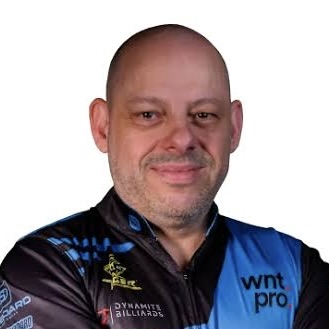
Darren “Dynamite” Appleton is one of the most accomplished and versatile competitors in modern cue sports. A four-time world champion, two-time U.S. Open 9-Ball champion, seven-time Mosconi Cup winner and 2017 inductee into the Billiard Congress of America Hall of Fame, the Englishman built his reputation by conquering games played on radically different tables and under dramatically different rules. His compact cue action, precise cue-ball control, tactical intelligence and fierce will to win made him a champion in 9-ball, 10-ball, straight pool and Chinese 8-ball—and one of the strongest all-around players of his generation.
Appleton was born on February 8, 1976, in Pontefract, West Yorkshire, and grew up as the youngest of three brothers in a rented council house. His father, Tony, worked with cars and as a handyman and also coached boxing; his mother, Susan, worked in a sewing-machine factory. Money was limited, but the household was rich in sport and competition. Darren played football as a goal-scoring striker and boxed as a lightweight, compiling a reported 12–4 amateur record with six knockouts. His first exposure to pool came when his older brother Shane received a six-foot table for Christmas, but football remained Darren’s first love for several years.
Pool took hold in earnest when Appleton was about 15. Inspired by exhibitions featuring his cousin Andy Appleton, one of England’s leading 8-ball players, Darren began practicing obsessively. He later recalled the guilt he felt whenever he missed a day. English pub pool offered an unforgettable … Read More