

 Apple Podcasts
 Spotify
 Ewa Mataya Laurance - Part 1 (The Striking Viking: Ewa Mataya Laurance’s Leap of Faith)
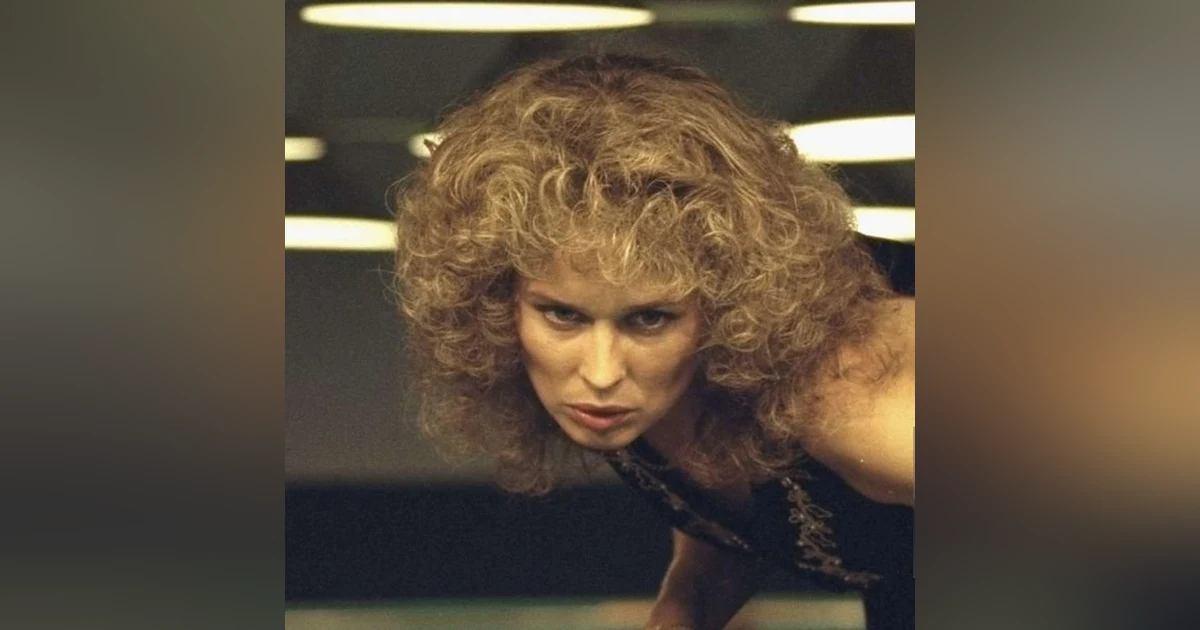

In this first chapter of our four-part life-story series, we welcome one of the most captivating figures ever to pick up a cue: Pool Hall of Famer Ewa Mataya Laurance—the iconic “Striking Viking.” From her earliest days in Sweden, Ewa takes us back to a childhood defined by energy, independence, and a love of sport. She was a goalkeeper in soccer, a force on the basketball court, and—by her own admission—a “control freak” who quickly realized team sports couldn’t match her appetite for precision, responsibility, and self-determination.
Then came the moment that changed everything: a curious teenage visit to a local pool hall. What began as tagging along because of a crush soon turned into genuine fascination—especially after someone explained why the best players chose certain shots and patterns in straight pool. That doorway into the chess-like strategy of cue sports lit a fire in Ewa that never went out.
Ewa shares vivid memories of Sweden’s vibrant club scene—Sunday tournaments that were equal parts competition and community, packed Jack-and-Jill events, and long bus trips to challenge rival clubs across the country. She reflects on the mentors who shaped her early understanding of pattern play and the hunger to “open the next door” of knowledge in a game with endless layers.
But the heart of Part 1 is the boldest decision of all: at just 17 years old, after competing in New York City at the World Championship in the storied Roosevelt Hotel, Ewa falls headlong into the electric world of American pool—legends, late nights, and possibilities she’d only seen in magazine pages. Then she makes the call that stunned her parents: she isn’t coming home… at least not yet.
This is where the legend truly begins.
Give Allison, Mark & Mike some feedback via Text.
Follow our show and/or leave a review/rating on:
Our website: https://www.legendsofthecue.com
Apple Podcasts: https://podcasts.apple.com/us/podcast/legends-of-the-cue/id1820520463
Spotify: https://open.spotify.com/show/4Za0IMh2SeNaWEGUHaVcy1
Music by Lyrium.
About
"Legends of the Cue" is a cue sports history podcast featuring interviews with Hall of Fame members, world champions, and influential figures from across the world of cue sports—including pocket billiards, snooker, and carom disciplines such as three-cushion billiards. We highlight the people, places, and moments that have shaped the game—celebrating iconic players, memorable events, historic venues, and the brands that helped define generations of play. With a focus on the positive spirit of the sport, our goal is to create a rich, engaging, and timeless archive of stories that fans can enjoy now and for years to come.
Co-hosted by WPA and BCA Hall of Fame member Allison Fisher and Mosconi Cup player and captain Mark Wilson, Legends of the Cue brings these stories to life—told in the voices of the game’s greatest figures.
Join Allison, Mark and Mike Gonzalez for “Legends of the Cu...
Welcome to another edition of Legends of the Cue and Mark Wilson. We've got another Lady Hall of Famer with us this morning.
Mark WilsonWell, today we have my father's personal favorite pool player in the world, and she's one of the few that transcended our sport. Allison.
Allison FisherWell, what an honor it is to introduce today's guest. She's won every title in the game. She's an entertainer, former model, hall of famer. She's graced covers of famous publications, written books, commentated, a true icon in our sport. Please welcome the striking Viking, Ava Matthias Lawrence. Welcome, Ava.
Ewa Mataya LauranceHi guys, thank you. I'm glad to be here. I'm so excited you guys are doing this.
Allison FisherYeah, it's uh it's something we're very proud of, and it's gonna be going for years and years and years to come. And I think some of these young players could learn a lot from the old ones. What do you think? Oh, absolutely.
Ewa Mataya LauranceIn so many different ways, too.
Allison FisherAbsolutely, I agree.
Mike GonzalezUh so great to have you, Ava. We've been looking forward to this for a while, and as we uh chatted a little bit yesterday, we're here to tell your life story, and we always start way back at the beginning. So if I've got this pronounced right, Yavle Sweden.
Ewa Mataya LauranceYavle Sweden.
Mike GonzalezYeah, that's it. So tell us about being a little girl in Sweden, growing up and then eventually coming to the game of pool.
Ewa Mataya LauranceWell, first of all, I think it's exciting that you guys you guys are telling my me, my life story, because at this point in my life, I can't remember half of what I did. So I appreciate that. Um we'll help you. I was your your regular tomboy growing up in the 70s, really. And you know, girl sports weren't that all about that. Now, Sweden was a little bit more ahead of other countries, I think, definitely United States, as far as being more okay with females in games and sports and everything else. So we had uh organized soccer. I played as a goalie. I wasn't as fast as the other short women with a whole real fast legs. So I wasn't the goal, I was tall and really loved soccer, loved basketball. I think the biggest problem I had with most team sports was I'm kind of a control freak. And I remember one time in our basketball team, I'm out there, I was the center or a forward, depending off the if the other tall woman was playing or a girl was playing or not. And I came down and I had played the whole game and again down to the end, and I and I got down on the bench, I was exhausted, and I look over at the the girl next to me, and she was brushing her hair in the middle of the game. So I said, okay, I can't do this. I can't do this. So then soccer continued on for a while, and then kind of by accident, stumbled into a pool room. My older brother and his friends started playing, they started bowling. I had a crush on my brother's best friend. My best, my best friend had a crush on my brother. So right around 14 is kind of when you start paying attention to what's going on in the, I don't know, the other gender. So all of a sudden, Nina and I, my friend, we decided to bowl. That was like what we were gonna do. Still played, you know, basketball, still played soccer, but we decided that you know, in the afternoons or at night, we would go to the bowling alley. Then all of a sudden, these two people that we cared about disappeared. So we bowled for a while, then all of a sudden we found out they were going to a place called Billiard Salon in a pool room, which we didn't even know what pool was. Nina and I went up to the pool room, and a lot of people there. Fun seemed like a really fun environment. And I got mesmerized by just watching what was happening, and I happened to watch a couple of the best players in our local pool room. And I the second time we came in, I asked, we still hadn't played, I asked somebody, whoever it was, I think it was Roger, Roger Schuppe, what's going on? Like, what are they doing? Why is it, why do some of these guys, you know, appreciate what's going on? And back then in Europe, you always went like this when it was a good shot. And he said, Well, this is what he's doing. He started explaining. They were playing in Straypool 14.1. And he said, Well, the reason why he made this ball is you can get over on this side on this ball and explain to me the pattern and what he had to do to get there. And I was, you know, I hate to use to overuse the word mesmerized, but I was. And after that second time, Nina and I got a table in the back and we were playing, and I remember coming home to my parents. I think I know what I want to do now. Now, I don't know if I meant the rest of my life as a turnover.
Mike GonzalezAt least this year.
Ewa Mataya LauranceBut that was that got me. And shortly thereafter, I quit basketball, and then, well, soccer kind of ended it quickly because we were playing a makeup or a what do you call it, like a scramble game, and somebody mistook my head for the ball in a really muddy situation. So I said, okay, that's enough. And I just decided that pool was it. And I became completely amazed by it. And I think it really helped having somebody explain to me what was happening on the table to understand the depth of it really early on. And that's that's that was it.
Mike GonzalezYeah, so we heard a little bit about how you got introduced to the game, and we're gonna pursue that a little bit, but let's just double back and talk a little bit about your family, talk about your folks, what did they do? Were they athletically inclined, and so forth?
Ewa Mataya LauranceMy parents, great, great people. My dad played a lot of my mom, let's get to it, zero. I mean, zero. Yeah, zero as far as athletic ability. And she will be the first to admit it. Very supportive parent, as far as you know, wanting me to live my dream, which she kind of didn't feel that she had a chance to do before she got married and had kids and did all that. So she was sometimes a little too overly supportive of my crazy lifestyle early on. But my father played handball and he played bandy, which is a uh Scandinavian sport, I think. I don't know if it's that big of in Europe, is it, Allie? Bandy? I've never heard of it, but I'm interested. It's it's played essentially on the soccer field, but instead of hockey sticks, you have they're kind of they have a bend at the end. I don't know, they're not the flat house hockey sticks.
Mike GonzalezOkay.
Ewa Mataya LauranceAnd but it's played on the soccer field, and it's pretty, it's a great, it's it's it's a form mixture between soccer and field hockey. It's very active, it's you know, skiing up and down, and you can imagine the size of these fields. So bandy is a big thing. So you played that and he played handball, which is uh, I think most people know it through the Olympics, where you're actually throwing the ball into a net and that type of thing. Anyway, so he was an athletic, but hardworking, self-employed, run their own business. So there was really no time for sports as far as once they got into their 30s and late 20s, 30s, and 40s. My father worked at the rail on the railway, and my mom worked at a pharmacy. And then my grandfather started an awning and blind company in the basement of their home, and which turned out later on to be our home. They sold it to us and they moved to a bigger place. And they made, you know, blinds. They didn't make awnings at the time, they made blinds in the basement of their home. And then my parents brought that business, and we ended up in a place called Opala, a little town of about, or I don't know if you call it a town, but there was about 200 people. And that's where we ended up. And yeah, hardworking people, and like I said, super, super, super supportive. Not the helicopter parents of today, which might have been a big better idea early on, but I left all that behind and came to America. So yeah, super, super, super childhood. My brother ended up taking over the business, and I he had his feet firmly planted on earth, and I did not.
Mike GonzalezSo it works. So, older brother, were there any other siblings?
Ewa Mataya LauranceNo, that was the two of them.
Mike GonzalezOkay, all right. So I don't know what how old were you when you moved from your uh your birth city of Yavle?
Ewa Mataya LauranceWell, I was born actually in in a place called Hiles, so then, which is where the business was. So then we moved to Opala outside of Yavle, both of them are outside of Yavle, and so I was five when we moved there. And at in seventh grade, from that little, you know, we had one of those little schools where first and second grade went together. Um I think six, you know, third and fourth, and I think either in third and fourth or sixth and seventh, between sixth and seventh, I think we had eight pupils. So it was that small of a place.
Mike GonzalezThat sounds like mine. We had first and second in one room, third, fourth, and fifth in another room.
Ewa Mataya LauranceThere you go.
Mike GonzalezSix through eight in other rooms, right? So there were there were two columns of third graders, two columns of fourth graders, two columns of fifth graders. The teacher just sort of moved around.
Ewa Mataya LauranceYes, I can relate. Crazy.
Mike GonzalezYeah, crazy. Yeah, I had a graduating class of six, so it's a little bit bigger than your class, I guess. Yeah, just a hair. So tell me if you have any recollection of the Yavla goat.
Ewa Mataya LauranceYavla goat, of course. We're on the map.
Mike GonzalezTell us about it. Our listeners want to know.
Ewa Mataya LauranceYeah, goat is it's a Christmas symbol, is the is the big goat. So I guess I should have, you know, had I known you were gonna ask me about that, I would have done this more. I should know this. He obviously did his, right? Yeah. So that's kind of our symbol. Every every city has a symbol. Ours is the Christmas goat. And they they make this big, and now I can't remember the like a straw, yeah. They build a big straw goat and put it in, and this thing is like 50, 60 feet. It's huge, gigantic, that they put up. It started small, but it's gotten bigger and more famous. And then one year some idiots decided it was a good idea to torch the goat. And year after year after year, in the beginning, they were torched.
Mike GonzalezNo.
Ewa Mataya LauranceAnd Sweden is not big on police everywhere. There's not, you know, they don't have a huge police presence or guard presence for that matter. So it kept getting put on fire. And then all of a sudden, it ended up on the UK gambling market. So you can actually bet on is the goat going down this year or not.
Allison FisherOh my gosh.
Ewa Mataya LauranceAnd since then, it's been some years it made it. And they have tried to put this non-flammable stuff they spray on the goat to try to stop it. But sometimes, you know, it it bites the bullet. So it's always exciting. Like, is it so right about now is when they're putting up the goat. So we'll see this year how it how it lands.
Mike GonzalezYeah, Alison, probably you'd never expect to make that kind of bet at Ladbrooks, would you?
Allison FisherNo, it's a bit kind of, isn't it? A bit like the Moscone betting on USA. Hey, you're European. What are you talking about? You're European American citizens. Exactly.
Ewa Mataya LauranceYou know, I I root for both sides, and and whoever wins, I go, we won. It's perfect.
Allison FisherYeah, yeah, it's perfect. I do the same thing, really. I do that. Works for us. Works for us. We've been here a long time. We've both been here a very long time. Yeah, 1981. I was I got here.
Ewa Mataya LauranceAnd you were only I was the pioneer that opened the floodgates for you people.
Allison FisherThat's correct. It's true. So 17 years old. Are you, Mike? Do you want to go back further to the beginning of the game?
Mike GonzalezYeah, before we'll we'll talk about uh Pool and and you know how your game developed. You mentioned uh having that gentleman sitting with you kind of discussing the patterns you were watching in 14-1. But what are your earliest recollections of how you learned the game? Were there other role models and so forth?
Ewa Mataya LauranceWell, my biggest role model, I think, and so at 14, it was just kind of playing, didn't really know anybody little by little. They always had a tournament on Sunday night, which is pretty much a big party. We had fun, it was no alcohol there, but what would happen is at the end of the, at, at the end of the tournament, a lot of times whoever won the tournament, and it wasn't not hardly any money, it was just a fun thing. You would have one week would be doubles, then it would be singles, then it would be like a Jack and Jill, and then singles. And Jack and Jill was always packed. And it was we played the five-nine, so you got a point for the five and two points for the nine. But it was more or less a fun, a fun thing. And I think that's what kept everybody still engaged. It wasn't just about the I got to try to get better. And I and I, you know, it was you got better accidentally because it was it was fun. It was fun all the time, which is now that I have an APA league, I understand the fun part. Yes, you want to get better if you have any integrity at all, or if you have passion, or if you have a goal. But if you take away the fun, then why do it? Get a second job. So the fun was really there at this at this place. And then the we had a club, it was called the Javle Golf Club. So the owner of the the pool room, he would rent a huge bus, like a like a city bus, and we would all go, a whole bunch of us would go to south of Sweden, north of Sweden, four-hour trip, six-hour trip, two-hour trip, and we would play other clubs. And then you would have the club championship and all that stuff. And during the Swedish championship and mixed doubles, I got uh hooked up to play with Bjorn Sheena Johnson. He was a multiple European eight-ball champion early on. And just talking about the game, we would play some pool and and talking about what he was trying to do and why. And not really teaching me the game per se, like hit it this way, this is how you hit to draw it. It wasn't about that, it was more about what he was doing, which taught me a lot about patterns, especially straightful back then. And I think the more I was fed information about the sport through that, I became more interested. It's like, where's the next door? I'm gonna open that the next door, the next window, the next peephole. What is what else can I learn about it? Because I didn't think I don't think anybody when you start playing the game understands how many doors and peepholes and windows there are to open.
Mike GonzalezSo, other than the fun aspect of the game, what else really down deep sort of resonated with you?
Ewa Mataya LauranceIt was always to me the pattern, the the chess part of the game. The shooting part came natural to me right off the bat for whatever reason, hand-eye coordination, whatever you want to call it. But the the the the thinking part got got me. And I think that again, just the intelligence of this game and the the you can take it about as far as you. I don't think that any pool player pool player ever said, I know what I need to know now. Forget about the perfect stance and that I knew nothing about. The the you know, I never even gave it one thought. Nobody ever taught me or suggested to me. There were no books on how to stand correctly, pre-shot routine, holding the cue right, you know, whatever it took to get that ball in the hole. But but I was more amazed by what happens to the cue ball next. So before I even knew what tangent line was, it started making sense to me. So at that point, I could never explain to anybody what I was doing because I hadn't broken it down yet. It was just seemed natural.
Mike GonzalezI I don't know a lot about the game in Sweden back in the late 70s, but you probably didn't have a whole lot of upper class, sort of even you know, world-class players there, did you?
Ewa Mataya LauranceWell, we had Sheena was a European class. At that time, European players were nowhere near the American player levels, but he knew plenty to run 100 balls balls and straight pools. He was he was a good player. I'm sure Mark remembers Sheena. He came over to the United States in '82 to play. But I mean, he, you know, some it was, it wasn't like it was today where everybody is spoiled, where you know, you have it's amazing between I'm learning things just looking at amateurs putting stuff up on YouTube, and I'm going, oh wow. I mean, I knew how to do it, I just never gave it much thought, or nobody taught me that. So the luxury, the luxury of the kids coming up now. You know, I was thinking about we have, you know, I have an APA pool league, and I was thinking about doing some videos about teaching, and I went, why am I doing that? Click on, I mean, there's 8,000 million of them now on YouTube and on the internet. So we didn't have that back then. No, it was uh yeah. So uh, you know, I won won the Swedish championship in 1980. I mean, 19, god, I'm old. 19 shut up 1978. You're only a little bit ahead of me, not much. So 1978. And that was a long story. I ended up getting sick, everything else, and all of a sudden, but I still went to go. And the my school that I went to at the time, I was in I just started 10th grade, which is you know, gymnasium in Sweden. And they would not give me time off to go to the European Championship, so I quit school. And my parents were not thrilled, but my brother, he only went nine years in school too, and then he decided to work for my father and took over the business. So, eh, you know, you'll go back to school. And played in the European Championship. That was in March, I think, of 1981. Well, I won I won the European Championship, sorry. I mean Swedish Championship in '81 in Strapool, got to go in '81 in August to the World Open in New York. And I remember my mom, I was helping out making a summer money pocket change. And all of a sudden my mom went, Ava, there's somebody from the Swedish you know, billiard association calling. And my and Christer Leofstrand won the juniors, Jürgen Karlsson won the senior men, and I won the ladies and and uh had a chance to go to Bern, Switzerland for the very first, the very second European championship ever. The very first women's European championship.
Mike GonzalezStraight pool. Straight pool, yeah.
Ewa Mataya LauranceIn straight pool. And yeah, it was I mean, overwhelming. We all took a huge uh one of those giant buses, and we went down and we had all these federation people, blah blah blah. First of all, they paid for us to go to the European Championship, and then my mom got the call and said, because I won the European Championship, Europe was gonna, Sweden was gonna pay for us three Swedes, that's Jorgen, myself, and Christer, to go to New York to play in the world championship.
Allison FisherWow. Life changed, didn't it? Oh my god. Yeah. And you were you were at seventeen? Fourteen. No. Oh seventeen, yeah. Seventeen. Let me yeah, jog your memory. Got it written. Seventeen years old heading into the US. Yeah. Wow. Very young. And life changed, didn't it? A little wild, maybe. I don't know. A little wild, very young. And then what happened in New York?
Ewa Mataya LauranceThe first thing that happened was Sweden. They had paid for us to get these Swedish outfits. So we saw the men have have gray pants. I had a great pleat gray pleated skirt way below the knee, mind you.
Allison FisherOf course, because that's the rules.
Ewa Mataya LauranceWow, yeah. So then we had a light in a blue, light blue shirt, dark blue blazer with a Swedish emblem, and a yellow tie. So it was the Swedish colors. And we came as a team, the you know, us and and the the head of the federation at the time. So all four of us came ready to. And we were told we I wasn't allowed to play that way. Neither were the guys. We had to go and get, I had a choice, either a to the floor evening gown or a tuxedo.
Mike GonzalezOh, yeah. This is back in the fancy day in New York. Yeah.
Ewa Mataya LauranceYeah. This was at the Roosevelt Hotel in New York City with the balconies and the old beautiful. So I'm going, I'm not gonna wear an evening gown. Come on, we're playing pool. I can't. So we went out and I got this really frilly, one peach, one lime green frilly um shirt and the little bow tie and the whole deal. And yeah, so played there. Didn't fare so well. I was really excited about everything going on. There was parties everywhere in somebody's room down in the lobby. And I was just thought this was I didn't gone to heaven.
Mike GonzalezThis is just freaking too freaking awesome.
Ewa Mataya LauranceAnd I remember before I left, months probably before I left for the United States, somebody sent me a clip of just the two two-sided pages of an article that was in Playboy magazine. And it featured, you know, Alan Hopkins, Jimmy Rempey, Jimmy Matthaya. I mean, all these guys, the greats from from that era. And I remember as a kid, I'm 17 years old and I'm looking at these guys, oh my god, yeah. So it was Jimmy Matthaya and one other guy who should you know remain unnamed, that I thought was kind of hot. So whatever, and I and all of a sudden, four months later, whatever it was, I end up and they're all there. And they are all partying. I mean, back then tournaments were like they are now, where everybody's got uniforms and e-shirts, and everybody goes to bed at you know 9:30. It was it was a party from start to finish. And Jimmy Matthaya happened to ask me if I wanted to go to a Yankee ball game. And I said, okay, whatever that is. And that was that was that. And he pursued me the whole time I was there. He was a lot older. And I thought I had died and gone to heaven as far as pool. I said, this is what I want to do. I don't want to go back. I want to stay here. This is the most exciting thing. Watch the best players in the world, Luther, Lassiter, Jimmy Karas, Siegel, Ray Martin, they were all there. Gene Belukas, but I hadn't heard so much about the women at that point. But my gosh, everybody that I had ever heard of, or anybody that I knew had ever heard of, were there.
Allison FisherWhat a fantastic era.
Ewa Mataya LauranceOh my gosh. I can't even tell you. I remember there was a there was a PPPA was what the men's association was called back then, and they had like a PPPA Hall of Fame kind of thing. And I remember Lou Batera was the inductee. And I can't remember a lot about it, but I remember Jim being one of the people that that roasted him. And back then it wasn't just oh, he's played this, he's won this. It was stories like alore. And you know, it was it was just it was a whirlwind, it was really crazy. So I called my mom and dad. I asked uh the the guy that owned my pool room at the time, he came that year, La Fay. And I asked La Fay to come up to the room with me. He said, Okay, so at the end of the tournament, I said, you know what? Can you help me? Because I'm not going home. So I know you can talk, help me talk to my parents. So I called my parents and I said, I'm I'm gonna stay here for a while. And my dad screamed, no, in the background. And my mom goes, Well, what are you gonna do? And anyway, back and forth, back and forth. And then La Fay got on the phone. He said, Ingrit, that's my mom's name. The race is over. So that was that.
Mike GonzalezAnd then uh I stayed, yeah. Wow.
Ewa Mataya LauranceAnd they made me promise to come home for Christmas.
Mark WilsonWhat a brave and courageous decision to make. Crazy.
Ewa Mataya LauranceA little crazy, yeah. But but you obviously felt safe, like you're in good hands, didn't you? Well, the reason why I ended up in good hands, because I wasn't really in good hands. But I had things to do. You guys know I had things to do. I had a goal. Luckily for me, and which is probably why it worked out the way it did, and why I ended up staying, is because I ended up in a in a town out just outside of Lansing, Michigan, which is where Vicki Paskey, Vicky Frecken at the time, lived.
Allison FisherWe became at that tournament, you meant.
Ewa Mataya LauranceShe was at the tournament. Right. Yeah. And we became best friends. She and then later on, her husband Bob took me under their wing and taught me about life, about insurance, about what checks are, because they don't really have those in Sweden. But I mean, the whole like how to live life, how to how to handle it in America, learn the language. So when I saw what I thought was a horse puppy, she had to point out to me that's right actually a foal. You know, just the the language. I knew some English from school, Swedes all learn English in school, but I mean to be able to live here and and understand the slang and also the official and uh how to take care of myself in a different way, which which I give all the credit in the world to Vicky. All the credit in the world.
Allison FisherAnd what a wonderful friendship you've had over many years for so long. Yeah.
Mike GonzalezSo I have to I have to ask, uh, two hot guys, one unnamed in New York. Was Mark Wilson the other one?
Ewa Mataya LauranceMark Wilson wasn't there, or he would have been there.
Mark WilsonOh great answer, just the way I wrote it.
Ewa Mataya LauranceYeah, yeah. All right, check that off. I'm checking that off right now, Mark.
Mike GonzalezMark, you might have been there.
Mark WilsonNo, I didn't play much in New York. I was not, I was kind of it was expensive and a long ways to go.
Ewa Mataya LauranceBack then there were kind of three, maybe four quadr, I guess four quadrants of pool in the United States. You had the Northeast, you had the Midwest, you had the West Coast, and then I guess the Texas area, Florida was not at the at the time then that I knew, it was not a hotbed.
Mark WilsonAbsolutely.
Ewa Mataya LauranceYou had kind of a subculture down in the south. But but those were so as far as events goes, it was New York was mostly straight pool, the Midwest was eight, I mean nine ball, eight ball and nine ball, you know what I mean? So it it it didn't make any sense because some you know it was just not financially feasible to go all the tournaments.
Mike GonzalezYeah. So looking back with the benefit of 2020 hindsight, would you have made that same bold move again at age 17?
Allison FisherWell, yeah. Hasn't been a bad move over the months. No.
Ewa Mataya LauranceI still go, you know, is one of the things I told my ex-husband, and it's one of the things I told my husband, and it's now Mitchell, and it's one of the things I told myself when I moved there. The minute I can't go home to visit every year, I'm going back. You know, I said that early on. So I told them all, I said, no matter what, there will always be money for me to go back and see my family. Yeah because I really miss. I'm I guess I'm really Swedish at heart because I was old enough to, I'm sure you can relate to that, Allison. Absolutely. I love where I live, I love being here. That's not it.
Allison FisherIt's just there's a it's in your heart, isn't it? Yeah, yeah. It's definitely a heartfelt.
Ewa Mataya LauranceAnd my mom still lives there, and my brother still lives there. So I mean, it's some of my best friends. So yeah.
Allison FisherDon't you have a really close relationship with your brother?
Ewa Mataya LauranceWe did until I started kindergarten, I guess, according to my mom. And then we went through a long hiatus where he did not want any part of his baby sisters around his friend, especially since I had a crush on his best friend. The last thing he needed was his three-year younger sister hanging around. But now we have a fantastic, yeah.
Allison FisherYeah, that's lovely. I'm like that with my brother.
Mike GonzalezLet's look back at your game at age 17. You make that bold move to come to the States, you're gonna stay here. How good were you then?
Ewa Mataya LauranceThat's hard to say. I was I was good, but I didn't have a lot of like deep knowledge. And I think what you were talking, you know, referring to earlier, I don't think I knew how good I could be, like what was out there that I hadn't seen yet. So I had a lot to learn about the game.
Mike GonzalezWould you have had much exposure to Nine Ball by that point?
Ewa Mataya LauranceOnly as a fun game to play on Sunday nights at our, you know, Jack and Jill or singles and stuff, not not as far as the intricate parts of Nine Ball that have evolved since.
Allison FisherYeah. Back in those days, in that time, were they uh were there a lot of mixed events? Were they all mixed, like the guys playing their tournament, the ladies playing theirs? Not really. No.
Ewa Mataya LauranceNo, not really. I mean, on a local level, or they would spot you, or that kind of thing. I remember playing a tournament in Chattanooga that Mike Massey had, and it was I got spotted two games in a race to nine, I think, you know, that kind of thing.
Allison FisherWas Jimmy Jimmy helping you with your game? Did you get any sort of thing? Not really.
Ewa Mataya LauranceYou know, people figured that he did, but he was kind of out of it by then. You know, he won the uh all-around world championship in 71, 72, I believe, or 72, 73. But by time we met, he he never practiced. I mean, I could not we had a house table in the basement, I would go practice, but he was not really into it by the as far as tournament pool anymore back then.
Allison FisherAnd it wasn't was there a lot going on for the men at that time? A lot of tournaments.
Ewa Mataya LauranceYeah. The men It depends on when you're talking about. If you're talking way back, the the problem the men had for a long time, and and Mark can attest to this, is they would form an organization, everything was fine, and then somebody said, You really should be making more money. Here's a new organization. Okay, then they would go over there. Somebody else would say, Yeah, you're not going anywhere, I'm gonna do that, and then they would go over there. So it never became like WPBA has been around for a very long time. The men have gone through alphabet soup, it'll make your head spin. And and it was something before I came over here in '81, it was PPP PPA PPPA back then, and then it's gone through all these evolutions. Unfortunately, the women had a weight of sticking together and saying, okay, if we don't like it, what do we do? The men just went to the next best thing. So my other bomb marks.
Mark WilsonNo, completely right. Yeah. So going back when when Ava first came here, my first encounter, she was 18, and all of us were smitten naturally, and she was just instinctively good. And you know, with she was a top player then, but then she evolved into a much better player down the way. But she began right at the top of the game. And then what she's saying about the men's associations, they were so fractured, and it was always a selfish thing. And I marveled at there was a time when I worked with the WPBA, the Women's Professional Association, and I would attend one of their board meetings. It was so such a contrast compared to the men's when I was a board member. And it would be all players that are all self-absorbed and self-interested, and they would say to each other, like, hey, Wilson beat me in a race to 11, so could we make it 15? Because he could never make it 15, you know, never with any interest whether whatsoever at the fan enjoys this, okay? And then there'd be like Buddy Hall would be flicking Seagull's ear, and there'd be complete chaos. And then one guy'd say, Hey, do you have the pen? Nah, damn, I thought you brought the pen. Okay. Then I'd go to a women's meeting and they all got laptops and they got minutes, and they're talking about making sound logic. I'm like, wow, what a contract. I never even considered that could go like this. So yeah, but anyway, and then you know, over the years to get to watch Ava's development uh throughout, it was just astounding because she was not someone that rested on her laurels of already being a top player and actually, you know, transcending pool and in the mainstream America. No, she kept working, and it was uh uh I always was always kind of like her secret. I hope she wins, just because I know where she came from and I remember back when she was 18. So yeah.
Allison FisherThank you, Mark.
Mark WilsonOh, yeah, it's all true.
Allison FisherThank you for listening to another episode of Legends of the Cube. If you like what you hear, wherever you listen to your podcast, including Apple and Spotify, please follow, subscribe, and spread the word. Give our podcast a five-star rating and share your thoughts. Visit our website and support our Paul History project. Until our next golden break with more Legends of the Cube, so long everybody's got to go.

Pool Professional
Ewa Mataya Laurance, forever known to fans as “The Striking Viking”, is one of the most significant figures in women’s professional pool: a champion who helped define an era, a broadcaster who helped explain the game to the wider world, and a leader who fought to move women’s billiards from smoky back rooms to legitimate sponsorship, television, and tour stability. Her story isn’t only about trophies. It’s about an immigrant’s stubborn commitment to a dream, the realities of making a living in a niche sport, and the will to keep building something bigger than yourself—while still caring, first and last, about playing pool.
Raised in Sweden, Ewa grew up athletic and fiercely competitive, a self-described “tomboy” who preferred sports and action to anything delicate. She played team games, but the longer she competed, the more she wanted full responsibility for outcomes. Pool gave her that: complete accountability, a mental battlefield, and an endless puzzle. What hooked her wasn’t just pocketing balls; it was the strategy, especially the pattern play and precision that turned runs into something planned, not accidental. From early on she gravitated to the “chess” side of the game: cue-ball routes, discipline, and learning how to control a table under pressure.
As a teenager, she began traveling and competing seriously, and by the time she reached international events she had already developed the engine that would define her career: practice, repetition, and a refusal to accept limits. A formative trip to the United States opened her eyes to the scale of … Read More