

 Apple Podcasts
 Spotify
 Ewa Mataya Laurance - Part 2 (Bunnies, Breakthroughs, and the FBI Raid: Ewa Mataya Laurance Finds Her Fire)
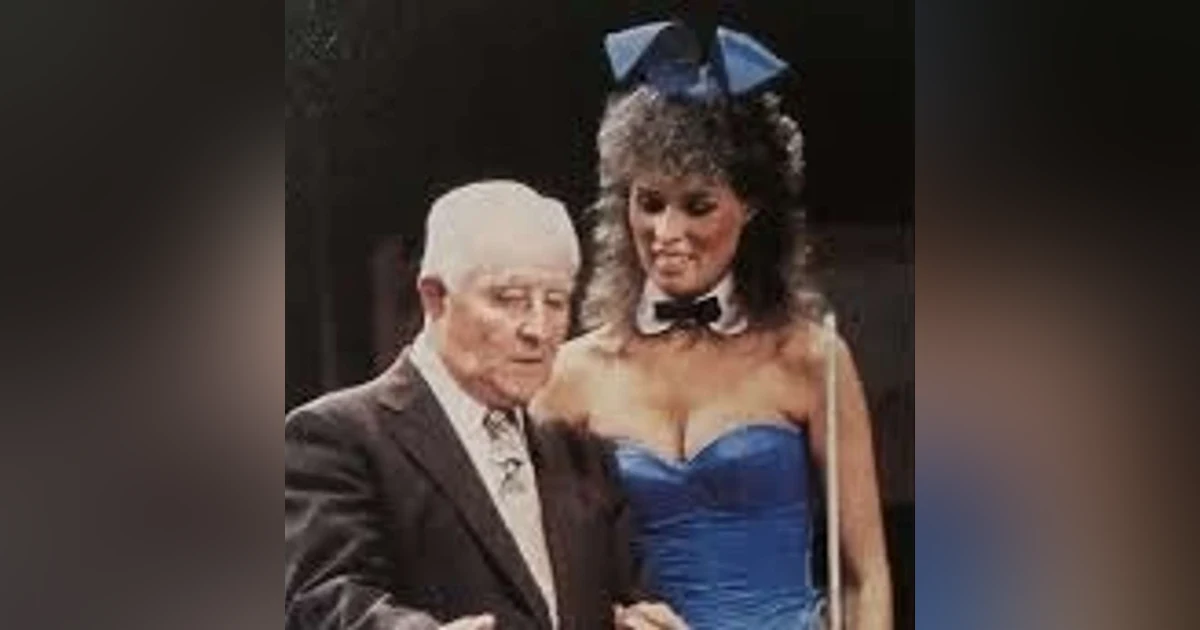

Part 2 picks up as Ewa Mataya Laurance—“The Striking Viking”—plants her feet in America with one goal: play pool, and nothing else. From home in Michigan to road trips with her friend Vicky Frechen (Paski), Ewa relives the hustle behind the highlight reels: waitressing shifts, a brief—and doomed—stint in an insurance office (“How did you get here?”), and even landing a job at a Playboy Club, learning the bunny dip while trying to run racks on a bumper-pool table in costume.
But the real story is the turning points. Ewa opens up about becoming a young mother, the fear and responsibility that reshaped her life, and how that pressure changed her relationship with the game. Then comes the breakthrough: the gritty, smoke-thick Maverick Club scene, a title match versus Lori Shampo, and the moment 20 FBI agents storm the room mid-finals—forcing Ewa to fight not only for the trophy, but for the scoreline itself.
Along the way, Ewa, Allison Fisher, and Mark Wilson revisit the stars and influencers of the era—Belinda Bearden, LoreeJon, Gloria Walker, Vivian Villarreal, Billie Billing, Palmer Byrd, and more—painting a vivid picture of women’s pro pool before it went mainstream. Ewa also shares a surprising partnership with “Mr. Humble” Mike Sigel in a pioneering live doubles event, plus what it felt like to watch trailblazer Jean Balukas carry the weight of attention, controversy, and expectation on national TV on ESPN—right up to the $200 fine that became her exit line.
Outside the arena, a Brunswick sponsorship arrives just as Ewa’s marriage fractures—raising the stakes on every rack as she chases big wins like her U.S. Open titles of the late ’80s. And in a fascinating behind-the-scenes chapter, she details the ambitious (and messy) attempt to unite men and women under one tour umbrella—the early blueprint that foreshadowed modern professional pool.
Give Allison, Mark & Mike some feedback via Text.
Follow our show and/or leave a review/rating on:
Our website: https://www.legendsofthecue.com
Apple Podcasts: https://podcasts.apple.com/us/podcast/legends-of-the-cue/id1820520463
Spotify: https://open.spotify.com/show/4Za0IMh2SeNaWEGUHaVcy1
Music by Lyrium.
About
"Legends of the Cue" is a cue sports history podcast featuring interviews with Hall of Fame members, world champions, and influential figures from across the world of cue sports—including pocket billiards, snooker, and carom disciplines such as three-cushion billiards. We highlight the people, places, and moments that have shaped the game—celebrating iconic players, memorable events, historic venues, and the brands that helped define generations of play. With a focus on the positive spirit of the sport, our goal is to create a rich, engaging, and timeless archive of stories that fans can enjoy now and for years to come.
Co-hosted by WPA and BCA Hall of Fame member Allison Fisher and Mosconi Cup player and captain Mark Wilson, Legends of the Cue brings these stories to life—told in the voices of the game’s greatest figures.
Join Allison, Mark and Mike Gonzalez for “Legends of the Cu...
We'll get to that later, but we were on the board of the PBT, weren't you? PBTA originally. Weren't you on the board there? PBTA, yeah.
Mark WilsonYeah, that was interesting.
Ewa Mataya LauranceWe'll get to that later on.
Mark WilsonOkay. But then so what uh I have a question. Then so when you you you moved to Lansing or Grand Rapids, is that is that right? Ledge outside of Ledge. Grand Ledge. Yeah. Was it pool your uh you just want to stay in America or were you here to become a great, great pool player?
Ewa Mataya LauranceI wanted to play pool. I mean, that's all I cared about. I mean, I remember one of the biggest, like to to let's go back to to try to figure out a way to make some money doing this and and like looking at the future. It wasn't like I was terrified, I don't want to go back to America to Sweden. It was more, I want to stay here. I want to stay here. And I never I don't know think I ever thought of staying here forever necessarily, but I did not want to go back. I wanted to, I loved the lifestyle, I loved the the potential, I loved watching all these great players. And I really enjoyed the country as a whole. But to be able to afford that, I worked as a waitress. I worked at Vicky's insurance office. I gotta tell you this real quick. This is why I was never made to like work in an office. So Vicky or Vicky had just become, I think she was just become a part owner in an insurance office. Her uncle owned it, and I don't know, you know, it's a long story what happened with her, but she had me do something very menial. I had to take, you know, the whatever it was and input like six things and then go to the next one, whatever. It was very basic, minimal wage, just to try to make some money. And it was computers, remember it was the green or yellow flashing lights. It was just a black screen with a green, whatever. And I'm doing what I'm can, and every about every 12 or 15 of those things, I go, Vicki. So she'd have to come and help me get out of it and do the right thing. And about 12 or 15 later, after this goes on for, I don't know, a couple weeks, I go, Vicki. She goes, so she comes in and the screen goes, How did you get here? So I was fired, I think. But then I start? Yeah. Then I start working uh as a waitress, and then uh they had a screening or or audition thing for a Playboy Club opening up in Lansing, Michigan. So I went out and you had to put this bathing suit on and go and do all this, and I got the job. And I worked there for about, they got ended up getting at one of those bumper pool tables. Yeah, which is really hard to do when you when you're I don't know if you ever saw a Playboy bunny costume, but yeah.
Mike GonzalezSo you were the house, you were the house, the Playboy house pro then on the bumper pool table.
Ewa Mataya LauranceAnd I learned how to do the bunny dip, therefore. So then as it would turn out, the very first, and I still would go to tournaments, I would have people kind of cover my shifts and all that. Then it turned out that big fights with sponsoring, you know, through Charlie Urzetti and everything else, the first ESPN women's only seven-ball championship, and it happened to be at the Playboy Casino in Atlantic City. So I went and I can't remember how I ended up with one, but they asked if I would wear my Playboy costume and then do a trick shot on TV with Alan Hopkins and one with William Muscone. And I'm going, and I Vicki knows this. Vicki will attest to me, I want to just be one of the players. You know, I'm practicing till there was a practice table. I was practicing till I was blue in the face, and now I'm supposed to go on and you know, it was it was not good. But I did, and I managed not to fall out in this thing, and and again, they would not let me take the time off, so I quit that and then came back and started, you know, went all over the place, playing tournaments, got better, kind of went from there. It was my last job.
Mike GonzalezYou started, yeah, yeah. You started with the WPBA right off the jump, then, as soon as you arrived in the States, I assume, huh?
Ewa Mataya LauranceYeah, I wasn't really involved as far as the organizational part of it. It was just, and and I was more in the Midwest. The WPBA was at the time more in the New York or the Northeast area. I started playing as some of it, Big Fights, who used to own all the video and everything else for Muhammad Ali, and they were a big promotional company in New York. They uh paid for me to do some modeling for, so I lived in New York for I can't remember for how many months I was there. And they put me up in a hotel and I would go to Ghostie's and do all this stuff, and then realized I want to play pools. So there was an event in Niagara Falls and or outside of and oh, in Buffalo. So I just kind of packed my stuff and went back and then really started getting involved. Vicky and I would travel cross-country to LA. We would drive, we would drive through Canada to tournaments in you know, in Niagara Falls or nearby in New York, wherever it was, we drove everywhere. And yeah, kind of those were those were those kind of days. Fantastic.
Allison FisherYeah. Fun times. Oh, yeah. So at what point you you became pregnant, didn't you? I did. I got knocked out. That threw me for a loop. What what how old were you at that point? Uh I was 20. So still quite young, very young.
Ewa Mataya LauranceYeah, I had um I had, was I 20 or 19? Yeah. That was about, I don't know, about a year after stopped working, if you will. I was still doing some modeling through Detroit. My mom was really excited. I was excited I was going to make a lot of, I was going to make like $10,000 doing modeling jobs in one in Hawaii, one in Dallas, one in Chicago, and one in Miami for like these car show things, you know, like this car. You should be in this car. So that went out the way. So I got pregnant. And it was really scary because I'm going, well, I don't think I had totally made a commitment to stay in the United States forever at that point. But now she she has a mother and she has a father, and I can't just take her away from Jim. So that was scary. That was kind of changed my life a lot. And I also couldn't, you know, Jim would take off on road trips doing what he did. And so I couldn't go anywhere. I couldn't go to tournaments, I couldn't do what my passion was. So yeah, it changed my life for the better, obviously. But also not how I had visioned it at the time.
Allison FisherYou were still so young. Yeah. You know, you had to grow up very quickly, didn't you? Yeah.
Mike GonzalezSo this is little Nikki we're talking about.
Allison FisherThis is little Nikki.
Mike GonzalezYeah. So when you broke through for your first WPBA title, 1984, the Clyde Childress Nine Ball Open, at what stage of your knocked-upness were you?
Ewa Mataya LauranceI think I was unknowingly knocked up at the time.
Mike GonzalezOkay.
Ewa Mataya LauranceYeah, or even even maybe it was before. I had I had come close. I had come second. I remember to Lori Champeau, who was like the person to beat. Do you remember Lori, Mark?
Mark WilsonAbsolutely.
Ewa Mataya LauranceYeah. I mean, she was a whole different breed. You know, Jean Beluka's incredible player, super smart, touch, nice, beautiful touch, straight pool player. But when it came to power, Lori broke the balls like any of the guys on tour. She was aggressive. It's a whole different game, wasn't it, Mark?
Mark WilsonShe was she would take you right on for big money at any point. And she didn't care man, woman, or beast. She would cut your heart out. Wow.
Ewa Mataya LauranceI wish I'd met her. I wish I'd seen her play. Well, think about this, Allison. It was 1982. I came in second in the McDermott Masters in Mobile.
Mike GonzalezMcDermott Masters, yeah.
Ewa Mataya LauranceYeah. And she, I couldn't believe it. I played a really good defensive shot on her, played a really good safe. I'm going, well, she can kick this way. She can't kick it the way she wants to. She can kick it this way. And she just stepped up, looked at it, and jumped over the freaking ball and made the six and ran out. And I went.
Mike GonzalezOh.
Ewa Mataya LauranceI had never seen man or woman. I had never seen anybody jump a ball at that point in my life. Never.
Mark WilsonInteresting.
Ewa Mataya LauranceThat was very early on, wasn't it? In that many years before. Yeah. Really? Yeah. Before Earl did it.
Mark WilsonThat was a full Q, too.
Ewa Mataya LauranceIt was a full Q. Like no hesitation. She just popped in and going, okay, I got a lot to learn. Was she tall? Was she a tall woman?
Mark WilsonNot real tall.
Allison FisherJust wondered because the full Q is probably 5'7-ish, 5'6, 5'7, maybe. Yeah. Amazing. So tell what happened to her. Does anyone know?
Mark WilsonYeah, she had some issues, some and maybe drugs took a role in her premature departure.
Ewa Mataya LauranceI don't know. I think she also got cancer, didn't she? I can't remember. Sad.
Mike GonzalezTell our listeners about break breaking through for that first win.
Ewa Mataya LauranceOh, you're talking about the Clyde Childers. Oh my God. All right. I gotta separate the two because I think the first, let's see. I won it two years in a row. So I won it 93, 83 and 84. 85 I couldn't go because I I had Nikki that year. But so 83, it was the most amazing. This is one of those where I don't want I would I don't want that time back. I fought a lot of my career to get rid of that kind of pool so we could actually bring it into mainstream, into television, everything else. But I am so glad I was part of it. You're walking into this place, it's the smokiest place. This this pool room was, it wasn't even a pool room. It was like a bar with nine-foot tables. I think they had six or eight tables in there, the bar on one side, a game room in the back that should not have been there. But here I am, and it's all the best players in the world. I remember Muchi had a stand on one side, and it was it was just the weirdest, weirdest place. I can't even explain it to you. And I ended up beating Geraldine Titcomb in the finals, which was a huge deal for me. I mean, it was the first big win I had, other than like a state championship in Michigan or whatever, but it was the first big win that I had. And Geraldine was a really good player, wasn't she, Mark?
Mark WilsonOh, absolutely. And then her husband kind of guided her through the U.S. Open Straight Pools. I knew her when she was much younger. Yeah. So you're talking about the Maverick Club then? Yes, the Maverick Club.
Ewa Mataya LauranceYeah. Were you ever there?
Mark WilsonOh, yeah. And I'll never forget Shannon Dalton told me a story about uh he him being there and underage. And I think this came from Earl Strickland. He says, Yeah, I was in that place, and here come this kid. And then uh he just went up to the bar and ordered a beer and they gave it to him. It was Shannon Dalton. That was his start when he was about 16. Like, oh, okay. Yeah.
Ewa Mataya LauranceSo the second year I went back to defend my title, played really, really well. I can't remember who it was, but I almost lost a match, then got on early on, and then got on fire and played great. So now we're in the finals. And I'm playing Laura Champ in the finals. And back then I think it was a race to seven. And so the score is four to two me, and I'm breaking. So it was three to two. I win that rack. It's four to two me. I am we're at the first table as you walk in, and I'm about to break the balls, and my heart's pounding because I said, I I got her, I got, I'm playing great. All of a sudden the doors went boom, and there was about 20 FBI agents busting into the so yeah, apparently there was a woman running an illegal gambling thing in the back, and there was somebody selling drug in the way back. So they busted up the place, made all of us leave, and it looked like the tournament that was gonna be the end of it. They were gonna shut the place down. And I remember we went to a waffle house, and I was furious. I could not believe this was gonna happen. I'm gonna hit four to two against Lori Shampoo. I'm on fire. So then, long story short, we find out they're they're gonna be able to open it. They realized that it was only these people doing their thing. It wasn't organized, blah, blah, blah, whatever. So they were gonna open it up, but they let us know that everybody was gonna start at zero and the matches were gonna start over the next day. Well, I think that's when Ava's political career started in the WCBA.
Mike GonzalezThere's no way.
Ewa Mataya LauranceI'm breaking the balls, the score is 4-2. I don't care what you say, and I won the argument. They let they let us continue where the score was. Fair enough. So I won. Yeah. That's how I won that title.
Allison FisherSo you came back the next day and finished the the match. Yeah. Nice.
Ewa Mataya LauranceBut that was a huge, that was a really big breakthrough. You know, you know, anybody who plays who has played on a on a professional level, especially, know what it's like to play great, win matches, and then there's that step of winning. You know, getting to the finals would be the next one, but then actually winning is is almost level. Yeah, another level takes.
Mike GonzalezAnd then validating with your second one.
Ewa Mataya LauranceYeah.
Mike GonzalezIt wasn't a fluke. Absolutely. It was a big deal. So you had a few other wins uh kind of in this time frame. Uh, you won the 1984 Midwest Nine Ball Open, the Milwaukee Doubles Cup in '84, you won a couple Midwest and Michigan nine ball events in in '85. And then you get to 1987 and you win the nine ball team challenge with none other than Mr. Humble. Oh, yeah. Mr. Humble, oh, yeah.
Allison FisherMike Siegel. How was that? And how did you get to partner him? I babysat him.
Ewa Mataya LauranceNo, what we did was we all pulled out of this bucket. We pulled who you're, you know, four women. It was Belinda, Lori John, myself, and Gene Belukas. And then it was Jim Rempe, Alan Hopkins, Miserac, and Siegel.
Allison FisherThat's a nice field, isn't it?
Ewa Mataya LauranceYeah. So that was kind of the cream or the crop kind of players at that time who were really playing well. So the first one I think went up to pull a ball to who she was going to play with was Jean, and she pulled Miserac, and we're all going, oh, it was like great. So that was obviously the favorite team. And then I think Laura John played with Hopkins. I played with Siegel, Belinda played with Rempi. And it was great. It was the first time Pool was live, at least in the modern day. And this was a doubles live, and they played two tables. So if there were any downtime, somebody was really thinking for a long time, or they were racking the balls, they popped over the other table. So they were covering both tables, the semifinals at the same time. And then they did the finals on one table. And all I remember is Siegel going, partner. And he, when we started practicing, because everybody else went out to dinner, Siegel and I decided to practice. And, you know, just like all guys, you didn't think, yeah, women pool players, please. But we we kept practicing. He went, wait a minute. You know, Siegel, right, Mr. Humboldt? You know how to play. And I went, Yeah, I know how to play. It's okay. So we went, we had we had a lot of fun. We played that doubles match and we ended up winning the whole thing. So that was pretty cool.
Mike GonzalezYeah.
Ewa Mataya LauranceThat was a good shot in the arm, money-wise, too, at the time.
Mike GonzalezSo yes. So tell us a little bit about our listeners, a little bit about some of the players of the day. You know, when you first came to town, of course, you mentioned Gene Belukas, but there were several other fine players in that era. And I'm talking about the pre-Fisher era, because you know, Allison came to town late 8085, and or I guess late 95, wasn't it, Alison? Late 95?
Allison FisherYeah, but I'd met Ava before that, but we can get to that.
Mike GonzalezYeah, but but but back in this day, you mentioned Lori Champeau. Of course, Lori John was playing back then, wasn't she? Yeah.
Ewa Mataya LauranceYeah. Who were some of the other Lori John, Vicky, Vicky Frecken, as she was known at the time. Vicki Pas Pasky. God. Gloria Walker.
Mike GonzalezGloria Walker. Belinda Bearded.
Ewa Mataya LauranceObviously. Belinda, of course. Belinda.
Allison FisherWhat did Robin come on the same? She left.
Ewa Mataya LauranceRobin, Robin and Mary Keniston, Mary Garino, Mary Kenniston, she they had been around for a while before, but they they didn't really come to a lot of the tournaments on the West Coast, on the East Coast.
Allison FisherRight.
Ewa Mataya LauranceSo but yeah, Robin, some of the players knew about Robin. I did not until probably the late mid to late 80s. Vivian Villarreal, same thing. Showed up at the Atlantic City tournament, and we're kind of going, yeah, I don't know who that is, but holy smokes, you know. So again, the money was not what it is now. So if it took a lot for players to go from one coast to the other to play. So that's what I was saying. It was kind of the country was split up in quadrants, then it kind of went to double side one side of the country or the other.
Mike GonzalezYeah.
Mark WilsonBilly Billing would have been in there, Palmer Bird would have been another name. Right.
Allison FisherYeah.
Mike GonzalezSome great players. Oh, yeah. Yeah.
Allison FisherWe just uh inducted Billy Billing into the WPBA Hall of Fame.
Ewa Mataya LauranceYeah, one of the early uh that started out the her and and Palmer Bird and then and uh what's her name? I can't think. Anyway, and Vicky Paske was was a charter member. So I mean it was a lot of, you know, they've started out going, okay, we gotta figure this has to be organized. We can't just do this and come from somebody having a tournament.
Allison FisherWhat year did that that start? Just to get WPBA. Yeah, with you involved and Vicky and Sherry, that that particular era where you were separating the men and the women.
Ewa Mataya LauranceWell, that's a whole. Now we're really talking. Are we there yet?
Allison FisherWhat about year what year are we in now? I'm just trying to frame it.
Ewa Mataya LauranceWe're really in when all that really started was 90.
Allison FisherOkay, so we're a bit before.
Ewa Mataya Laurance89 really is when it kind of started.
Mike GonzalezWell, let's talk about let's talk about that 1988 US Open win, then we can get to the other stuff.
Ewa Mataya LauranceThat was big.
Mike GonzalezIt's it's interesting. Um I'm looking at Wikipedia, you know, for the the US Open. All they show is men. What's what's up with that?
Ewa Mataya LauranceYeah, no kidding. No, but I won 88, I won 81, but I also won 86. I think that was against uh Bonnie Hoffman in the finals. I had to beat her twice.
Allison FisherI like those days of winning twice.
Mike GonzalezDid they contest the men and the women's at the same time at the same place, or were they held differently?
Ewa Mataya LauranceWell, uh at that point in time, I think it was 88, uh is about when things started, 87 maybe is when things started kind of really shaking up a little bit, which that was around that time that Gene Beluca started playing with the men. It was the time that at WPBA started organizing more, saying we need to have some kind of address code if we're gonna try to attract media, try to attract sponsorships, you know, that kind of thing, getting along with our our sports sponsorships. So that really changed things quite a bit because now all of a sudden we were looking at it differently. And there was a time we were in Binghamton, New York, and God, I wish my memory was better. But I remember that that was the first incident with Gene Belukas because the women were complaining because apparently there was some issue with the dress code. I was not on the board at the time, but there was an issue with the dress code. And at the same time, she had flack from the men saying this is BS because she was beating a lot of the top men. She beat Mizorak in that tournament, she beat somebody else. I don't know if you remember, Mark. Oh, well, Buddy, she beat Buddy. Buddy. Buddy Hall. Yeah.
Mark WilsonHopkins, LeBron.
Ewa Mataya LauranceYeah. I don't know that they were all in that particular event, but during that time, she was she started, you know, thinking about kind of crossing over. So she wanted to play in both. And I think it was the men's association said, You got to choose. If you're going to play with the men, you know, there was it was just a tug of war the whole time. It was an uncomfortable time for her because nothing was worked out yet. And it was just happened to be in that moment. Like, where is it going from here? And she was a pioneer, which is it takes a lot of guts to be a pioneer because you're going to get that means that you're going to get complaints from 18 different sides because you're trying to do something different. So yeah, so that was kind of started a shift. And we started really taking control. Belinda was involved, Vicky was involved. All of us we started getting on the board and going, what do we do from here? Well, we got to make sure we have an audience. Without an audience, you don't have you don't have sponsorships. Without an audience, you don't have television. So how do we get audience? Like, where do we start? Do we try to get sponsorships first and then grow an audience? I mean, there was a lot of discussions like that. Where do you start? Chicken or the egg kind of thing. And and the thing with Jean was unfortunate. She was playing, I had already beat Laura John to get into the finals for the World Open in Las Vegas. And Jean was playing Robin Dodson, Robin Bell. And before that match, you had seen the cracks in Jean, where you weren't even sure. She didn't look like she had fun anymore. She was really just not having a good time. And like I said, it kind of had to do with the Bing M T, but it had to do with what whatever was going on, but it also had to do with what was going on with Jean herself. She was not enjoying it. And I remember talking to her, I talked to her brother, and she played a match against I think it was Billy Billing, and she was losing that match. And then she played a match and she threw her a chalk across the room. She just took a piece of chalk and threw it across the room. So she got a warning. And then she played Bonnie Hoffman and she either lost that match or she almost lost it on the, you know, on the hill, and she took her cue and just slammed it. So she got another warning. And then she ended up playing in the semifinals against Robin on ESPN. And I was doing the commentary along with the main commentator for ESPN and Mizraq. And her brother Paul was sitting kind of right in front of us. And she was just really uncomfortable, not really thrilled being there. And at one point she just said, you know, Robin made, ended up making a second nine ball on the break. And she went, you know, something like nothing serious. She just went, beat me on mics, and she was mic, beat me on skill, not luck. This is ridiculous, or something like that. It wasn't anything major. She didn't make a spectacle of herself. But Paul was embarrassed. He said, I can't believe she's doing this. We try to cover it up, whatever. But so Peg Ledman, I think, was a president at the time, and Peg and the board decided to give her a $200 fine for we're finally on television, you know, and to act that way, being Mike. And she used that as an excuse to quit. She said, I will not pay it, and I'm done. And I think the pressure from her family being good, I don't think she she didn't enjoy it anymore.
Allison FisherI don't think it was her first love, really. She was good at other sports.
Ewa Mataya LauranceYeah, it was for a long time, but then she was pushed since she was like four or five years old, you know. Yeah. And it's not what she enjoyed doing. And being in the limelight like that and the expectations, it's hard. And I don't think she enjoyed travel either.
Mark WilsonIt's spot on summary. And I remember because I think I was there and we were at Caesar's Palace in Las Vegas when that occurred on ESPN. Is that the way you remember? That's where we were. Okay. And those are exact words. And then there was people that volunteered to pay her fine. And she wouldn't accept it. But it was not the money, it was just she was kind of done. She she just looked, there was no fun, there's no joy in the expectation. She would win seven out of eight tournaments, and then she the other one she got second in. And so it just wasn't fun anymore. For whatever reason, she just didn't have her heart in it. She had her heart in other things, and this just became a secondary thing.
Ewa Mataya LauranceSo yeah, and once you kind of become number one, I didn't have as long of a reign as she did or as Allison did, but then it's almost like people sit down and go, okay, you know, it's like you're still out there for fighting for the next shot, but they think that because you're ranked number one, you're just supposed to be some kind of a robot, and it's like you can hear that oh, if you miss a uh makeable shot, like yeah, it's not what I was expecting, you know what I mean? Yeah, yeah. So I don't think I think she had a hard time with that pressure.
Allison FisherYeah. So retired at 28 years old, I believe. Yeah.
Mike GonzalezYeah, a real loss to the sport. And of course, uh, Ava, Mark, and I and Ali are very hopeful we could get Gene on sometime to tell her story.
Ewa Mataya LauranceYeah, that would be great. It would be nice, but I don't think it's gonna happen. Good luck to you. She's not, she just doesn't enjoy it's like she talked about it. I don't think. I remember talking to her in Vegas. I said, Well, you know how great it was to get it back together, you know, to see each other, blah, blah, blah. I said, I'll email. She goes, I don't have email. So what? I said, I'll text you. I I don't have a cell phone. All right. Oh, kid, okay. It's just kind of like, you know, it's all right.
Mark WilsonIt was a tremendous loss, though, because it brought so much attention to the sport when she would be playing the men. It wouldn't matter what other matches, great matches going on. 90% of the audience was there rooting for Gene. And it put a lot of pressure. And at Ava's point earlier, it wasn't really the men said, Oh, you got to pick. It was more they were so chauvinistic and fearful of losing to her. That was the predominant because I was part of that group to witness it. I was one of the lone voters that, like, no, anybody that wants to get in should get in. They're like, Oh no, they didn't want that. So yeah, too much pressure.
Mike GonzalezYeah. Well, let's let's go back to the late 80s. We talked about your 88 uh U.S. Open Nine Ball Championship. And uh and it's always interesting to hear from our guests what was going on outside the pool room, because a lot of times that has something to do with your performance, just like golf or anything else, right? People realize that there's life outs outside the ropes, as they call it in golf. And this has to be aligned. You mentally you have to be right to perform well. And so as you look at periods of of uh gaps in performance or gaps in wins, and then you look at a hot streak like you had in 1991, just give our listeners a feel of what was going on outside the pool room that either led to your your best performance or maybe not your not so best performance.
Ewa Mataya LauranceBoy, for me it was a really difficult time. It was started out fine. I you know, I had my my daughter and I started, you know, missing playing. A few more tournaments started happening. And then I was ranked probably sixth, fifth or sixth in the country. And after the doubles event that it Siegel and I played, at the time Runswick was sponsoring Gene and Mike, Siegel, at on on tour. And after Gene quit, that was that was just that. It was just an about at that, but but this event was after that, I guess it was right around there. But anyway, I get a call out of the blue from Jim Bakula, who is the president for Brunswick, and he just said, you know what, I I like who you are. I don't care if you really win or not, but I I like who you what you represent and the way you carry yourself, and we would like you to represent us. So that was early 1988. So now all of a sudden I'm going, holy crap! And and they paid me a lot of money, but at that time not so much. But I went, I can actually survive somewhat now because I was trying to figure out what to do. Things were not great with my ex-husband. Things got worse, and right about that time in 88 is when that was, you know, we were gonna split up. And now the pressure is really on. How do I support my daughter? How do I still live the life I want being a pool player? So my only thought was I got to start winning. I got to start making money somehow. And I did. I started winning tournaments, big and small, and start getting a few exhibitions through Brunswick that I started doing, which I was really uncomfortable with. I was very, believe it or not, I'm very much of an introvert unless I'm working or, you know, in front of the line. I, you know, I just kind of like to be by myself. And I loved back then, all I cared about was playing pool. But I had to make a living, so I started doing some of that. And then winning the US Open, coming in second or third or fourth. I mean, I was always up there at the top, just really playing well. And I believe in so in 1989, being involved with it all, going back and forth different places, Harold Simonson and I started from who had to pull in Billiard Magazine started talking about we got to do something with this. Because at the time, the Billiard Congress of America had offered us the WPBA and the MPBA, the men's and the women's associations, each, I think it was either two or five thousand dollars a month to maybe it was five thousand. It's hard to remember. Two or five thousand to run it, start having offices. They were supporting the sport to try to bring that up. So the Billy Congress of America obviously is a trade organization. And we went, great. So Harold and I were talking. I remember sitting on his mother's deck listening to frogs. We went, you know, what are we doing? We need to put it, you know, put it back together. We should be working together. And Harold went, yeah. So Harold came up with this idea, and we were just talking. You know, we weren't drinking, we were just kind of listening to the frogs and just talking for probably four hours on that balcony. The next thing I know, Harold goes, I got it. I think I got it. So he came up with this idea. We're going to take the men and the women, we'll put them together, and so we put it and start the PBTA Tour, Pro Billiards Tour Association, where men and women, so what we did was we had three men, Mark being one of them, right from the get-go, right, Mark?
Mark WilsonYeah.
Ewa Mataya LauranceSo I think it was you and Jeff, maybe Carter.
Mark WilsonYeah, Bobby and Bobby.
Ewa Mataya LauranceThose were the three original. And then I think it was me and Peg and maybe Belinda. I can't remember who originals were, but I'm pretty sure. And then we had three independent business people. So we had Harold, we had a lawyer, and then we had somebody else, and I can't remember who that was.
Mark WilsonJackie Miller.
Ewa Mataya LauranceJackie Miller as a, you know, as running the office essentially. So we pulled the money together, it got that going, and Harold's idea was we're just gonna, nobody's gonna, you know, support a tour. We need to go and get the entire billiard industry together. So we'll we'll have one tournament will be sponsored, but this one we'll get a tour sponsorship. Or not, we know it was no tour sponsorship, but this tournament sponsorship presented by, so we created all these things, kind of copied other sports, whatever it was we had seen on TV. And so whatever they could, you know, they could bid on for a queue and you know, the pockets, JS Sales. I mean, it was all this kind of different things that everybody could bid on to put a tour together. Well, we never got the tour off because the men, not Mark, not the people we were just talking about, but the the the board that came into W MPB at that time said that because there were more men and they played better, they should have a bigger vote than a third. And that was that. We said no thanks. And it got a little ugly. Don Mackie got involved, he was the commissioner and told our board to cease and desist until he was in. It was just a mess. The whole thing was a mess. And then we broke off, and Harold's idea lived on through and became the classic tour. And we that's how it kind of got started that long ago.
Mark WilsonAnd the men failed epically thereafter.
Ewa Mataya LauranceYeah, they've lived okay now. And they had the moment where things were good. But yeah, the longevity that prize definitely goes to the WPBA.
Allison FisherStill going strong. Yeah. Thank you for listening to another episode of Legends of the Cube. If you like what you hear, wherever you listen to your podcast, including Apple and Spotify, please follow, subscribe, and spread the word. Give our podcast a five-star rating and share your thoughts. Visit our website and support our Paul History project. Until our next golden break with more legends of the queue, salon everybody.

Pool Professional
Ewa Mataya Laurance, forever known to fans as “The Striking Viking”, is one of the most significant figures in women’s professional pool: a champion who helped define an era, a broadcaster who helped explain the game to the wider world, and a leader who fought to move women’s billiards from smoky back rooms to legitimate sponsorship, television, and tour stability. Her story isn’t only about trophies. It’s about an immigrant’s stubborn commitment to a dream, the realities of making a living in a niche sport, and the will to keep building something bigger than yourself—while still caring, first and last, about playing pool.
Raised in Sweden, Ewa grew up athletic and fiercely competitive, a self-described “tomboy” who preferred sports and action to anything delicate. She played team games, but the longer she competed, the more she wanted full responsibility for outcomes. Pool gave her that: complete accountability, a mental battlefield, and an endless puzzle. What hooked her wasn’t just pocketing balls; it was the strategy, especially the pattern play and precision that turned runs into something planned, not accidental. From early on she gravitated to the “chess” side of the game: cue-ball routes, discipline, and learning how to control a table under pressure.
As a teenager, she began traveling and competing seriously, and by the time she reached international events she had already developed the engine that would define her career: practice, repetition, and a refusal to accept limits. A formative trip to the United States opened her eyes to the scale of … Read More