

 Apple Podcasts
 Spotify
 Jerry Briesath - Part 1 (The Father of Modern Pool Instruction)
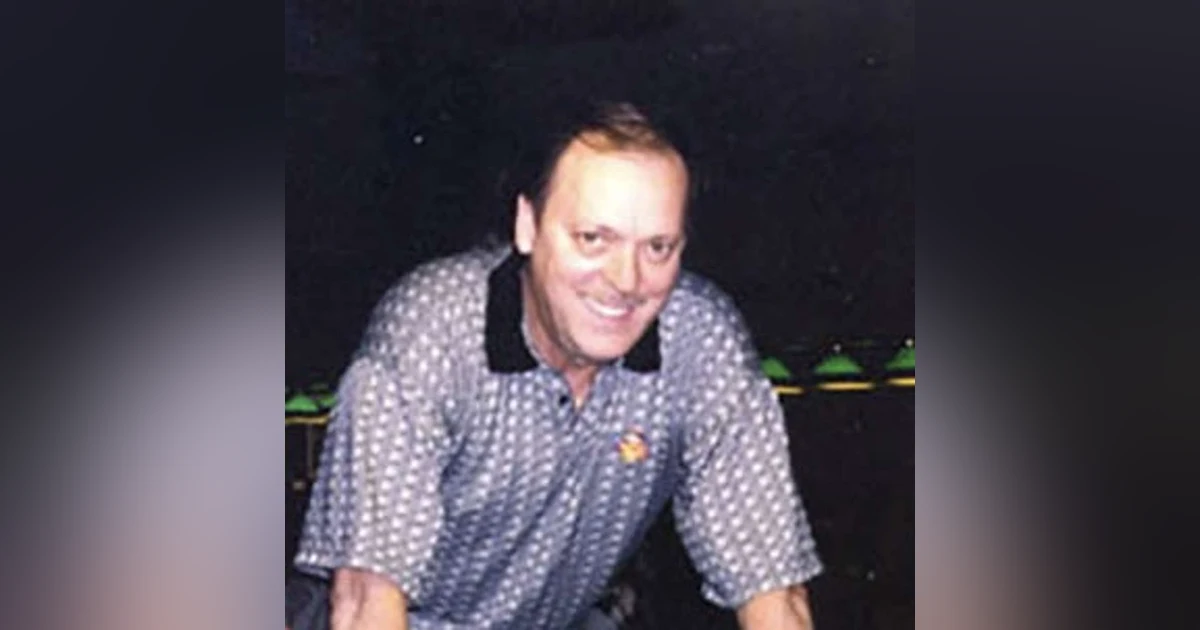

In this opening episode of a special four-part series, Legends of the Cue begins the remarkable life story of Jerry Briesath, widely regarded as the father of modern pool instruction and the longtime Dean of the BCA’s Master Instructor program.
Born in 1937 in Winona, Minnesota, Jerry’s story starts far from championship tables and teaching platforms. He grew up working at his father’s one-man gas station, pumping fuel for 23 cents a gallon, checking oil by hand, and learning the values of discipline, service, and hard work. As a youngster, his first athletic passion was golf—good enough to play high-school varsity as the number one player—before a move to Milwaukee and a chance visit to a small billiard room forever changed his path.
With no formal instruction available in those days, Jerry learned the game the old-fashioned way: watching great players, asking questions, and running balls late into the night. Under the influence of straight-pool runners like Willis Covington, Jerry fell in love with the game’s precision and patterns. Yet even then, he noticed something missing—there was no true understanding of mechanics, no structured way to teach how to control the cue stick.
That realization would ultimately reshape the sport.
In this episode, Jerry reflects on his earliest memories, the post-war years, discovering pool in Milwaukee, and the environment that shaped his thinking long before he ever taught a lesson. You’ll hear how his analytical mind, combined with a deep respect for fundamentals, laid the groundwork for an instructional philosophy that would influence generations of players—including Mosconi Cup player and Captain Mark Wilson and countless champions worldwide.
Part one sets the stage for an extraordinary journey—from small-town beginnings to the foundation of modern pool education—told in Jerry Briesath’s own thoughtful, humorous, and insightful voice.
Give Allison, Mark & Mike some feedback via Text.
Follow our show and/or leave a review/rating on:
Our website: https://www.legendsofthecue.com
Apple Podcasts: https://podcasts.apple.com/us/podcast/legends-of-the-cue/id1820520463
Spotify: https://open.spotify.com/show/4Za0IMh2SeNaWEGUHaVcy1
Music by Lyrium.
About
"Legends of the Cue" is a cue sports history podcast featuring interviews with Hall of Fame members, world champions, and influential figures from across the world of cue sports—including pocket billiards, snooker, and carom disciplines such as three-cushion billiards. We highlight the people, places, and moments that have shaped the game—celebrating iconic players, memorable events, historic venues, and the brands that helped define generations of play. With a focus on the positive spirit of the sport, our goal is to create a rich, engaging, and timeless archive of stories that fans can enjoy now and for years to come.
Co-hosted by WPA and BCA Hall of Fame member Allison Fisher and Mosconi Cup player and captain Mark Wilson, Legends of the Cue brings these stories to life—told in the voices of the game’s greatest figures.
Join Allison, Mark and Mike Gonzalez for “Legends of the Cu...
We've got a special guest that's very special to our co-host.
Allison FisherVery much too. He's one of the greatest and most well-known instructors of all time. It's an absolute honor to have him here. Mark, would you like to introduce?
Mark WilsonToday's guest is the most interesting subject that has pioneered many aspects of pool. He also happens to be my mentor. It's an honor to include the father of modern pool instruction and BCA Hall of Famer, Jerry Briesath. Welcome, Jerry.
Jerry BriesathWelcome. Thank you, Mark. Mark, that didn't look like you.
Mark WilsonNo. I've noticed in just the last year I've aged tremendously.
Allison FisherHe's not the young Mark you first met years ago.
Mike GonzalezHis hair was probably a little darker, Jerry, huh? Yes. Yes.
Jerry BriesathBusy as ever, though. I've been driving that car everywhere, huh? How many miles do you have on that now?
Mark Wilson55,000 in 14 months. I know exactly.
Mike GonzalezWell, Jerry, it's it's wonderful to have you. We've been looking forward to this for a while and glad to include you and your life story and Legends of the Queen as we get our podcast started. And if you've heard any of our previous guests, you'll know that we always like to start at the very beginning. We know you were born back in 1937 in Winona, Minnesota. So take us through your earliest recollections of growing up as a young lad in Winona.
Jerry BriesathYeah, well, born in Winona, my father ran a one-man gas station, and it was down the street about a block. And he opened at seven, closed at nine for years and years and years. And it was a great business. He did very good there. And and that's that's where I went to high school. And uh started playing golf when I was twelve. We lived near a public golf course. And so I started playing golf when I was twelve, and they bought me a set of clubs when I was fourteen, and I was played on the golf high school golf team. I was number one man the last two years and uh played good, loved to play golf. And then all of a sudden, when I graduated, I went to Milwaukee and and and started working at the Wisconsin Electric Power Company. And a friend took me in a little billiard room on the 13th in Wisconsin, which was on the Marquette campus.
Mike GonzalezYeah.
Jerry BriesathAnd I had five nine-footers and one ten-footer. And that's where I learned to play, fell in love with it, and the guy that ran it was Willis Covington, a hundred ball runner, great player. And but there were no instructures back then. There were none. You couldn't get a lesson if you had tried. And the only lesson you get was well, you should have put more English on that ball. Or less. That was it. That was it. There were no instructures. And so I fell in love with pool and and well as I was born up, I was go growing up on uh lineup straight pool. Learned to play straight pool lineup. And when you lined all the balls up, that bottom bottom ball was near the rail. You could rail first it in a corner just about every time. And and then I started playing 14-1. And I played Bill the owner, and he played a hundred, he had to go to a hundred and I had to go to ten. We played that way, and then it got to be twenty, thirty, forty, fifty, and four years later we played even.
Allison FisherNice.
Jerry BriesathInteresting. So he was he was wonderful and ran a nice place. And my first hundred ball run was on that ten foot table.
Mike GonzalezOh my. What was the name of that place, Jerry?
Jerry BriesathAbbot Crest Hotel Billiard Room. There you go. Well they everybody called it the Abbot Crest. Uh-huh. Little little five six table room. And but he had lots of kids in there. 18 to 25 college kids, and I wasn't that age. And he had he had he had a line when he was a funny guy sometimes. He had a line that if there was an easy run out or an easy shot, he'd say a kind of counter, he'd say, if you don't run out here, you don't like girls. Well, I'm gonna tighten every guy up. Don't never forget that line. I used it here at the retirement club. I say, if you don't run out here, you don't like girls. That was so funny.
Mike GonzalezWell, listen, you've you've given us the accelerated version getting through high school and to that first pool room in Milwaukee, but let me just take you back to you know being five, six. I mean, when you look back, what's your earliest memory? How old were you? I mean, I was probably six, and learning to ride a bike is probably the first memory I have of being a human being. How about for you?
Jerry BriesathWell, I remember when everybody celebrated the end of the war in 45. I was about seven years old. And that was big. And uh I remember when the war was on, though, they had exercises, you had to turn the lights out of your house every once in a while. Just and uh so we but just for protection in case we were attacked, you had to practice closing the lights in a town, turning the lights off in a town.
Mike GonzalezYeah.
Jerry BriesathThat was like that was interesting.
Mike GonzalezAnd you were probably you were probably too young maybe to have felt it, but uh you know, you remember the shortages involved in World War II and cutting back on a lot of things, right?
Jerry BriesathYeah, yeah. And I remember nylon. Nylon was not made anymore, and rubber was in demand big time. What else did uh that was way back?
Allison FisherThat doesn't help the pool table situation, does it?
Mike GonzalezNo.
Jerry BriesathI had a little they for Christmas when I was maybe nine or ten, they bought me a little two by three pool table with balls about an inch big. And uh I played on that thing, and I could put the cue on my shoulder and and and I could make I could make all those shots, a lot of shots. And here, and I was short. I was very short. I was the shortest person in the tenth grade. And and but I then I started growing in the tenth grade and went from four ten in the tenth grade to six feet in just a few years. Yeah, very short. So I had a short set of clubs, but I could play good I played good with them, and and when I got to be seventeen, eighteen, I was growing fast and got a big set of clubs and kept playing that golf.
Mike GonzalezWell, you know, had you had you pursued golf instead of pool, maybe I would have had you on my pool podcast, Jerry.
Jerry BriesathWell, uh a lot of people, a lot of people uh said, Why don't you? And I but I I just didn't. Yeah.
Mike GonzalezYeah. Well, so tell us a little bit about your folks. You mentioned your dad, one man operated a gas station, and just for our younger listeners, who only just pull up to a pump and put it in themselves and don't know how to check the oil and don't clean their windshield. Tell us a little bit about what that was like.
Jerry BriesathAnd it was uh just automatic that you checked all the tires and checked the oil. Just automatic. When I I remember prices of 22, 23 cents a gallon. And but that went on a long time. And the police officer, my dad, liked to play cribbage. So about three or four days a week, uh a squad car would be parked right next to the door of the station to go in on one side of the pumps, and they play cribbage in there every morning for a couple hours. And I go over there and there was that police car there. They were good buddies, they played cards every day.
Mike GonzalezDid you work at the gas station?
Jerry BriesathOh, yes, I worked a lot many hours growing up. Pumped a lot of gas. And he had a pit, no uh no hoist car over a pit. He had to climb down a ladder and uh not the oil out and stuff. And he there was a trailer park behind the gas station. And I don't know, maybe twenty, thirty trailers. And so my dad had sliced ham, sliced beef, he had one of the first convenience stores. Yeah, yeah. Maybe the first, I don't know, but he's and he had they ran a c chart they could charge it there and everything, and uh so he sold a lot of food, and every more Saturday morning I had to stock the shelves.
Mike GonzalezHow uh how many years did he have that gas station?
Jerry BriesathOh boy, to he then the shell shell gave him a bigger gas station later, and but that was until he retired, he retired from there from his gas state from one of his gas stations.
Mike GonzalezOkay, so from the move to Milwaukee then, would that have involved him running a station in Milwaukee as well?
Jerry BriesathNo. Uh uh. When I got to Milwaukee, I uh I found that billiard room and that got me in the pool.
Mike GonzalezYeah, yeah. And what about your what about your mom? Was she a homemaker or did she work? She was a homemaker.
Jerry BriesathShe worked at the gas station sometimes. And in later years she she'd work in it, he'd go home and have a rest and she'd go back. It was only a block away.
Mike GonzalezSo And was your dad a pool shooter or did you learn from others?
Jerry BriesathNo, no, he did no sports. No sports. And he worked on the farm when he was young up on up in the the ridge, it's called it was uh well known as a little river town and has bluffs, the bluffs, 300-foot bluffs, maybe 400 feet, in the river, you know, on the side of the river valley. And he worked up on the farms here with his his relatives. His mom and pop died when he was young.
Mike GonzalezGotcha, gotcha. So so you taking up pool and golf as a kid, you must have had pretty good hand-eye coordination. Did you play other sports as well?
Jerry BriesathYeah, I played I was a short, but I I love I played basketball in junior high school and and track, I ran. I ran. I could run pretty good. I ran I did the mile. And uh I didn't win any trophies, but you did it. I could run.
Mike GonzalezYeah. So take us through the pool then, I guess. I mean, what was your first attraction to the game?
Jerry BriesathWhat really got you home? I went to the Abbot Crest with a friend and he he we just kind of fell in love with it. And and so I started playing a lot. Yeah. But that that had some good players there, and then he had a couple guys that came in and play him every week. Bill did. And good players from Illinois, they come and some from the Milwaukee area. But he had good players come in. Some of the best players hung out. There were two or three other billiard rooms in Milwaukee, downtown. That was about a mile and a half away. And uh what were those? Do you remember? The Antlers, Plankington. And Plankington started out with 120 tables a long time ago. Oh my goodness. Wow. There were all kinds of those rooms around the mid around the country with 100 tables, New York, lots of them. And and then they slowly diminished when but during the bad years of 29, 35, a lot of those rooms opened up. Something to do.
Mike GonzalezWhat else was in Milwaukee? Uh Mark, was there what was the one on the south side? Seems like it's been there for a while. Well, Romines. Yeah. Yeah.
Jerry BriesathThere you go. Row mines. Yeah. Terry, Terry opened up a nice place. He had a bar on the southwest side. And but it with Randy, you know, he whatever he did, was it Randy?
Mark WilsonTerry.
Jerry BriesathTerry.
Mark WilsonTerry.
Jerry BriesathYeah, whatever he did just turned to gold. He was good at uh making businesses go. He did his bar real well. And his billiard room, I think, is still there. His son runs it now, if I'm not mistaken.
Mark WilsonYeah. Romine's first one was at uh 27th in Wisconsin. And uh that was really the the premier room, my preferred place to. And Terry was there all the time and made it work, and that's where he began showing cues as well.
Jerry BriesathAnd then he moved to the south side with a much bigger room. Yeah. Yep. Yeah. So but Milwaukee was a big place. There was a lot of good players in Milwaukee. Go to any bar and they play for two to five dollars a game, and you could play all night, and the only time they'd argue with you is whose turn it is to put in 20 cents.
Mike GonzalezSo, Jerry, the way you learned, assuming based on what you said about there's really no formal instruction, no real structured lessons. I assume back then you had to learn through observation. That's correct.
Jerry BriesathThat's correct. And you just watch people and and ask questions. And how do you do this? How do you do that? You remember put English on the ball. And when the when the when the news when the billiard newspapers came out with deflection all of a sudden, I thought, I never do that. I play good, I never used to worry about deflection. I don't it doesn't exist to me. And thinking back, I just pick it up quick, you know, and you just do it automatic.
Mike GonzalezYeah.
Jerry BriesathAnd so I thought that was a big hoax, deflection.
Allison FisherYeah. Did you have any mentors? Did you have anyone that you aspired to be like?
Jerry BriesathNo, there were no teachers at all.
Allison FisherNothing.
Jerry BriesathNo teachers.
Allison FisherBut some good players.
Jerry BriesathWills Cummings that would show patterns and stuff, but no mechanics. That's what was missing. No mechanics.
Allison FisherYeah.
Jerry BriesathAnd uh mechanics is what I enjoy the most teaching.
Allison FisherYes.
Mike GonzalezYeah, just the the fundamentals. Yes.
Jerry BriesathYes. That's everything, you know. It's it's uh well when I get a group of a group of people for a class, I get them all together and I say, now when you drove here or flew here I hope you thought, I hope Jerry teaches me to control the what better. Don't say it now. Now say it all together, and they all say, cue ball. And I say, think again. They look with the question, question mark on their face, and I say it, Q stick. You don't touch the balls, you just touch the Q stick. There you go.
Mike GonzalezThere you go.
Jerry BriesathThat's what you control.
Mike GonzalezYeah.
Jerry BriesathThe better you are, like Mark says, I use Mark's statement all the time. The pros like Allison and others hit the ball within one millimeter of where they ain't where they want to or where they aim the stick. And when you give somebody that information, even a 600 player or 500 player, and you say, Well, that draw shot you just shot, you aimed here, and you shot about 20 millimeters lower than you aimed. So they start to get the picture.
Mike GonzalezYeah.
Jerry BriesathYeah. You gotta be more careful with the cue, and the backswing is the key to that.
Mike GonzalezWell, I assume that my first pool school, which these two co-hosts of mine were the instructors, that uh that school probably looked a lot like what you would have been teaching.
Allison FisherSome of it.
Jerry BriesathYeah, it's I just love doing that because you can talk people into the common sense of what really makes a good pool player like Mark and Allison controlling the stick. Not uh not the balls. And uh when I teach somebody and I tell people this, if you were a 400 player, want to pay a 500 player, I'd say, well, you just have to be a little careful, more careful with the stick. Everybody has a little circle of error on the cue ball, you have to make that a little smaller. Okay, now I'm a 500, I want to be a 600. Well, you've got to be a little more careful with the stick and make that circle of error a little smaller. Now I'm a 600 player, I want to be a seven. How can I do that? Well, you gotta play, uh be a little more careful with the stick and hit it's the same answer. And of course, playing a lot. Once you get to be a 600, to maintain that, you've got to play quite a bit.
Mike GonzalezYeah. So again, back uh when you're learning the game, there there must have been something that uh that really excited you about about the game itself, whether it was the challenge, some youngsters just love the sound of that ball dropping in the pocket. What was it that really got you excited about Poole? I don't think I can answer that.
Jerry BriesathIt just uh just the seeing the balls drop in and seeing what people did and how good they could play just kind of ignited a fire, which made me want to play better and better. Yeah, how much?
Mark WilsonOh, for sure. You were a tremendous inspiration because I was completely unaware of stroke mechanics. I I everybody back home just told me make the ball and win the game, don't miss the ball and lose the game. And so that was a foreign thought that you gave me about controlling the cue. So it took me a while to embrace that because uh I don't know if I have a thick skull or if I was just so indoctrinated the other way, but a combination of that and well, I bought many lessons on the way.
Allison FisherI love Mark tell us about his time with you at the beginning, Jerry, uh, for every post call. About the words of wisdom that you gave to him. Do you want to say what it is, Mark? The words of wisdom.
Mark WilsonHe knows. He knows what it is. He says, Oh, well, Jim says you want to get better, Mark. Uh I said, Oh yeah, Jerry, I do. He says, Okay, he says, let me see. You hit the cue ball and you put it on the spot and let me shoot to the far corner pocket. And because of what Jim had told me, I was so nervous and concerned, and I wanted to have validation that I truly was good because I've been playing three months. And I I made the ball down there, but I poked it. The tip did not go past the spot. And Jerry says, Oh, okay, I see what you got there. I see what you got. How long did you tell me you've been playing, Mark? And I said, Jerry, I played every single day for three months, only missed one day. And he says, Okay, well, here's what I think. I want you to take two weeks off, and when you come back, I want you to consider quitting altogether. But he did not offer that with a smile, and the shock and horror of hearing this was such that it really woke me up that maybe I don't know too much about it. And uh from there, then that kind of led to you know what we did thereafter. Yeah, I was uh I I always tell people this I, you know, over the course of time because it was such a transition mentally, I bought 50 lessons off of Jerry, but I'm exaggerating a little bit about that. And so, but ultimately back and forth, and then I finally moved there to study under him. And the real number, I was much closer to 100 lessons I bought off of Jerry. And I would even say this, Jerry likes money. And at the end, he finally quit charging me for lessons. And I guarantee you I'm the only guy in the world that he ever quit charging because I'd taken so many. We couldn't break new ground, we had to try to establish the difference in some of these different things. But but it was revolutionary and very exciting for me. And and Jerry Willis Covington was really an inspiration for you when you were younger, right? Because he was a hundred ball runner and you weren't. Oh, for sure. Yeah, for sure. And when you when you when you played, when you ran 100 balls on a five by ten, was that lineup straight pool or was that 14-1 straight pool? 14-1. Okay.
Mike GonzalezWhat's the difference, guys, for our for our listeners that haven't heard that term?
Mark WilsonI will explain it. Yeah, the the lineup straight pool, I also agree with this. And back then, straight pool was everything. If you go to the pool room, the only thing you're going to do is play straight pool. You already know what you're going to play. But lineup was after you run the rack, you put them all on the spot all the way back to the back rail, and then four go in front of the head spot. So all 15 will line up like that on a nine foot table. And much like Jerry alluded to, if you don't have good position on that back ball, you can go rail first in behind it and it kicks across into the corner so you can get the balls to start to open. But you had to be very adept at running the line. And it was kind of like maybe shooting the colors in snooker. You had to practice that line all the time because after every rack, they're all lined up. And after actually after every inning. So if I got up and made four balls, then when it's Jerry's turn, all four balls go from the head spot on back because there's room. And then it's his turn with all 15 balls on the table. So you always start with 15 balls on the table. And you know, a good run would be like a 50-ball run. You'd have to hold your focus. It's not as easy as people might think, but it's far easier than 14-1. So that was the distinction there.
Allison FisherYeah. Jerry, did you say that to many players or just Mark about, you know, having two weeks off and then quitting? Did that come out of your mouth a lot?
Jerry BriesathI probably said something like that, but it was in jest, not uh I don't know about that.
Mark WilsonNo, no, no.
Jerry BriesathI wouldn't know. I didn't. That was in jest. That was not a serious.
Mark WilsonWhy did you mention crossword puzzles and crocheting might be my future?
Jerry BriesathSometimes I used to tell people if on the third day of your class, people a lot of people would fly in for three-day session. I'd say, if on the last day of your class I come in with a set of knitting needles, you're in trouble.
Mike GonzalezThat's funny.
Jerry BriesathSo that was I I I like to do stuff like that.
Mike GonzalezSo well, you seem like too nice a guy to really mean it.
Allison FisherSo uh I just wonder how many players have quit.
Mark WilsonWell, there is. There's a ton of dead bodies in pool that said they wanted to be good until they found out what that takes.
Jerry BriesathYes, hard work. Well so that so then uh I'm gonna I wanted to talk about uh in '67, a man from uh from uh Madison watched me playing tournaments and stuff. He owned a room in Madison and he fired the manager and he called me in Milwaukee and said, I will you be any interest in moving to Madison and buying into my room. I no longer have a manager, and uh so I left the power company and moved to Madison. Wow at 67. And then I ran that room for five years, and my attorney, who was a good friend of mine at the time, said you gotta get your own room. So he looked, he looked, found a building, and then I opened my own place called Cunek.
Allison FisherFantastic. We saw that. Yeah You saw the your plaque in the background behind you.
Jerry BriesathYes, that was uh that was uh sh should I move my can my phone and stuff?
Allison FisherNo, it's f it's fine. We know it's there, but it's that's that's wonderful. So you were thirty-five years old.
Jerry BriesathYeah.
Allison FisherAnd your attorney said that and you did it, and what a great, great piece of advice that was.
Jerry BriesathYeah, I found a building and a and a nine thousand square feet, we put in twenty-three tables, and it was second floor, and went in there, and there was a guy down the street that had a community center, it was near a high school. There was a high school near the Capitol in uh downtown Madison. And the old guy I could never forgot his name, Bill Hobberlin, would teach the kids in that little billiard room, uh community center, and he he s he said he would send some of the kids down. You go down and see that Jerry, he'll help you. And I'll never forget this. I had a sport coat on, I had to go, I forgot where I had to go. And two of those little 15-year-olds came up, pulled on my coat, pulled on my coat, Mister, would you teach us how to play? And both state champions, both hundred ball runners, Randy, Randy, and Kenny Cross.
Allison FisherFantastic. Yeah, that is a great story.
Mike GonzalezYeah, so so you went from the the place in Milwaukee, you're working for Wii Energy, left that job, joined a place in uh in Madison, opened up your own place, Cunek. So a lot of a lot of things happening there. You were playing at a pretty high level by then, weren't you?
Jerry BriesathYeah, I I played my best pool from six probably sixty-two to seventy, and then I but unlike other pros of the hunter ball runners, I I I was working 60 hours a week. And so I was run-of-the-mill. If I go to a world tournament, I win two, lose two, and but I won a lot of state and Midwest championships, I think, in the last fourteen tournaments I played in, I won eight or nine of them. Oh my state Midwest. One of them, one of the last ones was in Rockford. He had big tournaments there. I forgot his name. It's where Dallas West was. Dallas was the best player in Wisconsin in Illinois. I was the best player in Wisconsin at the time. And Dallas was always better than me. He shot a thousand balls a day, and but it's one of those things where I had his number. You know, and I'd 60 him to death playing straight pool. And uh he slapped my hand because he knew he was a lot better than me, but I just had his number and beat him quite a bit more than he beat me. But the last last I broke my hand. I was doing something silly, and I broke my right hand and I had a two-pound cast in my arm with a Midwest tournament starting. I still got pictures of that. And I beat Oh, great player from used to be from where was he from? Babe Thompson. Oh yeah. Yeah, a great player. He went he came out here in Arizona and played much better than he had played in Wisconsin, but he wasn't Dallas's speed, but he was a great player. Played him in Dallas and Cachapaglia in the finals with a two-pound cast on my right arm with two fingers sticking out. I run six or five balls every game. I got a picture, picture of the three of us for second-third. One of them I put that behind my back, and the other one I put it out where people can see it. So that's two pictures. And a cast on my arm and won those uh won that tournament.
Mike GonzalezIf Earl Strickland listens to this, that might be something he tries. He's willing to try anything, it looks like.
Jerry BriesathBut it hurt when I shot hard, it still hurt a little bit, but it's good. I was lucky.
Allison FisherThank you for listening to another episode of Legends of the Cube. If you like what you hear, wherever you listen to your podcast, including Apple and Spotify, please follow, subscribe, and spread the word. Give our podcast a five-star rating and share your thoughts. Visit our website and support our full history project. Until our next golden break with more Legends of the Cube.
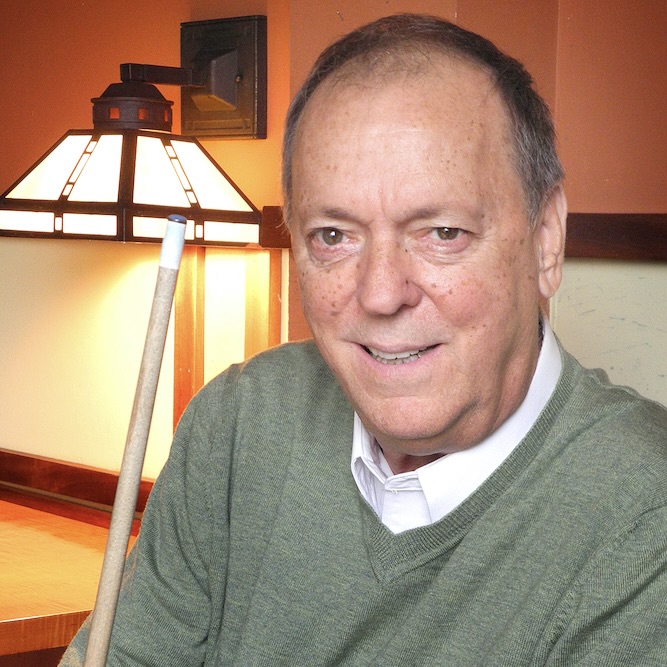
Pool Professional and Instructor
Jerry Briesath is widely regarded as one of the most influential instructors in the history of pocket billiards, often described as the “father of modern pool instruction.” Born in March 1937 in Winona, Minnesota, Jerry’s journey to becoming the game’s definitive teacher didn’t begin under bright tournament lights or inside a training academy. It began with work, hard, everyday, small-town work, at his father’s one-man gas station, where discipline and service weren’t motivational slogans, they were simply the price of admission to life. Jerry has recalled pumping gas for 23 cents a gallon, checking oil by hand, and learning early that consistency and pride in the basics are what separate “good enough” from exceptional.
Before pool ever took hold, Jerry was an athlete. His first love was golf, and he was good enough to play high-school varsity as the number one player—an important detail because so much of Jerry’s later teaching would be built around athletic movement, rhythm, and repeatable mechanics rather than guesswork or superstition. That athletic foundation, paired with a curious mind, made him a natural problem-solver when he eventually found his way to a cue and a set of balls.
Jerry’s introduction to pool came during his time in Milwaukee, where, in an era with little formal instruction available, he learned the old-fashioned way: watching strong players, asking questions, experimenting, and running balls late into the night. In our four-part conversation, Jerry describes the poolroom not just as a place to play, but as a living classroom, one … Read More