

 Apple Podcasts
 Spotify
 Jerry Briesath - Part 2 (The Delivery Is Everything — Building Players, Systems, and a Teaching Legacy)
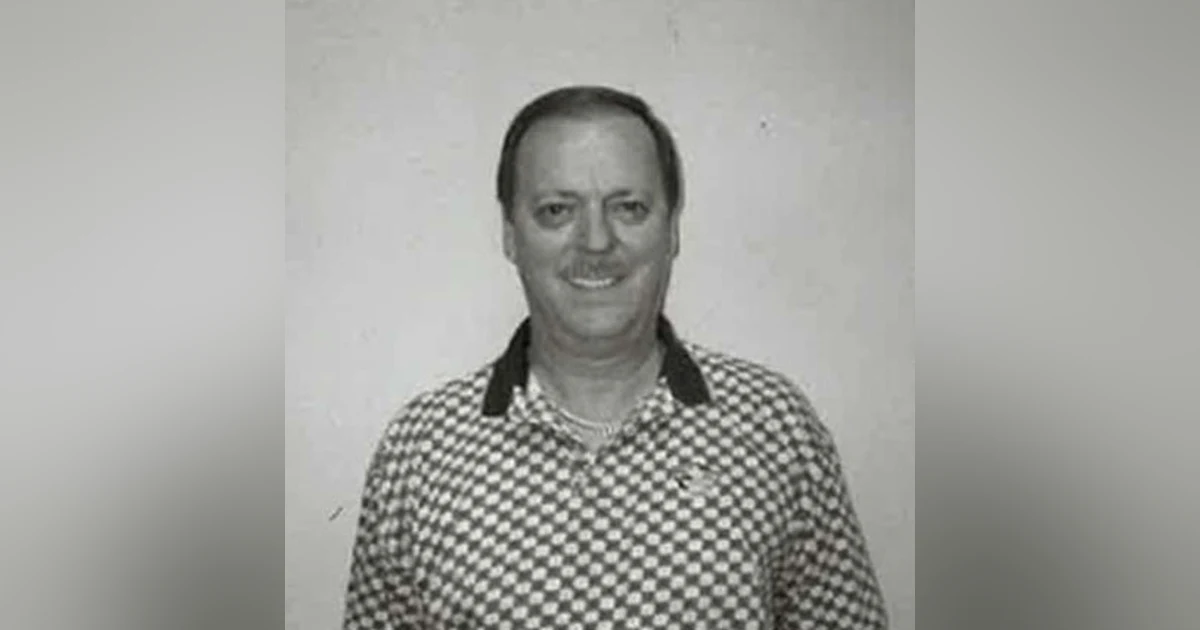

In Part 2 of our four-part Legends of the Cue conversation with Jerry Briesath, we dive deep into the heart of his instructional philosophy—and the ideas that forever changed how generations of players approach the game.
This episode is all about process over results. Jerry explains how his teaching evolved from instinct to system, anchored by one deceptively simple concept: the cue ball on the spot. From that single reference point, he reveals how the cue tip tells the entire story of a player’s stroke, why delivery matters more than the trophy, and how consistency under pressure is built long before competition ever begins.
Jerry shares priceless insights into timing, the pendulum stop, and the transition from backswing to forward swing—drawing parallels to golf, bowling, and throwing mechanics. You’ll hear why he teaches perfection even while acknowledging unorthodox champions, and how elite players separate themselves not by aiming better, but by moving the cue stick than their opponent.
We also explore Jerry’s impact beyond the lesson table: the culture he created in his rooms, the free-lesson philosophy that turned slow nights into packed houses, and the systems-driven approach that inspired lifelong improvement in beginners, league players, and future champions alike. From kids leagues that dominated state tournaments decades later to his instrumental role in shaping the BCA instructor program, Jerry’s influence reaches far beyond Madison.
Along the way, Mark Wilson, Allison Fisher, and Mike Gonzalez reflect on how these teachings shaped their own development—and why so much of what’s missing in today’s game isn’t talent, but environment, mentorship, and systemized learning.
If you’ve ever wondered why great players stay great under pressure, this episode provides the answer: trust the delivery, trust the system, and let the results take care of themselves.
Give Allison, Mark & Mike some feedback via Text.
Follow our show and/or leave a review/rating on:
Our website: https://www.legendsofthecue.com
Apple Podcasts: https://podcasts.apple.com/us/podcast/legends-of-the-cue/id1820520463
Spotify: https://open.spotify.com/show/4Za0IMh2SeNaWEGUHaVcy1
Music by Lyrium.
About
"Legends of the Cue" is a cue sports history podcast featuring interviews with Hall of Fame members, world champions, and influential figures from across the world of cue sports—including pocket billiards, snooker, and carom disciplines such as three-cushion billiards. We highlight the people, places, and moments that have shaped the game—celebrating iconic players, memorable events, historic venues, and the brands that helped define generations of play. With a focus on the positive spirit of the sport, our goal is to create a rich, engaging, and timeless archive of stories that fans can enjoy now and for years to come.
Co-hosted by WPA and BCA Hall of Fame member Allison Fisher and Mosconi Cup player and captain Mark Wilson, Legends of the Cue brings these stories to life—told in the voices of the game’s greatest figures.
Join Allison, Mark and Mike Gonzalez for “Legends of the Cu...
I assume then during this time, Jerry, as you had your room, you were doing some teaching, so you got started with that. When did your ideas sort of get formulated and crystallized to a point that they are today? I mean, did it take a period of years for you to kind of formulate your theories on pool instruction?
Jerry BriesathI'm going to go back in in Milwaukee when I had started winning state tournaments. A couple of the rumors would hire me to come in on a Tuesday night. Well, let me tell you, I forgot to tell you how that started. I by Hall of Fame speech I used that. But Bill Bill Covington, who's a good friend, he had a stroke. And I went to visit him at the hospital. He said, Oh, Jerry, am I glad you came in? You got to go teach my class at the one new YMCA. And I said, I don't have any idea what I'm doing. How am I going to show somebody else? You know, just show them on the stand, hold a cue, make a few balls, I'll be happy. So I was scared to death. But that's how I started teaching. And I went into that YMCA and and I had they had a deal for $7.50 every other month. You get you get three two-hour classes on Tuesday night. And so they split the money. I got half the money, and they got half the money. And a year later, I had 20, 25 people in the class. No, I'm making $30 an hour. They called me in and said, You make more than any of our employees. We can't do that. We're going to give you $7.50 an hour to keep the rest. So the first company I ever got ripped off by was YMCA.
Mike GonzalezOh be darn.
Jerry BriesathBut then when I when I got to Madison and started the the teaching, I gave all my customers free lessons. If you walked in the door, I'd run over and help you. And uh so that's just that's great. Business is true. Nothing brings a customer back, like improvement. I had and I had Moscone, Karas, Crane, Balsas, all those people in for trick shot shows, and they're good for business, but nothing like improvement. If you make somebody improve, they just can't wait to get back to the table. And a lot of them don't understand that. And I gave free lessons to everybody except Mark. No, just I was gonna ask about that.
Allison FisherMark, yeah, you're a little upset now.
Mark WilsonThe reason, the reason that he quit charging me because he knew I would happily pay it because I'd paid it so many times. I don't care. I just want the information and I need that support. And then I was his best customer, probably of all time. Don't you suppose, Jerry? Someone that bought more pool hours, I don't think you have anyone than me in terms of just tie them on the table.
Jerry BriesathYeah, so that was a key to my success. And then when I opened my own room and and uh CUNY, I just gave everybody free lessons. And so then the city, I don't know if you remember this, Mark, the city wanted to take my building for and other buildings on that block for a parking lot. Okay, to add parking downtown. And at the city council meeting when they're gonna vote on it, my manager Larry, who now owns another billiard room in Madison, great manager I had, Larry. He went, he did a lot of footwork, and he got a lot of people into that city council meeting explaining why Cunich should not be gone. And he had people get up there and say, Well, I'm Phil got up there and said, Oh, I got in trouble when I was young, but after going to Cunique, I never got in trouble again, and blah, blah, blah. And he had one guy got up there that might be a 300 player, and he got up there and he said, I went into Jerry's for lunch one noon, and Jerry came over and helped me, and nobody ever did that before. And he says, No, I play in a bar league, and last week I had held up a six-inch plastic trophy that he wanted a bar.
Mike GonzalezOh, that's great.
Jerry BriesathMy customer saved my building. It's incredible. Oh, that's a good idea.
Mike GonzalezYeah, it's a great story. So, when did when did Mark Wilson show up at your door for the first time? Do you remember?
Jerry BriesathYeah, I I was gone and he showed up, and I think he tells a story better than he. He's a great storyteller, by the way. Well, you know that already. But he tells it better than I can.
Mark WilsonWell, I know exactly when it was. It was the summer of 1973. I didn't know it was a pool room. I was only hoping it was a pool room. And I went in there and it was astounding. And even by today's standards, there's no room that compares to what Cunique was then. It was at a time all pool rooms were forbidden throughout America from serving alcohol. So everything in there was pool-centric. And Jerry had a ball polisher in the counter, he had lockers built into the counter, and it was like gleaming and clean, and it looked like the spaceship enterprise when you walked in there. I had never seen a pool room looking like this. Normally the ashtrays are overflowing, there's debris on the floor, the balls are dirty. This was brilliant, and everything was immaculate and most inspiring. And the kid that uh when I first walked in there, I was astounded by looking at this place. And it would even be there's nothing like it today. He had a 500-gallon tropical fish tank in the middle of the room, and it was very serene, and plants along the wall, and but it was all set up and inspiring. Very inspiring. And so the kid says, Hey, did you want to rent a table? And I couldn't believe they'd rent me a table in Jerry's place. And I said, Oh yeah, I'd love this. And so I did. And so that was the beginnings of that. But what made the place special was that Jerry was a real player. He's not like someone that just pretends. And today, too many people own these places that don't have a pool background, so they can't impart any information, and it's kind of they don't they don't play themselves, so it's that inspiring to the customer. Where Jerry would get out and play, and like you know, he was legitimately a hundred ball runner, you would see a hundred ball run, and he would do trick shot demonstrations, and he has a very witty, charming way of presenting them. And I'd never witnessed any of this, and it was compelling. He would make these fantastic shots on the first try, and then I'd seen the show maybe 11, 12 times. Sometimes Friday night, he'd go, Hey, everybody that's interested, I'll be doing trick shots on table three. And I'd seen it a dozen times. I'd take somebody that's never been in there before. Have you seen this? You you're not gonna believe this. It's amazing. And he could do it, and it was just the most inspiring thing. But what Jerry had that nobody else had was one, his interest was in heart was in pool, but he was so much of a better player. He's actually an elite-level pro player. He one time I was there and he held off Nick Farner for three days, they broke even playing serious pool, and that was in Nick's prime, and Jerry had been working the whole time, and other pros would come through and Jerry would beat him. I I mean he's I watched him beat everybody that came through there. And then there was another bevy of probably 10 players that were great players that were inspired by Jerry, and they were hundred ball runners, and then there was B class players that were three rack runners, and then there was me, I was a D class, lowest of the D. But subhorrible. You know, that's where we started at. But it was horrible. Everybody, yeah, subhorrible. Everybody was enthused when they came in there because there's no other distraction. You got B players, and here's a guy running two racks of nine ball on a nine-foot table, and here's a guy running 42 balls in straight bowl, and it was a very compelling, uplifting circumstance. And there was professional people, it was lawyers and doctors and veterinarians and the editor of the newspaper, and it was and then Jerry had rental cues and things that you've never heard of, and everything was beard-centric. It was the most inspiring place, the most fun place. Road players come through. Oftentimes they'd just cross it off the map because they get beat so much, and it was just you couldn't wait. No, really. It was it was a most unusual. I've never seen anything like it before or since, and that really it changed the course of my entire life, I would say.
Jerry BriesathWell, thank you, Mark. What makes me proud is when every year they had a state tournament at the sports show in Milwaukee, at the boat show. They had bleachers for at least 100, 150 people, six or eight tables set up, beautiful setup, and Milwaukee just dominated the tournaments. Milwaukee's ten times bigger than Madison. And five years after I got to Madison, Milwaukee no longer Madison dominated the women, the kids, and the men's division for decades.
Mike GonzalezThat was kind of fun. Was Mark Wilson your best customer ever?
Jerry BriesathBest playing customer?
Mike GonzalezBest paying customer. I don't think so. I don't think so.
Jerry BriesathI'm a thing.
Allison FisherNow he's upset. He wanted that award.
Mark WilsonYes, I did.
Jerry BriesathNo, I got a big bag of money in the safe in that Ultra Mark, you know.
Mark WilsonNo, that isn't exactly how it worked because I didn't have much then, but I I wouldn't spend everything I had. That that was for sure. I I used to work for Jerry and every other Tuesday was payday. And then I'd write down how many hours I've worked and versus how many hours I've played pool, and always on every other Tuesday, I always owed him money. I'm like, I don't know how much longer I can afford to work here, Jerry. But it was good. It was like going to graduate school. You're learning things all all along the way. But one of the things that uh is always uh weird to me is that nobody knows how good Jerry played unless you were there. And he had the most beautiful transition from backswing to fourth swing. There's no pros that got it today, hardly. And but it was just mesmerizing and hypnotic, and I would just watch and just be like captivated. And then mine would be a jerk and a flinch and you know, all this. But I could see him do it, but he had confidence and I didn't. So naturally, that's why I get my that abrupt transition in there. And a lot of times in the afternoon, because I was one of the worst ones in there, and there was a lot of good ones, he'd take me as his partner as a handicap because Jerry was by far the best. And then we'd play two good players, like a dollar a man per game. And I wouldn't want to let him down, and I'd be trying so hard. And then he would point out things that I had never observed before, like what I could do to make it better. And it was also, I didn't want to let him down, but also there was a certain confidence that I can't beat you, but my man can. You know, I mean, and I'm not worried about it, you know. And if I just can keep from losing, Jerry will win. And we'd play all afternoon like that, and then I'd go right away and start practicing what I thought I learned that particular segment on and on and on. So it was a tremendous learning environment, and that's what's missing is that there's virtually no proprietors that have that background and have that uh capacity to generate it. And unlike other pool rooms, people would come in there and just a regular guy, and he was thinking about maybe going fishing or bowling or pool. I'll do or a movie. No, I'm gonna do pool. And he'd go in there and he'd play, and he'd play for about an hour, and then he realized he's not any good, or and Jerry'd be working the counter and watch. And the guy would bring up the balls, and Jerry'd say, Hey, how'd you hit him today? And the guy would shake his head no, and he'd not too good, you know. And Jerry'd say, Well, let me, and he'd take him back down on the table, and the guy would get about a half hour lesson, and now all of a sudden he's drawing the cue ball or a couple things he didn't know about, and he felt that Jerry was very engaging too. He gave him total attention. Well, then the next day the guy stops in because he knows the owner now and he did see a little progress, and then Jerry helped him a little bit more, and then by next week he's bought an inexpensive queue, and there's no other place to use it. And so his business was built off of that, one thing. And the other thing he did was that on Thursday nights, if you came in from 9 to close, which is 1 a.m., and you told the guy at the counter you want to get help, Jerry would come in and give every table that was renting a table a lesson, and you go work with them individually all throughout the room, and you'd take a Thursday night that three tables would normally be rented, and he'd have 18 tables rented, and he would go around to every table. So his business was built off of building those slow times with personal attention, and you just don't find that anymore, and that's kind of a shame for our sport.
Jerry BriesathYeah, I uh what was I gonna say here? Some of the teaching things are new that that I'm proud of. The uh when you teach people, and every teacher should know that the first thing you do when you teach anybody a lesson is put the damn cue ball on the spot. Then you whatever that tip does tells you what the right hand is doing, so to speak. You don't have to walk around to that side. The tip tells you just what the person's doing right or wrong. And shooting off the spot is self-help. A person just goes to that spot once in a while and shoots different shots. If the Q stick isn't dead center across that dot four to six inches, you failed. That's how simple that is. People don't know it. You only control the stick. And and by the way, at Q Neek, when people come in, some people come in, I say, Oh, you he said, I used to play pool. I said, Oh, did you play straight pool? Oh, yeah. I said, What was your run? He said, Well, I think it was 110. And you get stuff like people exaggerate like crazy.
Mike GonzalezYeah.
Jerry BriesathAnd and I told Randy and Kenny, it were in every day. I said, You gotta learn to change in this business. You gotta learn to change one word in your vocabulary from bullshit to fantastic. So every once in a while, some guy would be at the counter with those two guys playing out there, and I'd say, fantastic, and Kenny'd run over to Randy and say, Somebody's gonna give you a line of crap.
Mike GonzalezThat's great. Well, I tell you, Jerry, one thing that I I maybe my biggest takeaway from the school that that Allison and Mark ran, and I know it reflects your teachings, was if you're focused on the results of your stroke effort, you're focused on the wrong thing. It's got to be the process, it's got to be putting in the work. As Kelly Fisher told us last week, you get better in the gym. You know, you don't get better in the match, you get better in the gym doing the work every day. And so it's it's focused on your process, on the basics, on the fundamentals. The results will come, but if that's your ultimate goal, is every every every shot is live or die, you're just not going to progress like you should.
Jerry BriesathYou said it very nice. I'm gonna say it better. When you make the delivery more important than the trophy, you win more trophies. Right. The delivery is everything. Amen to that. And and that I can't explain uh with enough passion to teach people, but first first thing you do, I don't care if I get a pro or a beginner, put the cue ball on the dot, give them some nice easy shots or medium shots to shoot, watch what that Q tip does across that dot.
Mike GonzalezHow old were you, Jerry, when that light bulb went on?
Jerry BriesathSo that that well it just got stronger and stronger as far as doing it and seeing success. The delivery is everything, as you said. There's left several ways to say it. People will come in and say, Oh, what's the worst part of your game? And uh that guy, a complete novice, would say, Well, I have trouble with my three rail banks.
Mike GonzalezDon't be all.
Jerry BriesathAnd another thing that's new in teaching is uh uh it's new, it's not just what you say, it's how you say it. Like I just said to you. Make the delivery more important than a trophy and you win more trophies. That makes sense. I told that to Scott Frost, and he looked at me and he says, That makes a ton of sense. And when when another new thing that that I came up with was telling any almost any skilled player that when you get done aiming at the cue ball, you the easy part is done. Now, instead of just going across the dot, which we I did for 50 years, now I do it better. I say, when you get done aiming, now your job is to move that stick across that dot. Are you ready? Better than him. Just those words make a person notice because he knows this as much as you, your opponent, he aims as straight as you, so the only edge you got is when you get done aiming, learn to move that cue better than him across that dot. There's always a little white dot under the cue ball. That's new and that's just work. You just see you can see it sink into people's minds when you say that better than him.
Mike GonzalezYeah. Yeah.
Jerry BriesathYeah. Oh yeah. I learn every year and get better. I try to get better at it every year.
Mike GonzalezWell, i your the the things that underpin your basic teachings, those sort of came to you probably early on, but really were refined over a period of years, weren't they?
Jerry BriesathExactly. Yeah. And and people say, well, I get scared. I'm everybody gets nervous under pressure. But if you have a good system, like every great player does, you just think do your system. Don't change anything. Does that sound good, Mark?
Mark WilsonOh, yeah.
Mike GonzalezI assume that uh Mark's book, Play Great Pool, was pretty true to your teachings.
Jerry BriesathWell, yeah, Mark was a great student. And he picked it up good and and he mastered that uh timing of the swing and everything. A timing is so important to teach people exactly what it is. And we we did go round and round a little bit with other teachers on the pause, but I I'm convinced that a pendulum stop is the best transition. As long as the cue flows to a stop. Get the idea, then you don't have to pause it any longer than that that pendulum stop is unnecessary. The thing we're fighting there is making it stop. You don't want to make it stop ever. You want to let it flow to a stop, then accelerate after it stops. That's the way you throw underhand, that's the way you throw underhand, that's how a golfer swings a club, that's how a bowler swings throws the ball. That pendulum stop, where it just slows to a stop, is the best looking swing there is.
Mike GonzalezYeah, I was gonna mention to you, as a golfer, you certainly appreciate finishing that backswing and then that transition from backswing to foreswing.
Jerry BriesathYeah, you don't have to wait. Long as you long as it slows to a stop, that's the key.
Mike GonzalezYeah. That's the key. And and some golfers are quicker than others. Some some almost have a deliberate stop up there. You see all different forms and and and as as Mark would say, some of these pros, they might not look textbook, but they've done it a zillion times. And uh, same is true in pool, isn't it?
Allison FisherUh yeah, some players you can't teach. You know, some are just Shane is Shane Van Bonin, for example, has got an extra you know, an unusual cue action, but the amount of hours and days he puts in, you know, that's why he gets away with a lot of things, I think. He's got a shoulder movement, isn't he? That was well said. Yeah. I think he's he puts so much time in, more than anyone.
Jerry BriesathYeah, and we teach we teach perfection. The closer you get to it, the better you are. That makes sense. Yeah, but a lot of people are unorthodox, like Shane and other people. But boy, look at 95 out of those top pros, they're all beautiful swings, most of them. Beautiful swings, beautiful timing. We try to teach you perfection. The closer you come, the better you play.
Mike GonzalezWell, we'll we'll get back to some of your teaching and some of the recognition you've received for your teaching, but just take us through the progression in your life of Cunique. You were there how long, and then what other sorts of pool hauls and things were involved in back at a younger age?
Jerry BriesathWell, I had Cunique 28 years and I sold it to Larry, my great manager.
Mike GonzalezYeah.
Jerry BriesathAnd then uh but the Before that in ninety five, I opened the green room. And where was the green room? Tw that was a gorgeous room, prettiest room I ever saw. Where where was that at? West southwest side of Madison, twenty-eight tables. We had a Verhoeven three cushion table and uh four or five bar tables, and the rest nine foot. Everything was gold crowns back then.
Mike GonzalezSure.
Jerry BriesathAnd just giving free free lessons. I had a manager, I opened that room with the manager who worked for me when he was in college. And he said, uh Jerry, I'm sick of my job in Chicago. I've run a big warehouse. I'd like to open a billiard room with you on the southwest side. I said, Let's do it. So he was gonna run it, he ran it and didn't do so good the first year and a half or so, and we got in financial trouble. So we paid him off and took over and built it up, paid everybody off and sold it. But uh those free lessons, I can't tell you. If you give free lessons, you're you're gonna build a business. Yeah. Mm-hmm.
Allison FisherDid you do that? You did that, Mark. You opened a room, didn't you?
Mark WilsonI had duple rooms.
Allison FisherYeah. Was it a good business for you? Yeah.
Mark WilsonYeah. You gotta get people inspired.
Jerry BriesathWe had kids' leagues in both places. We had maybe 25 to 30 kids every weekend for Saturdays for lessons, and and I did that early on at Cunek, and a lot of those kids won they won all the kids' state tournaments for decades. And and one guy sent me a note four or five years ago. There was a uh kind of a state tournament in Eau Claire, Wisconsin, sent me a note. He said, Jerry, check this out. And he said, first, third, and fourth, Cunique. Now those guys are 60 years old.
Mike GonzalezSo, Jerry, at some point your teachings uh came together enough and were, I guess, organized and formulated in such a way that uh you became very instrumental in establishing the BCA's certified instructor program. Tell us a little bit about that effort and and and how that's evolved to today.
Jerry BriesathOkay, well, back in the 70s and through the 80s, I think I was the only guy traveling around the country. Well, I got calls to go everywhere. And and then uh and I was on the board of directors of the BCA for a long time. And they said, Well, we got guys calling us that wanted to be instructors. Uh, would you do a class for them? I said, sure. So I think five of them came to Madison and and so I just told them, show them what I do. And uh that was Randy and Richard Rohr from Texas and three others who I can't think of right now. I think there were five or six guys there. And that's how it started.
Mike GonzalezAnd today that's referred to as the Professional Billiard Instructors Association. And BCA had named you at some point, Jerry, the Dean of Master Instructors.
Jerry BriesathWell, that's uh I'm proud of it, so that's nice, nice, it's nice, but as long as you spread the knowledge and get better every year, that's the thing. So it's up to the young teachers now to to keep coming up with new stuff. And even in the last in the last three years, last three years, power banks have come a long way. We never had systems for whacking the cue ball or whacking power banks. It was always two connects with one, three connects with one and a half. But now we got power banks. The guy in Erie, Pennsylvania, a beautiful room there. What's his name, Mark? Do you know? Do you remember? I forgot his name. No, I don't. But he has that room, and he said when we used to hustle pool, we hustled pool a long time ago in the in the oil fields of Alaska. He worked there and made a lot of money with pool. And he said, We found a way to make banks a long way across corner. We found connecting diamonds for that. So he showed me that, and I was flabbergasted because I've never seen that at all. And so when I got home, I did the long rail. And and then I showed Dr. Dave and he put it on his site, but they're they're connecting diamonds now. Somebody should make a better system out of it. What I showed Dr. Dave. But but it just works. You slam those banks and they go right in the middle of the hole with connecting diamonds. And that's brand new, and that's what I like. Get new stuff every year that you can.
Mike GonzalezYeah. So are you a proponent then today of of hitting most all of your bank shots firm, or does it really depend on the situation? Depends on the situation, but most pros whack 'em.
Jerry BriesathSeems like it. They do, because then the reason they whack them is then tables play more alike. An old cloth will play more like a new cloth, whereas if you're slow rolling, they're completely different. But when you whack them, they're almost identical. New cloth, old cloth. That's what that's I never knew why they hit them hard, but now I do. Yeah.
Mike GonzalezAlison, are you a bank whacker?
Allison FisherWell, it again depends on the situation. I don't really whack at anything, but it tends to make the I've heard it tends to make the pocket bigger because the ball comes in a bit flatter, so it can make the pocket a little bit bigger. Heard that from What do you want Brumback? John Brumbach. Thankfully, one of the Derby Thank 20 times. Thank you for listening to another episode of Legends of the Cube. If you like what you hear, wherever you listen to a podcast, including Apple and Spotify, please follow, subscribe, and spread the word. Give our podcast a five-star rating and share your thoughts. Visit our website and support our full history projects. Until our next Golden Break with more Legends of the Cube.
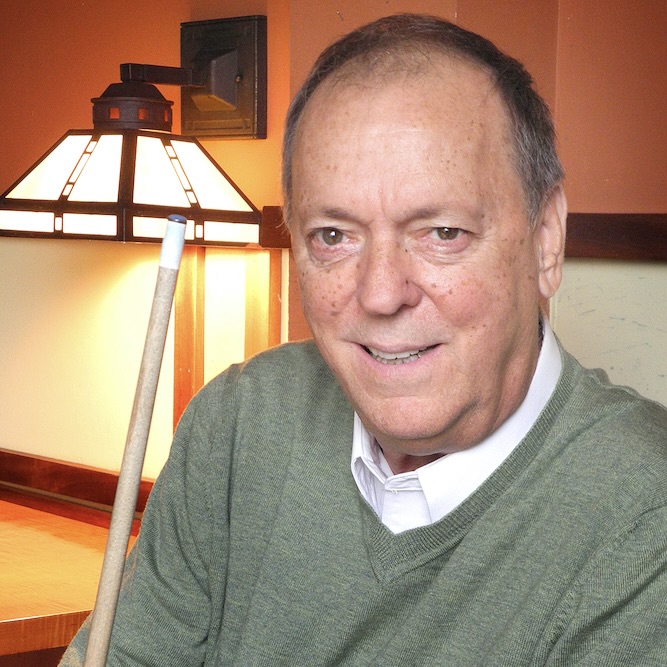
Pool Professional and Instructor
Jerry Briesath is widely regarded as one of the most influential instructors in the history of pocket billiards, often described as the “father of modern pool instruction.” Born in March 1937 in Winona, Minnesota, Jerry’s journey to becoming the game’s definitive teacher didn’t begin under bright tournament lights or inside a training academy. It began with work, hard, everyday, small-town work, at his father’s one-man gas station, where discipline and service weren’t motivational slogans, they were simply the price of admission to life. Jerry has recalled pumping gas for 23 cents a gallon, checking oil by hand, and learning early that consistency and pride in the basics are what separate “good enough” from exceptional.
Before pool ever took hold, Jerry was an athlete. His first love was golf, and he was good enough to play high-school varsity as the number one player—an important detail because so much of Jerry’s later teaching would be built around athletic movement, rhythm, and repeatable mechanics rather than guesswork or superstition. That athletic foundation, paired with a curious mind, made him a natural problem-solver when he eventually found his way to a cue and a set of balls.
Jerry’s introduction to pool came during his time in Milwaukee, where, in an era with little formal instruction available, he learned the old-fashioned way: watching strong players, asking questions, experimenting, and running balls late into the night. In our four-part conversation, Jerry describes the poolroom not just as a place to play, but as a living classroom, one … Read More