


Jerry Briesath - Part 3 (The Teacher’s Teacher — Mechanics, Passion, and a Lifetime of Giving Back)
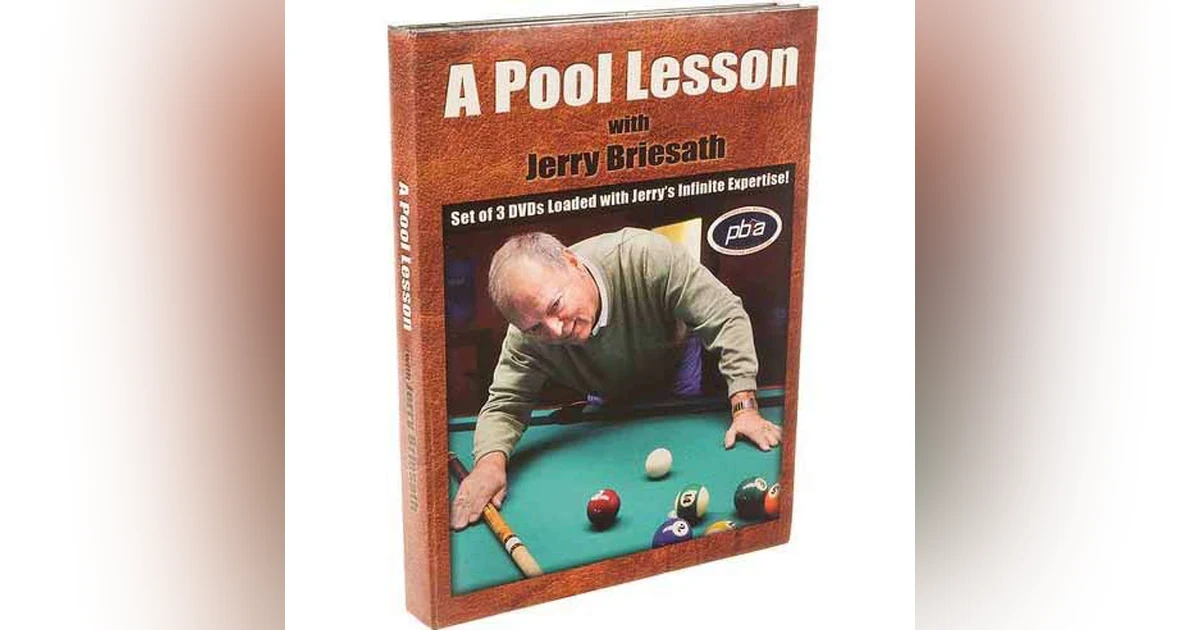


In Part Three of our four-part conversation with Pool Hall of Famer and BCA Dean of Master Instructors Jerry Briesath, we dive deep into the heart of what made Jerry one of the most influential teachers the game has ever known: mechanics, curiosity, passion, and an unrelenting desire to help others get better.
Jerry explains timeless concepts that still confound players today—why banks on balls near the rail come up short, how sliding changes everything, and why “easy” banks must be overcut. These aren’t tricks or systems, but truths passed down from earlier generations of knowledge, including lessons Jerry absorbed and refined long before modern aiming systems existed.
The conversation expands beyond technique into teaching philosophy. Jerry draws a powerful distinction between working on something and committing to it—a mindset shift that separates incremental improvement from lasting change. Alongside Mark Wilson and Allison Fisher, he emphasizes that no aiming system matters if the stroke doesn’t repeat, and that mechanics must always come first.
We also explore Jerry’s remarkable impact on players at every level: from junior programs and BCA youth camps to elite professionals. He shares stories of helping players like Jeanette Lee rediscover winning form, guiding young talents at summer camps, and working with champions who trusted him to rebuild fundamentals at the highest level.
Equally compelling are the stories of Jerry’s legacy beyond the table—his instructional work in Europe, the creation of A Pool Lesson DVD series with Mark Wilson, and the passion that radiated from every lesson he ever taught. As Mark reflects, Jerry wasn’t just teaching shots—he was modeling enthusiasm, patience, and a love for the craft that inspired everyone around him.
This episode captures Jerry Briesath at his best: thoughtful, funny, generous, and forever curious. A master instructor reminding us that the cue ball never lies—and that learning never stops.
Give Allison, Mark & Mike some feedback via Text.
Follow our show and/or leave a review/rating on:
Our website: https://www.legendsofthecue.com
Apple Podcasts: https://podcasts.apple.com/us/podcast/legends-of-the-cue/id1820520463
Spotify: https://open.spotify.com/show/4Za0IMh2SeNaWEGUHaVcy1
Music by Lyrium.
About
"Legends of the Cue" is a cue sports history podcast featuring interviews with Hall of Fame members, world champions, and influential figures from across the world of cue sports—including pocket billiards, snooker, and carom disciplines such as three-cushion billiards. We highlight the people, places, and moments that have shaped the game—celebrating iconic players, memorable events, historic venues, and the brands that helped define generations of play. With a focus on the positive spirit of the sport, our goal is to create a rich, engaging, and timeless archive of stories that fans can enjoy now and for years to come.
Co-hosted by WPA and BCA Hall of Fame member Allison Fisher and Mosconi Cup player and captain Mark Wilson, Legends of the Cue brings these stories to life—told in the voices of the game’s greatest figures.
Join Allison, Mark and Mike Gonzalez for “Legends of the Cu...
Another thing that's missing today is the knowledge that Robert Burns gave us. Robert Burns, he was a I gave him quite a few lessons. He was a good three-cushion player, didn't play much pool, but he was the writer back then. The knowledge on improving at pool way back. And he showed us in a roundabout way that any ball close to the rail is going to be short. And people still don't know why. Good players don't know why why. Now when you say short, Jerry. If it goes past your intended pocket, that's long. If it goes short of the intended pocket, that's short, it can hit it short. And people don't know why. Do you know why?
Allison FisherSliding into the rail, catching onto the rail.
Jerry BriesathIf a ball is on or close to a rail, it's sliding. It'll go a half a diamond at least short. And the the easiest bank on the table is the one within a diamond of a pocket, corner or side, cross-corner, cross side. And if if you if you just step up, if you hear this, what I'm saying, and you don't bank good, just put it two inches from the rail, put the cue ball straight out halfway across the table, and just cut it a little more than you used to. You might go ten in a row. The brain sees the proper angle, but the ball, if it's sliding going into the rail, like she said, it's gonna be short. Any bank close to a rail has to be short.
Mike GonzalezSo you use the term your brain will see the proper angle. That gets me to aiming systems. Were you ever proponent of that, or does it just repetition, repetition, repetition? We'll learn those angles.
Jerry BriesathThere are, I think that I heard of seven aiming systems out there. And I tell people, if you find one that helps you, use it. I think most pros use the ghost ball or ghost point of aim, point of impact. And if you you you f use another system and it works for you, use it. Mark, what do you think about that?
Mark WilsonWell, you know, I agree. It's but nothing will help you if your stroke does not repeat. It doesn't matter how good you aim, you got to get the cue ball projected down that straight line. That's where the problem exists. And Jerry always says everybody aims great, they just don't deliver the cue ball straight. And but they think they do because it's so intricate, and that that's the part that's hard to get across.
Mike GonzalezAnd for our listeners, aiming system is covered on CD number one in the three DVD series put out by Jerry, co-hosted by Mark, entitled A Pool Lesson. Our listeners can't see this, but when they see the video, they can. But this may be some of the best instruction anyone will ever find. Thank you.
Jerry BriesathThere's something else new in pool. Alice, I feel all like this. When you teach somebody something, something new, and they say, I'm gonna work on that, and you you agree, you say you work on that. And they see them in a week later, and they're kind of doing the same thing, but you say they say, I'm working on that. You say, Well, we have we have two choices. You're gonna like this, you can work at it, or you can commit. Which one do you think you should do? Commit means I will never do it different from what I learned. Right. So you have two choices when you learn something new. You can work on it, which never gets finished, or you can commit. There you go.
Allison FisherFantastic.
Jerry BriesathGreat teaching aid, yes.
Mike GonzalezGreat teaching aid. Got to commit to that. Yeah. We talked a little bit about uh your start in uh taking a certified instructor program nationwide beginning back in 1992. It wasn't too long thereafter, it was the following year, I believe, that you played a role in launching the BCA's youth queue summer camps. Tell us a little bit about that.
Jerry BriesathOh, yeah, we had a summer camp in Wisconsin and a summer camp, the other one of Southeast U.S., I forgot where. But we had kids up there, and we had Sven Davies, super guy, and he he was with the BCA way back then, just a super person. And uh we did I don't know, we had 15 or 20 kids in for three or four days and we just sent them home playing a lot better and gave them prizes, and whoever improved the most got a prize. We had a lot of things going for them to get better. It was a ton of fun. Ton of fun. Oh, we took them to we took them on trips to a billiard room and they we arranged with the billiard room, I forgot this, they arranged for the billiard room to get players to play our kids, and they did it, and everybody was a ton of fun, happy.
Mark WilsonI was invited to participate with Jerry in that and didn't know anything about it. It was in uh conducted at the University of Wisconsin-Eau Claire during the summertime. So you had the campus to yourself. We had dorm rooms for everyone to sleep in, and then the cafeteria opened, and then the pool room was there. And so there was a ton of activities as well, but the days were long and structured, and these were kids that there was 20 kids, and it was myself and Jerry, and I think Scott Lee maybe was uh was an instructor at that. And like you said, Sven Davies was there, and we would take those kids and we'd work from nine to noon, have lunch, then work from one to five, and then in the evening they were kind of free, but we all ended up in the pool room, and so and and Jerry was a great leader on this thing, and got all these kids playing so much better, and then we would do field trips. So one field trip was to Smoky Cook Q Company, and then they'd see all the processes of building a queue, and then another field trip was to a local pool room where these older gray-bearded guys would play us a match, and our little kids are Qs, they're taller than they are, and these older guys would be like, Well, now ain't they cute? And then all of a sudden our kids are just high-fiving and winning every match and doing the stroke right, and these poor old guys are just getting blistered by these nine and ten and twelve-year-old kids. But we had so much fun and it built so much camaraderie. It was one of the really the greatest things for growing the sport was to educating someone young like that. And we we did a lot of fun things. It just uh ultimately became an insurance liability for the BCA, and so that was discontinued, but sadly so.
Allison FisherYeah, it's a great idea.
Mike GonzalezThat was Jerry. When did you uh do the with the BCA do the how to play pool right book and video? How long ago did you do that?
Jerry BriesathThat was a long time ago. I don't think it was a book, was it?
Mark WilsonThere was a booklet.
Mike GonzalezA little booklet and video, maybe. Oh, okay.
Jerry BriesathThat was a long time ago. I don't remember much about that. They had they had this camera crew along, and the guy had what do you call it? Play c play cards or whatever. I said, I don't want any of those. Q Q cards, huh? Yeah, cue cards you want me to use. I can't use those. Ask me a question and I'll answer it, you know. And uh so that went pretty good. But that thing that Mark and I did is I never saw anything touch that.
Mark WilsonYeah, Jerry's talking about the videos. Let me clarify a little bit on the videos. Yes. Jerry contacted me, he said, Mark, I want you to help me with this. And I go, Oh no, Jerry, that's your stuff. I feel bad. And he goes, No, this is gonna be my legacy of the sport, and I've gotten a little older and a little shakier, and I want you to demonstrate the stroke and I want to do the talking of it. So I agreed, and we worked on it for oh, several weeks prior organizing the material, but it's material that you will not find on other DVDs anywhere, and things like power trade-off or just uh the thought pattern or what's possible and what isn't, and on and on and on. There's approximately 40 topics on there, if you know it's only anywhere from seven to fifteen minutes each. So it's a it's it's a pretty intense thing. We we recommend that you watch one segment, listen to Jerry, then go do it for 10 or 15 minutes, and then watch that same exact segment a second time, you'll get some more growth and depth out of it than you didn't anticipate. So it was uh really refreshing. And and here I've studied under my entire life, and in the process of making it, I learned a whole half a dozen new things of concepts and presentations. And if I've learned that long or spent that much time and learned that much, anyone else is gonna you know find great benefit. So yeah, it is uh still a revolutionary piece of work.
Mike GonzalezI I think if uh if the I play in a couple of pool leagues, I think if my teammates just looked at the pocket hanger thing you guys did, their far go would go up 20 points.
Jerry BriesathYeah, no, nobody ever taught hangers. Uh just there's a world of knowledge in hangers. People don't realize that. World of knowledge, unbelievable. You can spend hours on hangers. That's how, because you have so many options and so few good ones.
Mike GonzalezYeah. Yeah, that's right. I mean, you've got you've got such a wide pattern you can place that cue ball off that object ball and get anywhere on the table. You just gotta know how to do it, right?
Jerry BriesathYeah. Pros pros shoot a hanger as if it was eight feet from the hole. That's how accurate they gotta be to put the cue ball where they want. Yeah. Yeah. And one of the things that I try to spread around it that it's in fun is Whitey never lies. The cue ball always tells you what you did right or wrong. Too far, too high, too low on the ball, it's too soft, too. It tells you exactly what you did wrong once you learn to understand where where why it's going where it's going. If it goes too far, you hit it too hard. If it doesn't go far enough, you can't shoot hard enough. And so, but that just understanding that the cue ball tells you exactly what you did wrong every shot can help a ton.
Mike GonzalezSo, Jerry, for a beginning player who has yet to spend years and countless hours hitting millions of shots to learn that way, what's the best advice you'd give a new player for accelerating their learning?
Jerry BriesathGet the DVD set or go to a good teaching pro, for sure. For sure. But do both. Take some lessons from somebody who knows how mechanics is the hardest to teach, a hardest to learn. So go to a guy that teaches good mechanics first. And too many, too many guys, I'm sorry to say, just people that don't know how to handle the cue very well, and they've got them doing patterns and stuff like that, which fix the cue first. Then then they learn faster the rest of the stuff. Yeah.
Mike GonzalezWhy don't you tell our listeners a little bit about some of your other students that you've had over the years? Of course, we heard a lot about Mark and we've done his story, so we've we know a lot more about Mark and and and and his dealings with you, but you had a few other uh noteworthy students over your career.
Jerry BriesathYeah, I've had I think we've uh my students have won eight or ten international collegiate tournaments. And oh boy. Jeff Carter is one of my students. He came uh he was a world-class player with ranked at one time. And he came with a horrible two fingers, two fingers on the cue like this when he came to me and left a year later, world-class player.
Mike GonzalezHow about Tony Robles? Did you work with Tony? Tony Robles?
Jerry BriesathMm-hmm. I think so a long time ago, yes. Yes, I did. Yeah, yeah. He's a great teacher too. And Mark Wilson, Jeff Carter. I fixed a hitch with Corey Doole. Tyler Steyr is one of my is a new student. Last few years. I started teaching him when he was fourteen. Nice stroke, good looks good at the table. Oh Jeanette Lee. Jeanette Lee, yeah. She um was in a slump in 1920. And she had dominated the early nineties before Allison arrived, I think. When did you arrive on the scene?
Allison Fisher95. 1995.
Jerry BriesathYeah. But Jeanette just dominated be before you got here. And uh she called me and said, I'm in a big slump. I haven't done anything for a couple of years. I didn't know her, just as I only knew her to say hi. And she said, I want to come next week. Think you can help me? I said, I'll try my best. And she says, Next week okay? I said, Well, when's your next tournament? Uh, because sometimes if I help you, you you know your game might slip a little bit if when you commit to something new. And she said, I'm playing so bad it doesn't matter. So she said, I said, I said, okay, come on next week. When is your next tournament? She says, 11 days after I leave you, I'm going to Japan to play in that world tournament. I said, okay, so she came up and I fixed her mechanic. She was, oh, she was a little fancy with the Q. A little has some fancy things she did with the Q. She says, Well, I don't mind looking a little bit fancy with the Q. I said, okay, we got two subjects, fancy or winning. What do you want to talk about? She said, You got me. So she won that tournament. So that was nice. And one of the things I get people once in a while to call and say, Jerry, I want to come for lessons. I play with this group of people at a retirement community, wherever. And I said, I don't want you to let anybody know I'm taking lessons. Please don't tell any of my friends. I said, Okay, when do you want to come in? And we talk, he says, Will you promise me none of my friends will learn? I said, Where do you live? He says, Moose Jaw, Canada. I said, I promise. True story.
Mike GonzalezTrue story. You don't even need to use an alias. Well.
Jerry BriesathBut Scott Frost, I've helped a lot, and it's just a pleasure to work with those pros, you know. And if I can help them, that just makes me feel good, makes them feel good too.
Mike GonzalezSo yeah, yeah. I understand you set up a few pool schools in Europe as well.
Jerry BriesathYeah. I got went over there there twice to Germany and Switzerland, and a guy by the name of Hess had several rooms. And I went and taught at those rooms for 10 or 12 days. And then in Germany, another trip, they wanted to set up a school, so I helped them do that and taught them what I know about teaching. And then they came out with a book years later about Jerry Bryssatz how to play with something of them. They came out with a book. And I read it, and I I immediately said, I gotta talk to your translator. Didn't quite compute it. Oh man, I felt so bad.
Mike GonzalezYeah. So when did when did you and Mark do your semenal work here, a pool lesson?
Jerry BriesathWhen did we do it? It was about what 15, 14 years ago? 2012. 2012, okay. And I had 72 things. I would write down things that I think should be in a good video. I had 72 or 73. And Mark's a good organizer. I know he's better than I. So uh and and my tremor is pretty bad as I age. So I asked Mark to help me with it. And I said, I want you to look over these 72 items, simplify them if you can. And he came up with 53 items and wonderful job he did. And that's what's in the on the DVD set.
Mike GonzalezWell, it's a wonderful DVD set. How do you feel, both of you, about uh young players 50 years from now, you know they're gonna be sitting in front of whatever device they're using in 50 years and watching you guys tell them how to play pool.
Jerry BriesathYeah. Well, just it's it's neat. It's it's just that some things just go untouched, like Robert Byrne's thing about a sliding ball. Nobody teaches it anymore. People don't know about it. And we we gotta make that known why banks are short. Every amateur misses banks short. They gotta know why. They don't know why. Once they know why, they make a lot more of them. Especially those ones close to the hole. You might I had a guy who said, I'm the worst banker in the world, did 14 in a row after practicing three times. You know, he shooted three and he made 14 in a row. Cross-side easy banks, but you gotta make those easy banks. Those are gimme's, once you know how much to overcut them. Yeah.
Mike GonzalezYeah. Mm-hmm.
Mark WilsonI would say one of the most inspiring things to me was as Jerry taught me at the very beginning, and I would have to be terribly draining on anyone's enthusiasm because of my ineptitude. But he would teach me, and I would try my best. And then an hour and a half later, he was on two tables away teaching another man with his same level of enthusiasm and spirit. And it was always captivating to me because to me, if I would have had to teach me, I would have to go lay down for four hours. This would be the most draining thing. No, really. And he always had that energy, and I always took that from him and I still remember it to this day. Like, yeah, you should have that spirit, that positivity, and that's what people can't convey because they didn't live it and love it like he did, nor do they have the insights. He he was a very curious guy that would take it and make it better and learn how to say it better and learn how to demonstrate it better, and it was ongoing. It wasn't like he he truly is a professional in terms of he's always perfecting whatever it is that he's presenting, and that was terribly inspiring to me. You've never mastered a topic until you become capable of teaching it. And he's mastered this topic. You know, it's a singular best thing, but it's a curious, enthusiastic guy that did it.
Allison FisherJerry, do you have a mechanical mind? I think you mentioned that before, didn't you, Mike, where you can take something apart and put it back together, that type of person.
Mark WilsonThe the intricacy, how you love gadgets and how you make them work better and curious how they work, Jerry, is what she's talking about.
Allison FisherThe manic yeah, mechanical mind. You know how we can take things apart.
Jerry BriesathUh-oh, not not really. It's just, you know, for my own playing, when when I was when I when I even when I was playing in tournaments, I might take a on a break shot and straight pool, I might take a practice wing right next to the cue ball and just get it down a little bit, and I go over the cue ball and shoot. I was known to do that once in a while, people. Why do you do that? I'm just working on my stroke all the time. And you never, ever stop working on your smoothness of your stroke. Never.
Allison FisherCorrect.
Jerry BriesathYeah, true. And that's why golfers have coaches. And pool players, a lot of them can't afford coaches, but sooner, as soon as more money comes in, every player must have a coach. When a golfer who says to his coach, look, I played in three tournaments, I'm three strokes over my average. And a coach will say, Well, let's get out to the to the range. He'll say, Well, look, you your shoulders are turned too much at him at at the at the at the stance. And I didn't see that I didn't see your your back swing is about three, six inches farther than was it last time I saw you. So the coach is a guy that spots those little tiny things, it gets a guy back in. Nothing stays the same. Nothing stays the same. You've got to stay on top of your mechanics and your stroke.
Mike GonzalezYou know, just following up on what Mark was saying about intensity and and uh, you know, you're you're not good at teaching until you've taught, you're not good at pool until you know how to teach it. And I guess the one thing that I've taken away from Mark's teaching, which I'm sure he picked up from you and Ali, you can attest to this, and that I'd use one word, and that's passion. Passion comes through when Mark teaches pool, and I'm sure he got that from you.
Jerry BriesathWell, I think he got it from himself too, because he is passionate about the sport. And Mark deserves a lot more recognition than he'll ever receive for what he's done. Um I'm sure you two know about it, Morton.
Allison FisherYeah, definitely. I've never I've never met anyone as passionate as him about the game.
Jerry BriesathYeah, yeah. It's a fun game. We love the sport, and we'll call it a sport. I think it is a sport. And remember to seek one secret a pool. Never overcut a ball. Next week I'll tell you the other secret. Never undercut a ball. Very good.
Mike GonzalezYeah, you don't want to over under anything, probably in pool.
Jerry BriesathWell, I tell you what, I did that. I I put that in my Hall of Fame speech. Remember that, Alison? I had uh Guido. Remember Guido?
Allison FisherYeah, I do.
Jerry BriesathAnd I called him and asked him if I could mention him advice. But Guido was such a pool nut, positive way. He would call me and say, Jerry, my light is 29 inches above the surface. Should it be 30? He asked me that. I said, go to the end of the table with a tall person. If he bends over and hits his head, raise a light.
Allison FisherBecause he wasn't very tall.
Jerry BriesathAnd the next question he asked is my chip measured from my floor to the to the slate. And it's 30 37 inches. Should it be 40? That's the two questions that he actually asked me on the phone. Then he wanted to take lessons. He came up for the weekend. That's a funny story. And he wanted to go to the McDermott plant in Milwaukee. So I said, I'll call Jim. Jim was a great friend. And Jim said, bring him down. So I we drove to Milwaukee. And Jim gave him a great tour. On the way home, I'm driving. And Guido's happy as can be over the passenger seat. I said, Guido, yeah, what? I said, Do you know that one secret of poolies? No, what? I says, never overcut a ball. And he slumped down in his seat. His brain's brain was going a hundred miles an hour. I'm driving about 10 minutes later. He jumped up and said, Jerry, that's fantastic. The more I think about it, the more it makes sense. That's unbelievable. Where'd you hear that? I said, I don't know. I heard it from somebody. Makes a lot of sense. You know, that's unbelievable. He said, I can't believe it. So I'm driving another 10 miles. I said, Wait, well, yeah, what? I said, and one more secret or pool. What? What? What? I says, never undercut a ball. The words that came out of his mouth I can't say right now. We do have a bleeper.
Allison FisherThat's so funny.
Mike GonzalezOh, that's great. That's great. I gotta ask you, just going back to to your pool hall days, because I think we picked this up from Mark. Did you did you do a lot of Q uh Q work as well? I just put on tips, ferrels, tips and ferrels. Yeah, gosh, you ever build any Qs? Make any Qs? No, never did. Fairly basic stuff, though, huh?
Jerry BriesathI had a little pool lathe that I got from the guy in Ohio. He was very popular with those lathes. And I just put on ferrels and tips.
Mike GonzalezYeah, and you mentioned the Q Neak, you mentioned Green Room. What about some other pool halls that might have had an association with you? I've got Action Billiards, the Brass Ring, Bull Shooters Billiards.
Jerry BriesathWell, Bull Shooters Billiards is here in Phoenix. Great room. I think they have 38 tables, and I do a lot of classes there. The brass ring is the only billiard room left in Madison. I had 51 tables there. There's nine left.
Mike GonzalezWow.
Jerry BriesathTo this day. Yeah, so that makes me feel bad. Somebody should open a nice 30-table room in Madison. It would do beautifully.
Allison FisherThank you for listening to another episode of Legends of the Q. If you like what you hear, wherever you listen to your podcast, including Apple and Spotify, please follow, subscribe, and spread the word. Give our podcast a five-star rating and share your thoughts. Visit our website and support our full history project. Until our next golden break with more Legends of the Cube, so long, everybody.
Pool Professional and Instructor
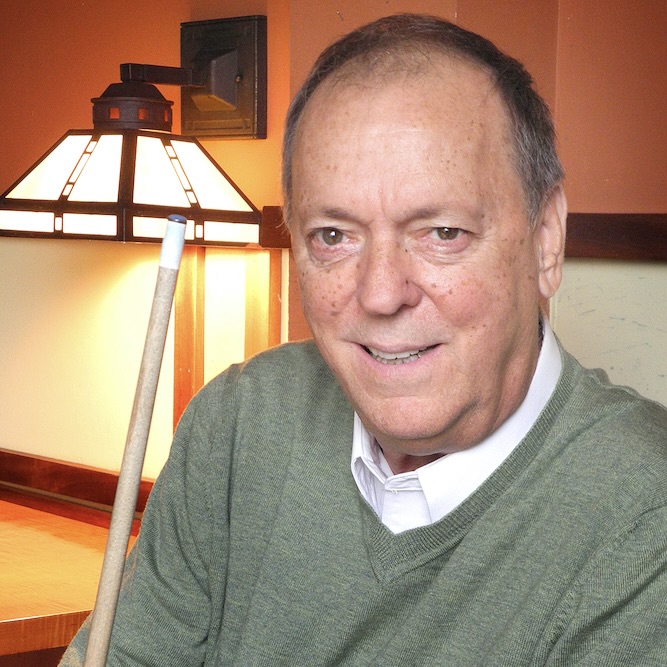
Jerry Briesath is widely regarded as one of the most influential instructors in the history of pocket billiards, often described as the “father of modern pool instruction.” Born in March 1937 in Winona, Minnesota, Jerry’s journey to becoming the game’s definitive teacher didn’t begin under bright tournament lights or inside a training academy. It began with work, hard, everyday, small-town work, at his father’s one-man gas station, where discipline and service weren’t motivational slogans, they were simply the price of admission to life. Jerry has recalled pumping gas for 23 cents a gallon, checking oil by hand, and learning early that consistency and pride in the basics are what separate “good enough” from exceptional.
Before pool ever took hold, Jerry was an athlete. His first love was golf, and he was good enough to play high-school varsity as the number one player—an important detail because so much of Jerry’s later teaching would be built around athletic movement, rhythm, and repeatable mechanics rather than guesswork or superstition. That athletic foundation, paired with a curious mind, made him a natural problem-solver when he eventually found his way to a cue and a set of balls.
Jerry’s introduction to pool came during his time in Milwaukee, where, in an era with little formal instruction available, he learned the old-fashioned way: watching strong players, asking questions, experimenting, and running balls late into the night. In our four-part conversation, Jerry describes the poolroom not just as a place to play, but as a living classroom, one … Read More