

 Apple Podcasts
 Spotify
 John Schmidt - Part 2 (Finding His Footing in the Pool World)
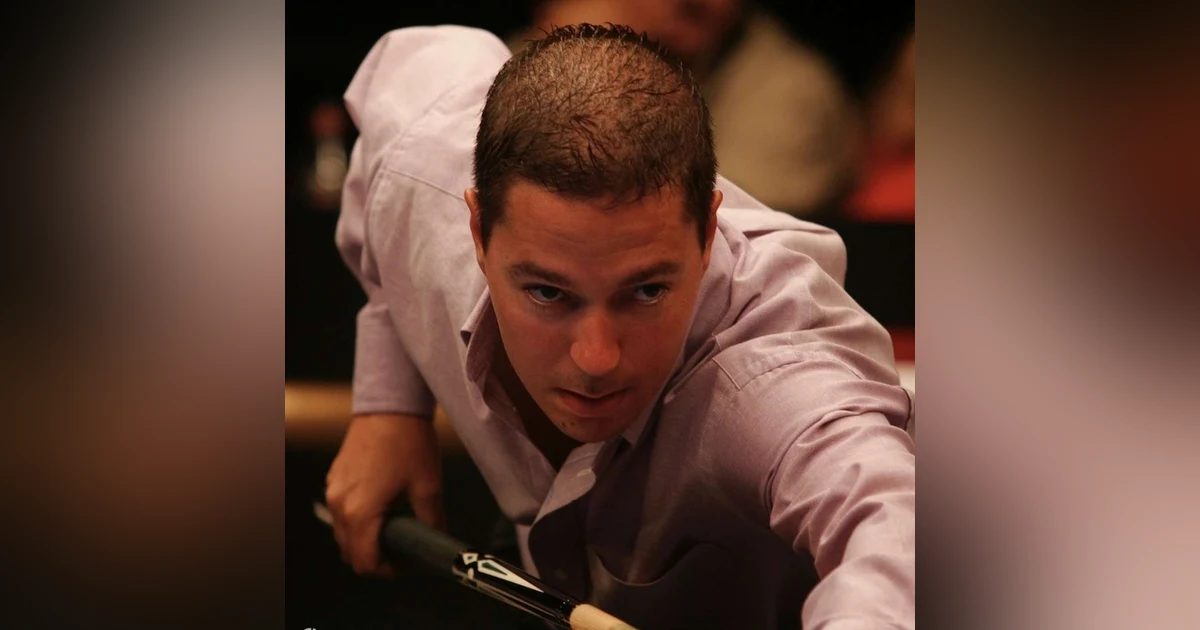

In part two of our four-part deep dive with “Mr. 600” John Schmidt—the man who broke Willie Mosconi’s legendary 65-year-old straight pool record—we follow his remarkable transition from ambitious newcomer to rising professional.
Schmidt pulls no punches as he recalls the leap of faith that sent him on the road with little more than $1,200, a cue, and an old Honda Accord. Along the way, he gained priceless lessons on tough equipment, in hostile rooms, and against opponents of every caliber. He shares how a brutal initiation into one-pocket at the hands of gambling legend Jack Cooney cost him dearly—but also laid the foundation for his greatest long-term success.
With candor and humor, John reflects on the mindset that separates champions: visualization, body control, and the ability to stay still under immense pressure. He and fellow pool greats Mark Wilson and Allison Fisher draw parallels between pool, golf, and even baseball, underscoring how discipline and environment shape greatness more than natural talent.
The episode crescendos with John’s unforgettable first professional tournament in 1999 at New York’s Roseland Ballroom. From playing his idol Mike Sigel under the lights, to an encouraging word from Steve Mizerak, to an unlikely romance sparked by a scorekeeper in the front row—Schmidt’s wide-eyed plunge into the big stage is equal parts raw, funny, and inspiring. By the time he notched breakthrough wins at the Canadian Open and the Legends of Straight Pool, the pool world had begun to recognize that John Schmidt was here to stay.
This installment captures the grit, heartbreak, and serendipity that define the early chapters of a champion’s story.
Give Allison, Mark & Mike some feedback via Text.
Follow our show and/or leave a review/rating on:
Our website: https://www.legendsofthecue.com
Apple Podcasts: https://podcasts.apple.com/us/podcast/legends-of-the-cue/id1820520463
Spotify: https://open.spotify.com/show/4Za0IMh2SeNaWEGUHaVcy1
Music by Lyrium.
About
"Legends of the Cue" is a cue sports history podcast featuring interviews with Hall of Fame members, world champions, and influential figures from across the world of cue sports—including pocket billiards, snooker, and carom disciplines such as three-cushion billiards. We highlight the people, places, and moments that have shaped the game—celebrating iconic players, memorable events, historic venues, and the brands that helped define generations of play. With a focus on the positive spirit of the sport, our goal is to create a rich, engaging, and timeless archive of stories that fans can enjoy now and for years to come.
Co-hosted by WPA and BCA Hall of Fame member Allison Fisher and Mosconi Cup player and captain Mark Wilson, Legends of the Cue brings these stories to life—told in the voices of the game’s greatest figures.
Join Allison, Mark and Mike Gonzalez for “Legends of the Cu...
So take us back through your decision to sort of turn professional. We've talked to Mark about it, we've talked to Ali about it. You know, what's that all about, turning pro? What, you know, what's the process you go through and then and what was available to you as a professional pool player?
John SchmidtIt's funny that you say that because, like, if you get on a plane and you ask a pilot, you know, are you a pro pilot? He doesn't just go, well, no, I don't really have a certification. I'm just really good. They have a certification, they have a card. With pool, there's no such thing. You just are either good enough to be out there and make more money than the expenses, or you don't. You know, and so I've noticed though that when there's these Fargo tournaments, everybody says, Hey John, you're a pro. I'm like, well, a minute ago you said I'm a bum and I'm a loser and I have no money, but as soon as there's money to be won, I'm this qualified pro. So I don't I don't know if there's even such a thing as a pro. I just know that there's the really good players who make the money and the ones who don't. So I remember this. It's 1996, and Bobby Hunter gave me this little five-minute lesson playing straight pull, and I'll try to make this short for you. But we weren't friends at the time. Bobby and I were not friends. We were almost kind of battling, and we we dated the same girl, and Bobby was always the taller than me, better looking than me. He had all the chicks. So I somehow got one of his crumbs, and he wasn't too happy about it. But anyway, and so, and so that that did not go over as swimmingly as I thought it would, us dating the same girl. So, anyway, he grabs me by the throat one day and he's choking me and he's gonna kill me. And a bunch of these guys, these gangbangers that knew me said to me, like, hey man, you want us to tune him up? And I go, No, no, no, no. He's a good guy. And I checked one of his girlfriends for ticks, and I probably shouldn't have done that. And so, and so, and so him and I are just having a little tip, but it'll be fine. I knew I could make Allie blush somewhere today. So, anyway, so Bobby says to me, he goes, So he comes in the poor room the next day and he looks at me, he goes, Come here, I want to talk to you. So I knew I'm gonna get beat up or scolded or something. And he says, Look, I don't even like you. He did say that. He goes, I don't even like you, but I've never seen anybody go from as bad as you were when I met you, because I had just ran 240 like a week before on him playing straight. But he goes, I and I'm busting tables and waiting tables and valet parking, and I've just ran 240. So I'm like, I don't know where I fit in the pool world. Uh and and I don't know if you know what that means, Mike, but that's something like shooting 65 at golf. Like it's time to get serious. So Bobby says, Look, I don't even like you, but I think you could really do something with pool. I think you need to quit your job at the casino because I was working in Tahoe at the at the uh casino's busing, and he goes, You need to quit your job. So I come in the pool room the next day and I go, I did it. And he goes, You did what? I go, I quit my job. He goes, Are you crazy? And I go, what? I go, you he goes, okay. I go, so what do I do now, Bob? Because I mean in Carson City, nobody's gonna play me. You know, Bobby was the best player there, and now I'm beating him, really. He goes, How much money you got? I go, uh, I don't know, like $1,200. And I never had any money working. I go, I got like a hundred dollar pool cue, a 1981 Honda Accord that was worth seven, six, seven hundred bucks. It did run good though. I tuned it up, run good. And I had a and I had 1200 bucks. He goes, listen, it was like the color of money where Paul Newman told Tom Cruise, you're here, there's 4,000 pool rooms here, just go hit them all, right? And that's what I did. I jumped in my car and I just went all over the place. And uh that was in God, I guess that would have been 97-ish. And that really, you want to talk about shaping me. I got to play on great equipment, bad equipment, nice people, hostile people, great players, mediocre players. I seen it all. And and uh that made me pretty tough. I was able to really figure out where I was at on the food chain from that. I guess that one year probably living in my car, traveling around playing. You know, you talk about the building blocks, that was it.
Mike GonzalezYeah, Mark, I'm sure you've probably compared notes with John a lot because it sounds like uh, you know, your road days were somewhat similar, going on the road across America just trying to make a buck playing pool, right?
Mark WilsonYeah, it was quite a bit easier at that point, though, because uh when John came in, now we had a tour. Uh before that, there was no tour, so you didn't even get the exposure like that. But you could travel throughout America and play games in virtually every little town, every little city, every pool room had a champion, and they'd all put you up against them. So he kind of got the crumbs, and then when I did it, uh people always told me, Oh, you missed it. It was used to be way better. Right. It was good for me. So um John, talk a little bit about when uh you played uh Jack Cooney.
John SchmidtOh, wow. You know what? It's funny, you guys asked me earlier about who shaped me. It's 1998, and I think I've played One Pocket two or three times for 20 bucks a game. I mean, I don't even know the rules. And I remember, and I don't know Jack Cooney's this like freaking legend, you know, money one pocket genius. I don't know that. So who who better to learn from? So Jack leans over the rail and he goes, hey, come on, John, let's play some like 100 a game one pocket. Jack, I don't, I can't play it. I know you're better than me. I don't know the game. No, I'm trying to save a little money. He goes, I'll tell you what, I'll play you five ahead for 500. Maybe you'll learn something, maybe you'll beat me. So I play, you know, I'm a cage type player, I want to play and see where I'm at. So he stalls. I mean, he let he's letting me win games. I don't know that at the time. And I'm thinking, well, this one pocket's kind of fun. I get to make some banks here and there, and you know, I'm expecting like panties to come flying out of the crowd while I'm making good shots. Somebody asked me one time, Mark, hey, John, do you have any groupies? I said, Oh, I got groupies, they're all 75-year-old men with chili stains on their shirt. There's no groups. There's no groupies. So anyway, so I play Jack five ahead for 500. That's a hundred bucks a game, and we're stalling, he's stalling. I don't, I'm not smart enough to realize that. And he beats me. Now I get mad, I go, come on, I'll play you five ahead for 2500. He beats me five in a row. So I've just lost 3,000 at my first one pocket experience. And and I'm now I'm hooked. I'm like, okay, I gotta figure this game out. Luckily, Jack did that to me because really, without One Pocket, I would I would be broke because the amount of money I made playing One Pocket over the next 20 years was fairly substantial. I I mean, relative to pull terms, and that all started with Jack Cooney. And uh he was something he he he would wear glasses, he and when you'd play him, he'd go like this, he'd kind of his head would go like this, and and he would he would push his glasses up, and I I'll remember this. It's the most brutal thing that ever happened. I gotta tell you guys this. So, this is like the third time I'm playing him, and he's spotting me 10, 8, 9, 8, which is a little spot. Now we're betting real money, and I'm betting my own money. I've got like 11 grand in the whole world, and I'm betting it all against this legend. And my friends are like, dude, what are you doing? My dad even says, Okay, I don't know Poole, but like there's 40 million people in California. Can't you just play somebody beside? I go, No, it don't work like that. I gotta play. So we're playing a race to four for a thousand. It goes hill hill, we roll it over, bet 2,000. It goes hill hill, we roll it over, we roll it over, bet 4,000. Now 4,000, a lot of money to John Schmidt in 1998, believe me. Still is. I'll never forget this. Jack has never ran 11 on me. We're playing on real tight, wet table. Jack needs 11, and I need one. And it's I'm gonna win this set. And I'm looking at my buddy like, finally, I'm not gonna be a bonehead. I'm gonna do something right. And God Almighty, if he doesn't make a combo off the back rail and runs all the balls, spots the four EOs, banks one in and runs 11 and out, and his wife says, just to put the knife in me, she says, nice out, Jack. That's all she says. And Jack just goes, you know. So I so I now we've just played like 30 hours. I can't even stand. I'm so and Jack's doing the Zoxins, he'll be the first to tell you, which is basically uppers to stay awake and outlast me. And I'm eating candy bars and coffee. I can barely walk, and I'm like 24 years old, and I can barely walk. And we go back to the car, and there's Jack and Barbara standing in front of hard times, and he's got my life savings. And I say, I look at my buddy driving, I go, just a minute. And I get out of the car and I screw my stick together, and I take my best driver golf swing against this pole, and my whole queue is fluttering down out of a thousand pieces. And Jack looks over at me and goes, I've been there, kid. And that's all he said.
Allison FisherWow. But you know what was listening.
John SchmidtOh, oh, it was, but I will give him credit. We played a couple more times, and I won 11,000 off him, and he shook my hand and just good shooting. And he was in the front row, Mark. He was in the front row when I beat Scott Frost to win the 2009 Derby City Classic. Him and Barb were right in the front row. And Barb says, when I ran out, I heard her go, nice out, John. And she knew that I knew what that was about. So yeah, it that's a great story. Oh, the the Cooneys were something else. Yeah, I learned a ton from him. He was a perfect gentleman to play, and he shot a million shots on me that at the time I didn't understand. And I would go back and lay there at night and go, When I do this, he would do that. But when I do that, he doesn't do that. He does, oh, and it started like computing in my head how the game worked. And I mean, you talk about a mentor. So now when I'm on the road playing for money, I'm just slapping people around playing one part because they they move like a fire hydrant compared to Jack Cooney. They're terrible. So I got to see it up close for my life savings against a true master, and losing all that money was painful, but you want to talk about learning. I learned.
Allison FisherOh, it's all credit to your attitude because you you took it all in and then you know wanted to be better. A lot of people would just forget about it.
John SchmidtYeah, just say I hate one pocket, but no, I I I I saw the value in the game because one pocket, I think, is the best pool game. It's very fair. You could take fouls and do something intelligent, you get alternate breaks. I like that game right off the bat. Most people think straight pool I'm obsessed with, but I I like One Pocket just as much. I think it's fun and and a fair game. So yeah, Jack Cooney influenced me greatly. Absolutely.
Mike GonzalezInteresting. I'm gonna ask all of you guys uh let's just fast forward, and we now have 50 of these interviews in the can, and we have uh a big fan of the show that has listened to all 50 interviews. You think they're gonna be better pool players? Definitely.
Allison FisherWe can have great attitudes, that's for sure, hearing all these stories.
Mike GonzalezAnd and John will appreciate this. You know, having done 108 golf interviews and probably we got 250 hours we've been able to spend with the greatest golfers of all time. Did my golf game get better just through osmosis? Absolutely. Yeah, so I think that's one thing our our listeners have to look forward to is they're gonna learn a lot about these games, about the nuances of the games. We'll get into your mental approach, because I think, you know, as you and I talked about yesterday, that's as big as anything, right? Is is the mental side of this game. Uh I think our listeners have got a lot to look forward to in terms of what they're gonna learn from the John Johns of the world.
Allison FisherWhat was that chess um you remember that show on Netflix, I think it was, and it was about the female chess.
John SchmidtOh, yeah, I saw that movie, Allen Great. It was great.
Allison FisherBut this reminds me of that where you're talking about, thinking about where you're laying in bed thinking about the one pocket moves. And I'm imagining you seeing it on the ceiling table and what he did to you.
John SchmidtYeah.
Allison FisherThat type of thing. It's really cool listening to it.
John SchmidtWell, the military did a study, and I never knew this, but I believe it's true. The military did a study that they took one group of and they visualized it was some kind of you know endeavor. They visualized it, and then the other group did it. I believe that visualizing hitting a golf ball straight and taking the club back right and my backswing being smooth, you can almost visualize it and improve. I can't prove that, but it does feel that way to me in some kind of you you're playing it in your head, aren't you? Yeah, for sure. Yeah, the mind's a powerful.
Allison FisherYou know, you're trying to feel it. Yeah, yeah.
Mike GonzalezIt's certainly part of uh any modern golf instruction now, that whole visualization process and actually seeing the result before you even think about approaching the ball to address it and play. And and I'm sure it's got a lot of applicability to the game of pool, doesn't it?
John SchmidtUh I think they're similar. I mean, the ball doesn't move till you hit it. I and I've had this little corny saying, and I think it's pretty true. Pool is a contest, and Mark seems to like this, but pull is a contest of who can hold still the best, and then always pause for dramatic effect at high speed. All the players can hold still on a little baby shot. But when you really got to swing that five-pound arm and that one-pound cue at high speed, it would be very easy to move your head. Now, I like shooting rifles. I can beat anybody in the world shooting rifles if I get to bump the stock of their gun right when they pull the trigger. Same in pool. If you're not holding still, you're gonna struggle. Like Allie holds so still, it's it's criminal. And she does it at high speed. And that's that's an art. That's like a body awareness, almost like martial arts, to where she's able to freeze like a statue, yet keep her arm limber and powerful under duress. I mean, that takes a lot of visualization and practice and failure and determination and thinking about it. Because what I do, one of my big flaws is when I'm under pressure, I mean, I can jump out on my own skin. I jump up, I can decelerate, and the cue oscillates, it goes crooked, and it's it's ugly. So whenever I'm holding still, which is what which was my main swing thought, like in golf, you have a swing thought. My swing thought and pool, when I ran that 626, believe me, I felt heat like you can't believe. And I just said, just hold still for once in your life, John, and see what happens. And it and the balls went in better.
Mike GonzalezYou you talk about hitting with velocity, Mark. What did you tell me to practice a couple weeks ago?
Mark WilsonOh, yeah. Well, that's uh that's really John's strength, too. His athleticism is uh remarkably good by comparison to the average guy that becomes a pro pool player. And John has power in his stroke, but it's effortless power. And I don't know if it's God's gift, and it's probably why he can hit the golf ball a lot further than I could. Um, but he's just got that timing and the uh the capacity to work. He's also mentally fixated on things. So that's why he he, you know, maybe in some cases it's like a special gift that uh to your point, Mike. Yes, for stroke development, you have to get out of your comfort zone. You gotta lengthen that swing out there, and it's dangerous and it's ugly, and I wouldn't want to do it because I wanted to look cool all the time. But Efren kind of clued me in in as harsh a fashion as as uh Jack Cooney did to John, and it was actually evoked a couple tears, the only time ever in my life that I cried a little bit just because I performed so poorly in the Philippines, not realizing that I was not geared up and throttled to big power swings with accuracy. And so that exposure is super important. And John's not afraid of risk. That that's the one thing about him.
John SchmidtHe's well, I got married twice, but we know that.
Mark WilsonYeah, yeah, yeah. Yeah, that that's that's where you've bet it all. Yeah, also at that point, I think, by the way. Yeah, so uh but nevertheless, uh power swings is really where it's at. And most of us shy away because immediately it looks ugly. You know, and you're you you want to look cool so you don't do it, but you never get that development. That's right.
John SchmidtI tell anybody when they hit a golf ball that's bad, like they're new at golf, I tell them, listen, hit it as far as you can, and we'll figure straight out later. And they just look at me like, what? I'm like, you ain't gonna hit it straight anyway. So hit it far and crooked, and then you'll hit it far and straight. And with pool, stroke development, when I teach somebody to play pool, I go, and I always joke, I tell you, I want you to flash gang signs. I want that ball spinning and doing fancy stuff because we can figure control and straight later. Develop that wrist, that hand opening, that timing, that big follow-through, thumping your chest, and and uh, you know, I'm not really athletic or strong, but my baseball background, and then I hit a million golf balls. So by the time I hit my first pool ball, my right hand and my brain and my coordination was was uh honed a little bit to where I think it maybe gave me an edge, maybe not, but but I'm not some gifted special. Mark was saying in a nice way, I'm autistic, which could be true, but but really playing those different sports probably helped me um you know be good at pool because I understand like with golf, some of the best golf I ever played, Mike, was Boo Weekly kept telling me lighten your grip pressure, and I would hold the club so light, and I was taking it back. And and I've never played better golf. And when I'm playing my best pool, I'm sure Allie could attest to this and Mark. The lighter you hold, I've never had a lesson where the cue flies out of their hand. Nobody ever holds it too light. And um, for me, I don't know. I just all the different sports helped. Um I believe the best barometer for a good athlete, though, is baseball. Like if somebody wanted me to coach pool, I would say, okay, let me go to the the AAA's or the major league. Those guys ain't gonna play pool, but some young, like 12-year-old best baseball players in the country. Give me the best hundred players. And out of those hundred, 10 of them will be freaks. And out of those 10, two or three of them will be Shane Van Boning. You know, because baseball throwing, hitting, running, catching, and and I, you know, I'm not gonna ramble on and try to convince you I was a great baseball player, but I'll tell you this I was able to make all-star six years in a row, big deal. But you know, I did it, never hitting a single home run. Every kid on my team hit 20, 30, 40 home runs, and I was all-star. They only picked two per team. So my ball handling skills and throwing and catching, I thought was really good because I never hit a home run. And I still the other guy that had 40 home runs had so many errors with the ball. And so that shaped me into golf and then into pool, and here I am. And I don't know, um maybe that's just crazy, but I think I don't think there's such a thing as talent. I think there's environments that can develop strengths, and I just was in the right, you know, the baseball, the BMX, and the guns and all of it kind of melded together um to where I got good at pool. I I really don't believe you're born with natural ability. I could be wrong, but but I just think you develop it. And I accidentally found the right ingredients to develop it.
Mike GonzalezAnd Mark, I've heard you say that many times in your teaching that uh anybody's got it in them, you got to put in the work.
Mark WilsonYeah, yeah, for sure. And that's uh uh one of the greatest things about pool. I don't think I was blessed with natural ability. None of us are diligent working at it, and and even the people ahead of me that were just not a little bit better than me, but they seemed to get it a little quicker. And uh boy, I don't know what was wrong with me, but it was always a terrible uh struggle to get any progress. But then some at some point we kind of reached where we were parallel, and then it was just hard work from there on in. So the people that got there a little quicker didn't have that fight. And for me, it always came so tough, so somehow it was like the tortoise and the hare type of thing where I just persisted, none of it was easy to me. And so I don't think natural ability means a lot. With that being said, I do think that filler and Shaw have a little something extra that I've never seen over my 50 years in pool. So maybe there is. I I've kind of rescinded that opinion, but nevertheless, Fan Boning doesn't have it. Gorst has work ethic. It's not natural gifts there. They're more like John, and then you've got those two, just but there's only two outliers, and then 98% are the other things.
Mike GonzalezSo even in golf, even in golf, you look at are there any outliers, and you look at you know, the two of the arguably greatest players ever, uh Tiger and Jack Nicholas. But I can tell you they put the work in.
John SchmidtYou know, and it's funny, you guys. I I said there's no such thing as natural talent, but on the flip side of that, a perfect example is Tiger Woods. Take a guy like Skip Kendall on the PJ Tour because people say, well, Tiger's great because he practiced. Well, Skip Kendall was on the PJ Tour 20 years and he's hit 10 million range balls, and I think he won one time. Tiger won like 108 times. So obviously, talent. Will get you to a destination quicker. But I do believe, you know, it's your environment. Like, you know, the best chess players are in Moscow, you know, and the um the best donut eaters are here in Rock Springs. I notice when I go to Walmart. But but basically, like, you know, it's it's everything is kind of a even if you have talent and whatever, you've got to be in that right environment. And my environment just so happened to be growing up with no money helped, not being big and strong and cool to where everybody's like, well, you're gonna be a pitcher in the nobody told me that. They looked at me and they're like, You're a runt. What sport could I ever do? So, pool was the right environment for me to maybe shine a little bit. And uh, but I never thought I was gonna be upgrade or nothing. I just wanted to beat the two guys in the pool room barking at me for 10 bucks, and you know, one day leads to here.
Mike GonzalezSo let's let's let's get let's let's take you back to your first professional tournament. Okay. What's your memories of that?
John SchmidtOh, that's an easy one. That is okay. It's 1999. I have never played in a pro tournament. I've played in a couple like what you'd call regional ones with like 30 players in it, and first place is 600 or something, and I didn't do any good. But I've never played in any kind of recognized pro event. So they have this U.S. Open qualifier in LA. And if you win it, you get to play in the U.S. Open straight pool in New York City, and it's all airfare and room and everything. Well, I well, I'm the only guy that knows how to play straight pool in LA except Calvin Coker, who's ran like 260. So he so I beat Calvin Coker in the finals and I win it. But I'm such a chicken, I try to sell the entry and flight and everything to somebody for like 1500. And everybody's like, well, no, you're the only guy in California that knows how to play straight pool. Get your ass in and quit being a chicken. So I had never really flown nowhere, never been in. I now I got to rent a tuxedo. I'm 26 years old. I don't even know how to put a tuxedo on, and I go to New York with Bobby Hunter, and I'm there with Bobby Hunter, and oh my god, there's Allison Fisher, Steve Miserac, Mike Siegel. Like, I'm I'm wanting to get everybody's autograph, but I'm supposed to play in the tournament. So they do the draw, Mike. Now, this is in Times Square, and I've never been nowhere. I'm from a little Podunk town, and I'm in this Times Square, like it was like sensory overload. So I I they do the draw, and Bobby Hunter's standing next to me, and I draw Mike Siegel, and Bobby looks at me and goes, Well, you know what that means. I go, Yeah, I'm gonna get demolished. I mean, well, he goes, You're gonna play on the Acustats table. Oh God, this is my first pro event. Now, check this out. This is my first time ever in a tournament, and I gotta wear a tuxedo, which you know, I don't I don't feel comfortable wearing that. And so it's in Times Square. So they're playing uh the Lion King, like a big Broadway show. So I have to I call my dad, I'm like, dad, I gotta play Mike Siegel, my pool hero, who I've just watched on Acustats 40 billion times. So I go in, oh, I'm leaving out of good park. So the day before that, I'm watching Siegel practice and he runs something stupid like 230, 250, right in front of me. I'm standing there leaning against the door, you know, uh thinking about my death the next day when I got to play him. And this woman goes, Mike, who did you draw? And he goes, Oh, some kid from California qualifier. It's like a bye. Well, that kind of pissed me off, but he was right. I mean, on paper, he's right. But I've I've run at this point in my life. I mean, I had run over 200, 30, 40, 50 times. Like I was a pretty good player. So I was thinking, well, I'll show you. I ain't no bye, you know. So anyway, I come across the next day. I gotta play seven o'clock at night in the Roseland Ballroom. I'd never been to a pro tournament. I mean, there's gotta be three people there watching, but I see there's like a thousand people in suits and cocktail dresses going in to the Lion King. I thought I walk through the crowd, excuse me, excuse me, with my little cue case, and I go in and I go in the back and they're putting on the microphone on the back of my shirt and asking me my resume. I'm like, uh, I'm alive still. I don't I don't have no back of legs. And so I look out through the curtain. Oh my god, all these people are here to see this. There's a thousand sold-out seats. You remember, Allie?
Allison FisherYeah, you remember that you remember that. It was a fantastic.
John SchmidtI am ready to vomit, Mike. I'm looking for an exit. I'm gonna literally walk. I ain't doing this. So then I start having these visions like, well, do you take the jacket off and then lag? Or do you lag and then shit? Like, I don't, yeah, I don't want to look like an idiot. So they they normally announce the nobody first, and as you guessed it, that's me, and then the superstar, but they do it backwards. They go, ladies and gentlemen, we have a marquee match for you, world champion this, eight-time world beater that, the winningest player in history, Captain Hook, and like 1,100 people go nuts. And his opponent from Hesperia, California, John Schmidt. So I walk now. Check this out. I've never been on camera, I've never played in front of seven people. I'm ready to faint. I'm literally trembling. I walk out there and I turn around, and right as I gotta, you know, shake his hand and lag, I stare in the front row, and there's Paul Sorvino from The Goodfellas and Jerry Orbach. And I just thought, like, right then, what have I gotten myself into? So Mike, God bless him, he had all the pressure on him, he hadn't compete. Mike plays horrific. And I play horrific. I mean, this is the ugliest match you'll ever see between two guys who can play. I somehow, well, okay, so now the match is 120 apiece going to 150. And I'm sitting there looking out into the abyss, thinking, why did I sign up for this humiliation? I mean, this is the most embarrassed I've ever been. I haven't run 20. And Mike scratches on this shot, and all of a sudden I hear this loud crack, and I look over, and he has just broke his cue in half in front of a thousand people. And Darlene Stinson, this female pro player, sweetheart, she yells out from the crowd and she goes, You can do it, John. And I yell back, No, I can't. And that kind of got a laugh. And I go to the bathroom and I wash my hands, and all these people come over. They're like, calm down and go out there and run 20 balls. So I somehow go out there and I stumble across the finish line. And Mike, to his credit, was gracious and nice and put his arm around me, and he said, Well, that wasn't pretty, but good job. Because he knew it was a big deal for me to somehow win. And now it got interesting. So now I'm not over the moon. I'm not happy that I won like that. It was it was uglier than Maxine Waters, the way I played. So I so I had to do politics. I couldn't help it. So anyway, so the next day, Steve Mizorac is standing there at the at the chart, and he's covering up the whole chart. He's big boy. And I walk up behind him. He's never met me. And I hear this guy say to Mark, uh Mike, uh to uh Mizorak, he goes, Miz, what do you what do you think of that kid that beat Siegel? I mean, how is that possible? He missed a million balls, and I heard Mizorak say, Let me tell you something. If that kid calms down a little bit, he's dangerous, he just didn't look comfortable. And Miz turns around and looks at me and goes, Speak of the devil. Let me talk to you. So imagine this. I mean, Mike, this would be like Nicholas pulling you off to the side and giving you a swing tip before you. I mean, it was unbelievable.
Mike GonzalezYeah.
John SchmidtSo I go, Miz, you're one of my pool heroes, the greatest straight pool player. Like, wow, thanks for talking to me. He goes, Who taught you to play? Bobby Hunter. He goes, Oh. He goes, I could see you know the game. You just were you know nervous. So he said, just breathe, relax your grip pressure, slow that backswing down and hold still. So Miz sets in the front row the next match, and I run 92 and out against a great player from Germany who had beat Varner. So now I'm two rounds in, and Mizerac's over there going like nice out, kid. I mean, it was surreal. And Paul Sorvino came up to me after I beat Sigal, and and I'm like, wow, I've watched you and the good fellas, you know, and he's like, Oh, that was a great match. Good job, young man. And uh and the best part of it, the best part of the whole week, they classed this event up like you can't believe. They had beautiful girls at every table keeping score. Well, one of the reasons I played bad in this match, in fairness, was the girl that was keeping my score was giving me the googly eye, I think. And so, so after the match, she goes, Hey, you ever been to New York? Let's go have a coffee. So we end up kind of hooking up and being, you know, boyfriend, girlfriend. So Bobby Hunter at the end of the tournament goes, Uh, well, when are we going to the airport? And I go, Well, I'm staying here with her. And he goes, Well, what do you mean? I go, Well, I moved in with her, and I lived there in Brooklyn for like six months. I mean, it was a pretty, pretty wild week for old Schmidty. Turning 2027 years old. And that's how kind of I ended up on the East Coast and playing in Philadelphia, New York. And it was um, I called her one day and I and I said, uh, I know I'm gonna be gone a week. She goes, You've been gone three months. All your stuff is on the front porch. So I blew that relationship up. But like Mark says, if you haven't ruined a few good relationships, you're not gonna make it in pool.
Mike GonzalezAllie, I don't remember your first pool event in Charlotte being this eventful.
Allison FisherNo, no, she didn't win the tournament. I remember that. I remember that Roseland Ball and Black Billiards sponsored it. And uh I didn't know it was you. I couldn't remember it was you. That was me.
John SchmidtI recollect the cue. I moved in with that young lady that was keeping score, it was like the greatest. But I'll tell you what, the way I got knocked out of that tournament was something, and Marco liked this. Dallas was so I played Dick Lane and I opened with 70, and I'm up 70 to nothing. He beats me 150 to 70, puts on a masterclass. Now I'm on the loser side. Dallas West and I are 148 apiece, and I need two. And again, I've never worn a tuxedo since or then. And I touch and I'm going to shoot a stop shot, and the ref calls foul. My cuff link touched the ball. And Dallas put his arm around me. He goes, You had me on the ropes, kid. You know, he Dallas is a perfect gentleman and and was a better straight pool player than me at that time, for sure. And uh he snuck past me there, but he handled it very nicely, and and it was just a whirlwind. And I ended up getting ninth place and making a couple grand, which is like I couldn't believe it. I just could, it just was such a um I and then I didn't play another tournament until I was 30 years old. Um, I believe it was the Canadian Open up in Canada, and then I won the Reno Open about two weeks later with Alex Bagelion, and so things started kind of moving and grooving, you know, and and um I became a little bit more known in the pool world, I guess.
Mike GonzalezYeah. Well, we've got you winning the 2003 Legends of Straight Pool Championship. I don't know if chronology, if that was sort of your first big win.
John SchmidtNo, no, I won the Canadian Open and won 23,000 a year before that. But I that tournament didn't get much fanfare, but there was 160 players in it, great players. So that was probably my first big win. The Legends of Straight Pool was interesting, real quick. It was straight pool and a one-pocket tournament, and Johnny Archer ran 110 on me on Diamonds first match, and I won 13 straight matches and beat Danny Beruti from New York in the finals. But the one pocket, doggone if I didn't almost win that. I beat Cliff Joyner race to four, Parika raced to four, and I lost to Scott Frost in the finals. So I went first and second in that event, and that's when I maybe started believing, like, hey, I kind of belong out here. I think I could compete, and um, you know, I can make enough money to offset the expenses. Let's see how this goes. And and uh then I I guess I won the Reno Open um right after that. And so that was kind of when I guess people started going, hey, this John guy can play a little, you know.
Mike GonzalezYeah, well, we took off a few others. Uh the Emerald Coast Nine Ball Classic that same year in 2003, the Sands Regency Nine Ball Open. Uh go down and win the Seminole Florida Pro Tour in 2004. So you're kind of leading up to this uh first really big one, right? Which was you winning the 2006 U.S. Open Nine Ball Championship. Tell us about that experience.
John SchmidtWell, that's an easy one, and it's something I'll never forget. Obviously, winning that was lucky and huge, and everything's got to go your way. But what a lot of people don't know, and this just shaped me because I used to think you have to practice all the time. Well, I found out the hard way that you don't. Once you get to our level, you can, but anyway, this was 05, the end of 05, going into 06. I'm in golf mode, Mike. That's all I'm doing. I'm sunburnt, sunup till sundown. I had not touched the pool cue for five and a half months. So Bobby Hunter calls me and goes, Hey, I got a room at the open. You're gonna come. I go, Bobby, I haven't hit a ball in almost six months, not a single ball. I'm not going to it. He goes, Well, just come on out, bring your golf clubs and come out, and you know, you'll go two and out and you can watch the tournament. So I get a guy to put me in the tournament. And I shouldn't have done that to that guy because I hadn't been playing him. So anyway, I get off the plane and I practice, and I'm telling you, I am missing one foot straight in shots. Like, I'm so bad I'm ready to give the guy his entry feedback and airfare, and I'm not gonna play. I'm just gonna golf. And Bobby goes, Well, how you hitting them? I go, like, like so bad, I have no reason. So I like a psycho, I stay there and practice for four hours, and Bobby comes back and goes, How you hitting him? I go, as good as I've ever played. He goes, What? I go, I'm running out like from everywhere. I mean, I practice hard and I play fast. So when I play four hours, it's like a normal player doing six hours because I run around like a nut, right? So now I gotta play Tony Chohan on the TV table, and I'm scared to death. I mean, I haven't played in five and a half months, not a single shot. And I and I shake past him 11-8, beat Tommy Kennedy 11-8, Raj Sandal 11-8, and Tony Watson 11-8. But I'm not thrilled with how I'm playing. I still can see I'm a little scared and rusty and questioning stuff. And then I lose to a guy, David Broxton, who would never beat me. He was 0-9, if I remember right. And I losed him 11-4, and I'm like, well, back to reality. So now I go play golf with Strickland and Jeremy Jones, and I'm like, screwpool, I got no chance. Well, lo and behold, I win nine straight matches on the loser side. Nobody gets past six, except Ronnie Elcano. I mean, I remember I'm playing Strickland with about eight of us left in the tournament. It's kind of getting interesting. I mean, I'm down to like seventh, eighth, and I don't know how, but I'm playing real good, and I'm playing Strickland in front of a big crowd, and Earl's got me 2-0. And he looks at me and he goes, You think you're better than me, don't you? I said, Well, I'm definitely a better golfer than you. And he went completely nuts. So I beat him, I beat him 11-3, and I thought to myself, because he was one of my pool heroes, he's tough to deal with. I go, man, if I could get by Earl, I mean, God only knows what I could pull off. Now I'm playing Ronnie Ocano on the loser side. He's like number one player in the world at the time, and he's got me eight to five. And my girlfriend at the time flew in. So now she gets right off the plane, and I'm gonna lose. Perfect, right? I somehow shimmy passed him and beat him six games in a row. And then I went on autopilot and robbed everybody. In the finals, Bill and Cadona comes up to me and he said, Look, I made you a pick'em with Luat. And the there's 8,800 bet on you and 200 bet on Louat. He was kind of hinting to me, like, I need you to lose. Well, I don't drink alcohol, I very rarely drink, but in the finals, if you ever watch, you'll see me. I'm so nervous. I'm drinking this styrofoam cup. Gabe Owen says that he pulls me off the side before the finals. He goes, dude, you need to dig in and win this. And I'm like thinking, well, duh. He goes, No, no, you don't understand. If you win this, you're gonna be on a Moscone cup. You're gonna get sponsors. It's worth like a hundred thousand more than the prize. You've got to dig in and win this. I go, well, I wish I could just win whenever I want to. It doesn't work like that. So Luat, who's a killer, I mean, you guys know, he's got me four games to two, and I turn on the afterburners, and everything goes right, and I drink a half a beer to settle down. And I win the match 11-8, and here we are. But Dillaberto's doing the commentary, he goes, Well, you know, John practices 12 hours a day. It doesn't surprise me. He's in the final. I was the most sunburnt human being who's ever won a nine ball tournament. But but that proved to me that once you get good, you don't have to play every day, you just got to fine-tune. But also, I had zero expectations. And and and I didn't, you know, I didn't like limp across the finish line and win a bunch of matches 11-10. I was 57 games winner. So it showed me that I do have a high enough gear to do damage when I'm feeling right and and you know, and everything's going right, I guess.
Allison FisherThank you for listening to another episode of Legends of the Queue. If you like what you hear, wherever you listen to your podcast, including Apple and Spotify, please follow, subscribe, and spread the word. Give our podcast a five-star rating and share your thoughts. Visit our website and support our Paul History project. Until our next golden break with more Legends of the Queue, so long, everybody.
Pool Professional
John Schmidt is one of the most compelling figures in modern cue sports, a champion whose story blends Midwestern toughness, road-warrior grit, and an almost monastic devotion to the craft of running balls. Known around the world as “Mr. 600,” Schmidt is the man who authored the historic 626-ball straight pool (14.1) run, eclipsing Willie Mosconi’s legendary 526 mark that had stood for more than six decades. But the number only hints at the journey.
Born April 12, 1973, in Keokuk, Iowa, Schmidt’s beginnings were humble, blue-collar, and formative in the way they taught him to compete and endure. In the Legends of the Cue conversations, he comes across as a kid shaped by small-town life, everyday responsibilities, an early understanding that nothing is given, and a stubborn desire to earn what he wanted. That toughness shows up later in his pool life not as bravado, but as an ability to keep going when the money is low, the rooms are hostile, and the pressure is real.
Before pool became the obsession, Schmidt was also deeply connected to golf, a thread that never really leaves his story. It isn’t merely a footnote; it’s part of his identity and, at key moments, a refuge and reset button when the pool road took its toll. In his own telling, the competitive instincts and self-discipline required in golf, managing emotion, committing to a process, staying present over long stretches, translate naturally to what elite pool demands.
Schmidt didn’t grow up as a junior prodigy with a formal program and a sponsor pipeline. He came to pool later than many … Read More