

 Apple Podcasts
 Spotify
 John Schmidt - Part 3 (The Quest to Best Mosconi)
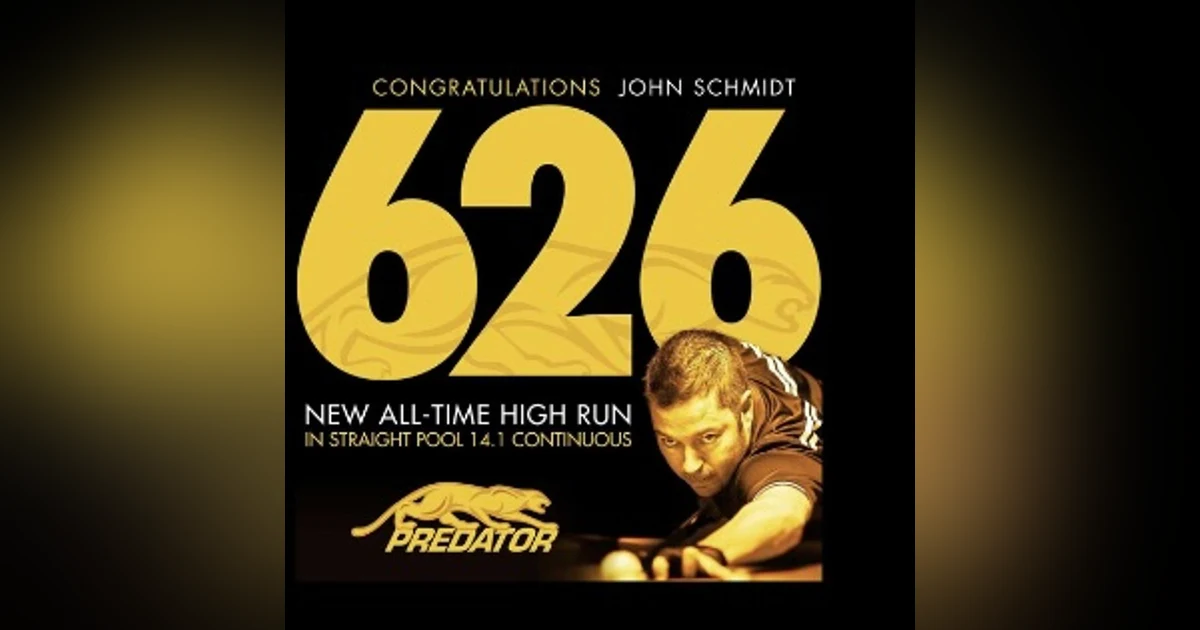

In this third installment of our four-part conversation with pool great John Schmidt—affectionately known as Mr. 600—we journey through the emotional highs and crushing lows that shaped one of the most fascinating careers in cue sports.
From flicking cockroaches out of his cereal on the morning of a U.S. Open to hoisting oversized winner’s checks in front of skeptical neighbors, Schmidt’s path to greatness was anything but ordinary. He opens up about the financial struggles and personal setbacks that nearly derailed his career, his surprising refuge in golf, and the critical turning points that brought him back to the table. We relive his U.S. Open victory, his tense debut on the pressure-packed stage of the Mosconi Cup alongside legends like Earl Strickland, and his triumph at the Derby City Classic—where street smarts were as essential as cue skills.
Schmidt also takes us inside his 2012 World Straight Pool Championship run, where he toppled icons like Johnny Archer, Thorsten Hohmann, and Efren Reyes. But the heart of this episode is his relentless, almost monastic pursuit of Willie Mosconi’s 526-ball high-run record. With candor, humor, and gritty detail, John recounts the grueling months of preparation, the physical pain, the near misses, the unlikely allies who stepped in to rack balls and provide support, and finally the magic day in 2019 when he ran 626 to eclipse a record thought untouchable for 65 years.
Equal parts inspiring and raw, Schmidt’s story is about more than numbers on a scoresheet. It’s about perseverance, obsession, and the quiet belief that you can push past the limits others set for you.
Join us as we explore the defining chapter in John Schmidt’s remarkable life and career.
Give Allison, Mark & Mike some feedback via Text.
Follow our show and/or leave a review/rating on:
Our website: https://www.legendsofthecue.com
Apple Podcasts: https://podcasts.apple.com/us/podcast/legends-of-the-cue/id1820520463
Spotify: https://open.spotify.com/show/4Za0IMh2SeNaWEGUHaVcy1
Music by Lyrium.
About
"Legends of the Cue" is a cue sports history podcast featuring interviews with Hall of Fame members, world champions, and influential figures from across the world of cue sports—including pocket billiards, snooker, and carom disciplines such as three-cushion billiards. We highlight the people, places, and moments that have shaped the game—celebrating iconic players, memorable events, historic venues, and the brands that helped define generations of play. With a focus on the positive spirit of the sport, our goal is to create a rich, engaging, and timeless archive of stories that fans can enjoy now and for years to come.
Co-hosted by WPA and BCA Hall of Fame member Allison Fisher and Mosconi Cup player and captain Mark Wilson, Legends of the Cue brings these stories to life—told in the voices of the game’s greatest figures.
Join Allison, Mark and Mike Gonzalez for “Legends of the Cu...
I'd like to interject one thing. John, when when you uh when we do clinics together, sometimes you're telling a story across the room. I don't get to hear it, but it was very entertaining for the students, and it had to do with that morning uh of the fine the final day of the U.S. Open and you were having breakfast. Do you recall the story? Um you were eating cereal and had a cockroach in it.
John SchmidtOh, no, no. Well, well, okay, that's true. Long story short, okay, okay, long it wasn't cockroach, it was the size of Bobby Chamberlain, had a neck tattoo. I remember it. So, so Mike's like, who's Bobby Chamberlain? But it worked anyway. Anyway, this is what happened in a nutshell. I was in a business arrangement with some people, and they borrowed $44,000 from me, and it was supposed to pay me back in 30. It was my life savings. They were going to pay me back with interest, but they fell on hard times, they couldn't. So four years later, I still don't have my money. Now I'd met this girl, Rachel, and I loved her to death, and she was my everything, but it was kind of weird living in their house because they were like, you could live with us till we give you your money back, but the wife didn't like her walking around little tiny shorts. You guys might need to move out. So I have no money. They have my 44,000. So I'm living in it, it was called like the Emerald Sands Motel. There was no Emerald and there was no Sands. It was a ghetto. It was a ghetto. And I'm and I'm getting ready to get on the plane to go to that US Open. And I remember a cockroach ran through my cereal and I just flicked him out, you know, five-second rule. I just flicked him out. And so I was just thinking like, this is my life. I I live in a halfway house. So the funny thing is, when I won that tournament, you know, they give you the big oversized fake check. Well, these two crackheads that were living up above me, they knew me because, you know, I talked to my neighbors and, you know, they asked me for crack or whatever. And so we knew each other. And so when I came in with that fake check, they looked down, they had like a couple of 40-ounce beers. They're like, Smitty, what's that? Is that a check? I go, yeah, I want a little pool tournament. And I went in and I hung that on the wall. You know, I'm looking at the cockroaches, like, it's nice, right? So, so like, like I'm hanging that $40,000 check on the wall, and it's funny how things turn around. Now, about six months later, well, that hurt my career, but I get a sponsor. Boom, that's good. And the people that owed me money to their credit, they paid me back the money. So all of a sudden, I win the U.S. Open. I mean, I'm dead broke. I win the U.S. Open, I get a sponsor, I get the $44,000 back, I buy a little home, like everything kind of fell into place. Um, that Q ruined me, though. The Q sponsor ruined me, but that's here and there. That was my fault. But I guess what you learn from all that is one minute you're flicking a cockroach out of your cereal. They're high protein, though. And the next minute, you know, you're getting things, you're coming around, you're getting a house, and you know, so I've I've been through some stuff that that probably has helped me. You know, I just didn't live that silver spooned easy life. And because life's gonna throw some serious curveballs at you, as you guys know. I guarantee all three of you have things that you're not gonna talk about on here that's been brutal. And you can either suck it up and deal with it, or you can pout in the corner. It's your your choice, you know.
Mike GonzalezYou're not gonna convince me that the proper way to prepare to win a U.S. Open is to not hit a ball for four months at the time.
John SchmidtIt's not. No, it's not. Well, well, in fairness to me, I was pouting a little bit and I was like, I am not going to a pool tournament until these people pay me my money. I'm just done with pool. And it's a shame because I was in my prime. I was 32 and I was playing good, and I just disappeared off the face of the earth because I was so depressed, it ruined my marriage. They didn't, they were never gonna pay me the money. I didn't think. And so I was really on tilt, and I was like, the only thing that gave me joy was playing golf. And so I really immersed myself. You know, we lived right on the course and I just played every day. And Johnny Archer called me one day. He's like, bro, are you gonna go to a pool tournament? What are you doing? And I go, nope. I'm done with pool until I get this 44,000. He goes, Well, go out and play pool and earn 44,000. I go, I can't. My mind don't work like that. This has to be resolved. I'm pissed, I'm mad, I can't deal with it. And so that's one thing about me that's not good. When when things go bad, I have to fix it. I'm not very good at like compartmental. Well, I'll just deal with that later. I deal with that, and that's just how I do it. So anyway, and but no, that's not the way to prepare to win a USL.
Mike GonzalezYou were gonna say something.
Allison FisherWell, I was just thinking that you've got an empty mind then. Like you said, the expectation's not there. So you're going in kind of fresh in some ways. There was no pressure on you. Can I relate to that? Yeah, I can relate to that. I think so.
John SchmidtWell, there's so much pressure on you, Allie. I see when you go compete, you were so dominant and you still are, but you've won so much that like anything short of winning and running eight racks in a row, everybody starts like, Well, what's wrong with Allie? You know, it's it's like you've been Superman, and so I don't know. Like for me, I've never been that dominant in pool. I've never played enough tournaments, and and when I did go to tournaments, I find a way to screw it up a lot of times. So I've never been like Shane Bent Boning, where there's expectations. I'm able to fly under the radar a little bit. But when I'm feeling right and I'm and I'm in the mood and I'm motivated and I'm mad and I care, you know, I'm able to run 600 or win big championships. So I can play, but the biggest regret that I have by far is that I don't know if you guys noticed this, you know, it's hard to follow everybody's career, but one thing that I've always done that was wrong is when I would win a tournament, I I disappear off the face of the earth to avoid the haters and the performance anxiety, and I go play golf. I've only played in 180 tournaments in my whole life. All the guys my age have played in 700, 800, 1,000 tournaments. What I should have done if I could turn back the clock was when I win a tournament, I should have been at the very next one and the next one. And then and and I would always have these two-month gaps where I just disappear because I loved golf. And it also I was able to afford to avoid the tournament pressure and the public eye. And so looking back, that's one regret I have is that I just didn't go to enough tournaments to make the impact that I think maybe I could have, you know. So, but that's okay. You make choices, you gotta live with them. That's that's what I did.
Allison FisherThat's why you've had a good balanced life though, because golf gave you balance too.
John SchmidtGolf and my dirt biking, and I I I would, yeah, I mean, but back then it was mostly golf. I was obsessed with golf, and I remember winning like when I won the U.S. Open, you didn't see me at a tournament for like four months, and my sponsors were like, We're sponsoring you. Like, why aren't you at a tournament? I would make up some reason, but I was just golfing and riding my dirt bikes, you know. So, yeah, I kind of wish I wouldn't have done it that way a little bit, but John.
Mike GonzalezOne of the things you mentioned that comes along with winning that uh U.S. Open, were you to win it, you know, the guy whispering in your ear, uh, was you make the Moscone Cup, which you did. Tell us about that experience and tell us about the tell us about the captain. I've heard a lot about him.
John SchmidtWell, the Moscone Cup was something. Obviously, it's it's the biggest thing in pool. And at the time, you know, now I'm now I'm playing, though. I know I'm gonna be on the cup, so I'm practicing, I'm feeling sharp, and I'm playing. So I'm on the team with Corey Doell, Mike Davis, Johnny Archer, Rodney Morrison, Earl Strickland, and me. And I bring Rachel, my girlfriend, to Europe. So she's in the practice room. I'll never forget this. And Earl looks at her and goes, You think this is a vacation? This is war. And I tell Johnny, I go, and now she goes running out of the room crying because she feels like she's in the way. I'm ready to kill Earl. We're like not even day one. So now I gotta play triples, me and Earl Strickland and Cory Dual. And I'm just trying not to vomit. I'm on live television, you know, most pressure I've ever felt. And it's triples. And of course, I'm thinking, God, please let my shot be an easy shot that I can make. And I hear Earl talking, and I look down, and Earl looks over at me and he goes, I gotta leave you this close to the next ball because I know you're gonna dog it. And Corey goes, Earl, Earl, like he's on our team. Like, and I'm playing the best pull of my life. I'm not as helpless as Earl's making it out to be, but Earl just thinks he's the only one who can play. I love Earl, but I told him afterwards, I go, Earl, I'm already up tight. And you're like belittling me on live TV and then wonder why I got out of line on the four ball. Like, you're brutal. You know? Can you imagine Earl as a Walmart greeter? You'd walk in, where's the toothpaste? And he just punches you in the face. Like he's a beauty.
Mike GonzalezTell our listeners what what triples are are.
John SchmidtWell, like, you know, three players play against three players. And if I shoot the four ball in, then the next guy on my team shoots a five-ball. So there's a lot of pressure on you to play good shape and not put him in a bad spot. But um, I I just remember like Earl broke his cue during that. And Earl said to me, he goes, This is too much pressure. I don't even want the 10,000. I can't deal with it. He goes, There's got to be a better way to make 10 grand. I go, I agree. And uh yeah, it was it was what it was quite a thing, was over in Holland or Amsterdam, whatever they call it. I'm not real worldly, I don't know, the Netherlands. And uh it was wild, but um it was so much pressure. I've never felt nothing like it. Like when you guys see the Ryder Cup in golf and wonder why are they dogging it, or why do the players in the Moscone Cup dog it, like it's a kind of you know, because you normally just play for yourself, but to to let down your team is a wild feeling. It's uh it's a brutal thing. You come back through that that player, uh, that private players' room and you're staring at Rodney Morris and Earl Strickland and Corey Doell after you've just missed a bunch of hangers. I mean, it is like you want to hide under a rock, man.
Mike GonzalezYou know, we just talked to Donna Andrews, who played uh, you know, played in the Solheim Cup on the women's side, right? And she said uh talked about playing her first uh Solheim Cup and and uh I don't remember who she was playing with. Let's just say it was somebody like Nancy Lopez. It was that caliber. Right. And they talked about because they're playing alternate shot, right? And so they're talking about well, who's gonna play the odds, who's gonna play the evens. And obviously, if you play the odds, you're gonna tee up first on the first hole. And Nancy says, Well, you are.
John SchmidtRight.
Mike GonzalezAnd Donna says, Well, why? She says, Because I'll throw up if I've got to hit that first ball. This is Nancy Lopez, one of the greatest women players ever.
John SchmidtYeah. Yeah, you know, I mean, what I try to do, and maybe it's corny, but the way I talk to myself when we talk about between the years, even though I seem like a spastic, frantic person, I have some ways that I deal with all that stuff. For example, I mean, there's people dying of cancer out there. So when I go out and play a pool match, I try to say to myself, like, John, get over yourself here. I mean, you lose a pool match. You're you're you're there's people dying of cancer. You know, there's people that are homeless. Like, it's gonna be okay, buddy. And so that's kind of the way I cope with it. I I try not to make too big of a deal out of it. And I think that's how I've been able to put together some pretty high pressure performances that I was proud of, to where I sort of just trick myself into, you know, you're just playing pool. People don't care if you win as much as you think they do. And there's people out there that are going through really bad things in life. And if the worst thing that happens to you is you lose a race to five in the Moscone Cup or in the US Open, like you're gonna live, man. So, I mean, right, Allie isn't, don't you do that?
Allison FisherYou you're putting you put everything into perspective, don't you? You try to at the end of the day, you've got to try and enjoy it.
John SchmidtYeah, but that's right. Yeah, that's right. And so I think I've been pretty good about that. Um, because I would like to think that I'm a pretty good pressure player to some degree. I'm not the keen at it, but but I have my little things I say, and I put in perspective of that, hey, I could be digging ditches for eight bucks an hour. I could have cancer dying. And uh, if the worst thing that happens to me is, you know, I'm gonna play a bad match in a pool tournament, I think I'm gonna be okay. So that's how I dealt with it.
Mike GonzalezSo you so you come off with all that pressure in the 2006 Moscone Cup, your first taste of that. Um, you could have come away saying, Man, I never want to do that again, or boy, I really want to do that again.
John SchmidtYeah, it it yeah, I I had both those feelings. I was like, I should quit playing golf and take pull more serious. Because even in my prime, I was only going to seven, eight, ten events a year instead of 20 or 30. So I should have probably operated a little different. Um, but it is a daunting thing because when you go to a tournament, you have two outcomes. You're either gonna play bad and not do well, and that's so painful, I can't even articulate it to you. Allie knows, Mark knows, I know. Well, Allie don't know, she wins every tournament, so she don't count. But Allie knows, don't worry. Allie knows, but or you're gonna have like the super elation and excitement and performance anxiety, and you're gonna play on live TV and for big money, and it's so it's never like an even killed ho-hum week. It's either it's either awful or so fantastic you can't believe it. And so the stress of that, I know going into a tournament that I'm gonna go into such a highly stressful deal that it stresses me out. I'm either gonna have an awful week. You know, there's nothing more painful than when I used to have to call my wife and go, Yeah, I I I made it to the money rounds, honey, and I lost 9-8 to Rodney Morris, and I'm coming home with no money. And you do that for two or three tournaments. Like, that's brutal. People don't understand. Like, like the highs are like this, but the lows are like this, way down here in hell. And so I I hated that. I hated the stress of knowing like when I tried to break the straight pull record, I told my buddy Doug, I said, Do you realize that if we do what we're trying to do and we get close, the mental turmoil that I'm gonna have to deal with, and the haters and the doubters and the naysayers and my own doubts and my own, and then what happens when at 520 balls, I miss a shot that I could shoot in with my face? And I get to walk around in a straitjacket forever, just mumbling to myself because I dogged it. So, like, like when you try to do something great, like scale a skyscraper, you also have the risk of falling to your death off of it. Now, if you just want to stay on the ground, you'll never get hurt, but they don't put you on the side of buildings and shine a big light on you either. So there's always that in my mind of like to be great, there's great failure, but there's you know, greatness too. So you better be ready to accept both sides of it.
Mike GonzalezYeah. Well, we're anxious to talk about your quest to beat Moscone's record. Before we do, a couple of things we probably ought to touch on. You alluded to one, and that's uh uh your one-pocket victory at the Derby City Classic 2009. The other would be talking about your 14-1 uh Straight Pool World Championship. Let's go back to the Derby Classic. And Mark, you've been there a lot. Describe for our listeners the environment from a player's perspective at that big event.
Mark WilsonWell, you have you know four or five hundred players participate, and so all the elite one-pocket players are there for that discipline. Um it's chaotic. You never know when you're gonna play because after every round it's a redraw, so it makes it hard to be a player and schedule yourself. But it also if you have to broadcast it, it's harder too, because you can't prep for anything. You never know who's up next. And then sometimes you'll end up being faced with playing four or five matches in one day, and they're long, lengthy matches, and it's been a long ten days, too. So it's a it's a grind. It's a it's a really an endurance test.
Mike GonzalezJohn, were you playing were you playing multiple events or did you just focus on one discipline at that Derby City that year?
John SchmidtActually, it's um it's a damnedest thing. Normally, normally it I don't play good enough banks to ever win the banks, but I could maybe, if everything went right, get 10th or 12th. And I've done that before. I got ninth one year. So I could play, I should play the banks just to get the all-around. Well, lo and behold, I don't play in the banks and I don't even pay the entry fee, but I played in the nine ball and got ninth, and I won the one pocket. So I would have got second or third in the all-around. So I screwed up there by not just paying the stinky little $50 entry fee. But the match that really, the match that really helped me in that that derby, see, Mark said there's 500 players in it, and there is, but in reality, there's 30 or 40 guys that are good enough to win it. And I like to think that I was one of them, you know, but there's really only 30 or 40. Sometimes you can avoid all of them and draw off soft, but I didn't draw soft that year. I managed to play a bunch of monsters and snuck by them. So now I'm playing Bustamani with like like six players left. And I haven't been beaten yet. I have a read by two, so that's really a nice little thing in your back pocket. Well, Bustamani has me, I'll never forget this. He has me two games to zero and seven balls to minus two, and his outball is like an inch from his hole. It's not looking too good. I somehow, I somehow get things to go my way and I win that match. And Bustamani set because Bustamani and Frost always had friction. And Bustamani says to me, He goes, You can win this thing. The way you're hitting the balls, you could win. Play like you played against me and play aggressive. So now I make it to the finals and I'm with Scott Frost, and the whole building thinks I have no chance, but I mean I played Scott many times. I have a chance, and it's a short enough race. And he has to beat me twice. But I'm nervous, you know me, I'm the nervous Nelly type, and I start off terrible. Mark, were you doing the commentary on it? Yeah. Oh, okay, there you go. Oh, slightly. Yeah, so I look like I got Tourette's out there. I'm just assaulting the rails from every direction. And I lose the first game, like eight to minus one. And you can just feel the whole crowd's energy, like, oh, poor John, he's just a straight pool player. You know, well, I run nine and out, eight and out, and eight and out to win. And and uh I wasn't surprised by that. I was playing a lot of pool and playing great and playing a lot of straight pool. So when you gave me a shot, I felt like a threat to run the balls. And uh the crowd thought it was a major upset, but I felt like, hey, I know how to play too, and you know, I played a lot of one hole. So that was an exciting win. And and then they called me on the loudspeaker, John Schmidt to the office. I thought I'm in trouble, like Bobby Hunter going, I don't like you. I go in there, I'm thinking, what's the problem? They go, Well, here's your 50 bucks back. They gave me my rebuy back because I never had to use it. So but the best part, the best part is my buddy Bill Miropoulos comes up to me and he goes, How much do you think first place is? I go, Oh, did they lower it again? I thought it was down to six. He goes, Well, what do you think it is? I go, six thousand. There's no cockroaches this time, but I figure it's six thousand. He goes, It's twelve thousand. Well, I ended up winning the game show that week for a couple thousand and the Derby City straight pool thing. So I went 17,000. And I kid you not, two guys tried to rob me on the way home. So, real quick, I'll make this real quick. I got the money, I get the cash at the window, and I'm driving down the 65 back to Florida. And these two guys in a pickup truck, we're going 70, and they're going, You got a flat tire. Well, I don't care if I got a flat tire, I'm not stopping. So I'm trying to open the door at 80 and look out. I can't, you know, because the wind pushing. And they're going, you they're trying to get me to pull over to rob me. So I go like eight miles to a gas station. I didn't have no flat tire. So luckily, I've been beaten up and robbed a few times, and I knew enough street smarts, I'm not stopping. I'll drive on a sparking rim all the way to the next town. So that would have been a bummer, but I didn't get robbed. I won the tournament, and uh that was pretty helpful. Yeah, that was pretty helpful in my financial life and career and everything.
Mike GonzalezYeah. So you win the Straight Pool World Championship in uh 2012. That was over somebody our listeners would recognize.
John SchmidtThat you know, you know, the thing though about that is okay, that was in New York City, but there was a tournament two weeks before that with the same exact field called the Maryland 14.1. And I'd only played in that once, and Archer beat me in the finals. So now, so now this year I'm playing in the semifinals with him, and things go my way, and I he's got me like seven to minus two, and I run 152 and out on him, and then I beat Torsten Homan in the finals. So I'm like Ernie McCracken. Now I'm finally above the law. That's Mark's saying, right? It's funny. So I win that tournament, and now two weeks later, they have the world straight pool in New York, and all the killers are there, and it's the same field, same setup, but a little more money. And I got to play Torsten Homan in the finals, one of my straight pool heroes. I mean, Torsten's phenomenal. And we have a heck of a match, and I think I sneak by him like 200 to 160. And then Efren and I got to play in the finals. Now, this is no slight on Efren, he's the GOAT, but I'm more scared of Torsten because Torsten runs 100 about as much as Efren takes a breath. Efren had not ran a hundred in the whole tournament, but of course decides to do it against me in the finals. So we we play that 200 point matchup. Match and we both run 100. And I win the match 200 to 169. And Efran was super gracious. Efren really impressed me in the finals. He played a super good match and um and getting by Torsten, you know, two two tournaments in a row. And these are 200-point games. And you know, now I'm tooting my own horn here, but I do believe that Torsten also knew that I was dangerous, and he didn't like drawing me either, because him and I, whenever we drew each other, we knew the frequency that we could run 100. I mean, Torsten will guaranteed run a hundred, and I will guaranteed run a hundred just about every 150-point game. So when we drew each other, we felt like that was the finals because Efren was a little bit of an unknown. Efren wasn't a straight pull nut. So we didn't feel that he was like gonna run 100, but sure enough he did on me anyway, little sucker.
Mike GonzalezWell, let's fast forward to 2019. And this may take a while if you're gonna give this uh do because uh uh this man, John Schmidt, set out to break what a baseball fan would view as Joe DiMaggio's record, right? Uh I grew up as a kid, played pool. I had one book, one pool book, Willie Moscone's book. I knew what the record was, I knew where he set it, I knew it was on an eight-foot table, it was a Brunswick. Anybody that that was in the pool knew a lot of that stuff, right? And so for you as a young man to look at that record and say, no, wait a minute. Nobody I know has even talked about doing this. Yeah. Uh just help us understand uh uh what the motivation was for you. First, just even try.
John SchmidtWell, to somebody on the outside looking in, you might have to think, well, John's just the biggest egomaniac ever, because he thought I I didn't think I could break it. Okay, what happened was Predator said to me, Look, we know you like straight pool and it's cool that you want to play it. And if you break your own personal high run of 400, because at that time my own high run was 400, you know, there were some bonuses involved. So I had to, again, go back to my broke childhood. There were some monetary incentives. But really, I thought running that many was impossible. And it probably was at the time with what I knew. Now I've played a million racks of straight pool and and I tried to break that record at 41 years old. But what I know now, you could have never convinced me that I needed to learn more and do it differently. And we'll get to that in a minute. But basically, I set out to try to break my own high run. And I know if I break 400, then I'm close enough to 526, something crazy could happen. But I just remember the reverence that Bobby Hunter talked about that kind of number. I mean, Bobby Hunter was a world straight pool champion. His high run was 225. I mean, Bobby talked about anybody that could run 400 is like like that's Hall of Fame type stuff. You are one of the best. So I always had that number, like we talked about earlier. I had that barometer, that number. So I said to my wife at the time, Felicity, you know, I'm gonna try to play some straight pool for a month on camera. Maybe we can get a nice high run of something over 400, get a little bonus from my sponsor, and life is good, you know? So the first day we set up this table, and I went in there at 5 a.m. and I eat my little protein shake and some apples or whatever, and I'm all fired up, and my little supporting wife is sitting there, like, you can do it, honey. And about an hour in, I look at her and I go, This is stupid. I have no chance. I go, I have no chance to break this. It's impossible. And nobody cares anyway. I don't, I, I don't, I mean, this is an hour in. I almost quit. I somehow trudge through the next week and I'll never forget it. This guy knocks on the door, and it's like 7 a.m. Because I'm starting before the pools open so I don't disturb anybody. And I got my little stupid video camera set up, and my one fan in the world who's not a fan anymore, my ex-wife sat in there. I'm not sure she was a fan then, but she's watching. And so he knocks on the door and he goes, Hey, uh, my name is Doug, and and I heard that you're trying to break this record. Would you mind if I came in and watched? I go, Well, I knew I had to have some fan somewhere. Come on in. So he comes in and watches, and he's racking for me, seven years old, and he racks for like six hours. And he looks at me and he goes, Could I come back tomorrow and rack for you? I go, You don't know how much racking helps because I'm racking for myself. It wears me out. That'd be great. He does this for about a week. And I finally ask him, I go, because we're in Monterey, California, right by Pebble Beach. And I go, Well, where do you live? And he tells me, I don't know where it's at. I go, what where is it? Like right around here? He goes, No, it's about 90 miles away. I go, you've driven 90 miles here and back for seven straight days. You gotta be kidding. He goes, I'll do it every day for the next month. He goes, I used to rack for Moscone and I wouldn't miss this for the world. And I go, Well, well, what do you think of me trying to break the record? He goes, from what I'm because I mean I've been running like 300 in front of the guy, you know. He goes, Man, it looks like you got a chance to me. So he calls me a week later. At the time, I'm staying in my 1993 motor home. You know, I don't have air conditioning, I just got the ocean breeze, and I mean it's a whole nine yards. So he goes, I rented a condo up on the hill, so you'll be comfortable, and I bought us some nice food and everything. What? I barely know this guy. So this goes on for about a month and I my high run ends up being like 363. But I keep getting one, and I don't know if you're familiar with this. Uh Mike Alley knows they call it a kick in Snooker. We call it a skid where the balls make bad content. I mean, I'm getting a skid or two a day to end these high runs. So now I take a break because I'm worn out. I've done this for a month, and he calls me back, goes, let's try one more month. And I go, Well, I'll tell you what, I'd like to try this new Sardo rack because it really freezes the balls up better. Now that might have been the third. At any rate, I'm learning. Like, I've got to get rid of this chalk. So this, I'll skip ahead. This goes on for three months where we take three attempts, and the best I can do is like 434. I run 434 and I scratch on the break. And as you can imagine, I'm just sick of it. I mean, I've played six hours a day, five days a week for three months. And we took a month in between each month, but it's a hellacious amount of pool. And the expenses are building up. Like it's costing this guy $3,000 a month for this condo. And I'm putting my life, I don't live in Monterey, so I'm I'm fading road expenses and all the stuff. And I'm getting messages from people like this one guy wrote me and he goes, Man, you got to break that record. I go, Oh, thanks. You know, I'm trying. He goes, No, you don't understand. People at my pool room make fun of you every day. I go, they make fun of me. Why? He goes, They said that you're crazy, you're an idiot, that you have no chance breaking the record. And I go, Well, do they know how good I am? And he goes, Oh, they think you're the best straight bull player in the country, and you have no chance. So that pissed me off. And I'm like, Well, I got a chance. Not saying I'm gonna do it, but I have a chance, right? And so so now we go to the fourth month and we take a two-month break, but things start getting interesting. A guy says to me at the Derby, Would you come to Phoenix and we want to live stream this and we're gonna pay you four grand. You're gonna play six hours a day, five days a week for a month. So I'm thinking, wow, I get paid money now for my failure. So that's a nice change. Right. Because normally my failures, I don't get no money. So so that so that happens, and I go to Phoenix and I'm playing on a table that honestly was not easy enough, but I manage on the last week to run 464 and I missed a long shot I got off the back rail. But I'm starting to think that like maybe if I could just catch lightning in a bottle, maybe. But see, like Ali would have a better chance doing it than me because she's calm under pressure. The one thing that held me back was I would get so uptight once I get over 400 that like I think my patterns went bad. But anyway, so check this out, Mike. So now, now I remember the the timeline of this. So my buddy Lu Sardo calls me, says, Listen, you've got to use my rack. It freezes the balls, they'll open better. Well, I'm like, at this point, I'll I'll try anything. I'll wear a big bird suit. I'm looking for any help I can get. And my wife says to me, because every night my back hurts so bad and my ankles, I can't even move. She goes, We got to go find you better tennis shoes. Because I was wearing like Crocs. You know, I'm just trying to be, yeah. Moscone would have been proud, right? I'm wearing jean shorts and Crocs, like Brad Pitt couldn't get laid wearing this outfit. So so I go, I go, I go buy these Hoka tennis shoes, and I'm a cheap ass. I'm not paying no 160 for shoes, but I put them on. I'm like, oh my God, these are a game changer. I mean, they they got souls this big. So now, now I'm armed with the Sardo rack and these shoes. So now we go back and we set up the table and we're ready to go. And I play for about two weeks and I run 490 and I miss a ball, I could shoot in with my face again, and I dog it. And I tell Doug, I go, we got to take a break for a day and go watch a movie. I can't take it. I said the pressure, like my heart was coming out of the side of my face shooting this break ball because I'm I'm five minutes from breaking the record and getting all the bonuses and the acclaim and the cockroaches to be proud, and it's all happening. So I miss at 490 and I call my friend Jerry McWerder. He says, Listen, I know you're not gonna want to change nothing at this point, but I got a suggestion. I want to come up there and watch, and I got something for you. And he brings me this town chalk. He goes, You gotta try this. The ball stays spotless, and you never get a skid. I go, Yeah, it's been brutal. I get a skid every day, it ends all my runs. I hate pool. He goes, You got it. So he comes up there, Jerry's racking, and he gives me this chalk, and I got these new Hokus shoes, and lo and behold, on the like the ninth, maybe the twelfth day in, I run the 626. It was a combination of the balls being racked tighter, the town chalk, and the shoes, and that's what did it. That's what did it. I I I remember the day before I run 378 and scratched, you know, and we're filming all this, but we ain't gonna do nothing with that, nobody cares. Normally a 378, you're a big deal, and this thing it's like you suck. So I run 378 and I scratch on the brake. I walk in the very next shot and one run 126 and scratch on the brake, then I run 26 and miss an easy shot, and then I run 626.
Mike GonzalezSo, Mark, help me, help, help me with the difference, Mark, because um I've got a magic rack. I used I used Tylum Chalk and I matched your high run at seven.
Mark WilsonWhat's the difference here between uh tenacity is a big part of it? Yeah. I mean, John just got that stick-to-ativeness. When uh when this all began, John and I were doing a player review broadcast, and uh he'd run 170 balls and got a bonus of $1,500 from Pat Fleming. And but for for that $1,500, he has to come in in the next day, and then we have to do a rebroadcast of the match, and then he airs his thoughts. And at the end of that, it was very insightful because I'm a straight pool player, and probably during the that run, John pointed out four or five things I'd never considered about when there's small gaps and the balls, once you've slightly dislodged them, how they don't come apart, so you have to be more careful. Because I'm I used to just crash into them and just hope it works out. But he was talking about things that I hadn't considered, and then upon the conclusion of that broadcast, he told me I know I could never do it, but I'd just like to take one crack at Moscone's record, which really caught me off guard because uh everybody that was in front of me, uh all my heroes, had never mentioned or uttered a word about beating Moscone. It was universally accepted that that would be impossible. So somehow I just kind of got that in my head that you know no one would ever even try it. Well, John was the first one to mention it, and he also he's kind of a self-deprecating guy, as you can see, but he goes, and I know I couldn't do it, but I'd just like to take a crack. And I thought, huh, wow, that's interesting, you know, and just his insights. And so I was always maybe one of his bigger advocates. And then when he did take a crack at it, he would oftentimes call me at night, or I would call him, and he would literally be limping out of the bullroom from playing eight hours nonstop. And you hop up there and you run a 113, and then something happens, and then you just rack them up and start over, okay? And then because you're not even scratch the surface, persist. There's no opponent, there's no uh you never get a sit-down. And so he just persisted doggedly, and then he said, Mark, I have to pull myself up into the motorhome. I can't even take the step. I have to hang on to the railing. Oh, and uh just dying. And then you know, every day he would report these numbers, and it'd be I ran a 270, and then almost all once he got to 200, there was a virtually never a missed shot that it happened, but it was a misfortune where the balls come and tangle up on the cue ball or kiss it back into the side pocket. It wasn't an open miss that that happened, and so uh I'm saying, no, you can do this, just stick at it. One of these days the stars are gonna line up and you're gonna not scratch but rattle, and then you're gonna make a good shot, and then we're back in it. And and so uh it was fascinating to watch. And uh the day that he got 490, I spoke to him and uh he goes, You can't believe what happened. He says, I got to 490, which is just incredible. And I go, Oh my goodness, fantastic. He goes, No, he says, I got paralyzed with fear. He said, I could see Moscone out there in the horizon, I can see him. And I started just making stop shots, and you can't play straight pool like that. He was just cinching balls, and then he said, I'll never get back this far again. And I was being positive, and I don't think he really meant it, but he just said it because he was frustrated. And I said, No, you can do it. One of these days, just persist, persist, persist. And uh anyway, it uh you know, a miracle did happen, and he did persist, and it was it was Memorial Day, wasn't it?
John SchmidtIt was 527-19. Yeah, it was it. Well, you know, I just didn't want to be an old man someday, and I'm getting there now, but I just I wanted to know what I could do, whether I broke the record or not. I didn't want to be that guy going, I coulda, woulda, shoulda, blah, blah, blah. Nobody cares about that. I just wanted to see I it wasn't so much about breaking Moscone's record because I thought that was impossible, but I kind of I kind of wanted to know like, how many days does it take me to run 300? And how many days does it take me to run 400? And I found out every 12 days I can run 400, and every other day I run 300, or even I average 296 each day. And so I learned from that because the high run stuff is just one lucky inning, one lucky day. But what can you do every day? Now, looking back, where I messed up is I overcommitted myself to sponsors. I said, Well, I'll play six hours a day. I didn't realize what that entailed because I never played by myself really that long. We estimate, well, we didn't estimate, we wrote it down. I shot in 4,000 break shots, and I missed nine of them, which I think is a good stat. That's another one I would like to know. How many break shots did you miss? Well, I missed nine out of 4,000. It could have been 13. It's between nine and 13. We know that, but that's here nor there. But I just was able to figure out from my own game and my own confidence like, well, how often can I run 200? So we wrote down every 100 ball run, every 200 ball, 300 ball, 400 ball, yada, yada, yada. And that's see, the greatest pool that I've ever played in my life, I think nobody knows about because it was a day I didn't break the record. And I'm again, I'm bragging here, but this means as much to me as the record. One day in there, and then we got the camera rolling. I took 11 innings, meaning I took 11 tries, and I averaged 173 per inning, and 10 of the 11 tries were over 100. I ran 100, 10 out of 11, and my last shot was like a 359. So Doug took all the balls I made, added them up, and divided by 11. He goes, Man, you just averaged 173 per shot for eight straight hours. And I told Torsten Homan that, and he goes, he goes, dude, that's stronger than running 626. I go, I know, because 626 is one lucky inning. And so when I'm old and I'm sitting in my rocket chair trying to convince somebody how good I played, like I know what I can do and I know what I did, and it was all documented. Whether somebody hates me or don't think I'm that good, I know what I could do on a pool table and I could take that to my grave with me. And it means a lot to me because I just always wanted to know like, how good am I really? Where am I at on the food chain? Well, I know now at 52 years old what I'm capable of if I'm pushed.
Allison FisherThank you for listening to another episode of Legends of the Q. If you like what you hear, wherever you listen to your podcast, including Apple and Spotify, please follow, subscribe, and spread the word. Give our podcast a five-star rating and share your thoughts. Visit our website and support our Paul History project. Until our next golden break with more Legends of the Queue, so long, everybody.
Pool Professional
John Schmidt is one of the most compelling figures in modern cue sports, a champion whose story blends Midwestern toughness, road-warrior grit, and an almost monastic devotion to the craft of running balls. Known around the world as “Mr. 600,” Schmidt is the man who authored the historic 626-ball straight pool (14.1) run, eclipsing Willie Mosconi’s legendary 526 mark that had stood for more than six decades. But the number only hints at the journey.
Born April 12, 1973, in Keokuk, Iowa, Schmidt’s beginnings were humble, blue-collar, and formative in the way they taught him to compete and endure. In the Legends of the Cue conversations, he comes across as a kid shaped by small-town life, everyday responsibilities, an early understanding that nothing is given, and a stubborn desire to earn what he wanted. That toughness shows up later in his pool life not as bravado, but as an ability to keep going when the money is low, the rooms are hostile, and the pressure is real.
Before pool became the obsession, Schmidt was also deeply connected to golf, a thread that never really leaves his story. It isn’t merely a footnote; it’s part of his identity and, at key moments, a refuge and reset button when the pool road took its toll. In his own telling, the competitive instincts and self-discipline required in golf, managing emotion, committing to a process, staying present over long stretches, translate naturally to what elite pool demands.
Schmidt didn’t grow up as a junior prodigy with a formal program and a sponsor pipeline. He came to pool later than many … Read More