

 Apple Podcasts
 Spotify
 John Schmidt w/Bob Keller - Part 4 (How 820 Happens: Break Balls, Patterns, and Pure Straight Pool Genius)

In part four, the series shifts into the pure mechanics of greatness. This is where John Schmidt and Bob Keller begin unpacking the actual run in a way straight pool lovers will savor. They discuss break balls, key balls, rack patterns, cue-ball precision, manufacturing insurance balls, and the many little recovery shots that separate a big run from a broken one. What becomes clear very quickly is that 820 was not a clean, carefree stroll. It was a living, breathing puzzle solved one rack at a time by a player with extraordinary knowledge of the game.
John makes one of the most telling points of the entire interview when he says that the right way to judge a huge run is not just by the final number, but by how many shots in it would still make sense in a real match. That standard matters to him. Bob, meanwhile, highlights how often John had to create break balls, rescue awkward situations, and trust his cue-ball control under constant pressure. Their back-and-forth becomes both technical and dramatic, because every pattern has consequence and every decision carries risk.
For serious students of straight pool, this episode is a gold mine. For casual listeners, it is a chance to hear a master explain his craft in plain language. By the time this installment ends, you will understand why 820 is not just a number. It is a blueprint of elite problem-solving on a pool table.
Give Allison, Mark & Mike some feedback via Text.
Follow our show and/or leave a review/rating on:
Our website: https://www.legendsofthecue.com
Apple Podcasts: https://podcasts.apple.com/us/podcast/legends-of-the-cue/id1820520463
Spotify: https://open.spotify.com/show/4Za0IMh2SeNaWEGUHaVcy1
Music by Lyrium.
About
"Legends of the Cue" is a cue sports history podcast featuring interviews with Hall of Fame members, world champions, and influential figures from across the world of cue sports—including pocket billiards, snooker, and carom disciplines such as three-cushion billiards. We highlight the people, places, and moments that have shaped the game—celebrating iconic players, memorable events, historic venues, and the brands that helped define generations of play. With a focus on the positive spirit of the sport, our goal is to create a rich, engaging, and timeless archive of stories that fans can enjoy now and for years to come.
Co-hosted by WPA and BCA Hall of Fame member Allison Fisher and Mosconi Cup player and captain Mark Wilson, Legends of the Cue brings these stories to life—told in the voices of the game’s greatest figures.
Join Allison, Mark and Mike Gonzalez for “Legends of the Cu...
John Schmidt
I mean it looks easier than it is, and I could have messed it up, but but I'm you know I've done it so much and I'm gonna get that right more often than not.
Mike Gonzalez
Yeah, yeah.
John Schmidt
But but but one last thing on that, Michael, that you gotta remember what you want to do when you play straight pool, you've got to play the patterns to where you have escape valves. And my escape valves, as I'm trying to nudge that ball, I know that if I whiff it, I can then use those balls up by the side. There's a reason I left those balls by the side because I know they're gonna be my escape valve for something else later. And it's just constant like risk assessment and percentage weighing. What's you know, like a poker player? Well, I have this many outs on the river card and I don't know how to play poker. Maybe it's a bad analogy. But that's how you got to play straight pool. You can't just be all in there and go, if I don't nudge this brake ball, the whole run comes to an end. I mean, you don't want to play like that.
Mike Gonzalez
Yeah.
Allison Fisher
So during the run, do you know exactly where you're at, point wise?
John Schmidt
Oh, yeah, Allie, because I keep track with a coin. Tell us about that. Yeah, I noticed. Well, I just do that for the viewers and for myself so that I know when to start dogging it. I know as soon as the coin goes all the way around the table once, that's 18 racks, that's 252. Here's how daunting that is. To run 800, your coin has to go completely around the table three times, plus like five or six racks. Other than that, so I mean, but the coin, I tried one time to play without the coin. I told Doug when I ran the six, don't tell me how many I'm on. And I'm so neurotic, I I couldn't do it. So I'm on a big run one day, and he goes, How many you think you are on? And I go, I don't know, man. It feels like 400-ish. He goes, No, you're 339. And I hate it. I'm like, nope. I just have to know. I want the pilot to tell me the plane's going down. I have to know where the coin's at.
Mike Gonzalez
And so of course you you mentioned you mentioned Doug, which was Doug Desmond, the fellow that was with your rack in the 626. So let's go, let's go now to to rack 14. So now you're approaching uh, I guess, 200 balls. Yeah, it's about 200. My math is right. And uh let's take a look at this one, which was an excellent out, by the way.
Bob Keller
Yeah, oh, I remember this one. Yeah, in a long line like this, you're gonna have racks that don't lay well, and you've just got to find a way to get through. So John's he's he's looking, can I cut this 14? No, I can't. And just take a look at how he finds a way to get there. Obviously, there's a break ball to the side of the rack. How are you gonna deal with those two balls that are tied up?
John Schmidt
Oh, I get out of line here real bad. I remember this now, but this is this is again playing the golf course. I'm gonna shoot shots that I know are more doable, and I'm gonna play patterns that are more doable because you might look at this and go, God, this is missable. Well, yeah, it sure is. I mean, and I was trying to land straight in here, and I got two or three inches of angle, and now I got to make a great shot here.
Mike Gonzalez
This is a this is a wonderful shot to get back on the nine the way you want it to, yeah.
John Schmidt
Yeah, because you can, I mean, you could just come short, long. And now this shot here, I call this killing the ball. You don't do this with draw, you do it with left-hand English, as much as you can use.
Mike Gonzalez
And there you are with a perfect break ball again. So let's let's go forward to rack 16, where you find a way again to get it done.
Bob Keller
This is in rack 16. Yeah, so so an instance like this is gonna stop most players. And John looked at this and he said, I don't know if I'm gonna clip this two ball. I better hit this with more speed in case I whiff it and I come around three rails. And he just barely glances that two. But because he had the foresight to give it some speed to come around, he has a chance. Like I said, this is gonna stop most people from here. But watch, I want you to watch when he shoots this ball into the upper corner pocket. Watch how long it takes the object ball to get to the corner pocket. He said, he's talking to himself right now, and he says, Okay, just smooth this in. Don't do much with the cue ball. Yeah, because I was on a pretty big number here, right? 300-ish? Yeah. Watch how long it takes the ball to get to the pocket. Yeah, I pinched that one. I mean, and made the cue ball stop on a dime, hitting it that softly. And now the very next shot, you got to come with a speed that's like eight out of ten to get the cue ball across for the combination or the two.
Mike Gonzalez
Yeah.
Bob Keller
Yeah, if I miss my mark there, I'm done. Yeah, that was a good shot. And now you're drawing the cue ball off the three to create a break shot and play position for the other one. I mean, that's you John was doing those things constantly through the whole run, and that's just amazing to me.
John Schmidt
Well, the good players, when you watch Torsten and Rempi and all those guys, here's the problem with straight bowl is the great players make it look so easy that people don't appreciate it. Every single rack is a complete cluster, you know what, and there is all kinds of lanes blocked, and there's all kinds of uh pitfalls, but the great players just get to the end of every rack, and it's like, well, anybody can play this game. He's got a little one-foot break shot, they're all hangers. No, you gotta make them be hangers by choosing the right risk assessment percentages. And uh, and there's still times I'm scrambling and I have to rely on cue ball control and shot making because every time I nudge the balls, they just get funny and they tie up and they block each other, and I'm like, oh god, now I'm screwed. You know, I mean it's a harder game than it looks. It looks so damn easy that people don't appreciate it. But Allie knows how hard it is. Bob knows, Mark knows, I know, Michael. We're trying to get you to know.
Mike Gonzalez
I know, I know. So so we go to Rack 20, and this is one of the ones where maybe I would have thrown my stick in the barrel and just walked back to my hotel. I I I love this shot. It's a short one, but Bob, a lot of people have seen this already on YouTube.
Bob Keller
John, you talk about it. You know what this is.
John Schmidt
Oh, okay. Well, this is interesting, and it's something I didn't really want to teach nobody because they'll use it in a high run. You might look at this shot and go, well, you'd never shoot that. And you're right. Up until six years ago, I think that shot I would make three or four out of twenty hand racking because of the micro gaps. But with the templated rack, if you shoot this ball and and you hit it with the right speed, like as soon as Bob left, I made this 14 out of 20 and hung it twice. It's actually kind of a hanger. But I guarantee somebody's gonna use that to run 890 on me. But it's a shot that you would never play normally, but with the new donut rings and them all being so frozen, you can consistently make that ball off the bottom two or the next two. The top two is a little harder because then a ball comes out and gets in the way. But try it at home. Just set it up, hit it light speed with a little draw, and the cue ball has to hit to the crevice on the right so that it double clicks and makes the cue ball turn left towards the pocket, and it goes, it just goes right in the pocket. People say, Oh, that's a dumb shot, he'd never play it. Well, be honest with you, I'll shoot a thousand a shot if anybody wants to bet on it. It's way better than even money. On pockets like that big, too, you know, five-inch pockets.
Mike Gonzalez
So let's go to the very next rack, rack 21. Sort of an unusual break shot here, Bob.
Bob Keller
Well, yeah, I mean, this is the type of thing you gotta do to keep a run going. This is a very unconventional break shot, and yet many players are gonna try and blast the rack from there and just leave it to luck. John is playing control, and the cue ball got away from him, but he played it with more control, and now you got to come with a shot. I gotta come in the super.
John Schmidt
Yeah, this is at about 400, too. This is a good shot. I just I channeled my inner Allison Fisher here, and I was like, I'm just gonna hold still and have good fundamentals because normally I look like I got Tourette's out there when I get nervous. I flop around. But but but that break shot was it's funny. The reason I had that break shot was because it was a guarantee. Now, if I try to get cute earlier and get on a better brake ball, I don't get through the rack. I just took my medicine, took what the table gave me, and that was probably one of the ugliest break shots in the run. But I was proud of that shot because at 400, that's a scary shot. You know, it's tough, you know, whatever.
Mike Gonzalez
Yeah, and and and then that long shot, that's one I would have been in full pucker. That was a heck of a shot. All right, rack 24. You're you're getting deeper into it now. And uh Yeah, we're over 300. This is just a great run of shots, uh, Bob.
Bob Keller
Yeah, and I put this together and it kind of plays it in fast motion, I think. But I mean, obviously overdrew the cue ball, and like I said, a lot of pool street pool players, that's the end of their run. And John shoots seven shots in a row, every one of them is missable. Now he's got to shoot a double combination, cutting this ball backwards, and he's playing position and doesn't quite get it. He's got to shoot another combination, elevated over the rack. Now, you know, there's ten balls in the rack area. How are you gonna open these? Nothing is situated well for it. But John just has a patience to know that he's gonna find a way, and that's what he does again. And then this shot is is razor thin, but yet still with control. Only one shot to shoot. So that's seven shots in a row. Any one of them could have stopped the run for a mere mortal, and now the run, now, now the rack was open.
John Schmidt
Yeah, yeah, you know, most people aren't gonna watch the 820. They just hear the number, they watch the final rack where I miss. Nobody's gonna set and watch all 58 racks. Half the racks look like that where you're like, man, he's in trouble. He ain't getting out. If you make one dumb move or one dumb decision, you're now treetop, straight in, frozen on the rail, hooked. I mean, it's it's a game of like, it's just a strange game to where you better have a lot of experience, shoot straight, have a great cue ball, and be lucky, drink and thrive, wearing hoke issues in town, got donuts, a 200-ball racker. I mean, it's just, you know, you watch the pros in the tournaments. I mean, a hundred-ball run is a big deal on a diamond in a tournament. That is hard to do.
Mike Gonzalez
Yeah. So this next one is it's in the same rack, isn't it, Bob? It's at the end of the rack.
Bob Keller
And so this is at the end of the rack. I mean, it's one of the toughest racks in the whole run. Now, how are you gonna get on a break ball here? And John knew he Oh, this was a good shot. This isn't cut. He knew exactly what to do. He's knocking the two ball over in front of the pocket and stopping the cue ball on the rack.
John Schmidt
And I'm just hoping this two doesn't go in and I don't miss this ball. This was a cute little shot. I knew if I nudge that over by the hole and put the cue ball on the rack, I have a chance. And Bob was like, Oh, that was a good shot.
Bob Keller
Now, I'm showing you thinking about this because you initially lined it up with the cue ball on the rail, but the you can't cut that to the left to go into the rack. So, what's your thoughts about where you're placing the cue ball?
John Schmidt
I'm screwed here, and what you have to do, this is interesting. You can't hit this with a high ball, really, because the cue ball won't act right on new cloth. I have to overcut this as much as I can without missing it with a draw stroke. That's why I moved the cue ball out to the middle. On camera, this looks like this easy cut, but it doesn't have any energy coming off this ball. So I have a tiny window, and then I have to really hit this through the right side of the pocket, and I'm still not going to go into the rack with much energy. That was a good shot because that was all I could do there. Yeah, I was happy with that one.
Mike Gonzalez
Yeah, yeah, pretty incredible. Next one we go to is now we're in rack 27. We're past the halfway point, little backward cut shot. Oh, yeah, this is terrible. This is incredible.
Bob Keller
But look, look where the cue ball stops. Yeah. Just a ton of inside English. You weren't hoping. You knew where the cue ball was going, and that's the shot that's going to stop most people.
John Schmidt
It wasn't really that hard a shot on big pockets, but it is when you're like four, five hundred. People just scoff. Well, these are buckets. I understand when you run 27, but go run 727. Mike, show that shot again.
Mike Gonzalez
This is this is the uh backward cut shot with the kill stroke. Look at that. You're cutting that. Oh, that was pretty big shot.
John Schmidt
Oh, yeah. Yeah, that was.
Bob Keller
That's a 90 degree cut.
John Schmidt
And I hit it with bottom inside English. Yeah, right. That was a good hit. Bottom inside control.
Bob Keller
The cue ball only touched two rails. Yeah. Yeah, otherwise my cue ball runs. I just thought it was an incredible shot.
Mike Gonzalez
Well, speaking of super thin cuts, Bob, let's look at this next one from Rack 29.
John Schmidt
Yeah, that was a good shot. I remember that. That was tough. Those little side pocket shots end a lot of runs.
Bob Keller
Without even thinking, switching to left-handed with inside English up and down. Yeah.
John Schmidt
Right. Give me a little bit. Like channeled by Ronnie O'Sullivan there. I think I'm at like 400 balls there. Yeah, that was a good shot.
Mike Gonzalez
Well, what a rack 29 is, that's more than that.
John Schmidt
A 30 round.
Mike Gonzalez
Yeah.
Bob Keller
I mean, John did this constantly. Just I look at the table and I'm like, well, the run's over. And then John pulls something like that out of his hat, and I was like, well, okay, we're going to keep shooting. Yeah.
Mike Gonzalez
Here's one in rack 32 where you had multiple tries to kind of bump out a break ball here.
Bob Keller
Yeah, this is the tenacity that just, I mean, he's he's trying to bump that stripe and didn't. So now he's got to play for an angle to try bump one of these and didn't get an angle to do that. So now we're we're coming over here knowing that he can get an angle to bump the five. Didn't get that angle. So now he's got to shoot another ball to try and draw back and get the angle on the five, and finally gets it. Yeah, now he gets it. Now you got a break ball. How are you gonna get on that break ball? Almost missed this ball to the left side of the pocket. Yeah. Dead straight. How are you gonna get on the break ball from here?
John Schmidt
Well, people say it's all a bunch of little one-foot shots. I'm like, nah, that was a pretty tough shot at five or six hundred.
Bob Keller
Every one of those shots just to try and get a break ball and keep the run going.
Mike Gonzalez
With some velocity. All right, this is probably the highlight that most people would say is uh maybe their favorite part of the deal. This is rack 39 and Allison and Mark, if you haven't, if you haven't seen this shot.
Bob Keller
I'll say something real quick and I'll let John talk. I looked at this and I'm like, well, the run the run's over. He's stretched out with the extension. You got to hit this hard, and he didn't get a shot. And I was about to get out of my chair. Right here, John says, Oh, the 12 ball's wired, and I'm like, What? And I sat I sat back down. I'm like, cool, go for it.
John Schmidt
And go ahead, John. You talk about it. Well, okay, first of all, people were like, you'd never shoot that in a tournament. I'll tell you what, if you don't shoot this shot, you're a sucker. This was a hanger. This shot actually wasn't hard because it was wired, and I had a sideboard. I kicked two rails. If I hit this, I can't see on my little phone, but the ball I'm trying to hit, if I hit it, or I even kick two inches right of that, it it gets guided. This was actually an easy shot. But what led to that, I'd like to talk about because what happened was well, I mean, you know, that really was wired. It was actually a hanger. But here's the thing. Well, the next shot was tough. I was trapped in the balls I had to make. But what happened was the rack before, the reason I didn't get enough angle on the break ball is because I came up one inch short on a key ball, and then my cue ball, and it just shows the difficulty. Like you're telling me one inch, one inch almost ruined a 600 ball run. Yeah. That's why I didn't, that's the one rack I didn't break the balls wide open there, and it was because I made a mistake before.
Bob Keller
Yeah, and here you got to cut a ball softly 40 degrees past another ball, and now all of a sudden the rack's open. So that's the type of thing.
John Schmidt
I was on what, maybe 300 there, Bobby.
Bob Keller
That was 547. Oh, yeah. Okay, well, that was 347. I thought that would have been your second 500 of the week, and I would have been, okay, two 500s in a week, that's pretty darn good. And then he pulls that shot off, and I'm like, okay, we're going for it.
John Schmidt
Game on. I've always said to run a big number, this is what I'm gonna need. I'm only good, I'm only good enough to run over 500 a few times in my life. Now I've been lucky enough to do it over 490 six times. So in those six times, a couple of times I dogged my brains out, and most of the time I got a bad roll scratch on the brake, get hooked. I said, one of these days, I'm gonna run something gigantic and get that lucky dead ball, and then something magical might happen. And that's now that right there was lucky to get the dead ball, but it was my fault that I didn't open the rack. I take the blame totally. Yeah. It's not like, well, it was unlucky, you didn't get a shot. No, I played myself to that point the rack before, and I made the mistake, and I wouldn't have blamed anybody but myself, you know, because that's how straightforward is.
Mike Gonzalez
But you make that sensational shot, you're right. And then you you're you're you're your your job's not done because you didn't have that easy shot the next time.
Bob Keller
I want to make an interesting point about this because John's 626 was really clean. There was none of that in that 626. But these monster runs that are kind of in a fad right now, you think about what it takes to make that happen. As a pool player, you need to there's what I call failure points. How does a run how every run comes to an end in the course of human history? They all end. So it's either a miss, a scratch, a foul, or you have no shot. So as a pool player, you do everything you can to minimize those. You don't want to miss, you've got to play good positions so you have a shot and control the cue ball so you don't scratch. But sometimes the table can beat you, the table's gonna do something, the cue ball is gonna get kicked somewhere impossible. And so you think about, you know, you think about the odds, how often over a thousand balls or over ten thousand balls, what are the what are the percentage odds that something weird is gonna happen that's gonna stop a run? And so I think it's something around 500 balls. You're you're the probabilities are gonna catch up with you. And when you look at Jason Shaw's 832, there were three times during his run that to a normal human that run would have been over, but he pulled a shot off to keep it going, and that's what John did. This I think was the only shot in the eight in John's 820 where he he got over that that mark. And so you have that you have that freak occurrence that happens that could stop a run. And if you can get past it and play well, now you're linking two sure four or five hundred ball runs together, and that's how you get your monster runs.
Mike Gonzalez
Yeah, yeah.
Mark Wilson
Well, these kids when John ran the the 626, we would talk about it after the day, and he would be exhausted and beat up because it's just you, you never get a break. And he was talking about Mark, every time I get over 200, it doesn't end with a miss, it ends up with a misfortune, meaning I went into the break shot and it got kissed back into the side. Or the cue ball got away from a stack, and one random ball came and tied itself up where there is nothing to shoot. And so I said, Well, just keep persisting. I think that one of these days the stars will line up. And you do not say that.
Mike Gonzalez
Yeah.
John Schmidt
Well, I will say this in defense of all the players in the past, okay? With these modern conditions where we've got it boiled down to, you know, the donut rings and just the ideal conditions, you can just tack on 20 or 30%, probably to all the pros, whatever their high run is. I mean, it just doesn't matter who you are. You just because this this is the best conditions. And I know because my high run in my whole life was 464 using master chalk. I got rid of one thing. I changed one thing, master chalk, and I doubled my high run. I've now run over 400 now, 13 times. And I honestly believe I could run 400 twice a week for the rest of my life to where I'd run, I'd have 80 runs over 400. So it's a different, it's a different deal now. It'd be like the pro golfer saying we're gonna get soft greens, cut the rough down, have no wind, and put the pins in low spots. I mean, so take Nick Varner's high run as 363. His high run would be 5, 6, 7, 800 if he had these conditions. So I'm not some kind of egomaniac, like I'm the greatest who's ever lived, and blah. I mean, I understand what I've done is I boiled it down to what it takes. But that being said, I still don't think if you had Babe Cranfield, Joshua Filler, or any of them, they don't have to just run 800 balls. Like they would all play their whole life and be pretty happy with a 719, an 863. Like nobody's just gonna get up and run 1700 and go, John Schmidt sucks, Jason Shaw sucks. Like what we've done is pretty damn hard. But the other pros could do it if you locked the other top 30 players in a room and they had to watch me play straight pool for a month, like they would all double their high runs because they'd go, okay. And and then with these conditions, I mean you would see all the top players have high runs of 570, 670, 770, 850. I'm not I'm not under the delusion I'm the only one and I'm special, but I think all the top pros would have a high run around six to eight hundred. Maybe somebody runs a thousand, but I would be in that range. That's all I want to do is just show the world, hey guys, I'm in that range, I'm in that group of players that can do something like that. That's all I want. I when I'm dead and gone, I just like people to say, yeah, John was one of the best five or ten players, you know. I'm not walking around going I'm the greatest and all that. I've never thought that. I don't want people to think I want that. But I I do think an 800 ball run is pretty sporty, even with the easy conditions. But the BP, the BPI thing now, thing, I stand behind that. I'm gonna let Joshua Filler come right here to my house for a week. He doesn't have to beat my BPI. And I'm not saying that to disparage him. I'm kind of I'm kind of saying, look at me too, I can play a little. Because nobody's gonna beat 105 over a week as easy as they think.
Mike Gonzalez
Yeah.
John Schmidt
And I'll you know, I know that's toot my own horn there.
Allison Fisher
I think I think the thing with generous pockets too is it's actually harder to stay on the right side of things sometimes. Sometimes you're lazy, can't you?
John Schmidt
You can't, you can Allie. It's funny, but you when you've played as much as me, you straight pool, you You start sensing when there's landmines and you really like there are so many times where I hit a ball through a hole, and if I put it through the thin side, my cue ball moves a foot and now I'm hooked. I mean, it's a real game of shooting straight. Even though you go, well, you don't gotta shoot straight, they're five inch pocket. Yes, you do. You know that. Yes, you do. Yes, you do to play shaperight or you're out of line. Yeah, you'll still make the ball, but your cue ball will not be within eight inches of where you won. And so it's it's a real test of cue ball skill and shot making skill and experience. And then for me, because I'm a high strung player, I get very nervous when I'm under pressure, I get very tense. It's just a game where I have to shut off my fear. And one thing I did this time, I don't know if it was the thrive or what, but I said to Bob, once I got around 400 or 500, I said, I'm gonna attack. I'm tired of playing scared, I'm gonna attack. And I would get like these tough break shots, and I would say to myself, attack this, shoot it, like you mean it. Don't just wiggle it in and hope to God you get a shot and all that. That ain't gonna cut it. And so I went down really swinging and trying to fire, you know. Yeah.
Bob Keller
I wanted to mention that because I remember John saying that that he might have gotten a little bit timid towards the end of the 626. And when he says attack, that is literally what happened later in the run when he was getting going and he had to shoot a break shot. He was saying it out loud. Come on, John, attack, attack. Just to keep him to run that moment shot to not be timid about it. Just shoot, shoot it the correct way.
Mike Gonzalez
Yeah. Yeah. Bob, this next clip uh I think illustrates some points you were making earlier. It's from racks 46 and 47.
Bob Keller
Yeah, there's two sequences here. I want you to watch these. How many straight pool players are gonna say, oh, I need to run into these balls? And so this is in fast motion, so you can get a sense of what's happening, and I'll let John talk about it. But John picks runs both of these without touching a ball. And watch how the minimal cue ball movement at the end of the rack. Look at this.
John Schmidt
Yeah, that's that's Bobby Hunter taught me that years ago. He goes, You you just can't be running unnecessary. They're not square blocks, so they don't move away from each other with precision. They're round. So when you run into them, your cue ball kind of goes over here. You get treetop. You I mean, you have to run into them sometimes, but I run into them less than anybody. That's the key.
Bob Keller
This end pattern, the cue ball never touches a rail and never moves more than eight inches. Yeah, that's the way that it's nice to watch.
John Schmidt
Yeah, it looks looks easy, John. Yeah. Well, that's how it should look, and that's kind of why Jason, Shaw, and I have kind of almost ruined the game. People hear 6800 and they go, It's too easy. And then they message me and go, I played it for a month, my high run was 31. And I go, Well, it's a little harder than it looks, ain't it? You know?
Mike Gonzalez
Okay, we're in the last rack. We got a little combo shot to show everybody.
Bob Keller
Well, this is the last rack, so this is your shot. Oh, this is so to try and get into this rack. How many people are gonna bank the three ball in the bank?
John Schmidt
Okay, oh, I I want to talk about this. I got crucified. People are like, that's the dumbest shot I've ever seen. And I go, you guys, for one, if I shoot the bank, I have to do two things right. I have to make the bank, which is you gotta understand, I haven't shot two banks in 9,000 balls, so I'm not gonna bank good on slick balls. And two, even if I make the bank, I then have to get a shot. The reason I shot the combination was the position's built in, so I only have to do one thing right. And the combo, the ball can hit the long rail and slide in. See this bank? That bank is hard. People are like, oh, you should have shot the bank. Again, they have a high run about like my shoe size, telling me what the right shot is. The shot was the combination there, and it was still difficult. I mean, I was happy to make it, but it was by far the best choice.
Allison Fisher
Yeah, I gotta tell you this. That's right.
Bob Keller
I was getting out of my chair because I was I was getting ready to kind of look at the rack or question it, and John's lining up this combination, and I'm like, really? And he's like, Oh yeah, I'm not gonna miss. He said it with confidence. I'm not gonna miss that. I was like, okay, cool. And I sat back down.
John Schmidt
And the way you you aim it, you heavy. You gotta aim the ball heavy so that I can double the pocket size and hit it softly into the long rail. You just don't want to overcut it. But it was laying so good. I was, believe it or not, I was thrilled to have it because these big runs always end on like you have no shot after the break. I was so dialed in and seeing the ball so good that anything that even resembled a shot, I felt like I was stealing at that point. Like, I know that sounds cocky, but like you know how it is when you get dead stroke alley where you're just like, I'll make this from everywhere. I watched you on ESPN do that a thousand times, where you just never missed a ball. It was like gross.
Allison Fisher
Thank you for listening to another episode of Legends of the Q. If you like what you hear, wherever you listen to your podcast, including Apple and Spotify, please follow, subscribe, and spread the word. Give our podcast a five-star rating and share your thoughts. Visit our website and support our full history project. Until our next golden break with more Legends of the Cube. So long, everybody.

Pool Professional
John Schmidt is one of the most compelling figures in modern cue sports, a champion whose story blends Midwestern toughness, road-warrior grit, and an almost monastic devotion to the craft of running balls. Known around the world as “Mr. 600,” Schmidt is the man who authored the historic 626-ball straight pool (14.1) run, eclipsing Willie Mosconi’s legendary 526 mark that had stood for more than six decades. But the number only hints at the journey.
Born April 12, 1973, in Keokuk, Iowa, Schmidt’s beginnings were humble, blue-collar, and formative in the way they taught him to compete and endure. In the Legends of the Cue conversations, he comes across as a kid shaped by small-town life, everyday responsibilities, an early understanding that nothing is given, and a stubborn desire to earn what he wanted. That toughness shows up later in his pool life not as bravado, but as an ability to keep going when the money is low, the rooms are hostile, and the pressure is real.
Before pool became the obsession, Schmidt was also deeply connected to golf, a thread that never really leaves his story. It isn’t merely a footnote; it’s part of his identity and, at key moments, a refuge and reset button when the pool road took its toll. In his own telling, the competitive instincts and self-discipline required in golf, managing emotion, committing to a process, staying present over long stretches, translate naturally to what elite pool demands.
Schmidt didn’t grow up as a junior prodigy with a formal program and a sponsor pipeline. He came to pool later than many … Read More
Pool Instructor and Influencer
Bob Keller, widely known as “Shortstop On Pool,” is a professional billiards instructor, author, and content creator dedicated to the art of Straight Pool (14.1). Based in Colorado, Bob has earned a reputation for his deep technical understanding of the game and his ability to break down complex patterns into clear, actionable instruction. Bob is an expert player with over sixty 100-ball Straight Pool runs to his credit including a high run of 206. His expertise was notably recognized when he assisted John Schmidt during his historic 820-ball run, acting as the primary witness, racker, and analyst for the feat.
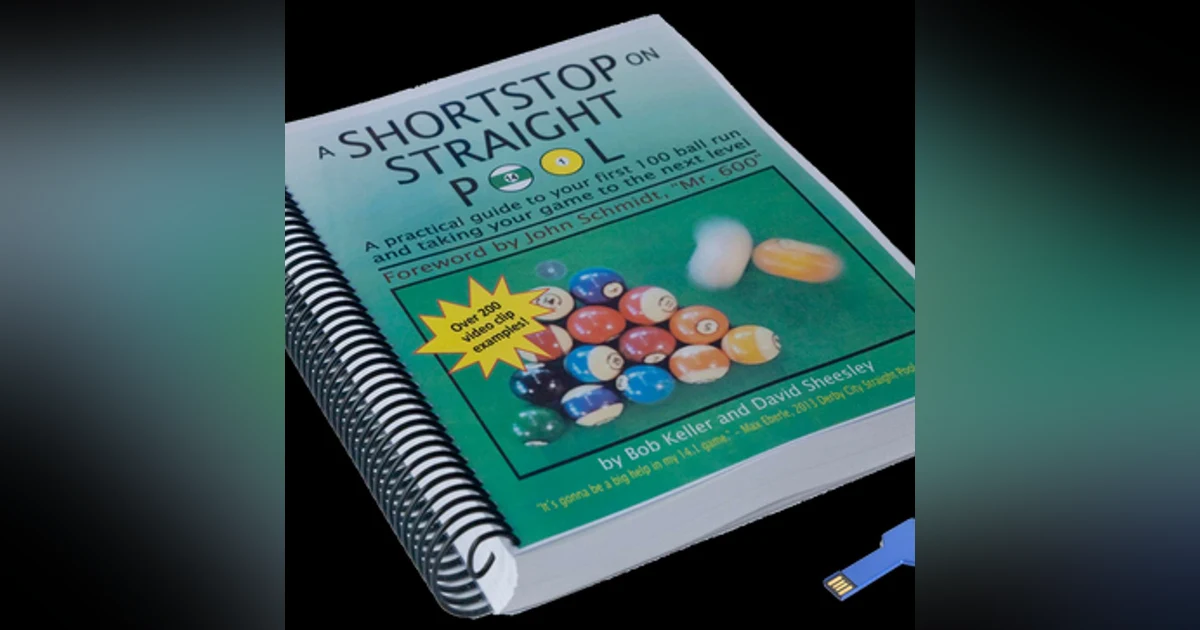
As a teacher, Bob focuses on helping players of all levels master the nuances of pattern play, break shots, and cue ball control. He has successfully bridged the gap between traditional pool wisdom and modern instructional methods through his YouTube channel and his comprehensive book, A Shortstop On Straight Pool. His approach emphasizes a structural and analytical view of the table, proving that with the right discipline, players can continue to reach new personal milestones at any age.
For those looking to elevate their game, Bob offers a variety of specialized training tools at his website, www.shortstoponpool.com. “The Right Way” is Bob’s presentation of John Schmidt’s mastery of Straight Pool in an online course of 13 videos that also includes a shot-by-shot analysis of John Schmidt’s historic 626 ball run. Bob’s “Ghost” products - Ghost Align, Ghost Aimer, Ghost Bridge and Ghost Target – are popular among pool players of all skill levels… Read More