

 Apple Podcasts
 Spotify
 John Schmidt w/Bob Keller - Part 5 (The Finish at 820: The Near Miss, the Nerve, and the Legacy)
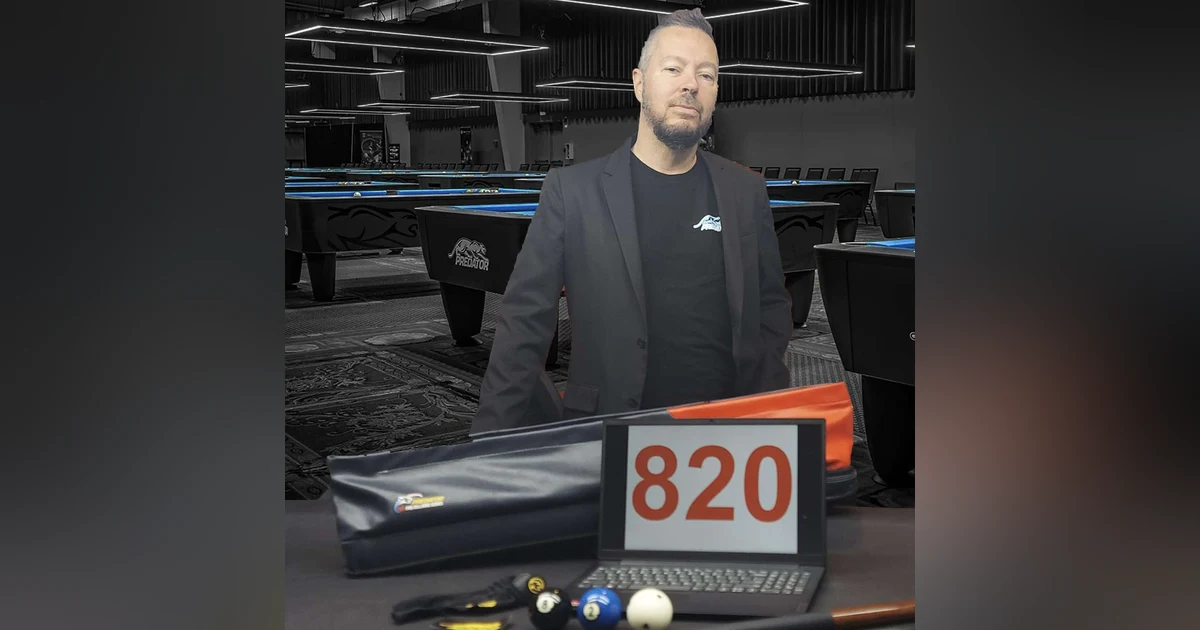

The final episode brings the drama home. With the number climbing, the pressure building, and history within reach, John Schmidt and Bob Keller take us through the closing stages of the 820 run and the decisions that still linger in the mind afterward. This is where the discussion turns to the final racks, the unconventional moments, the nerve required to keep going, and the emotional reality of coming so close to even bigger numbers. John reflects on the shots he would and would not choose in match play, the calm that comes from having lived in these positions before, and the strange mix of satisfaction and agony that can follow a run of this magnitude.
Bob adds an invaluable witness perspective, including how he tracked the run, how they used simple visual markers to measure progress, and when it became obvious that something special was unfolding. Together, they show that the late stages of a great run are not just about execution. They are about trust, rhythm, composure, and the ability to keep your decision-making intact while the number grows heavier with every rack.
The result is a fitting finale to a remarkable series. It is part postgame, part confession, part masterclass, and part love letter to straight pool itself. Above all, it captures what Legends of the Cue does best: preserving the stories behind the shots, in the voices of the people who lived them.
Give Allison, Mark & Mike some feedback via Text.
Follow our show and/or leave a review/rating on:
Our website: https://www.legendsofthecue.com
Apple Podcasts: https://podcasts.apple.com/us/podcast/legends-of-the-cue/id1820520463
Spotify: https://open.spotify.com/show/4Za0IMh2SeNaWEGUHaVcy1
Music by Lyrium.
About
"Legends of the Cue" is a cue sports history podcast featuring interviews with Hall of Fame members, world champions, and influential figures from across the world of cue sports—including pocket billiards, snooker, and carom disciplines such as three-cushion billiards. We highlight the people, places, and moments that have shaped the game—celebrating iconic players, memorable events, historic venues, and the brands that helped define generations of play. With a focus on the positive spirit of the sport, our goal is to create a rich, engaging, and timeless archive of stories that fans can enjoy now and for years to come.
Co-hosted by WPA and BCA Hall of Fame member Allison Fisher and Mosconi Cup player and captain Mark Wilson, Legends of the Cue brings these stories to life—told in the voices of the game’s greatest figures.
Join Allison, Mark and Mike Gonzalez for “Legends of the Cu...
Mike Gonzalez
So do you want us you want us to show this next clip? This is shot 821.
Bob Keller
Oh yeah, this was terrible. Let me preface this because John is on a roll. Once that two that 540 at shot 4547 he shot that combo, the racks were just flowing like butter. And and as you can see where the balls were lying, he was gonna get out and get on the brake ball, and now he's got to make six more balls to tie the 832.
John Schmidt
Well, people argued with me and said that ball didn't skid, so I'm gonna try to turn into a physics major here. It absolutely skidded, and here's how I can prove it to you. You can see the stripe turn. You can see the stripe. When an object ball leaves the cue ball, there should be no sideways rotation. It should just start sliding and rolling end over end. You see how the stripe turns clockwise because my cue ball had right English, so it was turning counterclockwise. And it grabbed the 10, turned it to the left a good half an inch right into the point. And you could hear it too live. I mean, when I shot it, I heard that that dreadful sound of kind of a like two blocks of wood, like clock. And and Bob couldn't see it skid because I was blocking his view, and I go, it skidded. And he goes, What? And then we watched it on video, and you can see the 10 rotate because people have told me I'm just crying, the ball didn't skid, you dogged it, and all that. That's the first skid I had in about a hundred thousand shots. Jason Shaw should send me a Christmas card for life. Because if I make that ball there, God only knows how many I run. Yeah, look how they're lying. Why?
Allison Fisher
Yeah, look at them.
John Schmidt
Oh, and I'm in dead stroke. I told I even told Bob, and I'm normally not like this. I'm normally like all I see is failure when I play straight bowl. I looked at Bob and I go, Bob, I feel like I'm gonna run a thousand because my energy was great. I was playing good, I was attacking, and then I get a skid. The first one I've had in a hundred thousand shots on a little straight in. I mean, it had one inch of cut. The silver lining to that is this. Here's the silver lining. I think it adds folklore to the run because people will say, Well, how many would John have run if you didn't get a skid? And I don't have to walk around in a straitjacket my whole life like I dogged it. I I kind of didn't really miss an easy shot, so I could sort of blame the skid instead of myself. So actually, I'm happy how it worked out.
Mike Gonzalez
So, what was the biggest number that went through your brain as you were going through this run?
John Schmidt
Oh, I was seeing well, you gotta understand, Mike. I've said this before, but I always think of straight pool in time blocks, not numbers, not in balls. Meaning, would you rather do a stand on your head for 30 seconds or an hour? Obviously, short, right? 30 seconds. That's how I play straight pool. Fast and painless. I want to get to the big run and fail quick. And so when I get on a run, I know that every 15 minutes I can run 100. So I was thinking, I am 15 minutes from greatness. I'm 15 minutes, another 15 minutes, I'm gonna be at a thousand here or 900. I wasn't thinking 200 balls because it goes by like every 15, 20 minutes like that. So it's it's like a time scale thing of I don't know. That's how I've tricked myself over the years to make it seem less painful to screw up a giant run. It's like, nope, I'll be on a 400 ball run in another couple hours, just rack them up.
Mark Wilson
I think I think one of the things that contributed to was that you've been in the high regions of numbers so often. Oh, yeah, and now you're recognizing that I used to get timid at this time, damn it. I'm gonna be aggressive. I'm gonna miss aggressive.
John Schmidt
That's right, Mark, because I wanted to play. I I promised myself, here's what I told Bob when he got off the plane. I said, now, Bob, I can't promise miracles. I'm older, I haven't played in six years and all that, so you we might just spin our wheels. But I do think I'm even money to run 400 once. And if somebody would have bet me, I wouldn't have bet high, I would have bet dinner, I wouldn't have bet no thousand dollars. You think you'd run over 400 once in seven days? I just know mathematically before with Master Chalk, every 12 days I could run 400. So I was like, if we could just run 400 once, I'd be happy. And I'll try to not play like a chicken if I get over 400, I'll try to attack. Well, I ran over, I ran 450 over three times that week. So I said, wow, this table's these donut rings is a different thing. And I didn't play as timid. So that really, you know, helped. I just let's go down swing and and quit playing so scared to death. And I know that sounds corny, but I promise you guys, when you get on a 600-ball run, you're gonna want to tighten up. And you're just gonna look for little one-foot stop shots that can't go wrong. That won't cut it. You still have to twirl and nibble and spin and swerve and deflect and elevate. And it's terrifying when you're on a 600-ball run. You're like, now let me just shoot this seven ball and I'll figure something else. No, you won't. The run will end and you'll go down in infamy as a scaredy cat. So I played, I played over 500 the same way that I played when I'm on an 80-ball run. And I was proud of that because I'm very I have a tendency to chicken out and just play scared to death on a big run.
Mark Wilson
So John first got to 490, and this would be what four or five years ago. Six years ago. He called me afterwards. He goes, Mark, I can see Moscone in front of me, and I just got paralyzed. He said, I just started making stop shots, and you can't play straight pool. And so he said, I'll never get I know I'm never getting this high again. This is my chance, and I can see Moscone right up in front of me there. There he is. And he said, I started making stop shots, and you can't play like that. And so this time, John didn't. He, you know, I mean he went for it.
John Schmidt
Well, the first time Mark I had a chance to break Moscone's record, I remember like it's yesterday, Doug and I. Now, you guys got to understand this seven days with Bob was not painful. Seven days, I only played three, four hours a day. It was like a buttercup. When I tried to do it six years ago, I had the world breathing down my neck and sponsors and all this stuff. So here, three and a half months in of trying, I'm getting all these skids with the master chalk and hand racking. I've had enough. And my poor wife's sitting there, like, come on, honey, and I just can't do it. It's just, I get on a 490 ball run. It's my high run of my whole life, and I got a five-ball. It's a reasonably makeable brake ball, but it's tough. And my timing goes out the window. I panic, like I could just feel my heart beating out of the side of my face. And I pull the cue back and I just thrust the cue forward like, like, please go in. And I chunked it. I hit it heavier than my ex-wife and chunked it right into the end rail. And Doug about fell out of the chair, and I told Doug, I said, I I can't do it, Doug, because I don't play, I don't play world-class pool once I get up over 400. I start panicking and I don't spin the ball. I don't have touch, my arms nervous, my heart's pounding. I can't do it. I just can't do it. I gotta quit for a couple days. I don't know if I can do this anymore. And then, like six days later, I run 626. And I remember at 490 again having the same break ball, and it was and it was the five ball to the right, just like the 490 I just dogged. And so these are all like little mental hurdles, like Marcus talking about. Like, it's like when you watch a professional fighter, how calm they look. You know why they look calm and why I would look scared in a fight? I haven't been in fights. I don't fight. I the heaviest thing I've ever lifted is a 19-ounce pool cue. I'm a total wimp here. But you watch a professional fighter, they've been in so many fights that they just look relaxed and they get punched, they don't panic, they don't turn their head and run. They just and so you have to, this straight pool thing, where it's gonna help me, I think, I hope, is if I'm in a tournament, I gotta run a hundred and out to win a match. I think I'm gonna be saying to myself, Well, come on, John, you run a hundred like every other shot. Like, look, look, let's just do this, you know.
Mike Gonzalez
Yeah.
John Schmidt
Although the tables will be tougher and all that, I get it.
Mike Gonzalez
Yeah.
Bob Keller
But I have something interesting to add to that. In the beginning of the week, John talked about what we talked about, and we we talked about the coin going around the table. Once around the table is a run of 252, twice is 504. And I said, John, look at it this way. You've run over 500 once, you ran 626. If you run over 500 one time during this week, that's a success. We're gonna party. So just think about that and and don't think about beating the 800 or 1,000. Forget all that stuff. We're just going for the high BPI and just try and get that coin to go around the table twice. And wouldn't you know on the third day he did that? And after that point, we knew it was game on.
Mike Gonzalez
Yeah, yeah. Let me pull up a couple of things that uh I think will uh really illustrate this accomplishment. Yeah. So this is the first thing I wanted to pull up, and and apologize to our audio listeners, but we'll describe it as best we can. What we're looking at is a pool table, John's pool table, uh, with marks indicating where all of his brake balls were on the table. And Bob, you've put this together. I I'm fascinated by this because uh there's only five out of how many ever, fifty-eight breaks that are in sort of non-traditional spots. Correct.
Bob Keller
Correct. Well, and two of them are below the rack, which you're gonna do. Yeah, I would only call three of them. Three of them unconditionally. Three of them were weird. Yeah. And two of them we saw in the highlight shots.
Mike Gonzalez
Yeah. Yeah. But that's just amazing. I mean, just the the the the tightness of of both sides of the rack. I mean, it you didn't play favorites, did you? You took what the table gave you.
John Schmidt
No, you take what yeah, you you take whatever pattern will lead you not to the best break ball, but to a guaranteed break. Well, I say guaranteed, nothing's guaranteed. But I'm gonna lead, I'm gonna try to play in a manner that I would say that's why sometimes I'll have a weird break ball, but it's one that earlier in the rack I would bet my life I could get on barring a miscue.
Mike Gonzalez
Yeah.
John Schmidt
Does that make sense? You know?
Mike Gonzalez
Yeah. Yeah. So this is an amazing pattern. The next thing uh is something that I know Bob has put together which sort of analyzes the week for everybody. And again, if you're listening on on the audio podcast format, you're not going to be able to see this graphic. But if you look at our video we'll produce later, you'll see a summary Wednesday through Tuesday, which is March 4th through the 10th, of the innings played, balls pocketed, and and Bob, this this is just absolutely astounding.
Bob Keller
All during the week, you don't know this, but all during the week, when we get in the house, John would be like, What was my BPI today? I was like, Well, I haven't calculated yet. Give me a minute. He was always, what's my BPI? What's my running BPI given uh what I did yesterday? And so I put together the spreadsheet to keep to track it, and I gotta put on my reading glasses. But yeah, it's better each day, too. Well, the first two days, like you said, he hadn't played in six months. The first two days, he's getting up, he's getting used to the table. Oh, six years, getting used to the table, etc. And you can see that he he played more innings in the first two days than the others, and he ended up with an 84 and a 70 BPI on those days. And you and you could literally I could literally see John getting better and more comfortable as the week went on. The third day, no runs over 100, not a single one until the ninth inning, and then he popped off a 512. And so that brought the BPI that day up to up to 110.
John Schmidt
And then I was upset that day, actually. I stuck with it. I told Bob I go, I cannot believe this. I'm playing like crap. I'm I'm gonna take one more inning. I'm just I was getting so agitated with it. I and then I the 512 wasn't pretty, to be honest with you, but it was encouraging because I'm like, okay.
Bob Keller
Yeah. And we were discussing the strategies. Should I should should you be breaking the racks harder? Should you be breaking them softer? Should you be running into clusters more often? We were debating those things and those just kind of sorting that out and figuring it out. And then on Saturday, one, two, three, four runs over a hundred, a two forty-eight, and then ended with a three thirty-seven.
Mike Gonzalez
I and I said as I said it earlier in the show, I think the most impressive stretch for me, because it doesn't involve a really high run relative to John Standards, on Sunday from innings three through nine, his highest run is two hundred eighty. And for for those innings, seven innings, he averaged one seventy-one.
Bob Keller
Yeah. Oh small. I can't see that on the screen. Well, he did that math on Sunday. It was yeah, it was one thirty-two if you include the lower scoring, but that six inning stretch, one seventy-one BPI. How many innings was that that day, Bob? Ten innings on Sunday.
John Schmidt
Oh, that's good. The best I've ever done in Monterey, I had an 11-inning day where I ran 173 average per shot. I had a 70 ball run, and the other ten runs were well over a hundred, and I finished with a 359 that day. So that that's pace there of one, you said 171. 171 over those seven. That's about as good as I got. That's about as good of a ball per inning average. And and that's what we mean when we say BPI ball per inning. So imagine if if a guy says I have a 171 BPI lifetime, which nobody would, he's gonna take 10 innings and have 1,700 balls. And so that's that's why I'm obsessive about the BPI because I know that if my BPI is 105 for the entire 83 innings, that means every 10 times I come to the table, I'm accruing a little over a thousand balls. And that's gonna hang with anybody breathing. I the high run thing is one thing, but I think that BPI alley would could defend myself against anybody.
Allison Fisher
All those numbers are incredible.
John Schmidt
I think there was 31, 31 runs of 100 out of 83 tries. So that tells me every third, every two and a half tries, I'm running a hundred or more, so that's good. Those are all, those are all, you know, how you build your confidence and then you know what you can do because you've got to understand the the sheer pride, ego, and arrogance that I have to have to even say, hey, I'm gonna try to run 800. It's like, you really think you're that good, John? Yeah, I do. If you want to know the truth, I'm not good at much in life, but like I do think I can do this.
Mike Gonzalez
Yeah, so I'm gonna try to do it. Did you start the week with a goal other than trying to set a record?
John Schmidt
No, I had a few mini goals. I told Bob, I said, Bob, the problem with this high run thing is we're not gonna have any, like if anything's short of 800, like imagine, Michael, if I go to a tournament, run 310. I'm some kind of legend. In this thing, I'm a piece of crap. You run 310, nobody cares, you're pissed, we're wasting our time. So if you get wrapped up into the high run thing, you don't have any fun. Like what? We're not gonna have any fun unless I run 860. So I try to find ways to have fun with it. Like, I want my BPI because I want this to be etched in stone. Like when I'm dead and gone, people go, we tracked all the other players for a week and John beat their BPI. John was the better player. That's what my ego wants. That's what my pride wants. Now I might not get it, I might get beat, but there's certain things that I want to put down on digital, you know, etch it in history, and other people can shoot at it. And if they beat it, great. But I'm just tired of people telling me what I can do, how good I am, how good I'm not. I'm just gonna put it on screen, and then you guys can figure it out when I'm dead and gone. And if I'm one of the great spine, and if you all have a 150 BPI, then I'm not as good as I think I am, and it is what it is. But that was the way my mind went into it of an 800 ball run would be fantastic, but good luck with that. That's impossible, I figured. I told Bob I'd love to run over 500 once, and I'd like to have a BPI in the 90s, like I did in Canada, because then that tells me that my skills aren't diminishing, because that was six years ago. So at 52, I'm almost 53. Do I still play as good? I don't know. I'd like to know. Does that make sense? Yeah. So this was all like a narcissistic thing, all about me, all about me trying to reconfirm that I can play. And it was a total selfish endeavor. Like it's just a total like obsessive thing. Like, am I still as good? Can I do it? Am I as good as him? It's a total like you have to be half nuts to even try this because anything short of an 800 ball run is considered a failure. So you're telling me you're gonna play eight hours a day for a week to to just embrace failure? Yeah, let's do it. I did three and a half months of failure before.
Mike Gonzalez
Yeah. So, John, you've set a new standard, not just for for pool and other players, but for yourself. So, what is next?
John Schmidt
Try not to get COVID again. Hope Bitcoin goes up. Seriously, though, I I guess I'd still like to play. I haven't been in public in three years. I haven't played pool in public in three years. I've turned into like a recluse or something. So maybe go out and play some and uh maybe a one-on-one money match or a tournament, and you know, just kind of would like to not be thrown away by the pool world just yet. I still feel like I'm a good enough player to do something.
Mike Gonzalez
Well, is is this it? Or could you describe a set of conditions that might convince you to make a run at a thousand?
John Schmidt
Well, well, that it's not that I don't want to try. I just can't do it by myself. I need a racker and I need a cameraman because I can't be on an 800-ball run and look over and go, oh, the camera shut off. I don't know why. Like, I don't know how to do all that stuff. And so I really kind of some financial incentive would be great. Like if some pool room said, hey, we want you to come here for a week, we'll give you ideal conditions and have you show off and run some 500 pluses, hopefully. And if you catch lightning in a bottle, I think people would find that entertaining. I would be down to do that tomorrow. I'm ready. But I just can't go out in my garage by myself and run a thousand balls. Like the vibe is off. There's no racker, it just ain't gonna work. So, Bob, can you move?
Bob Keller
Yeah, Bob needs to move to Rock Springs. Need to move to Rock Springs. Hey, I want to make a real quick point. The the pool world has changed since John Rand is 626 because he came to Denver just a few months after that, and I was starstruck, but I did get out a question I asked John, I said, Do you ever think that you're gonna make a try for a thousand balls in a row? And he immediately came back and said, It's impossible. No, no way. But since then, we're seeing people try making attempts with these racking donuts with the five-inch pockets on better quality, you know, just better quality equipment, clean balls. And now you see, John, his mindset has changed a little bit. It's now it's possible. It doesn't mean anybody's ever gonna do it, but it's it's more in the realm of possibility now if all these conditions are correct. And I think those donuts on the table have made a huge difference. First time I've ever got to use them, and look what happened.
John Schmidt
But I wouldn't bet my life that a thousand wouldn't get run. I mean, I probably would bet Danny Herriman's life. But like, I I mean, I I still, you gotta remember, still, millions and millions of innings have been taken by the best 40 or 50 players in the world, and the two best innings, and my buddy and I kind of just talked about this the other night. I said, I said, Dave, you gotta understand if you're high run 40, tacking on 20 more percent to that is kind of doable. I said, once you get up to 800, you're asking me to tack on 20% on top of the best inning that's ever been taken in mankind's history. Like that's absurd. So, I mean, somebody might do it, but I I I'll just bet against it. I bet I can't do it, I bet Shaw can't do it. But if it happens, I would be like, wow. But I don't know. I so much has to go right.
Bob Keller
You have to be such a player that it's in my opinion. You know what the difference is? You might call me crazy, but I want to throw this out there. I've watched more straight pool matches than you can imagine. And when they're racking with the hand rack, or even with the Sardo rack, but when they're racking with the hand rack, a high percentage of straight pool brake shot shots end up with six balls still in the rack area. And when you're hand racking, they're often frozen. But when you use the donuts, you can still have four, five, six balls in the rack area, but there's gaps, they separate a little bit, and it makes a huge difference to what you're able to do for your pattern. Yeah.
John Schmidt
I suppose anything's possible, but what I would say is like if tomorrow I had a magic wand and I could run 1150 or I could run over 800 three or four more times. I I just the whole high run thing to me is great. And I've got a lot of yardage out of it and a lot of acclaim, and I'm proud of these high runs. But like a guy, like I respect Mark Wilson's career and his like understanding of pool so much that when I'm dead and gone, and Mark says to somebody, Yeah, high runs are cute. John had a BPI of over 100, and then he would have to explain to them what he's talking about. But to me, I'm more proud of that, and I know that that sounds silly, but it's just one if you get up in straight point, you run 440, and then your next shot, you run four, and then seven, and then nine, like that's not the way to do it. You want to be a guy that just says, Does anybody want to bet? I take three tries, I run a hundred. Like, that is an elite group that can do that.
Mark Wilson
I want to add one thing. People say pattern play, pattern play, pattern play. And then they don't tell you what it is, and then they'll say, Well, you take three balls and make a triangle. Well, all three balls always make a triangle, so that means nothing. But when you look at John's cue ball triangle, travel between the balls and how many times he ends up with stop, stop, stop at the end of that rack. And for anyone that wants to get better, just go back and replay John's run and find a pattern where he ends up with three stop shots. Now you set up the balls the way he had them with just five or six balls and show me, show me you can stop them like that. And it's almost impossible unless you're highly skilled. It looks simple. It's not. No. And so I bet if Bob, did you do a a chart of how much he traveled the cue ball between shots throughout the run?
Bob Keller
Part of the my online program the right way that I've got is I did an analysis of the entire 626 ball run and I drew a line and I and to to measure travel distance and number of rails contacted. And I put up a little chart for every single rack with cumulative totals for the entire run to show how little his cue ball moved. And it's really fascinating information. Yeah.
Mike Gonzalez
So as we uh wind this down guys uh Bob uh anything you'd like to leave our listeners or viewers with that we haven't talked about as we end this oh if you gave me some time I could think of ten things.
Bob Keller
But what John just said is super important. Anyone who's trying to learn to play straight pool, we all tend to focus on the high runs. I want to run 50 balls for the first time or I want to run a hundred balls for my first time. The way that you get there is to pay attention to your average BPI your balls per inning over a week's time.
John Schmidt
Go to Bob Keller's website shortstop on pool and he has an un he's broken down all this and in a real detailed format. It's the best thing I've ever seen I I would like to thank all you guys for your time. You've given me two hours out of your day and I appreciate you guys making me feel important and what I did was relevant and that was very sweet of all of you. And I'd like to thank Predator for their support.
Allison Fisher
I just think their cues play amazing and thank you everybody for tuning in letting ramble on and Ali it's always great to see your beautiful face it's always lovely to see you too John's so relatable it's been wonderful sharing it all and thank you Bob because that's really insightful all the numbers that you've come up with and to explain it to everyone I'm going to check out this website. What is it SSOP?
Bob Keller
Shortstop on pre-league on YouTube. And I hope I can definitely run into you at a tournament sometime and we can talk more. And I'll take a moment real quick I have to give 100% credit to my transformation over the last five years as a pool player to Mark Wilson. I went and spent a day with him and bought his book and have been working on everything that he teaches on a daily basis since then and that's made all the difference. Thank you so good.
Allison Fisher
Yeah he's awesome. There you go and you're not so bad Michael either by the way good job thank you pal. My BPI is up to 2.6 hey it's been a blast guys and John and and Bob thank you so much for uh joining us and uh going into some very uh great and insightful detail uh around this effort and quest uh which you know it it turned out 820 it could have turned out to be a thousand who knows but uh what a what a what an accomplishment to thank you guys it was awesome you have to promise us if you ever better the 820 you got to come back with us oh yeah we'd love to thanks for having me guys thanks for tuning in thank you for listening to another episode of Legends of the Cube if you like what you hear wherever you listen to your podcast including Apple and Spotify please follow subscribe and spread the word give our podcast a five star rating and share your thoughts visit our website and support our Fall History project until our next golden break with more Legends of the Cube so long everybody

Pool Professional
John Schmidt is one of the most compelling figures in modern cue sports, a champion whose story blends Midwestern toughness, road-warrior grit, and an almost monastic devotion to the craft of running balls. Known around the world as “Mr. 600,” Schmidt is the man who authored the historic 626-ball straight pool (14.1) run, eclipsing Willie Mosconi’s legendary 526 mark that had stood for more than six decades. But the number only hints at the journey.
Born April 12, 1973, in Keokuk, Iowa, Schmidt’s beginnings were humble, blue-collar, and formative in the way they taught him to compete and endure. In the Legends of the Cue conversations, he comes across as a kid shaped by small-town life, everyday responsibilities, an early understanding that nothing is given, and a stubborn desire to earn what he wanted. That toughness shows up later in his pool life not as bravado, but as an ability to keep going when the money is low, the rooms are hostile, and the pressure is real.
Before pool became the obsession, Schmidt was also deeply connected to golf, a thread that never really leaves his story. It isn’t merely a footnote; it’s part of his identity and, at key moments, a refuge and reset button when the pool road took its toll. In his own telling, the competitive instincts and self-discipline required in golf, managing emotion, committing to a process, staying present over long stretches, translate naturally to what elite pool demands.
Schmidt didn’t grow up as a junior prodigy with a formal program and a sponsor pipeline. He came to pool later than many … Read More
Pool Instructor and Influencer
Bob Keller, widely known as “Shortstop On Pool,” is a professional billiards instructor, author, and content creator dedicated to the art of Straight Pool (14.1). Based in Colorado, Bob has earned a reputation for his deep technical understanding of the game and his ability to break down complex patterns into clear, actionable instruction. Bob is an expert player with over sixty 100-ball Straight Pool runs to his credit including a high run of 206. His expertise was notably recognized when he assisted John Schmidt during his historic 820-ball run, acting as the primary witness, racker, and analyst for the feat.
As a teacher, Bob focuses on helping players of all levels master the nuances of pattern play, break shots, and cue ball control. He has successfully bridged the gap between traditional pool wisdom and modern instructional methods through his YouTube channel and his comprehensive book, A Shortstop On Straight Pool. His approach emphasizes a structural and analytical view of the table, proving that with the right discipline, players can continue to reach new personal milestones at any age.
For those looking to elevate their game, Bob offers a variety of specialized training tools at his website, www.shortstoponpool.com. “The Right Way” is Bob’s presentation of John Schmidt’s mastery of Straight Pool in an online course of 13 videos that also includes a shot-by-shot analysis of John Schmidt’s historic 626 ball run. Bob’s “Ghost” products - Ghost Align, Ghost Aimer, Ghost Bridge and Ghost Target – are popular among pool players of all skill levels… Read More