

 Apple Podcasts
 Spotify
 Jorgen Sandman - Part 1 (From Swedish Ice Hockey to the Pool Hall Door)
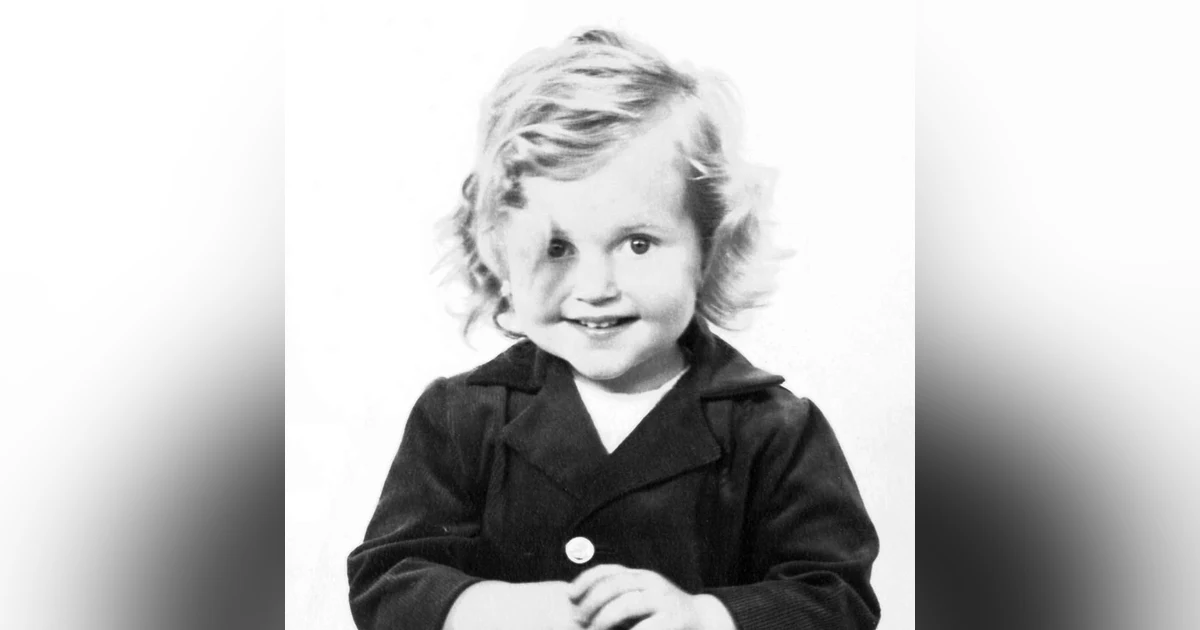

Jorgen Sandman’s extraordinary life in cue sports begins far from the bright lights of world championships and Olympic committees. In this opening episode of Legends of the Cue, Jorgen takes us back to Sundsvall, Sweden, where a childhood shaped by ice hockey, discipline, outdoor play, and multi-sport development laid the foundation for a lifetime in pool, billiards, coaching, and sports leadership.
Jorgen recalls learning to skate before he could walk, being taught fundamentals before being allowed near a puck, and later carrying those same lessons into cue sports. Alongside Allison Fisher, Mark Wilson, and Michael Gonzalez, he explores why early sport specialization can limit young athletes and why the world’s best competitors often benefit from a broad athletic background.
The story then shifts to 1968, when a young Jorgen first encountered billiards while watching his uncle play in Stockholm. What began with laughter, missed balls, and a humbling first attempt soon became a lifelong calling. Back home, Jorgen found his way into a local billiard club, a basement room with coin-operated table lights, strong carom influences, and a mentor, Rolf Larsson, who would change the course of his life.
This episode also touches on Sweden’s pioneering role in putting pool tables into schools, Jorgen’s early exposure to players and entertainers like Paul Gerni and Jimmy Caras, and the first signs of the teacher, promoter, and organizer he would become.
A rich origin story for anyone interested in pool history, billiards culture, Swedish pool, youth sports development, or the roots of modern cue sports governance.
Give Allison, Mark & Mike some feedback via Text.
Follow our show and/or leave a review/rating on:
Our website: https://www.legendsofthecue.com
Apple Podcasts: https://podcasts.apple.com/us/podcast/legends-of-the-cue/id1820520463
Spotify: https://open.spotify.com/show/4Za0IMh2SeNaWEGUHaVcy1
Music by Lyrium.
About
"Legends of the Cue" is a cue sports history podcast featuring interviews with Hall of Fame members, world champions, and influential figures from across the world of cue sports—including pocket billiards, snooker, and carom disciplines such as three-cushion billiards. We highlight the people, places, and moments that have shaped the game—celebrating iconic players, memorable events, historic venues, and the brands that helped define generations of play. With a focus on the positive spirit of the sport, our goal is to create a rich, engaging, and timeless archive of stories that fans can enjoy now and for years to come.
Co-hosted by WPA and BCA Hall of Fame member Allison Fisher and Mosconi Cup player and captain Mark Wilson, Legends of the Cue brings these stories to life—told in the voices of the game’s greatest figures.
Join Allison, Mark and Mike Gonzalez for “Legends of the Cu...
Mike Gonzalez
Welcome to another edition of Legends of the Cue and Mark Wilson. We've got our first governance guest this morning.
Mark Wilson
Well, the profound impact of our sport will be followed for generations, and today's guest has been involved for decades. Alli?
Allison Fisher
Well, I first met our guest today back in the 1990s. He has an extraordinary story as his career involves playing, teaching, administration, creating the sport's largest organizations, and I don't think any person has served the sport as long or as diligently as our guest today. I'd like to welcome Jürgen Sandman. How are you, Jürgen?
Jorgen Sandman
Thank you. That was uh very much of an introduction for a humble guy like me. I'm doing fine, thank you. I'm sitting over here in almost uh in sunshine. I'm hiding hidden hiding in my office, of course, but uh I can see the blue sky outdoors, and uh we are heading for summer, so yes, I'm enjoying myself.
Allison Fisher
And where are we where are you based now? Where are you talking to us from?
Jorgen Sandman
From approximately 30 kilometers uh uh off uh downtown Oslo in Norway.
Allison Fisher
Norway, very nice too. Originally from Sweden. Mike, would you like to start us off here on the journey?
Mike Gonzalez
A real pleasure. We've been looking forward to this. You know, you and I had a chance to talk a little bit yesterday just to kind of do some prep. And I would describe you in the pool world as a real renaissance man. You know, you look through your resume of all the things that you've touched, had your hand in, and and in particular in important leadership roles, which has given you an opportunity to, I think, put your imprimatur on the game. So we're really anxious to uh go down this life journey with you, talk about uh your early days, but uh also what uh you're up to these days. So let's start as we talked about yesterday at the very beginning. You were born in Sunsville, Sweden. And by the way, you are exactly two weeks younger than I am. Hey. There you go. So a fellow Leo.
Jorgen Sandman
I'm not the oldest one.
Mike Gonzalez
A fellow Leo. Well, I don't know, Mark. Maybe is it you or me? I don't even remember. I'm 70. Well, I am too, but I can't remember what month you were born in. June. Well, you got me by two months. Yeah.
Jorgen Sandman
And uh and Mark is uh is is another two months uh older than me then.
Mike Gonzalez
Yeah, I guess. Yeah. And then we got we then we got our little sister Allie with us today.
Allison Fisher
Oh, I'm a spring chicken compared to you guys.
Mike Gonzalez
Okay, life as a youngster in Sweden. What are your first recollections?
Jorgen Sandman
Yeah, that's a good question. I guess uh one of the things that uh I don't know whether or not I remember or if I have been uh told later on, but uh one of my troubles that I had as a small kid where I grew up was uh I wasn't allowed to play with boys. They thought I was a girl. Can you believe that? My mother made sure that my hair that was very curly and very very blonde was allowed to grow, and I guess that is what caused the trouble, but um I very quickly settled that, so not to worry. But uh otherwise, uh I would say that uh I had a very good uh childhood in in my hometown of Sonswall. I grew up in uh a part of the city called Hefners, and that uh was the name also of the hockey team that I was going to join a little bit later on. I had a a father that was a hockey player, and for that reason I learned to skate before I could walk, I guess, more or less. Uh so I did have a staked out future, at least that is what I thought to begin with, and then uh something happened that that uh made all of that uh turn into something else.
Mike Gonzalez
Yeah. So your father played uh what did ice hockey teach you about things like discipline, team, and competition?
Jorgen Sandman
Of course, it is a team sport, which is uh very much different from uh what I then ended up uh doing later on. Never mind. It was uh a very tough school. To give you an example, one of the things that uh the coach had us to do, which caused him a lot of problem as the coach, he told us that uh the first year there is no club and there is no pack. There are skates on the feet. We first need to learn how to skate before we can start learning how to play hockey. And the parents got furious and figured that this is completely wrong and whatever. And to a certain degree, perhaps they were right, I don't know, but I can tell you I learned to skate and I was fairly good at it and still am. That's fantastic.
Mike Gonzalez
Yeah, that that's just too sensible, isn't it? Yeah.
Allison Fisher
Yeah, a little bit too sensible, I think. But I like that though. Learn all those fundamentals of racing on skates and all the moves. Sounds like the right way to do it.
Jorgen Sandman
I don't think that we actually were without the the club and pack for a whole year, but uh that is what he said to begin with, and and very much uh the first probably half year or something was simply the skates. You know? Moving forward and moving backwards and uh learning to start and stop and uh all of the things that are ingredients in uh in ice hockey, right? Aside from the club and the pack.
Mike Gonzalez
Yeah. I guess the pool corollary there would be uh what Mark Wilson would teach you in his school, which is uh we're not gonna let you pot balls until you learn how to control your cue stick, right, Mark?
Mark Wilson
I really think that with uh without the balls, they're a terrible distraction from where the emphasis should be. And I think you should probably practice just with your cue only, the movement. So I would agree.
Mike Gonzalez
Yeah, yeah.
Mark Wilson
Not for a year, but at least for a bit of time.
Mike Gonzalez
Yeah. Jurgen, you tried all sorts of sports as a youngster. It wasn't just ice hockey. You played seemed like everything.
Jorgen Sandman
That is uh very important though. Very often uh parents have a tendency to, you know, put the kid into the one sport and and are very anxious and trying to make sure that that is uh what the kid is going to stick to, and they are forgetting a couple of things in doing so, and that is uh some of the skills that you absolutely will not acquire if you are practicing very one-sided, especially especially as a child, right? So the more yeah, that would be perhaps an exaggeration, but let's say that the more sports that you actually try, uh, the better your skills will be able to improve. You will be sort of uh benefiting from that over time. There is no question about it. And actually, a good example is Norway. When I came here, and still is this is still the case, and now there are more and more countries that are taking up on it, and that is as a kid, there are certain rules in place that says that uh you cannot specialise at a too early age. You are forced to allow the kid to try other sports and other activities that will help them to develop the motor skills and and whatnot. And that is something that I have adopted too when I'm working as a coach, right? But uh okay, that's uh perhaps a little bit later on.
Mike Gonzalez
I like that. That's great advice for young people, isn't it? You know, I I don't know if I mentioned Jorgen, I do a golf podcast as well. Similar things were telling the life stories of golf grades. One central theme across the 110 interviews with major champions and World Golf Hall of Fame members is this idea that they were not single sport athletes. Most all of them develop team and individual discipline around a number of different sports that use different parts of the brain, different parts of the body, and they too lament the fact that kids nowadays seem to be year-round focused on just one discipline.
Jorgen Sandman
One of the things, and here Allie can correct me, should I should I step on her toes a little bit? No, I don't think so. But what I'm saying to to people whenever asked is I believe there is a world champion in absolutely everybody. The trick is to figure out in what you happen to be a world champion of. Okay. And very many people go throughout their whole lives never finding out what they actually perhaps should have focused on and and whatever. Some of us are lucky finding the one thing that we master like nobody else.
Allison Fisher
I think that's true.
Mike Gonzalez
Yeah. Yeah. It's a great point. And Mark, if you'd relate that to pool, I suppose you'd rather not see a kid just play nine ball his whole life.
Mark Wilson
Well, I mean, I suppose, but as a kid, they should fish and play baseball too. So I'm uh I've seen it happen where young people are ruined by a singular focus put on by their parents. So but the transitional skills that Jorgen mentioned certainly translate and get you set up for a future, and then maybe you can discover what it is that you're a world champion at.
Allison Fisher
I know that I did lots of sports at school. I was hockey, netball, basketball, and then ended up because my PE teacher said when I was about 14, you need to pick something to specialize in. And that was when I took the course of playing snooker for you know professionally.
Jorgen Sandman
One interesting thing that uh came to my mind that uh I know Annie would be aware of, and that is Gerda Hofstetter. When she first got introduced to our sport through her sister and some colleagues of her sister and uh whatever, and she very quickly got fond of uh playing a little bit of pool on the side, but she was in fencing, and her coach told her back then, yes, the Swarzpikler. Her coach told her that uh this uh pool playing, you have to quit that immediately. That is uh that is uh that is not an option. You have to quit. And Gerda decided then I quit fencing, and uh she became a world champion in pool, right?
Allison Fisher
So yeah, amazing story. We had her on our podcast too, so that was really cool to listen to.
Mike Gonzalez
Yeah, yeah. I guess my point, Mark, with the Dine Ball question, uh because it's come up a lot in our series with these pool greats, is you can't just play one sport and develop as well as if you'd learned three-cushion, if you played charums, if you played other right?
Mark Wilson
Otherwise, straight pool, rotation. Yeah. You're right. A lot of transitional skills come from that. And you know, oftentimes you'll hear people say straight pool's the ultimate, which that's what I grew up believing too, but then after playing Ephrain a lot, I'd really think it's a more complete game when you play fifteen-ball rotation. But in either case, whether you play bank pool, one pocket, all those skills, snooker, three cushion beards, caroms, balk line, etc., all those things certainly add up to the recipe that made Efren Arraya special because he had that background. Americans are just good at ball pocketing and braking, but they don't have the diversity of controlling the object ball uh in secondary object ball and carry you know, combination shots, too. So those other aspects certainly add that dimension.
Jorgen Sandman
Grewing up in in the environment that I did and this uh ice hockey playing was of extreme importance in in that neighborhood where I grew up. As I told you, that uh carried the name also of the hockey team, and my hockey team was uh mainly in the second league in Sweden, but uh occasionally also did play in the very first league, and everything was, at least in my little world, was only ice hockey. That was the whole thing. So of course the plan was to end up uh somewhere in the States or in Canada playing the NHL and and whatever. That was the idea, right?
Mike Gonzalez
Yeah. Well, you had some early lessons in responsibility and leadership, uh taking on a paper out as a young boy and then eventually coaching kids at a fairly young age as well, right?
Jorgen Sandman
Yeah, I was uh probably around uh 15 years old when I started uh working with the junior kids in in ice hockey, yes. So and that was uh probably the one school, better than anything else, that uh later on in life told me that yeah, maybe I I could also try to be teaching a little bit of pool to people. I know that in my club when I started with that, uh some of them were kind of thinking, yeah, but who is he? He's not good enough or whatever. But you know, you don't have to be a world champion in order to teach people to become a world champion. That's true.
Mike Gonzalez
You started a volleyball club too at a fairly young age called Ultra 73. How'd you come to that? That is when my hockey career ended.
Jorgen Sandman
He needed a plan B.
Allison Fisher
Yeah, plan B is coming.
Jorgen Sandman
Uh I did have an altercation with my uh coach in ice hockey, and that uh ended in uh not in a very good fashion for me. I actually quit playing completely. It took another 12 years before I put the skates on my feet again. Uh, and that was when I was teaching my first uh daughter to skate, right? But instead of uh ice hockey, then uh I needed to pay or to put my focus on something else because sport is what I what I did and what I love to do. So then together with a couple of uh friends at school, we came up with the idea of starting with volleyball of all sports. And I was doing that for for seven years, and actually I was a coach there too, for six out of those seven years, both for the male and the female team that we had.
Mike Gonzalez
Interesting. So looking back on those seven years, what were your takeaways that you you kind of brought forth to today's roles that you've uh had in pool governance?
Jorgen Sandman
Through volleyball, I took my first uh steps also, you could say, as an official. Because uh I was uh of course taking care of that uh volleyball club, not only as the coach, but also as a as a leader. And in turn, that meant that I participated in regional meetings with uh leaders from other clubs, and all of a sudden I was at the General Assembly of the Swedish Volleyball Federation and and so on. So, yes, um volleyball probably played a very big role in what later was going to become out of me, to put it that way.
Mike Gonzalez
Yeah. And what about your time as a freelance sports journalist? Did that uh I guess teach you to observe sport in a little different way through a different lens?
Jorgen Sandman
This is uh perhaps the one thing where I figured maybe I should have taken another decision. I was offered a job as a full-time uh sports journalist uh with uh Swedish radio and television, and I t believe you me, I turned it down. Amazing. Why'd you turn it down? I loved to do sports myself too, and uh since I had to go there to watch other sports on a Friday, Saturday, Sunday when I myself also wanted to be active, that combination didn't work. So then I said, no, I'm sorry, I love to play sports uh too much myself. The guy that actually got that job, he uh retired uh just uh two years ago or something, and he had been able to visit all of these Olympic Games. And it could have been me.
Mike Gonzalez
Woulda, shoulda, coulda, yeah. But you were you were you were still too young to just be an observer.
Jorgen Sandman
Yeah. And as I said, I loved uh to be active myself, and that is uh was the reason why I turned it on. Yeah.
Allison Fisher
We we'd love to know if you remember the first time that Paul truly captured your imagination. How did you come to find out about the game?
Jorgen Sandman
Together with my family, we were traveling to Stockholm. The year was 1968, a little while ago.
Allison Fisher
And uh I know that year very well. Yeah, I guess you do, eh?
Jorgen Sandman
Uh and uh uh we we uh visited uh an uncle of mine, and uh I think it was on a Saturday that uh all of a sudden he informed me and and my brother that uh he had an important match to play. Uh billiards. And if we wanted to, we could uh join him uh and watch, right? So, yes, of course, me and my brother we tagged along. And uh very seldom in my life me and my brother had so much fun because it turned out that uh my uncle and uh the colleagues, there were two teams that were playing each other, they were completely useless. I mean, only every now and then they would be able to pocket the ball. They missed most of the shots, and then my brother and myself we were laughing, so the tears were running, and then all of a sudden uh my my uncle uh stomped the cue on the floor, and then he gave if it was me or my brother, I can't recall, gave the cue to us and said, Okay, you try. And I uh have to confess that my first attempt was not very successful. I even missed the cue ball, but uh I did. I didn't try, and maybe because of the realization that this is maybe tougher than what it looks like, uh is uh something that sparked uh a small uh flame or or whatever I should call it. And uh it didn't take all that long once I was back in my hometown again, before I was knocking on the door to the local billiard club.
Allison Fisher
And we note here that you began coaching Paul in 1973, which is only what five years later than that first time. So, what did coaching look like in Sweden at that time?
Jorgen Sandman
You didn't have any.
Allison Fisher
Didn't look at like anything at all then.
Mike Gonzalez
No.
Jorgen Sandman
And uh that is what I suggested before uh a little bit earlier on here, that uh when I started with this, actually it was the club that asked me, and I said, uh, excuse me, I can hardly play myself. Who am I supposed to be teaching, right? And then they said, Yeah, but with your background, ice hockey and volleyball and whatever, uh that's a piece of cake, you can do this. And uh I was uh uh first saying that, yeah, but this is different. I mean, this is uh this is something else. I'm not good enough, right? But then uh I was told by my mentor in that club that uh make it your motto, learning by doing. Start somewhere, and I'm sure that you will find a good start, and then you take it from there, and you learn as you go along. And that has been a very important motto for me throughout my whole life: the learning by doing. I could mention so many things that happened to me in my life where I told myself that okay, I don't know, but uh let's go ahead and do it and then we'll take it from there. So that uh worked fine, and I would suggest to you, for whatever it's worth, would I have been in any billiard club aside from the one where I got started, I probably wouldn't be sitting here in front of you today. It was that mentor of mine, his name was Rolf Larsen. I I don't think I haven't heard of him for many many years. I don't know whether he's still among us or not. But he played a very, very important role. Not only telling me uh to go ahead and and you know start working as an instructor or call it a coach. But he was also instrumental in making sure that the Swedish Billard Federation was accepted by the Swedish Sports Council as early as 1973. He was one out of three.
Allison Fisher
And that's very important because did did that allow for some money to help the coaching and uh travel for the players?
Jorgen Sandman
Not necessarily coaching, because that is something that uh that comes very much later normally. But through the fact that we got recognized by the Sports Council in Sweden, and again this person played a very central role because he then told the education system in Sweden that okay, you have gymnastics, you have basketball, you have all kinds of sports in school. We are recognized. You have to allow us to come into the schools with pool tables, and that is what happened. It's amazing. So he he he was uh a very important person, not only in my life, but for uh the whole of of our sport in my country.
Allison Fisher
So you were getting pool tables in schools back in Sweden, back in the 70s.
Jorgen Sandman
That's correct, yeah. For a while we had uh more than 4,500 schools in Sweden that had pool tables.
Allison Fisher
That's incredible.
Jorgen Sandman
Wow. That's amazing.
Allison Fisher
I've heard of that in China. I didn't know that was happening in Sweden all those years ago.
Mike Gonzalez
Yeah.
Allison Fisher
Pioneers You Swedes, you pioneers.
Jorgen Sandman
How how long did that last? Um there are still pool tables and schools in Sweden, not as many schools as before, but uh I would guess that a couple of thousand would still be uh having their pool tables. Fantastic.
Mike Gonzalez
Uh do us a favor, take our listeners back into your local billiard club. Just walk through that front door and describe for our listeners what you would have seen as a young man, uh, the atmosphere, the the tables, the the characters.
Jorgen Sandman
There would be two stories to that uh thing, because uh the first club that I came to did have uh a peak hole in the door. Okay. So you would be pounding you would be pounding on the door, right? And then all of a sudden you could see that uh there was a little bit of light through that peak hole, and then you could see how it uh turned black again, and that was all. Because they had an age limit, 18 years of age, right? Yeah, and I was definitely not 18 when I was knocking on that door for the first time, so I wasn't let in, right? It was only when the club moved from that one place into another location in the city, and I of course never gave up because I wanted to, you know, play some pool occasionally, right? Uh then uh I was uh accepted. I think uh I was uh probably yeah, close to 15, but definitely no 18, right? Uh so it was uh end of 69 or or 70, uh the first time I was allowed to come into that club. I guess they got tired of turning me down.
Allison Fisher
They're like, he's not going away, let him in.
Jorgen Sandman
And uh uh if I now would uh do as you asked me to, then uh first of all we have to go down the stairs, and then uh uh we come into uh actually a very nice billiard club. We did have, let's see, six tables in a row in one long hallway, and then you could go down another uh stair, and then you had three rooms, two rooms with one table in each, and one room with two tables. And needless to say, if you wanted to play more privately and so on, you also paid a little bit extra for that. Uh, and uh the thing was there was a meter on the wall, and you needed to put in, I guess at that time, uh a krona, a Swedish krona, and then you had to turn a little uh same group with yeah, and then uh you had light on the table for so many minutes before you needed to put in another coin and twist the same the wheel again, right? And one of the tricks that you of course learned very quickly was uh to put in a krona, but not to twist the wheel, and then you played played on the table without the light, right? Until uh you were caught and then yeah, I forgot, and then okay making the most of it. So that and uh but as I said, the the club was uh really very nice. The owner, which is this guy, Rolf Larson, he did put a lot of money into making it uh a very nice environment. Nobody that would go dare to go down the stairs would sort of turn halfway down and and walk away, because it was a very nice place. And that club, uh by the way, I was later than uh uh getting my first full-time job through that club as a club administrator. It was the biggest club in Sweden. Uh, we had uh at that time uh 350 members, which isn't so bad on ten tables, I would guess.
Allison Fisher
No, that's very good.
Mike Gonzalez
Yeah, and w w was there carom, was there Stucker, or was it uh strictly pool tables?
Jorgen Sandman
All tables we had were pool tables. Uh but of course at that time, let's say end of the 60s, pool got introduced as a discipline, you could say, around 64, 65, as far as I have been able to discover. Uh, and of course, all of the players to begin with were Kerom players that then started to also play pool. So our first uh Swedish champions and and so on, they actually came out of the Kerom division, and that also meant that we learned how to hold the queue, how to for instance the closed bridge was a given, right? Because that is what the Kerom players are doing. Our stroke would be the one of a Kerom player. The shafts that we had were rather 11 millimeters and not 13. Nobody had ever seen a 13 millimeter tip at that time. It was all of them 11 millimeters approximately, give or take, right? Not as thin as uh in Snoker, but uh close to right. So it took a few years before we had the first visitor out of the United States that I am aware of. Supposedly, Willie Moscone should have been there. There was at least a picture on the wall signed by Willy Moscone saying something like thank you for allowing me to visit or whatever it was. And I was told that that was the case, but I don't know, because that was definitely before my time.
Mike Gonzalez
Okay. But there were some big names uh there were some big names in Poole that came through that place, weren't there?
Jorgen Sandman
Yeah. The first one that actually came to us that I'm aware of was Paul Gurney, and that was in 76. And when he came, I was very much involved in that too. We hired the the uh big uh sports hall that we had in my hometown. The biggest venue inside, big uh enough for uh handball uh matches and whatever. It took uh a couple of thousand spectators, and we had one pool table put up in the center of that uh arena, and uh and uh I know that in the discussion was will pay people be able to see what's going on on that table and whatever, you know, but uh it worked fantastic and it was a sold-out venue. Uh so he had uh I think around 2,000 spectators that watched him, and he at that time Paul Gurney was uh fantastic. He was uh an entertainer, yeah, uh, for sure. And uh actually he is also to be blamed for the fact that I learned uh very many trick shots because I got hold of the tapes. We did put it on uh television too, you see. So I then was working with these these uh things. Um it took a while, you know, to do the butterfly and whatever. But eventually I I found how to put up the balls and then I could make it on uh just any table. And so I was doing trick shots uh from then and onwards, always when I was coaching. Like, you know, one or two trick shots uh during a lesson or before they go home or or something. It's a very good way of attracting the kids to our sport. Okay. Yeah. So Paul Gurner was the first one. And uh at that time uh I was uh not allowed to do the article in the newspaper myself. The next time I who was that? Jimmy Karas, I think, was the next one that came. And then uh the newspaper called me and said, Okay, you have the center fold, two full pages. We send the photographer. When do you want him? So then uh then I was definitely also writing a lot about Poole. Okay.
Mike Gonzalez
Yeah, some other big names that uh you've mentioned have come through too. People like Jimmy Rempe, uh Nick Varner, one of actually Nick was our first guest on the program after we did Allie and Mark stories, and of course uh everybody knows Mike Siegel. We've had him on the program as well.
Jorgen Sandman
There you go. I actually was the one that brought the the two of them to my hometown. So that was late, that was uh beginning of the 90s or something, and I was long since not any longer myself living in the in the city or or anything like that. Obviously, that is where my roots are for that particular reason. I of course had to bring them also to soon celebrate.
Allison Fisher
So thank you for listening to another episode of Legends of the Cube. If you like what you hear, wherever you listen to your podcast, including Apple and Spotify, please follow, subscribe, and spread the word. Give our podcast a five-star rating and share your thoughts. Visit our website and support our full history project. Until our next golden break with more Legends of the Cube, so long, everybody.
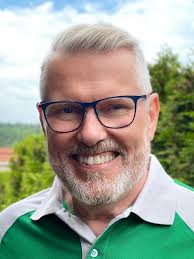
Administrator and Instructor
Jorgen Sandman is one of the most influential and enduring figures in the modern history of pool and billiards sports. Across more than five decades, he has served the game as a player, coach, instructor, room operator, promoter, author, federation leader, international administrator, and Olympic advocate. Few people have touched as many parts of the sport, and even fewer have done so with the same combination of humility, persistence, imagination, and service.
Born in Sundsvall, Sweden, Jorgen grew up in a sports-minded environment where competition, discipline, and teamwork were part of daily life. His father had played ice hockey, and Jorgen learned to skate almost before he could walk. Hockey became his first great sporting passion, and the lessons he learned on the ice stayed with him for life. One of the earliest and most important was the value of fundamentals. His hockey coach famously insisted that young players first learn how to skate before they were allowed to focus on sticks, pucks, and scoring goals. That approach later became central to the way Jorgen taught pool: learn the foundation first, then build the game.
As a youngster, Jorgen tried many sports. Hockey, volleyball, speed skating, football, table tennis, and other activities helped shape his coordination, competitiveness, and understanding of athletic development. He would later become a strong advocate for young people experiencing multiple sports rather than specializing too early. In his view, broad athletic experience develops better motor skills, better instincts, and a greate… Read More