

 Apple Podcasts
 Spotify
 Jorgen Sandman - Part 2 ("Learning by Doing": Teaching Pool, Running Rooms, and Selling the Sport)
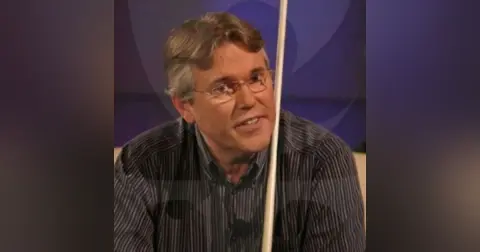
Before Jorgen Sandman became one of the most influential administrators in world pool, he was first a student, teacher, pool room operator, promoter, and believer in the power of simply getting started. In this second episode of Legends of the Cue, Jorgen explains how “learning by doing” became the motto that guided his journey from young instructor to international leader in billiards sports.
The conversation begins with the games that shaped Swedish pool in its early years, especially straight pool, five-and-nine, and later eight-ball. Jorgen reflects on what coaching looked like in Sweden in the 1970s, when there were no established systems, few instructional resources, and most players learned by watching others. Drawing on lessons from ice hockey, volleyball, and his own curiosity, he built a teaching philosophy based on fundamentals: how to hold the cue, how to stand, how to observe, analyze, and communicate.
Jorgen also shares candid insights from the business side of pool, including owning and operating rooms, selling products, writing about the game, and using creativity to attract new players. One standout story centers on The Color of Money, when he persuaded the Swedish film world to help promote pool by placing offers on cinema tickets—an idea that helped fill his room and generate remarkable media attention.
From the Challenge Cup to early professional tournaments, this episode reveals how Jorgen used journalism, promotion, and sheer initiative to raise pool’s profile in Sweden and beyond.
Essential listening for fans of pool instruction, billiards coaching, pool room history, straight pool, sports promotion, and the business of cue sports.
Give Allison, Mark & Mike some feedback via Text.
Follow our show and/or leave a review/rating on:
Our website: https://www.legendsofthecue.com
Apple Podcasts: https://podcasts.apple.com/us/podcast/legends-of-the-cue/id1820520463
Spotify: https://open.spotify.com/show/4Za0IMh2SeNaWEGUHaVcy1
Music by Lyrium.
About
"Legends of the Cue" is a cue sports history podcast featuring interviews with Hall of Fame members, world champions, and influential figures from across the world of cue sports—including pocket billiards, snooker, and carom disciplines such as three-cushion billiards. We highlight the people, places, and moments that have shaped the game—celebrating iconic players, memorable events, historic venues, and the brands that helped define generations of play. With a focus on the positive spirit of the sport, our goal is to create a rich, engaging, and timeless archive of stories that fans can enjoy now and for years to come.
Co-hosted by WPA and BCA Hall of Fame member Allison Fisher and Mosconi Cup player and captain Mark Wilson, Legends of the Cue brings these stories to life—told in the voices of the game’s greatest figures.
Join Allison, Mark and Mike Gonzalez for “Legends of the Cu...
Mike Gonzalez
So when you were coming to learn the game of pool, what was the game of the day back then?
Jorgen Sandman
Straight pool. We played as far as I can recall, very, very rarely, a bit of eight ball. It was straight pool. It was also what you know, Mark, for sure, five and nine. Right? Sort of the nine-ball game where you get uh one one point for the five and two for the nine, and you can have them to come back on the table if you pocket them correctly uh ahead of time, right? So you could score more than just the three points out of one frame. A very nice game uh when it comes to handicapping. Okay. I guess that's that's it. And uh when we later on got a little bit more organized, then of course uh eight pool came into the picture, especially because uh outside of Sweden, if they played pool at all, they did play eight ball, not straight pool as we did.
Mike Gonzalez
So tell us a little bit about your uh about your involvement as a teacher because that's been probably a lifelong passion of yours, but starting at a fairly young age is passing on these skills to youngsters. Tell us about some of your early experiences with teaching. What did you find to be the most uh difficult part of teaching, and what was sort of the most rewarding part of teaching?
Jorgen Sandman
If you go back uh the forty-five years in time, it was probably very much easier than it is today, even though today we actually do have instructors or or coaches uh around the world and whatever, it's not a novelty any longer as it was back then. We all have and including myself, I learned to play by watching others, and I guess that was the only way that we would actually learn how to play. So, and that was also the notion then when I said, Who am I supposed to be teaching with my limited uh knowledge of playing pool? But uh what I then told myself, okay, my coach in hockey said, okay, we learned we have to learn to skate before we can start to play, right? So then I figured, okay, what is the first thing that we would have to teach somebody that wants to become a hockey player? Yeah, it's not to skate. You first have to learn how to put the skates on the feet, where mother comes into place to do the knotting and whatever, right? So that is how I got started, really. I was working very much with uh, you know, how to hold the cue, how to stand and how to aim a little bit and whatever. And that is where we have to start at all times, right? And the learning by doing, right? As we have already been talking about. I was uh picking up as time went by more and more. I was reading a little bit of books, I was watching uh uh video when whenever it came, and so on, to be able to learn as much as I could. But the real school were the ones that I was working with rather than anything else. There are a couple of things that are of great importance if you're going to be coaching people, and that is the three code words, if you so wish. To first of all observe what they are doing and then analyze what it is that you see. Is it good what they are doing? Is it not good at all? Then uh once you have figured out what you want to do with it, then you have to communicate that with them in a way that they do understand, right? And uh I think another very important integer is that you never tell yourself, yeah, I know this, um you know, there is nothing that you can teach me and whatever. You have to always be humble, you have to accept that no matter how good you are, there is always new things that you can learn. And uh nowadays uh people are talking about lifelong learning, and that is something I learned very quickly. So whenever I was working with players also from very early on, I was always saying that okay, the way I'm teaching is like this: there are other versions of how to do things and whatever. I believe in what I am doing, but I would not say that that is the only way. There are too many others that are proving to me and to everybody, there are other ways. So it's your choice. You decide what you want to do. If I were to decide for you, this is what I would want you to do, but the decision is yours, not mine. Okay?
Mike Gonzalez
Don't don't you wish 50 years ago we would have had access to what kids have access to now in terms of learning?
Jorgen Sandman
No. I do. Yeah, but uh the reason why I so instinctively said no is because uh we are in trouble. It's very, very difficult for us to compete for the attraction of the kids in the same fashion as going back in time. When I grew up, if you could interest a kid into playing pool, that kid was stuck. Okay? That kid wouldn't ever leave you. Nowadays uh if you even if you're very good at attracting the kids when they come to your billiard room or whatever, the trick is to try to keep them. And that is uh not easy for many reasons, and one of them of course being the multitude of opportunities that they have nowadays. Another thing would be I don't know, probably I'm I'm not uh uh saying the truth here, but uh somehow I have a feeling that the patience is not the same. Either you learn very quick quickly or you're not really interested. That that seems to be um too common uh today. Okay. So the trick is to be able to keep the kids that you're attracting from the very beginning. And that is definitely not easy. Okay.
Mike Gonzalez
Yeah, yeah. Let's let's talk a little bit about some of your experiences uh running pool rooms, selling pool products, kind of the business side of the game that you got into. Tell us about some of the things you were involved in over your career with that.
Jorgen Sandman
There are of course many stories that has to do with uh running a pool room, and uh one of the things there that uh I also learned not only as uh let's call it a manager of a of a pool room or actually the owner to the pool room, but also as a leader, as an official, is that uh very often you hear people saying, Oh, I have an idea, okay? And then they are introducing that idea of theirs, and that's it. It never goes anywhere. It was just somebody introducing an idea. And I very quickly taught myself that an idea is absolutely nothing until you put it in place. And even an idea that turns out to be bad, it very often does take very little in order to turn it into a good idea. And I think that that has been sort of a I don't know if that translates into English, a red thread, we say in my own language. Something that uh I have always been thinking about, never being afraid of doing the thing that is different. A couple of examples there would be when the colour of money came, for instance. I did call the Swedish Film Institute and I introduced myself and said uh I'm running this uh billiard room in this little town, and uh uh I would want to do a little bit of a commercial in conjunction with this film and whatever. My idea, for instance, would be to have uh the back side of all of the cinema tickets that people were getting when they paid the entrance to go and watch the movie. And on the back side, I was offering them uh 10 hours of pool for literally nothing. Okay, and the reason here 10 hours, why 10 hours? Yeah, because you don't hook them in 15 minutes or an hour or two. But if you can get them to come back for 10 hours, you may be able to, you know, spool the one or other to get uh stuck in that pool room. And I did manage. Uh very many of them, right?
Mark Wilson
Yeah.
Jorgen Sandman
I was first of all allowed to do that trick, and and and secondly, it uh definitely paid off. I had in that pool room 10 tables, and uh the one day when it was more crowded than ever before, I had 43 tables waiting list. And actually, uh that uh town called Vexture. And you may remember because Challenge Cup was born in that city, which was another example. One of my ideas was to create uh professional tournaments with participants out of Asia and America and Europe and whatever. That is how the World Federation came about later on, right? The first uh World Championship was a perfect copy of the Challenge Cup and Munich Masters. Another tournament that you know very well, right?
Allison Fisher
I know that one well. I don't remember the other one. That been before me.
Jorgen Sandman
You participated I think once.
Allison Fisher
I don't remember that.
Jorgen Sandman
And it was Yeah, I I'm not sure that you actually did.
Allison Fisher
I don't think I did. I was definitely in the Munich Masters, and then Sweden was my first world championship.
Jorgen Sandman
Yeah, that was ninety nine that was '96. Where you also won the. You see, yeah, okay. Let's take one thing at the at a time. But uh I then uh had these uh cinema tickets and whatever, and I got a tremendous lot of people into the club, and I was using my skills as a as a sports journalist too. So much so that uh the first league football team of that uh city, Veccher, they once uh did call me and asked me what the heck I was doing, and I was excuse me, what are you talking about? Yeah, how come you're this uh newspaper is writing more about pool than it's writing about football? Hey, we are a first league uh team in football, former Swedish champion in football and whatever. What the heck are you doing? And then I said, excuse me, but pool is far more interesting.
Allison Fisher
I bet they loved you.
Jorgen Sandman
I guess they did. Yeah.
Mike Gonzalez
Well, related to your pool room experience, would you rather own one or run one?
Jorgen Sandman
That depends on who walks in the door, door. If uh the one that comes in the door is somebody that I would want to see leave very quickly, then uh I am an employee and not the owner to the club, right? So then I have to go up and and excuse myself and say, listen, may I please ask you to to leave, you know, because otherwise I may be at risk of losing my job, right? Yeah. But uh normally I would prefer to be the owner because that means that uh I am free to, you know, to put my uh ideas into to place. Yeah.
Mike Gonzalez
Mark, does that sound familiar to you, having done probably both?
Mark Wilson
Well definitely I've done both. Yeah, the ownership part of it. That way you can always implement whatever you want, what direction you want the room to go. So I think that would be my choice too. Although that does mean wearing a lot of hats. That is true.
Allison Fisher
Takes away from your game too, doesn't it? If you're a player. I mean, I know Mark, how you love to tinker around anyway.
Mark Wilson
Mm-hmm.
Allison Fisher
So owning a owning a pool room versus being a player, it's like a league as well, isn't it? You just don't have time to engage in what you really love.
Mark Wilson
Yeah, I always tell people sell your cue if you're gonna own a pool room because if you're playing pool, you're d neglecting something in your room. Yeah.
Jorgen Sandman
Yeah. Yeah, or turn it around. Uh if you're playing pool, uh one of the tricks is uh the phone is calling, you hear it, the door is opening, you see it. And there is you can never really concentrate on what you wanted to concentrate on, playing some pool. Yeah. Uh you can forget that. Uh the one thing is not uh very easily uh connected or uh or done at the same time, right?
Mike Gonzalez
So Jorgen, at this stage of your life, you're now you've been involved in a lot of sports, you've been a sports journalist, you've coached, you've uh seen the business side of pool. Did you have anything in your mind yet as to where this might go for you career-wise, in terms of what you ended up doing with governance?
Jorgen Sandman
That's a very good question, really, because I think that the answer is I never really was paying too much attention to what is going to happen tomorrow. The one thing led to the other, slowly but surely, right? So if we now back up to that challenge cup that uh that you can't remember that was the first tournament, professional tournament that I was doing, and uh the only security was my own wallet, okay. What I asked myself back then was how much does it cost to buy the headlines in newspapers in Sweden with my sport? And I came up with a round sum of 100,000. I didn't have the 100,000 at that point, but I figured that uh it will cost 100,000. And then I went to the local newspaper and then I said, sorry, I first asked the Swedish Billion Federation if I could have that tournament sanctioned, and sorry, I cannot pay a sanction fee or anything. I will have trouble enough to come up with the prize money, but uh what I can do is a deal with you. Should I make a profit, I will be happy to share it with you 50-50. And I actually told the same story to the European Federation as well. So I was already an official when that uh tournament was created, right? I got on the PBS board on the very first General Assembly 1980. Uh that organization was founded in 78, okay. And uh it had its first General Assembly in Germany in 1980, and I got on board, right? So, of course, I was asking my colleagues uh in order to be allowed uh to have that tournament sanctioned. And uh again, the same story. I will share with you 50-50, which meant that if I would make a profit, I would end up uh being the only one not making a profit, but that's another story. I wasn't uh necessarily worrying too much about the profit, I can tell you. But then I when I got the go-ahead from the Swedish Federation and and uh from the European Federation, I went to the local newspaper and then I said, okay, in February of next year, such and such date. Actually, I have the poster up there on the on the wall, but that's a little bit uh older. If I would turn that and then you go this challenge cup. This is now 1990. But the first uh tournament I had was uh three years before that, I think. Okay. Yeah, yeah. And uh and um I said then uh I think it was the first till the fourth or something of February, whatever. Well, maybe that was the one that was the first. Yeah, that one is the first till the fourth of February, but it was February. And uh I said that okay, 100,000 prize money and the players are going to come from the States and from what do I know, the Philippines, Japan, whatever, right? Wow, that's fantastic. Yeah, we need to write something about that. They had never heard of something like that in Sweden before, right? And actually, at 6 o'clock the same evening, it was on text television in Sweden. Um professional pool tournament in Veccher, 100,000 prize money and players coming from all around the world and whatever. Yes, I did it. I made uh a deficit of 14,000 and the uh commercial effect since I was a sports journalist. Uh I knew how to calculate that. The commercial effect that I got out of the tournament was uh a couple of million. I got it on uh national TV, uh the final match, okay, among other things.
Mike Gonzalez
Yeah.
Jorgen Sandman
And uh so then I told myself 14,000 for all of that. Oh, that's and that of course tells you how come I did have uh 43 tables waiting list and whatever. It was it was pooled every day in the local newspaper, and and most of it I wrote myself. Interesting.
Mike Gonzalez
Interesting. Very clever investment. Yeah. You know, we've we've had this discussion with other guests in terms of career arcs and whether where they ended up was part of a master plan, or whether, as you said, you kind of take things as they come. And uh and so I I guess it's as you said, it probably wasn't part of a master plan where you were laying brick by brick the foundation for what was to come, which was to be in a very significant leadership role governing pool worldwide, but instead it's you today looking back saying, I guess I did a lot of the right things preparing myself for this role today.
Jorgen Sandman
I can actually give you another example uh that probably will just underline what I or underscore, I don't know how to put it, of what I just said. We founded the WPA, and when I say we, it was uh an EPBF board meeting in 1987, in November of 87. Uh and the discussion around the table was, yeah, okay, we do have our European championships and whatever, but wouldn't it be the time that we are looking uh you know beyond the European borders and try to see if we can connect with the rest of the world somehow? And we knew about attempts that uh had been in the past in order to put a world organization in place and whatever. And one of the things that I could inform uh my colleagues on the EPBF board about was uh one of the reasons why the attempts ahead of time, ahead of us, failed was because they were trying to attract national federations to become members. And national federations simply didn't have any money. They couldn't participate in meetings and whatever, and this is of course uh way before yeah not way a number of years before the fax machine came about, for instance, right?
Allison Fisher
Yeah, communication was a problem. Yeah, right.
Jorgen Sandman
So you would have to meet, and meeting somewhere in the world costs a lot of money, and national federations couldn't cope with that kind of cost, right? And that is how the the idea was then born to instead try to create like the PBF, continental organizations, so that the national federations could could contribute over the continental organization that that then in turn could meet once or twice per year or something like that, right? And very quickly we managed to get Asia interested. I knew a very well known character that unfortunately passed. Away in January of this year. And I know that the two of you, Mark and Ally, knew Hassul Fujima very well. As a name, and I don't know, Mark, if you ever played him or saw him playing or anything. But he, of course, used to be a professional player. Very good. And since I knew him, I got in touch with him, and he came to Europe to meet with us, and all of a sudden we sort of had two continental federations. Then again, we knew that the WPA is never ever going to be able to take off unless we can interest the Americans. And who to talk to. At that time we had the WPBA was already there. We did also have the MPBA, the Men's Professional Billiard Association. But we didn't have any contacts with any of them. And I think it was probably Ava, Svenson, Matthaya, Lawrence. Probably she was the one that sort of told me that the only one that does have a little bit of financial clout would be BCA. Talk with them. And I then had uh this was 1988, we had Paul Gurney performing trick shots at the European Championship for Kids in Stockholm. And at that time I had Katsua Fujima to visit us too, right? So now we organized a meeting and we said we had an American representative to inform Paul Gurney. And he participated in the meeting, he went back home and he established a contact with the BCA. And the BCA was not particularly interested. Okay. So in 1989, and here is the thing then uh uh Horst von off, the German uh official, the German uh the president of the EPBF, and the president of the WPA that only consisted of the EPBF and the APBU, the Asian Pocket Billiard Union. We had a conversation and then we figured out the only way to interest the Americans is let's make a world championship. So we got uh, you know, venue in a small city called Bergheim in Germany. We got the local municipality behind us, and then we advertised the first official World Championship nine ball under the WPA, and all of a sudden the Americans became interested. Okay, and uh here Ava did play a very important role because one of the things that uh happened was I still can't believe that that was possible, but the president of the BCA at the time, certain uh man called Jim Bekula in Brunswick, he actually contacted my bank in Sweden and got some answers from the bank and around my person, my financial status and things like that. Talk about due diligence.
Allison Fisher
Doesn't seem right, and the question was who is this Swede?
Jorgen Sandman
And uh can he uh can we go to to a world championship in in Germany? Are they going to be able to pay out the prize money and things like that, right? I remember it was sixty thousand dollars was the prize money in the first uh world championship, okay. And um Ava said that uh okay this uh Jorgen Sandman from Sweden is a guy that I know very well. If he says that he is going to do this, he is going to do this. So you can trust him, okay. And I remember it was in the beginning of the of December in 1989, and it was late evening, and all of a sudden my fax machine, the fax machine was invented. Okay, the fax machine started uh noise, right? And it never stopped. It was page after page, a whole wow couple of meters of paper coming out of the machine. And that was the message from the BCA saying that uh okay, we have decided to join you for the world championships, and we want to become a part of the WPA. So let's take this a step further. And I immediately after having read that uh that lengthy facts, I of course called uh Horst von den Hoff in Germany and told him that believe it or not, the Americans are on board. And we decided instantaneously to uh get hold of a glass of wine or a champagne, whatever we could find. Absolutely and uh celebrate because uh the Americans are on board. I remember that very well.
Mike Gonzalez
Yeah, what's what's been the the biggest obstacle you faced at that time in bringing the world of pool together under the WPA?
Jorgen Sandman
Actually, UPBA isn't so bad. It was the UPBA in the United States that sort of uh forced us to put a uh hyphen between the pool and billiard and uh to shorten it to WPA, right? Yeah, yeah. Because there was already a WPBA. In hindsight, this thing with the Continental Federations uh being the members of the of the WPA hasn't always been the biggest success. But I can tell you, if we wouldn't have done it that way, we probably would be eventually looking to found a World Federation today, too. Okay? Financially wise, that was the only option we had. And it did work. And yes, not only did we know that without the Americans, whatever it is that we are trying to do is going to fail. We knew that the Americans were by far the very best ones when it came to play pool. We needed them. And that is also then how come BCA, that in reality, of course, is and was a trade organization, became the member of the UPA that otherwise consisted of national federations coming together under a Continental Federation and so on. BCA had a completely different uh organizational structure, right? And again, without the BCA, without their support, because they actually paid the professionals to come to the world, the first world championship. They wouldn't have come otherwise. We are talking about professionals, yes, their skill was professional, but they certainly weren't having a very good life. They weren't making very many dollars on their skills, right? So to call them professional, yeah, of course they were, but they didn't make very much money. They couldn't afford to be traveling to Germany to participate in a in a world championship if it wouldn't have been for the BCA and the support through the industry, right? So that uh was very important. And how good were the Americans? This is then before you, Ali. Not before you, but as a pool player. Yeah, and uh in the men's event, the uh only American that lost a match lost against an American. Okay, that uh goes to tell you that oh yeah, they were far ahead of us. And that was going to change though.
Allison Fisher
It sure did, didn't it? Wow. Thank you for listening to another episode of Legends of the Cube. If you like what you hear, wherever you listen to your podcast, including Apple and Spotify, please follow, subscribe, and spread the word. Give our podcast a five-star rating and share your thoughts. Visit our website and support our full history project. Until our next golden break with more Legends of the Cube. So long, everybody.

Administrator and Instructor
Jorgen Sandman is one of the most influential and enduring figures in the modern history of pool and billiards sports. Across more than five decades, he has served the game as a player, coach, instructor, room operator, promoter, author, federation leader, international administrator, and Olympic advocate. Few people have touched as many parts of the sport, and even fewer have done so with the same combination of humility, persistence, imagination, and service.
Born in Sundsvall, Sweden, Jorgen grew up in a sports-minded environment where competition, discipline, and teamwork were part of daily life. His father had played ice hockey, and Jorgen learned to skate almost before he could walk. Hockey became his first great sporting passion, and the lessons he learned on the ice stayed with him for life. One of the earliest and most important was the value of fundamentals. His hockey coach famously insisted that young players first learn how to skate before they were allowed to focus on sticks, pucks, and scoring goals. That approach later became central to the way Jorgen taught pool: learn the foundation first, then build the game.
As a youngster, Jorgen tried many sports. Hockey, volleyball, speed skating, football, table tennis, and other activities helped shape his coordination, competitiveness, and understanding of athletic development. He would later become a strong advocate for young people experiencing multiple sports rather than specializing too early. In his view, broad athletic experience develops better motor skills, better instincts, and a greate… Read More