

 Apple Podcasts
 Spotify
 Jorgen Sandman - Part 3 (Building World Pool: The WPA, America, and the Junior Pipeline)
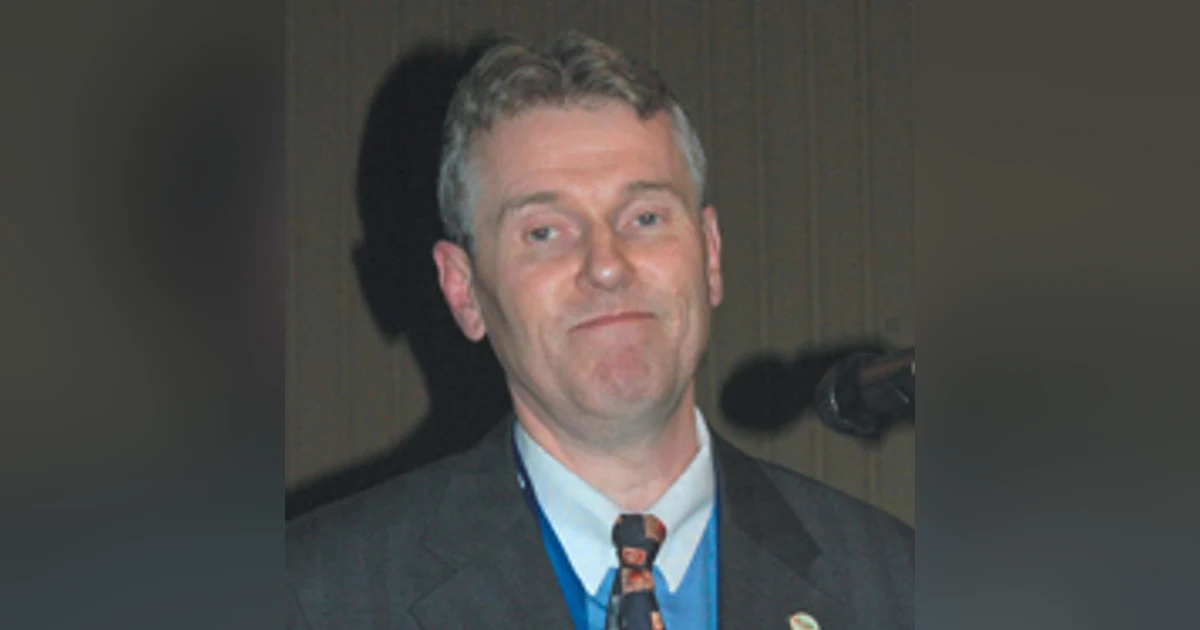

In this powerful third episode of Legends of the Cue, Jorgen Sandman pulls back the curtain on the creation of the World Pool-Billiard Association, the importance of American participation, and the youth development systems that helped Europe and Asia catch up to—and eventually surpass—the United States in world pool.
Jorgen recounts the late-1980s conversations that led European leaders to look beyond their own borders and imagine a true global structure for pool. He explains why the WPA could not succeed without the Americans, how the BCA became involved, and how a late-night fax helped confirm that the United States would join the first WPA World Championship. It is one of the great behind-the-scenes stories in modern pool history.
The discussion then turns to conflict, politics, and the fragile nature of professional pool. Jorgen shares his account of dealing with the Men’s Professional Billiard Association and Don Mackey, while Mark Wilson adds perspective on the long-term impact those years had on American men’s professional pool. The result is a frank conversation about structure, missed opportunities, and why the U.S. lost ground internationally.
But this episode is also about hope and development. Jorgen and Mark discuss junior training camps, disciplined coaching, European youth championships, and the pipeline that helped produce generations of elite players. Jorgen also tells the remarkable story of bringing pool to Russia, staging a European Championship in a state circus, donating the first twelve nine-foot pool tables, and helping seed a movement that would eventually produce world-class Russian players.
A must-listen for anyone interested in WPA history, American pool, European pool, junior development, Fedor Gorst, international nine-ball, and how world pool was built.
Give Allison, Mark & Mike some feedback via Text.
Follow our show and/or leave a review/rating on:
Our website: https://www.legendsofthecue.com
Apple Podcasts: https://podcasts.apple.com/us/podcast/legends-of-the-cue/id1820520463
Spotify: https://open.spotify.com/show/4Za0IMh2SeNaWEGUHaVcy1
Music by Lyrium.
About
"Legends of the Cue" is a cue sports history podcast featuring interviews with Hall of Fame members, world champions, and influential figures from across the world of cue sports—including pocket billiards, snooker, and carom disciplines such as three-cushion billiards. We highlight the people, places, and moments that have shaped the game—celebrating iconic players, memorable events, historic venues, and the brands that helped define generations of play. With a focus on the positive spirit of the sport, our goal is to create a rich, engaging, and timeless archive of stories that fans can enjoy now and for years to come.
Co-hosted by WPA and BCA Hall of Fame member Allison Fisher and Mosconi Cup player and captain Mark Wilson, Legends of the Cue brings these stories to life—told in the voices of the game’s greatest figures.
Join Allison, Mark and Mike Gonzalez for “Legends of the Cu...
Allison Fisher
But at that time in America, weren't the Americans having their own world championships? They weren't really world championships because they didn't involve other countries so much. Is that right?
Jorgen Sandman
They did before 1990, okay? Right. But after sort of the decision was taken, they were going to join the WPA and participate in our world championships and so on. For a number of years, I'm not sure, but I don't really think that there were any world championships during that time period. We did have mark you the World Open Straight Pool and things like that, right? World Open, but not World Championship. Then again, I did have an encounter with a guy that called himself, and I guess he wasn't the one that came up with the name perhaps, the commissioner of the Men's Professional Billiard Association. I had a meeting with him in in uh, I think it was in Taipei. And he was knocking on my door. I had an office there, it was a world championship ongoing, and then he told me that okay, if you do have rules in this game, and the rules does not uh allow for an American to be a world champion, those rules are wrong. And he also told me that uh if there is any prize money to be had uh in this sport, it belongs to the Americans. One of these days, maybe the Americans have so much money that they feel that okay, you can have the rest, then you can share that with the rest of the world. If I couldn't agree to those terms, then uh the men would be out of here. And then I said, okay, over there is the door. Please leave it open when you go so that you can tell your players that when they decide to come back, not if, but when they decide to come back, the door is still open. They don't have to knock, they are welcome. And then there were a number of world championships in the states. One actually a world eight ball championship at the same time as the WPA was having the World Nine Ball Championship in the States. So the men's professional players, they were playing eight ball in one city, and uh we had a world championship uh nine ball in Chicago. This was uh '97. There was one thing else, this is very important to me, because I told uh the commissioner that uh when you and your players are walking away, you are walking away as number one. I'm sorry, I cannot guarantee that when your players decide to come back, that they still will be number one. But they are welcome back. And true enough, when they did come back, and that was in '98, I think, they were not undisputable any longer. Europe and Asia did catch up around that time, and after that time period, I think that normally you would suggest that Europe and and Asia are a little bit ahead of the United States.
Mike Gonzalez
Yeah.
Jorgen Sandman
I think that's fair.
Mike Gonzalez
Jürgen, would you care to name any names here as far as who the commissioner was?
Allison Fisher
I think I know. I'm sure Mark knows, and I'm guessing, but go on, Jurgen.
Jorgen Sandman
His name is and was Don Mackey.
Mike Gonzalez
Oh, I I would have just hazarded a lucky guess, I guess, because that's who I would have chosen. Of course, Mark, you remember that like it was yesterday.
Mark Wilson
The catastrophe of all pool for America was Don Mackey. He alienated everybody, all the industry members. He ran off ESPN, he lost the the confidence of all the players except for those that he owed money to. He kind of strong-onged them into suing R.J. Reynolds cigarettes for our one good tour we had prior to that, and that that led to our last tour. Camel walked away in the early 2000s, and since then there's never been a men's pro tour. The BCA was alienated, the entirety of uh the women were gone, and just it was a disaster that we still pay for today.
Allison Fisher
So y I have a question for you, Jurgen. So during that time, you're saying that the Europeans and the Asian players caught up. Why do you think that happened? How did that happen?
Jorgen Sandman
I think uh the best answer to that is how pool is organized in Europe and in Asia, and actually probably a little bit more in Europe than it is in Asia. With uh the club structure, the regional federations and the national federations, and I also think uh that the Olympic recognition that we managed to achieve a little bit later on played a very important role in such a fashion that national federations all of a sudden got uh governmental support and things like that, right? So there are many, many bits and pieces that belong to that puzzle. But basically, we are simply better organized. And if there is one thing, there were a couple of times throughout my past when I was asked uh would I be interested in coming to the United States and whatever. And I can say that I was tempted, but the United States and me is not on equal terms. We were equal terms, but it's not uh I was never sharpening my elbows enough to be an American. So I think I was better off uh continue to being the European that I was and try to do things as as good as I possibly could. If I would have taken that uh offer for real and I would have decided to go, I would of course try to teach in America and to organize pool in the same kind of a way. And uh it would be very much uphill, I'm sure. That is what I would see as my task. And if that would be possible somehow, then the United States is again, of course, going to be uh uh a top-notch in in our pool professional side of of things.
Allison Fisher
We definitely lack a lot of structure over here, and you're talking we're talking back many years ago, you know, where you had the structure in Europe and it was you know, we've seen all the great players come out of Europe and dominate, and in Asia of course, because they'd have a lot of structure too. And it's a shame, really, that US is so far behind. But how much do you put that to the BCA being not really for Pro Paul? The BCA is not a pro pool organization, it's a way of sending people to world championships. But it's been many years since the BCA held any pro tournaments, and they are really for the industry, meaning the people who sell the products. So do you think that is a little factor?
Jorgen Sandman
Could be to a certain degree, but in order to create the structure that is needed, I think it will have to come from below and up, rather than from the top and down necessarily. I would uh suggest to you that if let's take one state out of uh what is it now, fifty fifty or fifty-one? What is it?
Allison Fisher
Well, it depends. It could be fifty-three eventually. If you have Greenland and Venezuela and Cuba, it could be fifty-four, fifty-five, we're not sure right now.
Jorgen Sandman
Never mind the uh if you take one state, and let's say that in that state there is organized a meeting between uh two room owners, and the idea is to create sort of an organizational structure where all of them come together and uh they put up a couple of goals, and the fewer the goals, the bigger the success rate will be. Because if you diversify that idea too much, dilute it too much, then it's never going to work, right? Because uh too many chefs. Okay? But if you have one idea or two to start off with, and you can have everybody to agree, yeah, we can do that, okay? And they set off. They start doing, they start working according to that one or two ideas and whatever. Very soon, provided that uh they are doing an okay job at it, that will send signals across the border to the next state and whatever. Okay? What can be done in one place can be done in another, and so on, right? Mark, we did the talk when when we met in St. Louis just recently. We talked about the training camps that I used to be doing, a fair number of, and how I managed to get the BCA interested in also doing the very same thing. And yes, the outcome. We were having a little bit of a disagreement there. Yeah. Because I was told one story, and it turned out that you were part of that, and I didn't even know that.
Mark Wilson
Yeah.
Jorgen Sandman
And you have a completely different recollection of uh what actually transpired. But never mind. There we had something going, and I think it only took place one or two times, and that was it. And I don't really then know how come wouldn't that continue? Because that is where you have to start. You have to have organized activities for kids. Without that, there isn't very much that you can do, right?
Mark Wilson
Aaron Ross Powell Specifically, what Jorgen's talking about is that we had in the summertime kids' camps, and Jerry Bryce was the leader of it. I was one of the uh coaches. And it would be conducted at the uh University of Wisconsin in Eau Claire, Wisconsin. It was a we had dorm rooms, we had a facility, we had the cafeteria, and then we had all kinds of uh uh sundry other activities for kids. Kids would literally come from all over the United States. And let's suppose that our camps had approximately 20 kids in them, and then they would stay there for a week and we would train them, and then at night there'd be basketball activities, or we would take field trips, we would go play pool matches at pool rooms, and but it was training every day, and it was such a wholesome good thing. But what happened was there were some, I guess, uh financial insurance liabilities. And so that was the stated reason that that was discontinued, but uh it was also probably some work, and people were looking for an excuse to not continue doing it, and because there's other things, activities for kids that go on with these same insurance liabilities. So that doesn't that seems a bit preposterous and short-sighted, and then consequently we never evolved like what Jorgen's talking about, developing a nucleus of kids that love pool and follow it, and ultimately participate in tournaments and leagues and own pool rooms and buy tables and all that. And so he was told that Jerry and I said, you just can't do anything with them. When that was quite the contrary, it was one of the most exciting, uplifting experiences of my entire pool life to see these kids evolve into a team and they're all working and growing and getting better. And when we went to these other pool rooms for matches at night, there would be gray-bearded guys that had played there all their life, and our kids would just absolutely rock their world, and they'd be high five, and then they can't believe it, but their stroke mechanics were so sound that their consistency rate was high. And it was a it was a really good thing, and it also matured the kids. They learned a lot of uh asundry life skills, not just pool skills, but the combination of that, had that continued today, American pool would be in a much different place. Right now, what Jorgen said is you can't get young people, it's hard to maintain them because there's so many different things pulling at their attention, you know, that we didn't have back in the day. So, but yeah, it was it was certainly untrue what he was told, and it was two of the greatest experiences of my life. And if you ask Cherry, I'm sure, not knowing, but I'm sure he would you know parallel what I'm saying.
Jorgen Sandman
Yeah, it's a shame. You would know how many European championship medals and world championship medals that came out of these training camps. They would be surprised. Yeah. And the thing is, when I organized the first camp, and I think that was was 86 or 87, and I decided to make it international, and that had to do with my own appetite for visiting uh places and whatever. I started the the first I was 14 years old when I was visiting uh 20 some countries, and I learned a lot. I learned more from that than I learned in school, more or less. And and uh so then when I came up with the idea, the thing was I was having this pool room, and in Sweden in summertime, it's empty. Everybody goes swimming and lay in out in the sun and whatever. Nobody's interested in a pool room, right? And I've came up with the idea of making a training camp for kids because I that is what I was used to from hockey and uh and speed skating and other activities that I had done myself, right? So I figured okay, I'll do that here too. So I sent a message to all of the national federations in Europe and said there is a summer training camp for kids 14 days, and uh they will, of course, practice uh very much every day, but they will also be doing some sightseeing and we will learn a lot about uh Sweden and things like that. And uh I was allowing, I think only 20 kids the first time. And what happened was these people, these kids, they went back home. And the next year I had 80. So I needed to run uh the one training camp after the other. And that very much of uh what you what you see uh the Europeans are capable of today. I think that that got started sort of back then, with the word spreading. There is a way of rather uh learning to play pool through quality and not quantity that otherwise used to be the method. You play ten hours per day, and yes, in a number of years you will become good. But there is another way of doing the same thing, not investing all that much time, but rather do it uh quality-wise instead of, as I said, quantity-wise. And that is what I taught kids. And here Nick Warner, that then has been a guest here, played a very important role because I used to be working with him a little bit in the beginning of the 80s, and he taught me drills. Okay, and the difference I think between what he did and what I did was I created a scoring system with the drills, and the next step was of course to put the drills different in different uh levels depending on how demanding they are, right? So those two things scoring system um levels of ability, levels of skill. That is what I was teaching in these uh training camps, how to practice based upon what do you know. So I was always testing the kids, and then uh based upon what what uh I came up with, I gave them exercises to work with. Okay.
Allison Fisher
That's very engaging because you can see your levels of improvement and always have goals to focus on. So so you've coached or instructed at roughly 50 training camps in 14 countries and served as the national coach for Sweden, Switzerland, Austria, Ukraine, and Denmark. What did that teach you about how differently nations approach the same game?
Jorgen Sandman
That's a good question. Um is uh I uh no matter where I went, and actually uh I have improved that uh statistics a bit, it was uh 67 training camps so far. God knows, and 19 countries, okay. Wow. You also have to add a couple of countries. I was uh of course the national coach in Norway where I live now, and I was also national coach for the women in Finland, and uh I don't know if there was another country that I also added on that list.
Allison Fisher
Did you go to Poland?
Jorgen Sandman
Yes, I was having a training camp for kids in Poland too. I thought so, yeah. Yes, in a place called the Bydgosz on the border to Russia, more or less. It was a very cold place, I remember. Never mind. Good for pool, though, that means so one of the things that I have come across is first of all, I needed to first display my own skill. Because if I couldn't play, then I couldn't work with a national team, right? Yeah. So I always sort of had to show that I know what I'm talking about, okay? And I was a fairly decent player, okay? So that is the one thing. But the biggest difference between the one country and the other would be how do people perceive pool in the country? In my own country, as you heard uh uh in the beginning when we started talking with each other, pool and snooker together uh became recognized by the Sports Council in 1973. I think that that was one of the very first countries in Europe where uh billiards was uh recognized at that level. There were a couple of Kerom countries that perhaps were before, like Belgium or the Netherlands, or possibly Spain or Portugal or something like that. I wouldn't know for sure, but uh definitely Sweden belonged to the very first ones that got governmental support. And then when I come to another country, then pool or billiards, that's just a hobby. There is absolutely no governmental support or anything like that. There is uh drinking and smoking in the billiard rooms and and whatever. In Sweden, the smoking stayed on for a long time, right? But the alcohol was not an issue in Sweden. No alcohol in a billiard room. That wasn't possible, even. And if you meet people on the street and they ask, so what are you doing? and you say, Yeah, I'm working with billiards, they would look at you and say, What? Can one work with that? Okay. Oh, that's interesting. If I would ask somebody when I say billiards, what what do you think? What comes to your mind? They would say, Yeah. Whiskey glass on the on the cushion and uh a cigar in the mouth and uh a fog in the room and uh whatever. Yeah. It has the American movies and the and whatever played a very important role, right? So that could be in some countries uh where I came, and actually to a very high degree uh here in Norway when I came too. Um I came here in 2006, and the country is uh fantastic, so I'm still here. Uh I love where we are living and uh and uh we are doing fine here, so we are not going to be moving, but anytime soon, at least. And uh never mind here, uh even in 2006, probably to a certain degree even today, people have a completely they don't see the sport in what we are doing in the same way that they would look at handball or football or whatever it might be, right? But uh to give you an example, in two years' time when the new sports uh Facility is built in my little village, then the billiard club is moving in there. Okay. So we are going to be in the midst of the other sports and just next to the school for the smallest kids and uh up to high school, right? Just around the corner from the sports facility. So that's going to be amazing. And I think then I would retire and uh be doing my my job in in the billiard club instead of traveling the world.
Mark Wilson
You know how you get to be a uh guest on Legends of the Queue is means you have to go above and beyond. It's not just something you fall into. And Jorgen's uh history in Pool goes beyond, and we're learning a little bit about it now. But I mean it started off he's putting in $14,000 to a tournament that he's gonna, you know, destined to lose on, yet got millions of dollars of promotion for the sake of the sport. So then anything that's happened in Pool throughout the world has his fingerprints on it because he's been that involved over all these decades. One time when Federal Course was just beginning, he came to the United States when he was 16 years old and played at the Derby, but he was also invited to play on the Bigfoot, which is the 10-foot table event that's invitational only, and it's 16 elite players. And I was shocked at how well he played, because I'd, you know, even pros, season pros fall down pretty badly in this event. And I was talking to him a little bit and I said, Well, how in the heck would you get this good at this age to be able to play with you know Alex Pagulion and the like? And he said, uh in Europe they have uh European kids' championships, and that happens once a month. And there's there's another five or six kids in that group that are destined to be world champions. And he was not speaking of himself at that point. And it was and and then now it's come to fruition. You got the you know, players like Zelensky and all the published kids and all that are young and uh ascending, but that's all starting from back when Jorgen began the WPA and all the different events he ran. So, you know, that's what goes unsung. Nobody notices that here's sacrifice and contribution coming forth. And that's how you get to be a legend of the queue.
Jorgen Sandman
Well, 1990, we actually had uh very first meeting of what was going to become the WCBS. We had that in Brighton in England. It was the first time that you had Kerom, pool, and Snooky people around one at the same table. Okay? And during that meeting, we got to know uh representatives from Russia and Mr. Fondenhoff that I have mentioned a couple of times, he actually has also passed away, that is like a year ago, I think now. We talked with each other and we came up with the idea maybe we should bring Pool to Russia. So we talked with this uh Russian fellow and he was excited about uh that opportunity. And since I at the same meeting there had uh two, one was actually uh selling tables and the other one was a manufacturer of pool tables. I asked if uh the two would be uh could entertain the idea of uh providing me with six tables each and we could make a first European championship in Russia, and both of them agreed uh to do that. That's how easy it can be sometimes. And um in 1991, the year after, we then uh had in August of 91 we had a first European championship for kids and for 40 plus, and uh we had that at the state circus, so we had the tables put up in the manes of the circus. I was myself together with a good colleague of mine from from Finland, actually the room owner to where Mika Imonen started his uh pool playing, okay? Jesse Poikolainen is the name of the owner of the Ritz Club in Finland. He and I we did put up the tables there in the Manaesh of that uh state circus, and it was a fantastic thing. Uh we were live on the national TV throughout Russia on the opening ceremony, and uh I remember that uh all of a sudden uh the beamer throwing the light on me. And I was looking around trying to figure out uh what why. And then all of a sudden, this guy comes to me and gives me a cue, and then I am asking what is going on here, and then he said, Yeah, you're supposed to do the trick shots. What? Nobody had told me about trick shots before. I was doing that when I put up the tables to show some of the Russians uh some trick shots, and obviously they got the wind of that, so now I was introduced on national TV to do trick shots. That was fun. And uh the fun thing is everything worked on the first attempt. I have never had that experience before. Never mind. We had that European championship there, and after, when the tournament was over, the 12 tables were donated to the Russian Federation. And those were the first, the 12 first nine-foot tables in Russia. As far as I know, there may have been uh private donors to a table somewhere or whatever. I don't know. But as far as I know, those were the first ones. And that is how the whole thing got started in in Russia. We were competing with their own game, which is a 12-foot pyramid game. You have 68mm balls and 72 millimeter cut pockets, only four millimeters on a 12-feet table, right? Very difficult. Crazy, crazy. Never mind. Pool is now in Russia, and I later on came back to educate coaches, and I was having a couple of training camps there, and whatever for kids. And I did not come across Fedor. He came about later. But there is no doubt that the beginning was the European Championship and the education of coaches and whatever. Actually, one of them I was just recently meeting in Guangxu at the GBE exhibition, and he has been communicating with me the last couple of days about a player that wants to participate in uh one of our world championships, right? But uh that's uh besides the story, that that is how it began, and then all of a sudden there were 700 rooms in Moscow alone, so something did happen.
Mike Gonzalez
Interesting. For our American listeners, uh the reference to beamer was not to an automobile, but to a spotlight. Ah, sorry.
Jorgen Sandman
Yeah, of course. It was beaming light at me. Super cheap.
Mike Gonzalez
Yeah, but you but you uh you persevered and you responded well to the pressure by getting everything done on the first try.
Jorgen Sandman
Yeah, that was pure luck, I can tell you. And of course I did pick my trick shot, so uh I wasn't trying anything really fancy or whatever. That would be stupid, especially since I didn't know about it ahead of time. Yeah, yeah. So I guess I did the right thing. It worked.
Allison Fisher
Thank you for listening to another episode of Legends of the Cube. If you like what you hear, wherever you listen to your podcast, including Apple and Spotify, please follow, subscribe, and spread the word. Give our podcast a five-star rating and share your thoughts. Visit our website and support our full history project. Until our next golden break with more Legends of the Cube, so long, everybody.
Administrator and Instructor
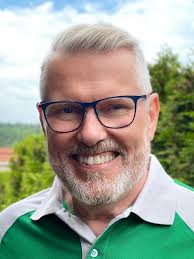
Jorgen Sandman is one of the most influential and enduring figures in the modern history of pool and billiards sports. Across more than five decades, he has served the game as a player, coach, instructor, room operator, promoter, author, federation leader, international administrator, and Olympic advocate. Few people have touched as many parts of the sport, and even fewer have done so with the same combination of humility, persistence, imagination, and service.
Born in Sundsvall, Sweden, Jorgen grew up in a sports-minded environment where competition, discipline, and teamwork were part of daily life. His father had played ice hockey, and Jorgen learned to skate almost before he could walk. Hockey became his first great sporting passion, and the lessons he learned on the ice stayed with him for life. One of the earliest and most important was the value of fundamentals. His hockey coach famously insisted that young players first learn how to skate before they were allowed to focus on sticks, pucks, and scoring goals. That approach later became central to the way Jorgen taught pool: learn the foundation first, then build the game.
As a youngster, Jorgen tried many sports. Hockey, volleyball, speed skating, football, table tennis, and other activities helped shape his coordination, competitiveness, and understanding of athletic development. He would later become a strong advocate for young people experiencing multiple sports rather than specializing too early. In his view, broad athletic experience develops better motor skills, better instincts, and a greate… Read More