

 Apple Podcasts
 Spotify
 Jorgen Sandman - Part 4 The Alphabet Soup of Cue Sports: How Billiards Reached the Olympic Family)
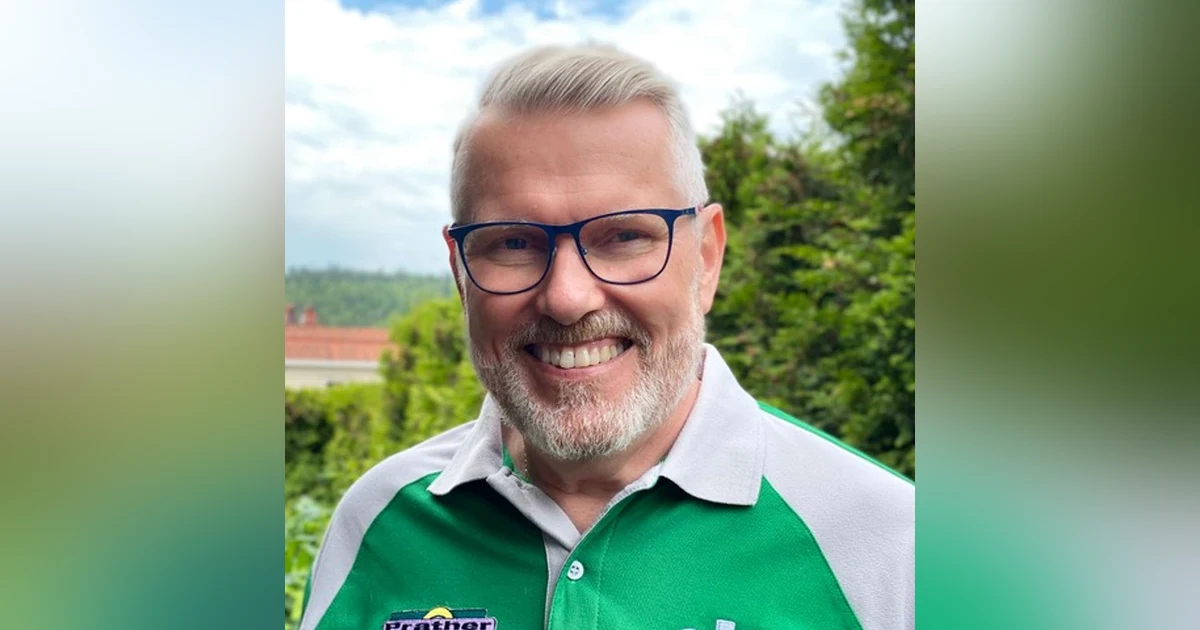

Pool fans know eight-ball, nine-ball, ten-ball, and straight pool. But behind the games themselves is a complex world of federations, Olympic recognition, acronyms, politics, and diplomacy. In this fourth episode of Legends of the Cue, Jorgen Sandman becomes the ideal guide through the “alphabet soup” of international cue sports governance.
Jorgen explains how carom, snooker, and pool first came together under one umbrella, eventually forming the World Confederation of Billiards Sports, or WCBS. He traces the historic meetings that brought the UMB, IBSF, WPBSA, and WPA into conversation, and explains why the International Olympic Committee required the entire billiards family to be united before recognition could even be considered.
The story moves from Switzerland to GAISF, from rejection to acceptance, and from skepticism—“billiards is not a sport”—to eventual Olympic recognition. Jorgen shares how a glossy presentation, persistent lobbying, and years of organizational work helped billiards sports earn provisional recognition in 1996 and full recognition in 1998. He also recalls operating billiards rooms inside the Olympic Villages in Barcelona and Atlanta on behalf of Brunswick, offering coaching and trick-shot demonstrations to Olympic athletes.
This episode also clarifies the differences between carom, snooker, pool, English Billiards, Pyramid, Blackball, Chinese Pool, and Heyball. Jorgen explains how these disciplines found their place within the world structure and why inclusion was often the only practical path forward.
For listeners interested in cue sports governance, Olympic billiards, WPA history, WCBS, carom, snooker, Heyball, Pyramid, Blackball, and the international future of pool, this is an essential masterclass.
Give Allison, Mark & Mike some feedback via Text.
Follow our show and/or leave a review/rating on:
Our website: https://www.legendsofthecue.com
Apple Podcasts: https://podcasts.apple.com/us/podcast/legends-of-the-cue/id1820520463
Spotify: https://open.spotify.com/show/4Za0IMh2SeNaWEGUHaVcy1
Music by Lyrium.
About
"Legends of the Cue" is a cue sports history podcast featuring interviews with Hall of Fame members, world champions, and influential figures from across the world of cue sports—including pocket billiards, snooker, and carom disciplines such as three-cushion billiards. We highlight the people, places, and moments that have shaped the game—celebrating iconic players, memorable events, historic venues, and the brands that helped define generations of play. With a focus on the positive spirit of the sport, our goal is to create a rich, engaging, and timeless archive of stories that fans can enjoy now and for years to come.
Co-hosted by WPA and BCA Hall of Fame member Allison Fisher and Mosconi Cup player and captain Mark Wilson, Legends of the Cue brings these stories to life—told in the voices of the game’s greatest figures.
Join Allison, Mark and Mike Gonzalez for “Legends of the Cu...
Mike Gonzalez
Let's, if we can, now uh start a short segment that will be an educational segment, I think, for our listeners as it relates to the alphabet soup of pool or Q Sports governance across the world. So we've already heard from you in terms of your involvement with a variety of organizations, including helping co-found the WPEA and being involved in the European Pocket Billiard Federation. But there's a whole lot of other acronyms, as we've talked about yesterday, involved in this process. When we come to a video presentation of this uh interview, hopefully we'll be able to put up a graphic that uh comes from the WP, a website, perhaps a graphic that is is a bit out of date now, but nonetheless, it will help guide our discussion. So at the very top of this organizational pyramid, you've got the International Olympic Committee, and you have that there because Pool, as we'll come to, has become a recognized sport again, thanks to some of your involvement years ago.
Jorgen Sandman
I was uh just uh referring to that very first meeting between uh Karen Poole and Snooker, and I'm not going to take the credit for putting that meeting together, that's for sure. Instead, that was a colleague of ours that also unfortunately has passed away, and that quite a long time ago already. Andre Ganyu from Switzerland. He was more than anybody else the one guy that was dreaming about getting the Olympic recognition for billiards and had been knocking on the door of the IOC a number of times, and he always got the same kind of answer. Only then, when you have the whole family of billiards under one umbrella, uh you eventually will be considered for an Olympic recognition. And uh it was in light of that, and the fact that the WPA was founded then in 87, was having its first World Championship in 1990, I think, as I said before, in February, that the Andre Ganyu realized okay, that's the missing link. The one thing that we need in order to eventually impress on the IUC that we deserve to get the recognition. Now pool could be added to the family, right? So he worked out a deal with the Snooker, the WPBSA in uh Great Britain. They would host the meeting, and the meeting would not only then have representatives of the three world governing body bodies, the Union Mondial de BR, UMB for CAREM, and at that time a cooperation between the WPBSA and the IBSF, UPBSA standing for the World Professional Billiards and Snooker Association and IBSF, the International Billiards and Snooker Federation, the amateur part of Snooker. Those two were cooperating under something that was referred to at the time as the World Snooker Federation, and of course, then the WPA, and that is where I came into the picture. So I participated in that very first historic meeting when the three uh billiard sports, main billion sports, are coming together. And as a result, uh one and a half years later, it was Andre Ganyou, myself from Poole and Mark Wildman from Snooker. Ali you know or knew of. I don't know if he's among us any longer.
Allison Fisher
I'm not sure. I don't think so.
Jorgen Sandman
I don't know. But the three of us were given the task to create a constitution that all three could agree to. And in order to create that, we needed to make a couple of compromises and whatever. It took a good year or something before we introduced that constitution, and we had then on the 25th of January 1992, we had the founding assembly in Yverdon-le-Bain in Switzerland, which belongs to the Canton Lausanne. And Lausanne, as you may know, is the city where the IOC is headquartered, right? So that was not just a coincidence. We made sure that we were founded there because it would make uh certain things much easier for us. So that happened in uh in 92, and uh just a month or two after that, we sent our application to the IOC, and they of course uh politely told us that uh okay, it doesn't go that fast, okay. We sort of first had to prove uh that we were worth uh sort of uh yeah, how can I put that? That uh our existence was not something that just popped up and was going to disappear again, right?
Mike Gonzalez
Right, yeah.
Jorgen Sandman
We needed to exist for a while and and do our work. But it was a beginning. We were then informed that we needed uh or needed, it would be it was a good advice by the IOC if we could manage to become members of an organization called uh the General Association of International Sports Federations, the GAISF, then our chances of getting the Olympic recognition would increase. That is what we were told. And uh in 1993, we then applied to become a member of the GAISF and failed. We were not allowed in the room when the vote was taken, uh, but we do very well know what happened. Uh people in the room said billiards? Nah, that's not a sport. That is a lot of alcohol and tobacco and whatever. No, we can't accept that. Uh and in 94 we applied again, and this time it was one of the uh federations, judo, that uh suggested to the floor that we can't accept these uh guys, this is no good. That that is not a sport. And so we were turned on again. Do you know what did the trick? Because in 95 we were accepted. The trick was alcohol adding or subtracting. It is uh it is uh of course not the whole truth, right? But uh in 1995 Andre Ganyu called me and then he said uh listen uh the next uh GAISF assembly will be in Seoul, Korea, and uh I'm not going to be able to make it. He was suffering from cancer, okay. And uh I have decided that uh I want you to take the responsibility for for the thing. And uh there is uh a thing that you need to know, and that is I have made certain promises to the GAISF. Uh and uh of course uh I I cannot really pull that off. You will have to do that. And I asked him, so what is this? And then he said, Yeah, there is going to be around 700 people there, right? Uh and I have offered that WCBS will uh throw a cocktail party. And I go, 700 cocktail. Oh, okay. Where am I going to dream up that money? Uh, because WCBS had absolutely no money, right? Uh all of these years uh going back in time, um I wasn't getting a penny. I was paying to do the job, right? Uh there was no money. Uh and especially for uh throwing cocktail parties for 700 people. So I needed to make a couple of phone calls. I made two and I got the money that it took because both of them said, okay, I cover half. That's nice. It only took two phone calls. So we did throw that cocktail party, and the WPBSA contributed with a brochure, a very nice brochure that described what billiards is all about, the carab, the pool, and the snooker and whatever, a glossy kind of a thing. I think they called it actually the same as the title of my book, but that was coincidence right on cue. Never mind. And we had of course a presentation there during the cocktail party, and that did the trick. All of a sudden we were members of the GAISF. That happened then in in uh the first half of uh 95, if I remember correctly, and in on the 16th of July 1996, I think it was, I was uh having running this pool room in uh a city called uh Atlanta in the United States. There was the Centennial Games and I was running the pool room inside the Olympic village. During the games, right? I did the same four years before in Barcelona, and I was there on behalf of Brunswick because it was Brunswick that did put up not only the billiard tables, but also, of course, the bowling lanes. So we had a combined bowling and billiard room in the Olympic Village, both 92 and 96, and Brunswick Extra made both a charum table or a couple of carum tables and a couple of snooker tables. So all tables were Brunswick tables, and I was there doing my trickshot performances a couple of times per day, and otherwise walking as a coach from table to table, offering my services, especially when I saw that they didn't know exactly how to hold the queue or whatever it was, right? And so I was there in Atlanta, and I probably was the last person in the world to experience that the IOC had decided to give a provisional recognition to the WCBS. I got that through a fax machine from Germany. And uh and uh So that was uh sort of the beginning, and then on the 5th of February 1998, we got the outright recognition as it is called. So now there is no question whether we are to be considered a sport any longer. As a result of the provisional recognition, we became a member of the Arisef? You know what that is, right? Maybe not. It's not on that chart, I can tell you.
Allison Fisher
Yeah, right.
Jorgen Sandman
There are three organizations under the IOC, one of them called ASUIF, which stands for Association of Summer Olympic International Federations. And of course, there is a similar one for the Winter Olympic International Federations, and there is ARISEF. And RISEF stands for Association of IOC Recognized International Sports Federations. Of course it does. And with the with the provisional recognition, uh, we were then offered membership with ARISEF. So that happened in 1997, and through the GAISF, we also became a member of the International World Games Association, IWGA. And we are still a member of the IWGA, and we participate in the World Games since 2001. And uh we are still, of course, also a member of Arisiv. And I was, as a matter of fact, uh during the years 2004 to 2008, I was vice president for Arisiv, and that was an organization that actually had more sports, summer sports, than the Olympic Games had. So that was very, very educational and and whatever. And we have only once had that kind of a position, and that was during those four years. Unfortunately, then I was overworking, I guess. So I suffered a heart attack in 2007, and that is the reason why I then in 2008 uh decided to resign from international sports, okay? International pool, I should say, or international vineyard sports, actually. So I stepped down as the president of the WCBS then in 2008. And automatically I could not any longer remain the vice president of Arises. And that is a little bit unfortunate. I think that uh we need to be up there in that hierarchy in order to really stand a good chance of inclusion into the Olympic Games and whatever. We need to be seen. Okay.
Mike Gonzalez
Yeah. Yeah. So we we want to we want to move toward that in terms of your views of uh having Q Sports represented in the Olympics, and we will. Uh I will say that for our listeners, uh, before we publish these episodes, I'll probably have Jurgen send me an updated chart, and we'll use that to provide uh a bit of a decoder ring uh to better understand all the acronyms we're talking about. But again, when you when you look at the chart, you'll see with the International Olympic Committee on top, and then three sort of Q sports organizations under that, one for billiards, one for Snooker, one for Pool. Just the fact that you you you you sort of the light came on that wait a minute, we need a governing organization in between to pull Q-sports together worldwide, and that's where the formation of the uh uh World Confederation of Billiard Sports came to be, correct?
Jorgen Sandman
That is correct, yes. Without without that, the IOC would not consider providing us with the with the recognition.
Mike Gonzalez
Yeah. Was there much of a debate when you talked about what we'd name it as to whether it should be Q Sports or billiard sports?
Jorgen Sandman
The one thing that came up, don't uh ask me to develop that very much further, but uh I was informed, or we were informed, that calling it Q-Sports would be fine, aside from the one fact that the IOC do have two official languages, one of them being, of course, English, the other one being French. And Q Sports doesn't translate very nicely in French, or we were told. So Q Sports is not very good. Okay, let's stick to uh billiard sports. And actually, this is a question that you can ponder upon. Why is it called billiards sports? Plural on top of a plural, right? And that goes back to the fact that somebody at one of those meetings in the very beginning said that billiards it has to be because we are playing on different types of billiards, the tables, okay, because that is what it really is. Okay, a table that is rectangular, having uh it's twice as long as it is uh wide, or is that correct to say it like that?
Allison Fisher
No, no.
Jorgen Sandman
Uh and some of them with pockets, other without, but there are different types of billiards, okay? So it needs to have an S at the end. And yes, there are different sports inside or under billiards, okay? So plural on plural. And yes, there are many people that over time have has told me that you can't have that. And I keep telling them that, yeah, okay. We were taught different back then, and uh I have told them that this is the reason, yeah, but you can't have that, but it is there, okay. So you have to live with it.
Mike Gonzalez
So to be clear, then, if you look at UMB, Union Mondial de Billiard, which sports, Q sports are included within that category? Is that all carum games primarily?
Jorgen Sandman
It's kind of fun that you're uh asking that question because uh there was one discipline that uh became very popular, and that is uh something in in its uh original language would be referred to as Tinquibirilli. Okay, five pins. And five five-pin game in South America they would call it casino, I think. The five-pin game was played on a table with a pocket okay, and as I said, it became popular, and then the UMB said, okay, you are welcome to join our organization, but you need to get rid of the pockets. And therefore, Chink Vibirili nowadays is played on a Keram table. Yeah, no pockets. But uh all of the games that are played on a game table without pockets, uh, that would be part of the UMB. I think that's the best way of putting it.
Mike Gonzalez
Aaron Powell And would it be correct to generalize then the uh participants in the IBSF, the International Billiards and Snooker Federation, as sports played on a snook what we would come to know as a snooker or billiard table, a 12 by 6 small pocket type table. Is that a fair statement?
Jorgen Sandman
That is a fair statement, yes. English Bineards and Snooker, and IBSF being the amateur organization. You are aware of the fact that there is a professional one, too, that we have mentioned a couple of times, the WPBSA. And they used to then have a cooperation between the two and were using the name World Snookie Federation. And that was on and off a couple of times throughout the years, starting then in 92, when the cooperation started under the WCBS. And currently, IBSF is still part of the UCBS, the WPBSA is not. And I know that uh there has been talks again between the amateur and the professional. And I have myself also met with uh Jason Ferguson. This is now a year ago or two years ago, and he said that the WPBSA is kind of keen to get back on board again. But so far it has only been talks, okay? Yeah.
Mike Gonzalez
Okay, so the third leg of the stool that you would call the WCBS, the World Confederation of Billiard Sports, would be the WPA, the World Pool-Billiard Association. Included in there, obviously, would be what Americans would know as eight ball, nine ball, ten ball. But where did the Russian game come in? Where does Chinese eight ball come in? Where does hay ball come in? Some variants of uh what we would know as pocket billiards.
Jorgen Sandman
Here, of course, I can also go on for ages. Let's start with the pyramid. That was, I don't know what you call it uh in in English, really, but uh it was a deal that I made with uh the president of the Russian Olympic Committee back in the day. I needed to have a session uh with Juan Antonio Samaranj, that was one thing, and I needed to have a session, or I needed to have billiards, billiard sports included in the first world youth games, what later on became the Youth Olympics. Russia was the host. So I went to Russia, I met with uh the president Smirnov, uh, and I told him that I need to have billiards included in the World Youth Games, and he told me that he needed to have pyramid to be part of the WCBS. And then I said, Okay, I fixed the one thing, you fix the other. But I also need to have a session with uh Juan Antonio Samaranch, the president of the IOC. See at the time because I wanted to figure out what it takes for us to get into the Olympics. And Vitali Schmirunov, he kept his deal. So we participated with Karen, Poole, and Snooker in the very first and only world use games, because then afterward, afterwards, as a result, it became the Use Olympics. And I kept my part of the deal by including Pyramid in the pool family under the WPA, and automatically it's then part of the WCBS, right? And it still is that way. Pyramid is part of the pool family. Okay? And we do have the 12-foot pyramid tables with cut pockets, not rounded pockets, right? And they are playing with numbered balls and whatever. So it was not a very tough thing to do. But I needed to convince my colleagues that pyramid needs to be part of the WPA. So that was the beginning of that. Okay? And then much later on, and then I was not part of that at all. Hable came about. There is one other story that needs to be told too. Blackball, right? What is blackball? In England. And there's one thing in common they have in all of these pubs, then that would be very little space. Okay? So they couldn't put in a snooker table there, but they could put in a six and a half foot table with rounded pockets. And they could play eight ball on those tables. And that became tremendously popular. And all of a sudden there was a World Eight Ball Pool Federation founded that organized not only then European championships but also world championships in English pool, as we used to call it back in the day. And they, of course, also wanted to be part of the family. So they applied to the WCBS for their own membership as a fourth division of the WCBS. And the WCBS decided that, or told them, that what you're playing is obviously eight pole, and that is part of the WPA. So the only way you will be part of the family is through the WPA. So happened I was the president of both these organizations. We told the World Eight Paul Pool Federation that yeah, okay, a World Federation cannot be part of a world federation. You have to rename your organization into international or whatever. So that's the one thing. And we cannot have two eight ball world champions. That doesn't work either. We can only have one, and we already have eight ball. So you have to rename the game too. And the World Eight Ball Pool Federation refused to do any of that. So they continued outside of the WCBS. And my uh and our decision was then it's a pity to leave all of these players on the outside. Let's see what we can do. We came up with the idea of recognizing a discipline that we called Blackpool. And then we said to all of the players that, okay, the W the WEPF, they don't want to join us, but you can feel free and participate in our blackpool competitions if you want. And uh all of a sudden it was not only eight ball, nine ball, ten ball, and straight pool, it was also pyramid and it was blackball. And the the black pole thing that came about probably around 97-98, it became a part of the WPA. Okay, and it took until around I think 2014 or something that a Chinese eight ball or Chinese pool became known to us. And uh here Ian Anderson, the former president of the WPA, played a very important role in such a fashion that he first saw this discipline being played in China. And then he then had a meeting with the CBSA, CBSA standing for Chinese at the time, Billiards and Snooker Association. Nowadays it's called the Chinese Billiard Sports Association. Acronym, right? So he went, he had a meeting with the CBSA and he said, yeah, he has seen this Chinese pool thing. And that that does look very, very good, very, very interesting to him. You may be sitting on something here that could be turned into something truly big, okay? And CBSA was smilingly interested in Chinese pool, and that had to do with the roots of the game. You may have seen some images. People were playing this game out in the streets in China, okay? And it was the Joy Company, the founder of the Joy Company, Mr. Chow. He was the one that uh sort of came up with the idea of bringing these tables indoors, start organizing competitions in uh Chinese pool or Chinese eight ball. And that is what Ian Anderson saw, and that is what he then tried to impress on the CBSA. And after some talks, he actually got a cooperation going with the CBSA. Yes, together with the WPA, there were a couple of uh world championships organized in this Chinese state ball or Chinese billiards, they also called it occasionally. But then CBSA sort of wanted to claim ownership to this whole thing. They actually came to the United States to one of the BCA trade shows, and they were trying to organize their own world organization for only that discipline. And that constituted a break between the WPA and the CBSA, and that is when the WPA then started cooperating with the company Joy, which is the table manufacturer, or one of many in China, but one of the very biggest nowadays, definitely. Then through the cooperation with Joy, Hayball has been that is just a renaming, because you know, when I got started, everybody was talking about American pool. And one of the things that I said to myself that I'm not going to be working with no American pool. American pool belongs in America. I'm going to work with pool. Forget about the American. The international word will be pool, simply pool, nothing else. And the English pool, I couldn't accept that either. And that is uh blackpool, then, right? And Russian pyramid became pyramid, not Russian pyramid. And here is yet another example. We couldn't accept Chinese pool or Chinese billiards or Chinese eight ball. So we needed to come up with a name, and the name became Hayborn. And what is hayborne? What does that mean? Yeah, it doesn't really have a meaning unless you would speak Chinese and you would say something along the lines heba, because then you're talking about the black ball again. So that is the origin sort of to hay ball as we know it today. And that is then part of the WPA family as well. Something that uh, you know, all of this pyramid and black ball and the hay ball and uh versus our uh traditional eight ball, nine ball, and straight, well, not everybody is uh all that happy about that kind of a development. I can understand that. But there is another side to it, and that is very important that people really understand. What are the options then? If pyramid is not part of the WPA, what is it then? Is it going to disappear? No, it's not going to disappear. It's going to continue to be there. Is it then going to be Keram? Or is it going to be Snoopy? Or is it going to claim its own right? It's not going to go away. Yes, the WPA invented, you could say, Blackball, at least the name, the discipline. We took that on board. What is the alternative? If we do not do that, is it going to disappear? No, it's not. Okay. And what are we turning down? We are turning down millions and millions of people that are actually playing Blackboard or Pyramid. And here Hayball or Chinese pool or whatever you call it, okay? Snooker claimed that it was Snooker. They did fight the WPA for the attention of Hayball. And that was not an easy fight because it was the WPBSA. They do have a little bit of a financial clout. A financial clout that the WPA still can only dream about, right? We needed to convince the WCBS that there is no question. Yes, the table is a nine-foot smaller kind of snooker table with rounded pocket. But what are they playing? Ah, eight ball. They didn't invent the eight bone. Eight ball has been around since uh the 1920s in the United States. Okay? And it's definitely part of the WPA. So, no, sorry, Snooky guys, this is pool. And we won that race, and as I said, some people perhaps uh feel that that is not uh that is not a gain for pool, I would see that differently. 465,000 billion rooms in China says that it is not wrong, that it is part of the Pool family. Anything else would be stupidity in my world.
Allison Fisher
Thank you for listening to another episode of Legends of the Cube. If you like what you hear, wherever you listen to your podcast, including Apple and Spotify, please follow, subscribe, and spread the word. Give our podcast a five-star rating and share your thoughts. Visit our website and support our full history project. Until our next golden break with more legends of the Cube, so long, everybody.

Administrator and Instructor
Jorgen Sandman is one of the most influential and enduring figures in the modern history of pool and billiards sports. Across more than five decades, he has served the game as a player, coach, instructor, room operator, promoter, author, federation leader, international administrator, and Olympic advocate. Few people have touched as many parts of the sport, and even fewer have done so with the same combination of humility, persistence, imagination, and service.
Born in Sundsvall, Sweden, Jorgen grew up in a sports-minded environment where competition, discipline, and teamwork were part of daily life. His father had played ice hockey, and Jorgen learned to skate almost before he could walk. Hockey became his first great sporting passion, and the lessons he learned on the ice stayed with him for life. One of the earliest and most important was the value of fundamentals. His hockey coach famously insisted that young players first learn how to skate before they were allowed to focus on sticks, pucks, and scoring goals. That approach later became central to the way Jorgen taught pool: learn the foundation first, then build the game.
As a youngster, Jorgen tried many sports. Hockey, volleyball, speed skating, football, table tennis, and other activities helped shape his coordination, competitiveness, and understanding of athletic development. He would later become a strong advocate for young people experiencing multiple sports rather than specializing too early. In his view, broad athletic experience develops better motor skills, better instincts, and a greate… Read More