

 Apple Podcasts
 Spotify
 Jorgen Sandman - Part 5 (The Olympic Dream: World Games, Brisbane, and Pool’s Global Future)
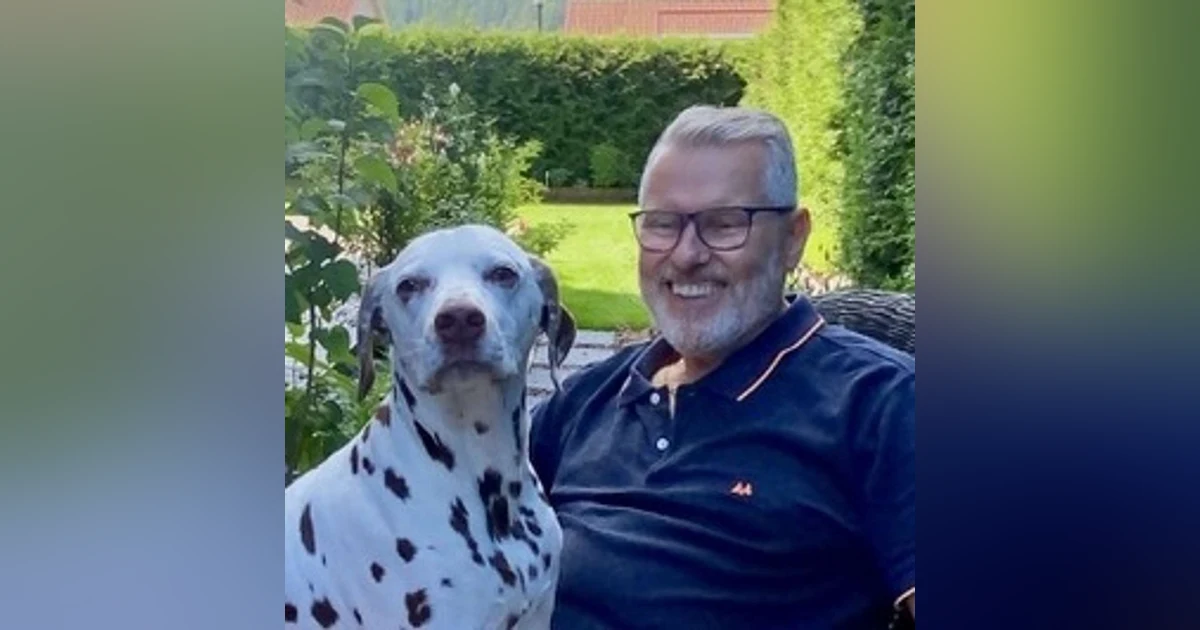

Can pool become an Olympic sport? In this fifth episode of Legends of the Cue, Jorgen Sandman offers one of the clearest explanations you will hear of where billiards sports stand in the Olympic movement, what still has to happen, and why the dream remains alive.
The episode begins with the continental structure of the WPA and why organizations like the EPBF, Asian federations, BCA, African associations, and Pan-American bodies became essential to pool’s global survival. Jorgen explains why the BCA’s role in North America has always been unusual, why USA Cue Sports may be an important step, and why a more complete North American or Americas-based federation could matter for the future.
From there, the conversation turns to the World Games, where billiards sports have long had a platform, and to the bigger question of Olympic inclusion. Jorgen breaks down the old limits of the Olympic Games—28 sports, 300 medals, and 10,000 athletes—and explains how newer thinking has opened the door for additional sports. He discusses Los Angeles 2028, Brisbane 2032, the importance of host-city shortlists, and the challenge of convincing Olympic committees that billiards deserves a place.
Jorgen also explains why multi-sport events matter so much: the World Games, Commonwealth Games, Asian Games, Pan American Games, South American Games, and others all help strengthen the case for Olympic inclusion. He gives special attention to Brisbane, Australia’s Neil Robertson factor, and the strategic question of whether pool, snooker, carom, or another discipline would have the best chance.
A vital episode for listeners following pool’s Olympic hopes, World Games billiards, WPA development, USA Cue Sports, and the future of international cue sports.
Give Allison, Mark & Mike some feedback via Text.
Follow our show and/or leave a review/rating on:
Our website: https://www.legendsofthecue.com
Apple Podcasts: https://podcasts.apple.com/us/podcast/legends-of-the-cue/id1820520463
Spotify: https://open.spotify.com/show/4Za0IMh2SeNaWEGUHaVcy1
Music by Lyrium.
About
"Legends of the Cue" is a cue sports history podcast featuring interviews with Hall of Fame members, world champions, and influential figures from across the world of cue sports—including pocket billiards, snooker, and carom disciplines such as three-cushion billiards. We highlight the people, places, and moments that have shaped the game—celebrating iconic players, memorable events, historic venues, and the brands that helped define generations of play. With a focus on the positive spirit of the sport, our goal is to create a rich, engaging, and timeless archive of stories that fans can enjoy now and for years to come.
Co-hosted by WPA and BCA Hall of Fame member Allison Fisher and Mosconi Cup player and captain Mark Wilson, Legends of the Cue brings these stories to life—told in the voices of the game’s greatest figures.
Join Allison, Mark and Mike Gonzalez for “Legends of the Cu...
Mike Gonzalez
Well, thank you for helping us and our listeners better understand what now constitutes pool under the WPA across the world. If you go a layer down then in this chart that I'm referring to, under the WPA, you've chosen to organize essentially around continental-based federations, correct?
Jorgen Sandman
That is correct. And I have already to a certain degree explained that that was the only way that we actually saw a possibility of having the WPA not only founded, but to be able to continue to exist. Because the national federations at the time did not have governmental funding, or a few did. But even the ones that did have couldn't really afford to go to meetings around the world. So the only way we could actually manage to put the WPA together and to keep it alive was to instead introduce the layer in between the national federations and the WPA itself, the continental federations. And you have to remember, of course, who did this, who came up with the idea. Yeah, the EPBF did. We did have a Continental Federation. We were the only ones that had it. A year after the Asian Pocket Billiard Union was founded, when Katsuho Fujima came back from that meeting in Stockholm in 1988. He uh had Japan and Chinese Taipei to go together and form the APBU, and they became a member then of the WPA. And I already explained how a BCA became the third one on board.
Mike Gonzalez
Yeah.
Jorgen Sandman
And when I resigned in 1999, then we covered the whole world. The last one in was the African DAAPA.
Allison Fisher
All Africa Pool Association?
Jorgen Sandman
Yeah. Yeah.
Mike Gonzalez
Yeah.
Jorgen Sandman
There you go.
Mike Gonzalez
Aaron Ross Powell Well, let me let me ask you a question that uh I don't think I know the answer to, but as you look across the six federations, is it fair to say that the BECA historically has probably been structured and operating differently than maybe the other continental federations?
Jorgen Sandman
That is true. And that is something that has been questioned throughout all of the years ever since BCA became a part of the WPA back in 1990, right? It has been uh questioned by the other members. How come an organization that mainly is uh a trade organization is sort of the official North American member of the WPA? I have already explained to you the sort of the historical background to that. It was either the BCA or we wouldn't have America, North America on board. So in the first instance, there was absolutely no way we could have done it any differently. And BCA being part of the WPA, no matter what the future bears in mind, I think it is very important for you and for everybody that will listen to this podcast to understand that the BCA has played a very important role in many ways. They did represent the industry, and the industry is the only avenue that we have had in order to get sponsoring for tournaments and whatever. It unfortunately still is our only way of getting the the money that we need in order to run tournaments and whatever. And yes, I'm very happy to say that finally there is a little bit of money coming into our sport, our side of the sport as well. Slowly but surely the price money is increasing. Last year we had in our WPA sanctioned events uh 11 and a half million dollars that was uh uh ending up in the pockets of the players. And yes, somebody will say, yeah, okay, Habl, we understand, right? But the truth of the matter is yes, Habel contributed contributed with a third, and uh uh then uh our traditional eight ball, nine ball, and and ten ball, also a third, and the rest is the rest of our disciplines and and whatever.
Mike Gonzalez
Yeah. So there's been a recent announcement about a new structure called USA Q Sports. Help put that in perspective for our listeners. Does that become the de facto federation now sitting with the WPA in place of BCA or or not?
Jorgen Sandman
What is going to be the end result of that is kind of I couldn't really say. But what I can say, and this is now first and foremost a personal opinion, and an opinion that I know I'm not the only one that is having, and that has to do. Okay, let's back up. BCA is a trade organization, and it has been mentioned a number of times that the BCA shouldn't be a member. We should have an organization that looks like the ACBS, as the Asian member is called today, the EPBF, the AAPA, the CPB, and so on. We should have one of those for North America too, and not the BCA. And actually at the recent uh General Assembly, it was uh it was uh up as a topic, but mainly a discussion kind of a thing. There has been no decision made. However, the BCA uh under uh Shane Tyree did make a promise to the WPA uh like two, three years ago, that he was very much in favor of putting up a new organization that would then be sort of the North American or become the North American member of the WPA. And he was telling us uh these couple of years then that uh oh yes, uh he is working on it, uh they are working on a constitution and whatever, and BCA uh is in on it all the way. They also want to see this kind of a development. And uh just before the General Assembly of the WPA, then uh he introduced the constitution to us, and the constitution told me personally that this is very much a USA organization. Shane was trying to explain to us all that uh, yeah, but uh we do have this USA in other sports, and then we have national federations that are attached to that USA, whatever it is, in other sports, and could be here too. But yeah, you have heard me saying already the USA sort of would then need to come out of there in my world in order for it to be a North American federation. And I think that that was definitely also what the WPA General Assembly said. That as a national organization, fine, we need a national organization in the United States. There is no doubt about it, okay? And that could be the USA Q Sports, okay? But it would then have to become a member of something else. And in the constitution of the USA Q Sports, it says that it is a member of the BCA. And the intention then was that the BCA should remain the WPA member. And that means that we have not yet seen the final solution to that. And the talks right now has been that eventually the CPB, which stands for Confederation Pan Americana de B, should perhaps be the Americas. Okay? And USAQ Sports and the CBSA, there is another CBSA in Canada, right? Yeah. They would become part of the CPB. And CPB is then the fifth. So there would be only five members of the WPA. And this has not yet been resolved, and that there is still probably a long way to go. And we don't, I don't know, and I don't think anybody knows. Is it going to be five? Is it going to remain six? And if it remains six, what is the solution to North America?
Mike Gonzalez
Right.
Jorgen Sandman
And as you know, geographically, North America is not just the United States and Canada. Actually, North America, if you would look at it on all of the various islands and whatever that are part of North America, North America is far bigger than South America when it comes to the amount of countries. Okay. So here I think our North American member over all of these years have done a little bit too little in order to develop and to include many more countries. In fact, countries like Nicaragua, Honduras, what else do you have in Central America? Panama, Nicaragua. Panama actually sort of is South America. But you have a lot of countries in what is referred to as Central America, right?
Allison Fisher
I've got here North America includes 23 sovereign countries.
Jorgen Sandman
See, and part of them would be, for instance, Nicaragua and Honduras that I mentioned, and Belize, Costa Rica, El Salvador, Guatemala, Honduras, Nepal. Guatemala was the one that I was looking for, of course.
Allison Fisher
And then all over the Caribbean.
Jorgen Sandman
Yeah, right. And all of these countries, or many of them, are part of the CPB, which in the WPA eyes actually is the member for South America, not for South and Central America. So there has been sort of a little bit of a of a dilemma, and it's easily easy to understand how come the countries then like Nicaragua, Honduras, Guatemala and so on are oriented towards South America because of Spanish, right? Right.
Allison Fisher
So Jürgen, we've seen that uh Q sports has been accepted into the world games. So what do you think about the potential for Q Sports to go into the Olympic Games? And if so, which Q sports do you think they would take?
Jorgen Sandman
Unfortunately, it's very much easier to ask those questions than to answer them. But yes, we are part of the World Games, and uh that was clear from the very beginning. That is one way of showcasing what we have to offer. And we continue to be part of the World Games, and it was recently decided by the International World Games Association that of course billiard sports will also be part of uh the World Games in 2029 when it takes place in Germany again. Okay. We don't yet know uh what disciplines uh they will allow us to have, but of course, we do hope that uh all three Keran Pool and Snoker will be in, and eventually then Pool will be allowed uh as in the last world games, both uh 10 ball and hay ball. Okay when it comes to the Olympic Games. If we go back in the day, we were always told that the bus is full. Sorry guys, and there was a you uh rule called 28, 310,000, and uh that stood for 28 sports, 300 medals and 10,000 athletes. Those are the limits of the Olympic, the summer Olympic Games, and the bus is full. We already have the 28 sports, the 300 medals, and the 10,000 athletes. There is no room for anything else. That was going to change slightly, I guess. First of all, with Jacques Rogue, the president that took over after Juan Antonio Samarange, and then even more so over Thomas Bach from Germany that became the next president again, and he opened the door for a new kind of a sinking, the sinking that allows uh all of the various sports to be part of the Olympic Games, and will be evaluated afterwards, and could eventually have to stand aside for one Olympic Games and instead allow something else to come in for one Games. Okay, and we have seen that in Paris recently, last year, uh two years ago now, right? Uh and uh we are most likely going to see we are going to see it in Los Angeles. There are going to be 36 sports, 28, 36 sports in Los Angeles. And Brisbane in 32, uh it was just recently advertised, actually, just a couple of days ago, it was advertised that uh Brisbane is not going to have as many as 36. It's going to be somewhat reduced, perhaps down to 34 or 33, or we don't know. We it was only said it was not going to have as many sports as in Los Angeles, okay? So that is the one side of the matter. Another one is uh the WCBS and its efforts, and one of the things where the WCBS perhaps have not been doing a very good job is you do apply to become part of the Olympic Games, and then you're told you don't have to apply again. You sort of automatically are part of the race, if you so wish. And that possibly would be true to a certain extent. But I also think that by approaching the various um hosts of the Olympic Games, you could learn over time to correct a couple of things that perhaps does not come across as too appealing to the IOC and the Olympic family when it comes to our sport. Things where we are not doing good enough. You could learn much more by being active at all times, and not only being active when the Olympic Games are going to take place in a place where you feel that here we have a great chance. Okay, like for instance, Los Angeles could be, right? If we think about mainly perhaps pool, right? So that is where perhaps the WCBS has not been doing its job in the best possible fashion. Aside from that, we are have met with the Brisbane Olympic Committee. We have, of course, told them that we are very keen on becoming part of the Olympic Games when they are going to take place in Brisbane in 1932. Um I don't know if you have heard the term shortlist before. But uh, what happens all the time when the Olympic Games are going to take place in a city? It has been decided that it will be Los Angeles in in uh what is it now, 28? It will be Brisbane in 32. Right now, uh there are a couple of cities competing for the 36 Games, right? Uh whenever it has been decided, let's let's focus on 32 and Brisbane, uh they will be approached by various sports that wants to be part. It could be 15 sports or 20, for what I know. And one of their tasks is to cut it down to what is referred to as a short list, okay? And normally that would be five sports. And when we met with the Brisbane Olympic Committee like last year, we were told that okay, uh they we could expect that they should form the decision on their short list sometime December, perhaps more likely January, February this year. And it hasn't yet been decided. The message that I read from a day or two ago where it was stated that Brisbane would contain less sports than Los Angeles, it was also said that the shortlist is to be expected in the fourth quarter of 26. So before then, we will not know if we at all are in the race. Okay. What have we done in order to impress on them that we should be part? Yeah, we have had a number of events in Australia, in Sydney, above all, of course, in Brisbane. Uh in order to sort of show our sport from its best possible angle. Okay, we are doing quite a lot in this, especially from our pool side, but to a certain degree, of course, also the WCBS. Last year we had the first attempt at becoming part of the Commonwealth's Games. Here, Ali, as a former world champion in Snooker, you know that the P WPBSA have been knocking on that door for ages. They wanted Snooker to be part of the Commonwealth Games. It has not been successful, unfortunately. Now, last year, Poole and the WCBS were knocking on the same door. And we were told that one way of introducing ourselves and giving ourselves a better opportunity of becoming part of the Commonwealth Games would be if we would organize the Commonwealth Championship periods. Okay so we did. And they said there are, if I remember correctly, 72 countries under the Commonwealth. If we could get, I think they said to us more than 32, that would be that that would be a message, okay? We had 36 on our first attempt. The next attempt will be this year in India, and we for sure hope that we will have at least 36. According to the Commonwealth Games Federation, they were actually there are two medals. So we get the two medals for the Commonwealth, but we are not yet officially part of it. And they said to us last year that that was really a very impressive manifestation of billiard sports, and yes, it looks very good for us to become part of the Commonwealth's games. Why is that of importance? All of these multiple sports events are of great importance. What do you know? What kind of games exists out there? Do you know about the Southeast Asian games, the Asian Games, the African games, the Pan American Games, the Commonwealth Games, the Bolivarian games, the Central American games, the South American games, and actually here this year, billiards for the first time is going to be in the South American Games. Okay. You have the universidad, you have the gymnasiad, you have there are many multiple sports events. And the more of those that we are part of is increasing our possibilities of. Getting into the Olympic Games. There is one that I left out, and that's the European Games. I don't know, Alison, if you have heard about the European Games. The reason why most of us have heard very little of the European Games is because it is used as a qualification event for the Olympic Games itself. So only the sports that already are on the Olympic or in the Olympic Games are competing. And it would be sort of a waste of time to apply to become par unless you first are in the Olympic Games. Okay? So here you have uh sort of uh catch 22, right?
Allison Fisher
Yeah, yeah.
Jorgen Sandman
But uh we are doing a tremendous job to get in to as many of those multiple sports events as possible. We sincerely hope that we will be part of the shortlist for the Brisbane Games, and if we are successful to be part of the shortlist, then the next question is they are going to narrow that down to three, to two, possibly only one in the end, that actually will then be introduced to the Brisbane Olympic Games. Okay, but you have to be on the shortlist first. What is our disadvantage in order to get that far? Normally a host city would be occupied uh on what are we good at? And unfortunately for us, we have Neil Roberts, and that I guess is in the eyes of the of the world, the sports world, that is what we have in Australia. We don't have the big names in Poole, we definitely do not have big names in Caron in Australia, so it would be uh Neil and the fact that he exists, that would help us possibly. And then we are coming on to the other half of your quest. If we are going to be getting actually a shot at being part of the Olympic Games, what discipline would it then be? The thing is, it isn't that easy. Yes, they would have a potential gold medalist in Neil Robertson, so that would be their angle eventually. And yes, they do have a fair number of relatively good pool players there too. So it's not that that they that they don't exist, it's just that they are not uh any any household names for the time being. Okay. But if and when uh the Brisbane Olympic Committee would decide that they would want billiards to be part of the Brisbane Olympic Games, then it needs to be approved by the IOC. And let's dream a little bit and say that okay, the IOC says, yeah, it's about time that we give uh our friends in billiard sports a shot at it too, to be able to show what they can do, right? Then we get the message, we get the nod, and who gets the nod? Yeah, the WCBS, the World Confederation of Billiard Sports, which is an autonomous organization with the IOC recognition. And it's up to the WCBS to decide what it's going to be. And whereas I do understand that most people that are listening to this are going to be, you know, very keen to hear that it will have to be pool and whatever. And personally, I would love to see that happening, and I would say that our chances are very big. And I would say so because pool is the one out of the three that is spread the most. It's one out of the three where you could have an Olympic champion coming out of, I don't know, 30 countries or something like it today. Did you know that we under the WPA, in our sanctioned events last year, had participation out of 128 countries? Wow. Many of the sports that are on the Olympic program can only dream of having that. And that is only a humble beginning. There are 206 National Olympic committees in the world, and unfortunately, I'm starting to get a little bit old.
Allison Fisher
But um There's plenty of life left in you yet. We got you for another couple of decades, Jurgen. Thank you for listening to another episode of Legends of the Cube. If you like what you hear, wherever you listen to your podcast, including Apple and Spotify, please follow, subscribe, and spread the word. Give our podcast a five-star rating and share your thoughts. Visit our website and support our full history project. Until our next golden break with more Legends of the Cube, salon everybody.
Administrator and Instructor
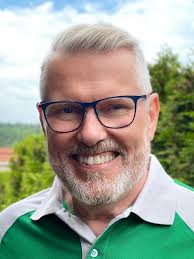
Jorgen Sandman is one of the most influential and enduring figures in the modern history of pool and billiards sports. Across more than five decades, he has served the game as a player, coach, instructor, room operator, promoter, author, federation leader, international administrator, and Olympic advocate. Few people have touched as many parts of the sport, and even fewer have done so with the same combination of humility, persistence, imagination, and service.
Born in Sundsvall, Sweden, Jorgen grew up in a sports-minded environment where competition, discipline, and teamwork were part of daily life. His father had played ice hockey, and Jorgen learned to skate almost before he could walk. Hockey became his first great sporting passion, and the lessons he learned on the ice stayed with him for life. One of the earliest and most important was the value of fundamentals. His hockey coach famously insisted that young players first learn how to skate before they were allowed to focus on sticks, pucks, and scoring goals. That approach later became central to the way Jorgen taught pool: learn the foundation first, then build the game.
As a youngster, Jorgen tried many sports. Hockey, volleyball, speed skating, football, table tennis, and other activities helped shape his coordination, competitiveness, and understanding of athletic development. He would later become a strong advocate for young people experiencing multiple sports rather than specializing too early. In his view, broad athletic experience develops better motor skills, better instincts, and a greate… Read More