

 Apple Podcasts
 Spotify
 Jorgen Sandman - Part 6 (A Pool Player with a Dream: on Survival, Service, and Legacy)
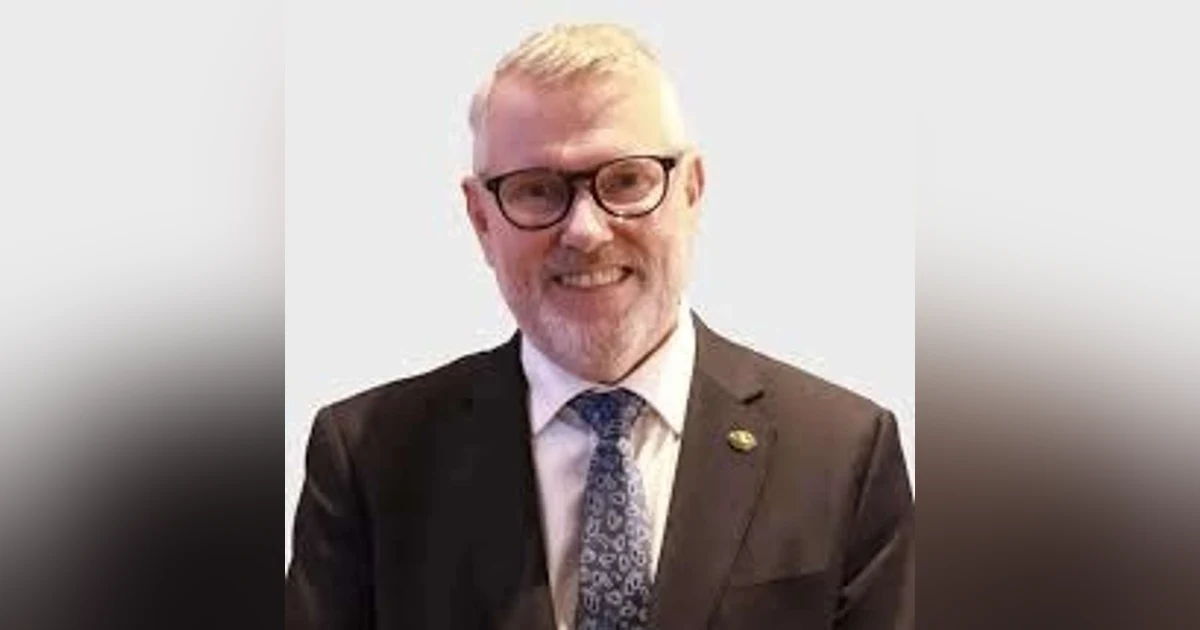

The final chapter of Jorgen Sandman’s Legends of the Cue interview brings together the personal and the historic: a lifetime of service to pool, a near-death experience, a renewed commitment to the WPA, and a simple answer to how he wants to be remembered—“as another pool player, with a dream.”
Jorgen continues the Olympic conversation by explaining why pool may deserve the first true chance if billiards sports are admitted to the Games. He points to pool’s global reach, the possibility of champions from dozens of countries, and the WPA’s sanctioned participation from 128 countries as evidence that cue sports have far more international depth than many people realize.
The episode then turns deeply personal. Jorgen recounts the devastating 2020 landslide in Norway that destroyed his home, moved it hundreds of meters, and took lives around him. He and his wife survived, losing nearly everything but choosing to stay in the village they loved. The global cue sports family, including the EPBF and WPA, rallied around them—an act of support that reflected the respect Jorgen had earned across decades.
As the conversation closes, Jorgen discusses the current WPA, the leadership of Ishaun Singh, the importance of Predator’s support during difficult times, and why he believes the organization is again doing meaningful work for the sport. In Alli’s Rapid Rack, he reflects on his first cue, ball colors, the best advice he ever received, players he would pay to watch, Olympic discipline choices, and the future of pool.
This is a fitting conclusion for fans of Jorgen Sandman, WPA history, pool governance, Olympic cue sports, Predator, international billiards, and the people whose dreams shaped the game.
Give Allison, Mark & Mike some feedback via Text.
Follow our show and/or leave a review/rating on:
Our website: https://www.legendsofthecue.com
Apple Podcasts: https://podcasts.apple.com/us/podcast/legends-of-the-cue/id1820520463
Spotify: https://open.spotify.com/show/4Za0IMh2SeNaWEGUHaVcy1
Music by Lyrium.
About
"Legends of the Cue" is a cue sports history podcast featuring interviews with Hall of Fame members, world champions, and influential figures from across the world of cue sports—including pocket billiards, snooker, and carom disciplines such as three-cushion billiards. We highlight the people, places, and moments that have shaped the game—celebrating iconic players, memorable events, historic venues, and the brands that helped define generations of play. With a focus on the positive spirit of the sport, our goal is to create a rich, engaging, and timeless archive of stories that fans can enjoy now and for years to come.
Co-hosted by WPA and BCA Hall of Fame member Allison Fisher and Mosconi Cup player and captain Mark Wilson, Legends of the Cue brings these stories to life—told in the voices of the game’s greatest figures.
Join Allison, Mark and Mike Gonzalez for “Legends of the Cu...
Jorgen Sandman
I am together with the board of the WPA, we are definitely very keen on adding countries and territories to the 128 we had last year. So that is one side of it. Never mind, back to the WCBS decision. If we are going to be part of the Brisbane Olympic Games, I don't think it will be Kerom. And that has to do with the fact that Kerom is virtually unknown in Australia. That isn't correct, of course, but you know what I'm saying, right?
Allison Fisher
What about English billiards? English billiards. That's very well known in Australia.
Jorgen Sandman
You mean uh the snooker English billiards?
Allison Fisher
Yes.
Jorgen Sandman
The three-ball game. That in theory could be part. And actually, there you have had over the years a number of world champions, as far as I know, coming out of Australia. Right now I don't know where we stand with the English billiards. There is a downside to it though, and that is English billiards is really very small in the world.
Allison Fisher
Yes.
Jorgen Sandman
So no, I don't think that that will be an option at all. So it would have to be a pool discipline or a snowy discipline, that is what uh would be my my guess, okay? And what to me would be perhaps more important than anything else that is that we do get in and whatever discipline it will be, we will present ourselves in such a fashion that the IOC will tell itself, oh we need these guys. We want them to be part in 36 too. Okay. But if you do get a shot at it, make sure that you do a good job at it. That is far more important than what discipline is going to be included. Okay. So most people, most of our listeners probably will say, yeah, it's going to be either one of our traditional 8.9 ball, 10 ball games, or it will be hay ball. Okay, and everybody or many of us would say, let's hope it will be 8.9 ball or 10 ball. And to me, I'm not all that occupied with what it will be. That it will be, that is far more important to me than anything else. Yeah, yeah.
Mike Gonzalez
Jorgen, just kind of putting a cap on this discussion about Olympic participation, you you spent a lifetime trying to give Pool the structure, credibility, and global standing that uh great sports need. Q sports being possibly represented in the Olympic Games, at some point as that happens, what would that mean to you personally?
Jorgen Sandman
Yeah, good question. Uh as you already pointed it out, it has occupied my mind for quite a few years. Uh I was introduced uh on one occasion over there, where you are all at home as uh, you know, the guy with the big dream and whatever. And yes, that is true. Yeah, it would definitely be, and I hope I will be around when that uh day comes, and that I will be allowed to go there and see it happening. That would be uh a fantastic thing for me personally. And uh, please do remember, very often people are saying, or I have seen it in writing a number of times that uh Jorgen Sandman and whatever, he is the one that did this and that and whatnot. I was not alone. Of course I wasn't. Okay. There were other people in yes, my name may have been seen more often than most of the others there, but it has been a big effort on many people there, their hands, right? And I am happy that I have uh been able to contribute to our sport the way I have. We do have the Olympic recognition. Nobody's going to take that away from us unless we manage to do that ourselves.
Mike Gonzalez
Yeah.
Jorgen Sandman
And if we do get into the Olympic Games, what will it mean? Aside from for me personally, a dream that is coming true. It will mean that the national federations are around the world will have a lot more money to work with because they are going to get supported in a completely different fashion from the National Sports Council and National Olympic Committees and whatever. So it's going to make it a tremendous uh it will have a tremendous impact on on all of us. Uh the sports, the industry behind it, and and whatever. So let's just cross our fingers and and hope that uh one day it's going to become true.
Mike Gonzalez
Yeah. Well, and in many other ways, your contributions to the sport have been recognized by many. So even short of having this as a medal sport in the Olympics, you've been uh you've been recognized with a golden pin by the DBU, you've been recognized with horst with the BCA President's Award back in 1991 for your contributions. The the Bowling and Billiard Institute of America Service Award was given to you in in 1998, but you've received an honorary doctorate from the National University for Physical Education and Sports in Ukraine in 2001, the EPBF Award and many others. We probably couldn't have the time to go down through the list. So, I mean, that recognition has come. I think others in the sport and outside the sport have recognized your lifetime contributions to the game. I think in one other way, uh, that recognition became very apparent when you and your family suffered a painful personal loss event with the landslides that occurred in in your home country back in uh the 2021 timeframe. And what happened? The WPA and the EPBF as as organizations rallied the Q Sports world around Jurgen and his family in a crowdfunding effort to help you literally dig out of that disaster. Tell us a little bit about that.
Jorgen Sandman
It was uh the 30th of December 2020. That's a date that uh I will never forget, and many people where I live, because I still live in the same village. It's just that we have moved up on the mountain. So we are not down in the valley any longer where we used to be. Uh, it was uh a huge landslide, um some 1.2 million cubic of dirt disappeared from underneath us, okay. The whole area is big enough for 70 sock uh soccer fields, okay, that more or less just vanished. Our house was uh moved uh without us knowing it. Sorry for laughing, it wasn't maybe that fun. Was moving uh 400 meters before it was uh falling apart. Okay. We were living uh on the ground floor uh in a building uh that had uh uh a ground floor, uh a second and the third floor, or first and the second. I don't know how you do it in the United States. Uh and uh there were actually two houses. They looked the same, built the same way, that moved along together the 400 meters. The other house was the first. Uh we were still sort of attached to each other, so we were sliding on I don't know what to call it, like uh an ice uh structure, let's call it that. So the two houses are floating along with the land masses, 400 meters, and all of a sudden there is something that stops the houses, and they were not built, you know, to be standing that kind of a thing. So they fell over. And whereas we on the in the one second are standing indoors trying to figure out what the heck is going on out there. I was convinced there is somebody that is uh trying to break in. So that was my take on it. So I was definitely not scared, on the contrary, I was getting ready for uh some fighting here, okay. And when the house fell apart, my comment, I was shouting to my wife that okay for breaking in, but tearing the whole house down. That is a little bit too much. And so I was standing there, you know, trying to throw out everything that came down from upstairs, right? And uh all of a sudden I was knocked down, and I didn't realize that myself until uh my wife pulled me out of there. Thankfully enough, I was on my back and she got hold of my left arm. Fortunate because uh turned out that my collarbone that nowadays is a piece of metal was uh shattered. I couldn't feel the pain, or I was so angry. So one can laugh about it uh afterwards. Um on the ground floor in the two houses, there were eight people at home. My wife and I are the only survivors. In the two houses altogether, there were sixteen people at home. 17, sorry, and eight are alive. Yes, we lost sort of everything we had, but we were allowed to keep our lives, therefore I think you agree with me that that's that's an easy choice, right?
Allison Fisher
Yeah, yeah.
Jorgen Sandman
We are very, very fortunate. I am very fortunate to be able to have this conversation with you today. Yeah, it was a huge disaster. Today it has this whole area has been turned into a recreational park to walk through and to sit down, and there is also uh uh a few things that has been put there that helps uh telling the story of what happened back then. We just had uh recently the five-year I don't know if you would call it an anniversary, definitely not a celebration, right? But a memory commemoration, yeah, cool, yeah. And uh it was uh then uh the sort of the official opening of this park. So it has taken five years to turn that area into a very nice uh place, okay. Um so yes, uh the fundraiser through the EPBF and the WPA did provide us with uh quite a lot of money, and as it turned out, we ended up being fully covered by insurance. But that is one thing. Another thing is to you know buy a new place and build a new house and and whatever. And I promised back then that uh every penny of the money that was collected uh for us were going to go into our new house, and that is also what has happened. And now we are having and we are overlooking the area where the disaster did strike us back then, and very important it is for me to be able to say neither me nor my wife ever lost a second of sleep. The first thing we told ourselves when all of a sudden we didn't have the walls or the roof on top of our head. By the way, the snow came that morning and the wind was blowing, and I was having a couple of briefs on, and that was it. And my wife was also having a top, but uh that was it. It was freezing, and the one thing we said to each other was if the rescue comes first, then we leave what is behind us, and we look forward. And uh another thing we told ourselves, this is a beautiful spot to be living. So we will remain in this village. Many actually moved out, they are not part of our village any longer, but for us that was never a question. Yeah, we are going to stay here, we love it here, and we have uh now a very beautiful new house and and whatever. So we don't think about that disaster very much, I can tell you.
Mike Gonzalez
What a story, what a story. Okay, so before we put a bow on it, as I like to say, we have a couple of segments, one Alli's rapid rack, and then the other is just the final three questions we have. Is there anything else that we didn't cover that you wanted to touch on? Any people you'd like to remember or recognize, or just anything in general that you want to make sure is part of this interview?
Jorgen Sandman
I have mentioned, I guess, a number of people that all of them uh were part of uh this whole journey that for me then started in the beginning of the 70s, really. I think most of the important ones, what I would want to say for everybody to hear, that is if the WPA for a number of years was not a very popular organization, there is one thing I can assure you, and that is that the WPA is working very hard and very good for the time being. So if we weren't doing a good job for a while, that is past right now. We need more people, we need more money. There are so many things that we are pursuing for the time being, and we are simply not enough, but we are doing a heck of a job. And I think that uh if you're being honest, all of these uh when when the WPA was uh not referred to in a very good fashion in social media and whatever, you haven't seen very much of that lately, I'm sure. Okay.
Allison Fisher
It's definitely changed. I you can see it on social media, and I think with Ishaun taking uh helm as a president, he has really good intentions, and I think you've got a great board there now, and you can see a lot of good changes coming. So I think just to follow it on social media is a good thing now, just to see what's going on.
Jorgen Sandman
The the big difference is it is uh full board with people that are actually carrying out various tasks, having their own portfolios and and so on. I am currently the sports director. And that is actually where I started with the WPA back in the day as the white as the sports director and vice president I was back then, and then I became eventually the president and whatever, then I was gone, and now I'm uh back and am the sports director, okay? Um so I don't think of course we could go on for forever. And probably I have forgotten the one or other that absolutely should be mentioned, and Ishaun Singh would definitely be one of them, and all of my colleagues on the WPA board currently, of course. And there are other people out there too, okay. One thing that I ought to mention is the support that we have had from Predator is truly important, okay? And that needs to be said, okay? And especially if we go back, let's say, two years in time when we had the rift between the between match from and the WPA and whatever, Predator stayed and believed in the WPA. And without that support back then and their support today, many of the things that we are now trying to achieve would be toothless. Okay. So that needs to be mentioned. They have played a very important role in giving us the chance that we needed in order to get our work back on board where it should be. Okay.
Mike Gonzalez
Okay. All right, good. So that's okay. Jorgen, we're going to close out with a segment that we've just added to the program. We call it Alli's Rapid Rack. Of course, the intent would be that it's a quick question answer to it. Sometimes it doesn't work out that way, but uh Ali, why don't you take it away?
Allison Fisher
Okie doke, Jurgen. What was the first queue you ever owned?
Jorgen Sandman
Uh it was um I paid the translated into Date's value probably around three dollars for it. Don't ask me the name of it. I have no idea. I kept it for two years, I think it was, and then, believe it or not, I sold it.
Mike Gonzalez
I don't know how to manage that. Yes, it was. So the answer was a cheap one.
Allison Fisher
Yeah.
Mike Gonzalez
Yeah, definitely was.
Allison Fisher
Next question. One rule in pool that you would change.
Jorgen Sandman
That's a tough one. You do know that we do have a five-year moratorium rules, so come back in five years.
Allison Fisher
There we go.
Mike Gonzalez
Keep the ball colors the same. How about it?
Allison Fisher
Yeah, there you go.
Jorgen Sandman
Okay, the ball colors, yeah. That is you have seen quite a fair number of sets. And I don't know how familiar you are. I don't know, Mark, you're not uh active as a player necessarily any longer. But Alison probably has over the years bought not one set of balls, lots of sets of balls. And why is that? Yeah, because as a professional athlete, if there is a next tournament coming up and you know it's going to be played with these balls, you need to get hold of them so you can practice with them. So that you don't end up uh who was it that said that? Picking up uh one of the object balls instead of the cue ball or whatever it might be.
Mike Gonzalez
Oh, nobody does that. Nobody does that.
Allison Fisher
Pink, purple, and all that jazz.
Mike Gonzalez
Yeah, yeah.
Allison Fisher
Like the orange five ball myself. But anyway. I have a story for you there. Go on.
Jorgen Sandman
Or if I'm allowed to say so, but uh I was asking a company that is producing very good balls uh like a couple of years ago, why is it that uh this set of balls are called uh sort of the TV set of balls? What kind of research is behind that? And the answer I got was research? No. It was simply a company that was asking for that colour combination. Okay, so they weren't aware of any research done on it. And then I said, yeah, unfortunately, I don't think that that new set is any better on TV, because when I'm sitting in in the bleach at the venue, I cannot differentiate between the balls, and it must be even more difficult on TV. I know it is. So uh but that's what was kind of a neat thing to research. Yeah.
Allison Fisher
Okay, next one. Best well, I think we touched on this earlier, one of your stories, but best advice you ever received learning by doing That's right. You got it right. And then how about this one? The worst advice you ever received following my heart attack when I withdrew from international the international side of media sports.
Jorgen Sandman
That is one thing that was very tough for me, and yes, it was my own decision to do that, and it goes back to the fact that I did have a young family to support, and I wasn't making a penny out of the job that I was doing. I needed to make a living in order to support my family, and I couldn't do both. I understood that because I was working a little bit too hard. So it was my own decision, but I would suggest to you that there were a couple of supporters of that idea that I should stop. Okay.
Allison Fisher
How about Jürgen Player? You would pay to watch in their prime.
Jorgen Sandman
I do have, of course, my uh favourites, and there there are quite a few over the years. Uh okay. And one of the first ones that uh that uh I was uh allowed to work with was Nick Warner, and of course you had the Efren Reyes and the Bustamantes and whatever you have uh today the and Josh Rashid there is the Federgorst and uh there are a fair number of players and those were the men and then we have the women and uh there we have a huge number of players too. That would be kind of an impossible thing. But I would have wanted to see one of those matches between Nick Warner and Efren Reyes back in the day. That would have been fun.
Allison Fisher
That'll be a good one. Here's a here's another one. Kerom, Snooker, or Paul, which is the hardest?
Jorgen Sandman
In order to score one point, easy, it's Keram, okay. In order to learn how to play the game. Um it doesn't really matter. Uh you have heard the story about the 10,000 hours, I'm sure. And I would suggest to you if you want to become a top-notch player in Carampool or Snooker, you go for the 10,000 hours. So it doesn't make a difference there. There are no shortcuts.
Allison Fisher
No. If the Olympics allowed only one discipline, what should it be?
Jorgen Sandman
Oh, that puts you on a spot. A pool discipline. Okay. And I think I I think I have said so already. I think that actually pool deserves that opportunity. If when the day comes, we can put up the show that I would want to see. That's another story, but I think we deserve a shot at it. Yes.
Allison Fisher
If you had to sell pool to the IOC in one sentence, what would you say?
Mike Gonzalez
This is your elevator speech, as we call it.
Jorgen Sandman
I would say that our sport is a professional sport where we are striving very hard towards gender equality and give us the chance and we will have as many men as we will have women there, and they will all show our sport in the best possible light, and you will understand what I'm talking about giving us that chance one word to describe the future of poor one word an L in the world very good.
Allison Fisher
What still gives you goosebumps after all these years?
Jorgen Sandman
What I get too little of, even though I am at so many of the very highest best tournaments around the world, I'm fortunate to be allowed to travel to many of these events. It's actually my task as a sports director to always be there for a world championship. And still, when I am there, I get to see too little. I cannot get enough of watching good matches.
Allison Fisher
It's like being a poor room owner. You don't get to play.
Mike Gonzalez
Yeah, exactly right. Exactly right. Okay, is that it, Allie?
Allison Fisher
Yes, that's our 10 questions.
Mike Gonzalez
Thank you, Jurgen. Terrific. Well, let's go to our three final questions. And so, Jorgen, we've had a chance to ask these three questions of each of our 025 or so guests. And I'm gonna let uh Mark Wilson ask the first question.
Mark Wilson
Okay, Jorgen, if you knew when you were 20 years old what you know now, what would you have done differently?
Jorgen Sandman
It has been my whole life. I hope to be able to continue for many years to come. Let's see about that. But uh I have never had any regrets about what I what I have been doing, and uh it has brought me around the world, it has given me so many friends around the world. Yes, I didn't turn a millionaire for what I did, but I did in a sense, because I know a million people or more.
Mike Gonzalez
Terrific. Uh so the second question, Jurgen, was sort of conceived with a player in mind because the question is really about uh giving you one career mulligan or one shot to do over. So let's just give you one do-over of anything that you happen to do in your career. Can you think of something you've done that you'd probably like another whack at it?
Jorgen Sandman
That's a tough one. That is a tough one. I think that I have you've heard me saying before that uh an idea is nothing until you put it in place. And actually most of the ideas that I did try to realize did turn out to be relatively good or even very good. I have a tough time to come up with the one thing that was a total failure. I don't know what that could have been really. I have been fortunate.
Mike Gonzalez
I think. Fair enough.
Allison Fisher
I like that. And then the last question is your final question, how would you like to be remembered?
Jorgen Sandman
That's another pool player. With a dream, though.
Allison Fisher
One who followed through on those dreams, right?
Jorgen Sandman
I did as good as I could.
Allison Fisher
Very good.
Mike Gonzalez
Perfect way to end this, Jurgen. Uh, and I'll start by just thanking you on behalf of all of us for your time today and your uh efforts in relating your story, not so much just your life story, but I think you did a lot to educate our listeners on the sport of pool, how it's governed, how it's managed, a little glimpse into the future. For that, we thank you. Mark Wilson?
Mark Wilson
The one thing that really comes out is your passion, and our sport desper desperately needs more Jorgen's handmans. So thank you.
Allison Fisher
And I just want to thank you so much again for your time, but your contribution to the sport is second to none. And you've done so much, and I think it's really important to tell your story because a lot of people, obviously, the youth of today who play the game and compete would have no idea what you've done. So thank you for enlightening us and uh allowing us your time and allowing everyone else to hear your story. Thank you, Jurgen.
Jorgen Sandman
To have the three of you to take your time to be listening to me, that is already a big reward. So thank you very much for allowing me to be part of Legends of the Q. I am really truly very honored.
Allison Fisher
Thank you. Thank you for listening to another episode of Legends of the Cube. If you like what you hear, wherever you listen to your podcast, including Apple and Spotify, please follow, subscribe, and spread the word. Give our podcast a five-star rating and share your thoughts. Visit our website and support our full history project. Until our next golden break with more Legends of the Cube. So long, everybody.
Administrator and Instructor
Jorgen Sandman is one of the most influential and enduring figures in the modern history of pool and billiards sports. Across more than five decades, he has served the game as a player, coach, instructor, room operator, promoter, author, federation leader, international administrator, and Olympic advocate. Few people have touched as many parts of the sport, and even fewer have done so with the same combination of humility, persistence, imagination, and service.
Born in Sundsvall, Sweden, Jorgen grew up in a sports-minded environment where competition, discipline, and teamwork were part of daily life. His father had played ice hockey, and Jorgen learned to skate almost before he could walk. Hockey became his first great sporting passion, and the lessons he learned on the ice stayed with him for life. One of the earliest and most important was the value of fundamentals. His hockey coach famously insisted that young players first learn how to skate before they were allowed to focus on sticks, pucks, and scoring goals. That approach later became central to the way Jorgen taught pool: learn the foundation first, then build the game.
As a youngster, Jorgen tried many sports. Hockey, volleyball, speed skating, football, table tennis, and other activities helped shape his coordination, competitiveness, and understanding of athletic development. He would later become a strong advocate for young people experiencing multiple sports rather than specializing too early. In his view, broad athletic experience develops better motor skills, better instincts, and a greate… Read More