

 Apple Podcasts
 Spotify
 Keith McCready - Part 1 (The Early Hustle: From Elmhurst to El Diablo)
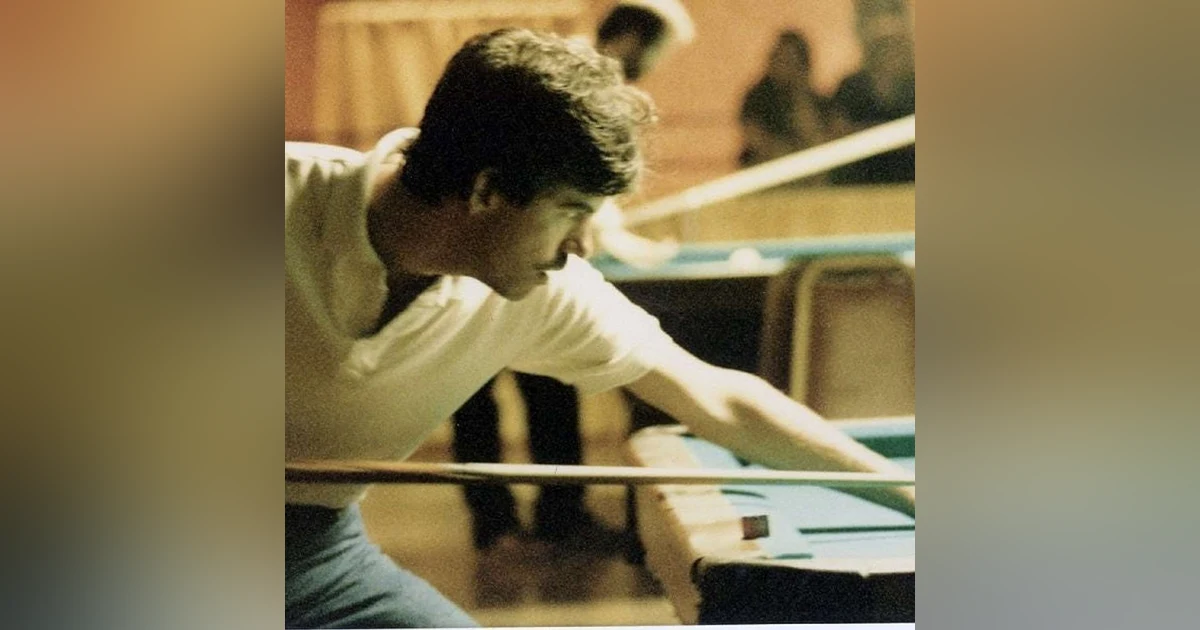

In this first installment of our Legends of the Cue four-part series, hosts Mike Gonzalez, Allison Fisher, and Mark Wilson sit down with one of pool’s most electrifying personalities—Keith McCready—to trace the raw, unfiltered beginnings of a life that could only be described as cinematic.
Born in Elmhurst, Illinois, and raised under the California sun, Keith’s early years were anything but ordinary. By age ten, while most kids were trading baseball cards, he was already gambling, running pool tables, and learning the delicate art of survival. After losing his mother at a young age, Keith found refuge in the game—and in the smoky glow of California pool halls where legends like Louis Lemke and “Cowboy” Jimmy Moore tested his growing talent.
Adopted at 13 by Bob Wallace, the owner of a local poolroom, Keith’s new family gave him both stability and access to the best action on the West Coast. By fifteen, he was on the road, matching up against future world champions, and earning a nickname that captured his fearless spirit—El Diablo. His stories of those days—standing on Coke crates to reach the table, running 56 balls at age twelve, winning thousands at the racetrack before eighth grade, and learning from icons like Ronnie Allen—paint the portrait of a natural-born competitor with an edge as sharp as his stroke.
This episode captures the roots of a player whose talent, charisma, and streetwise grit later caught the eye of none other than Martin Scorsese, who cast him as Grady Seasons in The Color of Money. Join us as Keith McCready takes us back to where it all began—before the fame, before the film—when the hustle, the game, and the gamble were one and the same.
🎱 A story only Keith could tell, and only pool could create.
Give Allison, Mark & Mike some feedback via Text.
Follow our show and/or leave a review/rating on:
Our website: https://www.legendsofthecue.com
Apple Podcasts: https://podcasts.apple.com/us/podcast/legends-of-the-cue/id1820520463
Spotify: https://open.spotify.com/show/4Za0IMh2SeNaWEGUHaVcy1
Music by Lyrium.
About
"Legends of the Cue" is a cue sports history podcast featuring interviews with Hall of Fame members, world champions, and influential figures from across the world of cue sports—including pocket billiards, snooker, and carom disciplines such as three-cushion billiards. We highlight the people, places, and moments that have shaped the game—celebrating iconic players, memorable events, historic venues, and the brands that helped define generations of play. With a focus on the positive spirit of the sport, our goal is to create a rich, engaging, and timeless archive of stories that fans can enjoy now and for years to come.
Co-hosted by WPA and BCA Hall of Fame member Allison Fisher and Mosconi Cup player and captain Mark Wilson, Legends of the Cue brings these stories to life—told in the voices of the game’s greatest figures.
Join Allison, Mark and Mike Gonzalez for “Legends of the Cu...
Mike Gonzalez
We're looking forward to telling your story and uh you know had a little chance to talk uh to Jenny, your wife yesterday to kind of get us all prepped. And uh one thing she mentioned to me, because we noticed that you were born in Elmhurst, Illinois. Of course, when we tell your story, we're gonna go all the way back to the beginning. I too lived in Elmhurst, Illinois.
Keith McCready
You did? Wow. Okay. Well, I was like four or five years old when I when we decided to uh come out to California, you know. So, you know, California's so more or less been my raising, but but actually born, I was in Elmhurst.
Mike Gonzalez
Yeah, were you in Elmhurst Hospital, do you know?
Keith McCready
I was I was born in Elmhurst Hospital.
Mike Gonzalez
There you go.
Keith McCready
Uh and I actually got the birth certificate for that.
Mike Gonzalez
And probably not that. Too many memories from Elmhurst, though. You were too young.
Keith McCready
Not really. Yeah. It's a lot of it was in California.
Mike Gonzalez
Well, what was going on in Elmhurst, Illinois, and then what took your family to Southern California?
Keith McCready
Elmhurst, you know, my dad and my mom were together, and um and then my my dad got a job out there in LA with text drawn paints. And so we moved the whole family there. And and then after that, you know, he he worked all the time, he had a great job. He was making a hundred and some thousand a year, which back then, you know, was pretty good money.
Mike Gonzalez
Sure was.
Keith McCready
And and then as time went on, you know, things got a little bit rougher, you know, relationships and stuff like that with my mom and dad. And then my mom got sick, and uh and she died when I was my brother tried to tell me I was eight, but I thought I was ten.
Mike Gonzalez
Okay.
Keith McCready
But yeah, it it and then it's it's sort of everything sort of snowballed from there.
Mike Gonzalez
Yeah.
Keith McCready
Um, you know, in and out of school, you know, and dealing with uh, you know, because at that time I started, you know, missing days of school and you know, and stuff like that, and and actually gambling and stuff when I was 10 and 11. You know, in school and stuff.
Mike Gonzalez
And you had you you had a couple older brothers, did you feel like they were kind of looking out for you?
Keith McCready
Well, I mean, y you know, they were older, but it it was they sort of did their own thing and I did mine. And you know, I I enjoyed, you know, the the excitement of it all, gambling. And you know, we used to do it, yeah, we used to pitch coins, play cards and and pool, and but the pool the pool started actually when I was probably about seven. You know, I was playing carams at the park and rec, and that's how it all started with me and pool. And then my dad started taking me down to the family billiard center, Lindbergh Family Billiards, and and from there it it started. Actually, you know who was in there when when I first started going? Louis Limke. And and you know, and and Louie was a straight pool player. And you know, Louie was running ninety and a hundred balls, you know, back then. And uh he had real long hair down down to his you know, past his shoulders and it was ac it it was almost actually down to his butt. And uh but then, you know, after that we just uh it just you know started doing weird things, you know. I missed a bunch of days of school and then the truant officers came in and and my mother, you know, just passed away and stuff like that. And so and then I started missing those days in school and so they got leery of me. And uh I had to, you know, I was in and out of juvenile hall and and uh and then finally the owner of Bob's Family Billiards, he was over there on Beach and Ball. It was about three miles from the pool room that I, you know, went into with my father all the time. And they adopted me when I was, I think, you know, like twelve or thirteen, and and he owned a pool room. He owned Bob's.
Mike Gonzalez
This is Bob Wallace you're talking about.
Keith McCready
Yes, Bob Wallace.
Mike Gonzalez
Yeah.
Keith McCready
And and everything started from there. I play actually played when I was twelve, I played uh Joe Balsas and Jimmy Moore in a in an exhibition, which was pretty cool back then. And you know, and running I run a 37 and a 56 playing straight pool. I only got three innings against whatchamacallit, uh Cowboy Jimmy Moore.
Mike Gonzalez
Okay.
Keith McCready
Yeah, Cowboy Jimmy Moore. No, I mean Joe Balsas. Yeah, Joe Joe Balses didn't want you know, he Jimmy Moore, you know, he didn't want to he didn't want to lose to me either, so he he ran like 70-some balls on me, and they just didn't want to get beat. You know, you could see it that uh they didn't want to get beat, you know.
Mike Gonzalez
But yeah, so how old were you?
Allison Fisher
I was gonna say, how old were you then? You seem I was twelve. Twelve years old.
Mike Gonzalez
And you yeah, and you ran how many, Keith?
Keith McCready
Thirty-seven and and a fifty-six.
Mike Gonzalez
And a fifty-six.
Keith McCready
Yeah, but and I wasn't real I wasn't a I wasn't a real straight pool player, you know, I was more of a nine ball player at that time. And but, you know, but that was just that was what, you know, they played.
Mike Gonzalez
Right.
Keith McCready
You know, they mean, you know, they they uh but I mean still running that and I was nervous, you know, you know, playing them and you know, heart was pumping and beating and but still does you know that it it yeah, it you know when you get in the when you get in the uh the realm of when you're go getting ready to go to the pit area or or I like to use the word combat, you know, everything changes. You know, Alison, I'm sure you can you can probably vouch for that, you know. You know, because when you have when you have uh I guess you could say two gunfighters or when you have that aura about you that they belong to you. You just you know when you're up there and you're in that zone, you don't you're not you don't it it doesn't even really matter who you're playing. You don't even really see them, do you? You don't really pay attention to them and I and a lot of times, you know, maybe I was numb a little bit, but I it didn't matter, you know, I just it was more it was more satisfying when you got up there and you'd be a a good player, say eleven to four, eleven to three, and and uh stuff like that compared, you know, a lot of times, you know, a lot of my matches would go 11, 10, 11, 9, and I'd go for 0 for 8 on the break or 01 for 9 on the break. And that happened for I don't know how many years. And I mean that's more or less what sort of held held me back in tournaments was my break. I mean, as far as shots for shots and pound for pound, I could make the shots with most any of them, you know. But you know, as as you know, Allison, the break's pretty important. Um but you know, then when you go to the when you get to a gambling situation and you're not racing for that money and you know you got a little bit of time, that was my stronger suit as far as, you know, I knew if I got my my my guy past the fifth or sixth hour, they usually belong to me, you know, because they couldn't, they couldn't, you know, they they couldn't fade those gears. You know, everybody has certain gears and you know, certain pressures that they can put on their opponents. And when you can apply that pressure to where, you know, there was times where I played, you know, 18, 20 hours and missed maybe one or two balls.
Mike Gonzalez
Wow.
Keith McCready
And and and playing that long a time, you know, and only miss one or two. I mean, it's pretty strong. That's crazy. And, you know, and I'm when I'm running five, six, sevens, and eights and all those interims, you know, and a lot of times, you know, you your opponents would break down, you know, and and they would, you know, they wouldn't they'd they would get one dose of it and they would never be back. It was just, you know, if they got if they got that one dose, they just the games would have to change, you know, and and at that time, you know, I was having to spot all them champions a seven ball, you know, and what and and that was on big tables where all my damage I was doing was on four by edge and bar tables, you know, and you know, with a bigger cue ball, and you know, and then you gotta change and play the same games on a four and a half by nine. Well the games got tougher, and I had to, you know, I couldn't, you know, keep giving those kind of spots away, you know, to champions that don't ever miss, you know.
Allison Fisher
And so, but uh Can I take you back in time a little bit just to see just to see if you had any mentors or coaches when you were younger?
Keith McCready
I had I had people I looked up to, you know, and listened to. As far as coaches, there was a lot of coaches that would give me raw advice, you know. As far as playing, I sort of did that, you know, just when I was lucky enough to have a table in my upstairs house where my stepfather had he had a pool table up there four and up by nine. And I w I just worked a lot there, you know, and then I'd come in the pool room, but I would exp I would I would be s experimenting Englishes all the time. You know, the force flowers, the spin, the spin kill twists, q-tip rights, the q-tip left, the q-tip centers. And I would work on all of that a lot and spend hours. And I wouldn't just miss, you know, make a mistake one time. You know, you you would try to sit up there to where you master it. You master the shot. And I'm sure you've probably done the same thing. Repetitive, yeah. Yeah, you s you see yourself making a couple few mistakes in tournaments where you you're gonna go on the off and you gotta practice that. And what's bad about a lot of times in tournaments, you know, you get there and you you you you'll get there and you'll try to be trying to work on your game or whatever. And it's really hard to because you got every all the people around you, they're they're wanting to cut up with you and bullshit uh and you're working on things, and you it's hard to you it's hard to put the same amount of uh uh you know the the work in. You know, it's and so I was doing, you know, and I was doing that at 12 and 13, and that's how you know when I was 15 I was playing with the world champions then, you know. I played just a hair underneath them. You know, you had your Cole Dixons, you had your Ronnie Allen's, you had your Richie Florence, you had your Larry Lascotti's, you had your Jimmy Rumpy's, you had your Billy and Cardones. Billy and Cardone at that time was the best nine ball player in the country. At that time, Wade Crane, you know, you go right on down the list, Richie Florence. You know, those guys were, you know, just a little bit above me at that time. And then there was a time period, you know, where I could give them all the age, you know, pretty you know.
Allison Fisher
What sort of time was that? How old were you then, do you think? I'd have to say 18. Still very, very young. Yeah. It's a real passion for you then.
Keith McCready
Yeah, I mean, but I went from one speed to another speed pretty fast, you know, it's you know, just put it in overdrive a little bit. And and you know, when I first actually when my first road trip was was when I was 15, I was with Wa Hawaiian Bryan, and that's when I met Buddy Hall. And Buddy Hall was you know tough back then too, you know, can't take nothing away from Buddy. And but, you know, he probably played for playing nine ball, probably played as good as them guys are probably better, you know, on paper. And, you know, nobody wanted to play Buddy. And it's sort of the same way it was with me. None of them people's from none of them people from the East Coast ever came over to California to play me some, and they knew where I was at. You know, Siegel and Hubbard tried it once or twice, and they fell a little short.
Mike Gonzalez
So you're you're talking about the trip to Oklahoma City with Hawaiian Brian.
Keith McCready
Yeah. Is that right? Yes. Uh-huh.
Mike Gonzalez
What did the Mexicans call him?
Keith McCready
Called they called me?
Mike Gonzalez
What'd they call what'd they call Hawaiian Brian? Or was it was it you they called El Diablo?
Keith McCready
They called me El Diablo.
Mike Gonzalez
El Diablo, the devil.
Keith McCready
And I was given I was given like Ernesto Dominguez a seven, Mauro Piazza a seven, which back then, you know, they, you know, they were they could play. You know, it wasn't, you know. And I g I actually gave Kim Gat Kim Davenport the seven, and I gave him the six one time. You know, and you know, it was it's sort of like them Filipinos, you know, here though those Filipinos are, you know, sort of, you know, sort of like the same thing, but I mean, they they can give up one ball, and it doesn't mean nothing to them. You know, it's if they can give you the seven, they can probably give you the five. You know, it's just it's just that it's just that way, you know.
Mike Gonzalez
Well, Keith, Keith, if there's one thing that I hope the the our young listeners take away from this, is oftentimes they're thinking, well, you guys were all just born to play. But from what I've heard from all of you, you gotta put in the work, don't you?
Keith McCready
You you do have to put in, you gotta, you definitely have to put in the work. And and and I'm not gonna, you know, there's a lot of people are, you know, sort of getting all keyed up for these tournaments and stuff. And you know, the tournament, the tournament trail is is good, it's okay. I'm not gonna put it down or anything, but you have to be in the situation to where you get nervous, you get tightened up, you dog it, and you have to figure out, you know, how to not dog it, and be able to come with these shots, and that comes with the work, you know, and playing for money sort of brings that out a little bit. Somewhere along the line, you gotta put, you know, the younger you you if they're a little bit younger, give them a chance. It's it's like Robin Dotson. I'll give you an example. Robin Donson never played 50 a game in her life. This is when we were back 15, 16 years old, and there was that uh billiard palace up in Bellflower. And she I had her playing, I forget the girl's name, but she was really good and at that time. But I made her get up there and play for 50 a game, and she ran like six racks on this one girl, you know, and which was really strong. And you just sometimes you gotta get them out of their comfort zone. You have to be able to get out of your comfort zone to be able to play better, and you know, you can put in the time and the work and practice, and which is good, but when you get in the the heat of that situation under pressure, under the lights, under the magnifying glass where everybody around you watching you, and you start dogging it. Well, you have to be able to know how to overcome that. And that's why, you know, I think it's it's good for the blood, and it's good, you know, like with Allison. I don't know about Allison if she grew up in any type of way of gambling. She got good by probably working, putting in the time, putting in the work. But but there's very few that can do that.
Allison Fisher
You know, yeah, agree agreed with you, but I was also curious, maybe at that time when you were playing, were there many tournaments going on?
Keith McCready
There was, but there, you know, the money of the tournaments was like if you won a tournament, it it would if if if a tournament paid seven or eight thousand dollars, that was a big tournament.
Mike Gonzalez
Right.
Keith McCready
A lot of them were like five thousand. And and the gambling, you know, I might if I got there and I lost my first or second round, well, I'm you know, the tournament's an add-on, you know. If I start off three or four and oh, well, I'm gonna concentrate a little bit more on the tournament until I, you know, get, you know, probably knocked out or whatever. But I could get gambling games, I knew how to round up money, I could get money to play, and that wasn't a problem. I always said to myself, just make the game and the money will appear, you know, and and and that was sort of my mindset, you know. And but there's you but if you get, you know, you know, there was streets where you know you couldn't book a winner, you know, and everybody'd be a little bit reluctant on, you know, backing you or whatever, but it sort of didn't stop me. I was one of the very few that could do that. You know, Louis Roberts was another one that could get money from out of the clouds, and you know.
Allison Fisher
Fluttering down.
Keith McCready
Yeah, but I mean, it's it's that's sort of the way it was for me. You know, just you know, get the game and then the money will appear. Which I had some pretty good money people that, you know, had money, you know.
Mike Gonzalez
Yeah, yeah. Well, let's let's let's take you back a little bit and and just cover off some of the younger days before we, you know, jump forward to more of your competitive days and tournament days and so forth. Probably fair to say your your childhood a bit unconventional.
Keith McCready
Yes, probably, yeah. Yeah. My childhood was, you know, it's like I said, I was I was starting to gamble when I was like after, you know, actually a little bit before my mom died. My mom actually dated this one guy who was a millionaire, and he'd come over to the house and we we had a nice long rug in there, and and I had that little putting dish. And and and I used to play golf and stuff, and and I would put the ball in, try to put the ball in the dish, and he'd give me 500, you know, which you know he's a millionaire. Well, I every time he came over, I'd throw that rug out there. I bet you would. Yeah. It was you know, sort of pretty neat like that. And you know, and 500 back in those days was pretty pretty good money, you know. You had a you had enough to you know go around and and hustle with, you know.
Mike Gonzalez
Oh yeah.
Keith McCready
You know, and you know, sometimes I'd get a couple hundred from my dad, and sometimes I'd get a couple hundred from him in a salubrious way, which I you know, you know, it is it is what it is, but yeah.
Mike Gonzalez
Whatever happened to your dad?
Keith McCready
My dad died too.
Mike Gonzalez
Early on.
Keith McCready
Yeah, my dad died, let's see. It was eighteen or twelve. 20 or maybe anywhere from 18 to 24. I'm not sure. It had to be bef before the movie came out for sure. So, and that was in 85. I would have to say he died in 82 or something like that.
Mike Gonzalez
You know, I could find out from my brother, but but essentially, you know, what happened with the school issues and everything else, you sort of became a ward of the state, didn't you? And uh went through the foster system and then eventually Bob Wallace adopted you.
Keith McCready
Yeah.
Mike Gonzalez
And that that was at what age?
Keith McCready
12 and 13.
Mike Gonzalez
12 and 13. Okay.
Keith McCready
Yeah.
Mike Gonzalez
All right. So are you still standing up on on coke boxes and stuff trying to read shots at that time?
Keith McCready
I was just coming out of the coke boxes. 12 and 13. But yeah, when I was nine and ten, I stood on them coke boxes, you know.
Mike Gonzalez
Yeah.
Keith McCready
When I was go over there at Lindbrook with with my father, Lindbrook Family Barriards. And it was funny, you know, like when you're playing Karen's, you know, those carom boards, you know, sit there like that. And I could barely just get over the uh, you know, the the carom boards. That's why it sort of made me develop that sidewinder stroke, you know, because the the carom board was carom board was about this high to me.
Mike Gonzalez
Okay.
Keith McCready
You know, so I'm going like this, you know. So that's probably how I got my little sidewinder. That's where it all started.
Mike Gonzalez
Yeah, a lot of people kid you that uh maybe you were a Ralph Greenleaf fan or something. He kind of had that.
Keith McCready
Well, no, I mean, I I really never even really knew much about Ralph Greenleaf, but you know, from what they say and everything, that I sort of emulate his style a little bit, you know.
Mike Gonzalez
Yeah. Tell us about the time when you got suspended from school because you had too much money on you. I never had that problem, by the way. I don't know about you, Mark.
Keith McCready
I've never had that problem. Thank you.
Mike Gonzalez
No.
Keith McCready
Well, I okay. This was in this was in junior high school in eighth grade. Uh so however old I am when I'm in eighth grade, you know, nothing I guess it's 10 or 11, right? 13, 14?
Mike Gonzalez
Yeah, maybe, yeah, maybe 14.
Keith McCready
Is it 14? 13, 14, yeah. Yeah, I think so. Okay. Yeah, maybe 13. Anyway, so what happened was is at that time I was going to the racetrack with my friends, you know, and uh and I was gambling playing pool, gambling at the racetrack, and and I had a good night that night.
Mike Gonzalez
And what kind of what kind of racetrack bets were you making at the time, you remember?
Keith McCready
Big bets.
Mike Gonzalez
Yeah, I mean, you do doubles, quinellas, everything, trifectas, uh, you know, they had all kinds of stuff.
Keith McCready
I was playing pick threes, pick fours, so a lot of, you know, you know, sometimes there was flat bets in there, but a lot of, you know, at that time it was daily doubles, pick threes, pick fours, exacto's once in a while. Every once in a while, some tries. But I'm I'm I'm like, I'm I I'm a pick three, pick four, pick five type of guy now. You know, but I'm in that and I still I'll still play the horses off and on, you know.
Mike Gonzalez
Yeah, yeah. So you had a good day at the track.
Keith McCready
So I had a good day, and I won about sixteen thousand. Oh my hello. Yes. Oh my what? It gets better. Anyway. I'm sure it does. Anyways, so I'm carrying this money, and there was a couple people that knew that uh, you know, that I had, you know, you know, a big old lot of cash on me and stuff. I had money in my four pockets. And so I I go to the I go to the PE coach and I said, Coach, I said, I don't know how I'm gonna explain this to you, but I'm a little better worried about dressing up, just dressing out, and leaving my clothes in the locker. And he said, Why? And I said, Well, I don't I won some money at the racetrack. You know, I had to open up the whole can of worms, sure you did, and that's what sort of opened it all up, too. You know, and so I said, I'd like to be able to leave this money here with you. And and he said, Yeah, sure, no problem. Well, then when I started pulling, whoa, wait a second, you know, it's uh how much well, how much is there, Keith? And I said, Well, I think about 15 or 16,000. He said, My lord. He said, No, I'm I have to send you to the principal's office. So they send me to the principal's office, so I I run it all down to them, and they sent me home for three days, you know, and that's when it all started, then here come social workers and all that stuff that you know to start checking up on me, and then they seen my dad was a periodic drunk, and you know, and then the sh hit the fan from there, and then but you know, but I mean that was a good day. But I mean, there was one yeah, I can tell you another story. This is this is the most money that I ever wanted the track, and this is way after that, but I I've I mean I've got some horse stories, but I was down to my last hundred. And I had about twenty four hundred when I walked in the track, and I was down to my last hundred dollars. So I got my binoculars, I'm you know, looking at, you know, these horses warming up and stuff like that, you know, and so I find a I find a ten to one shot that I like. So I wheel him up and back in the exactors to five different horses, first and second. There goes my hundred, ten dollars each way.
Mike Gonzalez
Yeah.
Keith McCready
Well, the horse wins. And I catch the uh the a long shot to run second. So the exactor comes down, and this is for two dollars, pays eight hundred and something. So I got it five times, you know, so I got four thousand and forty-some hundred. Well, to make a long story short, the next race, I come back and bet. I see a trainer in the this trainer in the window. We had we had a crew. There was a crew that followed trainers. When they bet, you bet, you know, and there were certain trainers that you you you look out for and stuff. So this trainer goes in, goes up and bets his horse, and there I go. I go back I go up there and I bet a thousand and a thousand on him, and he's two to one, and I hook him up to uh four horses and the exacta. These are all two dollar exactors. So he wins, and I got the exacta for two hundred.
Mike Gonzalez
Times fifty.
Keith McCready
No, so it's a hundred times.
Mike Gonzalez
A hundred times, yeah.
Keith McCready
Yeah, so a hundred times and the and the exactor comes down and pays eighty-eight for a deuce. A two to one to attend to one, you know, I mean, and it paid it paid that good, which was pretty good. So I cleared like I don't know, close to twenty grand on that race. Well anyways, I yeah. So I within after four races, I got 88,000.
Mike Gonzalez
Oh my god. I popped the laptop. Why go to school? Why go to school? That's what I'm trying to do.
Allison Fisher
If I was the teacher, I would have gone around and got the information.
Keith McCready
What was what was funny is one of my history teachers was in a wheelchair and I would see him at the track all the time. He passed me. He, you know, I should I should have never passed that class, you know, history class.
Mike Gonzalez
Yeah.
Keith McCready
But he passed me because I gave him winners at the track and stuff like that. Oh, it was Mr. Mr. Page, I'll never forget him. Mr.
Mike Gonzalez
Page.
Keith McCready
Yeah, so anyways, so we had a you know, when I got out of there with the 88,000, you know, everybody, you know, trying to get money off of me and stuff like that. We had there, and there were certain people that, you know, we all we all gave each other money. So what I did, and I uh what I did was I just I got like five guys, five of my closest friends that were there, and I just put us on an airplane, I put up 15,000 for all of us, you know, in a kitty, and then we'd go shoot the dice or whatever we do with it, we do with it. But after that's gone, they can't ask me for no more money. You know, that's that was that was my agreement with them, you know. So I paid, we paid the year fares, we all went to Vegas, we were there about a week, we finally lost the money, and I came home, and and then I didn't have to give up any more money. But you know, having that kind of money at that time was pretty big money, you know, and and then I was playing in Gardena, I was playing cards, yeah. Used to play lowball all the time, and I had started winning there, and I ended up pumping that money up to about a hundred and something thousand, you know, which was a lot of money. You know, you know, can I mean many years ago, yeah. Yes.
Allison Fisher
That's a lot of money now, let alone years ago.
Mike Gonzalez
Keith's winning more money at the track in one night than that PE teacher made in a year.
Keith McCready
Um but trust me, trust me. I mean, it's it's it's not even close to what I've lost, you know. I was gonna say if you still got any of it. No. That's the tough part. Yeah, that was, you know, we were, you know, wheeling and dealing back then, you know. We were sort of a lot of us were in the fast lane, you know. I have certain friends of mine bet real high too. And you know, we all we all I can tell you, uh one day one one day we were out at San Anita and and I had this we'd been waiting on this horse to run. And uh he uh had hidden works on him and stuff like that. You know, and I was going in the at that time I had a couple friends of mine that were friends of trainers and I I would get back in the back, you know, where everybody's buzzing and talking about horses and everything and and this horse that we've been waiting for was gonna run in in a couple few days, so you know, I was trying to beg bar and steal all the money I could, you know, he we had these hidden works and was gonna win, you know, easy. We thought, you know. Well anyways, he was six to one, six horse field, and I've got four hundred dollars actors, four horses. I got four thousand and four thousand on him, four thousand win, four thousand place. And when they went into the far turn, he's fifteen in front.
Mike Gonzalez
Oh my on on a short and a and a short field, too.
Keith McCready
Yeah, he's fifteen, and this time it was five dollars actus. He's fifteen in front, he jumps his shadow, jumps over the railing, jumps over the railing. Well, it cost me, cost me, I don't know. Well, you figure here's the numbers. Well, he's six to one, four thousand to win, four thousand to place. So you're gonna get back thirty there, okay? And then you got your place money. So if he's gonna pay fifteen dollars to win, he's gonna have to pay six dollars to place.
Mike Gonzalez
Eight grand or something.
Keith McCready
So that's another eight, plus four hundred dollars active, it comes down and pays, you know, uh a six to one to an eight, eight to one in a six hours field, yeah, that's gonna have to pay two hundred, you know, two fifty, and I and I've got it for four hundred, you know. So you figure out the numbers. So so you got four hundred, uh, and so you got that, and they're five dollar exactness, so you it's you and it pays it's another twenty thousand.
Mike Gonzalez
You know, is that jockey still living?
Keith McCready
Yeah. I mean, there's there's been a couple stories like that, but that was that one, that one sort of stung the most with me. Yeah, it was fun.
Mark Wilson
Keith, was was Ronnie Allen part of that group that would go to the track with you?
Keith McCready
Ronnie Allen loved to go to the track, you know, but he wasn't in that group at that time when we went to Vegas. No. I see. Ronnie did it, Ronnie did his own, Ronnie sneak out all by himself. Whenever Ronnie had money, you didn't see Ronnie. It was just the way it was. Ronnie was Ronnie was a mystery man. As you as they would say, but you know, I was sort of an open book, you know.
Mike Gonzalez
So how did you and Ronnie compare in age? Was Ronnie older?
Keith McCready
Yes. Yeah, Ronnie was yeah, way Ronnie was way older. But I mean I learned a lot from Ronnie. You know, I've yeah, I learned a lot, you know. I sort of, you know, with the way he talks, it sort of envied me and sort of the way I went at people sometimes, you know. I'd give it the old Ronnie Allen shuffle, as I would say. Yeah, and and Allison, I know Allison knows Ronnie, remembers Ronnie, right? Ron Allison?
Allison Fisher
I don't know. I th I feel like I've maybe met him.
Keith McCready
Not sure. Oh, you oh well he he was around in when when when did you start your first you know tournament in the United States? 1995. 1995. Oh, okay. Well then Ronnie was a little bit before your time.
Allison Fisher
Yeah, that's what I'm thinking.
Keith McCready
Yeah.
Allison Fisher
I don't think I did meet.
Keith McCready
But he was on he was on Ronnie was on his way out, you know. But it was uh it's it's amazing that you you know, because he but he he wasn't probably going around to tournaments as much. You know, I'd see him, you know, uh because he was living in Vegas with a friend of mine. Uh but once he lived in Vegas with my my friend, shit, he didn't want to go any place else, you know. My my friend was rich, but he wasn't he was up to it. He he knew what Ronnie was all about. They he understood Ronnie.
Mike Gonzalez
So Keith, when when when you look back at your earliest days, I'm talking about, you know, you're still 10, 12, 14, you know, uh grade school kind of age. How do you look back at that time?
Keith McCready
Well, I'm gonna be honest with you. Anything that I've ever done in my life, I wouldn't I wouldn't take it back. You know, people say here, why why why don't you stop this, stop that, stop that. I wouldn't take anything back, to be honest with you. The one thing I regret the most that I did, and it wasn't the drugs, it was the cigarette smoking. And you as far as anything else, you know, back in the 70s and the 80s and stuff like that, that was it was ever everybody was doing it. It wasn't like I was solo oh in that area, you know, drinking and and carrying on and doing drugs and stuff like that. I've never done heroin, I've never put a any kind of needle in my arm ever. Anything that I ever did, it was more or less to level me off to where you know I could be level playing pool. You know, everything was more or less dedicated to the pool. You know. And and then when I was out of the pool room, I wouldn't do nothing. You know, it was it was just it was funny.
Mike Gonzalez
But so cigarettes, so cigarettes, you say, huh?
Keith McCready
Cigarettes, yeah. That would that would be it. And and I'm finally, you know, I'm thir like 13 years clean of the cigarettes. Jenny got me all fills, and I'm 19, and I'm 19 years to the good as far as drugs and drinking.
Mike Gonzalez
Yeah.
Keith McCready
That's excellent. Congratulations. A lot of people didn't know that or don't know that today, probably, but I'm 19 years to the good as far as all that goes.
Mike Gonzalez
Good for you.
Keith McCready
Good for you. That's probably a lie. I'm still alive, you know.
Allison Fisher
Thank you for listening to another episode of Legends.
Pool Professional
Keith “Earthquake” McCready, also known to many fans as “El Diablo”, is one of pool’s most unforgettable originals: a fearless shot-maker, a born entertainer, and a road-seasoned money player whose life story feels like it was written for the movies… because, in a way, it was. Born on April 9, 1957, in Elmhurst, Illinois, McCready’s early years became a collision of natural talent, turbulence, and survival, with pool providing both a refuge and a proving ground.
In the four-part Legends of the Cue conversation, Keith’s beginnings come through as equal parts gritty and mythic: a kid learning to navigate grown-up environments far too young, discovering that a cue, a table, and a fearless heart could open doors, or start fires. The story traces his move to Southern California and the formative years that followed: the childhood runouts, the early gambling, and the immersion into a West Coast poolroom culture that was as much apprenticeship as it was trial-by-combat. By the time most kids were worrying about school and sports, Keith was learning to compete under pressure, to read people as well as angles, and to understand that in certain rooms the score wasn’t the only thing being wagered.
Part of what makes McCready’s story so compelling is that it’s not a tidy rise, it’s a raw one. He describes a life shaped by loss and instability, and he talks openly about how pool became an anchor during times when not much else felt steady. In those early years, he encountered larger-than-life characters and influences who left permanent marks on his approach to the g… Read More