

 Apple Podcasts
 Spotify
 Mark Kendall - Part 1 (From Rock Stages to Pool Halls – The Early Years)
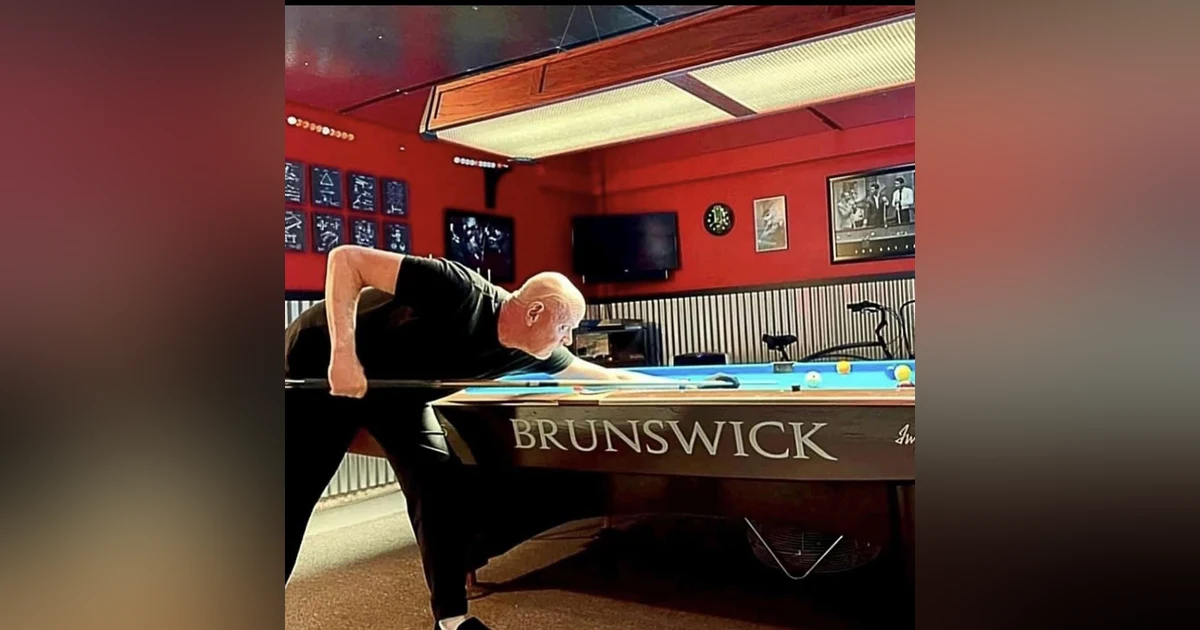

In this first installment of a captivating four-part series, Legends of the Cue welcomes Mark Kendall — the soulful guitarist and founding member of the multi-platinum rock band Great White, and one of the most accomplished celebrity pool players in the world. Known for his passionate guitar riffs and humble nature, Kendall opens up to hosts Mark Wilson, Mike Gonzalez and Allison Fisher about the fascinating intersections of music, family, and the game of pool that shaped his life.
Born into a musical household in Southern California, Mark’s journey began with jazz records spinning in the background and a deep appreciation for rhythm and melody passed down from his trumpet-playing father and singer mother. By age nine, a neighbor’s garage band sparked a lifelong love affair with the guitar — one that would eventually propel him to international rock stardom. But just as powerful was his discovery of the pool table in the family garage, igniting another lifelong passion.
Kendall recounts his early years juggling baseball, music, and pool, his formative experiences at California’s famed Westminster Family Billiards, and his first brushes with the competitive world of straight pool and nine-ball. With his trademark humility and humor, he reflects on lessons learned from early defeats, the thrill of live performance, and the shared intensity between the stage and the pool hall.
From neighborhood jam sessions to his first electric guitar on Christmas morning, from teenage tournaments to facing future pros, this episode paints a vivid portrait of a natural talent driven by curiosity, competition, and pure love of craft.
Tune in as Mark Kendall begins his journey — where cue balls meet power chords, and the rhythm of the game mirrors the heartbeat of rock ’n’ roll.
Give Allison, Mark & Mike some feedback via Text.
Follow our show and/or leave a review/rating on:
Our website: https://www.legendsofthecue.com
Apple Podcasts: https://podcasts.apple.com/us/podcast/legends-of-the-cue/id1820520463
Spotify: https://open.spotify.com/show/4Za0IMh2SeNaWEGUHaVcy1
Music by Lyrium.
About
"Legends of the Cue" is a cue sports history podcast featuring interviews with Hall of Fame members, world champions, and influential figures from across the world of cue sports—including pocket billiards, snooker, and carom disciplines such as three-cushion billiards. We highlight the people, places, and moments that have shaped the game—celebrating iconic players, memorable events, historic venues, and the brands that helped define generations of play. With a focus on the positive spirit of the sport, our goal is to create a rich, engaging, and timeless archive of stories that fans can enjoy now and for years to come.
Co-hosted by WPA and BCA Hall of Fame member Allison Fisher and Mosconi Cup player and captain Mark Wilson, Legends of the Cue brings these stories to life—told in the voices of the game’s greatest figures.
Join Allison, Mark and Mike Gonzalez for “Legends of the Cu...
Thank you. Good to be here. Big fan of Allison, so this is uh totally legit. I'm honored. And you know, I got to work with you, Mark, and on my game and stuff. And it, you know, I've really been lucky to have so many pool players around me to help my game. And got good friends who play really well. And you know, I got to play really good players, which helped my game a lot. Because I used to win local tournaments, but I wasn't playing, you know, Moro and all, you know, Nesto and all those guys. So I had to take my game to hard times to where when you miss a ball, you might lose four games. You know, that kind of changes your, you know, you you realize, you know, I can't play bad win. You know, you so it the pressures are different, and that really helped me. So uh yeah, it's great to be here. I've heard a couple shows. I'm really honored to be on the show.
Mike GonzalezWell, Mark, uh great to have you, and we're looking forward to hearing about your life in school and rock and roll. Lots to talk about. And uh before offline here, we'd like to tell your full story from the very beginning. To hear a little bit about you growing up in California, to hear about your family, your early influence. That's kind of what we're gonna try to do. So I think you were born in Loma Linda, but found your way probably to some other suburbs of LA.
Mark KendallWell, uh the reason I was born at that hospital, Loma Linda, which is near San Bernardino, California, kind of Riverside County, is because my dad was doing traveling salesman work at the time when my mom was pregnant. So we went to my grandma's, so you know, as soon as she was ready to go, that was the closest hospital. So so that's how that worked out. But my early, you know, just first three or four years, we lived right in dead smack of Los Angeles in a small little two-bedroom house, and and then moved to a suburb called West Cavina. And uh, you know, so that's the way that started. I was about four years old. And uh, so you want me to uh go through some stuff? Yeah, tell us about your folks.
Mike GonzalezThey were musically inclined, weren't they?
Mark KendallMy dad, he was a jazz trumpet player, and my mother was a singer, and they both had day jobs to make ends meet because there wasn't a lot of ton of money in jazz. So at five years old, we always had music in the house. So I used to sit by their records, and my mother's records were all women singers, you know, uh old great jazz singers, and you know, the Barbara Streisands and you know, those type of uh one thing I noticed uh when the first song I heard that I kept playing over and over again because it made me feel good when I listened to it, it was called The Girl from Epanema.
Mike GonzalezSure.
Mark KendallAnd it was like and the way that girl sang, it was real kind of a just a beautiful tone, and so it made me feel good. So I go, Oh, wonder if I play it again, if I'm still gonna feel good again. You know what I mean? So I kept playing it over and over, and I'm like five years old. Then I started singing with it, and my remember my mom told my dad he sings in key because my father had perfect pitch. We used to hit piano notes from another room and he would tell us what the notes are. Then my mom said, hit the black keys that'll mess them up, you know. And uh so so so he had this ear. So I think it's kind of a DNA issue where where I kind of got a gift to that I hear music well and I can kind of duplicate what I'm hearing. Like some people hear music well, but they can't, I guess they call it I can't carry a tune in a bucket, you know. But I've somehow I had this natural this ear where I heard music well and I can actually hum it back and it would be in the same key, you know, even though I wasn't a singer, but and that's kind of the way I listened to music for a long time. And uh so at nine years old, there was a band that played across the street, and I used to go watch them through this little window in the side of the garage, it was like a door, and one day the bass player's playing with his teeth, and so I went flying home. I told my dad, I gotta have a guitar, I gotta have a guitar. And he got me a guitar, and he said, But you gotta stick with it. That was a deal we made. You gotta stick with it, and you know, learn how to play it. You can't I don't want you throwing it down in a couple of days. So I stuck to my end of the bargain, and there were a couple more advanced guitar players in in my neighborhood. So I'm trying to borrow everything I can, trying to learn, and I learned from the next-door neighbor that the dad of my friend Mark, he he taught me how to play some chords on the guitar, and I picked it up pretty quickly, and so now I'm you know kind of getting my way around with those chords and starting to learn songs, and by the time I was ten, I'd been playing almost every day for like a year, and I played for the fourth grade class with another guitar player that I met at school, and he had like a fender amp and a fender guitar, you know. I thought his parents were millionaires or something. I I couldn't believe that they could afford gear this insane. And uh so I talked my dad into getting me a guitar and amp for Christmas, but a couple days before Christmas, he sits me on the bed and and says that things haven't gone that well this year, but maybe for your birthday, and I and I'm like, okay. You know, I didn't want to complain and say, but I've waited I've waited eight months for this moment, but the last time I complained and and threw a fit, I didn't get to go to a Dodger game, so I I didn't want to repeat that mistake again. And and uh so Christmas rolls around, and I'm ready to get the blue sweater and something else I totally hate, right? I walk out there, there's the guitar namp with the sun shining in. I was like, I was it it wasn't on the level of what my friend had, but I I was totally so out of my mind, excited, and and and I let my parents know it. And I I could tell, you know, they had they were really joyful. And so this thing played so much easier than my acoustic. It'd be like, you know, using a house cue compared to like, you know, whatever, a bell of bush gears. I mean, yeah. I mean, it wasn't even close. So so now I'm getting excited, and I I'm starting to learn songs. So I my first four songs I learned Pipeline, Wipeout, Gloria, and Secret Agent Man. So me and this other guitar player put these songs together, and I asked my mom and dad, I go, I wonder if I could play for the fourth grade class. So they talked to the principal and my teacher, and they thought it was a great idea that we play. And then we found out that fifth graders were gonna come into the classroom to watch us play. So, you know, we we're getting a big crowd going here. And we went through our four songs, and after every song, some you know they were cheering, so it was like it was so fun, and and then so we only have four songs, so they started to file out, and we just played pipeline again. You know, we played one song we already played, and uh so now at the same time, I'm playing baseball. I'm I'm like in Little League, I'm in the Boy Scouts, you know, scouts and stuff, and I'm I'm playing guitar. And when I was about 10 years old, my dad got a pool table. But I I heard uh Allison's story about getting a little pool table. I got one for Christmas. I I don't think it was a foot and a half or whatever, but it was it was real small, you know, and there was something about hitting balls into the pocket. It was just you know, I'm kind of compulsive anyway. So when I've seen, you know, hitting a cue ball into a ball going into the pocket, and I could start to do it, you know, that was it for me. I I just loved it. So I started playing carams at school, which is not pool, but it's you're it's it's like these little round things, and you have like big which simulates a cue ball, and you knock balls into the these pockets, you know. So I'm getting fascinated. Then my dad gets a four by eight pool table in our garage, and I'm out there hitting balls, you know, like every day. So I'm I'm juggling three different things. I love baseball, I love pool, and I love guitar. And you know, so it wasn't like you know, you get into one thing and just become obsessed, and that's all you do. I'm riding mini bikes, I'm playing pool, I'm playing baseball, I'm playing guitar, I'm getting in trouble sometimes, you know. And and so, you know, this was my early life. Um as time went on, my parents moved to Huntington Beach, and I'm 15 years old. Now I'm getting around my way on guitar pretty good. I'm starting to learn songs, I'm playing with drummers and bass players and stuff like that. But at the same time, I'm playing baseball. My dad's dream for me was to be on the LA Dodgers. That that I think what he figured is he didn't make it in jazz, so father like son deal, you know. I'm probably not gonna do it either, you know. So, but the problem was, and this is a funny thing, my arm was hurting a little bit when I was almost 18 pitching in baseball. So I used to have my dad take me out after three innings and he put me on first base. Now I was on Joe Rogan, we talked about this because I'm kind of making an excuse for myself a little bit. And Joe Rogan called me out, said, Well, don't you think you be could have been become a better player if you worked with lightweights, maybe did better training, worked harder, and stuff like this? I'm going, dude, of course I all the kids became better, you know what I mean? Uh but I think what it was is my love for guitar was so strong at that point that included passion, and I couldn't escape the guitar. If I was away from it for 15 minutes, it it I couldn't wait to get back to it. I used to walk to the store carrying my acoustic because I didn't want to leave it that long. You know, even though I looked goofy walking down the street with the guitar, like, you know, I don't know what that looked like, but I I literally just could not leave it alone. And uh so when I would when I was 16 uh you know, I moved to Huntington Beach. I found a pool hall. And uh it was called Westminster Family Billiards. And I'm playing a lot of pool at this place, like every every waking moment almost my mom would give me a ride up there. And I meet Robin Bell, the pre who became a professional pool player, and we used to play nine ball, you know, cheap nine ball as they call it, and I did pretty good on her. But but here here's the thing that reminds me of Larry Bird and Magic Johnson when Magic Johnson beat Larry Bird's team in the college thing, and and he can never live it down his whole life, like he's still upset by it that he lost.
Mike GonzalezYou know.
Mark KendallWell, here's the first time my parents ever seen me play pool, right? And I'm literally in the finals of a straight pool tournament. Like I beat players that were pretty darn good to get to that finals, and it's with Robin Bill. And I played so bad, I was so nervous. My my parents are watching, and and so we're taking you to pull home, and this is your game. I totally distracted myself in my head. You know what I mean? I got it instead of just not thinking about anything but the table and just playing my game or whatever, you know. I I didn't do that. And Robin played pretty good, and she won. And the what the winner, I think there was prize money or something, and we got to play Jimmy Moore. And I I wanted to play Cowboy Jimmy Moore so bad because I knew who he was. My dad took me to a straight pole tournament when I was about 13, and uh we went and I can remember some of the players, but they were the old school players, you know, the Willow Masconi's in that era, like you know, playing 14-1, you know, straight pole. So in El Monty, when when I was 14 years old, I used to go to this place called Carriman Q. And and I had my own queue as a Palmer. And I and I would I would play people cheap nine ball, and we'd also play straight pool. I ran 45 balls when I was 14 and just practicing with some kid. And I knew the game a little bit from watching with when my dad took me to the straight pool event, how the brake ball and how all that worked. So I I used to love that that you had to get on that brake ball. There's something about that brake ball, man. So you need to control the white ball, you know, to to get the right angle and and then continue to run. So 45 balls, I mean, I run that now, you know, but then it it didn't seem like you know, it was that hard for some reason. I I don't know what's up with that, but anyways, so getting back to uh that Robin Bell match, I just I miss uh you know but here's one thing. When I play good and lose, I it really I'm not affected by that. I it it's like I'm fine. In fact, you know, when John took me to that world, I played in the world tournament in in New York a few years ago, you know, playing guys like Eminem. I mean, it you know, it's crazy. But my best match was against this uh house pro from one of the from some place in New York, some pool hall. He was a house pro. And he beat me 150, 128. But I, you know, I had a couple 40 plus ball runs. I played real good on them. I had a chance to win at the end if I get those last 22 balls, but uh you know, missed the ball and that you know, it was fatal. But I really felt I played almost like my practice game in that one match. Now that's what I mean. I lost that match, but I w I felt good about it. You know, when I play real bad, I I'm just upset with myself because I know I you know, like anybody, and I'm not telling anything you guys don't know, but when I play bad, it then it it's a little bit tough, but so yeah, I was just the juggler. I I I love pool so much. And Mark knows how pool. I but my guitar like pays the bill. Like I'm in a band, you know, and we've had some success, you know, sold millions of records and done a lot of touring. And I remember the first time we went to England, which is your territory, Elison. I'm used to people just saying how great we are, you know, after every song, they just cheer, slinging their beer, and just think we're the greatest thing ever. But when we first went to England, man, those crowds are tough, you know. They're like you know, folding in the arms, going, okay, impressive yanks, you know. So so what we did was we just kept going back until we won them over. I remember playing Wimbling Arena, right? Play Wimbling Arena, and you could hear a pin drop after every song. And my singer goes, Hey, you might as well get into it because we're gonna finish the show. So but like I said, we just kept going back. We were relentless, we weren't gonna take, you know, defeat for, you know, and uh and finally we won them over, man. And but it it actually I'm I'm grateful for that they were tough on us. It it helped us improve our show a little bit, maybe uh stepped up our game a couple notches as far as our stage presence and you know, shapes on stage and stuff, and get really earn earn earn respect, you know. So it it it you know, like I said, it the difference between like where we the band started around the LA area, everybody kind of liked us, you know, so it's easy. Then when we go further east, like to New York and play, they're a little tougher. And then when you go further to England, it's even you know, a little more tough. So so you have to prove yourself, and I'm glad I did have to prove myself. You know, it's just like growing up listening to guitar players that played with so much passion that you could see it in their face, they're sweating bullets and they're just squeezing a note like Carl Santana. When I sit when I saw that this guy feels a note that much, it it made me want to improve and and and put that kind of heart in into my own playing and and say something that's musical that you you're gonna remember instead of just being flashy noteboy, you know, like a million notes a second, that you're gonna forget right after it happened. I like to because singers they get to sing all these beautiful melodies, so I wanted to do that on my guitar. So so they can say, oh man, that that one lick, man, I can't get it out of my head. You know, so that's my was my approach to guitar is to play with with a lot of passion and and really feel what I'm playing. And that just comes from guys that that did that, you know.
Mike GonzalezSo who else who else were you listening to in those early days that uh helped shape what you like to play and how you like to play?
Mark KendallYeah, well, I kind of would become obsessed with one guy, like Carlos Santana was one of the first ones that really rocked my boat, and actually got to ask him a question one time. But then I moved to Johnny Winter and became obsessed by him. And one thing I could never figure out is I'm playing every lick he does, perfect, but it doesn't sound like him. And then when I met him, I realized why it's because he started out in ukulele, right? So he used fingerprints. So every time he hit a note, he was striking the string in the same direction, which gives it more of a machine effect. So where I have a pick, I'm going up and down like gink, gink, gink, gink, gink, gink, gink, gink, gink. You know what I mean? So when He hit it all in the same direction, has the same tone, you know, uh the same sound. So then I realized because when he when he made the transition from ukulele to guitar, he kept the finger picks. Get me interesting to where the traditional thing is use of just a plectrum, you know, a pick to play your guitar. So so I I figured that out. We actually tried to get him to play on one of our records just a slide solo, so it's one part, but he wouldn't do it because we the song was already recorded and he doesn't like the overdub. He said, if we all jam together, I'll do it. But I I'm not gonna do those overdubs. Because every time Edgar gets me to do those overdubs, I do 40 cakes and they take the first one. So he would he wouldn't play it, you know, but but I I loved his reasoning. So I was a big fan of his, uh just absolutely highly, highly skilled guitarist. And you know, my first three records were Cream, The Doors, and Jimi Hendrix. But I was still listening to music back then, like I did with my parents' records, which was just listening to the singer. So I really wasn't my attention, wasn't so much on how great the guitar players were, even though they're legit uh legends, you know what I mean? I discovered of course I discovered that later how great they are. But I was more into the songs and and the way the singers were delivering, you know, the songs and the way they sang and stuff. So that that's just the way I listened to music, and it was a lot to do with my parents, you know. I remember hearing Elvis Presley. We had a babysitter, my little brother Matt, and we used to have a babysitter, he's five years younger than me. Like I was about six or seven years old, and this babysitter used to come over and bring records. And that's the first time I heard Elvis Presley, and I was all about it, man. I go, this dude, I never heard no one sing like that because my parents' records were women singers. My dad only had one record with us, a guy who sang. His name was Louis Armstrong. He's he's this black dude, and his cheeks would go out this big when he'd blow on that horn, and he's like, Is you, is you, is you ain't my baby. You know what I mean? And supposedly he was like a really big star back then, you know. But that was my dad's, everything else was instrumental with my dad's records, you know, it's all these dudes blowing horns. He used to have people coming to our house that were in his band, like this one guy, Bill Rios from Cuba, and he played like bongos and conga drums, always had all the tape on his hand, the calluses, and the stuff he could do. It just sounds like, oh, well, what's what's the big deal? You just beating on his little bongos? Like, I can do that. No way, you can't do it. He he he explained to me about Latin percussion and about these different grooves and and and all this stuff. There's a lot to it than just you know, going gang, gang, gang, you know. And he was a sweet, really sweet guy. And then my dad said that this guy, his sex player was the best on earth. Like he he swore to me this guy's the best sex player ever. And that his name's Jerry Ricketts. And he used to come over and make hamburgers, right? He's flipping these hamburgers, and I used to watch him flip those hamburgers, man. I'm like, God, this is just too amazing. And and that's the first time I ever seen ketchup, mustard, and mayonnaise mixed together to where it's kind of like Thousand Island vibes. Yeah, that's not bad. For the spread. Yeah, so that's the first time I got to see that. Yeah, so my dad was was kind of a he he was like my hero, like he was my coach every year in baseball from eight to eighteen, either my manager or my coach. So but it it's a funny thing when you compare even pool and baseball to the instruction available today, than back then. It was more like back then it they would just throw the kids on the field, kind of tell you the rules, and and you know, the guy who's the most natural player and talent is the great player. You didn't have pro camps, you know, people like uh a Mark Wilson to show you how to throw it right, you know, the fundamentals of baseball. Now you watch 12-year-old kids playing baseball, they all look like little pros. They look like little professional baseball players. They they they all their mechanics and everything are like you know, perfect. And I think it's the same with pool. Yeah, you look at some of the old players, like you know, the Keith McCrease, they got all these different strokes and you know, everything's kind of all over the place. But they're legit players. I mean, you know, they pop the balls, they they get out and all that. But the difference today is it seems like the mechanics from Joshua Phillips and all these guys, they they're the cue flies so straight. You know, if you if you look at Gorse, I mean his stance and everything is very repetitive. He he never moves his head, you know, even an eighth of an inch. I mean, it's it it's uh it's kind of a different world, and I I think the instruction really helped with that. So uh I know I'm kind of all over the place here, but these are things that are popping into my head because like like I said, I really juggled those three things baseball, pool, and my guitar.
Mike GonzalezYeah, and you you you talked about you you talked about uh when you were younger, just think about what was available to you to learn the game of pool. Other than your your observation, what you picked up through your own eyes, watching players, there wasn't much available, was there?
Mark KendallNot much. You know, of course there's no internet or anything like that. So you you actually had to go watch players play live. And when I I used to play this guy called Greg Parent when I moved to El Mani, California, I was about 14, and he had a I think it was a seven-footer, if I remember correctly. And we used to get in battles on that thing. When I discovered this pool hall, uh Caram and Q, I was there like every day. Now, this city I lived in, El Monty, they had gang activity there. And believe it or not, I actually gambled cheaply when I was 14. You know, I played $2.09 ball and stuff like that. And if and if I had what I would consider a big win, like 20 bucks or something, I put all the money in my shoe, and then I'd leave my queue with the owner, Larry, and he'd hold my queue for me, and I'd try to get home without getting jumped by somebody. I and I knew all the streets to go down, except for one I had couldn't avoid, so I just had to make sure to get through that street to get to my house. And I usually always made it. But I put my money down in my sock in the bottom of my shoe type deal. And uh, you know, 20 bucks, isn't that funny? Like I would go to the those lengths, but so I kind of learned from watching those guys. They were, I don't know if they're shortstop. There was one real good player named Georgie Urick. I'll never forget him. And he was kind of a bully, he always asked me to play because he's seen I was beaten some guys, but I I never played him. I said, Dude, you know, what are you gonna give me seven of the breaks or something? You know, what are you talking about? You beat up on a 14-year-old being the best player, you know. I I I don't know why he's so mean, but but I you know, I so I was just watching all that and uh years later when I was 17 and maybe 18 and and kind of no, no, I was in my twenties. I was in my twenties, early twenties, and uh winning some local tournaments, not really playing the best players, and then I realized I gotta start playing at hard times. And I remember you know it was the best players in California. You know, you had McCreaties, McCready, all the best Mexican players, Francisco Galinda, Ernesto, Moro, and a lot of really good players. One day I actually, and this is after I was married, so this is like, you know, uh I was 39 years old, I guess. And my wife had never seen me play pool except for in New York. I I went and matched up with the places probably. It was in Buffalo, so I think it might have been a seagull room, and played a guy who gave me the eight and found out he was some state champion, and I missed the ball on the side right in front of Bridget. It was so brutal to i it was uh the case game, you know, case ball. And and so I kind of made her watch me play bull and I played in this tournament and I beat McCready and a few other players, you know, it's short range, but I it was just a case where he only kicked at a ball like twice or something. I would I kind of played real good on him, but beat some other players I'm not supposed to beat. And here's the funny part. I come in fourth place, right? The big, you know, the big finish. I got $45. Okay. The entry fee was $25. Plus, you know, you get food and gas and all that. But I was thrilled because I wasn't really about the money at all for me. It was the fact that I'm playing really good players, I'm not supposed to be and kind of just playing good on the table and not, you know, because I have let players intimidate me because of who they are and stuff before. For some reason that day I was I was a little more at ease. I don't I don't know why. Because Bridget was watching and wanted to impress her, and uh and I just did good that day. And I'll never forget. I was playing this guy called Crown City Quarry or something like that. And when he would make a mistake, Bridget said, Yes! Like, you know, not even not under her breath, not under her breath. And she goes, he walked over to her, Crown City Quarry, routed over to her, and he said, you know, I I understand you you're rooting for your man or whatever, but if you wouldn't share my mistake, that'd be very nice, too. So funny, man. Never forget that.
Mike GonzalezThat reminds me of Nick Nick Varner when we had him, remember when he was playing the match and uh forget he was playing Mizdack or somebody and he's chomping on this bubblegum. And you're making all kinds of rock, and finally Mizdack comes over and says, Would you mind taking a little easy on the chewing gum over there? Yeah.
Mark KendallYeah. Yeah, that that bit about sharking, you know, that here's the funny thing about sharking for me is when you're playing really good. I don't know if I'm sure you've experienced this where you only see the table. It it's so weird when you're kind of just, I don't know, called it the the zone or or whatever, but you don't see anything. It's literally it's literally it's almost like you can't even make yourself see anything. You you're only seeing the table and you're you're kind of playing really good. But when things start going bad, that's when you start noticing movement and stuff like that. So there's a lot of excuses made about now. I can imagine some guy waving a towel right before his shoes or something. That'd be kind of brutal. But I I that the shark and gale, I only noticed it when I was playing bad. I I never you know noticed it really if uh my game is you know doing okay.
Mike GonzalezYeah, was it was there ever a point where you thought you might want to play pool for a living, or was guitar always number one back when you were a young guy?
Mark KendallBelieve it or not, at one time every baseball, pool, and guitar. Guitar might have had a slight lead, but it was it was pretty even. Like I couldn't wait to get to the pool. You know. I I was a very compulsive person and and it it gets me in trouble. It would it got me in some trouble because you know, if I if I'm compulsive about the wrong thing. Like, you know, I was quite the beer drinker at one time and and got way too in a rut and all that kind of stuff. So, you know, so I I gotta make sure the things that I'm compulsive about are good, you know. But I think the reason the guitar just went out for me because I started to have so many heroes and I really had a dream that I'm I want to go full-time music and and make something from it, you know. So it took a lot of work um to get the assembled the right people together, you know, that had um you know the skills and and uh and we could all get along.
Founder and Lead Guitarist - Great White Band
Mark Kendall is one of those rare guests whose life story makes perfect sense only after you hear him tell it: a Southern California kid raised on jazz and melody, who grew into the soulful, blues-rooted lead guitarist of Great White, and, at the same time, became a serious, “put-the-time-in” pool player whose love for the game runs far deeper than a celebrity hobby. On Legends of the Cue, Kendall doesn’t arrive as a rock star dropping in for a few quick pool stories. He shows up as a student of two crafts, music and cue sports, still chasing feel, still chasing precision, still chasing that elusive flow state where everything clicks.
Born April 29, 1957, in Loma Linda, California, Kendall’s early environment was steeped in sound. He describes a musically gifted household, his father a jazz trumpet player, his mother a jazz singer, and his grandfather a pianist, the kind of home where rhythm isn’t an abstract idea; it’s the wallpaper. Kendall has often cited Jimi Hendrix, Cream, and The Doors as formative influences, not merely for their technical brilliance, but for their emotion, the sense that every note is a confession. That focus on feel would later become a signature in both his guitar playing and his approach to the pool table: when it’s right, you know it; when it isn’t, no amount of explanation can fake it.
His guitar journey began young, he was hooked early, and the instrument became his voice. But what makes Kendall so compelling for Legends of the Cue listeners is that his pool origin story is just as authentic: the family garage table, the p… Read More