

 Apple Podcasts
 Spotify
 Mark Kendall - Part 3 (Rhythm, Recovery, and the Road Between Music and the Game)
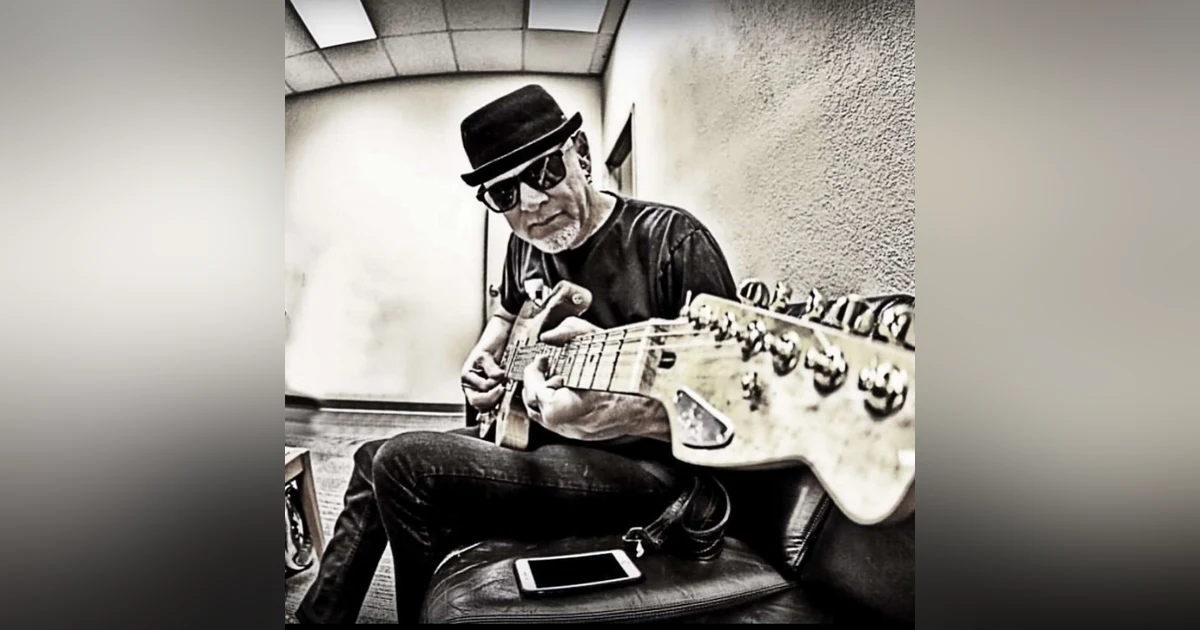

In this third installment of Legends of the Cue’s four-part conversation with Mark Kendall, the legendary guitarist and founding member of Great White, we explore the deep parallels between two of his lifelong passions — music and pool. Joined by hosts Mike Gonzalez, Mark Wilson, and Allison Fisher, Kendall opens up about the rhythm of discovery that links his guitar playing to his cue stroke, and how both crafts demand timing, creativity, and relentless discipline.
From his early days pounding the pavement with posters and dreams to headlining arenas, Kendall reflects on how technology reshaped the music industry — and how he’s adapted from analog grit to digital hustle. His stories of the 1980s rock scene are laced with humility and gratitude, as he recalls the raw determination that took him from backyard jam sessions to platinum records.
But it’s Kendall’s honesty about personal growth and recovery that resonates most. He speaks candidly about overcoming alcoholism, finding purpose in helping others, and channeling that same energy into his practice at the pool table. Whether chasing his dream of a 100-ball run or mentoring a struggling friend, Mark’s philosophy is rooted in perseverance and giving back.
Along the way, he and the hosts swap memories about training with top players, the nerves of competition, and the enduring joy of mastery — whether on stage or in the billiards hall. Blending rock ‘n’ roll authenticity with cue sport precision, this episode captures the heart of an artist who continues to find rhythm, redemption, and meaning in every note and every shot.
“When the lights go down, whether it’s a concert or a match, it’s the same rush — you just want to play your heart out.”
Give Allison, Mark & Mike some feedback via Text.
Follow our show and/or leave a review/rating on:
Our website: https://www.legendsofthecue.com
Apple Podcasts: https://podcasts.apple.com/us/podcast/legends-of-the-cue/id1820520463
Spotify: https://open.spotify.com/show/4Za0IMh2SeNaWEGUHaVcy1
Music by Lyrium.
About
"Legends of the Cue" is a cue sports history podcast featuring interviews with Hall of Fame members, world champions, and influential figures from across the world of cue sports—including pocket billiards, snooker, and carom disciplines such as three-cushion billiards. We highlight the people, places, and moments that have shaped the game—celebrating iconic players, memorable events, historic venues, and the brands that helped define generations of play. With a focus on the positive spirit of the sport, our goal is to create a rich, engaging, and timeless archive of stories that fans can enjoy now and for years to come.
Co-hosted by WPA and BCA Hall of Fame member Allison Fisher and Mosconi Cup player and captain Mark Wilson, Legends of the Cue brings these stories to life—told in the voices of the game’s greatest figures.
Join Allison, Mark and Mike Gonzalez for “Legends of the Cu...
It was probably about like 2017 when I had Linderwood. And Steve John somehow, I think Mark hooked up with me side like to come out and train with you for a little bit. And so we did, we trained at Lindawood. And Mark sort of pioneered a revolution concept-wise for me because he was so abrupt on the transition from backplane to fourth lane when he came there. And just like you said, it was distorted too. So we were and and John came with you, as I recall. And he was training on a table two tables down from us. I go, Mark, that's just that go fly. You've got to slow it down. That's just way too fast. And I had the staff on my iPad. And so, well, first off, I tried the timing manually with my cell phone. And I go, okay, now you're ready, but you cannot do it with your cell phones. You can't manually do it. So that's like what is a time code on the bottom of that app of the filming. And that's when he was routinely 28 tenths of a second from the time he pulled back from the cue ball into the impact. And so and I told John of the times when he was on my cup team in 2014 he had to slow down. But for John, he's very accomplished. It's hard to distance yourself from what's got you here. And so he had a very hard time. And then when it started to get a little flighty or nervous, then it would be abrupt. Well, I get Mark. Oh yeah.
Mark KendallNo, and so actually he was pocketing, he must have hit 30 in a row, although it's out there in the middle of nowhere.
Mark WilsonSo I I get Mark doing it. And I said, now listen, you've got to slow that down. And that was kind of where we came up with the ladies and gentlemen. Tempo. Yeah. So and now all of a sudden Mark is diamonding on our nine-foot diamond tables and pocketing balls freer than he's ever pocketed. Well now John's two tables away, and now he wants to get involved. And because he the rock star is uh kicking butt over here and John's down there uh tweaking. You know, so he he comes down and then now we start timing him. And boy, did he ever get onto it? And he made a length of the table backwards cut. And like Mark said, probably 29 out of 30 without any exaggeration three days in a row.
Mark KendallIt's going dead to go, this goes work.
Mark WilsonYeah.
Mark KendallMaybe I'll use it when I need it, like when I really got to make a list of it.
Mark WilsonYeah, but it was really marked. It kind of led to that. And the three of us, we had the best time. We trained, I bet we trained eight or ten hours a day over there. Do you think when you came? Yeah.
Mark KendallYeah. And the last time I trained in Alabama, I I have to uh come clean. I wasn't prepared. And it showed, even though I made those 12 draw shots in a row, that the big length of the table drew the ball all the way back. In my matches that I played, I I played just absolutely terrible. And I know it's because I wasn't, I I wasn't, I didn't train enough at home. I I wasn't able to put the hours that I'd put in before in our other uh training session. Yeah. So I really noticed that the only one I beat was that 12-year-old girl. But she plays great.
Mark WilsonYeah, she plays great. She plays great. Yeah, she plays good. Well, well, that was Kennedy, right? Kennedy Maiman, I believe.
Mark KendallBut that yeah, okay.
Mark WilsonWell anyway, great player. She was a little older. But my point is that Mark he comes to our clinics periodically, and I always invite him along because uh I love him like a brother. And and so if he's but a lot of times the music's dragging him away from pool. I mean, it's not like he doesn't like to play. It's just that sometimes he has to come in there with all the rust on his cube. And so but but he does get right into it. He does oh, he works hard. I mean, it's just he takes the discipline from guitar and applies it to pool. And so and that particular clinic you talk about is I don't think it wants to hear it's an advanced player clinic. And it will actually a few of our guys good, we have frozen stuff. And so anyway, you get thrown into the fire, and and that's why you can lose a little confidence, and then it's great, and then every exercise is just super tough and then we have competitions, and you're playing all the other frogs. So but but it's still very, very valuable. And then we did it another time. And smart, you know, it's got all kinds of successes like the cool success. And still we've tried the guitar success. And so we had to put together all we got to put together this big Mac that cost $50 a person to play. And we're playing down at the player class. And so uh Mark's part of it. Well, the match goes perfect. It goes down to the very last rack. Very last rack, and it's a long we've been there five hours. And it's April Larson versus Joey Vola, their killer player. And me and Mark are standing side by side, and we were like nervous and fidgety, and like, oh man, and April made the most beautiful run out, did she not, Mark? Oh my goodness. Yeah. Just killer.
Mark KendallI actually had one good win. It was heel heel, and I had a really tough nine. I was really like kind of really close to the rail, and the nine was way out past the side pocket. I had to cut it in the corner. I actually can't believe I made that job, man.
Mark WilsonThat was that hard week, though, and then now you're more liable to make it. But then when April won, the $50, it wasn't that. Mark just wanted to be on the winning side because he never gets to compete or anything. But April just came through like I mean, oh, would you not back April against anybody, you know?
Mark KendallOh yeah, yeah. Guys, he plays really good. Uh he's a very good player.
Mike GonzalezAre there a lot of parallels between uh uh advancing with guitar and advancing with your pool game? I I just see pool uh for me as a series of discoveries. You know, you're learning shots, you're learning strategy, you learn how to think, you learn how to behave, how to control your emotions. I would think with guitar, as you grew up, you you're you're you're hearing these different sounds, these different notes, the uh technology uh gets comes into play at some point, right?
Mark KendallYeah. I I kind of don't didn't really I I don't give myself too much to think about. I I just more like just play what I hear. If I hear something in my head, I try to get it on the guitar. And usually do I've done better with that over the years. If I hear a melody in my head and say I'm in writing mode, like I'm writing songs, I'll put that idea on my phone really quick on the little memo recorder, you know. Because sometimes when you're really inspired and you feel like you have this idea that you think is really good it's good to get it on tape when you're vibrating right at that frequency, you know, like to put it on right then and that way you can come back and get back to it later. Because if you get lazy and don't record it right then, you might not forget it, but it it won't have the same rhythmical quality. You might have a little different feel to it. So I like to I like to I used to not record because I have to go find my little mini recorder and but now there's no excuse, you always got your phone with you. So they have that little that thing is golden. You know, I did a radio show, and what they did was they put all the music on and I would talk in between the songs, and I just did it on my phone, and the audio was perfect. I I would send I'd send it to the radio and they put it just you know, put it in between the songs. And you know, I did all my rap about this band and where they came from, and you know, this guy was born in Germany and kind of went through the Holocaust and all that, and uh or or had to escape a a lot of uh war stuff and man, he's got a story. I'm talking about Stepwolf, you know. So I I just kind of treated like that, but it was just funny, the quality was so good just on a phone. It was crazy how how that worked. It was just perfect.
Mike GonzalezYou've probably seen a lot of changes to the music business, good and bad. Why don't you take us through some of the some of the bad ones and some of the good ones?
Mark KendallWell, the reason the music industry has changed is because of technology. Now we can record an album in some guy's bedroom, you know. So we no longer needed a million dollar advance and uh all this number from the money from the big labels, so it hurt the industry because of that. Also, people quit buying physical product which closed all the record stores. So now now you're dealing with all the mediums that made us get platinum records and sell millions are all being stripped away from us. But we just dealt with it the best way we can, which is you know, hire some internet assassins and get our music to the people somehow. You know, and then the people know what they're doing with the keyboard. Because in my day when we were up in commerce, you know, trying to find our way, everything we did was uh included going outside. You know, we had to go with our staple guns and put our posters on the telephone poles. We'd go to concerts and not even go to the concert. We just put flyers on the windshield wipers, you know, thousands of uh flyers to tell people about where we're playing. Then we go to high school at four in the morning, putting our flyers inside everybody's lockers. This is what I'm talking about, about the work we put in to try to get our name out there. And our motto was we're going. I told Jack once I go, okay, what detergent does your mom buy every time she goes to the store? Tide, right? Because that's all you get to see on the commercial. Let's make our band the Tide Commercial. See our see our name out there so much they think they're supposed to like us. You know what I mean? Let's brainwash these people. And uh so that's what we did. We were just relentless, man. And here's a funny thing, and I don't know if I believe in it, but they call this law of attraction or whatever. Now, people have different beliefs, but I can say this. We we would pretend like we're playing the forum in Los Angeles where the Lakers play when we didn't even have a bass player and we were in his mother's living room. We'd sit there and go, the forum could not! You know, so it it's that kid that you let the kid out and you pretend, right? And everything we pretended came to us. We ended up playing the forum, you know. My mom and dad was there, the guys in seventh grade were there, you know. And they're giving us platinum records on stage. You know, this this was just a dream, but it came to us. So it's kind of surreal when that happens, you know. I'm very grateful. It it's not like uh something that you would expect, so you you have to be grateful. But then I I later heard about this law of attraction where people, you know, they might put up a car that they dreamed about owning one day or something, and all of a sudden they end up owning it or whatever. So I don't want to get into it. Now I'm gonna start telling ghost stories after this because you're talking about vision boards, aren't you?
Mike GonzalezYeah, and and visualization, which is practiced a lot in today's sport. But but Mark, if if you were 10 years old again in 2025, do you think you'd go down the same career path in music? Because it's a lot different, isn't it?
Mark KendallYeah. I might take advantage of if the opportunities were the same as today, I might take advantage of some of those. Like get lessons from someone that could help me improve quicker, instead of me grinding it out, going to all the neighbor kids that play more advanced and trying to pick their brains and hey, can you show me that? You know, that's the way I had to do it. Everything required footwork, my my whole upbringing. Yeah. We couldn't stand behind a computer and just figure everything out. Yeah. We had to get out and and do the, you know.
Allison FisherBut with that comes a lot of wisdom, doesn't it? And then a lot of life experiences. It's a lot better, really.
Mark KendallIt I I believe that, Alison, because here's what happens. I have a lot of memories that kids today might not have when they grow up because they're in their Xbox, they're constantly on their phone or their computer.
Mike GonzalezYeah.
Mark KendallThey're they're not learning social skills, they're not out there in the real world learning how to converse with people, learning really hard work, you know, to get you from point A to point B or whatever. So I I'm I'm really grateful for my childhood because it's it it's just a better feeling when you feel like you you deserve you've worked hard for for you know the rewards you've reaped. You know, you don't have to say, Well, I r I think I deserve that, you know. I don't mean it in that way. I just mean we had no choice. But when I got up and you know, got home from school or whatever, I did not go home or if it's a weekend, I'm gone all day, and I only go home to eat something. Everything is outdoors with me. I don't care if it's climbing trees, riding mini bikes, you know, out there playing baseball, doing something, everything was an outdoor activity, you know. So yeah, uh, you got it right there. I think it creates memories. You got stuff to share, you know, later on in life. I'm doing an autobiography right now, and it's quite gonna be quite interesting to see my life laid out. Oh my god. Yeah, we're I mean, the timeline is going right there.
Allison FisherYou're very grounded and humble, and part of that is your background and how you grew up, probably, and all those experiences. That's because of my mom and dad.
Mark KendallThey're they're that way also. You know getting into you know, telling somebody how great you're or whatever. I I I just never been into I'm too shy for that type type of an attitude. So I just try to do my best, you know, and uh I was a little bit more selfish when I was used to drink, you know. Which uh that's all completely changed. I'm I'm more of a giving, loving person today. And you know, I helped alcoholics been able to reach out and and you know, be more giving and and uh you know, not be so self-centered and and make some contribution because I I think I'd rather be remembered for contribution, you know, like to humanity than just I'm a vicious guitar player, remember that guy? At least have that as well. That like, hey, this guy might have died. Now I was actually able to give him words that that made him think about it, and then shared my story and told him how I did it, and just was you know, encouraging, offered my sober friendship and say, hey man, I was just like you and I'm a lot better now. And it it's it it it's fun. It's actually beautiful feeling to see a sick person get well, you know. I've seen it over and over again. I I had a guy that I worked with that went to a rehab and after five years sobriety, he became a counselor at the rehab place in Nashville. So I go, man, I can't wait for the next guy. I I I gotta see this gone. And in 13 years I've worked with over 200 people that I would say ha were in trouble. You know, because a lot of times what when you're abusive with anything, drug or alcohol related, you lose a lot. You might lose your family, your job, your car, you know. And and and you're sick. And and so I think sometimes all these people need is maybe some cur encouraging words, because I think a lot of them are thinking about getting sober, but they just don't make that first step.
Allison FisherAnd they've probably lost a lot of their family, you know, and friendships over being, you know, having problems. So when somebody comes along and offers a hand or an ear, you know, or the words, then that makes a big difference.
Mark KendallIt does. It it it really does. Uh I wish somebody would have told me, I probably could have got it done earlier.
Mike GonzalezYeah.
Mark KendallBut I was a little bit bullheaded, I guess. Uh but once I figured it out, it changed my life. It it makes everything so much easier. We when you wake up and you don't feel good because you had uh a couple too many beers last night, you know. It becomes a rut. Yeah. And here's the other thing: you don't do anything as good as you could totally sober. I'm not gonna play my best pool if I'm hurting, you know. So but instead of using Facebook to tell everybody how bitching I'm doing, I think maybe I'll I'm gonna be more, you know, contribute and maybe try to help somebody.
Mike GonzalezYeah, yeah. I think that's a great that's a great sentiment. I I lost uh one of my best friends just a couple of months ago, not to alcohol, but he was uh an alcoholic, and he was he he he he didn't shy away from that label recovering alcoholic, and he was very active in AA. And uh the point of me mentioning this up, like you, he didn't realize it, but when we did the memorial for him and everybody kind of talked about all these nice things about my friend Tom Hale, it was all about what he did to help others through his activities with AA. He touched a lot of lives.
Mark KendallYeah, my dad, my dad was kind of a functioning alcoholic, like he never missed a day of work, he never hit my mom, you know, he did things, but you know, people think children are are kind of not aware of things. But when I was 18 years old, or eight years old, not 18, when I was eight years old, I knew where my dad's vodka bottles were, I knew where his joints were, his joints up in the cupboard. I I was really a very nosy kid. I don't know if all eight year old would would be would you know know about all that, but I knew where his stuff was. He wasn't fit fooling nobody.
Mike GonzalezYeah.
Mark KendallAnd uh he kind of secretly drank, which made made me think it might be a little bit of a problem. Why do you come home and make a drink, you know, and just have a couple of drinks and go to bed? You know, why do you hide it? You know, that's so goofy. And so I realized that he was a bit of a he would hide his uh bruise. But he was sober the last 26 years of his life. So he ended up doing good. But one thing I can say was great dad, you know, he was involved in m all my life, and my brother kind of got the bad end of the stick because which I felt bad about, and I tried to make up for it years later because he wasn't in sports, you know. My dad didn't have anything to brag about, you know. He'd brag about me. He he'd tell his friends, Mark, walk across the room on your hands, you know. And so I do it, you know, walk across the room. He's like, kid can really do it. He you know, he'd brag on me, and I really liked that. You know, I was like, yeah, my dad, you know, he's bragging about me. Or say something I didn't pay. Got 13 crack outs, man. And I remember the guy because the seeds can rip a phone book in half. A big one. You know what the real thick one? He he could rip it in half. He's big, big Samoan type dude. But so my dad wanted a So still on my show me off a lot, but my brother, he was more of the he's five years younger than me. He's more of the coin collector, you know, like he collected rocks and stuff, you know. So it's not you can't brag up on that. You know what I mean?
Mike GonzalezWell you can. I'm not sure anybody'll listen.
Mark KendallYeah, how many rocks did you get? You could see this one rat rock.
Allison FisherReally generous.
Mike GonzalezOh good.
Allison FisherI bet you had some good coins though.
Mark KendallYeah, I always felt bad about that. So, you know, when we when I started to get further in music, I always had him around and and made him a part of everything to try to make up for the, you know, uh he was very loved, but he just wasn't. I was always the focal point because all my interests were my dad's interests.
Mike GonzalezLet's go back to pool. Take us into your homeroom, tell us about what you're playing on, what you're playing with.
Mark KendallYeah. So the most recent queue I have, it was made by Fox Garcia. He's actually uh he he plays Pro Caliber, kind of more on the local level, doesn't really go on big tours or anything, but uh plays very solid, plays most of the games. I I don't think he really plays that much straight hole, but he plays wampacket and and um you know rotations games. He built me a queue. He worked for area cues. And I've never made the transition to low deflected shaft just because no reason other than I I like the way a queue feels. I don't want to change how I have to cut balls in or whatever what when I already have a feel for it. I don't I know uh people have told me that if you do it, you know, these cues it's it's really a big difference, but I I'm just a f I just I I tried to shoot with with John Smith's cue. I can't make a ball. I mean the thing it it feels weird and you know I mean he runs hundreds, he ran 300 plus on my table like twice and multiple 200 ball runs, but I pick it up and I can't make a uh anything.
Allison FisherDo guitars feel like that to you? If you pick up another guitar, is it like that?
Mark KendallYeah I yeah, yeah. Uh the neck has to be right, you know what I mean? It has to fit my hand a certain way.
Mike GonzalezYeah.
Mark KendallAnd the tension on the strings has to be a certain way. So there's a lot of things like most most of the guitars I use today are made by people to where I can have meetings with them and explain every detail of the guitar that I need to happen.
Mike GonzalezYeah.
Mark KendallThat's only yeah, it's only from trial and error. Like this certain I love everything but this one thing. And and so that one thing, I want to fix it. Yeah. So when I have a guitar made, I make sure that everything, and I'm sure it's like pool cues.
Mike GonzalezYeah.
Mark KendallYou know, I've had every type of pool cue. I had a Palmer for years that that really was a great, great cue. And it I lost it. Not playing pool, but uh in moving. It got broke uh by a piece of furniture. Really stupid. Unbelievable.
Mike GonzalezI don't remember having any meetings with Q-Tech before I got my Q-stick.
Allison FisherCustomized. Customized Q-Tech.
Mike GonzalezWell, it was pretty much just off the off the rack, you know, a little different than than Mark buying a guitar. But uh what kind of table are you playing on now, Mark, at home?
Mark KendallI just have a Brunswick, so I could it's really set up for it has four three-quarter inch pockets because I like to do straight pull runs when I practice. I just I practice by myself. I play pretty much only straight pull. But I do have, I don't know if you call it drills or whatever, where the Mark kind of set up for me where I play 15 ball or I'll play a set of ten ball, you know, kind of like the ten ball ghosts, and I'll play like the nine ball ghosts. Then I'll play a bunch of maybe ten innings of straight pool. And it it's really good practice to do that. Then I'll set up shots uh just certain shots that Mark has me do, and uh but mostly when I'm just I'm trying to beat my high run of 72. But I want to run 100 balls. And I I I'll tell you, the only thing keeping me from running 100 at times when I feel like I'm playing good enough to run 100 is my my darn nerves. That number just scares me. I you know, once I get in the 60s, I'm like my everything changes with my stroke, I'm getting timid, you know. I I don't know what happens. Now that number for John's about 350.
Mike GonzalezYeah, a little different.
Mark KendallA little different. Mine's like 62, and I'm trying to get paranoid. But you know, I crossed the 70 line once. I I wish I if I could get there, maybe I could rattle those last few in or something. Yeah.
Mark WilsonI didn't, you know, the the breaks out at 98 is just gonna be so Mark and I have a deal that uh when he breaks 100, he has to take Bridges to Hawaii. And and maybe the pool codes too.
Mike GonzalezMark, the other thing that ought to happen is you could put his name on your platform. Oh, absolutely. Uh yeah, he's never taken the plaque.
Mark KendallI'm a guy.
Mike GonzalezUh so let's go back, let's go back to music. I'm gonna name some guitarists and some bands, and you can kind of share with us whether they had any influence on you, whether you liked them, whether you hated them. I was always a pro kind of a British progressive rock guy myself, so Allison may appreciate that. I don't know if she was into it, but she'd appreciate it. So we'll start with Greg Lake, Emherst Lake and Palmer.
Mark KendallYeah, seen him once. I saw Emerson Lincoln Palmer at one of the Us Festival type shows. They were on the bill with uh people like Leon Russell and I think Deep Purple might have been on that bill. It was a very wide range of uh genres, not super wide range like I played with in Europe, but but pretty wide range. Like I've I've actually played with Black Sabbath in Denmark, and on that same bill with Bob Dylan and Slayer, which is just kill your parents every song, and and like you know, Buddy Guy. I mean, you couldn't believe the array of the different things. Like in America, we don't do that, like every every band's kind of in the same genre. But in that particular situation, Emerson, like Palmer, yeah, that their music was pretty cool. And and I remember the piano player was spinning around in circles, like he was on some kind of I I don't I don't know what it's some apparatus that spun them around upside down and stuff.
Mike GonzalezYeah, that was uh that was that was Keith, Keith Emerson. They did that for their uh when they went on tour with their brain salad surgery album. I saw him at a big hall.
Mark KendallUh I remember that album.
Mike GonzalezYeah, he's going upside down. All right, how about uh Chris Squire and Steve Howe from Yes?
Mark KendallLove a lot of their stuff. I mean, a lot of these people I have respect for more than it was an influence type music that I I want to project, like more in the blue style. But I've gotten modes where I go watch jazz bands like our progressive jazz, like Return to Forever with Chickaria and Sam and Clark and stuff like that, with Raymond Gomez on guitar, it might be Al Demiola just to experience their skill level and how far you can take a guitar, like but my own personal thing, I like to write a great song that somebody might be singing in the shower for 20 years from now, you know, if possible. Yeah instead of doing something that's technically incredible but nobody remembers it like in two days. You know what I mean? And I'm not saying any of those artists you mentioned are are that, yeah, but some some people take their skill to show you how many notes they can play and and the skill level is so impressive. But after hearing that for a couple minutes and it just you know to me, I need something else to happen that I remember, something that that has some kind of melody attached to it. You know, I I don't know if I'm being too nitpicky, but it's just the way I grew up. Even with my dad's jazz, these guys would just blow their faces off with these wind instruments, like whether it be horn, sax, but they always come back to this theme that goes and then they just fly off and then find their way back, don't they? Yeah, and then they come back to the thing you remember. Yeah. You're not gonna remember any of that other stuff.
Mike GonzalezYeah.
Mark KendallBut they're just showing you their skill, you know, because they're they're they're trained musicians.
Mike GonzalezThey're the very virtuostic uh uh guitarists, I guess. I mean, like an Eddie Van Halen or uh, you know, somebody like that, I guess. Uh Stevie Ray Volume.
Mark KendallI grew up with them.
Mike GonzalezYeah.
Mark KendallI mean I grew up with them. I saw them 16 years old, they played at a junkyard three blocks from my house, and my bass player at the time, he told me he'd seen them and said this guitar player was something else to see. So we went, we paid our dollar. We played at Tony's junkyard, three blocks from my house in the El Monte, California. Oh my god. I walk in, and the big and the singer, Dave Leero, was on the ground blowing a tube inside of the drummer's drum, and he was doing this like wipeout solo and made the pitch go up and down. And I'm going, when's the guitar player gonna play, man? And anyway, so they launched into some bad company songs and then played a few others, and I think they played maybe one or two original songs, but mostly covers. But I could tell right away, you know, he was a little bit outside the box, and you could tell he he was doing something different than we were we were doing. But one thing I didn't like was his solos in the songs that I was used to hearing a certain way were his own solos instead of how the original artist did it. But when they played their own music, then I loved it because it it was his own thing in his own music. But when he's playing songs that I'm familiar with and I don't hear it the way it was you know, on the record, that then I I didn't like that so much. But it was obvious that guy was on his way to something good.
Mike GonzalezOh, how about guys like uh uh Glenn Campbell and Roy Clark?
Mark KendallOh Glenn Campbell, Roy Clark. Okay, when I moved to my grandma's, my my parents got separated for six months. So we had to move out, and that's why I lost my baseball card. But anyways, my grandpa came and just took everything that wasn't furniture out of the house and drove us to their house, and we're gonna live there now. So it was a whole different world. I'm I'm leaving my friends, I was just kind of a disaster, but ended up good things happened. One of them was my aunt, my mother's sister, she was younger than my mom, had a boyfriend who played guitar like amazing. He was in band, so he's teaching me stuff like Johnny Cash and and all stuff that I wasn't even listening to, but it was fun to learn. And he goes, You pick up things quick. And um, I'm 11 now, so I'm you know, I think I'm pretty good. But this guy was so good on guitar, it was like silly. But I was so happy that he gave me his time and I really took advantage of it. And I I improved that six months a lot just from Larry. It was it they've been married like for a zillion years now, but they it was just his her boyfriend at the time. And so that was pretty cool. And then my my grandparents they were like Pentecostal, like full-blown Jesus mode, like like I was you know, kind of a believer and uh and and always went to church with my parents and stuff. But I never seen no one like my grandpa like screaming at the sky and stuff with the arm raised. Like I I I never witnessed that before, right? So it was like, wow man, you can really get into it, you know. And so I I kind of joined the church and I I was doing uh plays and stuff. We wear all this robe type gear and actually had lines, you know, and uh that was fun to perform, you know, in some medium like and I was a little bit nervous. You know, that's why in bands I I was shy, but I kind of got out of out of my personality and went into this almost like becoming someone else so I could get out there and be cocky, you know, which ended up just looking like the guys into it. I didn't look like I was being cocky, but it was cocky for me just to make it a good show. But I was really deep down very shy. So it was uh kind of forced, but I just learned to even today I still get nervous. It's almost like a a rush of adrenaline when the lights go down and and I'm gonna go on. I I just want to get through that first song, and so I can, you know, just tear through the set and kick, you know, kick it, kick butt or whatever. But I always feel that nerve, you know, before I go on. It it's not scared to death like coffee flying out your nose and you don't know what you're gonna do with yourself. It it's more of like uh an endor like an endorphin rush that you feel when the lights go down and you're gonna go out there and play in front of all these people. You know, you hope nothing goes wrong technically or you know, but uh yeah, uh performing is a different animal than being becoming good at something.
Allison FisherIt's like I don't know what it was like for you, Allison, getting out in front of the cameras and you know, being on a pool table when you got all these people watching and the and cameras are rolling around on cranes and it's everything that you I still get nervous and it's a lot of people.
Founder and Lead Guitarist - Great White Band
Mark Kendall is one of those rare guests whose life story makes perfect sense only after you hear him tell it: a Southern California kid raised on jazz and melody, who grew into the soulful, blues-rooted lead guitarist of Great White, and, at the same time, became a serious, “put-the-time-in” pool player whose love for the game runs far deeper than a celebrity hobby. On Legends of the Cue, Kendall doesn’t arrive as a rock star dropping in for a few quick pool stories. He shows up as a student of two crafts, music and cue sports, still chasing feel, still chasing precision, still chasing that elusive flow state where everything clicks.
Born April 29, 1957, in Loma Linda, California, Kendall’s early environment was steeped in sound. He describes a musically gifted household, his father a jazz trumpet player, his mother a jazz singer, and his grandfather a pianist, the kind of home where rhythm isn’t an abstract idea; it’s the wallpaper. Kendall has often cited Jimi Hendrix, Cream, and The Doors as formative influences, not merely for their technical brilliance, but for their emotion, the sense that every note is a confession. That focus on feel would later become a signature in both his guitar playing and his approach to the pool table: when it’s right, you know it; when it isn’t, no amount of explanation can fake it.
His guitar journey began young, he was hooked early, and the instrument became his voice. But what makes Kendall so compelling for Legends of the Cue listeners is that his pool origin story is just as authentic: the family garage table, the p… Read More