

 Apple Podcasts
 Spotify
 Mark Kendall - Part 4 (Rock, Rhythm & the Road to the Table)
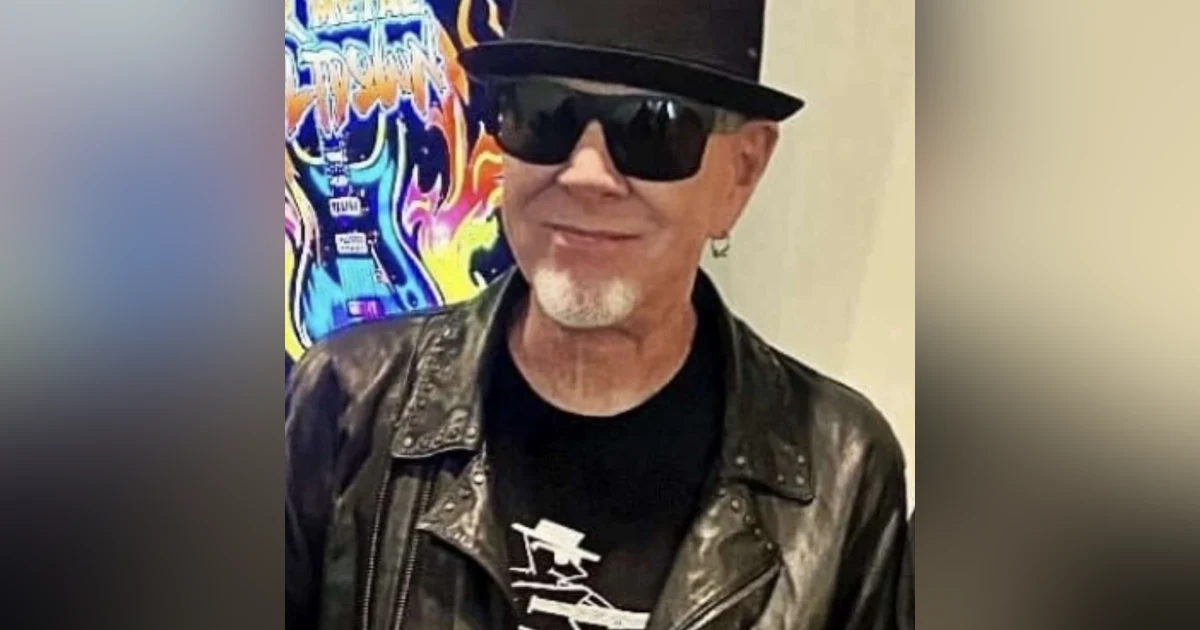

In this powerful conclusion to our four-part Legends of the Cue series with Mark Kendall, guitarist and founding member of the platinum-selling rock band Great White, we dive deep into the stories that shaped his life both on stage and at the pool table. From the adrenaline rush of performing for hundreds of thousands of fans to the quiet intensity of a one-on-one pool match, Kendall reflects on the parallels between music and cue sports — focus, rhythm, and that elusive flow state where everything just clicks.
Joined by co-hosts Allison Fisher, Mark Wilson, and Mike Gonzalez, Kendall shares how decades in the rock world forged his resilience, taught him humility, and kept him grounded through life’s toughest moments — including personal loss and rediscovery. Listeners will hear hilarious behind-the-scenes tales from the road, late-night jam sessions that turned into lifelong lessons, and his encounters with legendary pool players like Nick Varner, CJ Wiley, and Mike Massey.
But this final chapter also takes a more reflective turn. Mark opens up about what he’s learned after a lifetime of chasing perfection — in music, in pool, and in himself. His answers to our signature three closing questions reveal the wisdom of a man who has lived fully, loved deeply, and still finds joy in the simple act of hitting a clean shot or nailing the perfect riff.
Filled with laughter, insight, and inspiration, this episode celebrates the artistry of a true original — a rock star with a cue in his hand and gratitude in his heart.
🎧 “Mark Kendall: Rock, Rhythm & the Road to the Table” — the unforgettable finale of a story that hits every note.
Give Allison, Mark & Mike some feedback via Text.
Follow our show and/or leave a review/rating on:
Our website: https://www.legendsofthecue.com
Apple Podcasts: https://podcasts.apple.com/us/podcast/legends-of-the-cue/id1820520463
Spotify: https://open.spotify.com/show/4Za0IMh2SeNaWEGUHaVcy1
Music by Lyrium.
About
"Legends of the Cue" is a cue sports history podcast featuring interviews with Hall of Fame members, world champions, and influential figures from across the world of cue sports—including pocket billiards, snooker, and carom disciplines such as three-cushion billiards. We highlight the people, places, and moments that have shaped the game—celebrating iconic players, memorable events, historic venues, and the brands that helped define generations of play. With a focus on the positive spirit of the sport, our goal is to create a rich, engaging, and timeless archive of stories that fans can enjoy now and for years to come.
Co-hosted by WPA and BCA Hall of Fame member Allison Fisher and Mosconi Cup player and captain Mark Wilson, Legends of the Cue brings these stories to life—told in the voices of the game’s greatest figures.
Join Allison, Mark and Mike Gonzalez for “Legends of the Cu...
Yeah, that's that's a good analogy. It's like once you get past a game or so, and and just I've always heard if you get real nervous, think about your fundamentals. Think you know, just try to get away from the nerve thing and just think about making the key fly straight, you know, remembering what got you here.
Allison FisherYeah, I think it's just one thing when you say that, because I think your brain can't take too many things going on. And Steve Davis, who was a great player in the 80s, a snooker player, multi-world champion, just said to me, Take think of one thing. It might just be keep your head still. You know, just one thing, and that's just what you do for your whole performance.
Mark KendallAnd if you do that, I remember playing I played Max Everly one time, and I told him, I go, you know, I might I don't mind telling you, I don't really like the way I'm playing right now, and and it's kind of distracting playing here, and I don't know why. And he told me, Don't think of anything. Yeah, just play. It's easier said than done, but I know what he meant because when I am playing, and I like I was talking earlier to you about not seeing anything around the table except the table. And I'm usually playing good when that happens, when it's just dark, even though there's lights everywhere, it's dark all around the table except for the table. Yeah. When I'm playing good and just focus, it when that happens, it's it's almost crazy voodoo. I mean it's it's wonderful, isn't it? Yeah, and you you've done it, right?
Allison FisherThat's the feeling that's when you're feeling it rather than thinking it, isn't it? It's when you're in a little dialogue. Yeah. It's like being in a fish bowl, and you can everything goes into slow motion for me, and I can see the grain of the cloth. That's what I've felt before. It's been incredible. That's amazing.
Mark KendallA lot of people get to feel that.
Allison FisherNo, it's true. I don't think it was one time. Don't be still on it.
Mike GonzalezIt was a Tuesday.
Allison FisherIt was one time, I remember very vividly in a tournament.
Mike GonzalezSo, Mark, these days, how much pool you playing, how much music you making?
Mark KendallI say I would say I could be playing more pool.
Mike GonzalezCouldn't we all?
Mark KendallIt would not pass the Mark Wilson test. He would say, get off your butt and go, you know. He he he'd give me plenty to do. But I've had a little bit of distractions lately. I don't really don't want to get into it. But I'm doing great. Playing a lot. I mean, you know, see, here's the thing. When we used to tour, we tour in a tour bus, right? We would route the tour ourselves. You know, oh 300 mile drive, then we got, you know, a 370, you know, whatever. Now we're an airplane. So we play a show in Detroit. Now we got a 4 a.m. lobby call. You know, when we just got to the hotel at midnight, and it's hard to go right to sleep after you play a show. Your energy's flowing, you gotta settle down. You end up getting two hours sleep, and then you go straight to a sound champ. To where when you're touring in a bus, you go you unwind and go to sleep on your bunk while the driver's doing a drive, get there, go in the hotel and all that. It it's just it's the lack of sleep that makes airplanes the toughest way to tour. You know, so that part of it's not easy, but we find a way, you know, you become a master of the power nap. Learn how to sleep sitting up a lot.
Mike GonzalezSo uh so how many days uh a year are you touring now?
Mark KendallWe play we try to play 60 shows a year or so, which is pretty good when you got grandkids. Yeah. Yeah, how about it?
Mike GonzalezHow about it?
Mark WilsonI'd like to tell a funny story that uh Mark, he'd come him and I trained together a few times. And well, that's the cancel for charity. I've never gone to a great white show, and I wanted to still see him perform. And when it comes to understanding the technical side of music, I I just know what I hear, it's okay or good, or I don't like it, but that's all I know. And so he's in Detroit. Oh, he's in New York. He's in New York. And the next thing is going to be in Louisville. And my left thing cancel for 30. I just buy a tick. I just buy a ticket. I just want to I'm not trying to be a fast. I just want to go do it. You've got it all. And so all good. So how many comments I go? I don't know. I haven't asked anybody. Uh I'm coming by myself if I have to. Well, anyway, so we just do it. We'll call if you need more textbooks. So it's okay. So Kathy can't go my wife. And then the boys can't go. And then I'm starting to think of who could I stand to be with all day? You know, then that limits it down quite a bit. So anyway, no one can go. So that's fine. I'm gonna make my way over there. Well, halfway there, I'm thinking, well, I'm going by Nick Farner's place. And he goes Mark, and I'm just gonna grab Nick if we want if we can't. So I call him up and I'm like Nick. And he goes, Yeah, what's up? And I said, uh, hey, I'm heading to speak Kendall tonight over in Louisville, and I got an extra ticket. Oh, what do you got going on? Well, I'm playing a little lumpacker right now, but uh does sound pretty good. Okay, and so I said, okay, so I get him and we roll over there. Well, now we go backstage. Here's Mark. Now this guy, here's a guy playing in front of 300,000 people. He thinks that's I cannot believe he brought Nick Farner. I mean, oh my God. Uh it's my favorite player. He plays triple. I mean, I just love him. And now I gotta try not to dog it on stage. Like, like me and him wouldn't even know if he missed a chord or whatever it'd be. We would have no clue. But anyway, I'm nervous because Nick Barner. Yeah.
Mike GonzalezThat's great.
Mark KendallSo here's the funny part though. Uh Mark, tell him about what you said. Uh about what you said about, yeah, uh, I'm taking uh Barner to Metallica tomorrow.
Mark WilsonOh no. Yeah, we're we're in the front row, and here's me and Nick, and we're in our mid-60s at this time, and it's all young guys, all uh muscled up with and then the girls all fixed up perfect, you know, and and it's all young, young people. And this one guy comes up and goes, uh, hey, hey, you're you're Nick Barner, too. And Nick kind of backs, oh yeah, yeah. Uh just as a off, I go, Hey, are you guys gonna be next week at Metallica in Milwaukee? Like me and Nick just go to the front row of every big time rock act, you know, and they're like, no, no, we're not doing it. That is so anyway. We had a good time. And then Nick tried to ding me. He said, if I would have stayed and played one pocket, I would have won eighty dollars, so you should give me something, you know. And that was, you know, Nick, he's always about the money too. So but we had a great time.
Mark KendallYeah, I've met so many poor players that are like like pro players like Jimmy Wet, CJ Wiley, you know, just tons of who have come to Great Watches. And and I'm like total that's ridiculous. I'm really big fans of them, you know what I mean? They they always treat me real good. And when I would go match up with people, I'd let everybody knew I was a great wife. So I had no problem getting the game, you know. I said, how can this guy play pool if he's playing a guitar player for Great Wise? It's just ridiculous. But they don't know my background, how long I've been playing the game, you know. Not not saying I'm a great player or anything, I just I'm just saying they don't know that I play the speed I do. And I I'd never like hustle any anybody. I just play, but what happens by me saying I'm a great white, if I do win, you know, a couple of hundred or whatever, you know, they're they're they let they don't care, you know, and neither do I. I mean it wasn't about the money. I was really wanting wanting to see where were my games. Like I'm playing guys like Chris Bartram, you know, like before he's a total pro, you know, like but he played super strong, right? And he's actually said today then that he had to play good to beat me, you know. So I I did lose to a lot of these guys, but I got to play better players, you know. So it it it I think that's helpful when when to play better players because it just uh you bear down and you don't want to miss and and uh and you learn things, don't you?
Allison FisherYou learn shots, different shots.
Mark KendallYeah. One thing I've struggled with over the years is is keeping my emotions in check a little bit. I try to work on that. He goes, any kind of like complaining or rolling your eyes or you know, making negative showing your opponent i he he calls it a sign of weakness. Like so it if you're losing in a match and and you're not showing any emotion whatsoever, you know, your your opponent wants to look over and have your head beat down. And that's true. You know, you're really down on yourself, so they can further crush you. Body language, yeah. But it's hard to do. And I'm so but I've I've improved a little bit on that.
Allison FisherI find that very n I'm very natural at that. I don't have a problem doing that. Wasn't something I needed to work on.
Mark KendallAnd I noticed that. It really showed you just uh you can't change any uh mistakes, and but you don't just gotta get on with it.
Allison FisherYeah, yeah stay in the present, as they say.
Mark KendallAn emotional player, so I just scary.
Allison FisherYou've got to be ready to get back to the table. So have you missed something? You know, odd odds a lot of times your opponent misses it back, and you've got to be mentally ready. So that's a good reason to stay neutral, really. But sometimes you can't help it if you you dog a shot or something like that. And it's so frustrating and blood rush.
Mark KendallI think that's why you see great comeback sometimes.
Mike GonzalezYeah.
Mark KendallYou know, people that don't give up and all that, you know, because some people give up on the map. Yeah, I never give up. I've seen the most amazing comeback.
Mike GonzalezWell, let me let me ask you this have you had any uh any uh interaction with uh any of the following? Head East and John Schlitt, Jim Peterick, or the Jay Giles band?
Mark KendallUh Head East, you said Head East, the band. We played shows with them before.
Mike GonzalezOh, you did? Okay. All right.
Mark KendallYeah, a couple festivals with uh East. Kind of an old school band.
Mike GonzalezYeah.
Mark KendallThey had uh one big song that I remember. As far as Jay Giles, I know a lot about them because I watched a lot of documentaries on band. You know, out of curiosity, I just always I watch a lot of documentaries on every band I can to see if they've gone through a lot of trials and error trials and rough times as we have, just to comp you know, kind of compare notes. And here's the funny part. I have not seen a story including Tom Petty, Chicago, Ario Speedwagon. Just everybody has a way tougher story than we do. You know, so I have no room and I've never complained. I just always wonder, do people you know, because we toured for a year on our very first tour, gone for a whole year, came back and the record company said, You didn't sell enough record, goodbye. You know. And it was a six album deal, we're supposed to do another record, right? So in those days, record company has something called artist development. Which, if an artist on his first album doesn't do so good, maybe we'll get a songwriter in there, help them get one big song, and they can keep working on their craft and improve their songwriting, this, that, and the other. Like John Kirchner gave Kansas five albums without a hill and still lead in them. And then they started coming with dust in the wind and all these pillars dunes, right? And and just became a national treasure. So but with getting kicked up on labor that early, I'm walking on the beach with my manager going, like he said, Well, what do you want to do? And I and I I said, Well, I'm all in. I've always been all in. I've never left myself anything to fall back on. I I said, I I'm gonna fight through this. I'll let's go make another record and do better on the next one. And so he goes, I'm right with you. That's my that's my attitude. I'm not gonna take this. So we we borrowed $15,000 from some guy named Fred. And we went and made a record, and we got a hit on the radio's number two song of the year on KLOS in Los Angeles, like the biggest station in LA. And that got us a second opportunity. Here's the funny part Capitol Records signs us the night they come see us, and they were the father company. Uh EMI America was a subsidiary of their label. They owned that label that kicked us to the curb.
Mike GonzalezWow.
Mark KendallAnd now the Beatles label is signing us through the big long-term record deal. That's pretty much it. So all they did was they put they put us in the studio and said, okay, here's your chance. Come with it. Lucky for us, we wrote a couple songs that were became big songs.
Mike GonzalezBut um So I I I asked you about Jay Giles. I'll I'll share my one rock and roll story with you guys. Uh back in colleges, early 70s, University of Illinois, and I worked for an organization called Star Course, and Star Course put on all the concerts, right, in town. Big venues, small venues, whatever. So Jay Giles band was coming to town. So I think I only worked, I only worked one concert, so I didn't really do much for Star Course, but my assignment was I was going to be their driver while they were in town. Right. So I go out to Willard Airport, band comes off the plane, and they kind of split in two, right? Kind of half the group came with me, half the group came with somebody else, right? So I had done a little research on the band, so I had some idea who I was with. So we get in my car, it's a 1972 Mercury Montego, pumpkin colored with quadriphonic eight-track. I was bad. I was bad to the bone. So anyway, we get in the car, we started up, I look to my right, Jay Giles is sitting in the front seat with me. And and in the back seat on one side is Peter Wolf, lead singer, and on the other side is Stephen Joe Blad. And there was a woman sitting between them. And I look in my rearview mirror and I'm like, boy, she looks familiar. Faye Dunaway.
Allison FisherOh, really? Actress.
Mike GonzalezHeavy. You remember that where Jake they they got right? They got married. They were engaged at the time. I mean, Peter Wolfen and she, right?
Mark KendallTheir story about the way they got together is very fly by the seat of the pants. I mean, it's not a traditional thing, like a bunch of guys that went to school met and you know, decided to make a band. There was no story like that. It's a crazy story. I don't remember remember it exactly, but I did watch a documentary on it with it was with Magic Dick, who played the Homoticas.
Mike GonzalezYeah, exactly. Yeah.
Mark KendallHe kind of explained how they all got together. And I think Peter Wolfax had left the band for a minute and they got him back or something. It's it's a crazy story. Uh a lot of things happen not by design, you know, and and it's business. And probably in your in pool also, but unplanned things just kind of fall together that you didn't wasn't scripted, you know. And their situation was just like that. It was just a hodgepodge of things just happened on their own or something. Really crazy story, but I I was a fan of Jane Gyle. Don't get me wrong. I I listened to music. My friend had the record. Funny thing about our my era compared to now is now kids wake up in the morning and go to school, they download like, you know, seven songs off the internet. My best friend Jim Burns, who's my bass player. We would go out and buy a record, say Led Zeppelin Physical Computing. It would be an entire day just listening to that record. We'd put the speakers in the window, would get all set up, man, put it on and just like trip on it, you know. And and it was I remember that album was a double album. So things were way more eventful back then. And and the other difference is we knew everybody's name in every band. I knew who Jimmy Page was, I knew who Robin Plant was. You know, today I think they just go by the songs more. It's not as the human connection isn't there like it was when we were kids. Like these guys are heroes to us, just superheroes. Like, I know for a fact Viggy Top doesn't eat McDonald's like we do. Or whatever. You you know what I'm saying? Like he you think of him as alien almost. Like Les Apple isn't from our planet and they're kidding me. Yeah, that's the way teenagers think. But just the uh technology, you know, it's so much different. So stripped down. It it's so uh everything required more movement. You know? And like we were talking about earlier, it it creates a lot of memories when you have stuff like that.
Mike GonzalezWhat's gonna happen with rock and roll? Are you optimistic about the future?
Mark KendallWell, yes, because it's died so many times, it always comes back. You know, it it's yeah, rock and roll is dead. How many times have you heard that? What happens is they they veer off and get into other music maybe for a little while, but then when our stuff comes back, or rock in general, they remember it and it's fresh again, you know. I remember my my friend Jim Burns, the guy who talks about a physical comedian, he had the first Black Sabbath album, and this is like his grandmother's house. And there was this one part in that album where Ozzie Hosbarney goes, Oh god, please help me. And the grandmother comes running in and she goes, Oh Kitty, what is that? What is that? Like it was totally scary. Um so uh, you know, when you're when you're young teenager, things are so crap. I remember I I'll tell a quick story that's kind of out the grid, but my parents had a 1956 Chevy, and me and Jim's 15, I'm 14. This thing's supposed to be broke down. But we got it started one day, my parents at work, and we drive to Jim's girlfriend's house. We he don't have a license, I don't either. We're driving to 567 with no license. He drives all the way to his girlfriend's house. I'm just sitting there like, what do I do now? You know, what am I doing? But anyways, we go back, and then we since there was tire marks, we got these twigs and stuff and kind of went like this on the gravel. So we're seeing that we drove it. And we did that for a while, and then I got pulled over. I was kind of showing up in front of my school. You know, I'm only 14 to 7th grade, and I see a friend of mine, and I kind of read the injury, which was a complete joke. I mean, this thing couldn't go 40, probably. But anyway, so so I see lights on behind me. I go, holy shit. So I I just drove, acted like I didn't see him, and just drove all the way to my house. And so he pulls me. Me, I get handcuffed in the front, right in front of this, right in front of my car with a policeman next to me. And my neighbor's mother drives by. Never seen the mom before at night. So she finds she's all, you know, there's 14 young kids arrested, and you know, and uh my dad ended up picking me up and stuff. And believe it or not, as bad as that sounds, I should be in tons of trouble. My parents actually thought it was kind of funny. They couldn't believe that I took that car up. They couldn't believe it ran. They couldn't believe any of the stuff. So I I actually didn't get any severe trouble. I've done other things that that I, you know, I I took a my parents, the way my parents punished me, they would take away privileges, you know, which is the most devastating thing you can do to your young lad.
Mike GonzalezEspecially if it's a guitar or a pool cue.
Mark KendallThey could beat the crap out of me. I'd rather have that happen than them, yeah, like take a pool cue or say you can't play guitar for two weeks or something. Man, taking away privileges, they should go back to that because just swats on the butt. I mean, it it might sort of work, but is that it? I mean, okay, yeah. My trouble's over, you know, like that's what's gonna happen.
Mark WilsonHey Mark, I have a uh I have a uh a direction. I'm gonna name a couple of the LA pool players, and you just name if you met them, if you have a memory of them, whoever it might be. So Richie Florence.
Mark KendallRichie Florence. I didn't get to see him in K-Day, but I've heard about how great he played. And everybody I've talked to said nobody beats that guy a heads up in a match like challenge match. He was such a strong player. And he played really strong straight pool. He played nine ball like unbelievable. So I saw him in his non-Hayday, and he still played damn good. He was beating Dave Hammer even. Yeah, but one thing he could not stand, which cracked me up, was the music. B Metallica just like blazing in at South Bay Billiards by LAX. Yeah, what is that? He's probably used to hearing more, you know, music in jukeboxes in pool halls that's a little bit more ear-friendly, like just blasting metallica when you're gambling with a guy playing pool. I mean, it's kind of brutal.
Mark WilsonAnd he's a generation ahead of us.
Mark KendallHe was so funny. And his name is up, uh his name was up in one of the life hard times. Richie Florence. Legend. Legend.
Mark WilsonRonnie Allen.
Mark KendallRonnie Allen, I didn't get to see much of, just heard stories about him. But I I know he's kind of legendary for his kind of Keith McCready-ish flampoint attitude, you know. You know, there's certain players like Keith McCready or Morrow or or some of these guys, they're they're they're they're really good players, but there's something about it that every time you watch it, you want them to win because they have this thing called it, which I've never heard it totally described. You either have it or you don't, like this kind of stark quality of some sort that you can't really totally define or break down into uh you know you you could call it whatever you want, either you have it or you don't. That's why it, I guess that means something. But I used to love Morrow so much. His mechanics were all over the place, he jumped a lot, but he fought for every ball. I mean so hard. And he was so nice. Yeah, I remember he wanted me to be a stakehorse at one time, and that wasn't gonna happen. My wife wasn't having it, but you know, and I I loved him enough that I probably would stake him a couple games if I liked the game. But I kind of that guy would make me have a nervous breakdown the way he played. It was like you always think something's gonna go anywhere. But you know, he he fought through those, I don't know if it's nerves that made him jump so much or fidgety. But when he was, you know, in the zone and stuff, he it was really, really exciting. Other players like McCready, if you see him playing with when he was in looking pretty good, you know, he he was uh pretty good player to watch. Um players, like even Tangho when he was playing real good pool. He's a very good friend of mine. I could not beat any of these guys uh I I remember taking a less so-called lesson from Moro. And this is the funniest day of my life. He he just give me 40 bucks, 40 bucks. We played for four hours. All we did was play. He didn't say much. The only thing he said toward the end, he goes, This is what supposedly the learning experience you're gonna tell me what I need to work on. Your brick is no good. Your brick is no good. I can't wait when I get up there. I'm going right on to malicious Alice's entire story, man. Yeah, five, five parts.
Mike GonzalezIt's all there.
Mark KendallI'm sure there's a bit more too. I can't wait because that I was got cut off. That was really that was cold.
Mike GonzalezMarks is all there too. Five parts not a marks, so three three more drop last night. So yeah.
Mark KendallDoes he make it up to an A player? Because he's a D player of the entire It's so funny, isn't it?
Mike GonzalezHe's subhorriable for a long time working.
Allison FisherI love it.
Mike GonzalezYeah. He's working that high run of seven.
Allison FisherYeah. We really milked that, didn't we?
Mike GonzalezWe sure have.
Mark KendallHe really went down to, you know, he started from the very beginning. But he really had to fight. That's a good example of somebody that had to really put in a lot of work just to become a pro, you know, pro-level. You know, I think if you work that hard, you got a good chance.
Mike GonzalezPeople people are gonna, I think they're they're gonna hear some things in these interviews that they might not have known. I mean, Allison uh you know was pretty forthcoming about uh something with her father, you know, early in her life, and and mark the same way, you know, discovering and finding his mother who had committed suicide. I mean, gee, who is anything more traumatic than that, right?
Allison FisherYeah, it's nice to get a thread to cross people's lives. You know, you always pick up something. I enjoyed John Schmidt too. I really enjoyed his story. It was great to listen to.
Mark KendallHe's so funny. Yeah, he's a great idea. He's pretty humble himself, really. Yeah.
Allison FisherIt's self-deprecating, which is a way to find it.
Mike GonzalezWait till you hear Mike Massey's story.
Mark KendallOh yeah, I know Mike pretty good. Yeah, I used to hang out with him a little bit. Mike Massey's a good pool player. Mike Massey used to be a good pull. He's not just a picture of the play.
Mike GonzalezOh, yeah, definitely. Yeah, yeah. He plays decentable.
Allison FisherIt's unbelievable his life though, really, isn't it? Talk about humble beginnings. Wow.
Mark KendallI like his uh his trick shots that need execution.
Allison FisherYeah.
Mike GonzalezYeah, the stroke shots as he calls them, right?
Allison FisherHe does things uh uh defy.
Mark KendallJohn draws the ball from you know, a ball hanging in the pocket. He actually hits it dead center and draws the ball all the way back. That's amazing. I try to do it. It's like it's not not easy. It's not pretty ripping holes in the belt, and you know. I mean to be able to jack up like that and draw the ball straight back, just right off the dead center of a ball hanging in the pocket. That's not easy.
Allison FisherYeah, it's not easy.
Mark KendallThere's other ways to get it back though.
Allison FisherOh, yeah. Plan B's and C's.
Mark KendallYeah, yeah, yeah. I can use that. Safer.
Mike GonzalezI can't make a three-footer jacked up.
Allison FisherI don't believe that. I think you're hustling it.
Mike GonzalezSo, Mark Kendall, it's been fascinating this walk down memory lane with you, both uh with your music career and your pool career. And of course, that's why we're here is your your passion for the for the sport of pool and your connection with Mark, obviously. So uh as you will come to know, we're ending all these interviews with the same three questions across all of our guests. And uh we're gonna let the Duchess of Doom ask the first question.
Allison FisherMark, if you knew when you were twenty what you know now, what would you have done differently?
Mark KendallI think the only thing I can think of, I probably couldn't have changed much with my passion and love but maybe worked maybe uh took some lessons about music theory and just to have it incorporated because had I not had the stars lined up and have my band get signed and and live my dream, I would have been able to be a session player if I knew a lot of music theory and be able to go into like you're talking about the wrecking crew, how they played on like thousands of records, and and that was that's a whole career. Yeah, and you get to go home at night, you know. So even though I wouldn't have been the you know, my dream to be the next Led Zeppelin, I'd have other other options to still play guitar for my life and be able to play on all these different records and stuff.
Mike GonzalezYeah. Interesting. That's an interesting response. That's a plan B. A plan B. Exactly. So question number two. We're gonna give you one mulligan, one shot to do over. Where might you take it?
Mark KendallOne mulligan? That's that's a metaphor, right? Not call.
Mike GonzalezIt could be could be pool, it could be, you know, yeah, one one one do over.
Mark KendallIf I could do one do-over when we got a record deal, I would have got our own lawyer instead of using the manager's lawyer. Because that way I can ask questions to the lawyer without any bias or maybe him telling us things that just the manager wants us to hear. I I think that's good for an up-and-coming band to have someone separate from you know, the the powers that will explain what you're signing, and in case you're signing away any of your songwriting royalties or your publishing or any kind of crazy stuff like that, then it can affect you for the rest of your life. I think what happens is that younger bands, when you get signed, you don't oh, these guys are business guys, they know what the heck they're doing. You know, you just sign your name, not knowing what's gonna happen, do something for the best. And it's because you're so excited that now you're gonna play in Rings, you're going on these big tours, you're making records and all that, but you don't so they that's the one thing I I would that I it's something I'd learn from though. So even though it was a mistake, it it's uh I know better now. So you kind of learn as you go. If you can go back and change that and I had the knowledge I had now, I would get my own lawyer, you know. Yeah. Maybe to negotiate a couple things a little bit differently. It means a little more of this. Yeah, it's just a little more of this, you know what I mean?
Mike GonzalezYeah, yeah, yeah. All right, Mark, line final question.
Mark WilsonOkay. How would Mark Kendall like to be remembered?
Mark KendallWell, I mean I mean, obviously I I I want to be be remembered that I was uh a pretty solid dad, grandpa, you know, giving pretty pretty good guitar player, you know, in a pretty good band. And uh that's about it, really. And but I really want to be known for any you know contribution that I've done to humanity, probably more than anything else.
Mike GonzalezWell, that's right. Great way to finish it, Mark. And Alison, this has been a nice little diversion from the normal pool player interviews we were doing.
Allison FisherYeah, thoroughly, thoroughly enjoyed it. Thank you for your time. I could have made I could have made it all pool if you wanted.
Mark KendallBut uh yeah, the pleasure, uh you guys are great. Uh, you know, thanks Mark and thanks Allison and thanks Michael.
Mike GonzalezYou're welcome.
Mark KendallThis is a different thing than I normally do, but it's fun for me because I do have a lot of love for the for the game that Allison plays and Mark plays. And uh I mean a deep love for it. One thing, even though I'm a guitar player, when I watch a match, I know what I'm looking at. You know what I mean? I played the game so long. I know where the key ball, you know, what to do to make the key ball go in the you know the spot it should go to. And uh I've done commentary with Mark. And I even did commentary with Mike Siegel. He goes, you know, I'd say he needs to choke this off on the rail. You've got to choke it. You really do know about this game, don't you? That's actually a shot that Mark we we practice. We you go through the bottom of the cue ball and you all the want it to go 1.6 and all this uh yeah.
Mark WilsonYeah, no, you do a great job on the commentary, so for anyone listening that has never heard uh on actat. Mark listen to so many active videos, he does much better than the average pro player doing commentary. Anyway, Mark, thanks for joining us.
Allison FisherThank you guys. Thank you.
Founder and Lead Guitarist - Great White Band
Mark Kendall is one of those rare guests whose life story makes perfect sense only after you hear him tell it: a Southern California kid raised on jazz and melody, who grew into the soulful, blues-rooted lead guitarist of Great White, and, at the same time, became a serious, “put-the-time-in” pool player whose love for the game runs far deeper than a celebrity hobby. On Legends of the Cue, Kendall doesn’t arrive as a rock star dropping in for a few quick pool stories. He shows up as a student of two crafts, music and cue sports, still chasing feel, still chasing precision, still chasing that elusive flow state where everything clicks.
Born April 29, 1957, in Loma Linda, California, Kendall’s early environment was steeped in sound. He describes a musically gifted household, his father a jazz trumpet player, his mother a jazz singer, and his grandfather a pianist, the kind of home where rhythm isn’t an abstract idea; it’s the wallpaper. Kendall has often cited Jimi Hendrix, Cream, and The Doors as formative influences, not merely for their technical brilliance, but for their emotion, the sense that every note is a confession. That focus on feel would later become a signature in both his guitar playing and his approach to the pool table: when it’s right, you know it; when it isn’t, no amount of explanation can fake it.
His guitar journey began young, he was hooked early, and the instrument became his voice. But what makes Kendall so compelling for Legends of the Cue listeners is that his pool origin story is just as authentic: the family garage table, the p… Read More