

 Apple Podcasts
 Spotify
 Mark Wilson - Part 1 (The Early Years)
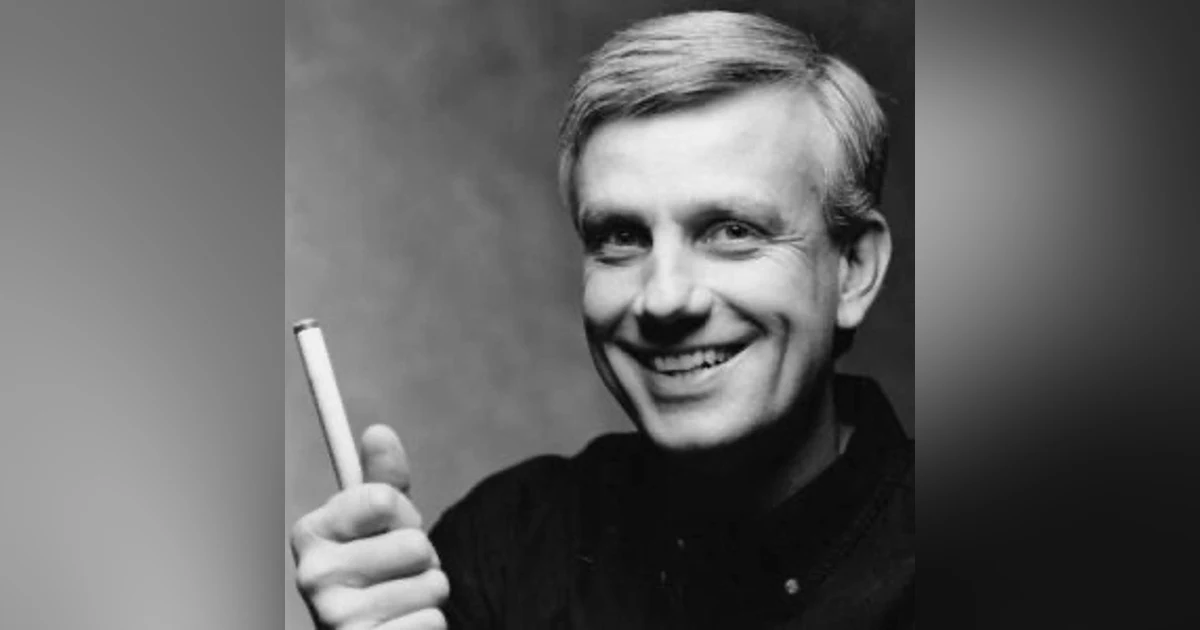

Legends of the Cue’s Allison Fisher and Mike Gonzalez sit down with their podcast co-host and one of the sport’s most passionate and respected figures—Mark Wilson—for the first of a compelling five-part conversation that explores a life devoted to the game of pool.
From his early days in Moline, Illinois, Mark shares a vivid portrait of growing up in a Midwestern family that valued structure, sportsmanship, and discipline. While baseball was his first love, a chance visit to a local bowling alley—and a glance at the pool tables—would quietly alter his course forever. What started as a curiosity soon became a consuming passion, even as his initial attempts at the game were, as he puts it, “sub-horrible.”
Listeners are treated to Wilson’s self-deprecating humor and honesty as he recalls formative experiences: Latin classes, transistor radio nights listening to Cardinals games, and his first encounter with legendary coach Jerry Briesath—who would deliver the stinging but pivotal feedback that launched Wilson’s serious study of the sport.
Allison and Mike draw out reflections that are heartfelt and humorous, uncovering the mindset of a man who turned down the conventional path in pursuit of mastering a game few truly understand. Along the way, we’re reminded of how transformative mentorship, discipline, and sheer enthusiasm can be.
With anecdotes of high school friends lost to beer runs, hours spent alone in the pool hall, and life lessons gleaned from every missed shot, this episode sets the stage for a remarkable series chronicling the journey of one of the game’s great ambassadors. Whether you're a lifelong fan or new to cue sports, Mark Wilson’s story will capture your imagination and your heart.
Give Allison, Mark & Mike some feedback via Text.
Follow our show and/or leave a review/rating on:
Our website: https://www.legendsofthecue.com
Apple Podcasts: https://podcasts.apple.com/us/podcast/legends-of-the-cue/id1820520463
Spotify: https://open.spotify.com/show/4Za0IMh2SeNaWEGUHaVcy1
Music by Lyrium.
About
"Legends of the Cue" is a cue sports history podcast featuring interviews with Hall of Fame members, world champions, and influential figures from across the world of cue sports—including pocket billiards, snooker, and carom disciplines such as three-cushion billiards. We highlight the people, places, and moments that have shaped the game—celebrating iconic players, memorable events, historic venues, and the brands that helped define generations of play. With a focus on the positive spirit of the sport, our goal is to create a rich, engaging, and timeless archive of stories that fans can enjoy now and for years to come.
Co-hosted by WPA and BCA Hall of Fame member Allison Fisher and Mosconi Cup player and captain Mark Wilson, Legends of the Cue brings these stories to life—told in the voices of the game’s greatest figures.
Join Allison, Mark and Mike Gonzalez for “Legends of the Cu...
Welcome to another edition of Legends of the Q and Alison Fisher. We've got our co-host with us to start us off telling his life story.
Allison FisherWow, I'm so excited for this episode because this is a man, a legendary man, in my opinion. He's been a former Moscone Cup captain. He's been a Moscone player back in the day, a lifelong student of the sport, a teacher, and an amazing man who I really respect and look up to. Welcome, everyone, is Mark Wilson.
Mark WilsonThank you, Allie. You read that just the way I wrote it, so that was good.
Allison FisherYou can pay me back to Mark.
Mark WilsonA complete joy to be here. I've been looking forward to this. Uh uh naturally I love Mike Gonzalez, our uh host, and uh always adored Allison Fisher ever since I first met her. And so uh yeah, that's that's my story.
Allison FisherOh, well we're we're delighted to have you here and to learn a lot about you here. So let's get going with you, Mark. How did it all start? Your early memories in Moline, Illinois.
Mark WilsonI was born in Moline and uh, you know, just a working class family. Loved uh sports all through grade school, junior high, high school, very active in baseball, especially, and then was uh on my way to college when Poole captured me. And so um I had planned on a law degree, three years of Latin. Oh my goodness, the hardest class I ever took. But the only class that I really learned anything in, and consequently, it has expanded my vocabulary so people say, Oh, he just tries to use three dollar words all the time. No, it just rolls off my tongue because no, because Latin is not a uh it's not a fun class to take because it's not spoken, it's written and it's uh translated, and so constantly you're doing declensions and uh conjugations, and oh my goodness, it was uh so uh intricate. And then the teachers are always the meanest teachers ever. They they hate their life and they hate the students, and there was a real smart girl. Here, here's how regimented they were. We had to sit in alphabetical order, and poor little Lori Wilkinson, she sat right in front of Wilson and uh she was super smart, so I was blessed because you know Lori would have her paperwork, and then sometimes I could check on it. And so uh anyway, she'd be crying about half the classes, and I'm thinking, oh my god, if Lori's crying, I'm doomed here. But but nevertheless, so that was that was my start. Baseball was my first love, still love it. And uh then, you know, towards the end of my high school days, I was going to college to play baseball, but no longer basketball and football were a big part of it. And I thought, pool, and I looked at the table and I thought, you know what, this cannot be that hard. I'll just master this in three weeks. I mean, it's not gonna take me any time at all. Later this year, I'll probably be a par golfer too. But anyway, uh here we are, you know, a few years later now, and I still haven't mastered it and uh still don't know how hard it is.
Allison FisherSo yeah, that's incredible. But I mean, you you so you're a sportsman, an ath natural athlete, sounds like, from playing baseball. And who's your favorite team?
Mark WilsonYou know, that's why I live in St. Louis, it's the St. Louis Cardinals lifelong. But that really started because as a boy, I had a transistor radio under my pillow that mom didn't know about, and at night in bed, I would listen to broadcasts, and KMOX in St. Louis came in the clearest from that distance. And so then it was Harry Carey and Jack Buck broadcasting, and they were very young. Most people here wouldn't even know how good they actually were, but they could paint a picture with words that was more vivid than if you were at the game yourself, and then I would dream every year about coming to a game, and then uh usually if my grades were good, mom would let me go to one game per year, and that was an epic occurrence.
Allison FisherWow. How how were your parents on you? I mean, what what were they like?
Mark WilsonWell, I was blessed. As it turns out, we don't all get the same parents. My mom was uh kind, loving, artistic, uh clean, you know, uh and six uh on you know structure, and dad was uh uh he was a kind and loving father, but he was also fairly stern. So if the teacher said I misbehave, there will be no my side of the story to tell. And then he was uh you know, he he was raised in the uh on a farm in the 40s, so you were part of the labor force, you weren't a kid, so he demanded a lot of us, and we kind of thought of him as General Patton, despite the fact that he was a kind and loving father, but you will be cooperating with what dad tells you. And so, but as it turned out, uh thank goodness that I had a really good dad.
Allison FisherWell, I think discipline is important, isn't it, in kids, because that instills love really. Um, a lot of love comes out of that.
Mark WilsonYeah.
Mike GonzalezYeah. And dads were like that too in the 50s and 60s. I mean, you and I are the same age, Mark, uh, same basic Midwestern upbringing. So we probably saw a lot of the same family values and uh and uh fathers were different than they are today. I think that's safe to say.
Mark WilsonYeah, you know, in preparation for this, I was just thinking of it when was my first contact with pool? And and nobody in my family is a pool player at all, not even interested remotely. And so, uh, but I remember dad took myself and my brother Steve to the bowling alley and we tried bowling. And so, okay, you know, yeah, it was kind of fun, it was okay, but they had pool tables there to just absolutely capture our imagination. So I guess the first game of pool I ever played was with my dad, who played that game and probably never played any game before or since. I mean, he's just he just let us play, and then somehow my friends had it, and there was there was a little pool room that opened up near the high school, and we walked by it, and all the people were in there having fun, and it always looked attractive, but we weren't old enough to go in, so uh that was it was probably more of a mystique of the thing.
Mike GonzalezYeah, you had a couple of brothers too, didn't you? Did they play pool?
Mark WilsonNever. Steve and Tim. Yeah, they they do now just because of me, but they never had any real interest in it.
Mike GonzalezYeah. I'll ask this of both of you. Uh uh we find this commonality on the golf side. You know, Ali mentioned uh we do this golf uh history podcast. We've interviewed 107 of golf's greats to date, and and we always do the same thing. We talk about their early life, how they came to find their sport. The one commonality across most of the men and the women is that they were all multi-sport athletes as as kids growing up. And I don't know if that would be true in the pool world or not in terms of developing that hand I required for pool.
Allison FisherIt was for me. Definitely. I was um I played lots of sport. I did hockey, netball, basketball. And for for many much of my youth, I used to kick a football against a wall for hours on end and play football with the boys. Soccer for you guys. Just to be clear. But yeah, I loved it. I loved the ball sports. Definitely had the hand and eye coordination from all of that. Yeah. Do you think we'll hear that a lot as we talk to some of your peers?
Mark WilsonI don't. I I I think most of them skip school and uh smoke cigarettes and they were looking for a way to not take a regular job, which has contributed to the downfall of American pool. They just didn't have the structured background that Allie had. And to her point, and this is a little bit off the what we're talking about, but she came to Lindawood University where I was a coach one time, and we'd given a lesson all day, and we each took a cup of coffee and we went out to the football field. And there was uh the girls, uh, what was that? Uh lacrosse. Lacrosse, yeah, lacrosse team. And we were just standing on the fence and they were in the middle of the field, and 50 yards out, they spotted Allison from her ESPN appearances, and they all came running running over, and they said, Come on, join us, join us. And she went out there, and I'll be damned if she couldn't catch the ball and throw the ball with that uh wicket. I mean, it was it was unbelievable and how good she was. And then I tried it a couple times, and it wasn't that easy. So, I mean, you can see whatever sports Allison takes up, is she's gonna be good at it.
Mike GonzalezYeah, yeah. Well, it is you sort of hinted at uh the state of the game, at least uh, you know, one person's perception of the state of the game. Yeah, I think as we as we go through this podcast series, while we'll focus on telling people's life stories, we can't help but talk about the state of the game, uh, both in the past, uh the trajectory it's on, where do we think it's heading? And I think uh you both would agree that uh part of the reason we're doing this podcast is we want to bring out and tell the good in the game. And if in one small way the three of us can influence its trajectory and its direction, we'd hope that some of this history and telling these stories will push it off into a better way.
Mark WilsonI think that's really part of my life's work at this juncture, too, is uh when I began, I I remember my mom, I go, Mom, I'm doing pool now, and she supported every sport before that. And then her inclination was, where do we go wrong? Marky was such a good boy, you know, and but she did didn't appreciate the sport, and then my father wasn't enamored either. And then even my own high school friends did not respect it. And I saw a beauty that was beyond anything they could conceive of. And so uh I just promised myself then I'm never gonna contribute negatively to the sport in any way because it's already been damaged so much. So if that's gonna be the way I'm gonna go, then I'm gonna do a different sport that could sustain some damage. We really can't. So that's that was kind of my initial impact.
Allison FisherYeah, you've all you've never ceased to amaze me with your positivity mark in anything that you do. Respect for the game. You gain you make all your students respectful and you know, it makes them better people for it. And uh it's just been so impressive over the years. You've you've really meant a lot to me as a person and a player and a supporter, a coach, you know, in every way. And everyone you come across, I think they feel the same way about you.
Mark WilsonWell, it's a it's a it's a pure love thing. And and part of the thing that happened with me was that when I was young, my my best friend, I used to call him Al Al Einstein, uh Al, because he's super bright. And so he didn't get pool at all. He goes, Why do you go to the pool room? I go, Paul, come with me. I'm telling you, it's freaking great, you know. And uh he says, uh, all right, so he came. And then I took him to the U.S. Open Straight Pool in Chicago and he saw how prestigious this event was, Meserc one. And it was uh just incredible, and we were both super motivated. So now we're going to the pool room every night after work and uh trying, and we're absolutely the worst players ever. But nevertheless, we're trying because we saw this beauty and he captured it. So then he knows this is how he is. He goes to the library and studies it intimately, and he comes back and he goes, Hey Mark, you know, the only thing I see what you're seeing, I see it, and I got a cue, but even if you got good, there's nothing at the top. And I said, Paul, I'm not doing that for money. You know, I mean, I'm doing it because I just love the challenge of this, and I can't believe I'm this bad at this sport. I've never been this bad at any sport I've ever tried. I just don't understand it. Usually I would always be just slightly above average because I'm a tall, lanky kid that can run and jump, and then with a little bit of coaching, I got even better. So I was always above average, except in pool, you know, sub-horrible, sub-horrible. No, it's incredible. I don't know how I could be this bad, you know. And it was just astounding to me and disappointing too. And probably that led to some of the part of it that really captured me. Like, I just cannot imagine I'm this bad.
Allison FisherBut that you've got to tell the story about Jerry, what you said to you now. Oh, well, yeah. I love the story.
Mark WilsonPretty much everybody's heard it, but uh it's it's one of these things where uh I happened into his pool room. This would be 1973. And Jerry Bryset, my my mentor, and kind of the father of modern pool instruction. But we were both young. I was 18 and he was in his 30s, and he was a tall, slender guy, he has these great big eyes, and uh I went into the pool room uh not knowing it's a pool room because the pool room I started off in was so horrific, but I thought it was okay because they had nine-foot tables, and it was all the you know, when the policeman come in, there's the kid that shoplifted over there, and here's the other juvenile link went to skip school, and then I'm in there like the ugly duckling. You know, I absolutely don't belong in this group because I'm an athlete that doesn't smoke, and so but I went out playing, and uh somehow in my head I I assumed that these must be the best players in the world in here the white because they're so much better than me, but as it turned out, they're actually horrible players, but I thought they were good, and so uh because they're way better than me. Well, then it ends up I end up in Madison, Wisconsin, go to Jerry's pool room, and the kid in there he says, uh Oh, did you want to rent a table? Well, I've never seen a pool room to this day that's nicer than Jerry's pool room, and this was pre-alcohol, so it just had to be 22 gold crowns, perfect, clean, immaculate, balls gleam, big 500-gallon fish tank in the middle of the room, plants along the wall, very serene. And it was called Cunique, Cunique Billiards. I'd never even seen a sign like that. And so uh anyway, I was encouraged to buy a lesson. So and I thought about it for a bit, and I had the money, so I thought, you know what, the people are gonna say I'm an idiot, but I'm gonna try it. And if it's as bad as I fear, I can afford this, I'll just never tell anybody what I did with this money because this would be really stupid. And so I chanced it. And Jerry says, Okay, he says, let me see you hit this cue ball down there in the far corner pocket. And my heart, oh, I'll never forget it. My heart was thumping. I wanted to impress him, I wanted him to have to say I'm good. And I shot it and it went in, but I poked it, but not knowing that that was wrong, and it went in, and I was so relieved. And now he's forced to say, Oh, you're good. And he goes, Oh, I see what you got there, I see what's going on. How long did you tell me you've been playing Mark? And I said, Jerry, I played every single day for three months, I only missed one day. And he said, Okay, well, here's what I think. And I kind of like leaned in because I want to hear every word. And he goes, I want you to take two weeks off, and when you come back, I want you to consider quitting altogether. And then he may have even uttered something about crocheting or crossword puzzles to be my you know, just kind of like that. But it stung and it hurt so bad. I'll never forget how I I had to take a moment to even collect myself. I surely did not hear those words, but it was really his way of getting my attention that what I thought I had learned was not valid. And when I went there, I thought, beans I played three months and pool in Wisconsin, that's filled with hillbillies to begin with. Who in the hell could beat me? And so that that was my how naive I was. You know, I just thought, and then anyway, it was it was a long story slog from subhorable.
Allison FisherHow'd you come back from that, really, from being told that?
Mark WilsonI think I think one of the best things was that my dad was kind of a uh a stern guy, and so my ego was kind of beat out of me, you know, by that time, and it was kind of like shut up and listen, son, you know, and that type of thing. So I thought, well, maybe, you know, I had let this go. That was embarrassing, but let's see what he has to say. And then it was it was sort of revolutionary in terms of his concept of you only control the queue, you don't control the balls. Where previous to that I'd always been told make the ball and win the game, don't miss the ball, lose the game.
Allison FisherYeah.
Mark WilsonAnd had no inkling of what uh the delivery of the queue should be. And he kind of rearranged that, although it did take me some time, and I mean significant time, to get my thinking to buy in, even though I conceptually understand his words, but I still wanted to make the ball and win the game. So that's probably and then I think it's still a conflict with other people even approaching the sport now, is that they get that same type of information and and then don't respect the technique as much as just want the result.
Allison FisherYeah, and Jerry has been a great uh instructor and mentor, hasn't he, for players all over the world.
Mark WilsonAt any skill level, and he's he's one of these inventive guys that he looks at something, it doesn't matter what it is, it doesn't have to be pole. He he's just got a knack for like if if you were I I can remember vividly, some guy had a cigarette lighter and it was kind of a new thing. And so Jerry was examining the cigarette lighter and he disassembled it in front of the guy, not knowing what he's doing, and then saw how it worked and put it back together and made it work better. And that really described, no, that's just how Jerry is. You know, whatever it might be, if you handed him a firearm, he'd take it apart and he would examine it and get it lubricated properly and make it slide better. He's just one of those inventive, uh, imaginative guys. But it's a little bit of an oddity, too, that most people they just look at it and say, Well, I guess that's a cigarette lighter, no big deal, or uh, here's a pool stroke. And uh he he's really just he's pioneered so many different thoughts about it that I still learn from him today, and he's 88 years old, and I've studied him the duration of my adult life.
Mike GonzalezYeah, we hope to get the opportunity to tell Jerry's life story on the podcast. You know, Marcus, you talk about um turning toward Poole as a young man and and uh and foregoing college. Uh probably fair to say your parents were not enthusiastic supporters of that idea, but uh your friends weren't necessarily that crazy about it either, were they?
Mark WilsonNot at all. No, I I I did I completed a year and a half of college on my way to law school. That had always been the plan. I don't know that my heart was in it deeply, but it made sense, and that's what they always told me, so I guess that's what I'm gonna do. And hence I always kind of built my life towards that. And then uh pool captured my imagination, so I decided I would just take one year off from college and just play pool so I could really see if I could make any progress at all. And it was, it did look horrific. You know, I mean, it was grotesque. And the people, my friends in the pool room would say, What are you doing? And then they always turn their head like, What are you thinking? You know, and I'd say, I know, I know, but I just want to try it. I just want to try it. I just and and so then I kind of clawed along there and made a little bit of progress. But yeah, my friends, especially my high school friends, they were, they'd go, Come on, come on, we're going out tonight, get some beer, get some girls, you ready? And uh I go, Oh, uh boy, I know it's psychological, I know they're gonna rebel. But I said, Well, I'm going to the pool room because I got this lesson off of Jerry and I'm not any good, but I want to work on it. I think I can be. And they go, Come on, come on. You used to be fun. What are you doing? Let's go. And uh I go, Oh, you know, uh, this is the only way I could shut him up. We never get girls, or I would go. And and so we just end up drinking cheap beer, and I don't care. You know, I mean, so I'm going to the pool room. And but that was really where I lost my high school friends after after high school was that I went this way and they were thinking about, you know, we'll get some beer. You know, it just ends up cheap beer and drunk and stupid. Yeah. And I wasn't fascinated by that. I'd never been an alcohol guy.
Mike GonzalezWell, you were you were attracted to to the game, but where'd you think you were going with it?
Mark WilsonNo, that was never the point. No, I didn't have any idea. Although I did after I went to the U.S. Open Straight Pool and saw Miserak and Danny DiLoberto and uh Jack Calavita and Lassiter and Balsus and all these greats, I mean, I'll never forget I rode the elevator down. The Willie Munson pro from Milwaukee had just lost a match, and I so wanted to say something, but I didn't want to bother him. And then, but these were like giants in the sport to me. I I couldn't even imagine they would ever utter one word to me. And we were going down the elevator, and I'm just standing there real quiet, and I was thinking about and he looks at me, he shakes his head, goes, mm-mm. Just wasn't Willie's day. And and then later on we became best friends, you know, but he was just such a great talent and the down-to-earth guy. And it was very endearing because I was just wishing even he uttered one phrase like hey, push button four or something, you know, I would have done that.
Allison FisherBut so you knew you knew of these players. What made you go to watch the US Open? Were you competing at the time?
Mark WilsonWell, not really. No. I'd heard. I'm always one of these guys. I believe in like mystery and uh fantasy and imagination and kind of a positive, like, and I just like, oh, I'd give anything to see what that looked like. I can't even imagine. But I guess they play probably there's clouds and they're standing on clouds and hitting balls or something. You know, I mean, I just had this like and but it was, it was absolutely amazing at the Sheridan on Michigan Avenue in Chicago. It was a big ballroom and it had it had a uh mezzanine. And we'd go up there and you could look down. It was just four tables, great big scoreboards, uh, tuxedos, and then these guys would be running uh a massive amount of balls beyond anything I could conceive. And the referee would call each ball, and Mr. Mezzerac playing the four ball on a 73 ball run unfinished, and uh, or if he got to 50, it'd be stopped the game, and everybody in the audience would have. To applaud the mandatory round of applause at 50 and 100. And it was just fascinating to me to see these you know titans of the sport who I never really thought much about, didn't know what it looked like, just was curious as could be.
Allison FisherDid you realize you were in a sort of special era? If you look back on your life, did you realize that that was a special era at the time?
Mark WilsonSadly, no. I I assumed it was only going to get better and I didn't realize it was I knew it was great. I I could see it was great, but you always think, you know, as time moves forward, things get bigger and more pronounced. And it was just a see, we didn't have the things that distract you. There was not a casino in every town, and there was not, you know, 150 channels of satellite TV. So you would read a lot, and then you'd kind of create a mental image, but then you'd go there and it'd be more grand than you possibly imagined because you'd never witnessed anything. And I think this kind of was that. It really captured my imagination of wow, this is incredible. I know I could never play anything like that. This was the big leagues for sure. And uh it was a prestigious tournament, it was limited to 32 players, and you had to go around the country to win a qualifier, and so unless you previously won it. So the people that were invited was Lassiter, Irving Crane, uh uh Dallas West later won it. I don't think him, but uh greats, uh Ray Martin, and uh on and on. And then you young guys like Siegel and uh Rympe and Lou Batera would travel the entire country trying to win one of these qualifiers that was just as tough as could be. And you'd have famous players and they would fly in to play, and I would attend those qualifiers, and oh, it'd be every bit any the equivalent of any American pro tournament today in terms of the difficulty. These are life masters, and only one guy got to qualify. And so it was fiercely fought, and so then when you got there to those top 32 at that tournament, oh, it was just incredible. Every match was could have been the final match had it drawn differently, and so it was just fascinating. I just couldn't miss a moment of it when we went there.
Mike GonzalezSo, how old were you when you attended that event?
Mark Wilson18, just 18 early early on in my pool life. I I wasn't any good. Uh I my high run was probably seven.
Mike GonzalezAnd uh really that's when did you progress from sort of sub-horrible to horrible using your lingo?
Mark WilsonWell, that's it's absolutely accurate. You know, I mean, I'm not embellishing it. Uh probably a year and a half in, I started to see a little something, and that was after many lessons, not one lesson, that was many lessons. I I guess you know the the fact of the matter is, as I've aged now, I understand, to do anything great in life, you have to have two attributes. Okay. Number one, you have to have tremendous enthusiasm. And secondly, you also have tremendous ignorance. Because if you knew what you're embarking on, how hard it is. No, really, and so you know, God bless me with plenty of both. I got enthusiasm and I'm dumb. You know what I mean? So, hey, make it happen here, just keep going. And uh that was Scott, I do have fortitude. I will I'll have to credit myself. I don't even believe what I win do or eat myself, and that's why it's hard to share with people. They think if I just whisper the secret in their ear, they could be good. It's not that, it has to be a lifestyle. You have to do it like Alison did, where she immersed herself in this. And it's she's not a pool player nine to five, it's 24-7, 365, or you're just not gonna get it. And that's uh I think with any sport it's like that at the highest level. You have to it has to be your lifestyle.
Mike GonzalezYeah, so the the vision for you at the time, it it certainly wasn't pointed toward financial reward. Uh it was all about uh getting better, the quest to get really, really good, and ultimately uh the trophy, not the money.
Mark WilsonThe challenge of the sport and the beauty of it, just to even hold it at bay for a little bit because I was so bereft of any talent, you know, for it. So I I just uh fascinated me. And then nobody else enjoyed it. And I always thought I'm gonna be way ahead of everybody else when people discover how great this is, you know. And uh I've already been working on this, you know. So uh anyway, it just became my uh my my complete passion, my overriding passion.
Allison FisherI can see in this that you turned professional in 1975 at the age of 19. Is that correct?
Mark WilsonWell, that's a pretty loose definition of professional.
Allison FisherThat's what I was wondering. If at 18 run seven balls, I'm wondering what the professional part at 19.
Mark WilsonRight. Well self-declared. It wasn't no, I would say. Well, there wasn't a tour. There was only a couple tournaments a year. And one was in Dayton, Ohio, and the other one was uh the U.S. Open Stray Pool in Chicago. And so um I wasn't qualified for either one of those things, but it was everything then was gambling, you know, travel on the road, gambling, you know, and I wasn't good enough for that. I couldn't even win a two-dollar game in the pool room locally with the worst player in there. But it was just uh the challenge of it, and so what happened was when I was 19, I'd moved to Madison, Wisconsin, and I'm working construction, and decided to take a year off from college, and so now um I've saved up $2,000, and I'm just gonna quit my job and devote myself completely to pool for one year, and then I'm going back to law school like I'm supposed to.
Allison FisherThat's what you told your mom and dad.
Mark WilsonNo, I was planning on it myself. I just wanted to see, but uh it was I just wanted to see if I could make any inroads whatsoever, but I absolutely do not want to sentence myself to a life of a sport that I could never be any good at. And right now it did not look very promising. So I did. I saved up $2,000 and I rented a student's apartment. It was in the top of a uh house, uh three blocks from Cunique Billiards, where I and I would walk there and walk back, and then uh every waking moment, Jerry would literally kick me out at night, and he would come by and he would pick balls off my tables because he called last call 10 minutes, finish up your drinks, games are over, we're closing at one, and then it'd be five minutes, five minutes, and then he would come down, I'd be the last guy there hitting balls. And he would I'd say, Jerry, look at my backswing. Isn't this what you said? I'm doing it right. Isn't this it? And he would literally start picking balls off my table. No, Mark, we're closed now. You have to go home. You have to go. And I would be waiting for him outside the door the next day. And he, because he worked at open the clothes often, he would get there a little bit late, but I'd been there 15 minutes early. Oh, I was so mad. I was so mad that he was, I'm like, what is it, 11, round 11? What the hell are we doing here? You know, and and one guy goes, he goes, I know I used to drive by, you'd be standing outside with your cue. I go, Oh, yeah, I remember that. He goes, You even had your cue together. And I go, Oh, I don't think, oh no, it is possible. You know, I mean I would say I can't recall that exactly, but uh when I walked in, it was not social hour. I would say, Hey Jerry, how's it going? Table eight, and I would do it all. I never broke stride. And I would go over there and play, and then I can remember I had to miser my money out. It was pool time, it was a dollar eighty an hour, and I tried to hold it down to twenty dollars a day pool time. And so if if like say Mike Gonzalez stopped in for lunch, I'd say, Hey Mike, what's up? Hey, how you going? Oh, you got an hour? Oh, you ordered a sandwich. Hey, how about if we play for an hour? And he said, Okay. And I said, How about for who pays the table? And if he agreed to this, if I could win that, now I can afford to stay later that night. So it really wasn't about Mike, uh, to be honest with you. You know, it was more about me getting an extra hour in. And uh that would be, I remember there was a place that it was a little pizzeria not too far away. And so lunch was one slice of pizza, it cost two dollars and twenty cents. And then dinner, there was a place called Mickey's Dairy Bar, and they made home cooked meals, and that was about like $3.50. And that was the extent of my expense anywhere other than the hundred a month apartment. No phone, no TV, nothing. Austere students' apartment and pool time. That's the extent. I'm not spending one penny on anything but those two things.
Allison FisherThank you for listening to another episode of Legends of the Q. If you like what you hear, wherever you listen to your podcast, including Apple and Spotify, please follow, subscribe, and spread the word. Give our podcast a five-star rating and share your thoughts. Visit our website and support our Paul History project. Until our next golden break with more Legends of the Queue, so long, everybody.
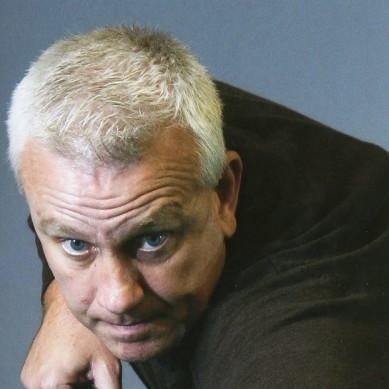
Mark Wilson is one of American pocket billiards’ most respected “complete professionals”, a high-level competitor, Mosconi Cup closer, international team captain, broadcaster, and master teacher whose life in pool has always been anchored by discipline, dignity, and a deep belief that the game deserves to be presented at its very best. Today, many fans know him as a co-host of "Legends of the Cue" alongside Allison Fisher and Mike Gonzalez, but Mark’s story stretches back decades, through smoky poolrooms, cross-country road trips, pressure-cooker arenas, and collegiate classrooms, always driven by the same idea: if you love the game, you owe it your best.
Born and raised in Moline, Illinois, Mark grew up on the banks of the Mississippi River in a working-class household and was a sports-first kid, especially baseball, long before pool captured him. He graduated high school in 1973 and attended Blackhawk College to play baseball, while also pursuing studies aimed toward law school (including three years of Latin, an early hint of the seriousness and mental structure he would later bring to cue sports). But as he tells it in the "Legends of the Cue" series, pool’s pull became impossible to ignore, and the path he’d mapped in academics slowly gave way to the life he truly wanted at the table.
By 1975, Mark had become a professional pool player, entering an era when there was no steady, modern “tour” economy, and many players stitched together a living through regional tournaments and action. He describes that period with clear-eyed hones… Read More