

 Apple Podcasts
 Spotify
 Mike Panozzo - Part 2 (Minnesota Fats, Buddy Hall and The Color of Money Boom)
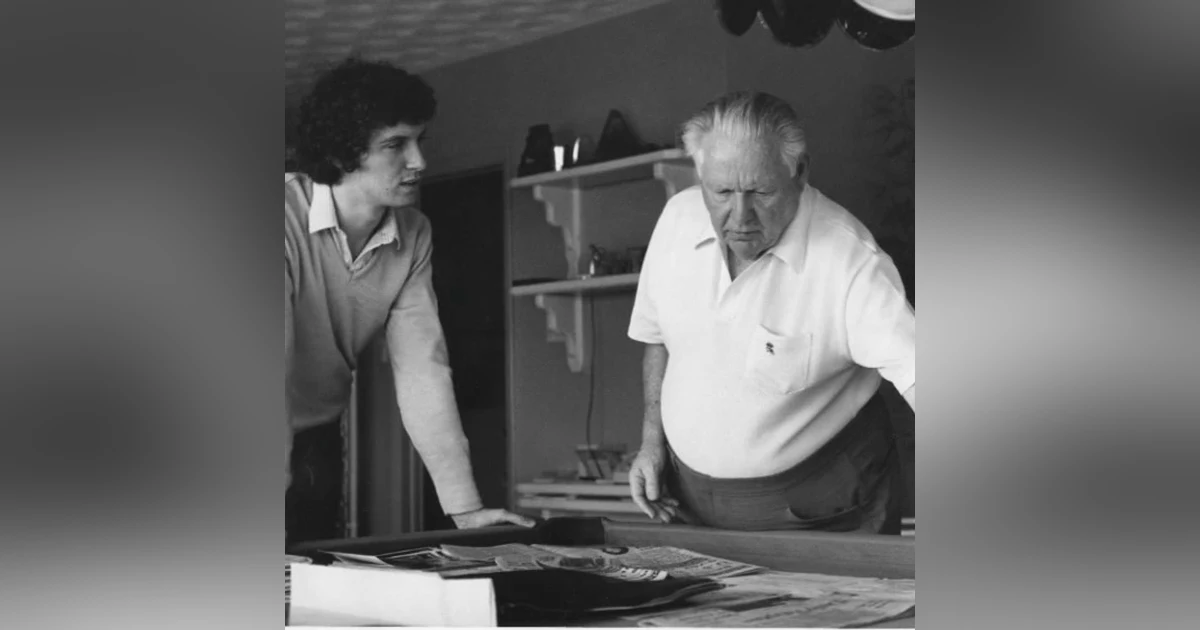

In Part 2 of our interview with Mike Panozzo, Legends of the Cue steps into the pool world of the early 1980s — a time when the billiard industry was struggling, professional pool was still searching for stability, and a young journalist from Chicago was learning the game one tournament, one poolroom and one unforgettable character at a time.
Mike describes what Billiards Digest Magazine looked like in 1980: a small, mostly black-and-white, bi-monthly publication covering tournaments, players, room owners, retailers and manufacturers. He recalls how the industry operated, how closely bowling and billiards were once connected, and how the magazine became a window into every corner of cue sports.
This episode features Mike’s memories of legendary players including Mike Sigel, Buddy Hall, Irving Crane, Willie Mosconi, Luther Lassiter, Joe Balsis, Jimmy Caras, Lou Butera, Jim Rempe, Jimmy Mataya and Minnesota Fats. His story about traveling to interview Fats in southern Illinois is classic pool history — funny, revealing and slightly exhausting.
Mike also shares his first impressions of Buddy Hall’s effortless cue ball control, Mike Sigel’s flair and star quality, and the early tournament rooms where regional and national talent collided. Mark Wilson adds perspective from inside that same era, recalling the Illinois Billiard Club and the deep fields of elite American players.
The episode then turns to the seismic impact of The Color of Money, Martin Scorsese’s 1986 film starring Paul Newman and Tom Cruise. Mike explains how the movie created a national pool boom, sparked new room openings, boosted manufacturers, lifted magazines, and changed the commercial landscape of billiards for more than a decade.
Give Allison, Mark & Mike some feedback via Text.
Follow our show and/or leave a review/rating on:
Our website: https://www.legendsofthecue.com
Apple Podcasts: https://podcasts.apple.com/us/podcast/legends-of-the-cue/id1820520463
Spotify: https://open.spotify.com/show/4Za0IMh2SeNaWEGUHaVcy1
Music by Lyrium.
About
"Legends of the Cue" is a cue sports history podcast featuring interviews with Hall of Fame members, world champions, and influential figures from across the world of cue sports—including pocket billiards, snooker, and carom disciplines such as three-cushion billiards. We highlight the people, places, and moments that have shaped the game—celebrating iconic players, memorable events, historic venues, and the brands that helped define generations of play. With a focus on the positive spirit of the sport, our goal is to create a rich, engaging, and timeless archive of stories that fans can enjoy now and for years to come.
Co-hosted by WPA and BCA Hall of Fame member Allison Fisher and Mosconi Cup player and captain Mark Wilson, Legends of the Cue brings these stories to life—told in the voices of the game’s greatest figures.
Join Allison, Mark and Mike Gonzalez for “Legends of the Cu...
Mike Gonzalez
So what the pool world in 1980, sort of in context with the history of the sport in terms of the movies and the popularity and so forth, where was it on its growth arc? Just describe the pool world that you came to know first in uh in 1980.
Mike Panozzo
It was uh it was pretty slim pickings in the billiard industry in 1980. It had gone through between, you know, because of the economy as much as anything, because of housing, because of huge interest rates, things like that. Uh the billiard industry was struggling at that point in in the early 1980s. Um and so, you know, it was the magazine, you know, struggled with it. We had we had, you know, we'd had a hard time filling pages. And um, so it was, you know, I didn't know, again, at that point I had just started there, so I didn't know how long I was going to stick around. I wasn't as, you know, dialed into whether the industry was going to survive or not. But you knew it would, you know, more always said, listen, this is this industry's been around a million years, it'll be around a million more years. It goes through these cycles of ups and downs. And that's just, you know, at that point it was okay, let's see, where where do we go from here? We got a train going by somewhere.
Allison Fisher
I love that.
Mike Panozzo
Yeah, I apologize. It was right alongside a train tractor, usually not very long, but I think that's our first train whistle on the pro. It's like uh talking to Mike is like my cousin Vinny here, where you're it sounds like one of those one of those you know police movies where we're trying to determine where someone was. You say, wait, can you listen? Can you hear in the background? There's a it must be near a train, you must be in a warehouse near a train track. Exactly. Case solved. But uh but yeah, the industry was struggling in the early 80s. Um and so uh, you know, and Mark can attest to this too. It was it was just a a difficult time for everybody in the U.S., uh, you know, certainly in the recreation business.
Mike Gonzalez
Aaron Powell Yeah, late 70s, 80, uh you're right. I mean, and that that was, of course, the the year of Miracle on Ice, which maybe changed uh the psyche of America with uh, you know, Carter came in. You had the Iran um hostage situation, you had mortgage rates at uh high double digits and gas prices very expensive and or or hard to get. So it was it was tough times. I'm sure that would have translated to pool.
Mike Panozzo
Yeah, it did. It did. My my paycheck reflected that as well.
Mike Gonzalez
So when when would you have run into Mr. Wilson? Because that probably would have been early on, I would think.
Mike Panozzo
That was right, that was right away. Uh you know, there was a there was a great pool room. It was kind of a private club listed as such in the Southside called the Illinois Billiard Club. And uh it had, I don't know, Mark, did it have six tables? I think there was eight. Six or eight tables. Um and and the the proprietor, Jim Parker, routinely ran, you know, decent little, you know, regional tournaments there that a lot of the players from Illinois, Wisconsin, Iowa, uh, you know, uh used, you know, they would come in and play. Nick Varner used to come up from Kentucky to play in some of the nine ball events at at Illinois Billiard Club. Mark, Mark was there. Um, a lot of other great Midwestern players would show up there. And so, and I would go there because it was in Chicago, it was easy for me to just drive my you know car down there and and um and poke in on the tournament, meet some people, and that's where I met Mark. And then I went up the first time I really interviewed Mark was in early 1981. I came up to Milwaukee, they had the uh state sports show in Milwaukee, and part of it was a pool tournament, and they had the straight pool, the state straight pool tournament there. So I came up to watch that, and I got to see Mark run a hundred and out in the semifinals, and then uh then he and then he then he ran, then he won uh the finals against a player. Was he from Green Bay or Appleton? Is it Rick Ruxton?
Mark Wilson
Green Bay, yeah.
Mike Panozzo
Yeah, Rick Ruxton, who was a terrific player. Uh, and Mark Mark beat him in the final. And so, yeah, that was that was Mark's first appearance in Billiards Diges. I took a photo of Mark holding his trophy after his win, and it's in the it's in the 19 March 1981 issue of Billiards Diges. For anybody who wants to look through the back issue.
Mark Wilson
I don't. I got my cover back here though. Um you know, going to the Billiards Club, the Illinois Billiards Club, it was such an interesting place.
Allison Fisher
I know that you all were again.
Mark Wilson
There you go. There it is. All right. We need that picture, by the way. Yeah. It's from Mum's basement. Nevertheless, uh the Illinois Billiards Club was such an interesting place, and it was kind of a historic kind of a place as well. And they had tournaments in there. Sometimes they were monthly even then. There would be players such as the stature of Louis Roberts and Don McCoy and Dallas West and Jeff Carter and Jim Matthias would come over occasionally, and then uh Tommy Spencer, George Brown, Willie Munson, players like this, regional stars and pros. And I'll never forget we went there one time and Jim Parker said, Okay, everybody, um, we're locking the door. Nobody leaves. Uh, there's gonna be a Nazi parade through Skokie, and there's gonna be trouble, there's gonna be violence. And I was terrified, but I was concentrating. Well, I've never been to a place where there's gonna be some type of uh altercation that could be, you know, life-threatening. So, but anyway, I was playing Dallas West and I didn't have time to worry about it too much. I was pretty much maxed out there, but that did happen, and you can find it, you can find news clips. This made national news, but you know, I probably wouldn't have gone had I known that that was even on the table. I'd never heard of such a thing as a Nazi rally.
Mike Gonzalez
Yeah. And of course, for our listeners, the Skokie community was a large Jewish community.
Mike Panozzo
Jewish community in Chicago.
Mike Gonzalez
So yeah, yeah.
Mike Panozzo
Yeah.
Mike Gonzalez
Well, so you guys, you guys go way back. We'll come to uh your first meeting with Ms. Fisher because that doesn't come up for another decade or so. But in the meantime, as you go back to 1980 and your beginnings at the magazine, can you think of ways you kind of put your imprimatur on the magazine early on, some things you might have changed or just taken to another level?
Mike Panozzo
You know, I I I don't give myself credit for for much of what happened there because it's always, you know, it was always Mort's decisions, but I really pushed, because I was such a Sports Illustrated fan, I really pushed art. I really pushed good cover art, taking the time to take photos and running full bleed covers. We didn't have full bleed covers at that time. We had small photos on it, and there would be a solid color background around the, you know, where they would drop into type, things like that. But I I liked full bleed colors with the covers with the with the type reversed out of it and things like that. And so I used to push for that a lot and good art inside, which I thought was really important for readers. And again, it was all Sports Illustrated influence because their art was phenomenal. And they took the other thing I loved was loved, it's gonna sound weird, but I loved headlines and captions for photos. I loved writing those because if you read Sports Illustrated back then, they were always clever. They always drew you into the story. They always gave you just a nugget of information, or they always had, they were always worded cleverly. Um, so I loved doing things like that. So I just tried to make, I tried to bring the magazine a little, make it a little more contemporary and put it a little more in line with a magazine. I wanted a magazine that I could show my friends and my journalism professor, professors, and that they would look at it in the same way they look at a large consumer magazine. That was that was my goal. How can I turn this into something that I'd be proud to show my college professor and my journalism friends that they would say, oh, this is a this is legit. This is a real magazine. From the writing standpoint, from the art standpoint, the design standpoint, I did try to push it along that way.
Mark Wilson
You know, I'll opine on this too, because before that it was the Bowler's Journal. Is that correct? Is that the right name? Bowler's Journal and Billiard Review. Okay. And in the back of it, there would be about six pages devoted to billiards, and it would be very generic and mundane. But I nevertheless, that was all we had, so we would read it. But then when Mike got his fingerprints on it, it evolved into something that was much more proud and and you were glad to be associated and far more interesting. And much like he said, there was clever titles and captioning, and the stories were often pertinent and good and relevant, where when before that they'd been somewhat antiseptic, like maybe somebody didn't even meet the person they're writing about. Or it was so so it did become quite a bit something more that the industry was proud of, too.
Mike Gonzalez
Yeah, thank you.
Mike Panozzo
It was fun.
Mike Gonzalez
Mike, as as you got started and and became somewhat exposed to the game of pool at a professional level. Do you remember a moment where you're watching somebody play and you're like, wow?
Mike Panozzo
Mike Siegel. Yeah, I was at the 1981 World Straight Pole Championship in New York. Um and this was they were all wearing tuxedos and playing straight polls at the Roosevelt Hotel and big ballroom there. And um uh I was watching these guys play, and I and I had heard about Irving Crane, and I got to see him play, and you know, people like that, and and Alan Hopkins, and you know, met all these players, and then I saw Mike play, and he just had a style about him that was uh, you know, he was a lefty, he was, you know, he always always his tucks fit perfectly. He had a very flashy style at the table, his feet spread really wide, and that long bridge, and and he would rifle balls in, and he had great reactions after the shot. And I and I thought this is the way a professional pool player is supposed to look to me. This is this is that style and that kind of uh you know stylish gunslinger, if you will, if if you know, if if you can combine the two. Um that's when I thought, this is this, this, this guy's, you know, this is if if I'm making a movie or I'm doing a uh a television, you know, thing on on pool, this is the guy I want people to see, because they say, okay, this this looks pretty cool, pretty legit. Yeah, yeah. And of course he could play. He could play a little. He could play a little bit.
Mike Gonzalez
He he won a few events. Thinking back, you mentioned uh a couple of the old timers, like an Irving Crane. Think about some of the people that most of our listeners would have never have ever had the opportunity to see play, particularly live. Yeah. You must have seen a lot of them in the early days.
Mike Panozzo
Yeah, I did get to see a lot of them. Many of them like past their prime. Like at that point, Crane was, you know, he was in his final years of playing. You know, there was a group, uh, a production company called Big Fights that that got into some sports, some billiard programming on ESPN and on ABC Wild Road Sports. And they had a couple of legends tournaments, you know, for three or four years in Atlantic City, and I would go to those. So I got to see, you know, Moscone and and you know, Babe Cranfield and Luther Lasseter and Joe Balsus and Jimmy Karras. And these are these are real legends. They were legends when I was 20. You know, so maybe fats.
Mike Gonzalez
Do you see fats?
Mike Panozzo
Yeah, well, fats, that's that's a whole different story. I I I went, my boss told Mort told me at one time, I want you to go down to DuCoyne, Illinois, which is where Fats lived in Southern Illinois, not too far from Johnston City, where the old hustlers tournaments were. And uh he said, I want you to go down there and I want you to interview Minnesota Fats. And I he said, your assignment is to go down there and pull what pull out of him, you know, see if you can really get in there and find out who he really is, what he's really like, whatever. And I was like, this is my kind of challenge. So I drove down to DuCoin, Illinois. I was supposed to spend two nights down there. Spent the whole day at Fats' house with him and his wife, Evelyn. And um, after one day and part of the next morning, I raced out of that town like my hair was on fire. I couldn't take one more minute of being with this guy. And you you met him, Mark, so you know you know what it was like talking to Minnesota, you know, to sit there in a room and interview him. It was just, he he makes Mike Siegel sound like a mute. I mean, he was talking. He could give Mike Siegel the nine, the eight and the break when it comes to talking. And he had, and it was all the typical Minnesota fats embellishment stories. It was, you know, you'd ask him about the weather, and the next thing you know, he's talking about the time he beat the Major Raja in India out of, you know, six million rupees. And then, you know, he was the champion, the world champion and whistling, and and he just would go on and on and on. And his house had this old pool table in the in the living room that, you know, he was not someone who's gonna sit around the house and practice pulling. He wasn't the greatest player to start with, but it was the pool table was all filled with these yellowed newspaper clippings. That part of it was kind of sad to a certain extent. You know, he's he was up there in age at this point and just kind of milking whatever he could still milk out of the name that he had. But he was lost in his own mind as well. I mean, he really, you know, believed all the stuff that he was telling you, but he could just, he could do it so quickly and so fast and come up with these things where you would just, it would just stop you in your tracks. You say, where the hell did this come from? But he was, he was, you know, it was Minnesota Fast. There was nobody else like him. There was nobody who could talk like him. He could come out with, you know, good comments every now and then that were very quick-witted and he had a good sense of humor and and you know, could could rip someone apart. Very, you know, he was like Muhammad Ali in that respect. He could he could slice someone up in a few words, you know, as quickly as anybody could. But yeah, that was one of those. I went back to my office, I said the more, I said, listen, I I couldn't do it. I was gonna hang myself if I stayed there another 10 minutes. So did you fail in your assignment of really pulling a lot of interesting stuff out of them that maybe nobody Yeah, but it ended up being a pretty good story because I basically wrote the story around what I was sent down there to do and what a futile effort it was.
Mike Gonzalez
Okay.
Mike Panozzo
And how I would challenge anyone in the world to try to get more out of Fats than I did in those two days.
Mike Gonzalez
Mark, does that sound familiar to you?
Mark Wilson
Yeah, you know, uh what Mike said nailed it. Fats has told those same stories so many times that he now believes it. And it's much like the older guys today, they the you know, the older they get, the fewer balls they missed when they were 30. So Fats would be like, yeah, I was playing the show of Iran. He was a little short of cash, so we played for a bathtub full of rubies. And he would just roll these on, on and on and never stop. But but he he was a decent player. It did take a real good player to beat him in one pocket or banks, and he would match up smart, and but he had all these real he he was a pool history guy that added so much depth, and he's one of the only two people that ever transcended billiards in the mainstream America, and that would be the other one, would be Jeanette Lee and be Minnesota Fats.
Mike Panozzo
Yeah, yeah. He was uh um he he was a good player and is he was great at making games. He knew how to make a game, and he lived around, you know, Southern Illinois because that kind of part of the Midwest was where a lot of guys would would hang because they would have a car and they would drive to Detroit, they would drive to Kentucky, they would drive here, they would drive there, play games and make games, and just you know, drive through the night to the next city. And this was a you know, that the Midwest was, you know, back from the hell, from the Bonnie and Clyde days was where the the gamblers and the the fast livers, they just where they kind of hung out was in in the middle of the Midwest there. So they get around the country pretty quickly.
Mike Gonzalez
Yeah. I I remember Nick Barner saying about Fats, he could he could catch a gear, but he was probably very smart about who he knew he could beat and who he knew he couldn't beat, right?
Mike Panozzo
Yeah, he could make a game.
Mike Gonzalez
Yeah, he knew how to do that. Yeah, yeah. So some about the other characters. Uh you you I mean you mentioned uh a lot of guys, Butera and Balsus and Crane and Lasseter. You probably would have seen a lot of Miserek coming up on Buddy Hall and Mattaia and all those guys. Uh who really made some impressions on you early on?
Mike Panozzo
Yeah, um, well, Buddy, it's funny you mentioned Buddy because I talked about Mike Siegel and I've told this story before before, but I went to a nine-ball tournament and I had never seen Buddy yet. I had not met Buddy yet. But Siegel was there and all these other players were there. And I was watching, and someone said, you know, uh, you've never watched Buddy Hall play. I said, No, he said, this is the guy you got to go watch play. And I had seen Siegel swing cue balls around a table and fireballs in from eight and a half feet and all this kind of stuff. And then I went and I watched Buddy Hall play for a while. And I was bored silly because this guy's cue ball was never more than 18 inches from the next object ball he wanted to hit, and the angle was always perfect. And so his runouts looked so effortless and so like every ball was a hanger. And I thought, this is kind of boring. This guy's, you know, uh he's always like a foot away from the shot that he's gonna take. And then it dawned on me, that's probably a really pro to play pool if you can do it. And so that was my first, um, that was really my my my first time seeing the game played that way, uh, where it wasn't all flash and dash and 80 miles an hour, and and appreciating just how good his cue ball was, just how good a player he was. He was that was a real eye-opener for me. Because, you know, again, like I said, watching the straight pool players and uh the big hitters like Siegel and Rempey and guys like that, and then watching Buddy Hall was just a completely different animal. And he was he was a very impressive player to me.
Mike Gonzalez
Was straight pool the game for a few years when you first got started before you saw the emergence of nine ball in the pro level?
Mike Panozzo
No, it was nine ball was was beginning to, you know, it was it was mostly the game then as well. There were a few straight pool tournaments, they had the world straight pool tournament every year, but it wasn't like you know, there were six or eight straight pool tournaments a year. There was one or two. And everything else that was developing was all around nine ball. Yeah.
Mike Gonzalez
So at some point, you came to buy the magazine, become owner and uh publisher, I guess. So in those intervening years, things that must have been going okay. You must have seen there's a future in investing in this thing, I guess, huh?
Mike Panozzo
Yeah, well, you know, we talked about the Illinois Billiard Club before, and Mark will remember this. In the the mid-80s, they had a casting call at the Illinois Billiard Club for an upcoming movie called The Color of Money. They actually, you know, Louis Roberts was there, McCready was there, Jimmy Matthias was there, all these players were there. They all came into town because they were they knew there was some parts available to be in this pool movie. And so I went to the Illinois Billiard Club, and Marty Scorsese was there, and his wife Barbara was there, and they had some other people with them, and they were kind of interviewing players. And so at that time, the big thing in pool was there was going to be this this movie about the sport. And it was at a time when the industry was starting to, the economy was starting to recover, the industry was getting a little bit stronger, and uh, so then uh, you know, eventually the color of money hit, and that that was a game changer for everybody in the business, including, including the magazine for sure.
Mike Gonzalez
Tom Cruise, Paul Newman, of course, everybody had been sitting around probably for years waiting for the next hustler, much like people are sitting around today, some of waiting for the next color of money. But it was a big deal back then.
Mike Panozzo
It was a huge, it was a huge deal. I mean, I didn't think of it, I didn't think much of it as a movie, but what it did for the industry was was it can't be denied. Even when they were filming it, you know, it was you could just feel the buzz and the excitement around it. I mean, Tom Cruise was this butting superstar, and Paul Newman was Paul Newman. He was fast eddy. And so it was you knew from a box office standpoint it was camp miss. What you didn't know was the impact it was would have on the industry, which was just staggering. I mean, this is the late 80s, and all of a sudden all of these pool rooms started opening up. You know, it was it was on every news channel, it was on New York Times magazine, it was on the cover of Time magazine, life, it was it was everywhere. Then everything exploded for everybody in industry. The the manufacturers couldn't make product fast enough. But the table that they used in the movie was a table called Murray, which was from Los Angeles area. And he was smart enough to get that gig with the movie and have his label on the side of that table. And The movie hit big and like so often happens, when something big happens in the West, all of a sudden Asia, Japan, you know, they jump on it. This guy was airshipping tables with slate to Japan. Wow. It was just the the numbers and the activity was just mind-boggling. And and everyone was opened up new pool rooms and they were they were nicer pools. They were pool rooms then that were built around, you know, bars and food and beverage type establishments. And and that became the big thing. We started the late 80s when we started a uh a as part of the magazine every September, we did the top 10 new rooms in the US. Because for 13 years, you know, there were a hundred new rooms opening up every year, uh, one plusher than the next. And so uh it was just a real boom period for the entire industry. Um, and you know, even for the magazine. For most people in the industry, you didn't even have to make sales, all you had to do was answer the phone because it was ringing all day long. Um and so yeah, that was that was the jump start that the industry really needed. Um, and it was it it lasted a good it lasted a good decade.
Mike Gonzalez
Yeah. Was it McDermott Q that donated a bunch of cues to the movie and had their cues promptly?
Mike Panozzo
There were a couple of them. I know while Adam's Q had the right to Balabushka name at that point, and they made that kind of not Balabushka, Balabushka that Paul Newman used in the movie and talked about Balabushka, and they couldn't sell enough of those cues. I think I think McDermott may have been involved as well.
Mike Gonzalez
Yeah, I think I think so. I mean, Siegel shared a little bit of that with us. And and of course we had Grady Seasons on the program as well.
Mike Panozzo
There you go. Yeah, he got a speaking part. God bless him.
Mike Gonzalez
What a what a character. And and and some great memories that we had from him from that whole experience.
Mike Panozzo
Uh the he and Siegel probably teaching uh Cruz a little bit about how to play up in Cruz's rented apartment, you know, with a pool table and and that's well they did a lot of that in Chicago and uh and Siegel they had Siegel, yeah, Siegel lived in spent a month staying at a hotel um or part or apartment right across the street from where my office was in Chicago at the time. And so uh I saw him a lot there and got to kind of chase around a little bit with the with the movie that as it was being shot. They shot a a scene of it in a small like roadhouse on the nearwest side called Fitzgerald's. And uh it was just you know a a honky tonk type of you know bar music venue and had a a pool table in there during the winter months, and they shot a couple scenes there, and I it was right near where I was living at the time. And so I went over there and that's where I actually got Paul Newman offered me Newman's best popcorn. I was standing there and he and he offered me some popcorn from his bag of popcorn. And I took five or six kernels, stuck them in my pocket, and I think they're still in a box in my desk drawer.
Mike Gonzalez
Great. So the the whole jar is not in that whole box of your sports illustrators, you don't think? No, it better not be Yeah. What a great so we remind our listeners, what year was that that Color Money came out? 1986. That sounds right. Yeah, okay. Yeah, 1986. So now we're off to the races. And so, you know, at some point you began distributing billiards digest through newsstands in addition to We did. I usually did it, right?
Mike Panozzo
Yeah, we we decided to uh stick our toe in those waters. There was another magazine at the time called Pool and Billiards magazine, which which was actually very had a real hand in working with Scorsese in the development of Colored Money. They helped stage, set up and stage the tournament scenes, things like that. Uh they got really involved and it really kickstarted their magazine. And and and they were um, they were, you know, good friends, terrific competitors, and uh they had done something similar. They had they had gone out and put their magazine on newsstand and and I'll be the first to admit, you know, we followed suit. Uh it was like, okay, well that we we really should do this. Um and that was a lot, that was a lot of fun knowing that your magazine was out there. You know, we didn't distribute hundreds of thousands of copies, uh, but we put, you know, they were in good bookstores and and and places like that. And it was cool to, I actually got was in a a store once when someone bought a copy. It was like one of my proudest moments. I was like, I wanted to. Did you offer to sign it for them? No, no, I just wanted to take a picture to prove to my boss that my idea was working. There you go. But uh yeah, no, it was a it was a it was a great uh that was a lot of fun too, just seeing the magazine out there and trying to help the industry. I mean, it was a you know a money loser for us for the most part, but it was it was worthwhile to help try to keep the word out there and keep the industry going.
Mike Gonzalez
So as the decade of the 80s comes to a close, why don't you and Mark kind of describe the state of the pro game in America?
Mike Panozzo
Late 80s, Mark was was PBT, PBA, were they together then? Yeah. Trying to remember that they yeah. So, you know, the men the men were getting a fair number of tournaments together, a decent little tour together at by that point of you know, a dozen to 15 solid tournaments a year, some television coverage, uh things like that. So uh the the the tournaments themselves were were pretty established. And at that time, it was still very heavily, you know, uh the tournament scene was was still heavily dominated by American players. There wasn't much influence or impact of international players at that time. And so the result was that all of these tournaments had all of the top players in the U.S. playing with them all the time. So that was that was a really good point in the in the pro game. Every tournament had every player. And so if you were a player of the year, if you won multiple titles during those years, you were certainly one of the best players in the world because there was nobody missing from any of these tournaments. That accurate, Mark?
Mark Wilson
100%. Yeah. We had, you know, back then the men and the women played simultaneously in the same venue. And it was so much better, it was so much more cost effective. And the women brought quite a another segment of one, they added uh, you know, beauty and legitimacy without the stigma of do you want to bet 50 or not? And then so it softened our image, but it also brought in fans specific for that group. And you know, Belukas was still relevant and Robin Bell, then later Allie came, but um it was we had our our crowd. And then, like Mike's saying, the depth of the fields, the quality of the players, due to the fact that we're playing a dozen times a year in big time tournaments, people were working on it, practicing, and and player number 46 in America back then would be a much better player than player number 46 today would be. There's just not the depth that we have because there's no continuity, there's no tour anymore. But it was really emerging and it kind of did spark with uh the color of money. And prior to that, one of the things that was really detrimental uh that happened to pool unbeknownst to us is that I thought finally we're gonna emerge. Finally, people are gonna get it, the beauty of this thing. And so, but then what happened? People opened pool rooms that really had no business opening pool rooms, but they were just flourishing in spite of themselves. They bought tables and balls and started counting money and didn't really care about the sport. Well, prior to that, throughout America, there were city ordinances against alcohol being served in pool rooms. That was throughout America. And then with that explosion, they liberalized those laws, so then alcohol became the predominant money maker in these places that we really lost a lot. And then that started to dwindle down, and then that was kind of our demise was that changing of the laws. So the tour flourished, and then you know, later on we got a bad commissioner and he alienated everybody and you know, run everything off, and then the sport was diminishing at that point. But much like what Mike had said, if you opened a pool room and ordered cues from a cue manufacturer, you'd have to wait three months and then you'd get one shipment, and then they'd be sell sold in just a couple weeks, and then you'd have to wait another three or four months to even hope to get a batch of cues. It was exploding like that. And you couldn't just play in leagues. Every league night was full. You'd have to wait, we want to play on Tuesday. No, we only have one opening on Thursday. That that's how that was back then. You Michael remembered there was 32 table pool rooms in brand new in Moline. And then within walking distance with 14 more nine-footers and across the river was the same thing. Another one of these places, and they were just waiting lists on Friday and Saturday night down a legal pad. You couldn't even get in.
Mike Panozzo
Yeah, it was a it was a booming time.
Mike Gonzalez
Yeah, and Allie on the women's side, uh, you know, you look at the WPBA uh winners from the 80s, and you you start 1980 with about three tournaments eventually, and and by the way, that that was mostly straight pool. And then by the time you get to 1990, the internationals haven't arrived yet. You see Ava is maybe one of the only international winners on the circuit in the 80s, but the tour is certainly growing, isn't it?
Allison Fisher
We talked uh a bit earlier about our first time that we met, it was 2000, uh 1992. I first came to America in 1995. So in 1992, I decided to go over to Munich to play in the Munich Masters, and all the top players were there. There was Ava, Laurie John, Vivian, Robin, and then a bunch of European players, and the men it would be Tom Storm, Oliver Ortman, Ralph, probably, and many other players.
Mike Panozzo
Francisco Bustamanti.
Allison Fisher
Yeah, Francisco. Yeah, he lived in Germany for many, many years. So all the top players were there, and that was my first experience of American poor, and it was a really good experience. I went over with Stacy Hilliard, who was another top snooker player at the time, and she ended up winning the tournament, and I came in third, and uh just the camaraderie among the players at the banquet after, it just was a completely different feeling to snooker to me, because that was very an individual sport, and you didn't really hang out with all the other players. This felt very different, the atmosphere. But it took me about another three years to come over to America. I wasn't quite ready at that point, but that's where we met, wasn't it, Mike?
Mike Panozzo
It was, it was the Munich Masters, and uh that was you know one of the beginning stages of the international scene. Americans going to play in Europe and Europe, Europeans coming to play in the U.S. And you know, there were there were players like Ava, who was already into US, players like Oliver Ortman who had um, you know, come over and won the U.S. Open straight pool tournament, the one year and uh the the legends, the early stage European legends. But, you know, especially up that was in Munich, and the tournament right before that was in Sweden. And sweet Sweden and Germany, those two countries were probably at the front edge of developing international pool players back in those days. And so it was really, you know, going to Munich and and seeing Allison there and Stacy there, uh, the other players there, Louise Furberg from um uh from Sweden. She's I think she's who beat you for third place, and then she lost in the final.
Allison Fisher
Yep.
Mike Panozzo
To Stacy. Um, you know, she was there, and when you looked at the men's field, it was Swedes like Tom Storm and you know, people like that, and then German players like Oliver and Ralph and and and Francisco Bustamante living in Germany. And there were American players there, but you can you you can kind of see that the gap at that point was starting to tighten up a little bit, at least in and to the to the extent that the Europeans were starting to think, okay, we we need to start going to America and playing in tournaments in America and growing the game and growing our skills there. And so then when you got into the early 90s, then then yeah, it became a little more prevalent that that the European players, it was still a little bit far for Asian players at that time, but European players were coming to the US with a little more regularity at that point.
Allison Fisher
Thank you for listening to another episode of Legends of the Cube. If you like what you hear, wherever you listen to your podcast, including Apple and Spotify, please follow, subscribe, and spread the word. Give our podcast a five-star rating today of thought. Visit our website and support our full history projects. Until our next golden break with more Legends of the Cube.

Journalist
Mike Panozzo has spent more than four decades doing something few people in cue sports have ever done: he has watched the game from nearly every angle — journalist, editor, publisher, historian, advocate, industry insider and, ultimately, Hall of Famer.
Best known as the longtime Owner, Publisher and Editor of Billiards Digest, Panozzo has been one of the most important chroniclers of modern pool history. Since joining the magazine in 1980, fresh out of Marquette University with a journalism degree, he has documented the players, promoters, room owners, manufacturers, tours, controversies, characters and turning points that shaped the sport from the post-"Hustler" era through "The Color of Money" boom, the rise of the women’s professional game, the internationalization of pool and today’s streaming-driven global landscape.
Panozzo’s story begins far from the tournament arena. He grew up on the far South Side of Chicago in a close-knit Italian-American neighborhood where, as he recalls, “Little Italy” was not one place but many. Surrounded by family, Catholic school, Sunday meals at his grandmother’s house and the rhythms of Chicago sports, he developed an early fascination with writing and storytelling. He was not, by his own admission, a straight-A altar-boy type. He joked in the interview that the hallway to the principal’s office might as well have been named the “Mike Panozzo Thruway.” But even as a fifth-grader, he knew he loved to write. A teacher’s encouragement helped him believe that writing might become not merely an interes… Read More