

 Apple Podcasts
 Spotify
 Mike Panozzo - Part 4 (Preserving Pool History and Imagining the Future of Cue Sports)
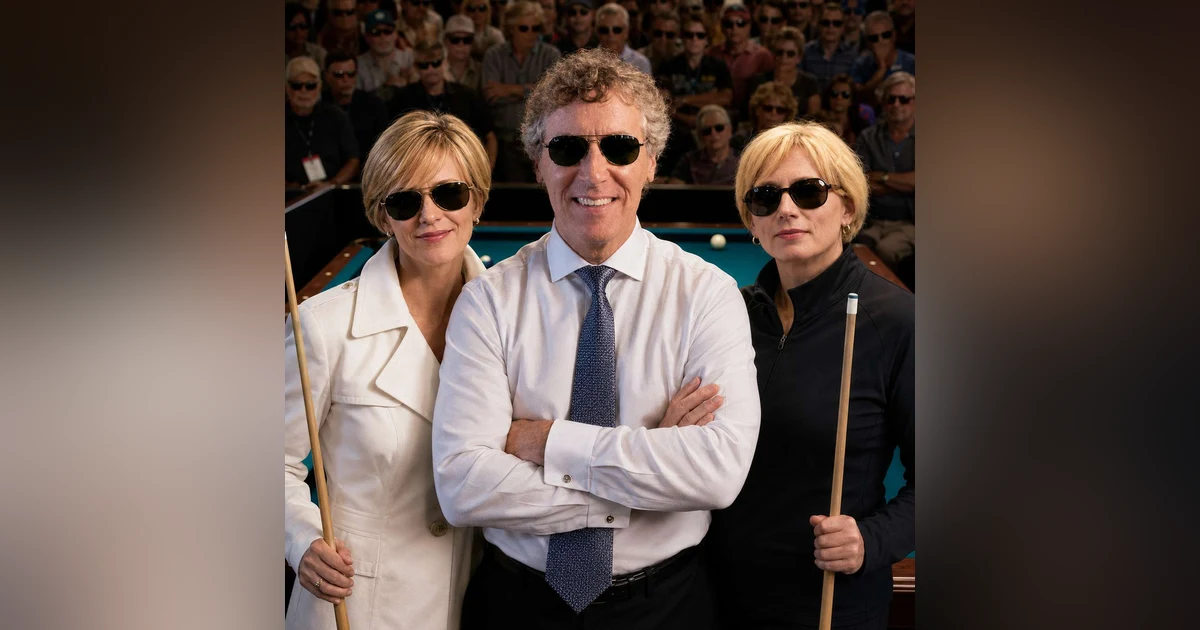

In the final part of our Legends of the Cue conversation with Mike Panozzo, we turn to history, legacy, media, governance and the future of professional pool. After more than four decades at Billiards Digest Magazine, Mike has not only reported on cue sports — he has helped preserve its record, recognize its legends and frame many of the sport’s most important debates.
Mike discusses his work with the Billiard Congress of America, the BCA Hall of Fame, and the United States Billiard Media Association. He humbly reflects on his own induction into the HOF and what makes someone worthy of Hall of Fame recognition, why meritorious service matters alongside playing greatness, and how difficult it can be to separate myth from fact in a sport built on road stories, poolroom legends and oral history.
The conversation also examines the evolution of billiards media. Mike offers a candid look at the transition from print magazines to websites, streaming, social media and instant online commentary. He explains what print did uniquely well, what has been lost in the rush for speed, and why long-form storytelling still matters in cue sports.
From there, the hosts and Mike discuss the modern professional landscape, including Matchroom, the WPA, player opportunity, international competition, event promotion and the sport’s continuing search for structure. Mike shares his thoughts on what pool needs to grow, what gives him optimism, and what still worries him about the future.
The episode closes with lighter reflections, including Mike’s favorite event, favorite Billiards Digest cover, the rule he would change, the tournament he wishes still existed, and why every young pool fan should know Allison Fisher.
A fitting conclusion to a four-part life story with one of cue sports’ most influential chroniclers.
Give Allison, Mark & Mike some feedback via Text.
Follow our show and/or leave a review/rating on:
Our website: https://www.legendsofthecue.com
Apple Podcasts: https://podcasts.apple.com/us/podcast/legends-of-the-cue/id1820520463
Spotify: https://open.spotify.com/show/4Za0IMh2SeNaWEGUHaVcy1
Music by Lyrium.
About
"Legends of the Cue" is a cue sports history podcast featuring interviews with Hall of Fame members, world champions, and influential figures from across the world of cue sports—including pocket billiards, snooker, and carom disciplines such as three-cushion billiards. We highlight the people, places, and moments that have shaped the game—celebrating iconic players, memorable events, historic venues, and the brands that helped define generations of play. With a focus on the positive spirit of the sport, our goal is to create a rich, engaging, and timeless archive of stories that fans can enjoy now and for years to come.
Co-hosted by WPA and BCA Hall of Fame member Allison Fisher and Mosconi Cup player and captain Mark Wilson, Legends of the Cue brings these stories to life—told in the voices of the game’s greatest figures.
Join Allison, Mark and Mike Gonzalez for “Legends of the Cu...
Mike Gonzalez
Mike, let's talk a little bit about your role in preserving history and governance of the game. You know, just beyond your publishing hat. You've worn a number of other hats, including uh get involved in the Hall of Fame. And uh just talk a little bit about that outlife outside the publishing world that you've been involved in with pool.
Mie Panozzo
Yeah, well, the you know, I've been involved, I was uh on the BCA board for some time, uh you know, uh another industry associated called the Billiard and Bowling Institute of America. You know, I've always wanted to be involved in in associations that were meant to help the industry, and I always thought I could do that and and leave my you know advertising sales hat uh aside. Uh, but the most special thing to me has always been Hall of Fame. Um, and I don't even know how that evolved. I think it's just more than anything was respect for the players. Um, you know, I always loved it. And there came a time, there's a little bit of a story to this, but the Hall of Fame used to be voted on by the BCA board. So these manufacturers and room owners who made up the bigger Congress of America Board of Directors would sit in a room once a year and just say, Who should we put in the Hall of Fame? And they would bring up a name and they would put it in. And I always thought that that was just inequitable, especially when the industry got bigger. And what they did was they started putting the voting out to everyone who was a voting member of the BCA. So voting member was essentially all the manufacturers who went to the trade show. When the trade show got big, there were several hundred manufacturers there. And all of a sudden, votes for the Hall of Fame were being turned in by someone who owns a spa company or an outdoor furniture company in Southern California. And it just seemed really dumb to me, counterintuitive. And so um we established something called the United States Billiard Media Association to establish a media group. And there was there were several functions that were going to be one, you know, there were people in the media at that time who worked for small regional rags or national magazines who would they would go to a tournament and you know the guy would say, Well, you got to pay 20 bucks like everybody else. And so what part of it was formed to be able to talk as one group to organizers and promoters and say, listen, these are legitimate media people, and if we have a media pass, you let us in, and we would work things out like that. The other thing that we wanted to do was take over the management of the Hall of Fame voting and make it a little bit more like baseball and some of these other sports, where the media helps control, you know, the voting because they're looked at as objective third parties who have the knowledge and the, you know, supposedly moral ethical, you know, buildup to be able to look at people's resume and and decide who should get into the Hall of Fame. And so we petitioned a BCA to take over the voting of the Hall of Fame. And we came up with a Hall of Fame board of these USBMA members and of what we called Friends of the Game, which are historians and promoters, people who had good backgrounds and knowledge of the game. And then the the living Hall of Famers would also get a vote. And so they went for that. And so we have run the Hall of Fame voting since I think 2010, maybe something along those lines. And then earlier than that, because then around in the late 2000s, when the economy hit the tank, the BCA decided that it would no longer fund a Hall of Fame banquet. And they said that they would, you know, we would vote on who it would be, and they would send them a plaque and a jacket and a ring in the mail. And I thought, wow, that's no way to treat the best players in the world who invested their lives into this game. And so we petitioned them again and said, listen, we'll do it. We'll take it over, we'll raise all the funds, we'll put on the show, we'll we'll do everything, soup the nuts. You just show up and hand over that plaque and that jacket, and we'll take care of everything else. And they agreed to let us do that. And that became a real passion project of mine. Um something that I I feel really strongly about because I just think that it would be criminal to not allow these players, the best players in the world, to have that one night that's just theirs. That they can, you know, talk to everybody like they don't talk to me during an interview, like they don't talk to someone after they won a tournament. They can talk to someone about their life, how they got where they got and who helped them get there. And those are such such a special moment. How would you how would you ever decide to deprive someone of that of you know that that benefit of uh you know that privilege? And so I was like, no, we're gonna we're gonna put on a Hall of Fame banquet every year, and we're gonna make sure that these players get the night that they're supposed to have. And so that that was, you know, I really I've enjoyed doing that as much as I've enjoyed anything in publishing.
Mike Gonzalez
Yeah. And of course the event has had a history of connection, whether it's to a big trade show, whether it was to the international last year, I think. What are you connecting to going forward?
Mie Panozzo
Well, not sure. I mean, it's kind of bounced around a little bit. You know, we we did it at the at the U.S. Open for years because, you know, we want to find someplace where the players are going to be for one, someplace that draws a good crowd of fans, knowledgeable and appreciative fans who want to go to that. And so the U.S. Open and then the International was a really comfortable fit for us. We did it several times at the Muscone Cup because there were, you know, there were certain events that took place that just made that, you know, when Barry Hearn got into the Hall of Fame, having it at the Muscone Cup made sense. You know, when Shane got in, having it at the Moscone Cup made sense. When we had our 50th anniversary Hall of Fame get together, which was spectacular, we did that at the Moscone Cup. So, you know, we'll go where we think is going to be the best, is going to give that that player the night that they deserve. This year, the international isn't going to happen this year. Uh, and so we're we're tinkering around with a couple of different options. Uh, Mascone Cup is in the U.S. again. I don't know if we'd do it there or not, but there's a couple of big pro tournaments toward the latter part of the year, uh uh and several of them where the men and women will both be at the same time. So it would be nice to be able to fit it into one of those. Uh so we I can't, you know, we don't have an answer right now, uh, but hopefully we'll have we'll have something soon because it's uh it is truly one of the great nights of the year in Poole.
Mike Gonzalez
Well, after 15 years of sort of taking that thing over, uh you got your own chance uh to be recognized as a as a Hall of Famer. What was that experience like?
Mie Panozzo
Yeah, it was someone made a bad mistake.
Mike Gonzalez
I hope you voted for yourself at least.
Mie Panozzo
No, I abstained. I abstained. I thought we were gonna end up one vote short, but no, it was that was let's say it was it was a real honor, something that I never expected or never really still don't know if it's something that that's deserved. I mean, you know, what when I saw it's very difficult with I was inducted in meritorious service, and it's very difficult to to rationalize one person over another when it comes to meritorious service, because there's so many people in this industry who've done so much over the years, a lot of it selflessly, uh, that has had a good impact. And it's it's really difficult to say this person deserves it more than that person. Players, it's a little more of a, you know what, you know what the bar is, you know where the bar is set. You win this many tournaments, you win this many world championships, you're like you're gonna be a Hall of Famer. Meratorial Service, it's a lot more subjective, right? And so it's very hard to look at yourself in uh in that situation and say, yeah, I, you know, I I I deserve to be here. So it was just it was it was very nice. It was very um, to be honest, they had talked to me a couple of years earlier, several years before that, and I kept telling them no, I this is not for me. Um I wanted to do it because one of the problems of being an Italian is you get emotional. Um my mother's 93 years old. And so I know how proud she is of what I went through for for this industry. And so when they asked me if I would be on the ballot, I said I'm gonna say yes this year, because if I'm lucky enough to get voted in, I want my 93-year-old mother to be there. Um and so that's what happened.
Allison Fisher
Totally wonderful. I'm glad she was.
Mike Gonzalez
What a special time at the moment.
Allison Fisher
It it is an amazing thank you for doing all the work that you've done for that Hall of Fame, because I can attest having you know, got inducted into it in 2009, what a special night it is. And you do get very emotional and it brings up things that you wouldn't expect. And you can celebrate with those closest and most dearest and obviously your industry people with you. It is a wonderful evening. So we appreciate it too, Mike.
Mie Panozzo
Yeah, go ahead, Mark.
Mark Wilson
No one could host it better than Mike. I mean, there may be somebody as good, but uh no one would be better because the passion comes through and the humor and the fun and the ceremonial selfie and all the different traditions that he's installed there and the class it's done with. You know, I mean it's a really a classy event, so I've always been a proud to attend.
Mike Gonzalez
I think the the 17-year history of of conducting and running this event is just one small part of the lifelong contribution you've made to the sport. You know, you're supposed to be objective and all the rest as a journalist and as a reporter of what's going on in the sport, but in your own way, you've been a promoter of the sport around the world. And I think uh that probably goes unappreciated.
Mie Panozzo
Uh it may, you know, it's just I I don't it's part of the thing that I don't look at as a job. It's it, you know, the this industry has gotten into my blood, and so um you'll do whatever you can to help it. And I use what the forum that I have to do it is through the magazine and through, you know, helping with things like the Hall of Fame, because I can't pocket a ball. So um, you know, you do you do the things that you can do to help what you love. Um and again, like I said, the Hall of Fame banquet is is right at the top of the list for me because like Allison said, you know, you you you you have that night where you can talk to people um about things you didn't ever really talk to them about, you know, not in a group saying like that. And we saw, you know, Shane Van Boning speak for 50 minutes. I I thought we were gonna get five minutes of him and he was gonna be done. And he tell he told stories that I don't think half the people in that room, more 90% of that room has ever heard into honesty and whatever. It that's what makes that to me, that's what makes that such a special night, is is people just you you get a side of people you've never seen before because they've got this moment.
Mike Gonzalez
Yeah, yeah. Let us ask you uh about a few things, most of which are unrelated to the sport of pool. The first one is for a guy who can't pocket a ball, you wrote three instructional books on pool.
Mie Panozzo
Follow me for more tips. Yeah, no, I um I did. I wrote three instructional books with Steve Mizerek, who contacted me at some point in the early 80s and and said, I've got this book deal and I need someone to write this book for me. And would you do it? Um, and I had never done anything like that. And I love a challenge. And so I said sure. And so the book went over really well. And the the publisher pushed for a second book and then pushed for a third book. And um the first one just about killed me. Uh, but you know, just you know, coming home from eight, eight or ten hours working on Billiards Digest to spend a whole night working on a book with Steve Miserek was was not didn't go over well at home. But uh but yeah, it was it that was a fun, it was a fun project, and it was another thing that was like, yeah, I got you know, if you look in the Library of Congress, I have a book in there with my name on it. Yeah, how cool is that? Which is which is which which is cool. Yeah. Yeah. Yeah, that was a lot of fun. So tell us about Pinozo Italian market belly. Another passion project. You know, growing up in an Italian neighborhood, you know, everything was made homemade by scratch, you know, and I used to go with my uncle and my brother, and we would go to these guys' houses and you know, a couple times a year and make 500 pounds of Italian sausage and and you know, do things like that. I love food, is one of my favorite things because it's such a people thing, it's such a personal thing. It's such a, you know, cook and invite people into your house and spend time with you has always been really uh an important part of our life uh in an Italian family. So I always wanted to do that. And we moved downtown in Chicago in 2005, and a couple of years, you know, saw this little, it was a booming new neighborhood. It was it was in an old warehouse district that all of a sudden was becoming very gentrified and built up with high rises. And I thought this is the type of place that needs something like an Italian market, and I'm not gonna wait for someone else to do it. We're gonna do it. And so we opened up an Italian food store, and I was blessed uh by having a friendship with an unbelievable chef in Chicago who worked at the number one restaurant in Chicago doing microbiology on food in the kitchen, you know, just amazing, amazing guy who wanted to try something different and do something a little more, you know, upfront. And so he he was my chef, and for seven years we ran Pinoza's Italian market, which was an incredible Italian deli in downtown Chicago, and had some of the best, you know, prepared foods that that you could have if you like Italian food.
Mike Gonzalez
Of course, you can't eat without drinking, and so tell us about your cocktail recipes.
Allison Fisher
I have one of those books that he made.
Mie Panozzo
I yeah, in addition to food, um, I love music and I love cocktails. And I'm not a I'm not a big drinker. Allison knows that we've been out a few times, and I love a couple of cocktails, and then I'm done, but I like cocktails to me are like a really well-crafted cocktail, is like a really well-made meal. Different ingredients creating different tastes and different flavors. And and so, you know, that to me is has always been really cool. Plus, I love barware. I love glasses, glassware, and all the decanters and and all these. I love stuff like that. I just think it's really cool. So during COVID, we were all, you know, locked up at home. And I started this thread on social media every day at five o'clock for 30 days. I said, I'm gonna make a different cocktail. And because I have an enormous collection of barware, I was able to use a different glass for every day. And so every day I would create a cocktail and I would take a picture of the ingredients, and I would take a picture of the finished product in its class, and I would write the recipe down, and I would write a little story about it, whether it was a personal end to it or whether this is how I found the cocktail or what I like about the ingredients or whatever. And I would post it online and it became a really popular thing. And at the end of those 30 days, I kept getting uh messages and emails and from people saying, please turn this into a book. Um, I called it quarantine cocktail hour every night. And so so then I went and I took all the recipes and I turned it into a book and sold it, you know, pretty much at cost any of my friends would buy it. And people would buy five, ten copies and give them to their friends or give them as gifts to somebody or whatever. And then, you know, next thing I had like 250 made the first run, and next it was 500, and then it was a thousand. And next thing I know, it's like 1700 copies of this book went out.
Allison Fisher
A lot of alkies out there.
Mie Panozzo
Yeah, I wish I would have found you during COVID. Yeah. Well, you know, it was yeah, COVID was an interesting time for sure. But I one of the things I'm proudest of is that failures I just never missed an issue during COVID. So, you know, we still published every month, found things to write about, what players were doing during COVID, different things, you know, the virtual tournaments, things like that. We found a way to keep the magazine going and the advertisers, God bless them, you know, continue to support us. And we worked out some deals and how much or when they needed to pay. But but it was that was a it was actually a pretty big task keeping that thing going during that those days.
Mike Gonzalez
I bet it was. Yeah. So, Mike, uh, you know, as we kind of wrap up here, uh, I think it'd be interesting for our listeners to hear about your perspective on the state of the game today and uh and maybe in fifty years, you know, we we hope, by the way, pool fans, young, young players especially, are gonna be listening to these stories, because our intent would be to preserve and archive these interviews and stories for generations to come. And and so they'll learn a little bit about the game as it existed back in this day. But if you can uh you know put your prognosticator hat on and and look forward 50 years in addition to the state of the game today, uh where do you think it's gonna be?
Mie Panozzo
Oh, fifty years is a long reach. Um yeah, no, I pool has I've I've always said pool has as much potential as any uh activity sport out there in terms of being able to hit it big because of its global appeal, because of its global participation. Um you you look at the international tournament scene now, and uh I think it's just ripe for in a global company or two or six to take notice of and say, you know, they've got these huge professional tournaments in Indonesia and in Vietnam and in, you know, Germany and in the UK and in the US, and and what a great way to reach people. You know, it's whether whether people play or not, you know, with the streaming and you know, a couple of the paywall systems now and things like that, there's there's ability for anybody to watch pool. Um, I watch golf, I don't golf. You know, I watch soccer, I don't play soccer. Uh so it's not about making everybody a pool player. It's about showing people how much enjoyment they can get watching a tournament, watching a championship match, or watching these players. So I think the pool's always had that ability. I think it's it's never been greater than it is now because of that accessibility, because of that visibility, because they had, you know, there are not a lot of sports who have the true, legitimate global reach participation-wise, the pool has. So again, it just takes a visionary and and you know, some marketing knowledge and a couple strokes of luck to get someone to realize what they could do with pool if it's organized and if it's delivered properly to the masses. And so what I would hope then, and certainly less than 50 years, is that that vision becomes crystallized and someone or some people figure out a way to take hold of that and deliver it to sponsors and to people, you know, non-endemic companies to take pool where it belongs. Because, you know, as as a sport, anybody who's listening to this, anybody who plays knows it's beautiful. It's it's incredibly difficult, it's incredibly impressive how good the top players are. Uh and and that's true in any sport, but you know, it's it's it's true in billiards as well. So um just have to get someone to to to to latch on to that. Do I think that'll happen? Yeah, I do. I mean, I I'd like to think that that people are gonna realize that over time, that that this is a very it can help you sell a product, it can help drive eyeballs, it can help develop more players, it can help the industry. You know, there's there's there's a lot of benefit to someone taking pool into a more global space.
Mike Gonzalez
Yeah, fair enough. During our time with you today, of course, you've had a chance to reflect back on some of your mentors, people that influenced you, people that supported you, like a Mort Luby Jr., like your fifth grade teacher, like some of the uh industry characters that uh you had a chance to meet and get to know or you like my wife too. Man, can he take a hint?
Mie Panozzo
Anyone, anybody looking over my help and this this anvil's coming flying at me here. No, of course. I mean, I if if I failed to mention my wife, it's only because I would probably worry about breaking. Down talking about her. But um, you know, the best thing that ever happened to me. So uh yeah, my wife's name is Ellen. She retired last year from years as a medical social worker, um, with me being her her primary subject, primary case case study.
Mike Gonzalez
Yeah.
Mie Panozzo
But yeah, we we've been married for 44 years, and she will tell you they've been 12 of the happiest years of her life. And uh Yeah, no, we we uh yeah, we enjoy each other's company and and she has supported me through she loves that I've been in this business this long and that I'm still passionate about it. She always rolls her eyes when she asks me about retirement, you know, what I might do when I'm retired and when I might retire. And but she knows she'll always tell people he's never gonna retire. This is what he loves to do. And and she she admits that she's envious that I that I like this, that I love this this much, the magazine and the industry. You know, not that she didn't love her job, but not to that extent. And so again, it's just one of those, you know, that hundredth instance of life has been just really lucky for Mike.
Mike Gonzalez
Yeah. Well, good. Uh we're gonna try a new segment on with you, Mike. So you'll be the first of our guests. We've now had about 25 interviews, but you'll be the first. And uh we're gonna call this for now until we come up with a better name, Allie's Rapid Rack. And so I should put I should set a timer to see if we're just a nine-ball rack, an eight-ball rack, or a ten-ball rack.
Allison Fisher
Well, actually, and let's see how many questions there are. I think there's ten. Is there ten? I see ten is the ten ball.
Mike Gonzalez
I'll start the timer and we'll see how long this goes. So let them let them rip.
Allison Fisher
All right, best pool room you've ever visited.
Mie Panozzo
Amsterdam Filiard.
Allison Fisher
Best interview subject.
Mie Panozzo
Earl.
Allison Fisher
Funniest player.
Mie Panozzo
I'm sorry.
Allison Fisher
Funniest, the funniest player.
Mie Panozzo
Mike Siegel.
Allison Fisher
Most misunderstood player. Mike Siegel.
Mie Panozzo
Most misunderstood player. Every player, every pro pool player is misunderstood. So I'll I'll go, I'll take, I'll take the group on that one.
Allison Fisher
Yeah, the group on most important non-player in the sport.
Mie Panozzo
Most important non-player in this sport. Barry Hearn.
Allison Fisher
I knew you were gonna say that. Best major event atmosphere.
Mie Panozzo
Moscone Cup.
Allison Fisher
Favorite billiards digest cover.
Mie Panozzo
It's really gonna be uh bad form, but I'm going with the cover with uh Fetter and Christina that we did about a well they're not together anymore, but when we came out with that cover, that was that was my that was my attempt at a vogue cover for billiards digest, and I thought it was I thought it was spectacular.
Allison Fisher
It was very, very good. One rule you'd change.
Mie Panozzo
I would change. Wow, that's a really difficult one because I don't play pool. So I would say Yeah. Yeah, winter breaks. I don't I don't I want to see alternate breaks.
Allison Fisher
Okay. One event you wish still existed.
Mie Panozzo
World Straight Pull Championship.
Allison Fisher
And one person every young pool fan should know about. Allison Fisher. Well, that's a great answer. That's that's a wonderful answer. Perfect answer. Thank you very much. That'll win you a few points. You bring a lot to the table. Well, thank you. Thank you. What? So let's go back to the bit that I mentioned earlier about the flash. Should we just go over that for the people listening? Why would someone call me Flash?
Mie Panozzo
Well, Allison, I'll tell you. So I don't remember the year, but the BCA Open Nine Ball Championship was held in Las Vegas every year. And they had a big arena and big setup for the table. And this was the early days of digital photography where I could take a photograph and and load, yeah, you can't get a camera out of my hands. Well, people that day wanted to get the camera out of my hands because I had this digital camera that then I would run back to my off to my room and and stick the little floppy little disc into my thing and send it over, you know, the intranet or whatever. And so this was a camera that that had a flash setting, but I've turned the flash setting off, right? And so it's the semifinals, and Gerda is playing Jennifer Chen. And Jennifer Chen is on the nine ball. Shortly before that, I was worried that my cam my batteries were dying. So I turned the camera off, I opened the thing, I put two more batteries in, I closed it up, not realizing that it was going to reset itself to its normal settings. Jen Chen is down on a nine ball looking down the table, and I am straight in her line of vision, about 20 feet away, but still straight in her line of vision. And as she's getting ready to pull the trigger, I pull the trigger, and out of the corner of my eye, I can see a big flash over the top of my head. And I and she stops and she gets up and I'm looking around like, who's the jerk with the flash around here? And all of a sudden, everyone is staring at me, and Jen Chan is staring a hole right through me. And and I realized that the flash had gone off on my digital camera. And it was, I was absolutely mortified. Luckily, she hadn't shot yet, so she got back up, collected herself, got back down, and proceeded to drill the ball right into the rail and lost the rack because it was and uh so she ends up losing the match, and the next the next day is the televised final between Allie and Gerda, and they come out and they're wearing sunglasses. And everyone in the front row, who were all industry members, a lot of my friends, are all wearing sunglasses. And it was it was uh and so after that point Alison called me a flash all the time, all the time.
Allison Fisher
But yeah, that was a uh I've got a I've found a picture the other day. I stumbled upon it somewhere.
Mie Panozzo
That would be one of us the three of us taking the picture before the match with your glasses on. Yeah, it's a it's a fantastic photo. Yeah, I'll have to send that to you. You can use that one of these days.
Allison Fisher
You can use that as the photography for this for an episode.
Mie Panozzo
Forty-six years of journalism is the only mistake I ever made. Yeah.
Mike Gonzalez
Oh, that's not too bad then. Very good. Not too bad. That's your story, and you're sticking to it. All right, so we got three final questions as we put a bow on this, as I would say, Allison, right?
Allison Fisher
Yes, yeah. I love that expression.
Mike Gonzalez
So we haven't really talked about this, but I think I'm gonna let Alison ask the first question.
Allison Fisher
Okay, Mike. If you knew when you were 20 what you know now, what would you have done differently?
Mie Panozzo
I would have invested in Apple. It's a good idea. Yes, I would have. I I would have invested in companies that would have taken me out of this business a long time ago.
Mike Gonzalez
Spoken like a pool player, actually.
Mie Panozzo
No, smoking like someone who likes money.
Mike Gonzalez
All right, that's fair enough. We're gonna take that one. I'll take the second question, which is you not being a player, we normally give these players a mulligan or a do-over. We'll just give you a career do-over. You had something that you'd uh a new a different cover, a different interview, something that you'd you'd like another whack at.
Mie Panozzo
Mean something that I actually did that I would like a redo on.
Mike Gonzalez
There you go.
Mie Panozzo
It would be the January 1981 cover of Billiards Digest, in which I convinced Mort that we should name a player of the year. And on the cover of the magazine, as I I used to get the magazine in the office to send it to the advertisers with their bills. And the magazine came in, it was all printed, and I'm sliding them into the envelopes, and I start sliding it a little slower, and I look at the cover and it says players of the year, Billy Billing and Steve Varner. Well, Steve Steve Varner is Nick's younger brother, who I had gotten to know really pretty well because I knew Nick and his dad, and Steve, Steve and Nick's dad used to come to all the tournaments, and I got to know them really well. And so, sure enough, we had a cover with our first player of the year on it, and it was Steve Varner, who plays less than I do. So, yeah, and probably that that that's the second mistake that I made in my 46 years, and that's one I would like to correct.
Mike Gonzalez
A sub-horrible player on the cover of Billiard Digest. Oh. All right, we go to Mark Wilson for the final question.
Mark Wilson
How would Mike Pinozo like to be remembered?
Mie Panozzo
Oh man, that's, you know. Yeah, that that's a really difficult thing to answer about yourself. I mean, you just want to be remembered as someone who had a positive impact on people or on the people that he worked with. Uh, that he somehow or another made people's lives better, that he somehow or another made people laugh, made people think, you know, those those are the you know the best things you can hope to be unless you're a mother Teresa, right? You know, just to be a person that that cared about other people and liked other people and and made their day a little bit better.
Mike Gonzalez
Very good. Good way to wrap it up, Mike. And uh I'll speak for myself as the person here on the on the on the interview that has known you the least amount of time. I would say thank you for what you've done and thank you for what you do for the sport of pool.
Mie Panozzo
Thank you very much. It's very kind of you to say. Thank you.
Allison Fisher
I think we all agree on it. Thank you for your time and thanks for being with us today. It was a really, really good interview. We really enjoyed it. It was a pleasure.
Mie Panozzo
I enjoyed it.
Allison Fisher
Thank you.
Mark Wilson
It was extremely enlightening and uh thought-evoking because we don't have someone that knows both sides of the sport for as much as you do and for as long and and then as current as you are. So thank you very much.
Mie Panozzo
You're very welcome. Thank you for considering me for the show.
Mike Gonzalez
Well, we appreciate uh you sharing your story with all the greats we've had on Legends of the Cube. Appreciate it.
Allison Fisher
Thank you for listening to another episode of Legends of the Cube. If you like watching here, wherever you listen to your podcast, including Apple and Spotify. Please follow, subscribe, and spread the word. Give our podcast a five-star rate of Jord. Visit our website for our fourth history project. Until our next Golden Break with more Legends of the Cube along everybody.

Journalist
Mike Panozzo has spent more than four decades doing something few people in cue sports have ever done: he has watched the game from nearly every angle — journalist, editor, publisher, historian, advocate, industry insider and, ultimately, Hall of Famer.
Best known as the longtime Owner, Publisher and Editor of Billiards Digest, Panozzo has been one of the most important chroniclers of modern pool history. Since joining the magazine in 1980, fresh out of Marquette University with a journalism degree, he has documented the players, promoters, room owners, manufacturers, tours, controversies, characters and turning points that shaped the sport from the post-"Hustler" era through "The Color of Money" boom, the rise of the women’s professional game, the internationalization of pool and today’s streaming-driven global landscape.
Panozzo’s story begins far from the tournament arena. He grew up on the far South Side of Chicago in a close-knit Italian-American neighborhood where, as he recalls, “Little Italy” was not one place but many. Surrounded by family, Catholic school, Sunday meals at his grandmother’s house and the rhythms of Chicago sports, he developed an early fascination with writing and storytelling. He was not, by his own admission, a straight-A altar-boy type. He joked in the interview that the hallway to the principal’s office might as well have been named the “Mike Panozzo Thruway.” But even as a fifth-grader, he knew he loved to write. A teacher’s encouragement helped him believe that writing might become not merely an interes… Read More