

 Apple Podcasts
 Spotify
 Mike Sigel - Part 2 (Life on the Road, The Rise of a Champion, and the Birth of the Modern Pool Era)
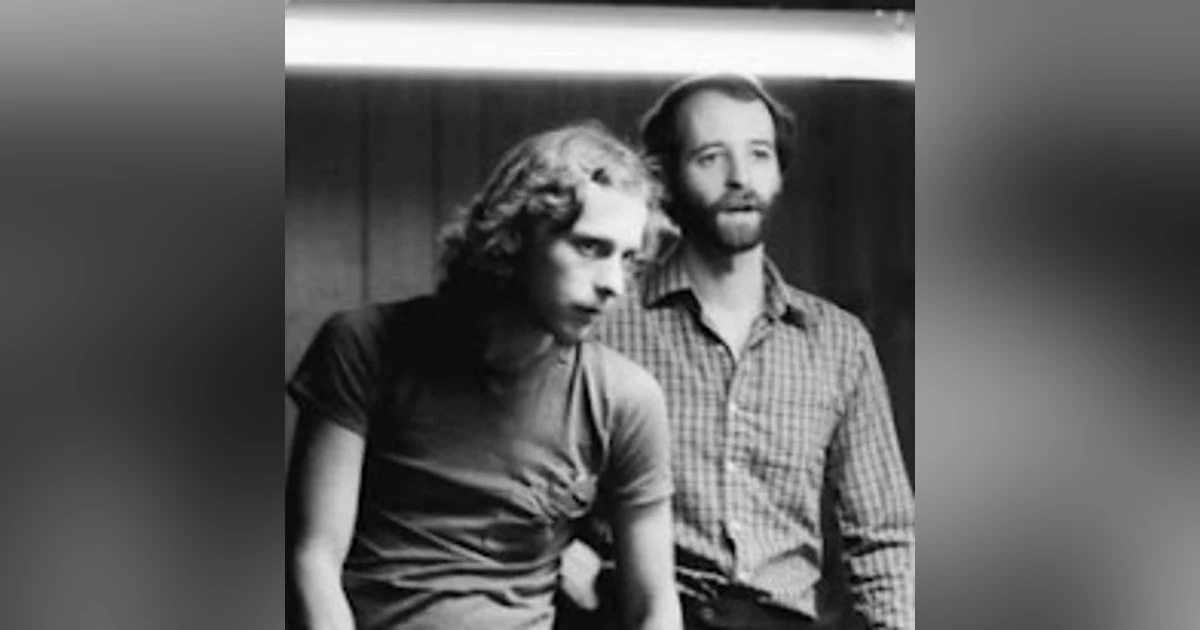

In the second installment of our multi-part conversation with Billiard Congress of America Hall of Famer Mike “Captain Hook” Sigel, we dive deeper into the wild early years that shaped one of the greatest champions the sport has ever known. This chapter of Mike’s story unfolds on America’s back roads—dusty poolrooms, high-stakes action, rough-and-tumble characters, and the moments of luck, danger, and instinct that forged his competitive edge.
Mike takes us inside his six-year run traveling with standout player Larry Hubbard, whose booming personality often became Mike’s shield and springboard in smoky gambling rooms where reputations spread faster than truth. From Beckley to Detroit, Mike recounts near hold-ups, unbelievable scores, and the unspoken hierarchy of pool’s underground economy—where bookies, hustlers, and even mob-connected backers circled the action.
We revisit the legendary Rack in Detroit, where Sigel, barely 17, was whisked from high school in a stretch Cadillac to face icons like Cornbread Red, Pittsburgh John, and Richie Florence—scenes straight from a movie, yet entirely real. Interwoven through these stories is Mike’s awakening: realizing the road could teach you everything about pressure but couldn’t sustain a lifetime.
This episode also traces the dawn of his professional career. Mike reflects on his breakthrough wins at the U.S. Classic—later renamed the U.S. Open—and why those early titles still spark debate. He explains how straight pool shaped his unmatched nine-ball instincts, how he revolutionized the concept of the break cue and cue cases, and how his relationship with billionaire Kevin Trudeau opened his eyes to a world far beyond the pool hall.
Candid, funny, and brimming with first-person history, this episode captures a pivotal stage in Mike Sigel’s remarkable journey from precocious road player to sport-defining champion.
Give Allison, Mark & Mike some feedback via Text.
Follow our show and/or leave a review/rating on:
Our website: https://www.legendsofthecue.com
Apple Podcasts: https://podcasts.apple.com/us/podcast/legends-of-the-cue/id1820520463
Spotify: https://open.spotify.com/show/4Za0IMh2SeNaWEGUHaVcy1
Music by Lyrium.
About
"Legends of the Cue" is a cue sports history podcast featuring interviews with Hall of Fame members, world champions, and influential figures from across the world of cue sports—including pocket billiards, snooker, and carom disciplines such as three-cushion billiards. We highlight the people, places, and moments that have shaped the game—celebrating iconic players, memorable events, historic venues, and the brands that helped define generations of play. With a focus on the positive spirit of the sport, our goal is to create a rich, engaging, and timeless archive of stories that fans can enjoy now and for years to come.
Co-hosted by WPA and BCA Hall of Fame member Allison Fisher and Mosconi Cup player and captain Mark Wilson, Legends of the Cue brings these stories to life—told in the voices of the game’s greatest figures.
Join Allison, Mark and Mike Gonzalez for “Legends of the Cu...
Going out on the road as a fairly young man with Larry Hubbard, tell us a little bit about that experience.
Mike SigelThat was an experience. Well, I went with Larry too, but you know, we went, let's see, we we went on the road off and on for six, seven years. So Larry would act as my backer, right? He would just yell, you know, uh, why don't you why don't you raise the bet with the kid? And the guy goes, Well, how come why don't you play? Larry goes, Well, I'll I'll take the five and the breath. That's all he kept saying. And eventually they would spot him at at certain times, you know, for four or five years. Larry and I, I mean, Larry was a great player. We were pretty even in playing. Now, I exceled later on, maybe a little bit, but you know, Larry won a bunch of tournaments. He was a great pressure player, too, one of the best you ever saw. So he would say, you know, I'll take the five and the break. He kept saying that. And he had guys that he'd rob, giving them like the seven and the like that. But mostly I played, and Larry would act as the backer because they knew him, but nobody knew me. You know, that went on for years. Eventually, that wore out because I was, you know, there's no internet, social media, but everyone was on the lookout for a thin left-handed kid. So that was me. So you didn't have to know what I what I looked like, but they saw right away when people saw that, they would assume that was me. So after five or six years, you know, the games got tougher and tougher and tougher. They all wanted a big spot. And I saw that I didn't like the gambling part of it. That's nice to win money. But I saw longer down the road that was not the way to make money. To me, I used to dress good, all that. And and you know, Rempi and I opened the endorsement stuff. There was no endorsements. I got my the Brunswick deal. I schmoozed Jim Bakula, who's in fact I have a picture right there of Jim Bakula with me and Gene Baluchis. I schmoozed him for a year and a half before they decided to do an endorsement. There was no endorsements. Renpe opened that market up with the cues. Then over time, endorsements became, you know, a common thing. But in my day, there was nothing like that, you know. So I dress good, go up to him. Hey, how you doing? I'd like to take out to dinner, you know, that kind of thing, you know, in those days.
Mike GonzalezWhat do you think was the one thing that kind of got you away from the road play? I mean, you said you didn't really care for the gambling aspect. Was there much danger involved? Did you ever get yourself a little deeper than you wanted in a situation?
Mike SigelOne time, one time I got held up with uh that Bob Osborne. One time. But other than that, it wasn't. We won a bunch of money. In fact, we went back the same day after we got robbed because we're beating this guy in Beckley, West Virginia. That's bird eye. Because what I in those days you'd have traveler's checks, you know. Let's say I had the guy suck six, seven thousand, right? So we go to the pool room with like a thousand or two and keep the rest like in traveler's checks that were on, you know, like a check. So we got robbed, you know, and that night we went back in the pool and still beat the guy, you know. But no, that wasn't that. I just didn't like the ups and downs. People think I hear all these stories. I'm not gonna mention names of all these, you know, big scores. You know right away that's not possible for two reasons. One, if you're beating a guy, they're not gonna just sit there and keep playing. I don't care who you're playing, okay? And the other thing is there's more money won and lost on a golf course. I mean, look, Michael Jordan Bose lost $78,000 because they have huge money. Like Kevin, you ready for this? I went out with Kevin with the guy that is his vice president in one of his companies. You ready? Guess how much they were playing? A hole. A hole. We're playing at the Ritz Carleton in Orlando, Florida, when it first opened, played that course, right? So him and his he owned Kevin owned 20 companies at one time. He didn't even know who the people were that ran the company. So they met in Orlando, right? They were talking, they went out playing golf. Guess how much they're playing a hole? Good, take a guess. 50 grand.
Mike Gonzalez50 grand.
Mike SigelNo, 10. 10,000 a hole. That's a lot of money. 10,000 a hole. So when you look at in golf, you see it all the time. Because those people have huge money. You know what I mean? But in pools, not the case. You know, you might play some bookmaker guy or some this that, but you know, those guys are not stupid. You know what I mean? You're not gonna just keep beating a guy, and he's here, take my money. The guy's gonna eventually say, Hey, you're too good. I need a handicap, right?
Mike GonzalezCome on.
Mike SigelYeah, so you know, I hear all these stories of I don't see too many pool players driving up in a Bentley, you know, in the pool room to practice, you know. Like me and Kevin, we go to the pool room and in Chicago. Kevin goes, Well, let's go play. He gets in the Bentley, we drive up, pull up in a Bentley, you know, there you go. So, I mean, you know, that you know, and there's nothing wrong with that. I'm just saying that a lot of these stories over the years have, you know, when I hear a guy won 300,000, that means the guy won 3,000. You know, that that's the tip off.
Allison FisherHow's the most you've won gambling?
Mike SigelWell, I was telling that story. I I beat that Canelo guy. I won almost 40,000, 30 something, but the most money I ever won playing pool, I was not playing. It was me and Mike Corella in Detroit. We beat Cornbread Red out of 78,000. No, 80. Let's see, 86,000. They were playing one pack at 12,000 a game. We didn't have all the money. I was like, I had 3,000 to my name. I started betting 1,500 a game. Corella wins the first two games. I start betting 3,000 a game, right? Two barrels. So anyway, we won, he won $24,000. I won 18 is 42. The rest was one on the rail. So I was sitting on the pool table, meaning this guy says I'll bet $500 a game, this guy a thousand, two, whatever. That total bet was $12,000 a game. Wow. But but as far as and all the cash was in front of me, I it took longer to pay and collect the money than it did to play the game.
Allison FisherYou know? Wow. It's exciting.
Mike SigelBut they had in that Detroit pool room. Oh, you never saw gambling like that in your life.
Mike GonzalezWhat was the name of the room there?
Mike SigelThat was called the Rack in Detroit. You the see the Gambino family used to stake me too, in between Larry. So they hung around the pool room. They took me to Detroit. Two of the guys they knew had a connection for that Detroit pool room, because one of the guys was born in Detroit, and he knew because you couldn't just walk in this pool room. It was like, you know, pimps and drug dealers and you know, and um racket guys, and they beat that Rosie out of 20 million. The guy owned an airline freighting company. At that time, this is 50 plus years ago, he made 200,000 a day. He was like FedEx in those days. Guy couldn't make a bowl. Lori Shampoo, you ever hear uh she beat him out of 70,000, playing 10,000 a game on a bar table. She gave him the 7, 8, and 9 on a bar table and beat him out of 70,000. This guy, he wouldn't play me. He loved playing champions. He said, You're the only one, because I met him, you know, he would back me. He wanted to back me. He goes, You're the only one I'm afraid of. That's what he tells me. Everybody else, Billy and Cardona, he hung around there. You know, that's where I met Billy. I was like 17. The first time I went there, I won 10,000. That was like, I thought I was a millionaire. You know, since you're talking 55 years ago, you know.
Mike GonzalezYeah, Mark, we talked, uh, we probably talked about the rack with Billy and Cardona when Billy was on, didn't we?
Mike SigelOh, well, for sure. Yeah, he was there at the same time I was there. Yeah.
Mark WilsonEverybody of this era will know about the rack.
Mike SigelYeah, they didn't like me because when I made money, I'd leave, and I didn't keep the money in action. So they didn't like that. They like, you know, like like cornbread, you know, he lived there, so he was in action day and night. So the money kept shifting. I got funny stories. I told those stories on the internet about Pittsburgh John. He went from here to here to here in like three weeks. He went from broke to wealthy, then broke in three weeks. You know, it's unbelievable. But anyway, you know, Sammy Jones, he he was in there, you know, him, Billy, a lot of, well, not a lot of players. Let's see who was in there. He had me. Of course, I was like 17. I was going to high school. The mob guys would pick me up in a limousine Friday at three o'clock when I got out in a big stretch Cadillac.
Allison FisherWow.
Mike SigelDrive me to Detroit. I'd prep play Friday night, Saturday, then Sunday morning at like 5, 4 in the morning, they would drive me back to high school. The first time I went there, watch, so I went 10,000. Now it was me and these two mob guys. So we split the money $3,300 apiece, right? You got to remember at this time how much money this was. Watch. It's a lot of money. So my first class was gym. That was my first class. So when I went to the gym class, the guy, and I had the money in my pocket, my clothes that you know, they dropped me off at school. I was getting linked, right? So the guy, the gym guy goes, he goes, you know, if you have any jewelry or whatever, you want to leave it with me for safety. So I reach my pocket, I throw him this wad of money. So he goes, after I collected it, he he his yearly pay was six thousand a year. That's how much money that was. And I explained that I, you know, won it playing pool, right?
Mike GonzalezTypical high school experience, huh? That's unbelievable.
Mike SigelYeah, those were the those were the days. Well, you're young, you know, and living at home. I don't have a car, there's no bills, you know.
Mark WilsonYeah.
Mike SigelI mean, in those days, the you know, the phone was at your house, no phone bill, no TV bill. I mean, today it's ridiculous, you know, how much you got to pay to watch television.
Mike GonzalezSo, how how much geography did you cover when you were out on the road? I mean, you went to Detroit. Did you go did you go further west than the other? Oh, everywhere.
Mike SigelYeah. We would, me and Larry would normally head west, going, I think it's 80. 80 would go all the way to California. That's like going through Chicago, I think St. Louis, and the upper part of the country, go to California, swing down and come back on, I think 20 and hit the, I think like Arizona, Texas. Looking at a map here. But most of the action, some in California, but most of the action was in the Carolinas, the Ohio, Pennsylvania. It seemed. California, there was, there was action there. You know, I played Keith when I went out there.
Mike GonzalezOh, did you?
Mike SigelYeah. We I was 17, he was 16, I think. Both of us weighed 80 pounds soaking wet together. He played with, you know, we played, we played. I played him, I played Hawaiian Bryan, I played Billy Johnson. I played a lot of guys.
Mark WilsonHow about Richie Florence? You play him?
Mike SigelI played him in the first U.S. Open nine bowl. That's well, that was the U.S. classic. You know, I tell that story because the the when the U.S. Open stuff, well, it it you know, I feel like I got robbed out of two tournaments because in 74 they started that tournament. Okay. Then in 75, which I won it in 74, 75, and 76. But in 76, Barry Berman moved his pool room across the street, and then he said, I'm gonna officially name this tournament the U.S. Open. So I said, I said, what about 74 and 5? He goes, Well, that was the U.S. Classic. I go, yeah, but it's the same, you know, he decides to name it U.S. Open. So I got robbed out of two tournaments, you know, for the U.S. Open. But U.S. Classic, US, same tournament, you know.
Mike GonzalezWe'll add that to your total then. I I've got it on Mike Page's the U.S. Masters, but uh whatever they called it, uh No, they called it the U.S.
Mike SigelI had a big argument with Barry. Yeah. I go, now you're I go, then name the two tournaments before that, 74 and 5, because I won it three years in a row undefeated, never lost a match. I played Lasseter, Richie Florence, all these Rempey, you know, these guys were big names in those days, right? So I said, well, you should say something about 74 and 5 leading up to 76, right? Because I won, well, I won five of those total, two classics, three US opens, plus a U.S. Open straight pool. But now in the record book, it shows three US opens, you know. So my ego when you have Earl and Van Boning both won a five, realistically, I won six, if you figure that. But it's not like that, right? Yeah, yeah. You see what I mean? So, you know, come on.
Mark WilsonAt that time, Mike Mike was well, he was the uh idol of everybody that was in the pool world because he was so dominating in these events, and he had a brand new sports card, Dotson 240z, with Captain Hook license plates, so you knew second place was all you could get.
Mike SigelYou know, it's really you know, it's really going back to the it's a shame that the only footage more people, mine more well known for my losses than my wins. No one remembers any tournaments I win, only Reyes beat them. This guy beat them, that guy, right? Because all the footage of me losing is like at the end of my career. It's too bad that they didn't see my best years, that there's no footage of that. Really, that's sick, you know. That's what it is. The only matches I see when I turn on TV, you know, I got streaming, so I see YouTube. I lost there, I lost there, I lost you know, pretty much, you know what I mean? Of course, I made a lot of money. In in four months, I made 400,000. No, 150. Well, 300 in the two events, and then I was on I was on a payroll of 100,000 a year with Kevin. Kevin knows how to pay, you know what I mean.
Mike GonzalezAnd you're talking about uh Kevin, Kevin Trudeau for our listeners, so we know who we're talking about.
Mike SigelYeah, to give you an idea, when Davenport commentated with with him when I played Rays, he gave me 10,000 to commentate. It's very generous. Huh? It's very generous. Well, yeah, that's what I'm saying. Uh now you're dealing with real money people. You know, when I get when I met Kevin, I met Kevin, somebody said, this guy, rich guy, wants to take lessons. I charged him. Now I was getting, well, this is let's see, this was 93, right before I quit, right in that time. 94. We did that tour for the APA. It was eight players. That's how I imagine how things can change your life. They had eight top players they picked to promote the APA. Each person drew to get a place in the country. I got Illinois. Okay, it was Hopkins, Rempey, I think Massey, Barner, me, Miserak, Miserac, and a couple other guys, right? I drew Illinois. So when I went, eventually I was in the Chicago area, and I did a bunch of, I did 50 exhibitions in like five-week period, something like that. I had the most out of all the people. I was doing like you go from city to city, town to town. Anyway, when I was in Chicago, Kevin, the people that got me into Chicago, they ran an ad on the radio, and radio. Mike Siegel's gonna be at, you know, whatever the pool room is, seven o'clock Saturday. Kevin heard that on the radio. He called the station and he he told them, I want to meet whatever and take lessons from this guy. They got a hold of the Rob and Mary Guzo, who was the APA operator in Chicago. They got a hold of them, called me, said, Hey, this rich guy wants to take lessons from you. I went, All right, but Chris's billiards. So we go in there, so I charged them 500 an hour. Right? That's a pretty good, you know, 500 an hour. You know what he told me after we became friends? He said he brought like 20,000 with him. He goes, I thought it was like 5,000 an hour. That's what he tells me. Oops. You see, it's a different world, you know. And I hung around, he changed my life, you know, and cute threw a lot of money at me. Yeah, so but when you consider the pool world, and then when you go out into the real world where companies are making 500 million a year, billion, all this, it's a totally different like this guy I'm giving lessons to, one of Kevin's friends, he put us up on the beach in a room 1200 a night, seven nights. He flew me and my girlfriend in. We're gonna food per diem and to take a few lessons from me. You know what I mean? So he instinctively, you know, he could have put me, you know, some 200 a night room would have been sufficient, but he's got us right on the beach, a suite, you know. So, you know, that you you you learn a lot of things. I was fortunate that I could hang around with the top of the food chain, guys like Kevin. Plus, I've met guys through him that are like these guys that are just wealthy beyond belief. They live in a different world than we do, you know.
Mike GonzalezYeah. Well, let's take you let let's take you back to sort of age 21. Again, your game is continuing to advance, you've had some luck on the road, and you begin to decide to compete in some professional events.
Mike SigelYeah.
Mike GonzalezAre you asking me that? Well, yeah, what was what was available? Because we've talked a lot about, you know, there were some stretches where other than Johnson City and maybe a Vegas tournament, maybe U.S. Open, there just wasn't a whole lot available for a while. Did that was that before your time, or did you go through it?
Mike SigelNo, I started playing the first tournament I played was this U.S. Classic. That was my first, which in my mind was the U.S. Open. And I played, I played Rempe. They announced him as winning 33 matches in a row. I played Lasseter, who was like in his 50s, but still played great, you know. And I wound up beating Richie Florence in the finals, who again was, and I can't remember the other guys I played. But anyway, the tournament wasn't that big, might have been 16 players. However, every guy was like a champion. You know what I mean? You know, in the U.S. Open nine ball today, you got 256 players. There's only 15 or 20 guys that are gonna win it. All the other guys, you know, they they have no chance. So when it gets down to the last 16, that's what we were playing there. 16, 32, 64 players, most of the time they were all pretty good players. Like your first match level would be a tough match, no seeding, you know.
Mike GonzalezSo this is sort of age 21, Mike, when you're when you're you're you're winning this U.S. Classic Nine Ball Championship 1974. But as we talked about earlier, and as we we've talked about with other guests, back in that day, straight pull was the game. So when did you start learning how to play nine ball?
Mike SigelWell, right. Around then. I mean, it wasn't learn. I just started playing it. In when we went on the road, a lot of people, that's what they played nine ball. So, but straight pool was still the game in those days. Even One Pocket, I went through that. But when you went on the road, most people played nine ball. Like when I played Keith, Nine Bowl. See, to me, there's a huge advantage for people from the East that are straight pool players over the guys that just play nine ball. That's just my opinion. You learn more, you have more knowledge, all that kind of stuff, you know. So that's a big advantage, is knowing how to play straightful. Because after you play straight pool, you can play any game. You know, the difference is this. If I'm playing a one-pocket player, okay, and I make a mistake and there's three balls open, they make three. If you're playing Miserac, Hopkins, me, or different guys that are straight full players, they run eight and out from that same position because they know how to make one, break them up, and have like another sh. They understand because those situations come up over and over again in straight pool. You see the difference?
Allison FisherYeah. Were the rules of nine ball back then the same as they are today? Was it a different game?
Mike SigelYeah, no, they played push out every shot.
Allison FisherRight.
Mike SigelSo that's why a better player could dominate because the if the guy missed and hooked you, you push out every shot, not just the one. So same, but I focused, I knew right away I had the biggest break. There was one or two or three guys that broke similar to me, but my break, I immediately knew that that the break and nine ball was like 80% of the game. So I when I practiced, I practiced my break, kicking, and banking. I didn't play shooting because I already shot. You know what I mean? So as I got older, I told people, today everybody breaks good, you know, pretty much. But in my day, a lot of games if a guy doesn't break good in eyeball, they're not threatening because you only lose one game at a time. You play a guy that can break, like play a guy like Earl. He can win eight games in a row before you blink, you know. So I knew right away. So I practiced the break over and over. That's what I practice mostly. So, you know, if I won a game, I usually could win two or three after that. You know what I mean? So you're playing in tournaments, but mostly for many years we played push-out on every shot. Then they changed it for TV or whatever, the one-shot push out on the opening shot.
Mike GonzalezSo why don't you describe for our listeners who may be just average pool players why your break was so good?
Mike SigelI don't know. I mean, I practiced it, you know, and I had a and I had a way of breaking where I used to lift up in the shaft, you know, I broke two shafts, the shaft would bend real because I'd keep my bridge hand down. So when I'd lift it up, the cue would, you know, but it worked for me. Over the years, I tried to flatten out my brake more to keep the cue ball from hopping. But I used to hit them so solid, that's in your stroke. I mean, me and a few other guys could hit a shot really hard and still maintain the the accuracy. That's what it boils down to. So, you know, I used to use practice, it's all leverage time. Nick Larner's got a great break. He weighs what, 100 pounds. So it's really not. Of course, the one thing I did learn, like you're gonna like this story with golf. I used to break, first I used to break with my own cue. So, you know, I mean, I could go into that. I'm the one that really opened the market of the Q, the break cue, the cases. Because when we played, everybody had one Q and two shafts. That's it. I used to play and break with my own queue. Then it started one day I rolled my Q and I it went voop, voop, voop. You know, I tried to. So then I went to Danny James. I go, I want another Q. He's thinking, like, here we go, another free Q. I go, no, I need another Q. He goes, What do you need another Q for? I need a Q to break. He goes, What do you mean? I go, I want another another Q to just to break with. He goes, Well, what do you need? I go, well, I'm bending the shaft. I want to play with this one and break with that one. So then when I got that, my case was one butt, one or two shafts. That was it. There was no four butts. There was none of that. So I called the case company. I go, I need a case that holds two butts and four shafts. He goes, like, what do you need that for? I go, I got swear to God. I had to have them make it for me. No one sold a case like that. And eventually that to me opened up that market. You know, now everybody has, you know, they got the jump cue, they got the the handle, they got the brake queue, the the you know, it's a whole ensemble.
Mark WilsonYeah.
Mike SigelBut in my day, you know, they didn't have that.
Mike GonzalezYeah, like the tennis players. I mean, they got what, six, eight rackets in those big bags of theirs, right?
Mike SigelI would have a valet. I would not walk out with the bags. Me, I would have someone behind me carrying all my stuff. That's what I would do.
Mike GonzalezYeah, that sounds like Bobby Riggs.
Mike SigelYeah, there you go. I mean, but anyway, you were saying, like, oh, yeah, with the brake. So even Van Boning, you know, Van Boning, watch my videos, whatever. He is the same thing with his brake. I mean, he broke. I used to hit him hard. Okay. I mean, really hard and square. Not as hard as Bustamani and all that, but I hit him more square. So the more solid you hit him, of course, today they got that crazy fist break, whatever it is. But, you know, in my day, you broke from the box, and it'll introduce the side rail, which I never broke good from the side rail. I did it because everybody was breaking from the side rail. The one or the corner bowl was going in almost every time. But most of the time when I played, he had to break out in the middle of the table. And hitting them square is the key. But anyway, Van Boning on a five by ten, he hit him so hard and square that every game he broke, I commentated the match with Mark. Every game the cue ball landed past the head string. Landed past the head string. I never I did that twice in my life on a four and a half by nine, never on a five by ten. That's but he's more muscular. Oh, but I was going back. So here's what happened. So I started breaking. Now I got a break cue. So now I start fooling around when I'm thinking, hmm, I want a heavier break cue. So Danny made me a 22 or 3 ounce break you, thinking that would break him. It broke good for about five breaks. My arm got sore. So then, no, well, here's what I thought about. So then I went like this. I went, I'm watching golf. Everything today is getting the technology, the clubs are lighter, titanium, this, that. And I thought about it, I went, wait a minute, lighter. You know, golf, all they talk about is clubhead speed. So I'm thinking, if I had a lighter break you, I might be able to hit it faster. Sure enough, that's what I did. So I break with like an 18 and a half ounce. A lot of people have gone to a lighter break. It's the same thing. It's clubhead speed, right? When you think about it. Oh, yeah.
Mike GonzalezI gotta go back and look at my break you. I'm I'm thinking you need all that mass. I'm just thinking of the physics of the mass, but you got to get that mass moving, don't you?
Mike SigelWell, it's like golf. Think about golf. In golf, when you watch a pro, they hit the ball 120, 125 miles an hour. If they were using a club that weighed 10 pounds, they're not going 120 miles an hour. So what they want is a lighter club. You know, the titanium is and the graphite shaft and all that. But anyway, in pool, it works for me. Now, somebody bigger, a guy like, you know, even Earl, Earl or Van Boning. Van Boning, he's more muscular. Maybe 19, 19 and a half is my 18 and a half. You see what I mean? But to me, the lighter break you, in my opinion, you hit him better, I think. More speed, you know.
Mike GonzalezNow you you referenced a Q guy by name a few times. What was the what was the Q company? Was he a private maker? Did he work for Josh? Jocks News. Okay. Is that the first company you really got involved with as a young man?
Mike SigelYeah. Yeah, he was at that time making one of the first customers. It was Palmer Q's, Balabushka who passed away. Irving Crane ordered a Balabushka from me, for me, because Crane had two or three of them. At that time, he was like the only custom cue maker. So then he died while he was in the process of making my cue. So it was Palmer Q. Everybody played with a Palmer. And then it was Joss came around. Two other guys. I think Gina Q had just started. But that market became an incredible market. You know, the Q, the Q, Q, I made I was doing 20,000, 30,000 a month making pool cues. And I I couldn't even play in pool, the best year I had was 101,000.
Mike GonzalezIt's crazy. So what was the price point on your uh your range of cues, Mike?
Mike SigelTwo to three thousand. Okay. So they were high end then. Well, not that high-end. I mean, you can pay 50, 100,000 for a queue today. But anyway, my market was that two to four thousand range. You know, I would be sold out. My nut was low, and uh it was almost all profit, you know. Yeah, that's a hell of a but I made a good cue. I mean, there's nothing wrong, and I think I'm the only world champion that made custom pool cues, you know.
Allison FisherThank you for listening to another episode of Legends of the Q. If you like what you hear, wherever you listen to your podcast, including Apple and Spotify, please follow, subscribe, and spread the word. Give our podcast a five-star rating and share your thoughts. Visit our website and support our poor history project. Until our next golden break with more Legends of the Q, salon everybody.

Pool Professional
Mike Sigel, at 35, became the youngest male elected to the BCA Hall of Fame. Born in Rochester, N.Y. Sigel began playing pool at 13, and turned professional when he was 20. A natural right-hander who shoots left-handed, Sigel won his first major tournament, the U.S. Open 9-Ball Championship, in 1975. His career blossomed quickly, and Sigel was perhaps the game's dominant player in the 1980s. He amassed 38 major 14.1 and 9-ball championships in that decade. Sigel has won three World 14.1 crowns (1979, 1981 and 1985) and one World 9-Ball title (1985) as well as numerous national titles.