

 Apple Podcasts
 Spotify
 Mitch Laurance - Part 1 (From Queens to Studio 8H: Mitch Laurance’s Wild Turn Toward “Saturday Night Live”)
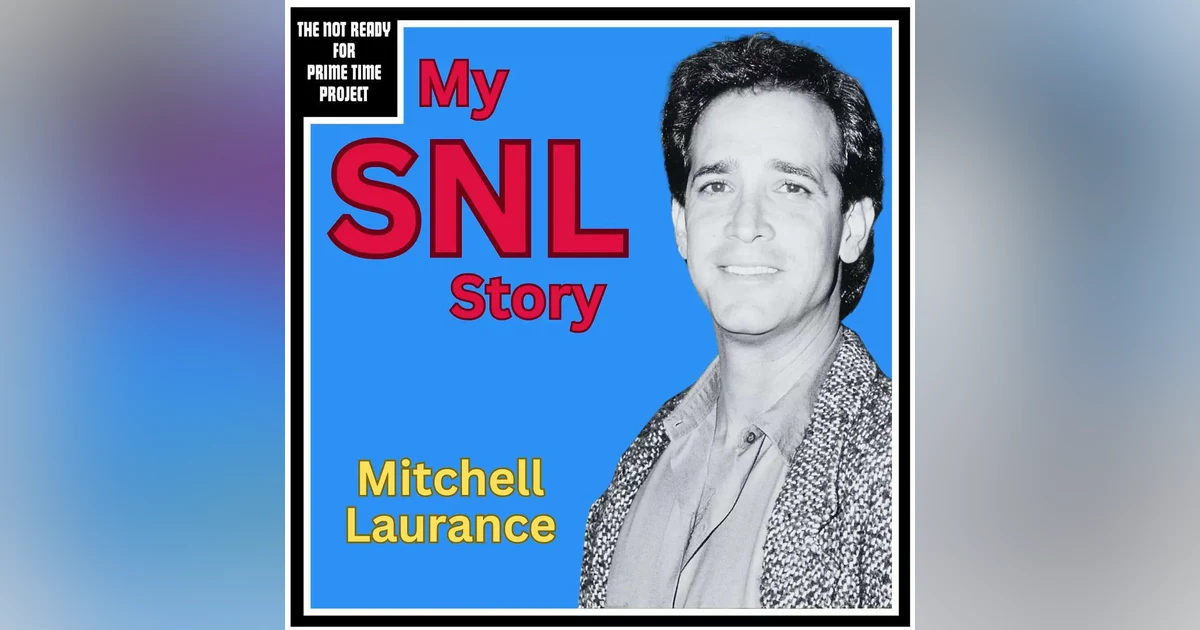

In this opening chapter of our multi-part conversation, Mitch Laurance takes us all the way back—before the bright lights of television, before the broadcast booth, before the roles that made his career a near-constant highlight reel—back to a simpler time on the south shore of Long Island.
Born in Queens and raised in Hewlett, Mitch shares what it really felt like growing up as an identical twin: the built-in best friend, the constant competition, the comfort of always having someone to throw a football to, run pass routes with, or battle one-on-one on the backyard hoop. It’s a window into a childhood shaped by sports, neighborhood freedom, and family dinners—long before screens took over daily life.
Mitch also paints a moving portrait of his parents: a steady, quiet father who anchored the household, and a magnetic, big-hearted mother who seemed to know everyone, everywhere—right up through her later years. Along the way, he reflects on the one thing many of us wish we’d done more of: asking our parents the deeper questions while we still had the chance.
From there, the story pivots into the late-1960s college experience—an era that cracked Mitch’s world wide open—and then into a string of “how did that happen?” turns: photography school, restaurant work, a short-lived banking career in Louisville that ended with a two-week notice typed in a flash of clarity… and finally, the moment that changed everything.
A friend. A brand-new show. A simple offer: “ Lorne Michaels needs a gopher.”
Next thing Mitch knows, he’s making $93 a week, running on no sleep, and living in a tiny room above a sandwich shop—right as Saturday Night Live is being born.
And that’s just the beginning.
Give Allison, Mark & Mike some feedback via Text.
Follow our show and/or leave a review/rating on:
Our website: https://www.legendsofthecue.com
Apple Podcasts: https://podcasts.apple.com/us/podcast/legends-of-the-cue/id1820520463
Spotify: https://open.spotify.com/show/4Za0IMh2SeNaWEGUHaVcy1
Music by Lyrium.
About
"Legends of the Cue" is a cue sports history podcast featuring interviews with Hall of Fame members, world champions, and influential figures from across the world of cue sports—including pocket billiards, snooker, and carom disciplines such as three-cushion billiards. We highlight the people, places, and moments that have shaped the game—celebrating iconic players, memorable events, historic venues, and the brands that helped define generations of play. With a focus on the positive spirit of the sport, our goal is to create a rich, engaging, and timeless archive of stories that fans can enjoy now and for years to come.
Co-hosted by WPA and BCA Hall of Fame member Allison Fisher and Mosconi Cup player and captain Mark Wilson, Legends of the Cue brings these stories to life—told in the voices of the game’s greatest figures.
Join Allison, Mark and Mike Gonzalez for “Legends of the Cu...
Welcome to another edition of Legends of the Cube and Alison Fisher. I could probably spend two hours talking to this guest about golf.
Allison FisherWell, fancy that. I've known this gentleman for many years. He's one of the legendary commentators that we used to have on ESPN, and he's also married to one of the great ladies in the game. Mark?
Mark WilsonWhat an absolute treasure our next guest is. His career is virtually a non-stop highlight of movies and television show roles. He's been an actor and a sports broadcaster. He's very humble, down to earth, and exceptionally bright. I'm very proud to welcome and introduce on Legends of the Q, Mitch Lawrence. Welcome, Mitch.
Mitch LauranceWell, wait a second, exceptionally bright?
Mark WilsonAbsolutely.
Mitch LauranceWhen you said that, Mark, I turned around and looked behind me because I was going. All right, wait, the other stuff made sense, but that's you're much too kind, my friend.
Mike GonzalezMitch, great to have you.
Mitch LauranceI have to say, I said to you before we started that I'm thrilled to be here with you. This is it's a treat for me. Obviously, Alison, I've known you for a long time. Mark as well. Mike has quickly become over the last few days. Well, I shouldn't say that because I've been listening to the podcast, the golf podcast now. So that's been a few weeks, and I consider you a good friend already, even though it's a short time. Oh, it's wonderful. Lovely to see you, Mitch. Yeah, you two.
Mike GonzalezWe've got a lot in common, Mitch, which I'm sure offline we'll be able to explore some more in terms of your golf exploits, the golf travel, the podcast. We're going to talk about all of that. But as you know, we're here to tell your life story. And the way we do that is to go back to the very beginning. My understanding, you were born in Queens, New York, grew up probably, we would call it uh Western Long Island.
Mitch LauranceYes. Yes. About grew up in a place called Hewlett on the south shore of Long Island. It's about 20 miles from New York City. Yeah, and I was born a long time ago. Somehow 75 years has gone by, and I inside I feel like I was at Woodstock two weeks ago, but somehow 75 years went. And I don't even know where to begin. I've been thinking since we I knew I was going to be coming on. This has been a pretty amazing journey that I think you anybody who's on this with you three, when you really, it's a suddenly a way of really looking back at your life. Not that I don't other times, but it's brought up so many interesting things for me. I have an identical twin brother. That's a key part of my life. Obviously, two unbelievable parents that I could talk for hours about the two of them. And an identical twin brother, and then I had a younger brother. My twin brother's name is Matthew, and my younger brother's name was Bruce. He unfortunately passed away when he was really young. Matthew and I had a, I mean, looking back, just kind of a really normal childhood. A lot going on, as you can imagine, with twins in the house. We were always, once we got old enough, always into sports. That was our thing. Most of it was basketball related. That was our key main sport. But it was a it was a fun, great childhood. Our parents were very involved. Matthew and I had great friends in school. And just, you know, I look back on it now, and certainly compared to what we're all experiencing now in the way the world is and technology and everything else, it was the simplest of childhoods. It was that dinner with the family, going to school. We didn't have anything. We had no cell phones and no computers. And so, you know, if we wanted to have fun and go out, Matthew and I always had somebody to play with. And Matthew and I would go out and either play tackle football on the front lawn or throw dirt bombs at each other or whistle ball during the summer. Or it was just really, really simple. There was no we had friends in the neighborhood, we'd ride our bikes. We and now I look back just wistfully at that kind of time and the ability it gave us to just be kids. Yeah. So it was a wonderful, it was a wonderful, wonderful time.
Mike GonzalezSo tell us a little bit more about more about your folks. Of course, your father Everett. You know, you think about these times. And Mitch, he was probably born what, maybe in the 20s?
Mitch LauranceYeah.
Mike GonzalezThe child of of Polish and Russian parents, right? Which, you know, in in in terms of just what's going on with world history from there through World War II, just some interesting times.
Mitch LauranceYeah. Yeah, yeah, yeah. And he, of course, when you're kids, you don't know any of it. And I think the one regret well, we always have some because we'll look back, but but a big regret that I have, and I I try to figure this into my life now with my family here, but a big regret that I have is that I didn't spend more time as I got older really talking to my father and my mother. But my dad died very young. At he was 50, let's see, I was 29. So he was probably 53 or so when he died. And I was busy living my life. I had uh started a really exciting time in my life at that point, but I never really got into his family history in the way that I would give anything to be able to do. I'm gonna let you know now. And Alison knows me pretty well, Mark knows me somewhat well, Mike doesn't know me. I'll probably cry 50 times during this podcast.
Allison FisherI love that about you though. That's uh that's I I feel the same about my father when you talk about things like that, you know, just getting to know them a lot better as you get older. Yeah, you know, my dad died at 64 too, and it was too young, but yeah. I can completely understand.
Mitch LauranceAnd I had been out of the house I left at 18 to go to college, and really pretty much after that, I spent a little bit of time at home after, but pretty much was never home again. And it was always about what I was doing. So he was a big Ev, we used to call him. He was a he was a great guy. He was he owned a manufacturing company. They made curtains and drapes and things like that. It was a family business with my mother's father, my grandfather, and my uncle, my mother's sister's husband. So the family thing was always kind of going on. But he was great. He was very kind. He loved our friends. He he absolutely loved being around the the guys I was growing up with in junior high school and high school. We all loved sports, and he was a big part of that. We used to sit around on Sunday Sundays and watch when there was only one game on Sundays, yeah, televised. Exactly. They would all come over to our house and we'd sit around and we'd watch the game, and you know, it was always it was always a fun time. But he was a very kind, he was a very generous guy. We never had a lot of money growing up, but he was always he was always there, could kind of talk to him. He was quiet in a lot of ways. My mother, on the other hand, was the opposite, let's say. But the two of them together were a pretty amazing pair. They used to go, you know, the memories that I have are growing up when we were little, they used to take dance lessons once a week. So they would leave us with a babysitter and then they'd come home and they'd show us what the dance lessons were about, and they would practice, and they would, and they were, I'm sure they had their stuff, as all married couples do. But it was basically a really peaceful, happy kind of household. And I think it started with him because my mother was such a force, and I think the the calm in the house started with my dad, because he was he was just calm. I'm sure there was a lot he wanted to say somehow. His personality style was to kind of keep it calm inside. So that's I think I'll that's how I'll always remember him. Is his he had an unbelievable smile. He loved us deeply. And yeah, he was he was an an interesting guy. He wasn't really a worldly guy, he didn't travel a whole lot. He and my mother used to go on vacation once a year. They loved Jamaica, they went to Jamaica every year, and but that was pretty much it. Unlike their two sons who wound up traveling more than most people, and obviously grateful for it. But that was dad. Dad was dad was kind of a rock to me.
Mike GonzalezSo your your mother Betty, then, what was her outlet for that force that she had?
Mitch LauranceShe was just always seemingly on the move. She started working. We were about in, I was about 13, and she went to work in the school systems. And at the very beginning, she was just doing secretarial work, but then through the school system, she got a job. It was when computers had literally just started. And she got a job with Westinghouse, and because of her work in the school systems, she started, they were just this was unbelievable. And Allison and Mark, you're younger, so I'm not how I well, I don't want to ask, Mike, but you may be closer to my age. Westinghouse had come up with computers, and the first computer that my mother took me to see was literally in a big room, one computer. And that computer, all it did was program school report cards and schedules. So they would type in and create cards, my mother and other people, and then they'd feed them into the computer, and the computer would print out all the school stuff. And my mother would go around because she knew everybody in the school district, she would take it and work with the schools. And so she was always kind of on the move somewhere. And always meeting people and her whole personality. And I think I think we're hardwired in our personality. I literally believe that we come into the world with a personality type, and then you can alter it if you work at it. But the and hers was hello world. That's the issue. People loved her. She was incredibly easy to get along with, to anybody she met, and it didn't matter. It could be the person at the grocery store, people she was working with, whatever. And I picked up, I think that's how I came into the world. I think both my brother and I came into the world that way. I'm sure my father probably would have preferred if he didn't have three people in the house like that.
Allison FisherThese two were men.
Mitch LauranceLike, yeah, it's kind of like a whirlwind, but that's that's who she was. That was her her thing. And she kind of carried it into the house when she got back from work. Which was the that was often the kind of can we tone this down a little bit, but uh but in a good way, you know, and not in a there was no kind of big deal about it. But that's who she was until she lived to be 93.
Allison FisherRight.
Mitch LauranceAnd through her whole life, that's who she was. Literally, till the day she died, that's who she was. She treated the she we were lucky enough. She lived in New York and for most of my life, and then as she got older and she had some illness issues, and I used to have to go up to New York about every couple weeks for a while. And then we brought her down to Myrtle Beach where we live, and she was here the last five years at an assisted living home about 10 minutes from us. So I spent a ton of time the last five years, which was great. But that's how she was the people in the nursing, you know, the assisted living home. She knew everybody, the nurse, everybody that came in. She had stories with them. She had three boyfriends in the assisted living home during the time she was there, which led to some very interesting discussions that I never thought I'd be having with my mother. Um, but that's who she was. She was pretty much just an open book when it came to life, how she dealt with people.
Mike GonzalezIt's wonderful. You kind of conjure up memories of a scene from Landman. I don't know if any of you are watching that show.
Mitch LauranceI love that show. Well, I haven't started the second season yet with Sam Elliott. So we're waiting. We're the kind when we binge watch shows, we always wait till the whole show, the whole season is a big good thing, isn't it?
Allison FisherThen you can do it all if you want.
Mitch LauranceAnd then dive in. So but I get you, Mike.
Mike GonzalezEverybody knows why we do that too, because you watch one episode and then a week later you forgot what you watched the week before.
Mitch LauranceThat's what it is. Oh god. No, I wasn't gonna bring it up. Forget a week later. Next eight hours.
Mike GonzalezIt happens. Well, I couldn't. Safe to say, then, I guess, uh, with your father more as an introvert, your mother as an as an extrovert, uh, had you been more like your father, perhaps you would have chosen a different profession.
Mitch LauranceYeah, and it's funny because I growing up, I didn't have a choice of profession. My brother and I really didn't have a choice until when we went to college, which was 1968. For those of you who remember back that far. Born that year.
Mike GonzalezInteresting times.
Mitch LauranceYou were born that year?
Allison FisherI was born that year. Oh, bless you, Alice.
Mike GonzalezWell, tell her tell her all about it, uh, bitch. Tell her all about 1968.
Mitch LauranceTell me, I want to hear. Oh my god. I I well I was gonna we'll get to college because that was a that was an experience. But growing up, but it wasn't like either my brother or I had some kind of chosen, I want to be this when we were younger. We just kind of went about everything, high school, basketball was the focus. There wasn't any question that that was the focus in our life. Between the summer of my 12 and 13, I grew four inches over the summer. And for the first time, shot up, Matthew didn't grow that much, and I grew four inches. And so when I went into seventh grade, and I was thinking, I'm 5'10, I'm in seventh grade, I'm gonna be six five, and I'm gonna play in the NBA. I mean, it wasn't even a question of my thoughts. That didn't happen. But we never had it, it wasn't like we grew up, and you know, my father always said, I don't want you doing what I'm doing. I'm working in a factory, and that's not something I think you guys want to. And we knew what that was about. He used to take us to work with him every Saturday morning. We'd hang for four or five hours. So all through high school, there was never any kind of goal. And even both of us went to Tufts University outside of Boston. And there was never a real goal. I think both of us at the time were political science majors because somehow we were supposed to be either lawyers or doctors. And it wasn't anything that was really talked about. It was just in 1968, getting a college degree and doing some, you know, it had a lot more meaning than it does now, I think. Unless you specifically want to be a doctor or a lawyer. But we knew, both of us knew pretty quickly that that wasn't going to happen. I think probably six months into my freshman year, I was going no to graduate school, no to any kind of anything. I was just really into college life. And everything that happened after that, and we'll talk about it, but everything in my life that happened after that was I used to believe that there were circumstance and random acts, but I don't believe that anymore. I I don't believe that there's anything that's random somehow in a in a much bigger picture. I don't believe there's anything that's random because everything that happened led to the next thing that led to the next thing, that led to the next thing, and all of a sudden I'm sitting here talking to you guys. So there was no greater goal in mind. There was none of that, Mike. That that just didn't happen.
Mike GonzalezThat kind of sounds familiar, you know. You you you wake up someday and you you realize, wow, great life, really been blessed. How did this all work out? Because it was never the result, it didn't feel like of a master plan, and yet there probably was a master plan. You just weren't realizing it at the time.
Mitch LauranceThat's exactly right. That's exactly right. And I don't think, I mean, unlike my brother, we have a lot in common and we're very different in certain ways. But even I remember being in college and walking around Harvard Square at different times. I used to work during college in Harvard Square, and I remember, I mean, I've forgotten a lot, but I remember walking around Harvard Square on certain days and just feeling a much bigger picture than what I was experiencing there. It's the only way I can put it. And knowing that I had no idea what was going on. And sometimes that was brought you to a low point, I think, looking back on it now, and other times to an exhilarating point where you're just kind of open to everything and kind of whatever's gonna come is gonna come. So I would alternate kind of between those two. But I've always been, ever since I can remember in high school, there was too much going on. Basketball, trying to get with Linda Barron, who I spent four years trying to impress. Um yeah. But once I got to college and I started really opening up, 1968 in Boston was, to say the least, fairly eye-opening. Let's put it that way. My brother lagged behind. We were both at the same school at the same time. He lagged behind, but I was kind of I was kind of out in front of the social cultural scene, shall we say? I love that story.
Allison FisherWe've been very subtle here, aren't we?
Mitch LauranceYeah. So I've always I think I've always kind of felt that way, and that's carried through from that time up until right now. That's how I feel.
Mike GonzalezYeah. I think one thing we'll talk about throughout our discussion today, not just as a young man, as a young kid, but also in your professional career, is the whole twin dynamic. Because let's face it, for most of our listeners, they have no idea what that's all about, other than they see two people and they kind of look alike, right? But boy, you can go really deep there. And I suppose uh as you look back, there was highs and there was lows. It's just something that uh most people don't have to deal with having an identical person right next to you, and there's probably competitive factors, there's best friend factors, there's a lot of stuff going on there, isn't there?
Mitch LauranceYou think? And you also uh, you know, a big part of that that's true, and I think that most twins have different dynamic, but we added another extra layer because apparently being an identical twin wasn't enough. But both of us became actors, and that was a an entirely different ball game when that happened, and that literally uh we went through so many changes for so many years. Because of that dynamic, that it's only been recently, and I'm gonna say probably within the last year, that now I think we're closer than we ever have been in our lives because we had to, and more specifically, I had to get to a point where I dealt with it in a different way than I had my whole life. And yeah, that's was that was on the one hand, growing up, it was there was something incredibly comforting about having him. And like I said, we always had someone to play with. That was a big deal because we had someone same age, pretty much the same ability. And because sports was such a big part of our life growing up, we could, you know, dad was working, mom was working, we'd come home from school and we'd stand go outside and throw a ball to each other for two hours.
Allison FisherYeah.
Mitch LauranceI played quarterback, he played wide receiver, you know, we'd work on pass roots and basketball. We'd, you know, we always had somebody, we had a hoop in the backyard, and we always had somebody to play one-on-one with. And so at the beginning, it there was definitely that dynamic of we're together in this. We're together in this. And that's when we started to have really go our separate ways, not just in terms of kind of the people we were, but friends. He had very different friends in college than I had. Graduated from college, went separate ways. You know, so it's it's it's been an unbelievably interesting journey. And the only thing now, without you know, getting really specific about that particular journey, is that I'm unbelievably grateful that we're both still here and that we're both we were able to get to a point where we are now.
Allison FisherYeah, it's wonderful.
Mark WilsonIn high school, were you in plays and drama, Mitch?
Mitch LauranceNo, Matthew was the actor. Matthew was he we did shows. We did a couple of shows in junior high, and then there were shows I didn't do any in high school, but Matthew did. And then when we left for college, he he didn't, he wasn't an acting drama major or anything, but he did a couple of shows when we were at Tufts. I had no interest at all. And then when we graduated college, he went to the neighborhood playhouse in New York, which is a very famous acting school that was run by a guy named Sanford Meisner, and just great actors came out of the playhouse and he went there. And I stayed in Boston. I went to photography school for six months. I was already at the point in my life where I'm going, I have no idea. But I went to photography school, which I loved. Then I moved to New York and I worked for a studio photographer named Jerry Zanetti. See, I can remember that, but I can't remember why I went to the grocery store yesterday. And Jerry was great and I loved him, but he was a studio photographer who did only product pieces. He hated working with models. He thought that was the worst thing in the world. So he only worked with inanimate objects. So he was great at it. He was incredibly creative and visually magnificent. He did great work, which didn't connect with me at all. I admired it, but I kept going, okay, I'm I have to talk to a spoon here. Yeah. Or an extrovert. That wasn't a great thing.
Allison FisherYeah.
Mitch LauranceSo I did that for a while and then kind of had no idea what I was gonna do, and kicked around, worked in restaurants for a while, and then so acting still was not anywhere here. Matthew was already kind of getting into that in New York and doing plays, small plays and things. And then in 1975, still with no idea, I was working at a restaurant with my friends on Long Island called Steak and Brew and just having a good time. And I went, we had cousins in Louisville, Kentucky, that we were incredibly close to from the time we were born. And we went out there for Christmas to a party at their house, and my cousin Calvin introduced me to a guy who was the president of the first national bank of Louisville. I gotta stop here because this just seems I love doing this and I love going down memory lane. But I have to tell you guys, it just feels so weird just to talk about myself on and on and on and on.
Allison FisherOh no, it's wonderful. Fascinating. It is, it's a great story. Keep going, keep talking about yourself, you narcissists.
Mitch LauranceTake two. That's it. I'm done. So anyway, I go out to Louisville and I'm at the Christmas party. He introduces me to this guy from First National Bank of Louisville, and the guy says to me, What do you want to do? And I go, I don't know. And he said, Well, what are you interested in? And I said, I love traveling. I had spent six months of my junior year in college in Italy, which was by far the best thing I ever did in college, which really is a whole other part of my life that just opened my world up literally and figuratively. I said, I love traveling and I like people. And, you know, he said, Well, how about this? How about if you come here, we'll put you in the management training program, and then you can go. We have international divisions and we'll put you somewhere overseas.
Allison FisherWow.
Mitch LauranceAnd I kind of went, All right, that that kind of sounds like fun. I'm not really into banking, but I don't know anything about business. Maybe it'll teach me something. Maybe I'll this is what we were talking about about you know, these marbles kind of falling in a certain line. I thought, okay, I'll do it.
Mike GonzalezYou had only aspired to be employee of the month at Stakenbrew.
Mitch LauranceThat's exactly right. That's uh to have the biggest tip jar. It wasn't really a lofty goal, but at least it was a goal. It was a goal. It was a goal. So I said, okay, and I wound up moving to Louisville, lived at my cousin's for a while, went to the bank and was in the management training program and did everything that they you do. They send you to all the branches, you open checking accounts and savings accounts and all kinds of stuff. And it was okay. But as the months went on, I was kind of going, I don't think I had two polyester suits that you had to wear, which were ugly. I mean, they were horrible. And I kept going, This is not me. This is just, I know this for a fact, this is not me. And about nine or ten months went by, and one day I was talking to the manager, I was working at the busiest commercial branch of the bank in all of Louisville. And this really, I can't believe I remember his name, Larry Dennison. And he and I were talking, and somehow it came up, and he loved what he was doing, running this branch. And somehow it came up, and I must have said to him, Do you mind me asking, how much do you make? And he said to me, $13,000, I literally $13,500 a year. Now this was 1975, but still. And I remember thinking to myself, okay, wait, you're the manager of the biggest busiest commercial branch of the bank. You've been working here for 20 years or whatever, and you're making $13,500 a year. And I got that he was happy, but it was kind of the final thing. And I called my friend, I said, What's up with the international stuff? He said, Well, it's a little bit of a recession, it might be a while. And I said, Thank you very much. And I turned around, and my typewriter was here, and I put a piece of paper in the typewriter, and I said, Two weeks, see ya. And I, you know, that was it. So I left and went back to New York. And this is where this is where it really starts to me getting interesting. I hope so to you too. I'm sure it is. Yeah, the rest is going to be more exciting. I promise. So I'm in New York and I have no job, and I'm trying to get a job at a restaurant. And I went to three or four restaurants, they didn't have anything, and then I went to interview at a place called Tavern on the Green in New York, which is in the middle of Central Park. Very famous restaurant. And I'm having an interview with this guy, and he asked me a bunch of questions. Now, I had worked in college as a waiter and a bartender at a French restaurant. That was the bartending at the French restaurant was one of my favorite things that I still have ever done. Absolutely loved it. And it was in Harvard Square. The people that I met there were mind-boggling. So I had been around restaurants. It wasn't like I just forget steak and brew. I'd been around real restaurants. And the guy said to me, How do you make steak tartare? And I looked at him and I went, I don't think that's too hard. It's pretty much just raw steak. And I got those words out of my mouth, and he said, Thank you very much. And I said, What do you mean? And he said, You're not, you're not cut out to be a waiter. And I walked out and I was so angry. I said, wait a minute. I have a degree from a four-year, very good college. I worked at restaurants, and you're telling me I don't I can't work at Tavern on the Green. And in that state of rage, I happened to speak to a really close friend of mine named Alan Zweibell. And Alan I'd known since junior high school. And he had just started a job on a new show called Saturday Night Live.
Allison FisherOh my gosh.
Mitch LauranceAnd I I was just angry. I said, Do you want to have lunch? He said, Yeah. So we met up for lunch, and we're sitting in this booth, and I'm telling him about this, and I don't know what I want to do, and blah, blah, blah. And Alan literally, the show had started. I think they had done their second or third show in 1975. And he said to me, Well, I don't know, I don't know if it's still available, but I think Lauren, Lauren Michaels, needs a gopher if you want to do that. And I said, Yeah, okay. I mean, that's fine. Wow. I'll do that. So I went up and I met Lauren. And he basically said, You sure you want to do this? And I said, Yeah. Nobody knew anything about the show. Nothing. And so I started working as Lawrence Gopher. I was making $93 a week. And I got an apartment, one room above a blimpy's sandwich shop across the street from Bloomingdale's in New York that looked like a New Orleans whorehouse. That's the only way I can put it. That's what the room looked like. Not that I've been in a New Orleans whore house. No, I was going to say nothing visual with that. It's what I imagine. I should have said it's what I imagine in New Orleans. Exactly. Anyway, so I'm living there, making $93 a week. I'm working 16 hours a day, doing everything under the sun that you can imagine for Lauren, watering the plants down at his loft in Soho, getting him cigars at four in the morning, you know, whatever. And just being around him. And that started a five-year run on Saturday Night Live. And that's obviously everything in my life changed from then. From that point, everything just became different.
Allison FisherThank you for listening to another episode of Legends of the Q. If you like what you hear, wherever you listen to your podcast, including Apple and Spotify, please follow, subscribe, and spread the word. Give our podcast a five-star rating and share your thoughts. Visit our website and support our Paul History project. Until our next golden break with more Legends of the Cube, so long, everybody.
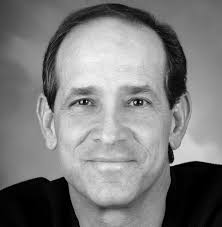
Actor, Sports Broadcaster
Mitch Laurance is one of cue sports’ most recognizable and trusted voices, an entertainer, storyteller, and broadcaster whose career has traveled an uncommon path from legendary television comedy to the pressure-packed arena of championship billiards. He’s the kind of presence audiences immediately feel: warm, quick-witted, and steady when the moment gets big. And whether he’s calling a final rack under bright lights or swapping stories about the personalities who shaped the game, Mitch has built a reputation on one essential skill, making people care.
Long before pool fans knew him from the booth, Mitch was developing the instincts of a live performer in the most demanding classroom imaginable: "Saturday Night Live". In the show’s formative years, he worked inside that famously fast, chaotic, and relentlessly creative environment, learning firsthand how timing, preparation, and teamwork turn a rough idea into something electric. Those early experiences weren’t just a résumé line, they became a professional foundation. Mitch has often reflected on what it means to operate under pressure with a clock running, an audience waiting, and no margin for hesitation. It’s a mindset that later translated seamlessly into live sports television, where a single shot can flip the story, and a broadcaster has to be ready to capture it in real time.
That blend of performance and discipline carried Mitch into a full on-camera career. After moving to Los Angeles, he worked his way into television roles, earning early credits that opened the door to a long run of… Read More