

 Apple Podcasts
 Spotify
 Mitch Laurance - Part 3 (From Balboa to “Bula Vinaka Beachside”: Mitch Laurance on Golf, Great Actors, and the Freedom to Perform)
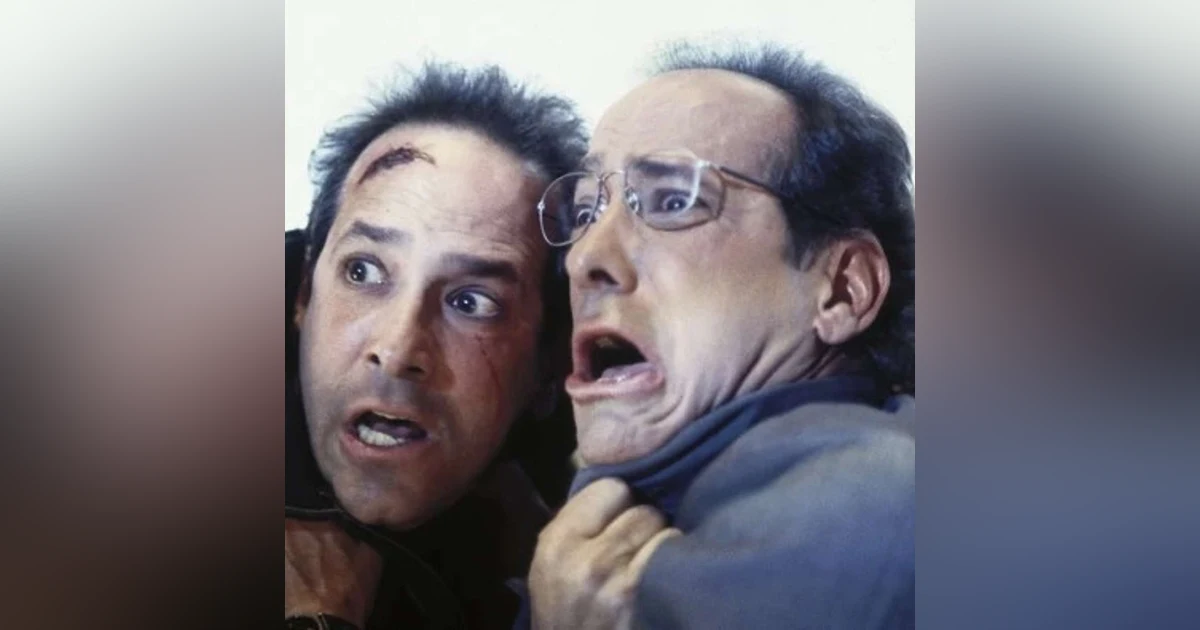

In Part 3 of our multi-part life-story conversation with American film and television actor—and longtime sports broadcaster—Mitch Laurance, we detour through the worlds that shaped him long before pool took center stage.
Mitch takes us back to Los Angeles in the 1980s, when a persistent friend talked him into an early-morning tee time at Balboa. What happened next surprised him: not instant love for golf, but total fascination. Here was a ball sitting still on the ground… and he couldn’t hit it. That maddening mystery became an obsession—fueling lessons, practice, and a deep dive into the competitive side of the game as he chased improvement, rounds, and a lower handicap.
From there, Mitch opens the door to the L.A. golf scene: the public gems like Griffith Park, Balboa, Encino, and Rancho Park, and the private clubs he came to know through celebrity events and friendships—Riviera, Bel-Air, Wilshire, Lakeside, and more. Along the way, he shares the actors and friends who became regular playing partners, including Craig T. Nelson, Andy Garcia, Chris Lemmon, and others.
Then we shift from fairways to film sets as Mitch reflects on the craft of acting—what it feels like to be “in the moment,” truly free, and creating something that didn’t exist before. He also speaks candidly about impostor syndrome, awe-filled encounters with icons like Lauren Bacall and Gregory Peck, and the performance he’s most proud of—an L.A. Law episode that taught him what it meant to be “free to be good enough.”
And yes… Mitch answers the question: did he ever feel famous? The answer involves an AT&T commercial, a phone booth, and one unforgettable line—“Bula Vinaka Beachside.”
Give Allison, Mark & Mike some feedback via Text.
Follow our show and/or leave a review/rating on:
Our website: https://www.legendsofthecue.com
Apple Podcasts: https://podcasts.apple.com/us/podcast/legends-of-the-cue/id1820520463
Spotify: https://open.spotify.com/show/4Za0IMh2SeNaWEGUHaVcy1
Music by Lyrium.
About
"Legends of the Cue" is a cue sports history podcast featuring interviews with Hall of Fame members, world champions, and influential figures from across the world of cue sports—including pocket billiards, snooker, and carom disciplines such as three-cushion billiards. We highlight the people, places, and moments that have shaped the game—celebrating iconic players, memorable events, historic venues, and the brands that helped define generations of play. With a focus on the positive spirit of the sport, our goal is to create a rich, engaging, and timeless archive of stories that fans can enjoy now and for years to come.
Co-hosted by WPA and BCA Hall of Fame member Allison Fisher and Mosconi Cup player and captain Mark Wilson, Legends of the Cue brings these stories to life—told in the voices of the game’s greatest figures.
Join Allison, Mark and Mike Gonzalez for “Legends of the Cu...
Well, question question. So at this point in your life and career, what did you say this was? 80 or 90. Yeah, 92. Okay. Had golf or pool come into your life yet?
Mitch LaurancePool had definitely not come into my life, for sure. Other than meeting Ava. But as far as the sport, not at all. Golf absolutely had become the golf is the reason I met Ava.
Mike GonzalezOkay.
Mitch LauranceSo if you want, we'll back up to 1980. Getting time warp.
Mike GonzalezYeah.
Mitch LauranceIn 1980, that's when I moved to LA. And I had never played golf. I mean, my brother and I when during the summer, my father used to take us to hit balls every now and then, but he didn't play. I knew one guy in high school who played golf. 1980, I moved to LA. I had a friend who I'd known since second grade named Keith Glass, who was a basketball coach and had moved to Los Angeles. He was had grown up kind of as a little brother to Larry Brown, who was a big-time basketball coach and at the time was coaching UCLA. So Keith moved out to coach. He was an assistant coach with Larry. And when I moved to LA, Keith and I were talking, and one day he said to me, You ought to come play golf with me and Larry. And I went, Nah, Keith, I don't play. He said, No, really, you should come play. And I said, Keith, I uh care less. And that went on for a little while, and he kept bugging me. And one day I said to him, All right, I'll come. I'll play golf with you. He said, Good, I'll pick you up at 6 30. I said, 6 30. It's going to be dark. He said, 6 30 in the morning. I said, Keith, I'm an actor. Unless you're paying me, I don't know that I'm showing up at 6 30. But anyway, I did. I went out with him and went to a Balboa golf course in LA.
Mark WilsonYeah.
Mitch LauranceAnd I was hooked immediately, not because I loved the game, but because I didn't hate it, but it was the most mind-boggling experience in sports I'd ever had. And what I mean by that is I'm out there and I can't hit the ball. I can't get it up in the air at all. And as the holes go by, and I would skull them on the ground and chunk it and do all the stuff. And I said to at Keith at one point, I said, I don't understand this. I'm a good athlete. Yeah. I played basketball for a year in college. I played. I played baseball. I played football. And the ball's always been good at sports. Here's a ball that's sitting on the ground. Nobody's yelling at you. Nobody's guarding you. Nobody's trying to tackle you. Nobody's throwing it at your head at 90 miles an hour. And I can't hit it. And that's what hooked me on the game. I just couldn't get over. And so I started from that point going out to practice and taking some lessons. And as time went on, and I was totally addicted to it. And I was single. So when I wasn't working, that's what I did. And once I started the HBO show about two years into the not necessarily the news, I got a publicist to do some stuff. And she had a number of clients, a couple of big clients who were golfers, and would play in these celebrity events around Los Angeles. So I started getting invited to those. And then through that, I started getting invited to pro ams and celebrity events around the country. And in the 80s, probably from 85 to 90, I would say I played easily 25 of them a year.
Mike GonzalezWow.
Mitch LauranceI mean, every other weekend. If I wasn't working, I was gone. And so it had become, other than acting, the biggest part of my life by far. And obviously started meeting a lot of people, among them a pool player named Dave Mataya at the time.
Mike GonzalezNow we'll come back to that. Let's just talk about the the LA golf scene then. Who were your fellow uh colleagues that uh were fairly adept at the game as well?
Mitch LauranceWell, I used to play a lot. I'm not used to talking this much. I haven't done podcasts for a while.
Allison FisherWho talks more in your family, you or Ava?
Mitch LauranceDepends on what time of day it is.
Allison FisherOh, yeah, yeah. I can understand that.
Mitch LauranceTakes her a few hours to wake up.
Allison FisherOh, really? But you wake very early, you two. I know that. I know what your timeline is. So my mum's like that. My mum's not my mum's not a morning person. She's living here, and I am. I'm a morning person. My mum wakes up in the evening, which when I want to shut down. That's funny. Okay, so what was the question?
Mike GonzalezYeah, yeah, what were we? Fellow, fellow actors who were who oh, fellow players.
Mitch LauranceTrying to think. There were some big ones. I'm trying to think of order, but it doesn't really matter. So I would say the ones I played the most golf with were Craig T. Nelson, who's an actor, who was on the show coach, and tons of movies. Craig T, Andy Garcia, I played a lot with. Chris Lemon, Jack Lemon's son. Those were probably the big three. Matthew and I played, but there were others. David Leisure, who was really doing great work in LA at the time. And Peter Jason, who all of you would know if you saw his face. Peter and I played a lot. Stu Pankin, who was on Not Necessarily the News with me, we played a lot. Steven Peterman, who was a producer, is a producer still in LA. He and I played a lot. He did, he produced Hannah Montana and Murphy Brown and a bunch of other shows. But those were kind of the those are the main guys. I mean, I was always hooking up with other people too.
Mike GonzalezAnd where where did you play most of your golf?
Mitch LauranceMost of it, certainly at the beginning, the first five years or so were at all the LA public courses. Griffith Park was a favorite, the courses there. Balboan and Sino in the Valley were important. That's where I played my first round. It's where I broke 80 the first time. I loved those courses. And then as I started playing with my more famous brethren, I started getting invited out to the big clubs, you know, the private ones, Riviera and Bel Air. Started playing there with them, Hillside, which was one of my favorite courses. Wilshire Country Club.
Mike GonzalezYeah, how about Lakeside? That was an old time famous one for actors, right?
Mitch LauranceLakeside, I played a lot because David Leisure, that friend of mine, was a member at Lakeside. So he'd call me once a month, probably. And we'd go out there. And as I said, I used to play Wilshire a lot because I had gotten to be friendly with Hollis Stacy, the Hall of Fame LPGA player, and we were friends. And so I'd play three or four times a year out at Wilshire. She was a member there. And it was those associations that that, you know, that was great. I had, I think I had a perfect mix of all of it, because there's so many great public courses. Rancho Park, I used to play all the time. Yeah. It was a mixture of both of those.
Mike GonzalezSo and what was the what was the real attraction, having now had a few years to think about it? The real attraction that really hooked you, hooked you on the game. I know you mentioned the challenge, but uh what else? Anything about the solitude of the game or just the environment you're in?
Mitch LauranceYeah, I mean, I think I appreciated the beauty of it. I was much more focused on scoring and how well I was playing at that point, playing golf. I used to get frustrated a lot. Like I said, took a lot of lessons trying to get better because it was I was playing probably four times a week every week. And so the main focus was getting better, lowering my handicap, all that kind of stuff. And so uh that was kind of the attraction. I loved being around my friends. That was definitely a part of it. We laughed a lot, and it wasn't until a bit later that I started really after I'd left LA and started really getting into the spiritual side of the game, which has been the focus of it for me for the last, well, easily 20 years. So, but that that was the part of the game that kind of got me at the beginning, was getting better being competitive, and then after I realized it's not what it's about, which I keep reminding myself every time I play.
Mike GonzalezYeah. Unfortunately, that comes to some people too late in life.
Mitch LauranceI know.
Mike GonzalezThat realization of what it's about.
Mitch LauranceYeah, I agree. I agree.
Mike GonzalezYeah. So, Mitch, looking back on your acting career, I guess a couple things come to mind for me. One is what aspect of the craft, because you did a lot of different things, right? You did TV, you did movies, you did what aspect of the craft uh did you enjoy the most?
Mitch LauranceIt's an interesting question because there's so many different parts to it that people who aren't acting don't really know. I think one of the main things well, the top of the list would be the people that you work with. And that can be either other actors or directors, or that's that's the top of the list. And the good ones and the ones that, and again, I absolutely can't believe that as a kid from Long Island that I got to work with some of the people I worked with. I never in a million years would that have ever entered my space. And when I say that, that goes from just people that nobody really would know other than the people that were on some of the shows I did that didn't become very famous, but who I loved working with, to the people that, like I said, the cast of not necessarily the news, that whole gang, the production team, and other shows too along the way. But uh for me, I got I got a chance to not just work with, but spend a couple of weeks at a time with people like Gregory Peck, Lauren Bacall, Carl Malden, Chris Christofferson. That's, you know, when I look back on it just as a whole big thing, being exposed to and working with people that I had grown up admiring for what they did and that had touched me in some way, was a just the biggest gift of all of it. So that the the people part of it was, and when you did, and I don't care what show it was or what the part was or anything, but when you it's like as as a pool player, Allison and more too, you've experienced it. And Mike, I would probably say that in your life in business or in golf when you're playing golf, when you catch a wave and you get in pool, you get a rack or an event, you know, a match or something where you are you are a hundred percent in the moment of it, and there's nothing in between you and what you're doing, and there's always obstacles to that, as we know, but when you hit it and you get a chance to do it in acting with somebody that you're performing with, and there's tons of people around, and all this crew and lights and all kinds of stuff going on, but when you find that that moment and those moments, that's the gift. And you kind of go to a different place, and out of that comes something that wasn't there before, it's the act of creation.
Mike GonzalezYeah. Yeah, just the reading you described, uh, I think it was when you got the role of Pete Kimmelman and the freedom you felt with that reading, thinking, I'm not gonna get this, what the hell? I just let it all out there. And that was so early on.
Mitch LauranceGood by you to pull Pete Kimmelman out of that.
Allison FisherYou know what was interesting about that moment, you know, when Matthew Matthew left the room and just sort of, you know, said, Oh, you know, like he didn't get the job, did that give you more freedom to the Oh, I think it did.
Mitch LauranceThe combination of no no expectation. Right. Because I was with all these people that were trained and had done this and had all this stuff going on. And like I said, I this was early. I had been there out in LA for two years. And I had no training in that, no comedy, other than being around Saturday Night Live for five years and watching everything around me, but I had no expectation to get that done.
Allison FisherYeah, it was like a nothing to lose moment. Yeah. Yeah.
Mitch LauranceAnd when you, as you know, if you come in expecting or caring too much about getting a job because the the script is so great, or you're gonna be working with Gregory Peck and Lauren Bacall, or you're gonna be that's when it starts to get those those little walls come in between you and the creation.
Allison FisherYeah.
Mitch LauranceSo that was absolutely the case in that that audition.
Allison FisherYeah. And then one other question, I kind of sorry, Mike, can I just ask one other question? When you've been in the presence of these great actors that you've been in the presence of, have you picked their brains at all about acting? Have they learned anything?
Mitch LauranceI mean, there might be general conversation, but I think it's also if I were doing it now, if I if at the at the kind of end of after doing what I was doing, but I was always someone who was, and this is sad to me, but it's just who I've been. My wife is not like this. And the reason I say this is it's a really specific character trait. I was always, I think because of what I called the imposter syndrome when I was starting out, I never a hundred percent felt like I belonged there. That's the truth. That's that's I did some really good work, stuff I watch, that I'm proud of, you know, I'm really proud of it. But other than maybe a couple times, I I always felt like I was Noma someplace I wasn't supposed to be. That's the only way I can put it. So for me to spend if the the weeks with Lauren Bacall and Gregory Peck were in Raleigh, North Carolina, we were doing a TV movie, and all of my stuff with them during a two-week period was filmed at one house.
Allison FisherYeah.
Mitch LauranceAnd it was a big house with a big porch. And so often when they would be doing lighting changes, set things, decorating, doing different things, I'd find myself out on the porch sitting across from Lauren Bacall. And instead of what I would do now is I would try to subtly probe, you know, or talk about different things, whatever. But at the time, I was in awe.
Allison FisherI can imagine that.
Mitch LauranceI was just in awe. I mean, in my mind, we're talking, and she was like a sailor. She was the greatest. I mean, she was she was unbelievable. What are we saying?
Allison FisherAre we saying she had a potty mouth or something?
Mitch LaurancePotty mouth does not cover it.
Allison FisherI love that.
Mitch LauranceYou can capitalize like that. You can capitalize the P, but it still wouldn't cover it. But she was unbelievable. And so we'd just be kind of talking and whatever would come up. And in my mind, I'm sitting there and I'm going, it's Lauren Bacall. She was married to Humphrey Bogart. She was my dad wouldn't love her. I didn't, and I really wish I had been confident enough of myself. This started, and I have to tell you, because it's an interesting point to me. When I was it started on Saturday Night Live. I would be in the green room with whoever the guest host would be, you're getting ready for the show or before dress rehearsal or whenever. And you'd be sitting in this room with the writers and the cast. And so there might be, let's say, there were 30 people in the green room. And I would be sitting there because I needed to be involved on the production side. But I'd be sitting there and I'm going, it's Mick Jagger. That's Mick Jagger. Or the most impressive host by far on Saturday Night Live to me was Ray Charles. And I'd be sit and I'd go, it's Ray Charles. Yeah. Or whoever it might be that I held up. Yes. That was my feeling. And I carried that, you know, into acting too, in a way. And so I think if I had known what I know now or 20 years ago, I might have acted differently in the way that I I think I still did really good work. Was it the best work I ever did? I don't know. It was it was absolutely perfect for what I was in, you know, for the TV movie, for the whatever. I never embarrassed myself at all, which makes me feel good. But the reason I said about Ava is her whole background and growing up in Sweden had a lot to do with it. And to this day, she holds no one up here. There is no one on the planet, no matter who they are or what they do, that she feels like she is not entitled to be in that space.
Allison FisherI'm a little bit like that. I think you are a little bit like that, yeah.
Mitch LauranceI think to achieve what you've achieved also. No, but I I'm I mean I I get it. I it doesn't mean that you don't respect people. No, not at all. Or you might not really respect something they've done. Right, of course. But it has never held you back from like really when I watch great work, when I watch actors that I love, I don't have you guys seen this is way off topic, but for your listeners too, have you seen Hamnet yet?
Allison FisherNo. No.
Mitch LauranceYou have to go see this movie because I'll write this down. One of the greatest acting performances on film that I can safely say I've ever seen in my life is an Irish actress named Jesse Buckley. And it is the I mean, there have obviously been hundreds of great, great performances. This is the free we're talking about being free and completely. This is, I think of all the performances I've ever seen, the freest work that I've ever seen. Yeah, that's how powerful this is to me. And when you listen to her talk, she's incredibly humble and graceful and everything else, but there's not one ounce of her you can tell that does not feel like somehow I don't belong in this space. And that's to wrap that acting discussion up, it's kind of you know, I feel unbelievably lucky. I really do to have done what I did.
Allison FisherAnd it's a great life.
Mike GonzalezWhich which performance, looking back, are you most proud of?
Mitch LauranceI did a job on LA Law, which was a long-running show. And I had a monologue at the end of the show that was really important. It was important to the show, and it was important to me. It was a kind of closing summation. Wow. Love you, Mitch. Some of it hits hard. Anyway it was it was the closing summation to the jury in this case. And I had been in, I had gotten the job. They called me back three or four times. And at the time, this was one of the top three shows on television. When I auditioned for it, it was with Botchko, and uh, there were a bunch of people from the network in the room and whatever. It was just a guest starring part, it wasn't a regular part, but it was it was a big deal. It was a two part episode, you know, two episodes. And in preparing for that closing, I knew how important it was, and so I was putting a lot of extra pressure on myself. And when I finally wound up doing it, I kind of there was a part of me that was that was free, I think, and it for whatever reasons. And it's kind of like when you play Alice and and you're by yourself at the table. Yeah, I understand. And there's all this around you doing this. Everybody that's there. And that pressure can be stifling and crushing. Or it can be almost non-existent because, like I said, you're locked in, or whatever. And for whatever reason, that was the first time that I felt like I was free to be good enough. That's the only way I can explain it. So I mean, I did a lot of work that I was proud of. But I think in terms of my own life and my own progression, it was it was really big for me. And I'll say quickly that another one that I absolutely loved and look back on with that kind of wow, this was really was the outer limits with my brother.
Mark WilsonYeah, I can see that. You know, in my life, Mitch is a hero to me, and I'm a little bit like him in terms of, you know, there's Screen Actors Guild, and then there's Other Talent in Hollywood. Well, I'm Other Talent. And so when we got to be part of ESPN, we go to these production meetings, and they'd be right before the show, and I'm nervous, and I also don't belong, even though I would love to be part of the commentary team. And they give Mitch two pages of single-spaced things that have to be interjected into an hour-long program. And then I'd have about three lines of the whole thing. And so we go out, the lights are super bright, and Mitch is so down to earth and welcoming. I mean, you could cast him as James Bond, and he would be fine, and he'd just rock that thing. And then I'm over there like I'm over there like a meth addict, you know, like a hyper, like an all-strong. And so uh anyway, we go out there, the lights are stifling bright, and Mitch would nail his part every single time, so smooth and so professional. And and then I'd be over there stumbling on the first three words, you know, and then we have to start over. And then in my headset, there'd be more energy, Mark, more energy. You're not you know, and I'm trying to say now he's gonna play safe. More energy. So but anyway, Mitch is an epically cool guy, and that that's why you know he he's also sincere and he's down to earth, and he and he made me better and taught me a lot during that span of time of just how to interact. And so I can certainly uh relate uh what he went through with you know, Lauren Bacall, Richard Dreyfuss, and John Belusi, or whoever it might have been, it had to be fascinating.
Allison FisherSo yeah, it's definitely.
Mitch LauranceI have to say, you you jumped in on this one because I was waiting till the pool section of our discussion to talk about getting to work with you. For real. Well, because one of my great joys of doing commentary for so long was getting to work with different I mean, I had you know regular partners, obviously, but was getting to work with people that I ordinarily wouldn't have gotten to work with. And you were right up there, man. And I know I knew at the time that it wasn't easy for you, too. And it's no different than throwing anybody into a situation they're not really, it's not their milieu, it's not their, you know, it's not what they're used to, it's not and I totally got it, and I and I told you then, and I still think it now, I thought you did a great job. You you bring an unbelievable wealth of knowledge about what we were doing. And if I could have drilled into your head before we said anything during that commentary, that's enough reason to be there. That's yeah, that's true.
Mark WilsonWhen you're self-assured and successful like Mitch, then you make the other person comfortable, and that's the highest level of professionalism you can have. You don't have to say it's about me, me, me. And and that's what he he was welcoming and encouraging and positive, and also allayed my nerves, I would say, quite a bit. So when you make your partner better, that's the height of success, Mitch. So well done.
Mitch LauranceIt's a bromance going on here, pal.
Mike GonzalezThere we go.
Mark WilsonWell, slow down. I'm not gonna cry.
Mike GonzalezWell, I know, I know everybody's anxious to get into the pool segment of this, but I do have a couple other questions relative to acting career, and then we'll get into it. And uh, I guess the the next question I have for you, Mitch, is did you ever feel famous?
Mitch LauranceBoy, that's a good question. I I'll tell you something that is gonna completely come out of the blue. I don't think I ever really felt famous because I I wasn't I wasn't a big even when the HBO show was big, the other shows not so much. I mean, Matthew, when Matthew was on Beverly Hills 90210, he he wasn't famous, famous like off the charts, but he would walk around and people knew him because he was on Beverly Hills 90210. I was never really, you know, the people who watched Matlock, I did a recurring character on Matlock for two or three years, and none of the people on the street ever came up to me and said, Aren't you Richard Jeffers from Matlock? Most of the time, because they were probably 90 years old who watched it. But but the one time that I felt famous, and this will I'm this is gonna shock you. When I started playing in the celebrity golf tournaments, I was in, I was at Duke, and I was playing in the Duke Children's Classic charity event. And because of the events that I had already played in, I had gotten to be good friends with a couple people who were basketball coaches. Jim Beheim from Syracuse, PJ Corlesimo, and Mike Cheshevsky. Allison, these were all really big-time college basketball coaches.
Allison FisherThank you for that.
Mitch LauranceAnd so I had been doing stuff, and I had been doing stuff, and I had done when I was in LA, and it was pretty close to when this golf tournament happened. That was in May, it was always in the spring. So in February of that year, I had done a commercial for ATT. And the commercial was I was in a phone booth and I was trying to call Fiji. I was trying to call Phoenix, and I got Fiji on the phone. And the gist of the commercial was that that was a big problem because I had gotten Fiji, and this guy answers in Fiji, and he says, Nakamaka beachside. He was at a bar, and I'm on the phone and going, I'm trying to reach Phoenix and back and forth and back and forth. Anyway, the commercial ran all the time. They ran it during the Super Bowl, it was on all the time. So fast forward to May. I go to Sheshewski's having some people over to his house one night. And I was with PJ and Jim Beheim, these two other coaches, and they said, Come on, we're going over to Mike's house. Fine. So we go over to Mike's house, and there's a guy named Bobby Cremens, who was also a big-time coach. And he was coaching at Georgia Tech at the time. And I walk in the living room, say hi to Mike. I'm with Jim and PJ, and I sit down in this chair across from Cremens, and I go to introduce myself, and he looks at me like I mean, he had the widest eyes ever. Now, this is somebody who's you played for national championships in the world of sports. And I go to stick out my hand and I go, hi, Mitch.
Allison FisherAnd he looks at me and he goes, Nakamaka Beach died. That's what I was thinking he was gonna say.
Mitch LauranceI was hoping that was the line.
Allison FisherYeah.
Mitch LauranceHe's flipped out. And that's Bobby. If you knew Bobby, he is a great guy, just really fun and out there. And that's who he is. And he was brilliant. You'd have thought he'd met the president. I don't know. And that Mike is probably the most famous I've ever done.
Allison FisherThat's worth it. Thank you for listening to another episode of Legends of the Q. If you like what you hear, wherever you listen to your podcast, including Apple and Spotify, please follow, subscribe, and spread the word. Give our podcast a five-star rating and share your thoughts. Visit our website and support our Paul History project. Until our next golden break with more Legends of the Cube, so long everybody.
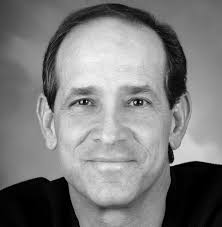
Actor, Sports Broadcaster
Mitch Laurance is one of cue sports’ most recognizable and trusted voices, an entertainer, storyteller, and broadcaster whose career has traveled an uncommon path from legendary television comedy to the pressure-packed arena of championship billiards. He’s the kind of presence audiences immediately feel: warm, quick-witted, and steady when the moment gets big. And whether he’s calling a final rack under bright lights or swapping stories about the personalities who shaped the game, Mitch has built a reputation on one essential skill, making people care.
Long before pool fans knew him from the booth, Mitch was developing the instincts of a live performer in the most demanding classroom imaginable: "Saturday Night Live". In the show’s formative years, he worked inside that famously fast, chaotic, and relentlessly creative environment, learning firsthand how timing, preparation, and teamwork turn a rough idea into something electric. Those early experiences weren’t just a résumé line, they became a professional foundation. Mitch has often reflected on what it means to operate under pressure with a clock running, an audience waiting, and no margin for hesitation. It’s a mindset that later translated seamlessly into live sports television, where a single shot can flip the story, and a broadcaster has to be ready to capture it in real time.
That blend of performance and discipline carried Mitch into a full on-camera career. After moving to Los Angeles, he worked his way into television roles, earning early credits that opened the door to a long run of… Read More