

 Apple Podcasts
 Spotify
 Mitch Laurance - Part 5 (From Hollywood to the Booth: Mitch Laurance, ESPN, and the Voices of Pool)
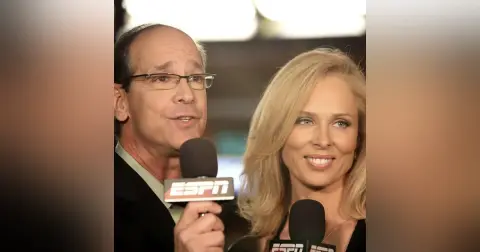
In Episode 5 of our six-part life-story series with Mitch Laurance, we pick up where his improbable second act really takes flight—behind the microphone, on the biggest stage pool had at the time: ESPN. Mitch takes us back to that first broadcast, when pool commentary was still being figured out in real time… and he was, too. With the opening and closing done live and much of the commentary recorded in post, Mitch describes the surreal learning curve of watching a match like a fan—only to hear a director in his headset reminding him, “Mitch, you have to talk!”
From those early WPBA broadcasts (including a memorable Robin Dodson vs. “Ewa” final) to years of working alongside top voices like Mark Wilson and Vicki Paski, Mitch shares what it’s like to grow into a role you never expected to have. The conversation opens up into the craft of commentary—how little formal guidance there was, how confidence is built on the fly, and why the best production teams are the ones you never notice.
Then, in classic Legends of the Cue fashion, we detour into a wild and wonderful story: Mitch at Woodstock. He paints the scene from a 1969 Rolling Stone ad to waking up on a blanket and realizing tens of thousands had arrived while he slept—before the weekend became the muddy, mythic event we all know today.
We close by looking forward: what happens to sports broadcasting when commentary moves off-site? Mitch, Allison Fisher, and Mark Wilson weigh the cost-saving trend against what you lose—atmosphere, insight, adrenaline… and authenticity. If you care about the soul of pool on television, this episode hits home.
Give Allison, Mark & Mike some feedback via Text.
Follow our show and/or leave a review/rating on:
Our website: https://www.legendsofthecue.com
Apple Podcasts: https://podcasts.apple.com/us/podcast/legends-of-the-cue/id1820520463
Spotify: https://open.spotify.com/show/4Za0IMh2SeNaWEGUHaVcy1
Music by Lyrium.
About
"Legends of the Cue" is a cue sports history podcast featuring interviews with Hall of Fame members, world champions, and influential figures from across the world of cue sports—including pocket billiards, snooker, and carom disciplines such as three-cushion billiards. We highlight the people, places, and moments that have shaped the game—celebrating iconic players, memorable events, historic venues, and the brands that helped define generations of play. With a focus on the positive spirit of the sport, our goal is to create a rich, engaging, and timeless archive of stories that fans can enjoy now and for years to come.
Co-hosted by WPA and BCA Hall of Fame member Allison Fisher and Mosconi Cup player and captain Mark Wilson, Legends of the Cue brings these stories to life—told in the voices of the game’s greatest figures.
Join Allison, Mark and Mike Gonzalez for “Legends of the Cu...
I'll never that was literally what happened. And for some reason, uh at that point, and this changed different times over the years of doing it, but at that point, they were doing the all the commentary in post-production. They would shoot the event, and the commentators would do the commentary in post-production. The only thing that was required was to do a live opening to kind of set the scene and a closing at the end of the event. And somehow, I still don't know really why, I said, okay, I'll give it a try. And Vicky, Pasky, and I were the two commentators. We still laugh about this to this day. They had the table set up and we were above them, and we had two little monitors in front of us. So they were having us do the commentary. They weren't recording our commentary, but they were having us do the commentary to kind of get used to it and do it as if we were doing it live. And at the beginning of all this, I would be, and so I'm watching on the monitor, because the table is kind of down there. You can't really see too much of it. And I have headphones on, and Vicki's next to me. And at different times during this process of the match, the direct I can't remember who was directing it, but I would be sitting there and I would hear in my headphones, Mitch, you have to talk. Mitch, you got to talk. You're doing commentary. I would literally just be watching the TV like I did at home. Yeah. So somehow we I did the opening, still don't know how. And the closing, still don't know how. And that was the first event that I did. And I I pretty much in my mind was going, okay, that's going to be it for this, because after we did the post-production, which again somehow I got through. And what was amazing about that event, if you can think about this, Robin Dotson and Ava in the final. Robin won the event. I said to Ava the other day we were talking about, I said, wouldn't it have been amazing if you had beaten Robin? And the first event I did, you won. She said, Yeah, sorry, I ruined that for you. Um, but that was that was kind of the first one, and somehow they let me keep going. They uh got people at ESPN let me get going. I really don't know how because at that point I I still knew nothing and I didn't feel you talk about imposter syndrome, I really didn't feel like I belonged there at all. And we I just kind of kept going. I kept kept going. The events they kept letting me do them. It happened that it was an incredible time in the women's game. Allison, I think you understand this part of it because of the people that all of a sudden appeared on our shores and took the took the game and the sport to a whole different level for real. So I uh for whatever reason I got to be there when all that happened, and one by one, as players came over and events started getting more attention, and it just it kind of got bigger and bigger. But that's that was how the transition happened. I was still acting at the time, also. So it was I had this dual double life going on.
Allison FisherYeah, I'm sure. And you you said you were in the hand, I remember you being in it actually, the hand that rocks the cradle. Were things taken off you in the acting world? Did it take off a little bit after that?
Mitch LauranceNo, that was one scene. That was not it wasn't like I was a doctor.
Allison FisherWas you a doctor in it or something? Lawyer. Lawyer, okay. Yeah. Some professional. I knew it was.
Mitch LauranceI was a lot of doctors and professions. Oh, right, yeah.
Allison FisherYeah, I just yeah. Yeah, sorry to digress there. But anyway, so you came over.
Mitch LauranceBut that again, that's what was so amazing about that instance. I had one scene in that movie. One scene.
Allison FisherYeah.
Mitch LauranceBut the implications of that movie, obviously, like we said, changed my life.
Allison FisherSo Yeah, definitely. And uh I wasn't a part of the I just came over too late for the Gordon's event.
Mitch LauranceThat's it Yeah, there were only a few of them. Lori John was Lori John dominated it.
Allison FisherYeah.
Mitch LauranceI think she won five out of the six of them. I think the one that Robin won was the only one that she didn't win.
Allison FisherRight. I think it's amazing.
Mitch LauranceYeah, she she liked her Gordon's gin and vodka.
Allison FisherYes, she did. So so that ended in 94, didn't it? Is that right? Or ninety-five?
Mitch LauranceNo, that went ninety-five was it was I think till about ninety-six, maybe.
Mike GonzalezYeah, I see I see Gordon's events in '96. I see uh Helena Thornfeld winning the Gordon Chicago in ninety six. Oh, nice.
Mitch LauranceYes, that's right.
Mike GonzalezShe and Vivian won the Boston Gordon's event in ninety-six.
Allison FisherI just wasn't allowed in the event. I wasn't allowed in. I wasn't happy. I wasn't a Turing pro, I think, at the time. I just came over in 95.
Mitch LauranceAlso, Alison, they thought you would have an unfair advantage with the gin aspect of it coming from. Probably, you know.
Allison FisherDefinitely. There's no doubt about that.
Mike GonzalezYeah, they try out and tried to find some tea sponsors.
Mitch LauranceYeah, no, yeah. That didn't work. No, but they were gor they were they were fun, great events. They were um Yeah, I can imagine.
Allison FisherThey were 20,000 to the winner of each when they had two.
Mitch LauranceIt was a big deal. I mean, money-wise, it was a huge win for the WPBA.
Allison FisherSo was it a winner-take-all event?
Mike GonzalezNo, they were all fifty thousand dollar purses.
Allison FisherNice.
Mike GonzalezYeah.
Allison FisherWere they invitational events? Don't like you had to be in a top eight or top zone. Yeah, I f I feel like they were, but not so.
Mitch LauranceI'll have to get my researchers on it.
Allison FisherYeah, let's do.
Mike GonzalezSo back to that first time. Mark, you can probably relate. I mean, you guys probably work together too, but you could probably remember your first time in the booth thinking, what am I doing here? I know the game, but I'm not sure I know this commentating stuff.
Mark WilsonSee, the first ones we did were not the taped, it was these were live segments. So that that really hurts me, you know. And and then later on, we did post-production commentary because it was going to be edited down to an hour, and so you couldn't refer to racks that weren't included. So then we would go to Tulsa and produce those. Yeah, and it was a bit more comfortable, wasn't so much on camera. But it really did help a lot of in a lot of cases. Later on, I got some chances to work with Fox too from that. So that was a big step up, and I always channeled my inner Mitch whenever I got nervous. How much did you guys work together? Uh quite a few.
Mitch LauranceYeah.
Mark WilsonWe did the women's thing in Tulsa. I don't know how many times we went to Tulsa, but it's a significant amount.
Mitch LauranceYep. So it was it was it was like I said, it was great. Uh, and it's all learning as you go anyway. I mean, as long as you're able to give yourself room and have people around you, I had those people trust me more around me at the beginning, certainly, and even as we kept going, I think of the producers that I got to work with during all those years because they were different ones, and things I learned from them and the way they did things to make me more comfortable. You know, it wasn't as it wasn't just all, oh yeah, come on, let's do this and then do it and then goodbye. Never, as in any business. I mean, those are the best leaders and the best, you know, that kind of support among the community of what you're doing. You know, the goal always was, and it still is in everything, is to make everything that's off air totally unnoticeable. So that what's on air and what winds up the public winds up seeing and feeling is seamless. They don't think about any of it. The only thing they they think about and see and feel is what you give them. And when you're able to do it seamlessly, which is the goal, then you succeeded. Period.
Mike GonzalezSo a question for both of you as you got into pool commentating, a few questions, really. One, did you get much advice going in? Two, did you get much feedback on your performance? And if you did get advice, what was the most meaningful thing you remember or helpful that uh that you kind of put into practice every time?
Mitch LauranceI for me, uh I don't I don't remember specific advice, Mike. But I I really got thrown in there. I I really got thrown in there. And especially the first events because ESPN didn't know it was new to them, too. You know, they hadn't done, they had done some events before, but they never had anything like the WPBA classic tour. They never had a tour that would have repeat, you know, events continually through the course of the year. Uh we had people at ESPN who were guiding us in terms of production, but it wasn't very involved and it wasn't very personal. It wasn't didn't have that at all. I didn't have a mentor at ESPN who said, okay, let's work together. Come up to Bristol and let's sit down and do a couple. I didn't, there was none of that. So what I really don't remember any other than those producers, like I said, and I think at the beginning, because I felt out of place, I'm sure if I watched them now that I would look back on it and go, I think I was trying too hard. Which would be pretty natural. It feels like it's almost natural because you you don't want people who are watching, so you try harder to make it feel like you know what you're doing. You know, it's there's nothing comfortable about it at that point. I'm sure if I watched those early events now, I'd probably cringe a little. Although some of it I kind of I have watched, and some of it was just fun for me. Yeah. And the more I let that part out, I was fine.
Mike GonzalezYeah. So Mark, you remember any advice you got to getting started?
Mark WilsonWell, I was I was comfortable doing it because of the pool background. So I was quite the opposite of Mitch. He's the actor and in but public eye on camera. And I'm not, I'm just behind a microphone talking about what I understand. So that's my little comfort zone, and his little comfort zone is on camera. So then we'd be on camera or we'd be in the booth commentating, and Mitch would be saying something. And in my headset, it would be more energy, Mark. More energy. You know, it'd be like, and then and then you're trying to say that I think you should play safe. But you can't really rise your voice. He's gonna play safe. You know what I mean? But anyway, so there was a little bit of that. Yeah, and then one of the one of the memories, this has nothing to do with your question, but I'm gonna go into it anyway because it's comical. My wife, so we had a little pool room, and Mitch and I did the very first ESPN thing. For a pool player, it's like being on the cover of the Rolling Stone magazine mic when we were dying. I mean, that's the height of what you could ever do. And so my wife, she devises us, she likes party, you know, it's karaoke Kathy. So at the pool room, we've invited all these guests to for the premiere of this Blair's event and ESPN. So all good. She's got snacks, and we got 30 people there. And finally it comes the time, you know, the big countdown, and I get preempted for a spelling bee. The height of humiliation. And the next thing you know, there's an Iraqi kid on there spelling a 13-letter word. I'm like, you got to be kidding here. You know, damn, but all these disappointments of we're eating chicken wings and watching the spelling bee. But anyway, that puts you kind of so I'm a pretty humble guy if you want to know the truth. I've been scarred and uh abused, and but nevertheless, we had so many fun times that and Mitch would be riding with me in the car, and he likes the Beatles because that's all the time in my car. So he's a cool guy, and this this kind of gets back to this is an aside, so I'm just taking this away. But Mitch, for me and for the rest of the audience that cares, describe your experience at Woodstock.
Mitch LauranceI did not think you were going there.
Mark WilsonNo, no, but it's in the forefront of my mind. He's the coolest guy I ever though. He went to Woodstock, for God's sakes. Who do you know? Yes, do we really?
Allison FisherYes, we do. Absolutely. Let's live through you.
Mitch LauranceAll right, I'll give you the quick rundown. I was going to school in Boston. It was the summer of 1969. I had been was between my freshman and sophomore years. I had three friends, Kathy, Kevin, and Garrett, that I had known since you know junior high and high school. And that summer I had, let me see if I can, well, it doesn't really matter, so I guess I can say anything. We had during that summer, we all had different jobs. And we went back, came back from college, and we were all at home during the summer. And we spent every night, literally that summer together, all four of us, usually enjoying some of nature's bounty, shall we say, every night. And one night we were sitting, Kathy's family had this house with a beautiful den, open den with big glass windows that looked out on a lake, and it was gorgeous. And so we were sitting in that room, and we were on the three of us were on the couch. I was in a chair, and you spoke of the Rolling Stone, Mark. My friend Kevin was reading The Rolling Stone. This was at the beginning of the summer, and he went, Holy, look at this. And he opened the Rolling Stone, and it was a two-page ad for the Woodstock Festival. And it listed everybody that was going to be there. And the four of us are going, Oh my god, look at the oh my god, what in one place in New York? What? How much does it cost? $18 for the ticket to the entire event. So we kind of looked at each other and went, okay, I think we have to do this. So we decided to go, we bought tickets. Two of us, Garrett and Kevin, were gonna meet, Kathy and I and one other friend of our seal were gonna meet us at Woodstock. This is how nobody realized what was about to happen. People just thought, okay, it's a weekend music thing. There'll be people there. We were gonna meet them at the main gate. We went up on Wednesday, which was two days before the opening, and Kevin and Garrett were gonna meet us on Friday at the main gate. So we went up there, we hung around for two days. There were really not that many people. They were still building the stage down at the bottom, and we just kind of hung out and listened to music and threw a frisbee and just hung out. Friday comes around and it starts to get crazy. And we went over to the we had parked where you could walk to the site, which was incredible to think of. And we walked down there probably about noon on Friday, and we were at the top of the first rise, and we had blankets laid out, and we were just hanging again. And I fell asleep on the blanket. Not sure why, but I have a pretty good idea of why. Some might say passed out, but sleeping is maybe. But I woke up maybe two hours later, and there were probably 50,000 people there already.
Allison FisherWow. Wow.
Mitch LauranceDown all covering the side of the thing. I mean, and it got full quick. And we stayed Friday, Saturday. It started to rain Saturday. We got to hear a lot of great people. By Saturday night, it was uh it was nuts. It was just all mud and there was no food left, and you know, it got to be not the paradise that it started. We wound up leaving during the day on Sunday because there was we had nothing and there was no anything. But those first days at Woodstock were pretty good. They were pretty good. That's that's all I'm gonna say. There were a lot of incidents and things you saw, and you know, everybody knows about that now. But at the time, and I think about I think back on my parents, because all we told them was we're going to this music thing for the weekend. And then they would turn on the news at night and see that all everything that was going on. And somehow, I don't know, somehow we got back and we were okay, and they were okay.
Mark WilsonSo Mitch always related to me that he didn't know it was gonna be historic, you know. So that that would be all he could relate to his parents for going to this thing. Who knew it was gonna be that? Yeah. So I've always been jealous.
Mitch LauranceYep. And it was it was I think back on it now. And my those three four friends of mine are still we see each other all the time and talk to each other all the time. And it kind of always comes up that we're amazed that at our ages now, all of us in the mid-70s, that the way we laugh about it is that we can't believe we have any brain synapses left.
Allison FisherMark was busy being subhorrible at that point.
Mark WilsonI guess I hadn't started. That was 1969. I started pooling 73. So okay.
Mitch LauranceYou weren't but you weren't there yet, then you were quite there. That's uh that makes total sense. Yeah.
Mike GonzalezHe he wasn't yet running seven balls. No.
Mark WilsonThis is what you get for being honest, Mitch. Uh with this crew. They never let you. It's always the way.
Mike GonzalezBut you know, what a what an experience he just ticked down the playlist to Richie Havens and Arlo Guthrie Joan Baez, day one. Day two, some of the people that that our listeners might remember, the older ones, Country Joe McDonald, Santana, John Sebastian, Canned Heat, Mountain Grateful Dead, CCR, Joplin, Sly and the Family Stone, the Who Jefferson Airplane. Now, is that a day or what?
Mitch LauranceWow. The whole thing was that's why when we looked at that Rolling Stone double page, you it was inconceivable that the all those people were going to be there. Even logistically. I remember talking and we were going, how are they gonna do this? How are they getting all these people in one place at the same time for those days? Yeah, it was it was intense.
Mike GonzalezLet's just say, Yeah, and they were all scheduled to be like hour sets, and so they probably scheduled 30 minutes in between to kind of transition equipment.
Mitch LauranceYeah, but they brought them in on helicopters and they amazed him. It wasn't like they were all hanging out backstage. They just it was a continual cycle.
Mike GonzalezSo so back to pool then. Yep. How long, how long did you do the commentary? How many years? And was it all with ESPN?
Mitch LauranceYeah, it was all with it was all with ESPN. And it, you know, the great thing for me, and in kind of thinking about talking about it, it was it was all the disciplines that I got to start to understand. You know, what started as no knowledge, zero knowledge, over the years kind of turned into this appreciation for for all of it, which I didn't expect. You know, I hadn't, I hadn't, once I started doing the commentary, it was for nine ball. That was it. That was the tour, and that's what I did. But thankfully, because I was doing it, I got to experience other things. I mentioned trick shots before, and I got to see some of the great artists and com do commentary for the trick, you know, the trick shot championships. Allison knows this too. And you know, just watching it would be it's as if you take any other sport and take the most proficient people in that sport, and then say, okay, yes, this is kind of the same thing, but now let's see you be really good at this. And they were. They, you know, it was not just something that kind of happened. And I remember one of the things that really blew me away in that regard was I Started being able to do other events like the BCA championships and just different events in both the men's and women's game. And one year, and I then also got to MC a whole bunch of things in the in the world of billiards. And one of the things that was incredible every year was the BCA tributes and Hall of Fame things. And Sang Lee was being inducted. And Three Cushion Billiards was was something I didn't know anything about. I mean nothing. Zero. I knew less. I was subhorrible with Mark.
Mark WilsonThank you.
Mitch LauranceIn the world of real billiards. And because I was uh in a place where I was MCing that event, that induction ceremony, I remember going and looking up it was 2000. I'm gonna say 2007, I think it was. And this was Sang Lee was a three-cushion trick shot artist. Which I never I didn't even know that existed as a thing. Not I knew about the billiards part of it. I never knew trick shots. So I started to prepare for the event, I started to do some research on Sang Lee, who was just not just as a performer and an artist, but just an unbelievable guy. So I started watching some other things and I came across semi-saganor. Are you familiar with semi-saganor? Yes, Turkish, Turkish, Turkish three cushion trick. Three cushion trick shot guy. Yeah. And I remember watching videos, literally with my mouth open, my jaw just dropped watching this guy. And the all of it, the skill of it, the creativity of it, his showmanship. And I I would be thinking to myself, I'm sitting here watching someone in a sport that I knew nothing about from Turkey when we're about to induct Sang Lee. It's you know, that stuff, and it still is mind-boggling to me. It's still something I don't quite grasp that I was lucky enough to get to do. And those are the kinds of things, you know, that I'm really, really grateful for the totality of all that I got to see when I was doing the commentary. So I started in '95, and I think the last one, because we went from full-on ESPN to ESPN 2, and then from that to what they called ESPN 3, which was essentially streaming, you know, on the computer. And and then that was kind of over. So that was probably, I don't know the exact date, but it was probably, I'm gonna say maybe 10 years ago. So for 20 good years, 20 solid years. Probably. Yeah.
Mike GonzalezYeah, yeah. Now, here's a question for all three of you as it relates to the future of pool commentating. I've taken note that the uh PGA tour is moving to a model where the champions tour events are going to be covered by the staff, you know, by the by the crew remotely. So Paul Azinger and others are going to be sitting in a studio somewhere, not at the golf course, telling the viewers about the event that uh they're all witnessing together on screen. Is that the and that's I'm sure big of it is cost, right? Uh do you all see pool moving in the same direction where on-site commentating may be a thing of the past at some point? And to preserve costs, they'll just have you sit at home and do it?
Allison FisherI think it already has. I mean, it definitely has a predator event. There's definitely remote commentating there.
Mike GonzalezYeah, because uh Mark, I mean, you you you you do the international, you do the derby, you do on-site stuff, and and boy, that's a whole different kettle of fish, right? Trying to sit at home and providing the same depth of of coverage as you would if you're right there live, being able to talk to the players between matches, that sort of thing.
Mark WilsonAbsolutely. It's you know, I think it's going the way uh it's going to be remotely done, especially for the lower budget places, but it really loses a lot, too, because you can never give any insights of things going on currently or things that may affect the match, the exact angle of the shot. So, you know, I'm not really an advocate for it, but I understand it.
Allison FisherYeah, and you're losing the atmosphere, aren't you? You're losing the atmosphere and how the players are feeling possibly at that time if you're not in the arena with them or something. And you don't get the adrenaline prior. Yeah.
Mark WilsonWhen you see spectacular comebacks or shots or things, and then you know some of the ancillary things on the background that are happening, you can't give any flavor to it.
Mitch LauranceIt's just a dry, you know, so well, I think the the thing to me that's the most, and I understand it too. Obviously, there's so much going on now that we never envisioned, even five years ago. But a big problem, and what you both have said is true. The other part of it is I think it leads to artificial announcing, artificial commentary, which gets in my craw bigger than anything else, even when people are alive. The need to feel like you've got to, as the commentator, add stuff to what's actually going on. I'm not saying when a spectacular shot happens, if you react spectacularly, that's understandable. Because you're you're watching it too when you get involved. It's the other times, it's all the times in between when you feel like you've got to make something happening happen that's not there, or make it bigger than it is, or whatever. And I think when you're not at there is nothing like being at the event. I know it because I've done it both ways, Mark. You you have too. There is nothing like being there, period. You can't artificially recreate that. And the fact that that people watching at home, they're not made aware that the commentator, in other words, they try to make it seem like the commentators are actually at the event. A lie. I know why they have to do it. I'm not naive. But I kind of feel like it's just this separation again of things going on where the reality of what's going on isn't real. It's not what's actually happening. So that makes me sad, even to think about where it's going.
Allison FisherThank you for listening to another episode of Legends of the Q. If you like what you hear, wherever you listen to your podcast, including Apple and Spotify, please follow, subscribe, and spread the word. Give our podcast a five-star rating and share your thoughts. Visit our website and support our Paul History project. Until our next Golden Break with more Legends of the Cube. So long, everybody.
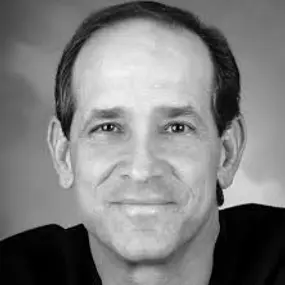
Actor, Sports Broadcaster
Mitch Laurance is one of cue sports’ most recognizable and trusted voices, an entertainer, storyteller, and broadcaster whose career has traveled an uncommon path from legendary television comedy to the pressure-packed arena of championship billiards. He’s the kind of presence audiences immediately feel: warm, quick-witted, and steady when the moment gets big. And whether he’s calling a final rack under bright lights or swapping stories about the personalities who shaped the game, Mitch has built a reputation on one essential skill, making people care.
Long before pool fans knew him from the booth, Mitch was developing the instincts of a live performer in the most demanding classroom imaginable: "Saturday Night Live". In the show’s formative years, he worked inside that famously fast, chaotic, and relentlessly creative environment, learning firsthand how timing, preparation, and teamwork turn a rough idea into something electric. Those early experiences weren’t just a résumé line, they became a professional foundation. Mitch has often reflected on what it means to operate under pressure with a clock running, an audience waiting, and no margin for hesitation. It’s a mindset that later translated seamlessly into live sports television, where a single shot can flip the story, and a broadcaster has to be ready to capture it in real time.
That blend of performance and discipline carried Mitch into a full on-camera career. After moving to Los Angeles, he worked his way into television roles, earning early credits that opened the door to a long run of… Read More