

 Apple Podcasts
 Spotify
 Nick Varner - Part 2 (From First World Title to an Unmatched Season of Greatness)
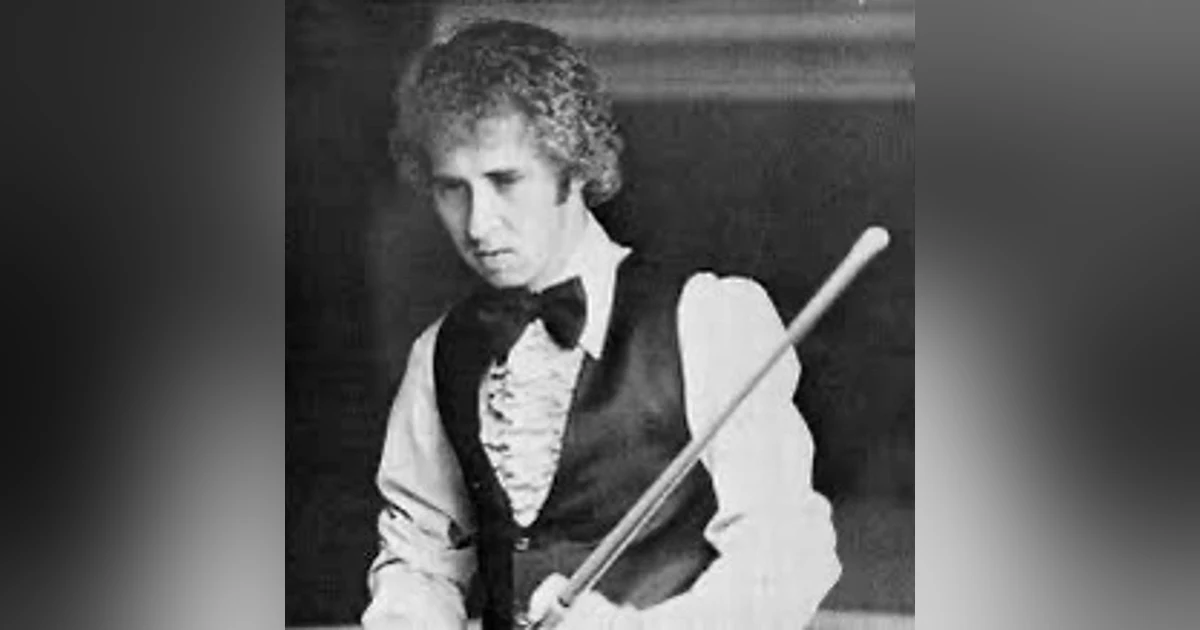

In Part 2 of our four-part conversation with Billiard Congress of America Hall of Famer Nick Varner, we dive deep into the years when his career shifted into high gear — and he began carving out one of the most remarkable résumés in cue sports history.
Nick takes us ringside to legendary match-ups with Minnesota Fats, Hubert “Daddy Warbucks” Cokes, and other colorful characters, sharing the high-stakes gambling culture, sharp banter, and the psychology of playing for your own money. We hear how a divorce, a ranking system, and the release of The Color of Money combined to push him into full-time pool — and how his game transformed when he dedicated eight to ten hours a day to practice.
From his breakthrough at the 1980 World Straight Pool Championship, where he dominated the field and toppled Mike Sigel in the finals, to his unforgettable 1986 title run featuring one of the greatest shots of his career, Nick recounts the pressure of defending a world title and the mindset needed to close out big matches.
We also relive his electric televised victory at the 1982 ABC Wide World of Sports PPPA World Championship, with Howard Cosell in the booth, and fast-forward to his astonishing 1989 season — 11 wins in 22 elite events — a feat still unmatched in the modern era. Along the way, Nick reveals moments of vulnerability, like the time he famously whiffed on a break against Dallas West, and how he turned that embarrassment into laughter, composure, and victory.
It’s a rare inside look at the grit, confidence, and mental toughness that made Nick Varner one of the greatest champions the game has ever seen.
Give Allison, Mark & Mike some feedback via Text.
Follow our show and/or leave a review/rating on:
Our website: https://www.legendsofthecue.com
Apple Podcasts: https://podcasts.apple.com/us/podcast/legends-of-the-cue/id1820520463
Spotify: https://open.spotify.com/show/4Za0IMh2SeNaWEGUHaVcy1
Music by Lyrium.
About
"Legends of the Cue" is a cue sports history podcast featuring interviews with Hall of Fame members, world champions, and influential figures from across the world of cue sports—including pocket billiards, snooker, and carom disciplines such as three-cushion billiards. We highlight the people, places, and moments that have shaped the game—celebrating iconic players, memorable events, historic venues, and the brands that helped define generations of play. With a focus on the positive spirit of the sport, our goal is to create a rich, engaging, and timeless archive of stories that fans can enjoy now and for years to come.
Co-hosted by WPA and BCA Hall of Fame member Allison Fisher and Mosconi Cup player and captain Mark Wilson, Legends of the Cue brings these stories to life—told in the voices of the game’s greatest figures.
Join Allison, Mark and Mike Gonzalez for “Legends of the Cu...
What was Fats like? I mean, he he he could he could hit a gear, couldn't he?
Nick VarnerUh yeah, he could hit a gear, and I gambled with him a lot because Hubert, he knew Fats. He says a lot of people, he says Fats matches up real good, but he said uh he said uh he matches up where he's tough to beat, but he said uh a lot of people don't realize that he gets his nose open. He said he he he will sail, and and uh and uh he so Hubert matched up a game for me to go over there. Anyway, we started off I think a couple hundred a game or something. And Fats he started out, he looked like a beginner. He he couldn't make anything, he missed everything, and then but he wasn't the type of guy that was gonna lose 40 barrels at the same price. He was always gonna keep raising the bet so he had a chance to get even. And and uh it was amazing how bad he always started off. And and I remember the first time we went over there, of course, we stopped at Fats' house, and he's showing us his scrapbook and pictures with all the movie stars and stuff, and and uh and Hubert, he he really knew how to handle Fats pretty good. He says, Listen, Fatty, he said, we didn't come over here to look at your scrapbook. He said, we came over here to bust you. And uh I guess for years, I guess in Hubert at one time used to play Fats 10-8, I guess, and spot him a couple balls, and then toward the end, he'd hardly ever beat Fats, but he came over there to play Hubert. They played for years and years. Anyway, Fats is pounding on Hubert and and Fatty. He's uh he's not uh humble's not his middle name, that's for sure. He's rubbing it in big time. And he said uh he said, yeah, Hubert, he said you might as well go get you a sandwich. He says, I'll be taking care of all the shooting tonight. And anyway, Hubert said, yeah. He said, you know, for 50 years a team of bulldogs couldn't get you up there to play me any even. He said, listen, Hubert, he says, I got nine speeds and ain't nobody ever seen the last four. He said, uh and Hubert says, yeah, them last four's in reverse, too. So uh they were really good at bannering back and forth, and uh and they had a lot of experience.
Mark WilsonUh so a couple of things that Nick told me about uh Hubert was that when uh he went to play Fats, Hubert knew Fats and knew that Nick had the game that could possibly win, just didn't lack the experience and the understanding. And so Hubert kind of took him under his wing because he saw a big upside and Hubert was about the money. But he also said that uh Hubert made me bet half of my money. And and Nick said to him one time, he says, Well, why is it you back other guys, but you don't back me? And he said he looked at me and he said, Kid, this is for your own good. Meaning uh I'm gonna toughen you up so you can make a living on your own. You don't need me. And it was it was really telling. Right, Nick?
Nick VarnerYeah, he said it shows so if you don't bet your own, he says it shows a weakness in your character. That's exactly what he told me.
Mark WilsonBut he's got college boy betting way more money than he uh school at that time. He could go to Purdue for 800, and Nick's playing 200 Iraq to start off with, and then kick it up to 500 with fats in the 69-70 era.
Mike GonzalezYeah, yeah. So help us, Nick, with the chronology here. Uh, you know, you you get out of college, you say you're still uh working kind of part-time golf. When did you when did you give up the golf entirely and kind of go pretty much 100% pool year-round?
Nick VarnerProbably I went uh I had played in most of the major tournaments up until about uh 1984, but and uh and I won a couple world tournaments, but there weren't that many tournaments and and uh I was married with a family and and uh but then uh uh I got a divorce and uh I was trying to figure out what to do with the rest of my life and it it was devastating for about three months. I didn't even want to go into pool room and and uh finally I got back uh where I I decided, you know, I've done pretty good playing this pool, you know, ru and working in the family business and doing exhibitions and uh and spending time with the family. I thought, you know, I think I can climb up to number one in this game because they came with a ranking point system where you could climb up to number one. I think Pat Fleming was probably the one that put that ranking system together, another Hall of Famer. And and uh I thought, you know, if I could get up to number one, I think a few opportunities to get endorsements and and stuff might be available. And if you're number one, you'd be first in line. So so uh uh it did make a big difference when I started playing pool eight or ten hours every day. My game did uh get much more consistent and in and it it uh really uh it really was a big difference uh in uh in my performance and and uh right away. Uh uh I started climbing up pretty fast and and uh then uh uh then the color of money came along about the same time. My timing was pretty good. And uh so uh a lot of opportunities opened up around that color of money, exhibitions and foreign trips, and and uh and uh so uh uh that that uh was uh really uh and then I continued and then in 1989 I really had a year that uh you could only dream about. I'll never forget I was doing an exhibition at the Vantage Senior Championship in Clemens, North Carolina, and uh and I got to know Rocky Thompson pretty well, and he uh he became a star on that senior tour.
Mike GonzalezAnd and uh talking about the golf senior tour, yeah.
Nick VarnerYeah, and uh he didn't he played, I guess, on the regular tour, but he didn't have uh the success that he did on the senior tour. Well, he knew Rocky knew something about uh Pooh, and he knew that the year I'd had this was 1990 when I was doing uh exhibition. And in fact, uh he he knew I'd won all them tournaments, and he took me down on the tee, and Jack Nicholas and Trevino and Palmer are there, and he says, You guys think you play good in your sport? He says, Here's a guy said uh you couldn't come close to his record, said he won half the tournaments on the tour, 11 out of 22, so that was embarrassing. I mean, it was nice, but uh standing next to uh him and uh and talking to Nicholas and Trevino, that was uh that was uh a little tough uh next to those superstars. And then uh and then uh in fact that tournament was where Ava Mataya, one of the lady players, we were doing an exhibition there together. They had like a oh, they had like a gambling night uh before the uh Pro Am where they had crap tables set up and I'm not sure they planned for money, I think as maybe prizes, but anyway, uh Mitch Lawrence was kind of the MC there, and uh and anyway, that's where she met her husband that she's married to today.
Mike GonzalezSo let me take you back to uh to kind of your twenties uh leading up to that first world title. What was available to professionals back then? Let's talk a little bit more about just give our listeners a feel for how you know were there many tournaments? Was it mostly gambling that would get you by and pay the bills? Was it the work at the pool hall? What was available to you as sort of a fledgling pool professional?
Nick VarnerWell, probably I built up that exhibition schedule. That was probably uh as far as my income, that that was the biggest part. And and uh and then the golf I got out of that about 75. And I hated to lose that PGA tour card because you gotta play every golf course almost in the nation for nothing. Yeah, it's a free pass, isn't it? And and uh that was uh I enjoyed that and uh and uh uh and then I because I went to Ohio and man, I gotta play some serious courses in Ohio and and it didn't cost you anything, and uh because that was uh just uh that was just the uh routine in in golf. Uh just professional courtesy, I guess you would call it. And and uh so I was done with the golf then in 75, and then I held on to my card. That was fun for the year, and but they you have to be employed to keep that card. And uh and so uh then uh I uh started working in the pool room after that, and I'll never forget one of the big cue collectors, William W uh uh Bill Prout from Kansas City, has such a cue collection, it's unbelievable of expensive cues. And well, that one year I lived in Canton, Ohio in uh 70 75. So I guess I went home the Christmas, uh Christmas Eve. I went back to Kentucky to get up 75 because one year a guy offered me a job selling prefab garages in Canton, Ohio, and with a friend of mine. And so uh anyway, I lived in Canton for a year and and uh sold prefab garages, but but uh I guess I had uh if I could compete, although there weren't that many tournaments, the exhibitions, like I say, was my main source of income. And most of the big tournaments, it was in New York or and I think 75 was the first U.S. open. And uh the prize money was pretty weak, so I never even went there until 86, I think. And uh uh because it wasn't hardly worth traveling that far to play in the tournament. Then uh uh and then uh I just uh worked in the family business, the pool room.
Mike GonzalezYeah, yeah. What kind of cue stick were you playing with back then?
Nick VarnerWell, from 1975 to 80, I played with a TAD Q. It's a custom cue maker out of California, and uh and uh still have that cue, and then uh and then I when I won the world tournament, then I worked out a deal with one of the major queue companies called Josh Q's. And so he he uh we designed he designed a line together. We designed a line and then of about uh eight models, and so uh I started selling them to pick up money and and uh uh and I did that for about 11 years with him.
Mike GonzalezWell, why don't you take us through your first world title? This has been 1980 Straight Pool Championship.
Nick VarnerYeah, what an incredible experience that was. Uh I'll never forget that one. Uh yeah, I only had one close match. Um uh I just ran over everybody. I think 150 times seven, that's a thousand fifty points, and I don't think all my opponent's score put together added up to three hundred. And uh and Lou Boutera, who has the same birthday, another Hall of Famer as I do, same exact birthday, May 15th, and and uh uh he he he he almost beat me. It it was a pretty close match with him, but everybody else didn't hardly get to 40 or 50 going to 150, and and I beat Siegel pretty handily in the finals. And in any way, beating bosses, that was big, but uh uh then uh uh right before that tournament, I went to Chicago and beat everybody up there. And and I just went up there to play one guy, but ended up playing a lot of people in Chicago, and and I won every match, and and uh that was a couple weeks before that world tournament. I went there and man, I just played uh about as close to perfect as you can. And and uh but I got to the final seagull, he had a Saturday like Balsus had the year before. He just Miserac had him like 139 to nothing, and Miserac never got another shot. I don't think Siegel run 150 now, but he ran a oh well over a hundred, and then they got in a safety battle, and then Siegel won. And then like Rympy, I think, hit him with like 122 or something, and he beat Rympy. I mean, he just had one of them days where he could do no wrong. And and anyway, I know when I played in the finals back in those days, they they didn't think anybody knew how to play poo unless you live between New York and Philadelphia. They thought everybody else was a hillbilly and uh when it came to playing poo, and anyway, I played that single. I remember looking in the mirror in my hotel room, I can still visualize that where I kept saying, I'm gonna win this. I'm gonna win this. I'm gonna win this. Because I just didn't want to end up in the runner-up spot because nobody ever remembers who that is. And uh and uh and I played really good against him because I was probably at least a two to one favorite. You you bet a hundred you you probably could get two hundred back if uh if you bet on me. And and uh uh I mean he put on a show on that Saturday, just like Bosses had the year before. It was phenomenal. But uh one thing you can you want to never forget is uh every day's a new day. And one of the questions people asked me a lot when they got interviewed said, What's your toughest match? And what what has been your toughest match? I said, the next one, because your resume doesn't do you any good. You know, it looks good on paper, but that's not uh competing doesn't follow that resume.
Mike GonzalezYeah.
Mark WilsonWell along the way, Nick, uh did you play the U.S. Open in Chicago, the US Open Straight Bowl on in Michigan Avenue at the Sheridan? Because I know you played in qualifiers for it.
Nick VarnerYeah, I played uh let's see. I think I played the Year of Miserek when he's first won, 1970, because I got invited because I was a national collegiate champion. But I didn't do very good and uh in that one. And then a lot of those LA world tournaments, those were invitational, and I didn't have a big enough reputation to get invited.
Mike GonzalezYeah, and uh and uh did much change for you after winning that first world title in 1980?
Nick VarnerYeah, yeah. One thing I I noticed was uh the uh uh well a lot of players I think, oh I just got because uh people said who won that tournament in New York? He said Nick Varner, they said who? And uh and so uh and so uh uh uh because they didn't think I played very good because I hadn't won hardly anything except those collegiate titles and and some local events and stuff, kind of regional tournaments, and and so uh uh because I remember after winning that I wanted to back that up so bad. I really didn't want to be a one-shot wonder and and uh and so that created some pressure and because the next year I I finished second to Sagel in the same world tournament. I I finished second to him and and uh uh but that would have been nice to win back to back here.
Mike GonzalezYeah, well you you wanna you won an 80 if we just strick stick to the straight pool championships. I think you were runner-up twice, weren't you? And you won it an 80 and 86? Yeah, I won it an 86, and and uh yeah, I'll never forget that.
Nick VarnerUh I made one of the greatest shots of my whole career. Not in the finals, but the semifinals. It was a brutal shot, but I just thought I was gonna make it. I don't know why.
Mike GonzalezUh describe it, describe it for us. You brought it up, you gotta describe it for us.
Nick VarnerWell, the score was really close was a another Hall of Famer, Jim Rymp, and and uh he had a perfect break shot. It was 147, 142. He needed a break shot plus two more. And he just you couldn't hardly lay the position of the break shot down any better with your hand. But uh I don't know what happened if uh I have and I never asked him either. Because he probably wouldn't appreciate it, because I'm sure that was a sore spot. I know he hadn't forgot that match. And uh because he was a premier player in straight pool. He was phenomenal, and he was a good all-around player too, outstanding. And anyway, he I don't know if he got to thinking, well, when he was over, instead of hitting him hard like he usually did, he kind of took some speed off and got stuck on the side of the rack. And and uh he didn't have a shot. So he pushed me up to the corner and I had to cut a ball in that was maybe three inches to the left of the spot. And I'll never forget my thought processes on that shot. I I got over and it looked like a hanger, like it might as well have been hanging right in front of the pocket. Uh and I thought, boy, this is do or die here. Maybe I better get over there and look at the line to the pocket and take a real good look at this, because uh there wasn't gonna be, I wasn't gonna be able to get back to the table if I missed it. And it's one of those shots. If you made it two out of ten, that'd be phenomenal. And uh to this day, and uh anybody. And so I walked around, looked at that line, tried to visualize that line to the pocket, and then instead of going back the same way, I decided to walk around. Well, when I got to that first corner pocket, I hope I didn't make a mistake here because that shot looked like a hanger when I got over it. And I got back up, and so uh I walked all the way around. Sure enough, when I got back and got over that shot, it still looked like a hanger, and I cut it right in, and then I didn't need many in one, and then uh in the finals. So it I had Hopkins, I think 112 to zero, and uh uh and then uh I think he got 50 or something like that. And so that was my second world straight pool title.
Mike GonzalezYeah, yeah. So uh just coming out of that first one, just talking about we we we won't have time obviously to talk about every tournament you've ever won, but uh some of these names might be familiar to people, others be new for the first time hearing some of these. Kentucky Open Nine Ball, the BCA National Eight Ball Tournament, the Illinois Open. Uh you turn you ended up being the Billiards Digest Player of the Year that year in 1980, didn't you? Yeah. Yes, uh.
Nick VarnerYeah, a lot of those were regional tournaments, and they weren't national as far as the fields were concerned. I'm not saying they were easy. They weren't easy to win. With hardly any tournaments easy to win.
Mike GonzalezTell us about. Playing in front of Howard Co sell in 1982.
Nick VarnerYeah, I was lucky there. He kind of took a liking to me and he really buttered me up, and I was playing Segal in the finals, and uh and uh he what a guy he was. Boy, talk about a guy that had command of the English language. He uh and uh always liked his commentating anyway, and and uh uh a little bit off the subject, but I'll never forget that Minnesota Fats and those Moscone matches some of those were the highest rated of anything, including the Super Bowl and all the big sporting events, the ratings were phenomenal on those matches. And uh anyway, uh that uh uh Kosell. I remember Muhammad Ali and Fats, he was interviewing both of them, and because they both claimed they were the greatest, and and so so uh uh Kosell had them, and oh man, they were bannering back and forth, and finally the one that got Muhammad Ali was Fat says, Listen, Sonny boy, he says, I was I was uh knocking uh I was knocking uh my competition in when your grandpappy was still drinking corn whiskey in Kentucky, and Muhammad Ali, that was the topper. He just lifted that fat, he grabbed Fatty's hand, lifted up, says, Fatty, you are the greatest.
Mike GonzalezOh, that's great. Well, this was this was what the ABC Sports Nine Ball Invitational, I think. Is that what it was called at the time?
Nick VarnerYeah, the World Invitational. It was well, actually, I think it was called the PPPA World Championship. And uh there was uh eight players invited, and I was playing Sagal in the finals and in uh Atlantic City. And so uh he he just couldn't be comp complimentary enough to to me. He uh he just uh he said, Man, he's got the eyes of a brain surgeon the way I was cutting them balls in. And anyway, Siegel, I started off with a big jump on him. Anyway, Siegel come to the table, so he's behind. Back in those days, we didn't get to play much on TV, so the pressure was a little bit more intense because you's uh because you didn't get many opportunities to play on ABC wide world of sports, and anyway, uh cat in fact that was my first televised tournament I ever won. And and uh anyway, Siegel come to the table, and his first words were, I forgot to play. And and Cosell says, This guy's a comedian, he says. And uh and anyway, he explains the shot what he's gonna do. And anyway, Siegel missed. He says, Well, the what was it? He said, the plan was there, the execution was not.
Mark WilsonThat sounds like Howard.
Nick VarnerYeah, yeah. Yeah, and uh uh yeah, that uh that he treated me like a king, and and uh in Segal, he really kind of cut him down. I don't think Segal liked that too much.
Mike GonzalezBut well, this was back in 1982. You were again the National Billiard News uh player of the year. You went on uh uh to chalk up quite a few more victories, and then uh well fast forward uh to to 86, you won that World Pool Straight Pool Championship over Alan Hop Hopkins that we talked about. And then uh I guess progress on to uh 1989, you're the U.S. Open Nine Ball champion.
Nick VarnerYeah, let's see uh I beat uh Kim Davenport. And I remember the finals of that match where Kim uh he he had this light windbreaker and he he played seagull and he polished him off in like no time and uh for the finals and uh anyway uh uh he had this light jacket off and Siegel didn't he didn't even work up a sweat where he had to take the light jacket off. And anyway, he started out like just like that on me. He was flying around the table, he's making everything. And I'm thinking in my chair, this is gonna be an easy night. I'm not gonna have to get out of my chair, and and uh all of a sudden he missed a ball. I I forget what the score exactly was. I don't know if it was 5'3 or 5'1, something like that. But talk about the momentum turning. He hardly got another game, and and I guess I was just so relaxed because uh I had no fear of losing because I I thought, you know, if he keeps playing like this, uh I got no chance and and uh and then all of a sudden I remember another match just like that where I had the same feeling. It wasn't the finals, but I was playing a guy that just died, uh Danny DiLoberto. And I played him, I think, the second round at that US Open in Chicago in might have been 89 or 90. And uh he opened up with 108, and you could just tell the balls were opening up like butter, and and they were all spreading apart in one shot, and and it just looked like he's gonna go a hundred and fifty and out. And I remember uh I was just sitting there, I figured I'd just be shaking his hand at the end and him beating me in the but all of a sudden after a break shot, I think he had 108, something like that, and then the ball skidded on him, which is a little bit hard looking. And uh I remember I had so much confidence when I climbed out of that chair. I just knew he couldn't win from there. I I don't know what it was, but my I I he even though I thought he's gonna go 150 and out, and he didn't, but I don't know. I wish I had a I wish I had that uh I could maintain that mindset my whole career. There'd be a lot more victories on that sheet. Because uh I was totally relaxed and so confident, and uh you didn't always feel like that. Sometimes you struggle and and uh you know you just go six inches too far for position and you end up on the 50-yard line.
Mike GonzalezBut uh Well, Mark, I I would bet Nick would have had that feeling a lot this year. We're talking about 1989. Of course, he alluded to it earlier, being almost Byron Nelson like that year, winning everything. 11 out of 22 events. Um I don't know if you've got the list in front of you, but it's just boom, boom, boom, boom. I mean, uh uh Billy Digest Player of the Year, obviously. Um, you win the World Nine Ball Championship in a Hill Hill win over Grady Matthews. You were beating everybody that yeah.
Nick VarnerYeah, you know, uh I'm not even sure that's the best year I had. It was definitely the best year I had as far as results and performance. But I I felt that year like I had an angel on my shoulder because it a lot of guys would be in position to beat me, but just something happened, you know what I mean? It it uh, you know, because still that year I probably lost say 22 matches. I had to lose like 40 matches or something. It wasn't like you, you know, that uh uh uh nobody beat me that year, but boy, I tell you what, I was riding high on the confidence because I got to where I walked into the tournament. I went up to the I wanted to see the tournament prize money break down because I wanted to know how much money I was gonna make that week uh because I knew I was gonna win first. I mean, that was talk about a confident year, that was a fantastic feeling. And then uh uh is uh having that that kind of confidence. It just but uh I remember when I had close matches, all the good players would gather around the table at the end if it was like close, like Hill Hill or 10-9 or 10-8. Man, the players come because I could just feel the vibes so strong. They were all praying that I lost because I just had won too much, and I'm telling you, I could feel the vibes.
Mark WilsonWell, you know, when we talk back about the that particular year, um Nick, normally let's say that we had between 12 and 20 tour stops per year that were really elite and good. And at the end of the year, you know, Siegel'd win two or three, Buddy Hall win two or three, Miserac win one, Varner get two, Rempey'd win one, and then there'd be some smattering of other guys that would just win one. But nobody ever won 11 out of 22 before or since. So that's just never happened. And we were in Memphis, and Nick will remember this when I remind him, or maybe he probably had blocked it out, but he was playing Dallas West, and uh, I was watching because uh when Nick's on that big crest, I want to try to gather any information I can. So I'm sitting in the crowd, a huge crowd, and it's five to five, and it's next break, and and nobody's beating Nick at all. And you know, so here's the greatest player in the world playing in his prime, and he swung mightily at the break and missed the entire cue ball. And uh okay, so so now the crowd is mortified, and Nick also is shocked. This never happened. He extended his arm full out. I mean, it almost looked like it might have hurt, but the best player in the world missed the entire cue ball on the break, and so then Nick realized how uh he was embarrassed and and kind of chuckled a little bit, and then the crowd started to chuckle, and then Nick laughed harder, and then the end it ended up in uproarious laughter, five minutes. And because just the idea that the best player in the world missed the entire ball, he he then leaned against the table during that time and uh composed himself. And I would just want to exit, I just want to get out of the arena. He broke and ran out and then won the set from there, maybe 11 to 5. I mean, it where most people would shrink back from that moment, and then it said, you know, this is what makes him a champion, you know, and and it was incredible. The the whole sequence of events, and I'll never forget that experience of just feeling that. I just know uh most people would wilt.
Nick VarnerI do remember that because I pulled back and I caught my index finger on the forward stroke. I I pulled back past my index finger, and then I hit the index finger going forward. That's why I whiffed it because it deflected my cue so bad. But yeah, I remember that one.
Mike GonzalezIt happens to the best, doesn't it?
Mark WilsonYeah, yeah. Well, I think it really tells you a lot more about him, you know. That that grit. I mean, it's wonderful when you just break and run out and do everything perfect, and then you don't remember that. But this to get up and break and run out after that, boy, that was something. I'll never forget it.
Mike GonzalezYeah. Well, what a year, what a year. And then Nick, you go on uh the next year and you you win the U.S. Open Nine Ball Championship again.
Nick VarnerYeah, that was the first player, I was the first player to ever repeat it, and the record stood for about 20 years, and then all of a sudden, three people beat it almost back to back to back, and then Shane Van Boning won three in a row. And I had a chance to win three in a row in '88. I I I never really lost hardly ever in the finals twice because a lot of the tournaments back in those days were pure double elimination, where when you won the hot seat, they had to beat you twice. That's changed. In today's world, usually they play one set, but uh Mike LeBron beat me twice in the finals.
Allison FisherThank you for listening to another episode of Legends of the Q. If you like what you hear, wherever you listen to your podcast, including Apple and Spotify, please follow, subscribe, and spread the word. Give our podcast a five-star rating and share your thoughts. Visit our website and support our Paul History project. Until our next golden break with more Legends of the Queue, salon everybody.
Pool Professional
Nick (Kentucky Colonel) Varner’s name has been spoken with reverence in poolrooms for more than five decades—not just because he won, but because of how he won. Calm under pressure, relentlessly prepared, and unfailingly respectful to opponents, Varner became known to generations of fans as one of the sport’s true standard-bearers: a complete player with a champion’s nerve and a gentleman’s touch. Born May 15, 1948, in Owensboro, Kentucky, Varner’s story begins in the kind of everyday American setting that has launched so many great cueing lives: family, hard work, and a neighborhood poolroom.
Although he was born in Kentucky, Nick grew up in southern Indiana, where his father owned (and later expanded) a small poolroom. In the Varner household, pool wasn’t something you “discovered” later—it was part of the family fabric. In the earliest days, Nick’s father stood him on a Coke crate so he could reach the table, and that image—kid, cue, crate, and curiosity—captures something essential about Varner: the game met him early, and he met it with discipline. From those first formative years, he learned more than mechanics; he learned what a poolroom can be: a place where stories are traded, reputations are built, and character is tested one rack at a time.
As Varner grew, he absorbed the traditions of an era when top players traveled from town to town giving exhibitions, taking on challengers, and turning pool into equal parts competition and theater. In those rooms, Nick didn’t just watch—he studied. He sought out the old masters and learned from their style… Read More