

 Apple Podcasts
 Spotify
 Nick Varner - Part 3 (From Straight Pool to Mosconi Cup Glory)
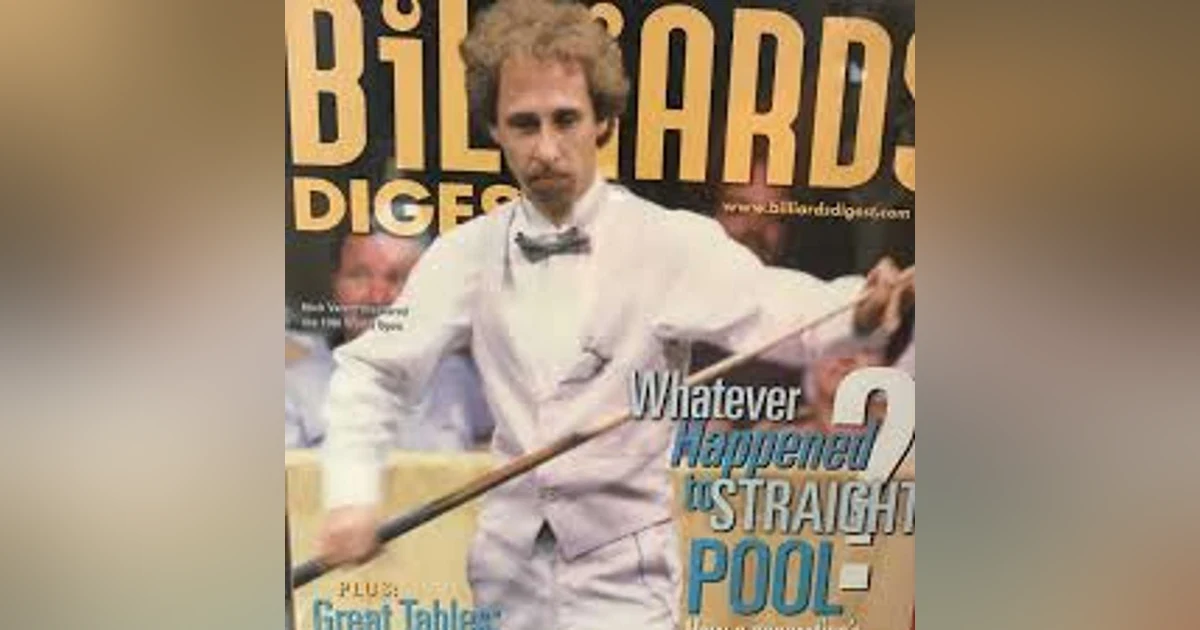

In Part 3 of our four-part conversation with BCA Hall of Famer Nick Varner, we dive into the rich details of his legendary career, exploring the transitions, rivalries, and defining moments that shaped one of the greatest champions in cue sports history.
Nick reflects on his early love for straight pool—a game of patterns, precision, and deep strategy—and how it contrasted with the faster, high-pressure rise of nine ball. He shares fascinating insights into the mental shift required to thrive when the sport’s focus moved from methodical runs to the unpredictability of nine ball, a game he ultimately dominated for decades.
We revisit Nick’s experiences in the Mosconi Cup, where team dynamics, momentum swings, and raw pressure created some of the most intense environments of his career. With anecdotes about teammates like Jimmy Rempe and Mike Sigel, and his unique perspective as both player and coach, Nick sheds light on what it really takes to succeed in the crucible of international team play.
The conversation also explores the evolution of the American pool scene—shrinking pool halls, the rise of bar tables, and the European and Asian dominance fueled by training systems and commitment to the nine-foot game. Nick’s stories about practicing pattern play in college, learning from legends like Ray Martin, and his observations on players like Steve Mizerak highlight the generational shifts within the sport.
Finally, Nick shares his enduring connection to bank pool, a discipline that sharpened his precision and kept his competitive edge razor sharp. From world championships to bubble gum stories with Mizerak, this episode captures Nick Varner at his most candid—revealing not only his unmatched accomplishments but also his thoughtful love for the game.
Give Allison, Mark & Mike some feedback via Text.
Follow our show and/or leave a review/rating on:
Our website: https://www.legendsofthecue.com
Apple Podcasts: https://podcasts.apple.com/us/podcast/legends-of-the-cue/id1820520463
Spotify: https://open.spotify.com/show/4Za0IMh2SeNaWEGUHaVcy1
Music by Lyrium.
About
"Legends of the Cue" is a cue sports history podcast featuring interviews with Hall of Fame members, world champions, and influential figures from across the world of cue sports—including pocket billiards, snooker, and carom disciplines such as three-cushion billiards. We highlight the people, places, and moments that have shaped the game—celebrating iconic players, memorable events, historic venues, and the brands that helped define generations of play. With a focus on the positive spirit of the sport, our goal is to create a rich, engaging, and timeless archive of stories that fans can enjoy now and for years to come.
Co-hosted by WPA and BCA Hall of Fame member Allison Fisher and Mosconi Cup player and captain Mark Wilson, Legends of the Cue brings these stories to life—told in the voices of the game’s greatest figures.
Join Allison, Mark and Mike Gonzalez for “Legends of the Cu...
Well, you continued to win big events. Uh I I guess you fast forward to 1994 and you see uh an eight ball world championship. This was the Seagate uh venue, I think we were talking about yesterday.
Nick VarnerYeah, yeah, that was in Toledo, Ohio, and that that's the first time the Pro Tort ever had a World Eight Ball Championship at the time. Uh that was the very first one, and then they started having them every year.
Mike GonzalezBut were you guys playing much eight ball back then? I mean, were there not any eight ball events? It was pretty much nine ball or straight pool.
Nick VarnerNo, it was pretty well nine ball. Even one pocket, there wasn't much going on in one pocket. I mean, over the years I won a few one pocket tournaments, but boy, today they have really some serious one. Boy, I wish we'd had that many one pocket tournaments in those days, but but uh because one pocket's really growing in popularity and in uh uh a lot more tournaments. Mostly I'm I made a living playing nine ball.
Mike GonzalezYeah, yeah. What was your what was your preferred game, just for enjoyment sake?
Nick VarnerWell, when I went to college, I I'd never played a game of straight pool and I loved it. And uh uh I just fell in love with that game. I thought it was so interesting, and then I got around some of those straight pool players, and it was a little different person than the people that played nine ball. They were really high character people in the straight pool. And uh uh I just loved it. Uh I loved you had to think more. It was a pretty complex game. Like nine ball, you don't have to worry about what you got to shoot next. There is no decision what you have to shoot next, because the rules of the game determine what you got to shoot next, the lowest ball on the table. Straight pull, you can shoot any one of the 14 or 15 out there. You you know, and a lot of times you have uh the pattern play so important in the straight pool, the way you pick the balls, and uh uh is so important uh the patterns you pick.
Mike GonzalezDo you think some players are just born to see those patterns more than others? Or is it just something that that comes to you with a lot of repetition and and observation and learning?
Nick VarnerWell, I th I don't think you could be barned with seeing those patterns. Um I think you have to log some time, a lot of time doing the pattern play, because I spent a lot of time playing straight pool and and uh you know in straight pool where you hit the cue ball and the break shots is a lot of skill and a lot of knowledge. And then also um uh when you those last if you got the balls all apart at the end, the last four or five balls, you'd like to end up stop, stop, stop, stop. I mean, it usually doesn't quite work out quite that easy. Usually there's one or two balls where you might have to roll the ball a couple or three feet, but but basically straight pull is a half-table game. You're playing on one half of the table where the ball's wrecked, and and uh so yeah, I used to spend hours just throwing four, five, six balls on the table and and then figuring out how to end up with that break shot. Because um, and boy, when I was in college, I I was really working hard on that game, and there a lot of there was a lot of good players on my campus, and and uh so we'd discuss that all the time. They were really pool fans, and and uh I'd say, how uh Joe, how how you think uh I should play this? And because maybe I'm just practicing or something by myself, and how would you play this pattern? So so you get different people's viewpoints and and you tried to learn from that where and uh the bottom line is you tried to connect the balls where they the cue ball didn't have to row too far, where and you're obvious most of the time trying to end up with the right angle, or a lot of you'd like to end up while all you gotta do is stop the cue ball. Probably the most important position shot there is is a stop shot.
Mark WilsonRight. The economy of cue ball travel is what wins because it minimizes unforced errors. And didn't you tell me that you thought Ray Martin picked the balls about the best of anybody?
Nick VarnerWell, he was as good as anybody. He uh Ray Martin, he had such good cue ball control, and I did some exhibitions with him, and man alive, I was impressed with the patterns that he played. He really kept it simple and and he had such uh good speed control with the cue ball and and uh yeah he was a great straight pool player. But then in the 80s uh the game started to change where he'd come nine ball, they're looking for a faster game and and uh simpler game and and uh so uh I almost wanted to give up the game when it went from straight pool to nine ball, and and uh what really made me come out of it is uh is uh because most of straight pool players from New York and New Jersey and Philadelphia, they thought nine ball is a joke game and stuff. And and uh but I looked up and Buddy Hall and Mike Siegler winning almost every tournament. I thought, boy, how lucky can this really be with these guys winning every tournament? So so I got with the program after that, and and uh because uh I won a lot more nine ball tournaments by miles than anything else. And to a big extent, prize money-wise, nine ball was uh what I made a living at.
Mark WilsonAnd uh what happened before that was that straight bull had been the predominant game for so long, we all invested our whole heart into it. And there were some top players, and uh Steve Mizerak could be a prime example, that didn't convert well to nine ball, despite the fact he could play it great. He just his heart wasn't in it because you got to make a ball on the break, and you couldn't control some of the uh things that happened, the variances. And Nick was one of the ones that made the conversion, Siegel made the conversion, and Rimpe to a large extent made the conversion. But Miserat got left behind. He just didn't have his heart in it, it just kind of killed, but he used to dominate straight pool, and now he couldn't dominate quite as easily, and it just seemed like a more like a carnival game to him, so he didn't really love it like he did the the other part of it.
Nick VarnerAnd I think in Miserek's case, what hurt him, he made so much money that uh he was involved in a lot of business activities which took him off the pool table, and and I think that hurt him big time too. Although his mental approach to nine ball, it was a good. He he thought it was a lucky game, and and uh I think that kind of hurt him. And uh I think I think uh way I would sum it up is nine ball and straight pool mentally are two different games. A lot of times you run a hundred balls and you you you might never be under any pressure. Every shot might be a hanger, you can make 99 out of 100. Uh but that don't happen in nine ball. Usually you got a blood test or two every rack. So the pressures in a lot different pressure in nine ball, and I I think maybe that's what Miserac, even though he he he was a tremendous shot maker, because I remember I played him uh in uh world tournament uh when I won the first one, and uh his last shot I had him trapped with on two fouls, and I remember his last shot. It was either a three or four ball combination. I mean, you might shoot that for a year and never make it, but he says, I'm not going down. Well, he had no safety, he had no good safety, so he called that shot. I thought, oh my god. If he would have made that, I might have fainted.
Mark WilsonAnd the most beautiful stroke, and Nick said that you know, he would just get in stroke himself watching Miserac deliver the queue. It was a beautiful thing to watch and uh special, you know, it's uh all the great players are great, and then Miserac was just a hair more special. He won four straight U.S. opens 1970 through 1973. So uh phenomenal talent that never happened ever before or since.
Nick VarnerWell, his move, that that cue. I watched him get through that cue, it was a beautiful thing to watch, and I don't know what it was about it, but I really always felt good playing him uh because uh I don't know, he just bought out the best in me. From why and I enjoyed watching him play. And here's a funny story in in uh Binghamton well, interesting story anyway. In Binghamton, New York, they had a pro tournament. In fact, the golf pros played at the same time, and they used to come down and play some of them in our pro am before the tournament started. And anyway, uh, but uh Miserek, we're playing, and it's close. It's really close at the finish line. And boy, we were in that process where you used to be able to smoke in the tournaments, but but we're in the process where they were making it where you couldn't smoke. So I took up chewing bubblegum kind of as a substitute, and and uh I guess I was really going to town on that bubble gum. And I'll never forget what a classy guy Miserac was, because he because uh he comes over and he he he he bends over and whispers to me. He says, uh, could you slow down a little bit on that bubble gun? Nobody could hear it but me, and I thought that was classy. And a few years later, I he started a senior tour, and when I qualified for it, he always he carted everybody, wanted to look at their driver's license the first event you played in, and then he bought me a big uh basketball that was cut out in the open, and it was basketball size, and it was filled with bubblegum.
Mike GonzalezThat's great. Well, let's let's go if we can to some of your Moscone Cup experience. We're in 1997 now. Explain to our listeners uh what the process was back then when Moscone Cup first got started, who ran it, how they picked the players, what the competition was like. Just take us through some of that.
Nick VarnerWell, uh they they back in those days, today it's just five players, but back then it was six. And Matt Room picked three of them, and then we we did have a uh ranking system on the Pro Tour, so they went off the ranking system. So to guaranteed if if you didn't get a free invitation, you had to qualify, you had to be in the top three to get in. And so that's why I only played four years. There's four years I was ranked in the top three in '97, '98, 2001, and 2002. I was the coach seven times, and th three times I was playing a playing coach. And uh that is tough there, playing and trying to compete. And then as Mark, I know he can understand what I'm talking about. Uh you know, a lot of egos in that room. And uh trying to keep everybody from self-destructing is uh because that team plays tough action because uh the pressure is so much more intense than when you're playing head a heads-up pool match. Uh because when and especially in those days, both teams have the same uh uh practice room. So the loser of every match and the winner of every match eventually has to w and usually it's not too long, has to get back to the same room. And anyway, uh a lot of times the tempers were pretty short and uh and you had to be so careful when you had a problem, you had to try to deal with it, even though I questioned sometimes how good it really did. But team play, boy, when you lose a match, the next match is so important because losing just like cancer. Uh and winning is just so momentum and boy when you my thought in the the Moscone Cup, my key thought is the uh next match is uh is uh so important because you gotta stop the bleeding because sometime uh once you lose a match you really end up end up digging a deep hole for yourself. And so uh the and to me the next match I I I think I won a couple times where they Europe saved their best players a little too long. And when they came to the plate, they were behind and uh they weren't uh feeling too comfortable when they got up there. And I always felt I wanted to win the my strategy was always to win the next match because if you win 11-8 or 11-7, who cares who's left to play, you know. Yeah, and and if it does go hill hill, you just have to take pot luck. I mean, you know, it's if the two worst players or if you're worst players up there, he just I mean, they are all supposed to be pros.
Mike GonzalezI mean so uh, you know, they do have some responsibility to try to win and what it seems as though the history of the Moscone Cup is has tracked a bit with the history of the Ryder Cup in terms of the early U.S. dominance, then the Europeans sort of come on. U.S. now is coming back in Ryder Cup a little bit, but boy, Europe had a great stretch. And we've talked about this a lot on our golf podcast with probably 60 different guys that played Ryder Cup, right? And we always kind of debate about is the European culture and mindset conducive to team play, much more so than the setup we have here in the United States. What do you guys think about that?
Mark WilsonWell, I I I think you know that they're far harder working and more focused on not the financial aspect, but making a career out of this and and treating it like a sport.
Nick VarnerI think there might be a difference in the mentality of the players today. I think the players I played with, you know, you really you you you had to beat people to make a living. It you you know, you didn't have uh at least a big part of our especially when we got started uh playing pro, we had to try to scratch out every dollar and hope we could get to the next tournament. It it wasn't like I in the beginning, I think I won four world tournaments before I got much of help. Uh and then I did get some good help in. And uh, but uh, you know, when I look at the players that we had on our teams, them guys were tough competitors. I mean, they didn't like losing, and they didn't go over there thinking that uh, well, there's a first place prize and a second place prize. And the guys I went with, the second place prize was unacceptable to them. They like Rampy, Reed Pierce, uh uh. Johnny. I mean, these guys, they they didn't come along peacefully. They'd be what do you call, they'd be screaming the whole way. They they were fighting and screaming the whole way, even if they got beat, they they weren't uh they I think they were I think they were I think they were better pressure players really. I think uh they just played better. The moment wasn't too big for them guys. And uh you know, some guys can't fade that heat, uh, and uh the heat's just too hot in the kitchen, and but the guys I played with, they they were used to having to scratch and fight and to eke out a living, and so uh and then I think they worked harder at their games. I think the guys I played with they put in a lot more hours on the table and and uh I think also us having a ranking point system helped too, because I still don't understand people always talking about what's gonna make pool and stuff, and and uh I still don't understand why this country can't have t at least ten tournaments a year with at least 10,000 added. I think that would be very easy for somebody to put together and at least they get a play however long if it's 10 months, they get a play once a month. So I think that would really help the performance of American players because uh uh uh there's been years people play that hardly play in a tournament uh on the team the last few years.
Mike GonzalezYeah, yeah.
Nick VarnerAnd uh and you got the Europeans, they're probably practicing eight hours every day of their life. You know what I mean? Yeah uh they're working hard. So uh and it was a fight to get on the team where a lot of guys just get invited the last few years. Uh uh there's guys that's never won a world tournament or U.S. Open that's played on the Moscone Cup seven, eight years in a row. I gotta play four times my whole career.
Mike GonzalezHow do you stay competitive, guys, when uh uh we've probably got 5% of the pool halls we used to have 30 years ago in this country? Uh they're all filled with seven-foot tables. I I gotta tell you, I don't have a publicly available nine-footer within 50 miles of where I live. How do you grow a crop of young kids to play at an elite level in that kind of an environment?
Nick VarnerThat is kind of tough. Uh, you'll have to be in an area where you're gonna have to play, if you're gonna compete on that main tour, you're gonna have to play a nine-foot table, because in Europe it's mostly nine-foot tables. You're and in Asia it's mostly nine-foot tables. Uh the bar tables are a little bit unique to the United States of America, and I think it has to do with uh the leagues and uh and uh uh to get people to play on the leagues because I remember in the pool room business back in the 70s, we had a big teenage business and date is a big dating spot on the weekends where the 16, 17-year-olds come in with a girlfriend, and sometimes nights I just watch them play. They'd be lucky to play two games of A-ball in an hour, and I'm thinking, how can this be fun? And so we tried to do our best, and education's a big part of that problem. Where, you know, one thing about the older generation, some of them uh they took all the the knowledge to their grave, you know. That was kind of a little bit of the mentality in uh the generation or two before me, and and uh where that's changed today, people are pretty happy to share their knowledge. And and there's so many people teaching in this country. I mean, you don't have to go far to get a lesson and in uh uh instructions readily available. And but the nine-foot table, I remember well, I just talked to a guy today at one time there were 31 nine-foot tables in Owensboro, my hometown, and probably three or four decent pool rooms. And today the biggest pool room in town's got four, seven foot, and a nine-foot, and they're and another one open up with the same amount of tables, and uh, you know, so you know, if you're gonna compete, that's seven foot, just not the same game that it is on a nine foot table. And I've had actually people in my hometown that will argue with me about that, and to me It's like common sense. I mean to me, this the same thing. To me, if the best players in the world play on a seven foot, if they play long enough, you're going to get the same result. Now, in the short run, there'll be a lot more upsets and and it'd be much tougher to dominate. But to me, it's like that old saying at Scotty Townsend, he wore this t-shirt that said, I've never lost. I've never been beaten. I just run out of money a few times. Right.
Mike GonzalezOh, that's great. Well, Mark, you probably have a view about that too, right? In terms of how the game's developing here in the States. 100%.
Mark WilsonYeah, I've seen it happen in Europe where uh we used to play in Taiwan, and they were not very competitive in the world stage, but then Mr. Two put together a school and deployed players into that school, and now they're the most dominant crew in the in the world, other than maybe the Philippines. You got the Co. brothers there, J.L. Chang, uh Lee Hai Tao, and on and on and on, because the focus and emphasis is on that. Plus, there is no such thing as a bar table there, and the same in the Philippines, no bar tables. And so here we distinguish you know the sport from uh the game. The game of pool played on seven-footers with a handicap, uh, you know, uh drink some beers and argue about your handicap, and that's the game of pool. It's something different, less respectful. Then there's the sport of pool where you're putting your whole heart into it and training diligently and trying to get better and working at your craft, and it's it's as broad as chess and checkers, I would say, or mini golf and golf. Uh it's that broad of a thing, but it all gets painted with the same brush, so people don't understand, they just call it pool. They don't understand there's that kind of a distinction in there.
Nick VarnerWell, you know, in my part of the country and in the south, and even in Texas, the big size table really was eight foot oversized. Uh, and that's what I grew up on, the 46 by 92, and and uh my first real taste of a nine-foot table. Well, I take that back in high school we did have eight nine-foot tables, so that was different. But then my my dad's pool room was eight foot oversized at the time, and but there's such a light year of difference, and yeah.
Mike GonzalezWell, hey, we got it, we got about three more world championships to talk about. Let's uh let's go back to the the one you won in 1999, the World Bank Pool Championship. So you're able to put those skills to good use.
Nick VarnerI remember when uh they had a big tour where uh and it was A-ball and and uh guy named Kevin Trudeau ran it called the International Pool of Tours about 2005 and 6, I think. And uh he had some monster tournaments and anyway I think the field was uh was it 128 was the fields, I think. And uh and people were dying to get in them because the money was so huge. They had qualifiers where some some of them you had to pay 2,000 getting a qualifier with with 32 champions almost, and you had to win it to get in. So it was tough action, probably similar to if you had to Monday qualify on the PGA tour. Uh exactly probably a similar system. And and uh I remember I was good friends with Mike Siegel, and he's kind of the one that kind of got uh Trudeau involved with Pro Pool. And and uh anyway, uh Trudeau he was a real stickler, everybody had to send an uh fill out a uh resume. And uh I remember Shannon Dalton said, What'd you put on your resume? I said, Well, I just barely could get all eight world titles in there. I said, I didn't have any room for anything else. He he laughed.
Mark WilsonUh hey Nick, talk a little bit about bank pool for developing your skills. You grew up in bank pool country, and that's what you played there. And then like sometimes what you've told me about when you feel like you're a little out of stroke and the benefit of bank pool.
Nick VarnerYeah, bank pool. I was always kind of bored with uh 15-ball bank because you play so many safeties. Back in those days, the way we played bank is we broke like straight pool the first shot. So it was safety after safety, and I I kind of wanted to pocket a little bit more than that. And and uh but when I started playing nine ball bank, uh it was a pretty offensive. Not that there's n I mean, there's defense in nine ball bank, without a doubt, but but uh nothing like 15 ball bank. It's uh course today I think a lot of bankers just break them wide open, and so you're almost guaranteed a shot after the break if you make one. But but back in those days uh it was uh one and stop uh bank and that just didn't help me. But before even Derby City, I I seen the power of the nine ball because a lot of times my routine was I'd go in the pool room when I started playing full-time on the tour. I uh when they started having enough uh tournaments to play full-time, that's about 85. And uh uh I uh a lot of times nobody would play me or anything. So in the afternoons, there usually there wasn't many people in the pool room, so I'd practice in the afternoon, go to dinner and and then come back at night and play to 12, one or two, whatever. And then uh and uh I try to match up at night, either match up a nine ball game, or if uh nobody's around, it could hardly a lot of good bank pool players. I mean, if they played me nine ball, they might be able to run five and out in bank, but they could hardly ever run five balls in nine ball in rotation. I mean, it's that's much a different game. And but uh there's yeah, that might have been a hundred players that could run five and out in bank pool. So they they gotta shoot a lot, and it was uh competitive somewhat, so I'd play that nine ball bank, and I noticed some days I I wouldn't be I keep I keep missing the banks, catching the point, or or uh and I'm thinking, well, I at first my thought was uh I'm having an off night, and then and then I got to thinking, well, I'm just like sometime in nine ball, you're on autopilot, uh, you know, you're just flying around the table and and uh you have a margin of error, the pocket's usually twice as big as the ball, and and so if you mishit it a little bit, a lot of times it doesn't make a difference. So you still run out. I mean, sometimes you get out of line, you're in big trouble, but you end up on that 50-yard line where you've got to come with a tough shot. But what I noticed about bank, that when you hit the object ball, you have to match that with your hit on the cue ball. So you really had to bear down much harder on the aiming process, and uh you couldn't take it for granted. And and uh and I I noticed that if I played a guy, maybe a guy come in, we'd play for a couple hours, he'd leave. Well, you know, I wasn't done for the day, you know. I was just getting warmed up. And and so so uh uh and maybe find somebody playing nine ball. And I it just like I was in dead stroke as soon as I started. I mean, the shots looked so easy, everything when I lined up, it just looked like automatic. It was in, and I seen the power of playing that uh nine ball banks and and uh but I never was a fan of 15 ball banks. It just put me to sleep. And and uh but most of the people, that's what they played uh back in the 70s and the 60s and and even the eighties. Uh really when Derby City started in 2000, that really hardly anybody ever played nine ball banks. You played it on the bar table. It's a good game to play on the seven-foot table because to me, nine ball and eight ball just too easy on the seven-foot to really get my attention where banks I got to bear down even on the seven-foot table. I mean, I'm gonna run out a lot more, obviously, but Yeah.
Mike GonzalezI kind of learned the game uh from my dad. He we had always played two straights in a bank, straight in a bank, two straights in a bank. That was the game we played.
Nick VarnerThree, five, and eight, we used to call that. Three, five, and eight. Yeah. You bank the third, fifth, and eighth, and uh yeah, you could run out in that game. And they that was a big game around here, too. Uh a lot of people played that game three, five, and eight. That was really popular, probably more popular than bank pool, was three, five, and eight, because you get to shoot so many five of the eight, you get to shoot straight in, so people could be more competitive at that game.
Mike GonzalezYeah, and and of course, uh also as kids we used to play a lot of Kelly P pool.
Nick VarnerYeah, yeah. I never played too much of that to me. It just uh That's a lot of luck, right? And I was more of a heads-up player anyway. I was never real fond of ring games. Some players they love them, and and uh and a lot of them like the pay ball and the snooker table. Now, snooker's pretty popular over in the part of the country you grew up in, southern Illinois.
Mike GonzalezYeah, we had tables. We had two two pool holes in a small town with and each had snooker tables. Yeah.
Nick VarnerYeah, snooker was pretty big over there and uh and uh but uh that's another game I didn't play too much.
Mike GonzalezUm Did you play much uh three-cushion?
Nick VarnerNo, I would have liked to learn I would have liked to play that. Uh I like that game, but I was so busy trying to make a living, I just didn't have time to fit it in. Same way with Snooker, you know. I just, you know, the money was in nine ball when I was competing, and that's what I had to keep my focus on. And the only reason I played the Nine Ball Bank was uh is uh to help my tournament performance.
Allison FisherThank you for listening to another episode of Legends of the Cube. If you like what you hear, wherever you listen to your podcast, including Apple and Spotify, please follow, subscribe, and spread the word. Give our podcast a five-star rating and share your thoughts. Visit our website and support our pool history project. Until our next golden break with more Legends of the Cube, so long everybody.
Pool Professional
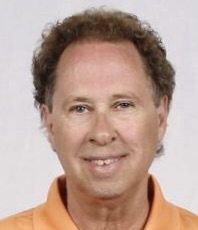
Nick (Kentucky Colonel) Varner’s name has been spoken with reverence in poolrooms for more than five decades—not just because he won, but because of how he won. Calm under pressure, relentlessly prepared, and unfailingly respectful to opponents, Varner became known to generations of fans as one of the sport’s true standard-bearers: a complete player with a champion’s nerve and a gentleman’s touch. Born May 15, 1948, in Owensboro, Kentucky, Varner’s story begins in the kind of everyday American setting that has launched so many great cueing lives: family, hard work, and a neighborhood poolroom.
Although he was born in Kentucky, Nick grew up in southern Indiana, where his father owned (and later expanded) a small poolroom. In the Varner household, pool wasn’t something you “discovered” later—it was part of the family fabric. In the earliest days, Nick’s father stood him on a Coke crate so he could reach the table, and that image—kid, cue, crate, and curiosity—captures something essential about Varner: the game met him early, and he met it with discipline. From those first formative years, he learned more than mechanics; he learned what a poolroom can be: a place where stories are traded, reputations are built, and character is tested one rack at a time.
As Varner grew, he absorbed the traditions of an era when top players traveled from town to town giving exhibitions, taking on challengers, and turning pool into equal parts competition and theater. In those rooms, Nick didn’t just watch—he studied. He sought out the old masters and learned from their style… Read More