

 Apple Podcasts
 Spotify
 Nick Varner - Part 4 (From World Championships to "White Lightning")


In this fourth and final installment of our exclusive Legends of the Cue series with Hall of Fame icon Nick Varner, we bring his extraordinary journey full circle. From the heights of world titles to the challenges of sustaining a career in a sport often overshadowed, Nick’s story is equal parts grit, passion, and perseverance.
Nick revisits his late-career triumphs, including capturing his second WPA World Nine Ball Championship at the age of 51 and going undefeated to claim the 2000 World One Pocket Championship. Alongside host Mike Gonzalez and co-host Mark Wilson, he reflects on how pool’s professional landscape changed when Camel withdrew its sponsorship, leaving players scrambling for new ways to make a living. For Nick, the answer was entrepreneurship—launching his own line of cues that became a successful business built the old-fashioned way: with handshakes, relationships, and relentless hustle.
The conversation also turns deeply personal as Nick shares how his wife, Tony, was by his side for nearly every match of his professional career, serving as both supporter and coach. He opens up about the shots he wishes he could have back, including a heartbreaking loss to Earl Strickland, and how he’d approach the game differently if starting over today.
Closing with reflections on legacy, Nick emphasizes resilience, composure, and the joy of giving back to the sport that defined his life. Mark and Mike underscore what makes Varner unique: a tireless worker, a consummate sportsman, and a man who never quit on himself—or the game.
This episode not only caps a four-part deep dive into one of pool’s greatest champions, it preserves the voice of a legend whose story continues to inspire players and fans alike.
Give Allison, Mark & Mike some feedback via Text.
Follow our show and/or leave a review/rating on:
Our website: https://www.legendsofthecue.com
Apple Podcasts: https://podcasts.apple.com/us/podcast/legends-of-the-cue/id1820520463
Spotify: https://open.spotify.com/show/4Za0IMh2SeNaWEGUHaVcy1
Music by Lyrium.
About
"Legends of the Cue" is a cue sports history podcast featuring interviews with Hall of Fame members, world champions, and influential figures from across the world of cue sports—including pocket billiards, snooker, and carom disciplines such as three-cushion billiards. We highlight the people, places, and moments that have shaped the game—celebrating iconic players, memorable events, historic venues, and the brands that helped define generations of play. With a focus on the positive spirit of the sport, our goal is to create a rich, engaging, and timeless archive of stories that fans can enjoy now and for years to come.
Co-hosted by WPA and BCA Hall of Fame member Allison Fisher and Mosconi Cup player and captain Mark Wilson, Legends of the Cue brings these stories to life—told in the voices of the game’s greatest figures.
Join Allison, Mark and Mike Gonzalez for “Legends of the Cu...
Speaking of nine ball, we're still back in 1999. Not only did you win the World Bank Pool Championship, you won a a second WPA World Nine Ball Championship at a the ripe old age of 51. Yeah, yeah.
Nick VarnerYeah, back in those days they said nobody could play nine ball. It was a young man's game, you had to have young eyes. But I flew from Reno to Alicante, Spain. Ah. And I think I flew. Must have been a Monday. And you lose a day going to Europe, so when you get there it's Tuesday. And my first match was on Wednesday at nine or ten a.m. And see I was spoiled in those days. Uh I made my living mostly when the sun went down. And playing pool at 9 a.m. You know, a lot of the world tournaments when you travel to other countries, for some reason they they like uh to start early and they like to be done early at night. And uh and uh I won that uh 86 world tournament probably 5 a.m. uh when I made the winning ball which uh turned out not to be too good for stray pool, but because of the bad scheduling, that was the last time ABC Wide World of Sports had a stray pool tournament televised. That cured of and uh I flew over there and for some reason I just started going to bed early. I I I'd go to bed at nine or ten at night and and uh sleep and get up at 6 a.m. And my schedule until the last day or two was uh I played almost a morning match every time and and I was rested and and uh and uh for some reason and I was actually sharing a room with Jeremy Jones and he was kind of a night owl. He was going there was a there was uh a nightclub right uh we were right on the ocean and there was a nightclub right on the bay there and and uh and uh it was popular in the Spanish people. They're night owls. I I'd get up at 6 a.m. There might be 50 cabs there to g picking up people to go home at 6 a.m. I mean uh and uh but I fell into that and and uh Jeremy came in later and stuff and didn't bother me. And uh I got the full night's rest and and then uh I had one close match. That was one of those matches where I kind of run away with it too. Um the Japanese player I'll never forget he had a shot on the seven that you just wouldn't expect him missing. I mean, it's missable. I mean, you know, that's one thing doing teaching with Mark, I found out that there's hardly anything you can't miss. And from all my years at competing, you you know, everybody makes this statement said, I never miss that shot. And then you just miss something out of the clear blue. I remember I had a student one time and and he's a pretty good player, and he missed a absolute hanger and uh in uh he said, I never miss that shot. I said, What are you talking about? I just saw you miss that. But anyway, that that tournament I fell into a real good frame in the second match. I think it was the second or third match. Might have but anyway, I uh played a Japanese player and he had me. He had me. It was Hill Hill, and he had three balls on the table. He did have to cut the seven a little bit, and he just cut it a little too much, and I won that match, and I think that was a hill match too. But after that, that tournament, the races were to 13, and nobody else turned nine, and and some of them like the defending champion, I had him 11 to 0. So I really played phenomenal in that tournament, and then the finals was a little bit of a funny match. Everybody thought Jeremy was like a huge favorite over me, and uh because he's a lot younger and stuff, and and uh but anyway, it was a weird match. The guy didn't rack the balls, they had a racker for us and he did a pretty poor job. And uh you could see that the one wasn't really touching and and he was doing his best, but he just didn't have a clue. And Jeremy mentioned it during the match, but I was you know, anything that brought me to the game more, I figured, made me the had I had a better chance to win. You know, if somebody runs four or five racks on you, it's tough to win uh tough to win, but if you have to fight it out rack for rack, you know I I didn't mind the way the guy was racking the balls. And it was the weirdest set I think I ever played because you could hardly ever run out. And I bet five or six games I won on ridiculous combinations where I just figured shooting the combination, I had a better chance shooting at the combination and missing it than I did trying to play a safe because there was just no place to hide. And uh I made every one of them. And I mean, they were like every one of them was probably like uh two and ten shot that you make one or two times. I mean, it was ridiculous, and and uh so I I uh won that match and and uh and I'll never forget I never made that many combinations.
Mike GonzalezWell, you you still got another world title in you, and this is uh in 2000, you you win the World One Pocket Championship.
Nick VarnerYeah, that was another game that was something else. Uh um it was in Portland, Oregon, and uh uh the races were at a four. And uh I went undefeated 7-0, so I won 28 games. When you add all my opponents' games together, they won four games, and I won twenty-eight. I won twenty-eight out of thirty-two games, and I really caught a good gear there, and I remember playing Alex, so the hot seat, and uh that was pure double elimination that tournament, and uh and I beat him four one, and uh he was shooting so straight back in. I mean he still plays great, but but uh and uh and I beat him 4-1. Then he went over and played Parikan, then he came back and played me in the finals, and I beat him four zips. So beat that guy, try to somebody beat that guy eight out of nine times at the end of the tournament. Good luck.
Mark WilsonWhat do you think, Mark? Oh yeah, he's one of the all-time greats for sure. He's right up there with you. Very complete player, plays all games, and that's what I always admired about you is uh everything I wanted to be. Someone that can you know play any game top speed. Um you just don't see that very normally there's specialists, and you don't see them be diverse enough to play straight pool and then switch into bank pool and then go to eight ball and then you know all the world championships. Nick won in five disciplines, you know, out of his eight world championships. So uh remarkable. There's there's no one that can compare with that in in the United States.
Mike GonzalezWell, as you said, Nick, there's only so many hours in the day, right? So where would you have time to learn to play three-cushion or play snooker or some other game?
Nick VarnerWell, I I had pretty good, I had my hands full trying to uh make a living playing nine ball. I mean, it's not like we're playing for astronomical purses and and uh the guys I played weren't suckers. I mean, uh, you know, almost all them top uh eight players or ten, they all Hall of Famers. I mean, pretty well speaks for itself.
Mike GonzalezYeah, yeah.
Nick VarnerYeah, I used to make the joke you almost had to be a Hall of Famer to survive financially.
Mike GonzalezYeah, yeah. Um so early in the 2000s, as you're winning some of your final tournaments, describe what the pro game was like. Was there a tour? Were there many tournaments every year for you guys?
Nick VarnerWell, Camel kind of the Pro Tour. When Camel walked away, when they came in, they kind of took over the Pro Tour uh running the tour, and then when they decided to leave, there was nothing left. So what was the timing then? When did they when did that was two uh the last year Camel was with the Pro Tour was 99. They came on board in 96.
Mike GonzalezOkay. All right.
Nick VarnerAnd and then when they left, they they took over the whole tour and there wasn't hardly anything left. Uh it was really probably the darkest time in Pooh was uh 2002. You know, really, it's really just picked up in uh I'd say in the last two or three years where it looks like it has uh a future. You know what I mean? Uh what do you think, Mark?
Mark WilsonWell, I agree. Yeah, there was a vacuum left when Camel left because Camel was the greatest pro tour we ever had. And then, you know, when they left, we didn't have anyone to pick up the pieces, and there was uh ill will and bad feelings, and so consequently, here we are in 2025, and we have three tournaments a year, and one of them is more of a festival, the derby. It's great, a great fun event, but it's not all pros. We're the international open and U.S. Open, those are elite pros. Otherwise, you have to go overseas to play the top-tier competition.
Nick VarnerYeah, that's what I'd I'd like to see. But everybody always wants to get to the promised land. They want to start off in the promised land. Nobody wants to build anything, you know. Um uh with pool, they want somebody to drop a big bag of money, but I still think if they started out and had the goal would be to get 10 tournaments. I mean, the pool room owner could put up two or three thousand. Uh, you can get money from I think a few I think that's very feasible to have 10,000 added tournaments, and uh I think it would grow from there. I think uh if those tournaments, if they could figure out how to make money at those tournaments, instead of people losing money running a tournament, if they could get enough sponsors where they made money, everybody'd want to get in on the bandwagon because I've talked to pros over the years. I said, you should hope these tournament promoters get filthy rich, because I said, if you do, there'll be plenty of people trying to climb on board, you know, and but that's a starting point, and I think it'd be feasible for the industry to put together. I I don't think that's uh too much money, and it would grow from there, you know what I mean? And it would make our players more competitive. Right. They could play go to more standardized rules where they play. When we played in the Moscone Cup, they always trying to change the brake to, you know, they wanted to change a break every year, the box, the rail, and I mean, uh now they're whiffing the one and going like a zebra back and forth. I mean it's it's uh ridiculous, really. And yet they still make the one every time in the side, you know. Well, might as well be making the corner ball, you know what I mean? Right, yeah, yeah. But match room, uh, they they offer a lot of hope. The only thing is that worldwide tour, that's really expensive to fly around the world, and uh and uh there's not that many of them, and uh and it it that's gonna be no bargain uh until the money gets up a lot higher. I mean, you have some guys that I seen were what's this half the year's gone, Justin uh or uh Joshua Filler's leading with 154,000 in prize money for the year, and the next closest guy to him is like half that. And uh so uh it's got a long way to go.
Mike GonzalezBut uh Yeah, compare that to golf and tennis and some of the other sports. Uh you can't compare, can you?
Nick VarnerWell, you know, when I used to do the exhibitions, they were so big I could go into Pittsburgh or Cleveland and I could call the sports cast and get the guy out, the the the the main sportcaster. He'd come out, spend they love filming a couple trick shots, and then they showed on the six and ten o'clock news, and uh they used to love that. Uh and uh I bet that's a lot harder to get it on today, because those same people that are uh filming that trick shot, they just got done maybe talking to a mediocre shard stop that's making five, ten million a year.
Mike GonzalezExactly. Yeah, yeah, yeah. So when when Camel uh pulled out in 1999 or so, uh a lot of guys had to come up with plan B. What was plan B for a lot of guys to make a living?
Mark WilsonA lot of the older guys stepped away.
Nick VarnerYeah, a lot of the older guys did step away, and I started my business. I was uh, let's say, 99, I've been 51. I mean, I was won the world nine ball champion, but there wasn't much to play in. When we lost that ranking system, that was a brutal blow. That I don't think a lot of people realize how important having a ranking system is, where you know, I know when I I did my best uh endorsement deals, I was ranked number one because the guys behind me could try to knock me out of the box on the endorsement deal and get it for themselves. But my classic line was you know, do you want the best player in the world working for you? And because everybody else, they can scream and holler and say they're better, but the bottom line is they're standing behind me.
Mike GonzalezYeah. Yeah. So your your plan B was develop a business.
Nick VarnerYeah, well, I knew my whole career that uh twilight years might be a little brutal. I mean, I realized first place wasn't an appointed position. And uh I was always trying to figure what am I gonna do, and and uh finally through the companies I work for and uh the contacts I made over the years, I thought I could uh design my own cues and uh and uh eek out a live. And and I started with uh in 99 I started with 28 pool cues and seven cases. And uh it took me about a year to put that together, but I was traveling a lot, so so I did it while I was traveling, and and then I did about three months I did a marketing survey where I checked to see how big that market was and the price point, because obviously I can't compete with the Walmart cues, and I didn't have the contacts. Miserek had that business. He he had he got in all those contacts through his exposure with the commercial and and TV exposure, and and uh actually I guess he was playing in a pro am pro am on uh PGA tour and met the uh the guy that was chairman of the board of Kmart, and that's what got him started, and he ended up selling uh cues by the train car load. Yeah. So tell us tell us a little bit about your business then today. Well, I started with a four-page brochure, and I was still traveling a lot, either exhibitions or tournaments. I mean, even though things weren't too hot like they were with Camel, there still was some tournaments out there, and the prize money not have been the best, but that's where most of the good players went. And and uh uh so I was able to build that business uh along the way, hand out a brochure, stop at a pool room, a retail store as I was driving, because I might drive to the east coast where I'd stop in the bigger cities and stuff, and and uh I-95's a dream for a salesman. I mean, that's where all the population is. I mean, uh it didn't take me too long to figure out I I needed to be anywhere from Fort Lemaine to Miami on that I-95, Philadelphia, New York, uh, Baltimore, DC, and uh so I I worked that area and and I got some really lucky breaks. Uh the to get started, uh the company, the table company I represented at the time, Peter Vitali, uh, they uh they I still have the display. They they they built me a wood display that held exactly 28 Qs. And they put Nick Varner's signature series, really first class professional artwork, and they painted it on the wood, and and uh it was four posters and they put me right in the middle of their booth with they were a successful company with a lot of dealers, and uh and uh so I originally planned on running the business out of my house and uh the first trade show I sold way too much to to run it out of my house. So so uh I remember writing that check. I I'd saved some money, but not enough to maintain my lifestyle, that's for sure. And I remember writing that first check out for 60,000 for about 3,000 Q's. Man, I kept sitting in my living room, and boy, I I was having a hard time filling that baby out. I I'm just sitting there thinking, thinking, thinking, because there's so many things that could go wrong. Number one, I knew I'd probably get a pretty good jump start, but then somebody has to pull them off the wall because I'm competing with all the big companies that are doing things first class. They got great catalogs and and and great uh ads, and and they do everything just first class, and their products are are good, and uh but somehow people I was able to get on that wall and and people pulled my cues off the wall because if you don't get reorders, uh it's not a business. Uh you don't have a business. And uh and I was lucky, I just kept building it year after year and getting more dealers and and uh up until COVID, I probably traveled uh well over 200 days a year. Wow. Either either uh playing in tournaments, exhibitions, clinics, and uh and uh then COVID kind of changed it drastically. The supply chain for delivery of my products got so long it's it's hard to deal with. And now with the tariffs, you know, at one time all my queues well, they started out in Canada and then Taiwan, then I went to China and in uh the tariff. I mean, when they went to 145%, all the boats had to turn back around to go to China. You know, they that's what they did. And nobody had that kind of margin, and it's still almost impossible, I think, with uh I think the tariffs right now are 37.5%. That's still the my margin averages on everything for the year about 30 percent. So but I built it the old-fashioned way when I walked in, and because I won the world championship, my timing was pretty good because when I walked in, people were tickled to death. I walked in their front door, I was highly visible. Yeah. At the time, I mean they were really happy that I walked in, and and they'd give me usually the hardest thing was getting away. They wanted to you to hang out in the store all day, then they want to take you to dinner, and I could only make one call a day. Of course, today I don't have that problem. I mean, I still might be happy I walk in the door, but my visibility is not quite that high. And uh, but uh anyway, it got me through the tough years, uh 50 to 75. So yeah. So uh oh yeah. And now I'm in pretty decent health, so I go to work every day. So I just uh, you know, it seems to be working for my health. And plus, you know, everything I've done, I've covered almost all the bases and pool, and I like every one of them. You know, I maybe my favorite thing besides playing is walk in a customer's front door and and because I kind of sewed, I decided to do kind of the report. Selling. I like to spend two or three hours there because then I they have a choice of where to buy their products. So if I can develop a rapport and they like me, I have a chance to get business. Because you know, before I walked in that front door, they were getting all their cues someplace else. You know what I mean? It's not like they have to buy from me. And uh, oh, I was really worried about once they got on the wall because that you'd be out of business before you got in business if nobody bought it. But but uh that market was pretty strong in the price range I was in at that time. I think it was about retail, about 60 to 150. So it's not something where people like a custom queue, 500, 1,000, they gotta or higher. They they they maybe gotta save up to get where mine, if they see it, they like it, they can afford just to take it with them.
Mike GonzalezYeah. So as we look at the accolades and awards uh for one Nick Varner, we this is unusual. It's almost like he wins an Oscar, an Emmy, a Tony. You know, he's in all these Hall of Fames. 1992, he gets inducted to the BCA Hall of Fame. 2005 gets inducted into the One Pocket Hall of Fame. 2011, they put him in the Bank Pool Hall of Fame. Is there anybody else that's in those three Hall of Fames? Probably not, huh?
Mark WilsonI don't know.
Nick VarnerMaybe Jersey Red would be I don't know if there is or not. Uh the banks in the one pocket kind of go together, but uh where the BCAs, uh it's uh that's uh one thing, that is a pretty elite hall of fame, the BCA. There's uh it's uh getting in that one's a little bit difficult. And uh yeah, I would like to say a few more things. Uh number one, I'd like to thank all the friends that I've made over the years and all the helping hands that I've got every step of the way. I've I met just uh some fantastic people. It's uh unbelievable when I think about all the friends. I could I could start traveling full time, and I don't know how long it'd take just to get around to to see people I know and spend a couple days and uh and uh I know sometime we like to think, well, we we did it ourselves, but uh just like I mentioned with Peter Vitali and and my Q endorsements over the years, and uh I'm lucky that I I've had so many friends and and uh my dad and my my family and then uh probably during my uh greatest performance on the Pro Tour, my wife, and uh these are pretty I know I was listening to somebody the other day saying they they could use a good coach, uh, but ooh, it doesn't afford you the luxury to bring one with you, but I could see how it'd be helpful and my wife Tony really served kind of I mean I don't think she missed over two matches in 15 years. I mean, she religiously was sitting in there and I used to think she just bullshitting with the people, she'd be bored out of her mind and stuff, but after the match, we get to talking about it. I couldn't believe because I'm the world's worst. If like if Mark comes up and sits down with me in the bleachers, I get to visiting with him, I forget what I'm watching. I don't even pay attention. But Tony and uh I remember her support and and uh and uh sure helped my performance. Well, the first tournament I went to, I beat Ephraim Rays in the finals in the Glass City Open, and and I drew him the first round and beat him, and he came all the way through the loser's bracket. That was 1988. And uh and I beat him twice, beat him the first round and the last round. And uh, and uh so that was a pretty good omen, and and uh I'm uh sure got a one lucky row when I met my wife, Tony.
Mike GonzalezWell, good. That's probably a terrific way to end this, but uh we don't let you go without answering three questions, and I'm gonna turn it over to my senior partner for question number one.
Mark WilsonOkay, Nick, if you were 20 years old and had to do it all over again, what would you do different?
Nick VarnerTwenty years old different. Well, first thing that hit me, I'd work on my bra I thought I worked on my brake shot, but I'd work on it because one thing that hasn't changed in the game is if your opponent breaks better than you, you're not gonna win. And uh that hasn't changed a bit in the last 40 or 50 years. That's if you got out broke, you weren't gonna win uh a match or a tournament. Uh that's still just as true as it ever was. And so uh I would work on that break shot more, and I think uh well I grew up when I would watch a lot more I did watch a lot of matches, but I the players today have a real luxury they luxury, they can just get on YouTube and watch anybody in the world play. They can spend their entire life just watching matches. So so that would have been a a real blessing. That would have cut down the time to get, I think, to get to the top. And uh and so uh like I won my first world tournament, I was 32. And I think it was only the second world tournament uh that I played in in uh Straypool and and uh mostly because you couldn't afford to go to New York. Uh I think when I won the world tournament, the first place was five thousand. And uh then you gotta pay your expenses in New York City. That's uh a little brutal. So the break shot for sure. Yeah. Yeah. That uh and I I'd like to today you got the luxury of watching all the great players. I think you could really move up in the game a lot faster because back in my day it was a luxury to watch the pros play. You know. You didn't get to see much of it. Like I saw Jimmy Karris and uh and Joe Bosses play a lot of exhibitions, but that's a little different than a tournament. And then I I went to Johnson City uh a couple times in the sixties, and then I played the last three years they had the tournament and and uh but I had no idea when I had no idea when I went to college that I would end up being a professional pool player. I had no I was a pretty good student and and uh and I I figured that uh I'd end up doing something in business.
Mike GonzalezYeah, yeah. All right, well let's let's let's do question number two. Question number two, I'm gonna give you, and you'll you'll appreciate this as a golfer, I'm gonna give you one career mulligan, one shot to do over. Where would it where would you think of one shot to do over that might have made a difference? Where would it be?
Nick VarnerUh one shot, let's see, a mulligan now. Well, um you know, it might not be one shot, but you know, not too long ago, probably a year, year and a half ago, I watched a match I lost to Ephraim Rays in uh US Open. And uh I'd like to I wish I would have known then what I saw in that match, because I got out broke, that's the main reason I lost, and and I struggled with the break, and I kept hitting them harder and harder, and when I watched the film, I could see that I went the wrong way. I should have hit them easier. I should have taken probably 25% off the break, and I bet the balls would have poured in because when I watched the match, I could see the balls that just like uh no ball was even trying to find a pocket. It it was just like the pockets were closed and and uh and I kept going the wrong way. If I hit him easy, I'm liable to hit, I think I might have hit him with four or five racks. I uh but that's not one shot. If I think about one shot, one shot that always kills me to this day is I lost any second in the World Nine Ball Championship in 1990 in Las Vegas at the Sahara Hotel. I think I had a one-game lead, or it was about even and it was about s I think 6'6 or 7-6, or might have been 7-7 even. It was close to the end. I hooked Earl Strickland and and I thought I really had him, and it wasn't automatic that he hits the ball, let alone he hits the the seven, and the cue ball goes down and cuts the nine in a foot out on the table. I I mean he didn't even know where the nine was at on the table. I I mean it it's such a lucky kick shot, and and I end up losing that match at the end there, and that one always sticks in my mind. And I was playing the Earl again. I I was playing Earl in Bergheim, Germany. It was a first world WPA World Championship in Bergheim, Germany, and uh it's a semifinals to go into the finals, and uh I had a long reach on a shot, and uh I I wish I I would have got that bridge, and it wasn't a hanger, I mean it was a pretty tough shot, but I I'd like to have that one over instead of reaching for it. It would I I'd like to try the bridge, so kind of a decision making. So those are a couple examples.
Mike GonzalezUm, I like your first one because it's somebody else's shot, and it reminds me of when we interviewed Jack Nicholas and we asked these same three questions on our golf podcast. So we come around to the mulligan, and you're expecting, okay, what shot did Jack hit that he'd want to do over? He won 18 majors, finished second 19 times. You know what he did? He named three shots that other guys took to beat him. I thought that was sort of interesting. So when you mentioned, you know, uh uh somebody else's shot against you, that's that's sort of interesting. So, anyway, let's let's go on to our final question, Mark.
Mark WilsonNick, you know, as far as your legacy goes, how would Nick Varner like to be remembered?
Nick VarnerYeah, I should have given that some thought. That'd be good for your tombstone there, I guess. Uh I guess uh uh something along the lines of never give up. That would be one uh I always tried as hard as I could to never lose my composure. It was tough in spots, which you know the old saying is you know, when you're playing perfect and you run four or five racks and you run over the guy and beat him 11-2, and and uh but the matches that are hard to win is when you're not playing so good and and uh uh when you're playing with your B game and you still gotta figure out a way to grind it out and and and and win uh when you're when everything's going your way, the momentum, and you're just uh breaking and getting a good shot every time. And uh that's sure a lot easier when you gotta fight ball for ball or game for game.
Mark WilsonWell, that really is Nick Barner, uh a grinder. Nobody worked harder on their game in my era, uh period. And when you came to the tournament, he'd be practicing, and when he uh went to bed, when you went to bed, he was still practicing. And same thing the next day. Always had his head in the game, never gave up, never quit. And you know, throughout this uh couple hours, you can see the passion this man has for the sport. And it's so compelling to me. That's why I love doing clinics with Nick, because he doesn't he likes the money, but he doesn't do it for the money. He does it because he actually loves pool and wants to give back and he shares with the uh other people there. He doesn't just say, you know, I'm the best that ever lived, and you people are nothing. There's never any attitude like that. So uh that really uh that speaks to his character.
Mike GonzalezYeah, Nick, we really appreciate you being on and sharing your story. You know, uh we're just at the front end of this little project, but if I look over to our golf experience where Bruce and I have had the chance now to talk to 108 of the greatest golfers that ever lived, well, I hope in a few years Allie and and uh and Mark and I are gonna be able to look back and say the same thing that we we talked to all these old greats. Some of them, by the way, in five years may not be around anymore, but we got their stories on Legends of the Q.
Mark WilsonLet me add one thing and then you close it up, Nick. Nick Barner cues. Get one before one gets you.
Nick VarnerWell that's my that's my slogan. And uh and then uh the cue I play with still to this day, the white lightning uh uh when I first started selling it, I said uh you better uh if you run into white lightning, you better realize uh a storm is coming your way. And I named the cue white lightning and and uh and so yeah, when I looked back, I really been blessed. I mean, uh uh I'm not saying that it's been uh uh an easy ride, but it got a lot easier uh when I started per performing better. But still, you know, there's no pension fund at the end of the rainbow and poo. You gotta make your own. So so I feel like I've really been lucky, and a lot of people have really helped me along the way, and and uh I really treasure those friendships and I appreciate the help because a lot of people think they're super smart and they did it all themselves, but I don't think so. I think uh like the people you surround yourself and become friends with, I think that's who you become.
Mike GonzalezYeah. Well, thanks again for sharing your story on Legends of the Q. We hope you enjoyed it.
Nick VarnerOkay, thanks, guys. Thanks, Mike, thanks, Mark. It's been fun.
Allison FisherThank you for listening to another episode of Legends of the Q. If you like what you hear, wherever you listen to your podcast, including Apple and Spotify, please follow, subscribe, and spread the word. Give our podcast a five-star rating and share your thoughts. Visit our website and support our Paul History project. Until our next golden break with more Legends of the Cube, so long everybody's gonna be able to get the
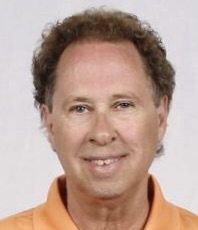
Pool Professional
Nick (Kentucky Colonel) Varner’s name has been spoken with reverence in poolrooms for more than five decades—not just because he won, but because of how he won. Calm under pressure, relentlessly prepared, and unfailingly respectful to opponents, Varner became known to generations of fans as one of the sport’s true standard-bearers: a complete player with a champion’s nerve and a gentleman’s touch. Born May 15, 1948, in Owensboro, Kentucky, Varner’s story begins in the kind of everyday American setting that has launched so many great cueing lives: family, hard work, and a neighborhood poolroom.
Although he was born in Kentucky, Nick grew up in southern Indiana, where his father owned (and later expanded) a small poolroom. In the Varner household, pool wasn’t something you “discovered” later—it was part of the family fabric. In the earliest days, Nick’s father stood him on a Coke crate so he could reach the table, and that image—kid, cue, crate, and curiosity—captures something essential about Varner: the game met him early, and he met it with discipline. From those first formative years, he learned more than mechanics; he learned what a poolroom can be: a place where stories are traded, reputations are built, and character is tested one rack at a time.
As Varner grew, he absorbed the traditions of an era when top players traveled from town to town giving exhibitions, taking on challengers, and turning pool into equal parts competition and theater. In those rooms, Nick didn’t just watch—he studied. He sought out the old masters and learned from their style… Read More