

 Apple Podcasts
 Spotify
 Pat Fleming - Part 2 (Accu-Stats, Innovation, and the Numbers That Changed Pool Forever)


In Part 2 of our in-depth Legends of the Cue conversation with Hall of Famer and Accu-Stats founder Pat Fleming, we dive deeper into the ideas, inventions, and relentless curiosity that forever altered how the game of pool is played, studied, and preserved.
Pat takes us behind the scenes of Accu-Stats’ evolution—from single, stationary cameras and silent VHS tapes to groundbreaking commentary, moving cameras, and a production standard that reshaped the sport. He shares the unlikely story of how legendary voices like Billy Incardona, Grady Mathews and Danny DiLiberto helped create an entirely new viewing experience, turning raw match footage into something educational, entertaining, and timeless.
This episode also showcases Pat the inventor. Long before jump cues became commonplace, Pat was experimenting with short cues, counterweights, racks, and training aids—many of which laid the foundation for equipment players now take for granted. His philosophy is simple and profound: most ideas fail, but the few that stand the test of time can change the game.
A central theme of this episode is Pat’s lifelong devotion to statistics. Fleming explains why Total Performance Average (TPA) reveals far more about a player’s true skill than the final score ever could—and why understanding numbers is one of the fastest paths to improvement. As Mark Wilson and Allison Fisher note, Accu-Stats didn’t just record history; it taught generations of players how to think differently about winning pool.
The episode closes with a remarkable behind-the-scenes story involving the U.S. Open, Barry Behrman, and Matchroom—an example of Pat’s integrity, foresight, and commitment to the long-term health of the sport.
This is a masterclass in innovation, integrity, and passion—from one of pool’s true architects.
Give Allison, Mark & Mike some feedback via Text.
Follow our show and/or leave a review/rating on:
Our website: https://www.legendsofthecue.com
Apple Podcasts: https://podcasts.apple.com/us/podcast/legends-of-the-cue/id1820520463
Spotify: https://open.spotify.com/show/4Za0IMh2SeNaWEGUHaVcy1
Music by Lyrium.
About
"Legends of the Cue" is a cue sports history podcast featuring interviews with Hall of Fame members, world champions, and influential figures from across the world of cue sports—including pocket billiards, snooker, and carom disciplines such as three-cushion billiards. We highlight the people, places, and moments that have shaped the game—celebrating iconic players, memorable events, historic venues, and the brands that helped define generations of play. With a focus on the positive spirit of the sport, our goal is to create a rich, engaging, and timeless archive of stories that fans can enjoy now and for years to come.
Co-hosted by WPA and BCA Hall of Fame member Allison Fisher and Mosconi Cup player and captain Mark Wilson, Legends of the Cue brings these stories to life—told in the voices of the game’s greatest figures.
Join Allison, Mark and Mike Gonzalez for “Legends of the Cu...
There's no commentary, there's no extra cameras, it's just a stationary camera on a pool table to keep the stats. But it showed a player, play and pool, and nobody else had it. So from that point on, I said, we don't need any scorekeepers. We just make sure we have enough cameras for these tables. Ali, you know what a VHS tape is?
Allison FisherAbsolutely. Don't worry about that. I got a load of them.
Pat FlemingYeah.
Allison FisherAbsolutely. Well, I'm in the night. I'm from the 1900s too.
Pat FlemingWell, we sold those things. They went like hotcakes because there's nothing else. And people wanted to see themselves play. They wanted to see the great players play. And they just sold like hotcakes. I said, this is great. This is a moneymaker. Well, after a certain time, Bill and Cardona approaches me and asks me, why don't I have commentary on these tapes? I said, Well, I don't know. I didn't need it. No one asked for it, and I don't know how to do it anyway. He said, Well, you gotta find out. So in Phoenix, Arizona, there is a tournament. We just did a tournament in Phoenix. It was just with our stationary cameras just to sell the videos. But then when we went to the golden eight ball in Phoenix, I had this purchase better equipment to hopefully do commentary. Of course, the tournament starts. I don't know how to use this thing, so I'm trying to figure this thing out. And eventually, after several matches is over, I said, I think I I think we can do it. I think we can do it. So we got the camera going, and now we've got audio. And I gave Billy and Cardona and Bobby Hunter a microphone. In the middle of a match, they started, and they are in the front row of the audience. There's no booth, there's no no can you mention there they're just sitting on the rail, you know, with everybody else, and they are talking, and man alive, that changed the world. Commentary. And Billy Cardona called me on his way home, and he says, Pat, this is it. We gotta have commentary. And sure enough, he was such a regular and his voice was so capturing. And when he speaks, you listen. And he's called the voice of acustats, you know, for years after that. So he's responsible for quite a bit of having Acustats grow. And he was with us for many years.
Allison FisherAnd certainly a unique voice, and you've had many great commentators, including our own Mark down there.
Pat FlemingHe yes, he invited early on before Mike, Mark. Yeah, we had Billy Cardona bring in Grady Matthews, yeah, Buddy Hall, and uh Danny Laberto, and all these great players. And and then, of course, Mark came in on board, and Mark's been with us for a long time, and he's the host, and he brings in a lot of great staff and uh players.
Allison FisherYes, yeah I loved listening to those old acustat tapes. They're especially if Grady was in there, Grady and Billy.
Pat FlemingI was doing when I was inducted into the Hall of Fame in 2008. I remember one line I said, if anyone hears Billy and Grady, they know somebody else knows what they're talking about. It's them doing commentary because they were classics and they were just priceless.
Allison FisherYeah, yeah.
Mark WilsonGrady and Billy are my all-time favorite duo to listen to.
Allison FisherYeah, yeah, fun. Yeah, they used to go at it, didn't they?
Pat FlemingYes, they did.
Allison FisherFun stuff.
Mark WilsonIt's like a married couple. They would end up arguing.
Allison FisherYeah, you do what?
Mark WilsonHow damn dumb are you, Billy?
Allison FisherOh, damn.
Mark WilsonYou know, going back to what Pat was saying, uh clarity-wise, so the he he hired us to do acustats manually, and it's very intricate. And so I was gonna watch the great matches anyway. I'm playing the tournament, he trained me on it. But the first couple matches that you do, you really have to pay attention to do a credible job because it's so intricate and so detailed, and so he would have a hard time fulfilling quality staff. Yeah, and so I did it because he'd pay us five dollars each, and I was gonna watch a great match anyway, so I started doing it. So it was really fun. And you always get assigned great matches, and so I'd do it. But what happened is you can't converse. I used to watch the matches very leisurely and not pay attention. So now he has me doing these details, and you have to you know recognize what was the source or reason for leaving the table. And what I learned was it really involved is that it just comes down to who makes the most balls total at the end of the day that wins any pool game whatsoever, whether it be eight ball, nine ball, straight pool, bank pool, one pocket, whatever it is, the most balls pocketed. And so to deny your opponent from getting balls, you have to stop unforced airs. And it was just invaluable information. So it was like going to school and getting like a small stipend. And but I learned so much more when I started doing the accu stats. And Pat's always a guy that's way ahead of his time. He's he's uh like one of these four-thinking guys. He had the accuracy back in the 80s. No one's ever now we got templates, but Pat pioneered that. He had weights on the end of your cue for when you have an elevated cue shot so the shaft doesn't rise. And just everything that you could think of that's inventive came from Pat Fleming. But most people don't know. I was there for it, so I saw. And I still tremendous credit, more credit is deserved than whatever has been heaped on him. A Hall of Fame, he deserves two Hall of Fames.
Pat FlemingLet me let me mention this. Uh you're bringing some stuff up that's uh unique. I was practicing at my table, practicing masse shots. And I used a shorter cue because it it felt better with a masse than a long cue.
Mike GonzalezWith with a tip or without a without a tip.
Pat FlemingUh yeah, with a tip. But it was almost almost vertical. I was trying some shots almost vertical to masse around the ball. And what happened was on one of these strokes, the cue ball jumped over the ball that I'm trying to masse around. I said, Whoa, whoa, what was that? And so I tried to duplicate it again, and eventually I was able to jump over that ball. And I say, wait a minute, this is tremendous. And I had a tournament coming up, this was 1982, and I said, I've got to hide what this is doing here. So I had bolsa wood attached to this short masse cue, I called it. Okay. And now it looked like a normal cue. And I taped it so that no one would know that it's really a short cue with bolsa wood that weighs nothing at the end of it. And I went to Florida and I remember playing Danny DiLaberto, my first match, and I'm jumping everything. I'm jumping the things I don't have to jump. This is like a joke. Everybody went crazy. Everybody went crazy. What is this? What this? And so now later I find out well, now I'm playing in the US Open, and the players want to use my queue because nobody had a jump queue at that time. And they wanted to outlaw the queue. Other players wanted to outlaw the queue, but that didn't work. So they said, Well, let us use the queue if we need it. And that didn't work either. So I heard about Sammy Jones who jumped balls with his shaft. And I said, Well, he's got a trick shaft. That's in my mind, he's got a trick shaft. So tournaments in North Carolina somewhere, and Sammy's there, and I've known Sammy for years. And I said, Sammy, I hear you, I hear you can jump a ball with uh just your shaft. He says, Oh yeah, no problem, no problem. I said, I got him. Okay, show me uh what you can do. He says, sure, give me your shaft. So what? My shaft. No, no, no. He took my shaft and jumped over the ball like it was nothing. So I knew it wasn't a trick shaft. Yeah, so they're the two jump shut stories that I remember well.
Allison FisherAnd everyone thought it was Earl who created that then. So you were the creator of the jump shot.
Pat FlemingWell, Earl was one who jumped balls with a regular cue.
Allison FisherWith a full cue.
Pat FlemingYeah. I started the short cue.
Allison FisherOh, yeah.
Pat FlemingI was the first one.
Mike GonzalezHow what was the evolution of that then, Pat, in terms of uh it becoming a standard in the in the game and made specifically for that shot?
Pat FlemingWell, some of the Q-makers, well, because eventually I didn't use that bolsa wood thing. I just used the just to show them that it could be done. And so now QMakers started making them. And then everybody eventually bought them from Q-Makers.
Mike GonzalezWas there progression then in terms of the type of tips used, or they finally figured it out a certain type of tip would be better and more effective than than a regular tip?
Pat FlemingWell, I what I had was a prototype, and I'm sure the Q-makers have made improvements all over the years. And I'm sure that uh they jumped great now and better than I could ever have jumped.
Mike GonzalezSo while we're on inventions, then let's talk about some of these other things you might have been involved in, AcuRack being one.
Pat FlemingWell, the AccuRack was a rack that we use at a world straight pool tournament. No, world, yeah, world straight pool tournament, where the rack was at a size where it butted the end rail. And the balls went in the same place every time because this rack had a an extra extension on it. You just pull it back, touches the rail, and that's it. And and that was used at one of the world tournaments. And then there's this counterweight that I invented where you slide this metal device on your shaft, and when you're shooting over a ball or from the rail, it just holds the shaft down better and you can follow through on the ball better. But uh I look, I've I've I've invented a hundred things and like three of them worked. So it's not like, oh, you got a good idea and this doesn't work, got a good idea, this will work. No, no, no. Yeah, I think of a million things and a few of them work and are time tested. And that that's the key to knowing if something works. Is it time tested? Does it work for a week or a year, or is it something that works for many, many years?
Mike GonzalezHey Pat, one thing that uh I'm curious about, you go back to when Acustat started and you'd make these recordings and then trash them. How many matches do you think you guys uh ended up putting in the garbage can?
Pat FlemingWell, a lot of them were sold because the players who were competing wanted to buy them. So they were very popular, and you know, they'd want to be on, you know, if there was more tables than cameras, they would be saying, okay, I want to be on a camera so I could buy my video. But, you know, there's countless hundreds, thousands, maybe. Yeah.
Mike GonzalezThat you that you actually erased.
Pat FlemingYeah. Yeah. Yeah.
Mike GonzalezShame on you. Shame on you.
Pat FlemingBut there was no commentary, and there was one camera. You know, eventually, Rick Boley, who joined our team, we started covering tournaments regularly, going all over the place because we were the only ones doing it. So now when someone had a tournament, they said, Pat, you want to come to our tournament? Yeah, okay. So we would go to the tournaments, we would set up all the cameras, and Rick Boley eventually became our cameraman for our main camera that would actually move. Okay, so now we had our first moving camera. And that was that was great too, of course. And and let's see. And then Julian Robertson came on board. Now he's still with us. But this guy is a genius. He improved our production quality, he would invent things to make things work right. If there was a problem, whether it was be electricity or or anything, you know, he was experienced and he would. You go to Julian, you know, Julian, there's a problem. Okay, I'll fix it. And he would fix it. And he's that's the way he is now, too. You know, we go to the tournament, and oh, there's a serious problem. Oh my god, what are we gonna do? Well, ask Julian. You go to Julian, and he he'll say, Okay, let me think about it. And a few minutes later, he says, Okay, I got it. And he would he would take care of it. But he's been with us for 20 over 20 years, and he's priceless.
Allison FisherYeah, yeah.
Pat FlemingAnd also, when the post-production work got overwhelming, my son Patrick stepped in, and this is 25 years ago, where he handled all the editing and all the original music and anything. We had to edit stuff, convert stuff to send to Asia because they had a different system in Asia. So we had to convert all the tapes, and this wasn't VHS tapes, by the way. This is professional recording tapes.
Mike GonzalezYeah.
Pat FlemingAnd so he was an integral part of us behind the scenes. You didn't know it, but he was there and he made sure everything worked out right. If we needed new equipment, I would have to go to my son and say, okay, this is what we want to do. What do we got to buy? And he would research it and and uh handle that part.
Mike GonzalezYeah, yeah. Well, Alison and Mark, how often do you meet somebody in life who's been able to marry two of their passions and and create a a job out of it, in this case, pool and statistics.
Allison FisherI think it's absolutely incredible. And I really like the idea of that ACURAC. I'm not sure I ever saw one in person where I could use it, but I really like the idea of that for the consistency. Yeah. What a wonderful career you've had. Yeah. And still going, still going strong.
Mark WilsonPat did not set out to be a videographer. I'm just saying, Pat didn't set out to be a videographer. It just happened because of a statistical love, and it was a kind of a back channel thing that flourished. But now, you know, he set a standard and made a record of history. You can see Miserek in his prime, you can see Reyes in his prime, Jose Perica, Buddy Hall. And it's just been an incredible evolution of kind of a back channel thing that all evolved from his love and passion for statistics, which is still still beyond the capacity of most people. It's that forward, he he devised this back in the late 70s, and even today, they're not used unilaterally as the batting average of pool, which it was what it really should be, and people just don't know. They buy the videos and they don't think too much of it. But if they really wanted to get better at pool, understanding the statistics, which if you can just go on the ACU-stats website and click on library, you can go down there and learn how to do it. It's pretty involved, but it's also uh doable. It's not it's not like hieroglyphics, you can do it. But it's added so much to our sport that uh well when I was the Moscone Cup captain, I employed Pat to calculate every day so we know where we're where we're failing. But that's still not done and it should be.
Pat FlemingWell, let me tell you why it's really important to know what the total performance average is. If two amateurs are playing and you say, How'd you do? Well, I won 1110. Now you go to two pros and say, How'd you do it? Say, well, I did okay, I won 1110. What does that tell you? It doesn't tell you anything about their skill level at all. But if you kept the total performance average, the amateurs would be shooting a 500, 550, 600, but the pros would be shooting 800, 900. So knowing that number gives you an indication of how well that player played that match because it's done on a match basis. So now, if you know what you shot, or well, often happened when we posted all the averages, players after their match would run to the sheets and want to know what they shot and what their average was for the tournament. That was very common. And now, especially our commentators, they know very well, and they'll say, Well, look at the because we keep the stats on the screen, and as every ball it's pocketed changes that number just a little bit. So after half a match is over, we start posting that number. And Mark or somebody else would say, Oh, look at this, oh my goodness, you know, filler is shooting a 960. That's like hard to believe, you know. And, you know, what did he do? Well, he missed one shot and he missed one, he played one bad safety, you know, and it's the eighth rack already, you know, things like that. But if there were amateurs, you know, you couldn't say anything like that. You know, you can just say what the score is. Okay, score is six to five, six to five. But knowing that TPA gives you a real good idea of how well a player's playing. And there's other players that just they're pros, but they never shoot a 900. I I shouldn't say never, I guess as a record they would, but they might be shooting in the 800s, 800, 850, and they're real good players. And but then you got the best players, they're shooting 900 pretty commonly.
Allison FisherYeah, I think it's very valuable information. It's used in every other sport, and I think it's great for commentary. Yeah. Really good.
Pat FlemingWell, but nobody else uses it except us.
Allison FisherThat's a shame.
Pat FlemingYeah, really.
Allison FisherBut it's not a shame because it's yours.
Mike GonzalezPat, let me ask you about the advance in technology that you've witnessed over the years. Uh you can kind of see it, you know, as you go year from year across the video uh collection of uh video capture technology changing, video display technology changing. It's come a long way. You've seen all sorts of developments in that arena.
Pat FlemingYeah, indeed. I mean, like I say, we started with VHS cameras, and then eventually they stopped selling, and we went to CDs, DVDs, and and then we started capturing it on digitally. And so it all happens because you have to make these changes. You have to. If you don't make the changes, then you go backwards, basically, because everybody else will be in the forefront. But right now the technology is way beyond what I can even imagine. You know, I'm 76 years old, and I'm happy with what we've done, and I'm uh what's being done in the industry is tremendous. How about this? I was Barry Berman's. Tournament director for many years. And he was, without question, the best salesman and promoter in the business. He could talk anybody into anything. He could get sponsors, he can get hotels, he can get players. Just a talented guy. He had one main flaw at tournaments as years went on. He was a slow payer. He would pay everybody, but it was slow. So if you're winning the tournament, don't expect to get paid that day. In fact, he would flaunt how he's going to pay you. He's going to pay you if you if you won $30,000, he's going to pay you monthly. And then at the next US Open, he would show the crowd, I'm giving him his last check. I am now paid. Okay. So I'd be hiding it. I wouldn't be telling a soul, you know, but he thought nothing of it. And the players knew they'd get paid, but you know, at times you're going to be slow. Well, the WPA, World Pool Association, heard these complaints all the time about Barry. And they fought for him, you know, with their committees and everything. And they said, look, he's good for the sport. He does pay, and this and that. Well, eventually it got to the point where the WPA got together with their crew, with their big honchos, and they said, We're not going to we're not going to sanction Barry Berman's tournament because he's a slow payer and we guarantee that the money's being paid. It's got to be paid on time. And we're not going to do it. We're not going to sanction his tournament. So Barry calls me in a panic. And he says, Pat, that they're not going to sanction my tournament. I have to have the WPA sanctioning because our tournament needs all the foreign players. I said, Well, calm down, calm down. Let me give them a call and find out what it really is. Maybe they want all the money up front or something. I don't know. Let me do some research. So I called uh Ian Anderson, I think it was, WPA president. And I said, Barry just called me. He's in a panic. He said, You guys won't sanction his event. He needs the sanctioning. No, I tried. We tried to help him. Every year we suffer through this and we give him a break and can't do it anymore. Can't do it anymore. I said, Well, let me tell you something. You're not just hurting Barry Berman. You're hurting the hotel, the industry, video production, the spectators that have been around for 40 years. You're not just hurting him, you're hurting everybody. He said, Okay, let me get back to you. So Ian gets back to me and he says, Okay, I talked to our staff, and this is what we came up with. If you, Pat Fleming, guarantee all the money, we'll do it. I have to guarantee the money. That's the only way we'll do it. We can't trust Barry. This is what we're doing. So I go to Barry and I said, Barry, then I they they won't budge. They won't budge. They actually told me the only way that they would sanction the tournament is if I put up the money. He says, Oh, wonderful! He gives me a big hug. He says, Oh, thank you, Pat. You saved the tournament. What a guy.
Allison FisherI can picture that.
Pat FlemingWe made a deal where it had to be published, and Mike Pinoza published it, that I will be the producer of the event. No money can go to Barry Berman. All the sponsors, all the ticket sales, all the advertisers, every cent has to be sent. Entry fees, every cent has to be sent to me. And it worked. We got all the money. I got all the money and paid everybody, and that was fine. So the next year we did the same thing again. I guaranteed the money, but I got all the revenue for the tournament. Everybody got paid on time, which they loved, and that was fine. And now Barry passes away. And I'm there in his hospital room with his kids, and he's telling his kids that I want Pat to run our tournament forever. You know, whatever as long as he wants to run our tournament. We're still gonna keep it going, the US Open. Okay, that's agreed on. And we did it. And then the next year we're planning on doing it again, except his children are a little hesitant about commitment. And I said, Well, look, I've eventually have to commit the hotel to dates, or otherwise they'll give away the dates. And so I need an okay to to follow through on this and sign a contract with this hotel. And they said, Well, do whatever you want to do, it's okay with us. Next day, I signed a contract with the Sheraton Hotel in Norfolk, Virginia for the U.S. Open. Okay, done deal. The next morning, I get a call from Mike Pinoza saying, Matchroom just bought the rights to the U.S. Open. I almost fainted. Almost fainted. I says, How could this be what? How could this be? What are you talking about? I just talked to the kids. They said, do whatever you want. I made a contract. He said, Well, relax. They're not going to put a tournament on this year. They're going to start next year, and it's going to be in Las Vegas. It'll be six months away from yours. So it's not going to be that bad. You just have to change your name. So we changed the name to the International Open. And I got online to explain my situation. I said exactly what I told you. You know, I was told to sign the contract, it's fine. I signed it. Next day I find out that they gave the rights to the name to Match Room. And and and I said the kids should have at least said to me, Pat, hold off on signing. Can't tell you why, but just hold off on signing for a couple days, and then you can decide to sign it or not. At least I would know what's happened and I could cancel it or not. But no, they didn't do that. But despite that, I said, it's the best thing that's happened to Pool in my history that Match Room did that. And it ended up being true. So although I was upset initially, I said for the sport, it's the best thing that could happen. And so I published it that way. They gave me credit. And uh so that was a little story of how the US Open ended up in the match route.
Allison FisherThank you for listening to another episode of Legends of the Cube. If you like what you hear, wherever you listen to your podcast, including Apple and Spotify, please follow, subscribe, and spread the word. Give us a podcast of five-star rates and today's course. Our website support our whole history projects. Until the next golden break with more legends of the Cube. Hello, everybody.
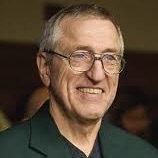
Pool Professional and Promoter
Pat Fleming has spent a lifetime proving that in pool, what gets measured gets remembered, and that the stories behind the great performances are every bit as important as the performances themselves. A Billiard Congress of America (BCA) Hall of Famer (Meritorious Service) and the founder of Accu-Stats Video Productions, Fleming is widely regarded as one of the most influential behind-the-scenes figures in modern pocket billiards: a former touring-level competitor, an innovator obsessed with accuracy, and a steward of the sport’s history whose work has helped define how pool is watched, evaluated, taught, and preserved.
Born in 1948, Pat grew up in Paterson, New Jersey, where a childhood fascination with numbers showed up early and often. Long before he would become synonymous with statistical analysis in cue sports, he was the kid who tracked things for the sheer satisfaction of knowing the truth with certainty, counts, totals, patterns, and progress. That instinct, part curiosity, part discipline, became a defining thread throughout his life. In the Legends of the Cue series, Pat’s early years come through as the foundation of everything that followed: a young man shaped by routine, responsibility, and a deep belief that improvement isn’t a guess; it’s something you can document.
Athletics were also central to those early chapters. Pat excelled in baseball, where repetition, mechanics, and measurable outcomes reward the player willing to put in the work. That same competitive DNA ultimately carried him into pool, a game that, at its highest level, dema… Read More