

 Apple Podcasts
 Spotify
 Pat Fleming - Part 4 (Forever Is a Long Time)


In this powerful and deeply human conclusion to our multi-part conversation, Pat Fleming reflects on a life spent giving more to the game of pool than he ever took from it. Known worldwide as the founder of Accu-Stats, Fleming opens the door to the values, decisions, and moments that shaped both his career and his character.
The episode begins with gratitude—gratitude for fans across generations who discovered pool history through his lens, and for a team so committed to the mission that they’d show up even without a paycheck. Pat speaks candidly about legacy: preserving moments so future players can see greatness, not just hear about it. For him, the joy has always been in sharing history with people who weren’t yet born when legends first ran racks.
We also hear stories that reveal the competitor behind the camera. Fleming recounts his own days as a formidable straight-pool player, including memorable battles with icons like Steve Mizerak—moments that remind us he didn’t just document excellence; he lived it. From there, the conversation turns delightfully personal, touching on skydiving mishaps, lifelong athletic curiosity, and his current passion for long-distance cycling—where, at 75, he’s still chasing records with a grin.
The final moments bring three signature questions that distill Pat’s philosophy. What would he tell his 20-year-old self? Why family matters more than any missed shot. And how does he want to be remembered? Simply: as someone who contributed, who wasn’t selfish, and who built something lasting.
It’s a fitting close to a remarkable life story—one defined by service, integrity, and an unwavering belief that preserving history matters. This is Pat Fleming, forever part of the fabric of the game, and now forever part of Legends of the Cue.
Give Allison, Mark & Mike some feedback via Text.
Follow our show and/or leave a review/rating on:
Our website: https://www.legendsofthecue.com
Apple Podcasts: https://podcasts.apple.com/us/podcast/legends-of-the-cue/id1820520463
Spotify: https://open.spotify.com/show/4Za0IMh2SeNaWEGUHaVcy1
Music by Lyrium.
About
"Legends of the Cue" is a cue sports history podcast featuring interviews with Hall of Fame members, world champions, and influential figures from across the world of cue sports—including pocket billiards, snooker, and carom disciplines such as three-cushion billiards. We highlight the people, places, and moments that have shaped the game—celebrating iconic players, memorable events, historic venues, and the brands that helped define generations of play. With a focus on the positive spirit of the sport, our goal is to create a rich, engaging, and timeless archive of stories that fans can enjoy now and for years to come.
Co-hosted by WPA and BCA Hall of Fame member Allison Fisher and Mosconi Cup player and captain Mark Wilson, Legends of the Cue brings these stories to life—told in the voices of the game’s greatest figures.
Join Allison, Mark and Mike Gonzalez for “Legends of the Cu...
Well, you know, one that maybe we did have a question from Gideon F, and he asked, how about the ability to mute just one of the commentators, lol?
Pat FlemingYeah, we get that in the chat room when Mike Siegel is is there, you know, because he talks so much and and they can find criticism in it. Yeah, so yeah.
Mike GonzalezWell, let me let me just share one other with you. It's not a question, it's a statement. It came from more than one person. This particular one was couldn't think of a one. And all he said was thank him for us.
Pat FlemingThank you. Thank everybody. You know, it's it's really rewarding. I'm in the chat room quite a bit. And a lot of these folks in the chat room are they weren't born when some of these players they're watching play because they might be 30 years old, and these guys are 20 years old or 22 or whatever. And it's it's a joy. I get satisfaction of presenting them history that they would never have seen. And they've heard of these great players, and now they're actually watching them play. It's it's rewarding.
Mike GonzalezYeah. Yeah. It it really is. And and you know, we'll say it again. I mean, you've left such an enduring legacy, not just for yourself, but for the sport for future generations of of pool fans, pool uh enthusiasts. And you can't say it enough, but uh you've really created a treasure that a lot of people are going to enjoy for a long time.
Pat FlemingForever. Yes. Yeah.
Mike GonzalezYou know, forever's a long time.
Mark WilsonI would like to interject. Pat is a he's a leader, kind of a quiet leader, a kind and loving leader, and every one of his staff members, and Pat will mention this, would work for free if they could afford to. And that's the type of team that he has behind him. Everybody believes in him, and he pioneers the way, and like you said, he's left a legacy that will go on and on and on, way beyond his own years.
Pat FlemingAnd that is true. Our staff they get paid, but if they couldn't get paid, they would still do it. They would still do it. If they could afford to be there, they they just it's I don't know, it's something about being a part of it. It's really cool.
Mike GonzalezWell, the work continues, but at some point, some of this work was acknowledged by your being inducted into the Meritorious Service category as a BCA Hall of Fame member. You went in with Alan Hopkins, that had to be a wonderful memory for you.
Pat FlemingYeah, yeah, and what's truly noticeable is my wife, Diane, she never saw me play pool, other than maybe in the house or something, but she never saw me play pool in the tournament. And she knew I worked constantly on vacuustats. But when I was inducted and she was in the audience and experiencing that, she really appreciated what I did.
Mike GonzalezYeah.
Allison FisherMade it all worthwhile.
Pat FlemingYeah.
Allison FisherYeah. That's great support you had there. Your wingman.
Pat FlemingBut if it wasn't for her, believe me, Acustats wouldn't have been around too long. Yeah.
Mike GonzalezYeah. Yeah. Well, after listening to this story in a few weeks, our listeners will come to realize that uh Pat Fleming was a pretty good baseball player. But don't you wish more people knew just what a good pool player you were? Because you were a darn fine pool player.
Pat FlemingI was a good player in the late 70s and early 80s. I still competed after that, but they were my best years. And like I say, I beat everybody. They beat me more than I beat them, maybe, but I was competitive enough. I mean one match, I played Steve Miserac in a World Straight Bowl tournament. And I ran 97 or something on him, and was coming back where it looked like I was gonna win. I mean, I missed this easy shot, and I would have won the match by running over 100 and out to win. And after the match was over, we shook hands, and then he held my arm up, and that was nice. There you go. And then the next year we played in the World Straight Pool tournament again, and I broke the balls, and two balls didn't hit a rail, and I was minus two. And he got up and ran 66, 150-point match. So now the score is 66 to minus two. And I got up and ran 137 and missed a ball that you would say, how could anybody miss it? It was only three inches from the pocket, but I was shooting over ball and it wobbled and missed. Bottom line is I did win the match with that 137 ball run during the during the match. And years later, I mean I've known Steve forever, and I jokingly said, Hey Steve, remember uh we played in that uh World Straight Pool tournament? I remember 137 on you. He says, You didn't that's funny. Uh you remember the good stuff, right? Yeah, yeah.
Mike GonzalezPat, we've been able to cover your life and career pretty well. Before we put a bow on it, I ask you about a couple of other things because we know you're an avid cyclist. We've heard through the grapevine that you might have been able to bowl a pretty nifty game at one point. Any other crazy things you've been doing in your life? Like skydiving?
Pat FlemingSkydiving, yeah. Yeah, I've made a lot of mistakes skydiving, which told me you better not do this anymore.
Mike GonzalezUh-oh, like what?
Pat FlemingYeah, what happened? Oh, oh Lord. Okay. I what before you go skydiving, you're with jump masters, they're called. And I didn't do any tandem jumps, meaning attached to anyone. Okay. But I did have Sky Masters on the side so that they would fly with me and correct my position, things like that. But before you start that, you're doing training on the ground. They position your body and they give you hand signals. This is what this means, and that's what that means, and have your arms this way, and if you tilt this way, do this, if you turn this way, do that. And they you you get trained on the ground. And eventually you go up into a plane, and the plane, the back of the plane goes down as if you were loading trucks into the train, uh, into the plane. And so the first jump, the first time I go into the plane, you have to sit nested into other skydivers. Okay, so you can imagine yourself sitting and your legs are a little bit apart. Now someone's sitting in between your legs and their legs are apart. You got a whole line of skydivers. And my jump master says, Okay, Pat, this is your first jump. Before you jump, I am going to ask you, are you ready to jump? And you have to tell me yes. This way I know that as much is going on, and it might be scary and everything, you know what's going on, and you're giving me the okay that you can jump. I said, okay, so now I'm in the plane, it's making a lot of noise, and I'm seeing all these experienced skydivers jump out of the back of the plane, and it's getting to be my turn. And he says, Okay, Pat, are you ready to skydive? Or are you ready to jump? And I said, now wrong. All I have to do is say yes, and he says, Okay, Pat, are you ready to jump? And I realized I screwed up, and I said, Yes. Okay, so we go to the back of the plane and we jump backwards into the wind, and the plane flies away. And imagine this. Imagine what a fish would look like if you took it out of the water and just dropped it in your boat. It'd be flipping around all crazy, right? Well, that's what every skydiver looks like the first time because they've not experienced it. They've been trained on the ground, but now they're in the air and they're starting to fall at 120 miles an hour and they are flying like a fish. And it's normal. Now the skymasters are grabbing your arms and your legs and showing you this is what you should be positioned you should be in now when you come. So that was fine. Learn how. Now I get out of the out of the jump out of the plane, and I know what position and what it feels like too with the wind and everything else. So now, a little while later, they've teach they've taught you hand signals. One is this, which means look at your altimeter. Your altimeter is on your left hand. By the way, the first time I used the altimeter, I looked at it like this, and all of a sudden I'm doing a 360. These are wings, you know. Okay, so that's look at your altimeter. This is spread your legs, relax your legs, pull your ripcord, and other things, you know. So now, after a couple of jumps, we jump, and I've I'm experienced enough to know that okay, I'm gonna jump backwards. I have to look at the plane as it leaves us. Gives me some kind of orientation. Make sure you're kind of level with the horizon. If you start moving back, you do this. If you go dipping, you do this, if you turn to the right or left, you do this. I'm doing everything perfectly, perfectly. And eventually I'm just falling and it feels so wonderful, so wonderful. And so now the jump master on my left goes, look at your altimeter. And I don't look at it. The jump master on the right goes, look at your altimeter, shakes his hand a little bit, like, look at your altimeter. Because I have to pull my ripcord at 3,500 feet. We started at 13,000 feet. So the jump master on the right does this. What I see is this.
Mike GonzalezYeah, yeah. You're doing fine.
Pat FlemingYou're doing great. I don't do anything. So now I'm still falling. So now it's time to pull my ripcord. And the jump master on the left goes, pull your ripcord. The jump master on the right, after I don't pull it, goes, pull your ripcord. What I see is you're great, you're doing pull, you're number one. Don't I didn't change the thing. Head pull it.
Allison FisherAnd then you went flying back up.
Pat FlemingAnd then I thought about after a bunch of more jumps and making other screwy mistakes, I said, you know what? This is not for me. But I had 22 jumps. So pretty cool.
Allison FisherWow.
Mike GonzalezYeah, that's pretty cool.
Allison FisherI did attend them. I did a tandem. It was fantastic. I was dreading it, but it was fantastic.
Mike GonzalezJust just a wonderful one.
Allison FisherSomebody was somebody was pulling the ripcord.
Mike GonzalezYeah, you can't forget, right?
Allison FisherYeah.
Mike GonzalezYeah. But these days you're into a little different sport. Yes.
Pat FlemingYes.
Mike GonzalezAnd we'll edit out the pause, but uh, why don't you tell us about your avid cycling?
Pat FlemingOh, okay. Well, I first started cycling, well, 27 years, 26 years ago, when my brother-in-law had a buy and went on this charity ride and said, Boy, this was really cool. You know, went 50 miles and you know, you donated some money and you had a great time and blah blah blah. And then at tournament, Julian Robertson had a bike and said, Here, why don't you try my bike? And I rode the bike around, because of course I rode as a kid, you know, but I didn't ride in 30 years. And I fell in love with it and started riding with the clubs and all that. And trained quite a bit, lost weight, was good at climbing hills, getting out of the saddle and really flying up the hills. And that's still my specialty, I would say, is when we get to a hill, I'll go to the top and I'll wait for you. That's typically what happens. And I'm talking about being 75 years old, and then everybody else is like 40, 30, 20, it doesn't matter. Now, the difference is my VO2 max, which is your capacity to utilize oxygen, is not as good as a 20-year-old or 30-year-old. Your VO2 max decreases as you get older. So what I could do short term is great. But if the hill is a mile long, all of a sudden everybody starts passing me. If it's a half a mile long, I'll be first up. But uh, but that's normal.
Mike GonzalezYeah. So how much are you how much you typically ride?
Pat FlemingWell, if I go out, it's usually 40 miles. But if I go with a club, it might be 50 miles. If I go with a another club, it could be 125 miles, 250 miles. It's just, and those long rides are not races. They're just the goal is to finish. Because as easy as you would think, you'd start out and you're going like, you know, 13, 14 miles an hour. Hey, this, I could ride this for a thousand miles. Yeah, and about 50 miles, you realize you really got to make sure you're hydrated and you're eating enough and all that jazz. Otherwise, you eventually, and it's happened to me, you have to cry, uncle, say, I can't do it. Yeah. And then when you get good at it, you know how to treat your body. Yeah.
Mike GonzalezWhat a great way to stay fit, though, huh?
Pat FlemingOh, forever. I'll be my goal in life is to set the one hour speed record for hundred-year-olds. I got 26, 25 more years to do it, but uh, I'll be training for it.
Allison FisherFantastic. And Diane's like, never don't see you again for cycling now. It was poor once upon a time. Now it's cycling. Yeah, yeah, cycling is my favorite sport right now.
Mike GonzalezDo you still find yourself with a cue stick in your hand occasionally?
Pat FlemingNot while he's cycling. I will go to a tournament to promote my tournament, to support a tournament, but I really don't go there to let's see how well I can play. What I do enjoy, though, is playing somebody in their 30s, and I'm 75 years old and I'm beating the hell out of them. I may not win the tournament, but I'll win my share of matches for my age. That's fun.
Mike GonzalezSounds like a typical overachiever. Yeah, yeah. Well, Pat, listen, it's been a delight uh you sharing your time and your story with us this morning. And uh, as you may have come to know by now in these interviews, we like to ask three final questions. And I'm gonna give the honor of the first question to the Duchess of Doom.
Allison FisherOh, you're a national treasure. I just want to say that, by the way. Pat, if you knew when you were twenty what you know now, what would you have done differently?
Pat FlemingWell, it's such a high risk. A high risk at making a career out of pool. Knowing that, I wouldn't have choose chosen pool. Unfortunately, I did alright. But at 20 years old, the odds of doing well are astronomical. Most players that are good players let's say they're good in their pool room, they're good in their town, they're good in their state, and now they're 60 and 70 years old. They weren't there just wasn't enough in life other than them wanting to be great pool players. So I wouldn't recommend that. Of course, there's gonna be great players that you know end up great, but at 20 years old, the risk is just out of this world. You might want to get another job and play pool, do the best you can, but have a backup system. Because if you don't have a backup system, what are you gonna do when you realize, if you realize that okay, this is a lot of fun, it's great, but it's not really gonna I can't get married and have a car and have a house and just the risk is too high. So at 20, I I I would have I would if knowing what I know now, I would never devote my life to pool. There's just not enough to to survive. And that may change, but it's true though.
Allison FisherYeah, it's true.
Mike GonzalezYeah, but we're talking your era when you were 20, so that's fair enough. All right, question number two. We're gonna give you one mulligan, one shot to do over. Is there a shot you can think of sometime in your life that you'd like to have have over?
Pat FlemingYou mean a pool shot?
Mike GonzalezWell, it could be a pool shot, or maybe there's something else that comes to mind.
Pat FlemingOh I probably would have liked to spend more time with my family during my career. Just make more time for it. That's all.
Mike GonzalezThat's a pretty good mulligan. Well good. Final question, Mark Wilson.
Mark WilsonHow would Pat Fleming like to be remembered?
Pat FlemingThat I contributed to the sport, that I wasn't selfish, and that I did some things that were lasting. Oh, very good.
Mike GonzalezYou certainly did do some things that were lasting. And Mark Wilson, thanks for helping us get Pat on this program. Of course, you guys go a long way, and so sure you're most appreciative of our time together being able to tell Pat's story.
Mark WilsonYeah, I go back uh to the late 1970s with Pat. So we got Quite some history together. And the the very time I first met him, we were in San Francisco and we went to Hal Mix's house, who later became Mike Varner's protege. And then that night we were going to Chinatown. And it was myself and Pat from New Jersey. I was from Wisconsin. And Brian Hashimoto, Hawaiian Brian, he's from Hawaii. We're all standing on the corner, blustery, San Francisco. And Brian has a heavy winter leather coat. Freezing to death. Pat from New Jersey has a light windbreaker on. And I'm from Wisconsin. I have short sleeves. And I we all think it's fine. It was the oddest circumstance. You remember that, Pat? Oh. Well, anyway. I do. I vividly recall how the three of us were odd.
Pat FlemingI love that. I remember the three of us together, and I remember spending a lot of time with you with uh Cal Mix, too. But I don't remember that specific story. I apologize.
Mike GonzalezThat's all right. Allison, it's been fun.
Allison FisherYeah, thank you, Pat. I've really, really enjoyed your story and uh thank you for coming on.
Pat FlemingThank you for being here. Thank you.
Mike GonzalezI think our wish, Pat, would be that uh Legends of the Q is ever used in the future in the same sentence as Acustad's.
Pat FlemingLet's hope for that.
Mike GonzalezAll right, good. Well, it's been a pleasure having you. Thanks for joining us and putting your story amongst the other legends of the Q.
Pat FlemingThanks for me. Letting me be a part of that. Thank you.
Allison FisherThank you for listening to another episode of Legends of the Q. If you like what you hear, wherever you listen to your podcast, including Apple and Spotify, please follow, subscribe, and spread the word. Give our podcast a five-star rating and share your thoughts. Visit our website and support our Paul History project. Until our next golden break with more Legends of the Queue, so long, everybody.
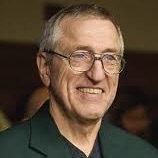
Pool Professional and Promoter
Pat Fleming has spent a lifetime proving that in pool, what gets measured gets remembered, and that the stories behind the great performances are every bit as important as the performances themselves. A Billiard Congress of America (BCA) Hall of Famer (Meritorious Service) and the founder of Accu-Stats Video Productions, Fleming is widely regarded as one of the most influential behind-the-scenes figures in modern pocket billiards: a former touring-level competitor, an innovator obsessed with accuracy, and a steward of the sport’s history whose work has helped define how pool is watched, evaluated, taught, and preserved.
Born in 1948, Pat grew up in Paterson, New Jersey, where a childhood fascination with numbers showed up early and often. Long before he would become synonymous with statistical analysis in cue sports, he was the kid who tracked things for the sheer satisfaction of knowing the truth with certainty, counts, totals, patterns, and progress. That instinct, part curiosity, part discipline, became a defining thread throughout his life. In the Legends of the Cue series, Pat’s early years come through as the foundation of everything that followed: a young man shaped by routine, responsibility, and a deep belief that improvement isn’t a guess; it’s something you can document.
Athletics were also central to those early chapters. Pat excelled in baseball, where repetition, mechanics, and measurable outcomes reward the player willing to put in the work. That same competitive DNA ultimately carried him into pool, a game that, at its highest level, dema… Read More