

 Apple Podcasts

 Spotify
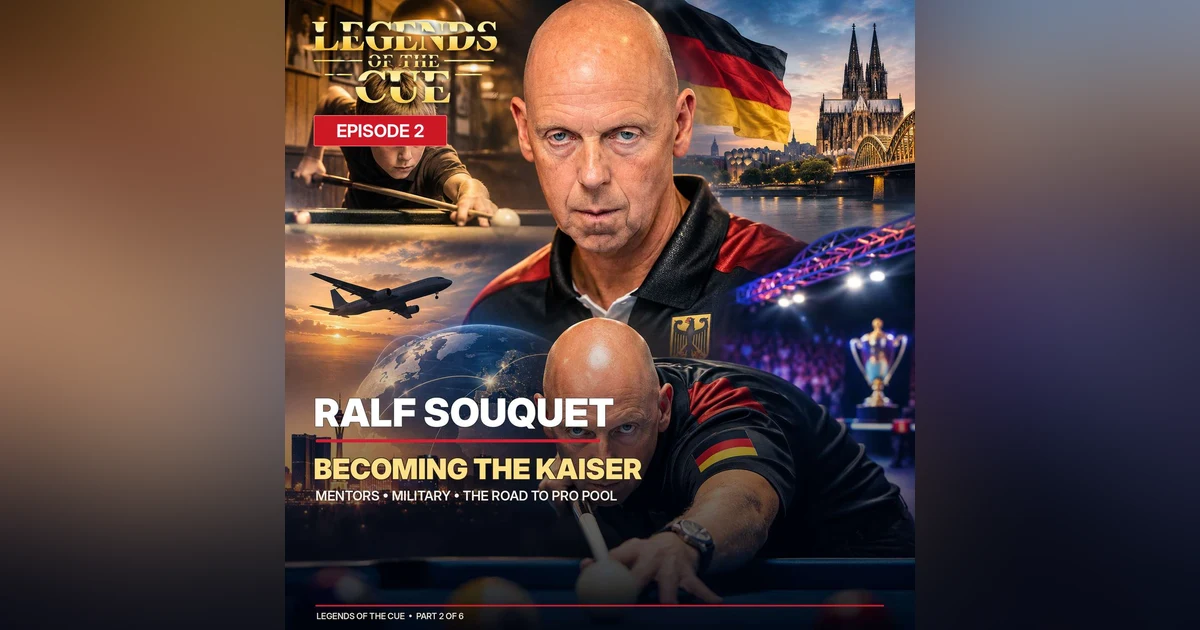
Ralf Souquet - Part 2 (Becoming “The Kaiser” — The Road to Professional Pool)

Key Takeaways
- German businessman Holger Vieth became Ralf Souquet's first major international sponsor in 1987, providing essential funding for travel, hotel bills, and entry fees that made a professional pool career possible.
- Souquet's first solo trip to the United States in 1989 involved a harrowing airport experience at JFK and a mentorship visit with American pool legend Jim Rempe in Scranton, Pennsylvania.
- A breakthrough victory over top American player Bobby Hunter at the Challenge Cup in Sweden during 1991 proved to Souquet that professional pool could actually pay the bills.
- When drafted by the German military just as his career was taking off, Souquet successfully challenged the decision in court to earn a spot in the military's elite sports program.
- Legendary MC John McDonald gave Souquet the famous nickname "The Kaiser," though Souquet noted he also wouldn't have minded being called "The Surgeon" due to his precise style of play.
How does a promising young German pool player become an international professional when making a living from the game seems almost impossible?
In Part 2 of our Legends of the Cue interview, BCA Hall of Famer Ralf Souquet shares the remarkable people, opportunities, and unexpected challenges that transformed his passion for billiards into a lifelong career.
Ralf recalls how German businessman Holger Vieth first recognized his potential and began sponsoring his international travel—a relationship that has lasted nearly four decades. He shares the hilarious and occasionally harrowing story of his first solo trip to America in 1989, including an airport nightmare at JFK and a memorable visit with legendary American pool champion Jim Rempe.
We also hear about his breakthrough victory over Bobby Hunter in Sweden, the growing realization that professional pool could actually pay the bills, and an extraordinary confrontation with the German military. When drafted just as his career was taking off, Ralf challenged the decision and ultimately secured a place in the military's elite sports program.
Along the way, he reveals the mystery surrounding his first championship cue, lovingly engraved by his father and subsequently lost, possibly to an overenthusiastic dog!
Finally, we discover how legendary announcer John McDonald gave him the nickname "The Kaiser"—and why Ralf might actually have preferred "The Surgeon."
Join us for an entertaining look at the determination, generosity, and unlikely circumstances behind the rise of a future world pool champion.
Give Allison, Mark & Mike some feedback via Text.
Follow our show and/or leave a review/rating on:
Our website: https://www.legendsofthecue.com
YouTube: www.youtube.com/@LegendsoftheCue-MLG
Apple Podcasts: https://podcasts.apple.com/us/podcast/legends-of-the-cue/id1820520463
Spotify: https://open.spotify.com/show/4Za0IMh2SeNaWEGUHaVcy1
Music by Lyrium.
About
"Legends of the Cue" is a cue sports history podcast featuring interviews with influential figures from across the world of cue sports—including pocket billiards, snooker, and carom disciplines such as three-cushion billiards. We highlight the people, places, and moments that have shaped the game—celebrating iconic players, memorable events, historic venues, and the brands that helped define generations of play. With a focus on the positive spirit of the sport, our goal is to create a rich, engaging, and timeless archive of stories that fans can enjoy now and for years to come.
Co-hosted by WPA and BCA Hall of Fame member Allison Fisher and Mosconi Cup player and captain Mark Wilson, Legends of the Cue brings these stories to life—told in the voices of the game’s greatest figures.
Join A...
Frequently Asked Questions
How did Ralf Souquet get his start as a professional pool player?
Ralf Souquet launched his international professional career with the financial backing of German businessman Holger Vieth, who began sponsoring his travel and tournament fees in 1987 after seeing him play in Sweden.
Who gave Ralf Souquet the nickname 'The Kaiser'?
Renowned sports announcer and master of ceremonies John McDonald gave Ralf Souquet the nickname 'The Kaiser' during his time competing on the international circuit.
How did Ralf Souquet handle being drafted by the German military?
When drafted in 1991, Souquet took the German military to court and successfully secured a spot in their elite sports program, allowing him to balance limited military duties with his professional pool career.
Mike Gonzalez
So when did that when did that thought first enter your mind then?
Ralf Souquet
Um it was probably in 89 when I flew to the US for the very first time. Now I have to go back a little bit. Um my very first sponsor, Holger Feit from the Fight Corporation in Hamburg. Um he saw me playing, I believe, in 88. Well no, I think it was actually 87, when I went to play in Sweden in an event. It might have been, it was not the Challenge Cup.
Mike Gonzalez
I I forgot the was it uh in '91 when you beat Bobby Hunter.
Ralf Souquet
That was when I won the Challenge Cup, yes. When I beat Bobby Hunter, yeah. Yeah. But I I went there before that and I and I didn't win. But I do remember that it was uh I believe at Jürgen Sandmann's uh pool hall where I played. It might have been not his pool hall, but I I I thought it was his. And um as I said, I I didn't win, but it was an international event where also uh Mike Siegel and uh Nick Varner played. Maybe even Jim Remper was there as well, not sure. No, I get no, he was not there. No. It was only Mike Siegel and Nick Varner back in the days because they they had good relationship with uh some companies in Switzerland also. So I I got a chance to play them and meet them already in Switzerland before, but uh again I I ran into them in Sweden. And I don't know why my or back then it wasn't my sponsor, but Holgerfeit was at the event, but he saw me playing there, and he was I guess I uh uh yeah, I I did a pretty good job according to him, and he you know reached out to me and said, Yeah, would you mind if I, you know, would help you to uh you know travel the world a little bit and pay your flights and entropy and and hotel bills so you can you know go out there and and see a little more besides playing in in Germany and uh yeah, all in Switzerland and once a year in Sweden.
Mike Gonzalez
Yeah.
Allison Fisher
It's nice when people do that, isn't it? Yep, at the same time. Come up to you and say that. You're like, of course you can. That would be wonderful.
Mike Gonzalez
Well tell tell us a little bit more about Holger. He was in the equipment business back then, yeah, and probably still is.
Ralf Souquet
Well, he still is, he still is, yes. I mean, he's uh not that active anymore. His daughter Viola has basically taken over the company a few years back, but uh but he's still involved, you know. He he still goes there every day for a few hours and and he's and they still sponsor me, you know. They they started in '87 and they're still helping me out. Obviously on a on a lower scale, not as huge as they did in the beginning, but I'm I'm very grateful and you know very thankful that they uh still helping me out. And uh and without him and and and his company, it probably would have been impossible to become a professional player. Because he he made it possible, you know.
Mike Gonzalez
And did you play the cues that he was rapping then along the way?
Ralf Souquet
Um not in the beginning, but obviously with him helping me, he asked me if I would like to play a Muchi Cue, yeah, because I think uh when he first saw me playing, no, actually I was already playing a Muchi Cue. I I had several cues before that, obviously. Uh I think, yeah, as I said, the first one was the five-piece thing. I think it was a buffalo, not 100% sure. Then the the first better queue, which the two-piece queue, was a Mali Cue that was introduced to me. And uh that was quite nice too. Um then I believe I had my first Muchi after that, yeah. Then I had got my first MUCI, the 80-1, whatever what it was called, and followed by the 80-3. And with this cue, with the 83 Muchi, I actually won my first uh German championship, the the pupils eight ball title in '83. Yeah, gotcha. And I also remember that it was it was a nice cue. Thomas Engert had the exact same cue, I remember, because we were playing in the same team back then in Alstorf as well. And uh when after I won it, my dad he actually did not ask me, he just uh took the queue, like I don't know, basically like five minutes later. He went outside of the arena. It was a sports hall, actually, it was not like a pool room, it was just a sports arena where they usually play football, uh not football, football, basketball, handball, and stuff like that. And uh outside was a big van, and that was uh owned by the company that uh provided the pool tables, and the name of the pool table was Stahn. So they had like an I don't even know, like an engraving uh tool there, so you could actually have your cues engraved there. And yeah, without asking me, he went out there, took the cue, and had in German written Deutscher Meister, German Champion 1983, and my name, you know. So he had the cue engraved. So when I first saw it, I was not so crazy happy, but afterwards, okay, I said, Yeah, now it's too late, anyways. But uh yeah.
Allison Fisher
Did you say it made that's made my cue a bit lighter? I'm not happy. Yeah, exactly. That's what I was talking about.
Ralf Souquet
I I wasn't, I mean, nowadays I probably would say that.
Allison Fisher
Yeah, the balance is off. Yeah, yeah, exactly.
Ralf Souquet
Nowadays I would say that, I like that. Yeah, yeah. That's funny. Yeah. Yeah, so I I had the queue in engraved and everything, so I so that was yeah, it was a super nice queue. But when uh Horst Von den Hoff then that was at that event or after the event, when he basically uh you know asked me to play for his team in Alsdorf. Uh I started or I kept playing with this queue, but not much after that, he offered me to play with a Hupler queue. Because him and his wife had also a company that sold queues and equipment, and they had a big deal or they had a deal with uh Paul Huppler back in the days. So he asked me, he basically begged me, you know, if I would like to do an upgrade to a Hoopler queue. So I yeah, I had to trade in my my Muchi Cue. Uh yeah, I I gave it away, you know, kind of and and and upgraded it to the mu uh to the Hoopler. I didn't have to pay anything extra, but that was the deal, because they just didn't want to give me the queue uh without a trade, because the queue was worth like I think close to $2,000 back in the days. And my Mew Chi was like, yeah, I don't know, maybe $600. Yeah. So it was a totally different. But it's engraved now with your championship. Yeah, and I haven't seen a queue uh in the last 20 years. I actually asked several times if I could get it back, but I heard some weird stories about it. So well, maybe I'll I'll let it out now because otherwise we we may not get back to that topic. Um it's it was you know in the possession of Horst Fondanoff then. Um they always had a pool table in their basement where I also practice with his son Andreas, or with both sons, Achim and Andreas, back in the days, uh, because we were also playing for the same team in Alstorf. And uh so once in a while, you know, he took us there, and so we played in the basement and you know, did some some practice together and get ready for the you know next team matches or for individual events. And uh yeah, but at some point there was they didn't have enough room for other queues, so they yeah, I don't know how it happened, but they they also had a big dog, and uh I heard that at some point the dog started playing with the queue. Oh biting it all up, yeah. So I did ask, I mean, I said, I don't really care how bad the condition would be, and I would like to have it back, but yeah, it didn't happen, and unfortunately now Horst is uh yeah, he has passed also like a few years back, and uh and I kind of lost uh I'm I'm I'm no longer in touch with with the family, with uh Andreas, his son or so, and yeah, so I don't know if if there would be a chance in the future to actually get the queue back. It might have be been you know in such a bad condition that they had to throw it away. I don't know, but uh yeah.
Mike Gonzalez
Okay, so we're gonna issue an amber alert for this pool cue to the thousands of people that are gonna watch this interview.
Ralf Souquet
We've got my name engraved, and I mean still looking, still looking for it.
Mike Gonzalez
What color is it? Describe the cue.
Ralf Souquet
It's it's all brown, it's a totally brown cue with many different brown tones, and uh yeah, as I said, it's called uh 80-6, I believe it was called. Yeah.
Mike Gonzalez
Okay, let's bring this cue home for Ralph, people.
Allison Fisher
Let's do it where it belongs. Put it back where it belongs.
Mike Gonzalez
Yeah, that would be great. Yeah, at some point, you had a chance to come to America and visit a young man by the name of Jimmy Rempe.
Ralf Souquet
Tell us a little bit about that. Yeah, so now I have to go back to Holger Feit, my first and still sponsor. Um, him and Jimmy, they had, or they I believe they still have a business relationship going on as of today. And uh most people probably know about the Jim Rempey training ball. That's the cue ball with all the circles, and and this ball uh or this ball was created. I I mean it it's been manufactured by Aramith, but the deal was made by Holger Fight. So Holger was the the guy that's you know got this ball into the market with Jimmy's name on it, and uh and I think Jimmy is still you know getting some money from from the sales that Holger is doing on the Jim Rampey cue ball. Yeah and they had some other business things going on, and so basically um Jimmy owed Holger a favor. And um we you know had been together in uh German trade shows at a booth together, Jimmy and I, for several years. That was when uh we still had a huge trade show in Essen, which uh consisted always uh of the playoffs for the German pool championships, like last eight or last four. I'm not sure about that anymore. But it was also played alongside the three cushion world championship that was played like next door. And it was a huge trade show, probably the biggest in uh not say in the world, but at least in Europe, because the trade shows in the US are definitely bigger. But it was a a main a major show where lots of the distributors also from the US always came over. And so at one of the trade shows, uh Holger asked me, or actually asked uh Jimmy if uh yeah, he could uh or if I could visit him in Scranton, Pennsylvania, and if uh Jimmy could, you know, maybe show me a few things here and there and help me along. Especially in in Straight Bowl, because Jimmy was obviously you know known for his great Straight Bowl game. And uh Jimmy agreed, and that's actually what happened then in uh '89. Not sure which month it was. Might have been May. Might have been I think it was in May, actually, yeah. So that was my very first trip to the US by my own. Before that, I was already in Asia, but I was already also in in Sweden, Switzerland. But I usually had someone with me, either other players like Thomas Engert or or other guardians, basically, you know, that uh looked after me. But this was the very first time on my own. So I have to say I was already 20, so it was not like, but still, you know, first time, you know, and uh yeah, so I I remember flying through uh JFK back in the days, and then in JFK I had to switch planes, but for some reason it was not like you go from one terminal to the other, so you had to take either a bus or a taxi to get to the other terminal, and this is where the nightmare started, you know. So first of all, always when you fly into the US, you have to get your luggage and bring it through custom. So that was never the case when I traveled to Asia. I was already in Japan and Taiwan, but there that was never the case. But in America, that is still the case. So, okay, so I had to get my luggage, and then you know, I think we had a little delay in in Germany already. So I had probably like, I don't know, maybe 45 minutes to make it from one terminal to the other. Here with my luggage, and I say, So, where can I put my luggage? Well, you have to take it to the plane. Okay, how how do I get there? And my English was really bad back in the day. I the only thing I knew in English was, you know, from my school English, which is, I mean, I'm my English is still not perfect, or for myself it's not good enough. I would rather, you know, I could still improve a a lot. But uh back then it was like yeah, nothing. You know, I was also very shy, you know, not so open to speak in a in a foreign language. So yeah, it was uh it was an adventure, let's put it that way. Eventually someone helped me, you know, so they with the big suitcase and the the second uh suitcase where the the queue was sent in. No, no, actually back then the queue I could still uh took as uh hand luggage onto the plane. Yeah. So I I so I had the queue and and the other luggage, but I had to go with the full luggage through the airports, through uh security again, and then they didn't let me, and uh so it was just a nightmare. My English was bad, and eventually I I made it, so I I I took the big suitcase into a small plane, I don't know what kind of plane it was. Embraer, I don't know, a very small one. It was it had 19 seats, I remember. It was eight seats on the left, eight on the right, and three in the last row. I I could not stand up, so I had to like you know uh make myself shorter. I'm not the tallest person to begin with in order to get in the plane, and the luggage obviously would never fit there, so they they had to somehow get the the big piece of luggage and storage it you know somewhere else there because the official check-in was already a long time uh gone, you know, was over. So yeah, it was uh quite an experience, you know. But I finally made it then to Scranton, and uh the airport there is also kind of small, and uh yeah, Jimmy was already waiting and and waving for me, and then him and his wife Sally, you know, they picked me up and uh yeah, it was just a great experience, you know. They they really welcomed me uh great, and you know, we we had lots of fun and you know, did a lot of barbecue uh stuff and then you know grilled burgers and this and that. But the the the crazy thing was he didn't even had a pool table back then in his house. He had a snooker table. Oh, interesting because at that time he played snooker, yeah. He he was playing snooker, yeah. So we had to go to his best friend Dave into his house because he had the pool table in his house to practice there. Crazy. Yeah, he played on tour for a while on a snooker tour. I remember that. Yeah, and that was that must have been around that's that time too.
Mike Gonzalez
So, what were your takeaways from your time with Jimmy at the table?
Ralf Souquet
Well, I mean, he it was not like he had to show me a lot. There was, you know, little things here and there, you know, about the safety play, about reading the wreck, about reading the wreck on a break, you know, where to hit ideally the which ball and and how you hit it, how hard, you know, play follow-through, pre play draw. I mean, little things that I kind of knew because Horst Von den Hoff already told me or or or taught me these things, you know, when when I first made the switch to his club. But still Jimmy, you know, was on a on a different level. I mean, Horst was a or was an official BCA instructor. He was one of, I believe, only two or three non-American BCA instructors already. So he knew what he was talking about, even though he wasn't the greatest player himself, but you know, he he had lots of knowledge. But obviously, Jimmy being you know world champion and you know winning so many big titles, that's a different uh element, you know, that's a different level. So uh yeah, he he helped me uh a lot, but he didn't he didn't really need to tell me a lot. But the little things he told me helped me a lot, let's put it that way.
Mike Gonzalez
Gotcha, gotcha. Well, let's let's take you to uh 1991, that win that I referenced earlier over Bobby Hunter in in in Sweden. Uh how did that change things for you?
Ralf Souquet
Well, uh of course every win, especially on an international uh level, is is always good, you know. And uh that was my I don't know if it was uh probably was the the biggest nine ball title that that I won up to that point, you know, because you know I I didn't start playing 9 ball till 85. That's when you know it officially became a game in uh Germany or or in Europe. And um yeah, I mean beating you know a lot of great players there was yeah, just just great, you know. And I remember I had uh back then a good friend of mine, Thomas Overbeck, who was a referee. Um let me think now. Was he a referee in the first world championships in '93? I believe he was in uh in Berkheim. But back then he was uh yeah, I don't know how we actually met. Anyways, we we were friends, so he he came with me to Sweden and so he was at at my side and uh Yeah, it was was just great that I you know was was able to to beat many, many good players there. I I don't remember any other player, but obviously I do remember beating Bobby Hunter. And I think he I don't know if he won the event the year before or if he finished high in the uh event in Munich that uh happened like a week before that, because there were like two events back to back, the Munich Masters in Munich, and then the Challenge Cup in uh Veschus, Sweden. So uh so he was a household name and he had won maybe the US Open Straight Bull like not too long before that. So he was you know like the one of the top US players back in the days, or back then. Yeah, yeah. To be able to beat him in the finals uh was uh yeah a great achievement, yeah.
Mike Gonzalez
So so by 91 was the thought in your head now, okay, this is what's gonna put bread on my table the rest of my life?
Ralf Souquet
I still um it was back then not a goal. It it never was one, but you know, with that win and with more sponsorship coming along, it actually yeah made it happen. That you know, I I got together with more uh sponsors, uh, you know, Simonis came along. I think that actually was in in 91 when they signed me up, and that also went through Holger Fight because he was a Simon's cloth dealer back in the days, so he had set up the meeting with uh Bernard Boulette back in the days, who just retired from uh Simonis like a couple of years ago, and uh yeah, so so they signed me. Up and then with two bigger sponsors on my side, I was able to travel the world even more. And you know, when you start winning events, then you realize, hmm, I actually can make a living, and there's actually no time to do another job, you know, so you that's basically it.
Mike Gonzalez
Yeah.
Ralf Souquet
But ironically, in 91 also the German army drafted me, and they wanted me uh you know serving for our country. And I did not like that, to be honest, because I was you know starting my career, my professional career. So I actually took them to court because I did not want to join the army. I kind of I lost it 50%, but I also won it 50%. Why did I lose the case? Uh I still had to go. Why did I win? I was able to uh join the sports group. Like there's like a special sports unit in the German army, same one that Thorsten Holman then served, and many more, even uh nowadays, you know, like Felix Vogel and uh Huma Dürmer and other players that are in the sports section of the uh German military nowadays. So yeah, so I I had to go still, but I was able after the basic training, which lasted normally three months. I was lucky, I only had to do six weeks for whatever reason. I still don't know why. Uh then after those six weeks, they released me to the sports uh units, and from that on I served the army for another year and nine months in the in the sports units, and uh and that's why I always say the official um professional career didn't start until 93, but inofficially it started in 91 when I got the sponsorships and when the German army drafted me.
Mike Gonzalez
Uh, yeah, I I think I'd take that as a win. You know, your experience parallels Bernhard Longer. I mentioned that we had interviewed Bernhardt on the golf side of our deal, and and uh he did the same thing. You know, he he he got drafted and then was able to serve sort of on the sports side, which really helped him develop his game. I remember him telling us about uh uh and maybe you had the same experience. He had to meet with somebody maybe after school where they sat down to determine what his career was gonna be. And you know, you get this, you get this, you get this regimented book with all these different professions that are acknowledged and and and recognized, accountant and lawyer, and school teacher, and whatever. And he says, uh he says, Well, I'm gonna be a professional golfer. Now, you know, back in his day in Germany, that nobody heard about that. So they're looking through the book, and we don't see this anywhere in the book.
Ralf Souquet
You're sure that's what you want to do. It's it's probably the same uh in Germany because I was the very first pool player that joined the army or the the sports unit in the army. Before that, uh there were only Karen players. There were no snooker, no pool, only Karen. They had a good lobby there for many, many years because the Kerom side of the German Federation is existing since 1911. And the pool side only exists since 1971, you know. And they united in I forgot the year, you know. Yeah, yeah. At at some point, you know. Yeah. So uh yeah, so that's why I had to go to court, and I was the very first pool player to uh make that happen. And and after me, it was actually easy then for everyone that that followed me to uh to go in that direction. But obviously you had to be you had to have a career, you know. I mean meaning at least you have won a German uh championship title in the juniors division better already in the in the man's division, but it depends on when they uh want to draft you, you know. I was already older and I was actually also married already at the time to my to my first wife back in the days. And back then I do know that the army usually didn't draft uh guys that were already married because first of all they didn't want to destroy the family lives, and besides that, it was too expensive for them because then they had to pay like some extra money to the to the wife, you know, that the husband is is away. But yeah, in my case that didn't count didn't get away with it.
Allison Fisher
So is it it's compulsory that you serve two years, is that right? Yeah. So in the sports section, what does it what would a daily life look like in the army serving?
Ralf Souquet
Could you give us a little inkling as to Well once once I was there I only had so-called three army days per month. Meaning that you arrive on a Monday till noon, you have to be in the barracks, and then you greet everyone, you tell a little bit about what happened in the last three, four weeks. Um then you do like a military training, you might go shooting, you know, shooting the the gun, shooting the the rifle, whatever. You know, then talk to to the other guys, then maybe do like a sports something, you play basketball, soccer, whatever, you know. Um, and that was basically it, you know, and then you do that for two days, and on day three you prepare or you actually talk with your commander, uh, you know, do the training plans with them, you know, show them okay, this is what I'm gonna do in the next three to four weeks. I'm playing this event, I'm doing this, and then you uh collect uh some food that they provide you with. Like, yeah, I don't even know what what it's called in English. It's like uh you get some snacks, you know, your box of Snickers and this, some energy drinks and and whatnot. So you can you can take that home. So you you have some snacks to to go on the on the road to your tournaments, so you don't have to buy the Whole Foods, you know. Yeah, that's basically it. And you meet with all the other uh sportsmen in in the group, so you talk about yeah, what has these what have you done, how successful were you, and then if someone won something big, then uh you know, you maybe show the video uh of celebration and this and that, or or you celebrated a birthday, whatever. But usually it was like one military day where you did something, and then one day you you visited uh another barrack and and you know, maybe you know, I don't know. I mean just just stuff that the that the military offers you, but that was basically it. It was just a a get together and show your face that you're still alive and show and tell. Yeah. And uh and then the rest was basically, yeah, you you can practice and and play your events, but you have to have you know, you have to say, okay, I'm on this day I'm practicing from that time to that time, so you have to have like a monthly plan and and let your your commander know what what's happening, you know.
Allison Fisher
They need to know where you are and what you're doing. Yeah.
Ralf Souquet
So it was not like just a freebie where you can relax and and and stay home. Right.
Mike Gonzalez
Sounds like pretty tough duty, Rolf, but somebody had to do it, right?
Ralf Souquet
Yeah, well that's actually back then it was compared to nowadays, it was still tougher because we still had some some military stuff to do, and especially after the barracks in Essen, that was the the first uh base where or where our sports group was located, that was closed down, so we had to uh we had to move to a different city. And in in the new barracks, we actually you know had to do some military work like every eight weeks we had to serve at the at the entrance and um yeah you you open up the uh what is it called? Uh that's a good one. Don't know that English word. Um just make it up. Schlagbaum is the German word for it. Schlagbaum, of course, we're gonna leave it at that then. That sounds why don't you why don't you share what's like a barrier? Yeah, it's like a barrier, obviously, you know, where you know if you want to drive into the into the premises, you know, you have to you know salute and say, Yeah, I'm so and so, and then you have a general, you know, and so yeah, so where you're gonna visit, what are you gonna do here? So you have to you know check you know, it's like a checkpoint. Yeah, yeah. Yeah, like a checkpoint. Yeah, exactly. Yeah. So we had to do that in in the new barracks.
Mike Gonzalez
Yeah.
Ralf Souquet
But that was only like two or three times per year, so it wasn't that crazy. But it was a 24 hours uh total total time. So you had to, you know, yeah, two guys and then one guy is in front, the other guy can stay in the back and take a quick nap in between, but then you swap around again. But you had you had, or we had duty 24 hours.
Mike Gonzalez
The origin of your nickname Kaiser.
Ralf Souquet
Well, it uh was given to me by John McDonald, the very famous MC that used to do Mosconi Cup, World Pool Masters, World Cup of Pool, and so on. Also big boxing MC, as we all know. And on top of that, I think the last I don't know, 10 years, he was the Darts MC. He came up with that name, I forgot exactly the year when it was. It might have been 94, maybe 95, not sure. So uh yeah, Metroom always likes to have players with nicknames, so and if you don't have one, they find you one. And and John was the one that uh you know came up with with my nickname. Um you would actually have to ask him why. I mean, obviously, not obviously, but in Germany the nickname Kaiser is very popular because we had a very famous football player, Franz Beckenbauer, who was the world champion uh '74 with the German national team as a player, but also won it as a coach in 1990. And his nickname was Kaiser Franz. And uh so I don't know if John you know made it up because of him or because Kaiser is the German word for emperor. And of course, we used to have Kaisers in in Germany back in the days, not anymore. And uh because the Kaiser is is the ruler, and I was a ruler in Poole in Germany or in the European scene for yeah, maybe a couple of decades, and uh and that's probably why. But you would actually have to ask him, you know, why he gave me that name.
Mike Gonzalez
Yeah, okay. So so if you're like a lot of our guests, and I don't know how you feel about it, but Kaiser might not have been your first choice.
Ralf Souquet
Um I I mean I I didn't mislike it, but uh if I could have given myself a nickname, then it probably would have been the surgeon. That was kind of my second nickname that you know was brought up also by Denny Di Liberdo in the US. So because that you know was how I basically uh yeah was at the pool table like a surgeon, you know. I I wasn't a very spectacular player and you know very flashy. I I made my way through the wreck, you know, like like a surgeon does when he does a surgery, you know. Yeah, yeah. But I'm you know I'm I'm very fine with both nicknames, and Kaiser is is a cool nickname.
Mike Gonzalez
Yeah. And we've had some interesting discussions around nicknames, haven't we, Ali?
Ralf Souquet
Oh.
Allison Fisher
Mine. I'm not sure I love mine.
Mike Gonzalez
No, she wanted to be the queen. She wanted to be the queen.
Allison Fisher
The queen, yeah, and the queen was taken, and the princess was taken, so I got demoted to a duchess.
Ralf Souquet
Okay, so so so who who is the queen then in in in the pool world?
Allison Fisher
Well, back in the day you got you had Queen Jean and then Laurie John was Queen of the Hill. Oh, okay. Queen of the Queen. So everything was taken with the titles above, so I just became a duchess. Yeah, I know. It's not very good place to be, is it?
Mike Gonzalez
It bothers her to this day.
Ralf Souquet
Yeah, but but you are uh an MBE, you know, where you can be very proud of.
Allison Fisher
And I got it from a from a former duchess. It became a duchess to ten.
Mike Gonzalez
Okay.
Ralf Souquet
So it's good.
Allison Fisher
So we had that in common, which was good something to talk about. Thank you for listening to another episode of Legends of the Cube. If you like what you hear, wherever you listen to your podcast, including Apple and Spotify, please follow, subscribe, and spread the word. Give our podcast a five-star rating and share your thoughts. Visit our website and support our full history project. Until our next golden break with more Legends of the Cube. So long, everybody.
Pool Professional
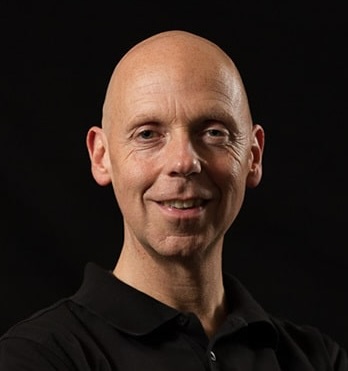
Long before the world knew him as “The Kaiser,” Ralf Souquet was a six-year-old boy standing on a Coca-Cola crate to reach the pool table in his parents' pub. Born November 29, 1968, in Eschweiler, West Germany, and raised in nearby Hoengen, he would become one of the most accomplished, consistent, and respected players in cue sports history. His journey from a modest German pub to the world's greatest pool arenas is a remarkable story of discipline, opportunity, perseverance, and an enduring love for the game.
Ralf's parents operated their pub from 1973 to 1980, while his father, Wolfgang, worked a second job paving roads. Young Ralf initially gravitated toward foosball, a game at which his father had excelled, before picking up a pool cue shortly after his sixth birthday in 1974. He practiced whenever possible, sometimes for eight hours while his parents cleaned the pub. His early equipment was hardly sophisticated: a heavy, multi-piece cue, an enormous tip, and red chalk. He also loved soccer, but an unhappy experience with his coach helped convince him that pool offered a more promising future.
By 1977, Souquet was competing in regional pool leagues. In 1983, he captured a German junior 8-ball championship, attracting the attention of Horst Vondenhoff, an influential figure in European billiards. Vondenhoff invited the 14-year-old to join BC Alsdorf in Germany's newly established Bundesliga. Competing against the country's strongest players, particularly in straight pool, proved invaluable in developing the strategic thinking… Read More