

 Apple Podcasts

 Spotify
Ralf Souquet - Part 3 (The First Mosconi Cup and a World 9-Ball Championship)
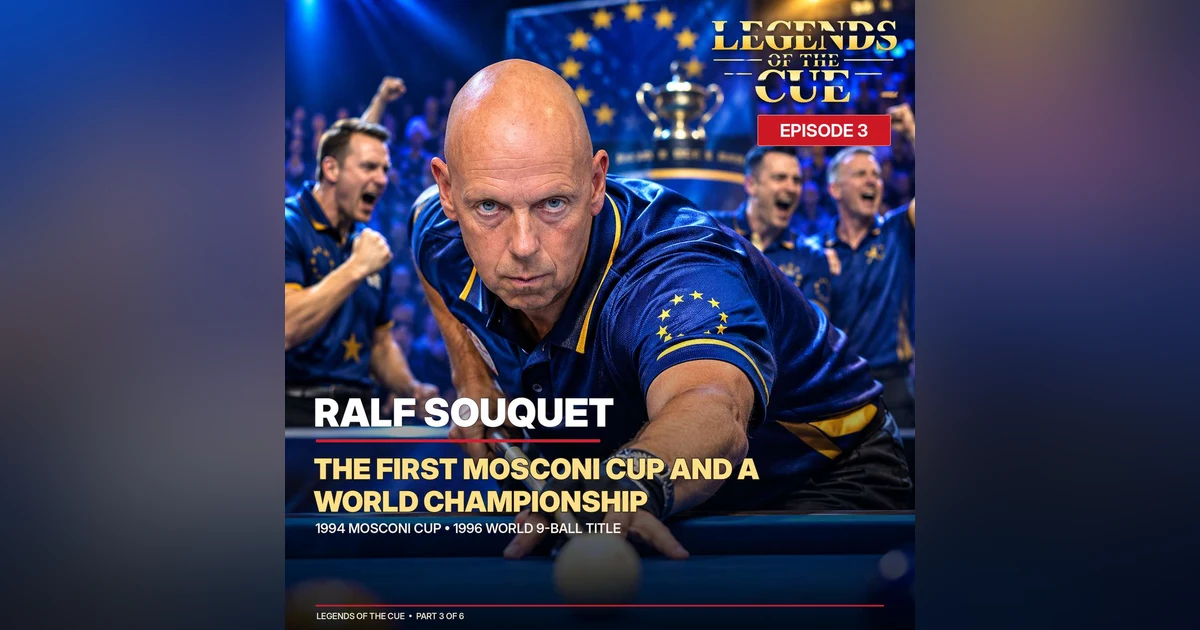

What was the Mosconi Cup like before it became one of professional pool's most electrifying events? And what does it take to become a world champion? In Part 3 of our Legends of the Cue interview, German pool legend Ralf "The Kaiser" Souquet takes us inside two defining moments of his extraordinary career: the inaugural Mosconi Cup in 1994 and his first World 9-Ball Championship in 1996. Ralf shares firsthand memories of the original Mosconi Cup, where he and Allison Fisher represented Europe...
Key Takeaways
- German pool legend Ralf Souquet shares firsthand memories of the inaugural Mosconi Cup in 1994, reflecting on makeshift transportation, format changes, and matches finished in the practice room after midnight.
- Souquet reveals the frustrating story of why he missed Europe's historic first Mosconi Cup victory in 1995 despite being the top-ranked player on the European tour, due to a canceled tournament in Greece.
- The conversation explores Ralf's methodical playing style, his critique of fast players, and his thoughts on why an ideal shot clock should be around 40 seconds to allow for complex positional decisions.
- As a theoretical 'pool czar,' Souquet proposes fascinating rule changes, including limiting jump shots per match, standardizing equipment specs, and implementing call-shot rules in nine-ball.
- Souquet revisits his dominant 1996 World 9-Ball Championship victory in Sweden, where he overcame a disastrous pre-tournament practice session and a partisan hometown crowd to defeat Tom Storm 11-1 in the final.
What was the Mosconi Cup like before it became one of professional pool's most electrifying events? And what does it take to become a world champion?
In Part 3 of our Legends of the Cue interview, German pool legend Ralf "The Kaiser" Souquet takes us inside two defining moments of his extraordinary career: the inaugural Mosconi Cup in 1994 and his first World 9-Ball Championship in 1996.
Ralf shares firsthand memories of the original Mosconi Cup, where he and Allison Fisher represented Europe against an American team that included Mark Wilson. The three Mosconi Cup pioneers recall makeshift transportation, unexpected format changes, matches played after midnight, and an event nobody imagined would become a global phenomenon.
Ralf also reveals why he missed Europe's historic first Mosconi Cup victory in 1995, despite being Europe's top-ranked player—a frustrating story involving a tournament that never happened!
The conversation explores Ralf's meticulous playing style and his provocative views on the modern game, including shot clocks, jump cues, smaller pockets, breaking rules, and how professional pool could be improved.
Finally, we revisit the 1996 World 9-Ball Championship in Sweden, where Ralf overcame a disastrous practice session and a partisan hometown crowd to defeat Tom Storm 11–1 in one of the greatest performances of his career.
It's a fascinating combination of cue sports history, unforgettable championship memories, and the mind of one of pool's most methodical champions.
Give Allison, Mark & Mike some feedback via Text.
Follow our show and/or leave a review/rating on:
Our website: https://www.legendsofthecue.com
YouTube: www.youtube.com/@LegendsoftheCue-MLG
Apple Podcasts: https://podcasts.apple.com/us/podcast/legends-of-the-cue/id1820520463
Spotify: https://open.spotify.com/show/4Za0IMh2SeNaWEGUHaVcy1
Music by Lyrium.
About
"Legends of the Cue" is a cue sports history podcast featuring interviews with influential figures from across the world of cue sports—including pocket billiards, snooker, and carom disciplines such as three-cushion billiards. We highlight the people, places, and moments that have shaped the game—celebrating iconic players, memorable events, historic venues, and the brands that helped define generations of play. With a focus on the positive spirit of the sport, our goal is to create a rich, engaging, and timeless archive of stories that fans can enjoy now and for years to come.
Co-hosted by WPA and BCA Hall of Fame member Allison Fisher and Mosconi Cup player and captain Mark Wilson, Legends of the Cue brings these stories to life—told in the voices of the game’s greatest figures.
Join A...
Frequently Asked Questions
What happened at the inaugural Mosconi Cup in 1994?
The first Mosconi Cup in 1994 featured unique challenges, including last-minute format changes, players crammed onto a single small bus for transportation, and doubles matches finishing in the practice room after midnight.
Why did Ralf Souquet miss the 1995 Mosconi Cup?
As the top-ranked player on the European tour, Souquet was blocked from playing by the EPBF president because a conflicting tournament was scheduled in Greece; ironically, that tournament was eventually canceled, leaving him at home while Europe won its first title.
What are Ralf Souquet's views on jump cues in professional pool?
Souquet believes that modern jump cues and advanced materials make jumping too accessible without requiring adequate position-play skills, suggesting that players should be limited to a specific number of jump shots per match.
How did Ralf Souquet win the 1996 World 9-Ball Championship?
After a nightmare practice session on tight equipment the day before the event, Souquet gained confidence throughout the tournament and played one of the greatest matches of his career to defeat Tom Storm 11-1 in the final on his opponent's home turf.
Mike Gonzalez
Well let's jump to uh 1994. You get your first master's win. It's the inaugural Mosconi Cup that featured not only you and Allison on the European side, but Mark for the U.S. Mark, let's talk a little bit about uh some of those things.
Mark Wilson
Well, I was just about to ask what did winning the first Whirlpool Masters do for your confidence, right?
Ralf Souquet
Um well the that was '94, right? Yeah. Because '93 I lost in the finals to Werner Durriger, and it was still called actually the European Masters that year. And um yeah, I was very disappointed losing in the finals of the very first one, but obviously winning the second one uh was was a great thing, and yeah, that again, you know, puts another big big stamp uh onto my career. And uh yeah, basically with that win that that started the relationship uh with Metro also, you know. And uh yeah, and that was also I I I believe it was before it it usually is played like in September or so and the Mosconi Cup was always like the last weekend of uh no the last weekend before Christmas. That's how it used to be, yeah. And yeah, Ellie, you probably remember that might have been your first pool event ever that you played in.
Allison Fisher
Yeah, I mean I played in the Munich Masters in 92.
Ralf Souquet
Oh, okay.
Allison Fisher
I came over there and played in that, and then there was a challenge between Steve Mizerak, Stephen Hendry, myself, and Ava in 1988. Oh, okay. So those were the two times I played pool and then invited to the Mosconi Cup one with Francisca Stark. Stark, exactly. And then and then and uh Jeanette and Vivian. Vivian that's where I met you all, and I'm like, I haven't got a clue what I'm doing here.
Ralf Souquet
Well, I mean of course it was fun. Yeah, I mean being the Snooker world champion, you know, um obviously you are a great potter, and you know it's it's hard to actually miss for you. But yeah, the tactics, the safety playing and you know, and all that, it's it's a it's a huge difference, yeah. Yeah, but I what I do remember, maybe I don't know if you remember Ali, but I do. Uh at some point we ran out of time. So I had to finish a doubles with Francisca back in the practice room at like midnight. No. Yeah, I do remember. I don't remember who we played. You know, so I don't know if Mark, maybe were you involved? Or do you remember?
Mark Wilson
No, I didn't play in that match. Oh, I well, here's what I remember. It was gonna be just the girls play the girls to begin with. And so then they ended up making into a kind of a man and woman partners thing. Midway through the event, they they changed the format a little bit.
Ralf Souquet
And so they used to do that all the time, yeah. Yeah, they they're good at that, aren't they?
Mark Wilson
Okay. But anyway, uh that's the but I don't remember that match at all, but I was probably watching the primary table or something at the time.
Ralf Souquet
So we yeah, Francisca and I we played in the doubles, but I I can't remember who we played, but it had to be played in the practice room, yeah. That I do remember. I don't know if there actually was a match at the same time still in the main arena. That might have been the case, that they had to close the arena. And uh and therefore we had to, you know, play that match in the practice room, but yeah, that's exactly how it was. And that was uh that was my first Musconi Cup memory or my.
Allison Fisher
I was gonna say, um any idea back then what you thought or envisioned it might become? I mean the first.
Ralf Souquet
That was the very first, and it was yeah, kind of wild, and then nobody knew how this event could turn. Or I mean, when you when you look at how it uh progressed over the years and and it became probably the event of the year for the whole pool community. You know, everyone is looking forward to it. And yeah, back in the day, uh I don't even know. Was there money at all involved? I mean, probably before the window.
Allison Fisher
pro probably something. There had to be something fuel to be over there to get it.
Ralf Souquet
But I don't think there was some some price money, and and and the fee was quite low, maybe like thirty five hundred, maybe five thousand, if that yeah, probably not that much.
Mark Wilson
The very first one everyone was paid three thousand dollars.
Ralf Souquet
Okay. I'm glad you remember, Mark.
Mark Wilson
Yeah. That was big. That was big back then for me. Yeah that was a good one.
Ralf Souquet
It was definitely big for me too. And I and I also remember um that in the second year I was ranked number one on the European tour, on the Euro Tour that was already existing. I think they started in 90 or 91, I believe. But the EPBF and Horst Fondenov being the president back then, he didn't allow me to join the Musconi Cup in '95. Because being the number one ranked player on the European tour, uh they said there was a tournament in Greece scheduled at the exact same time, and the promoter there wanted the number one ranked player in his event, and that's why Horst didn't let me play in the second year, even though I was ranked number one and I was invited by Metroom. And yeah, ironically, that was the first time Europe won. And uh and I was not part of it, and even worse was the fact that the event in Greece did not even happen. Oh no. It got cancelled. I don't know the exact reason why, but it got cancelled. So I I sat home and had nothing. Oh gosh, and you're watching it on TV probably. Yeah, I don't know. I don't even know if that it I don't think there was a possibility to watch it on television, yeah. Oh no.
Mike Gonzalez
Could have been your 18th Mosconi Cup appearance.
Ralf Souquet
Could have been, yeah. And most likely the the first win in year two, and because it took a while before you won, actually, then and and me being part of it, yeah. Yeah.
Mike Gonzalez
So do each of you have sort of a crazy memory from that week? Just something goofy that might have happened or unexpected.
Ralf Souquet
Well, as I said, you know, finishing the match in the practice room was uh was crazy from my part already. And yeah, I I do remember that we had to take a bus or so from the hotel to the venue. Uh and I think it was like one bus with all of us. I mean, nowadays you have like separate vehicles, you have the US team and the European team, but back then there was like one bus with all of them, or with all of us, and there was always someone late, and I assume it was Jeanette that was never really old time. Fashionably late. Oh yeah. Totally. So uh yeah, and then you know, some people had to sit on on on yeah, on on someone other's laps because you know there were also some fans and and maybe wives and and girlfriends along, so yeah. And and the bus only had you know space for a certain amount of people, and uh yeah, so it was yeah, it was a different experience, yeah.
Mark Wilson
It was the short bus and uh a very small bus. And after after we won, uh the poor bus driver had no idea. So all the players piled on there, plus a bunch of drunken English fans. And he was just trying to force the door closed. He assumed that everybody got on the bus belonged on the bus, but it was standing room only, just like you suggested. And so they took off, and then I was still standing outside, and I have no idea where we're going or how I get there, and then Allison ended up giving me a ride that day. She came out and just then so that was that was one part. Remember the bartender at the venue that would twirl bottles in the air in between racks or matches. Oh, definitely. That was pretty dynamic. Yeah.
Ralf Souquet
Yeah. He yeah, exactly. He was doing like flipping the the bottles around and I and I and I'm if I'm not mistaken, we were actually still also allowed to smoke at the event or during the breaks there.
Allison Fisher
Probably drink too, probably. No knowing Jimmy and whoever was in it back in the day.
Mark Wilson
Yeah, Jimmy was having a beer and a cigarette. And then the following year, uh so was uh Alex. Alex Higgins Higgins.
Allison Fisher
Oh, he would definitely be drinking and smoking. Yeah.
Mike Gonzalez
Well, as you all said, uh none of you had any idea where this thing was going.
Ralf Souquet
Yeah. Yeah, and now it became you know the the biggest event. Well, not prize money-wise, but when when you talk uh spectator-wise and you know you have two rivalries, and uh and yeah, the whole world is always looking forward to it, even though you know it it's it's going a bit lopsided lately towards the European side, but that's exactly how it was in in the first 10 years when it was lopsided to the American side, you know. And yeah, unfortunately I was on the losing side way too often, you know, from my 17 appearances. I lost 10 times, even though I still have a uh positive record overall. But you know, it's it's definitely much harder when you are on the losing side to uh perform or or play your your best game than when you are on the winning side. Things are a lot easier when you're on the winning team, that's for sure.
Mike Gonzalez
And and the short races in nine ball, that can't be easy, guys.
Ralf Souquet
That's always difficult, of course. You know, one little mistake here, one bad roll, and yeah, your history. But but again, you know, that's that's part of the game that has luckily not changed over the years. And uh yeah, whoever gets you know gets dialed in quicker and and and and you know gets to feel the atmosphere better, uh is gonna gonna win. Yeah.
Mark Wilson
Yeah. What were your thoughts about uh Lou Batter's stroke mechanics and style of play? Because that had to be stunning for you.
Ralf Souquet
Slightly different, obviously not bookmarked, even though my stroke is not like textbook, but uh yeah, his was uh yeah, like like most other super fast players, they don't have the the best strokes, you know. Um I think a very good reason for playing that fast is and I mean I always have people asking me why I'm uh well some people call me a slow player. I personally don't think that I play slow. I play very methodical, yes. I like to take my time, yes, for a good reason, because you know, usually there's like two, three, four options, and I like to you know get all those options in my mind and then come up with hopefully the best uh solution that I uh shoot then. And uh fast players usually they are very uh insecure. That is how I see it, and that's the main reason why they play fast. Because if they start thinking too long about a shot or about the situation, then they even get more nervous and then then they can play their speed anymore. But when they c can play fast, then that's how they perform their best game. I mean I I I've never talked about it, let's say, with Tony Drago, but there is a very good example and I've and I've seen that many many times. He's a super fast player, very good player, but as soon as he got an official shot clock, he got into trouble. Even though he never would use the shot clock because he usually shoots after like 11 seconds. Uh but when the shot clock was there with 30-35 seconds, you know, it made something with with his mind that he f he felt like he needs to even play faster, and that's when he started making mistakes.
Allison Fisher
Yeah. It's interesting the dynamics is that you don't want to overthink it, probably. Yeah, yeah.
Mike Gonzalez
And speaking of that, do do most players do they practice with a shot clock before going into a tournament just to get used to that sort of environment?
Ralf Souquet
I don't know if they do, to be honest or not. I mean, I have I kind of had to practice with it for a little while, but it's it didn't change things, you know, because it's just a way how I am, how I play, and if for me, an ideal shot clock would be probably 40 seconds. I can live with 35 easily because that's what we do on the European tour, but there will be situations or games where the 35 seconds are not enough, where you need a little more extra time, and that is when you start making silly mistakes, you know. Yeah, we're 40 seconds would be ideally. I mean, and I think every player on earth could would be super fine with with 40 seconds. Yeah. And matrooms, 30 seconds, in sorry to if I interrupting you. I think you think it's it's way too short.
Allison Fisher
Yeah.
Ralf Souquet
It's it's okay when the table is open. It's okay when when the table is open, when you don't have to do like any crazy stuff, but when you have like two or three clusters or you have to make up your mind, do I go offense, do I go defense? This is when the 30 seconds, for me personally, and I would say probably for 80% of the players, it's it's not a good shot clock.
Mike Gonzalez
Okay. So you've opened up Pandora's box here.
Ralf Souquet
That's okay. I can move with that.
Mike Gonzalez
And so I think we need to talk about this because I have heard you talk about a desire for more rules consistency across the game. So it's not just the shot clock, right, that you've referenced before. There's many other things that vary from event to event, from table to table. From why don't you just talk about some of your thoughts on if you were the pool czar, what sort of key changes would you or the pool kaiser? What would you what what changes would you make?
Ralf Souquet
Um, well, I don't know. I mean, you know, there are some things. Um I I ran a tournament once in I would say like the mid-90s, might have been the late 90s, where I got some money from back then Ian Anderson as the president of the WPA. There were like there was like a a week or 10 days in between two tournaments in Asia where there was actually nothing scheduled. And he said, How can we fill that gap so that the players don't run away or don't leave and and and may maybe not even play the second event because there's too much time between the first and the second one. So I I called so he asked me, would you run a tournament? And I said, Yeah, I would love to do so. So I did that in a pool room in Manila, and I called it the gap event, because I was I was just trying to fill a gap, you know, and uh and I made up my my own rules for it, and uh which consisted of, for example, um you or the players were limited to a certain amount of jump shots per game or per match. I did it for the whole match, and I think back then I had like five jump shots for a race to seven match, which is debatable. You could to make it easy, you could say you have one jump shot per game, so to speak. Because I have realized that um I see too many jump shots nowadays played, and that's not because of the quality of the players, also, but also because of the so good material that is available nowadays where people can jump over a ball that is let's say within a ball width, maybe a little more. I know many also amateurs that can jump. So they can jump because they have good material, but they're not capable of running three or four balls. And to me, there's something wrong with that. Obviously, a good player, he can also make uh good use of of the jump queue, and there are some jump specialists in the market, and I don't know how perfect you have to play the safety in in order to hook them. And it and it also keeps away from the from the kicking, which is also a very, very nice part of our game. That would probably favor a lot of the Filipinos because they are very great in kicking, but also you know, the Americans and Europeans, you know, they have become much much better in kicking also. And I would personally prefer seeing more kicking than than too many jump shots. So I would I would just you know put a limitation to the jump shots. I wouldn't forbid it completely, like some other players might like to see it. Like Earl is a big fan of at least getting rid of the jump queue. I would not like that because you know the industry is just too big and too helpful uh with that, so that that that would kill you know a lot of sponsorship possibilities. But if you limit it per game or per match, then it's you're not gonna harm the industry or you're not gonna ruin a player to begin with. And it would actually bring like a new effect or something new to the to the game, also for commentators, because now commentators they can talk about it. Oh, is he's gonna use his jump tune now, or now he's gonna, you know, keep it for maybe another opportunity. So there's something new to talk about, you know. Yeah. Also, so I I always try to see it from different perspectives, not only as a player, also from a promoter side or from a TV side.
Mike Gonzalez
Um Yeah, it would be like managing challenges, Mark, in baseball or football or managing your number of timeouts. You know, if you get to hey, he's only got one jump left, he's gonna choose to kick this ball. Um what about breaking, Ralph?
Ralf Souquet
That is a very, very difficult thing to talk about. I mean, there's if if I would know what is ideal I don't know. I mean, you know, of course, when it comes to this, I have to see it from a player's point of view. I mean, I have practiced my let's go back to like nine-ball break for like 30 years, and I, you know, I consider myself one of the best breakers in the game, which is absolutely useless nowadays because you know things have changed, you know, break racking higher, racking templates, this and that, I mean many things, break box, you know. So I it seems like I have to start all over again. But now at age 50, you know, I'm it's not like I started something at age 10 where things are much quicker or easier to learn, you know. Not saying that I'm not capable of learning new things, but yeah, all the advantage or all the the advantages that I, you know, had over many, many years, they were gone overnight, basically, you know.
Mike Gonzalez
Yeah, pocket size, pocket cuts.
Ralf Souquet
Yeah, I mean many things, you know. I also think or believe that the tight four-inch pockets are too tight.
Allison Fisher
Yeah.
Ralf Souquet
If if I wanted to play Hayball or Snooker, I would have chosen that.
Mike Gonzalez
Yeah.
Ralf Souquet
But I'm a pole player, and I'm a pole player because the pockets were a little more generous. Yeah. And actually, I see the pocket size as a tool where you can create an angle even though you don't have one. Because if you are straight in on a tight pocket, excuse my language, you are f bump dot dot dot dot dot. Yes. Now you mean Ng E D. And uh yeah, with a bigger pocket you can still, you know, put it in the left side or the right side, you can you can mi use the size of the pocket to create an angle, and that's how we grew up, you know. And that part has just been also taken away from the I think that's what pool's all about, isn't it though? I think that's the beauty of creating angles, you know. So I don't know. I mean of course when you are a top player now. Nowadays, and you look at a four-inch pocket and still believe that thing is big, you know, then bless you, and yeah, all good, you know. But uh yeah, so that's I mean, many things, you know, pockets cut wrong. So, you know, some tables, even though the pockets are even less than four inches, they still play, it seems, generous, and others they are over four, but they the cut is wrong, and you can make a ball that is uh close to the rail if you have to force it in, you know. Yeah, so those things they need to be addressed. But on the other hand, you know if all the specs are exactly the same with every different table manufacturer, then they probably play all the same. So there need to be certain differences, obviously. Otherwise, you know, you you cannot tell a difference from a diamond table to a Rason or to a Gabriel's or to a dynamic table, for example. No.
Mike Gonzalez
So what about playing nine ball with ten ball rules?
Ralf Souquet
That's basically what my idea was back in the days. I was the one that uh wrote the rules for nine-ball call shots, and I approached the WPA because I was a member of the players committee back in the days. When uh Thomas Overbeck, I think he was the sports director with the WPA back then. So uh I you know wrote the rules for it. I still have them on my laptop and uh said no, I wouldn't mind if we would play Cold Shut because there is still enough luck involved because you never know how the table will look like after the break. And even if someone misses and snookers you, it's still a big luck factor that could make a huge difference at the end of the day. But when you put it in a ball because you miss it here and it goes in there, that's a little too much, and that's why I would or that's why I created the the the call shut for a nine ball, but the WPA said yeah, they don't want to touch the rules because it already had become too famous and too popular on television, and Metroom probably would have not liked it anyway, so yeah. But they asked me if if they could use those rules uh for 10 ball, because 10 ball was back then played like nine ball.
Mike Gonzalez
Okay.
Ralf Souquet
Only with an extra ball and obviously with the triangle shape on the break. But the rest was the same. That's how even the Americans still uh were playing 10 ball for many, many years, even though the official international WPA rules were called shut. Okay. But that's a that's another topic that we don't want to touch now.
Mike Gonzalez
So Yeah. Well I didn't I didn't know that, but it just I just it struck me as an outsider, kind of strange that you play a rotation game, you add one ball to the game, and you completely change the rules.
Ralf Souquet
Uh well, as I said, I mean I I would actually would get rid of ten ball again as a competition and would implement the call shot into the nine ball because I believe we only need one uh rotation game. I mean we we we officially we I believe we should break it down to one um one discipline as or on a professional level. Like in snooker, there's only one snooker. In carom, of course, you have different disciplines. You have 71.2 or 72.1, 47. so and so you have the uh yeah, I don't even even what it's called. Uh you know, you have different fields, but the only big game in Carom is three cushion. That's the one that gets the the most attention and where all the pro leagues are played in Asia and and in Europe. And so should be nine ball. I mean, you could still debate if it's nine ball or ten ball, but I I would break it down to nine ball, but with coal shut.
Allison Fisher
Yeah, I remember when you were talking about that in the way back years ago, and I was in favor of that, because it was so frustrating when people flute balls or get lucky snookers or no matter what, you know.
Ralf Souquet
You can't take the whole luck factor out, but uh yeah, that would certainly well thank you for sharing your views on on the rules.
Mike Gonzalez
Uh I want to take advantage of you opening up the subject to just kind of get uh some of your thoughts on these things.
Ralf Souquet
Uh well I I I would like just like to add one more thing on the on the jump uh thing that I've forgotten. Um I also had the rule, and I would still like to see that enforced, that you cannot use a jump cue for jumping when you snooker yourself. Like if you get bad shape on your own, that's a good idea. You should not be allowed to use a jump cue.
Allison Fisher
Yeah, I like that.
Mike Gonzalez
Yeah. Interesting. Interesting. So you get five, but you can't use one for that scenario.
Allison Fisher
Yeah.
Mike Gonzalez
I like that. That's clever.
Ralf Souquet
It's yourself. It's it's it's I'm I'm not I'm not I'm just not sure about let's say if your opponent snookers you, then you use your jump cue, you make the ball, and you snooker yourself again. That is the only maybe situation where I think maybe yes, but I still would say to make the rule easier, it's still not allowed.
Mike Gonzalez
Yeah. And then of course we'd have to call Michaela Tabb in to uh rule whether you're indeed snookered or not, right? Uh there's probably that's another story, yeah.
Allison Fisher
Should we go to should we should we head to now 1996? I think that you became world champion. And what do you remember most clearly about that?
Mike Gonzalez
Nine ball.
Ralf Souquet
Well, uh it was nine ball, and I do remember that's you, Alison. You also won the women's division in the same venue. Okay.
Mike Gonzalez
That's why she wants to talk about 1996.
Ralf Souquet
Yeah. Um, I remember, I think it was the very first time when we played on a, I would say, greyish cloth, even though it wasn't grey, it was more like a beige, like a sand tone color. And with actually tighter pockets for the very first time. I don't know how tight they were. It might have been maybe four and a quarter, maybe a little bigger than four and a quarter, but that was the very first time I felt like playing on really, really tight equipment. And I think it was one day before the event started. Um, yeah, we we had a table that we shared with three, four, maybe five players. And I believe in the first hour I probably made three balls. I just missed everything. I was so scared, so afraid of these tight pockets. It was terrible. But it got better and better, you know, from match to match, and you know, the more I got used to it, and yeah, so that's that that eased up throughout the event. But one day before the event, that was a nightmare. I felt like, what am I even doing? I should just wrap it up and go home again, you know.
Allison Fisher
Yeah, I remember that venue. I remember it was black tie, wasn't it? I think everyone was in was everyone in waistcoats back then? Yeah, yeah.
Mike Gonzalez
It was beautiful.
Allison Fisher
That was still the rule. It was a beautiful venue and it was of long races. That's what I remember about it.
Ralf Souquet
Uh well, I I know that it was raced to eleven in the finals, and I believe maybe all the races were raised to eleven from round one.
Allison Fisher
I feel like they were, because that's that was a beauty of that event, and then at some point at another tournament, a little bit later we turned up and it suddenly races to seven in world championships, and it was ridiculous. But anyway, that was the beauty of that event, I think.
Ralf Souquet
Yeah. Yeah, that was I mean, the the shorter races were basically created due to television because they always said, you know, the match, I mean, we are not tennis yet, where you can broadcast a match that lasts maybe four and a half hours, like a Wimbledon final or a US Open final that goes, you know, over the full length of five uh sets. Yeah. You know, if we would be in that situation nowadays, we probably could go, you know, in let's play, let's say race to 17 or or even longer, which Matchroom already is doing in their world championship finals again, you know. But other than that, all the other ones, you know, you sometimes you played matches raised to 11, like in the semifinals, and then you came to the finals, so now it's only raised to six. Yeah. Because we only have an hour of broadcasting, you know. So flip the coins. Yeah, so that's that's crazy, but yeah, what are you gonna do? You know, I mean that's if you if you try to get uh television involved, then you you have to follow their rules, you know. Yeah, yeah.
Mark Wilson
In that event you uh paired up with Tom Storm in the finals, and uh how did you get yourself mentally prepared to play in the finals against Tom?
Ralf Souquet
Well, I had a pretty good uh event so far, and um obviously knowing that it was or still is Tom Storm's uh home city, so that's his home turf. And uh I knew it was you know I was facing a crowd that was absolutely for him and I'm not saying against me, but definitely not rooting for me, let's put it that way. It turned out though that uh well besides the fact that I rolled over him with an 11-1 victory, so I I kept the the audience kind of quiet. But they they started rooting and clapping for me because I just played great. That was you know one of the the greatest matches that I've probably played in my whole career, and uh that's you know, to do that in a world championship final, uh yeah, it's it's something that not too many uh people in sports can can dream of, you know. And uh because I've I've I've been in that situation many, many times thereafter, where I played great throughout the whole tournament, and then in the finals, for some reason nothing went my way, and all of a sudden I was also twice on the on the losing side playing in the World Championship Finals in 2001 against uh Mika Imen in in Cardiff, and then one more time in 2006 when I played Ronnie Alcano in uh Manila. So uh yeah, twice I probably played two of my best overall tournaments, but couldn't uh perform as great or just didn't have the roles that you need in the in the finals, and then basically both finals were not saying without a chance, but with very slim chances, just the way you played so well in that final that uh I remembered it as 11-0, but uh was just probably one.
Mark Wilson
But you just played so dominating it was a it was not a a close uh affair at all.
Ralf Souquet
No, so I I think I ran like the first three or four out of the gate, and so that's kind of set the tone because also we were playing uh Windows Break, which is still the case in in the WNT tour. But and I can nowadays I can agree with Winnows Break if the equipment is tight, but when you play on a little looser equipment, which I would prefer because that would be or that suits our game the best, then it actually should be alternate break. I don't I don't think it's I I cannot think of any other sport in in the world where you possibly could not have a chance and participate at all in the match. And I had one I had one uh example. I mean my opponent did get to play, but not for for much. Uh it was in the finals of a European eight ball championship, where my opponent broke the first wreck. He didn't make a ball. I ran this plus nine in a race to eleven, and then in the last uh or in the 11th game, I didn't make a ball on the break, and so he got to shoot in the last rack, but didn't run out, so I won 11-0. And that was Peter F. Nielsen, another great player from Denmark, you know, who used to travel the world and and lived in Asia. And and now looking or thinking back about it, I think it's it's just not fair if you don't get a fair chance at the table to defend yourself or or you know, or to to get a chance to win the match.
Allison Fisher
Thank you for listening to another episode of Legends of the Cue. If you like what you hear, wherever you listen to your podcast, including Apple and Spotify, please follow, subscribe, and spread the word. Give our podcast a five-star rating and share your thoughts. Visit our website and support our Paul History project. Until our next golden break with more Legends of the Cue. So long, everybody.
Pool Professional
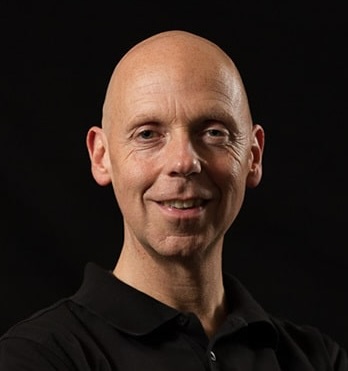
Long before the world knew him as “The Kaiser,” Ralf Souquet was a six-year-old boy standing on a Coca-Cola crate to reach the pool table in his parents' pub. Born November 29, 1968, in Eschweiler, West Germany, and raised in nearby Hoengen, he would become one of the most accomplished, consistent, and respected players in cue sports history. His journey from a modest German pub to the world's greatest pool arenas is a remarkable story of discipline, opportunity, perseverance, and an enduring love for the game.
Ralf's parents operated their pub from 1973 to 1980, while his father, Wolfgang, worked a second job paving roads. Young Ralf initially gravitated toward foosball, a game at which his father had excelled, before picking up a pool cue shortly after his sixth birthday in 1974. He practiced whenever possible, sometimes for eight hours while his parents cleaned the pub. His early equipment was hardly sophisticated: a heavy, multi-piece cue, an enormous tip, and red chalk. He also loved soccer, but an unhappy experience with his coach helped convince him that pool offered a more promising future.
By 1977, Souquet was competing in regional pool leagues. In 1983, he captured a German junior 8-ball championship, attracting the attention of Horst Vondenhoff, an influential figure in European billiards. Vondenhoff invited the 14-year-old to join BC Alsdorf in Germany's newly established Bundesliga. Competing against the country's strongest players, particularly in straight pool, proved invaluable in developing the strategic thinking… Read More