

 Apple Podcasts

 Spotify
Ralf Souquet - Part 1 (From a German Pub to Pool Prodigy )
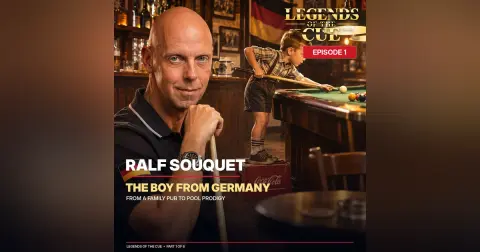
Before he became "The Kaiser," Ralf Souquet was a six-year-old boy standing on a Coca-Cola crate in a German pub, reaching for a cue and falling in love with the game. In Part 1 of our six-part Legends of the Cue interview, the two-time world pool champion takes Mike Gonzalez, Mark Wilson, and Allison Fisher back to the very beginning. Ralf remembers growing up in Höngen, Germany, where his parents ran a pub and his father worked a second job paving roads. Pool, foosball, soccer, ABBA on the ...
Key Takeaways
- Ralf Souquet began his pool journey at just six years old, standing on a Coca-Cola crate in his parents' German pub to reach the table.
- A disappointing soccer experience pushed Souquet to fully commit to pool, where he practiced for up to eight hours a day.
- Souquet won his first major German junior 8-ball championship in 1983, catching the attention of billiards administrator Horst Vondenhoff.
- Joining Germany's prestigious Bundesliga national league at age 14 helped shape Souquet into a world-class competitor.
- Souquet recently captained Team Rest of the World to a victory at the Reyes Cup, adding another milestone to his legendary career.
Before he became "The Kaiser," Ralf Souquet was a six-year-old boy standing on a Coca-Cola crate in a German pub, reaching for a cue and falling in love with the game. In Part 1 of our six-part Legends of the Cue interview, the two-time world pool champion takes Mike Gonzalez, Mark Wilson, and Allison Fisher back to the very beginning.
Ralf remembers growing up in Höngen, Germany, where his parents ran a pub and his father worked a second job paving roads. Pool, foosball, soccer, ABBA on the jukebox, and the freedom to practice for hours shaped his childhood. He shares how an unhappy soccer experience nudged him toward the pool table, why he found creative ways to make one Deutschmark buy more practice time, and what happened when he finally got his first wildly heavy, multi-piece cue.
Then the story turns from childhood pastime to serious competition. Ralf recalls joining a regional pool league in 1977, winning a large open tournament as a youngster, and capturing a German junior 8-ball championship in 1983. That victory brought him to the attention of influential billiards administrator Horst Vondenhoff and into the Bundesliga, Germany's demanding national team league.
The episode also opens with a heartfelt personal update from Allison and a glimpse of Ralf's recent Reyes Cup triumph.
Discover the origins of one of professional pool's greatest international careers—and the family, discipline, and early opportunities that helped make it possible.
Give Allison, Mark & Mike some feedback via Text.
Follow our show and/or leave a review/rating on:
Our website: https://www.legendsofthecue.com
YouTube: www.youtube.com/@LegendsoftheCue-MLG
Apple Podcasts: https://podcasts.apple.com/us/podcast/legends-of-the-cue/id1820520463
Spotify: https://open.spotify.com/show/4Za0IMh2SeNaWEGUHaVcy1
Music by Lyrium.
About
"Legends of the Cue" is a cue sports history podcast featuring interviews with influential figures from across the world of cue sports—including pocket billiards, snooker, and carom disciplines such as three-cushion billiards. We highlight the people, places, and moments that have shaped the game—celebrating iconic players, memorable events, historic venues, and the brands that helped define generations of play. With a focus on the positive spirit of the sport, our goal is to create a rich, engaging, and timeless archive of stories that fans can enjoy now and for years to come.
Co-hosted by WPA and BCA Hall of Fame member Allison Fisher and Mosconi Cup player and captain Mark Wilson, Legends of the Cue brings these stories to life—told in the voices of the game’s greatest figures.
Join A...
Frequently Asked Questions
Who is Ralf Souquet?
Ralf Souquet, nicknamed 'The Kaiser,' is a BCA Hall of Famer, world champion in nine-ball and eight-ball, US Open champion, and six-time World Poolmasters winner.
How did Ralf Souquet get his start in pool?
Souquet started playing at age six in his parents' pub in Höngen, Germany, using a Coca-Cola crate to reach the table before eventually joining regional leagues.
What is the Bundesliga in German pool?
The Bundesliga is Germany's demanding national team league featuring top-tier competition, which played a pivotal role in developing Souquet's professional career.
Mike Gonzalez
Welcome to another edition of Legends of the Cue and Mark Wilson. Not only do we have another Hall of Famer with us, we have our first guest from Deutschland.
Mark Wilson
Imagine that today's guest has led a life in pool that has brought a standard of excellence with class, dignity, and respect to the sport that almost overshadows the Hall of Fame career. Allie, tell us who we have today.
Allison Fisher
Our guest today is none other than Ralph Suquet, the Kaiser, world champion in nine ball and eight ball, US Open champion, six-time World Poolmasters winner, and BCA Hall of Famer. His story reaches from a family pub in Germany to the biggest stages in pool. This month he added another chapter, captaining rest of the world to victory in the Ray's Cup. Mark and I also share memories with Ralph from the very first Mosconi Cup. Today we're going back to the beginning to meet the people, hear the stories, and understand the choices behind that remarkable career. Ralph, welcome to Legends of the Cue.
Ralf Souquet
Thank you very much. Thanks, guys. Thank you, Mark. Thank you, Ellison. Thank you, Mike.
Allison Fisher
Thank you. And when that last nine ball dropped at the Ray's Cup, what did winning as a captain feel like?
Ralf Souquet
Well it was just a great feeling because it was the very first time, you know, captaining such an elite group. Obviously, I'm no stranger to uh team play because we have a league system in Germany, and that's where my career basically started back in 1977. On a more you know, local regional level, but uh it's you know grew into the nationwide level, which is uh our first league called the Bundesliga, that started in '83. And so I'm very familiar with playing for a team in a team, but it was actually the first time that I was uh captaining as a non-playing captain. So that was something else. And of course, you know, I had five champions that I had to form to one team, and that was very special because uh, yeah, as we all know, in about four weeks from now on, half the team will battle the other half of the team in the Mosconi Cup. So, and that was the the main uh not saying issue, but that was the the task that uh you know was uh ahead of me once I was uh yeah announced or asked to be the captain for team Rest of the World.
Mike Gonzalez
Yeah. Well, Ralph, you probably haven't come down from the high of that great victory yet. It was uh Rest of World 11 Asia 4. We're gonna come back uh later in our talk with you and really do a deep dive into that event because it was uh it was wonderful theater for those of us who were watching from afar. Before we go back to the very beginning of Ralph Suquet's life, if you don't mind, I'm gonna pivot a little bit toward one of my partners. Allison Fisher, as most of our listeners know, made a very important announcement on uh October the 2nd, uh had to do with her health and future in pool. And uh she's had a few weeks now to reflect back on that experience of the reaction from the pool world, the love, the support she felt. But uh, you know, we had a we had a Billiards Digest uh front page article that same day that uh came out with Allison making this uh this announcement to the world. And so, Allison, we thought we'd give you the opportunity because you and I and Mark haven't been together recording anything since that day. Uh just to share for our listeners a little bit about what these last few weeks have been like for you.
Allison Fisher
Well, first of all, I've missed you guys. It's nice to be back here. It's lovely to see your faces, but really unbelievable. Um the outreach from the pool world has been absolutely incredible, as I thought it would. I mean, it's just been amazing from around the world. Um it was obviously a little difficult to do that interview at times, but I think it sort of was really a relief to me to let it out in the open. And uh yeah, just an incredible support. And I want to thank everyone for reaching out. It's been amazing. And, you know, I I'm at the end of one part of it, but moving on to another part of a career, and I think, you know, doing the podcast, teaching, commentating, there's still many things and many avenues that I can go down, and um I'm writing a memoir currently. So there's you know, there's lots, lots to still do, and I'm really enjoying that process.
Mike Gonzalez
Well, good, good. I I know just uh watching social media and some of the things that we're able to see, just looking at the the the well-wishes and the love that I'm sure you felt from fans all over the world uh had to be uh invigorating for you and just you know had to make your heart warm.
Allison Fisher
It really does. It's you get a lot of energy from people, and that's um part of the reason we played a sport. We just love that. So I'm I very much appreciate people reaching out.
Mike Gonzalez
Good. Well, let's go back to Germany, 1968. Our guest grows up as a as a young man. Tell us a little bit about this, Ralph. Uh, what was life like uh early on in Germany as a young lad?
Ralf Souquet
Um well, I don't really remember a lot of it, you know. It's been a few years back, but um yeah, obviously, you know, the first years I don't really remember anything, to be honest. But I do remember when I started, you know, hanging out in the pub as a five-year-old already, because my parents had a pub, and uh, you know, the first year I wasn't in school yet, I was still in kindergarten, so that was, yeah, whenever I came back, I, you know, I did whatever I had to do after kindergarten and basically actually started playing football. That was my my first uh thing that I did in the pub because my dad was a pretty good football player back in the days. He actually finished runner-up in a German championship in the doubles. And so that was uh even before I started playing pool. And uh obviously I was not tall enough to reach the table, so I had three chairs standing next to each other where I was basically running on and running around and you know, and try to play. So and I was pretty good at it too, to be honest. But uh yeah, that that didn't last very long. As soon as I was able to get my little Coke box to stand on to play pool, that's uh that that caught my attention uh yeah a lot better or more, let's put it that way. But I also played uh football or soccer, as you guys in the US say. And uh yeah, so the the very I would say let's say five, six years I played both. I played soccer and pool, but at some point I had to make a a decision because uh the pool matches, because I was already playing for a team, as I'm as I mentioned before. Um they were basically at the same time than the soccer matches. And uh so I had to make a decision, and uh I guess the back then football coach made it kind of easy for me when he thought that it was my mistake that we uh lost one soccer game. Uh so he basically, you know, he didn't blame everything on me, but you know, I I had a a a big part of the blame from him. And then I said, you know what? I think I should stick to pool. There goes team sports for you. Yeah.
Mike Gonzalez
You mentioned foosball. So I got uh it takes me back to my uh my youth as well. My grandfather and and then my uncle owned a pub, or you know, as we called it back then, a tavern, had a foosball table. Uh what my brother and I used to do is stuff napkins down in the pockets so we could play for free all afternoon. You probably didn't have to do that, did you?
Ralf Souquet
No, I actually did that uh in our pool table here because uh it was coin-operated. And then back then, you know, my parents uh did not own the pub. They they rented it, and also all the machines, like the pinball machine, the the pool table, and also uh what else do we and the the football table was actually not owned by my parents. Okay. So it was from an outside company. Um so so I didn't do it on the fußball table, but I did do it on the pool table, yes. So I I was able to hit more balls with back then one Deutschmark.
Mike Gonzalez
Yeah. Clever thinking. And uh a jukebox in the pub as well? Yeah, absolutely, yeah. So what was playing back uh in those days? You remember the tunes you would have been playing?
Ralf Souquet
Uh definitely a lot of ABBA.
Mike Gonzalez
There you go.
Ralf Souquet
But also some but also some some yeah, dancing queen, whatever, you know, but also some German songs and yeah, like yeah, I don't remember exactly, but yeah, ABBA was definitely a huge part back then. Yeah.
Mike Gonzalez
BGs. Tell us about your folks and uh how long did they have that particular business?
Ralf Souquet
They started the business in 73 and it lasted till uh 1980. Um yeah, in 73, as I said, I I started playing football, and then in uh four in uh 74, in but in late 74, it was actually a few or actually one week after my sixth birthday, I I started playing uh pool for the very first time. Maybe I shouldn't call it playing pool, it was just you know trying to move the stick and and trying to hit that cue ball, you know. But uh yeah, so that was uh yeah, my very first time that I picked up a queue because my dad uh besides him playing football, he also started or had already started playing uh pool and uh they had formed a team in our pub as well with like six or seven other team members, and but that was only on a on a regional base, you know. That was only let's say yeah, I don't know between 20 and 30 kilometers, you know, around our area. That's where all the other teams were based and and located. And that's how I how I started uh actually playing and competing in in the league, and that was in uh early 77.
Mike Gonzalez
Yeah, okay. Uh take us inside your uh the first home you remember. What was it like, and then tell us a little bit about what young Ralph was like back as a young lad.
Ralf Souquet
Well, um it was uh across from the pub that my parents were running. Um yeah, the fact that my parents both were working in the pub at night time during the day. My dad had another regular job, you know, he was uh paving streets and and and driving uh yeah caterpillars. That was his his main job. So and when when his daily work was done at yeah, four or five in the afternoon, he basically came and uh took over the pub. When my mom then started cooking, preparing dinner and and food for us. So and then at the end of the night or later on in the evening when it was my bedtime at eight or nine o'clock, then they both were working in the pub till like 1 a.m. That was basically every day of the week except for the Tuesday that was our yeah uh closed day, cleaning day of the pub, and then do some yeah, private stuff. And to me that was, you know, when whenever they cleaned the pub and did everything else, I played pool for like eight hours.
Allison Fisher
It sounds like they were really good role models in that sense, giving you the discipline that you've had in your life.
Ralf Souquet
Yep, absolutely.
Allison Fisher
Yeah. So when did you when did you what do you remember about the first time that you could reach that pool table? First experience on the pool table. Do you remember anything about it?
Ralf Souquet
Um no, not really. I I just was very fascinated, you know, about all the the colored balls. I mean, back then we actually played still with the uh red and and yellow balls. And no, it was it was a proper pool table, but it wasn't a big table. I I'm not sure if it was a seven and a half or eight foot table. That I don't remember exactly, but it was a regular pool table because we never had an English pool table. Right. That's I do know, yeah. And our cue ball was uh a big one with a magnet. So it's it came out of the of the ball return uh on on the opposite side because all the other balls once they dropped they went, you know, into the table and you could only get them out when you put in money again. Yeah. Yep.
Mark Wilson
Who who taught you pool, Ralph?
Ralf Souquet
The very first I would say one and a half years, it was uh my dad because obviously he was the the closest to me, and uh I didn't know uh any of the other people that well yet. But uh after that when the the club was formed and the team was competing, it was actually a guy called Joseph Kalrad. So he was the the guy that's yeah helped me for for the next couple of years, I would say, yeah. Because he was back then the the best player of the team and and he probably was the one that's uh yeah for him the coaching was a little easier than uh all the all of the other guys.
Mike Gonzalez
You must have just started off uh grabbing a cue stick off the rack uh when you first started playing, I guess, or was there a modified uh stick that you were able to use as a as a kid?
Ralf Souquet
No, it was actually just a yeah, house queue off the rack. That is true. But um not sure when I got my first own queue. That might have been a year, one and a half years later.
Mike Gonzalez
Uh-huh.
Ralf Souquet
And uh I remember where it was bought. It was, you know, near my my hometown. Um and it was a let me see, was it four or five pieces? Oh my.
Allison Fisher
I remember those cues. Somebody in my pub had one, and it was in a like little bookcase. You would open it like a book and piece it together.
Ralf Souquet
Yeah. Very heavy, very heavy. Exactly. And back then, the heavier the better. And I also remembered uh I mean I I never weighted it, but it probably was like 27 ounces. Probably with all the joints, right? Yeah, because the more weight bolts you were able to put in, you know, the cooler it looked, you know. So and I also remember I had like a close to 15 millimeter tip. It was super round. Holy and I was yeah, and I was into red shock too. So that was those are memories that would probably never you know never go away. That was very unique.
Mike Gonzalez
Uh do you still have that first cue?
Ralf Souquet
No. I'm not sure what happened with it. Uh I might have just you know traded it in for a better one.
Mike Gonzalez
Yeah.
Ralf Souquet
But I definitely don't have that anymore. No.
Mike Gonzalez
Yeah. Allie and I still have our first cues. Of course, hers was a a two-piece cue. Mine was only only one piece. Um she's gotta she's gotta find hers. Yeah. Look at this. It was a jointed stick, huh?
Allison Fisher
All right. Nice one, yeah. Nice nice tip on it. See? I haven't got red chalk, though. I haven't got any red. You gotta get you've got to get a Kaiser tip for it, yeah. Oh yes.
Mike Gonzalez
We'll get to that later. We gotta get to that, yeah.
Allison Fisher
Yeah, I'm interested in that.
Mike Gonzalez
Listening to that. Without the visual, our our our listeners.
Allison Fisher
Yeah, yeah.
Mike Gonzalez
They're gonna they're gonna be lost on that, but they'll see it on the on the YouTube video. Uh anyway. So what else what else mattered to Ralph as a young lad, other than a little football and and you start getting into pool a little bit? What other kind of things were you into as a child?
Ralf Souquet
Well, there wasn't really much else than uh playing soccer, pool, and there was a a game also called Kick Tip, uh, which is like, yeah, I don't know, it's like a you roll up the field, it's basically a lot basically like a uh a soccer field. It only has two goals. It's yeah, I don't know how how big is it? I would say a meter by maybe fifty centimeters, something like that. It might have been a little bigger, I'm I'm not 100% sure. And the ball is yeah, I don't know how many um I mean it wasn't really round, it had like I don't know, eight sides, maybe ten sides, but half was white and the other half was black, and because of the funny shape, you had you had like one little figure, about yeah, I would say maybe two to three inches big. And in order to hit the foot of it, you had to it it had like a little button on the head, so you had to hit that button on the head in order to make the the the foot shoot against the ball. Yeah. And so you know the goal was to get a goal into your opponent's goal and and don't get one from your opponent. And the where however the ball landed, if it was white and you were on the white side, it was your turn. If it was black, then it was the opponent's turn. Yeah. So that was also something I was very good at, and I actually started running tournaments with my uh school friends, and we had that in in the back of our pub, there was like a little uh yeah, diverse room where there were some extra chairs just for festivities and and so, but not for regular use when the uh pub was open. But there I put like a I created like a little uh kick tip arena for my school friends, and so I invited them and uh you know so we had little tournaments and I always ran them. I didn't win all the time, but I would say probably 60% of the events I ran I also won.
Allison Fisher
Home turf advantage. Yeah, exactly. Yeah, sounds good. It reminds me of a little game called Subutio. Did you get that where you flick them? You flicked the little football figures. Nope, nothing. That was in England. Yeah. Similar sounding type of game.
Mike Gonzalez
I I have never heard of that. Anyway, so let's just talk about how your how your young pool career advanced. It was the 1983 German junior championships, where I think you first came across a fellow by the name of Horst Vandenhoff, and uh that probably became an early turning point for you. Of course, we talked about Horst as I'd mentioned yesterday when we interviewed Jorgen Sandman, who were both very instrumental in creating a little uh world sort of governance around the game, correct?
Ralf Souquet
Yes. I played my first season in 77, and I was the youngest player in the regional league to uh yeah, to play that league, and that was at the age of nine. Um so until 83 I basically just played on a regional level, except in 81 I played in a uh tournament near my home in Basweiler, um, which was an international competition back then. I mean it had no Americans or or no Asian players, but you know, some of the uh neighbor countries came in, like Dutch, uh Belgium, I don't know if there was a Luxembourg player or not, and and obviously some players from around Germany uh played in that event, and I ended up winning the event with I don't know, 180 players. So that was uh the first bigger event that I won at or as a pupil in the open division, so to speak. And then in 83 I played my very first German championship because in that year uh our regional federation actually um joined the official uh yeah German Federation. The uh back then it was not called the DBU like it is today, it was called the uh Deutsche Billiardbund, the German billiard federation, whatever, you know. And so that was the very first time that I was actually able to participate in a German championship because before we were just like a like a hobby league so to speak even though the hobby league consisted of 3,000 players you know so it was quite a quite a big league you know um so when I won or when I played the first German championships in my hometown Alsdorf which was also the home turf of Horst von denov who was back then the uh president of the EPPF the European Pocket Billiard Federation but he was also the president of the club in Alsdorf so he saw me playing there and uh saw me winning in the uh eight ball competition even though I came into the event as the big favorite in Straight Bull but uh in Straight pool I did not win I lost against uh one of my team colleagues in I forgot when if it was I think it was in the quarterfinals or something so I did not even win a medal but in eight ball I you know I ended up uh beating everyone and won my first uh yeah German title and that's uh when Horst von denov you know saw me playing and and thought this could be a player for our team in the in the Bundesliga and that was the club of BC Alstorf Bilderclub Alstorf that I basically joined right after I won the uh German championship in the pupils division and so he obviously talked to me but he had to talk to my dad first because I was 14 at the time and uh so I mean we didn't have our pub anymore but the club that I played for was still in the village where I lived which was called Hungen that is a you know part of the city of Alsdorf and um so he asked my dad if uh if that would be okay if if he could uh yeah get me over and and promote me for this team because that team you know uh would play in the in the first uh national league in in the Bundesliga which was the very first year when this actually uh start happening up to that point there was no Bundesliga because all the team championships until then were played at the German championships that happened like usually in July or August of the year.
Mike Gonzalez
Yeah. Yeah you mentioned coming into that uh German championship uh as the favorite in straight pool Mark uh you probably couldn't name five kids in America that were playing straight pool at age 14 I I defer I'm talking about today not back then yes right right right because back back in my day everything was straight pool you didn't even talk about what you're gonna play but yes modern day uh people don't even know what you're talking about so but that's a uh trait that uh the Germans perfected straight pool.
Mark Wilson
I mean along the way there was Oliver Engert and all the other players from Germany that just dominated Straightpool throughout the world I'm fascinated by the Bundesliga because it brings great players together.
Allison Fisher
So tell it can you tell us a little bit more about that Bundesliga? Because I remember Horst von den Hoff. He served I think on the EPBF didn't he on the European Pocket Billiard Federation.
Ralf Souquet
I didn't meet no he was the president for many many years yeah and also became the president afterwards then of the WPA you know alongside with Jürgen Sandman and uh yeah so back to the Bundesliga well we we had over the years we had different systems you know we had different structures in the very first uh years uh I think we had 16 teams nationwide and there were uh five weekends for the season and every weekend four teams met at a place so it was always let's say let's say uh once per season every team had uh played on on home court so to speak so it might have been the first weekend the second third or fourth or fifth so let's say when uh the first uh let's assume that the first weekend you know was was a home game so there were three other teams would come in you know it's I don't know how they how they actually um figured out which teams will come or you know when you have to go to Berlin or when you have to do this. So this was run by the sports director back then. But anyway so you had three teams coming in and over the weekend you played every team in a team match and back then it was only straight pool. So it was like four games straight pool I believe in the beginning was raised to 125 and uh basically the matches were kind of fixed because each team had a so-called team order and the team order was uh or was based on the average that you played the league before I'm not really sure how it worked the first year because there was no uh season before I think they probably took the results from the German championships as you know as uh or those statistics for for the seedings so uh let let's say my team played team cologne you know of course the cologne team had a different name um and then you know whoever had the highest uh average in straight pool there played the the player with the highest average in the other team and the number two played the number two three against three and four against four so and and that's how it went so you could win the match four zero you could win it three one or you just drew two two or yeah so this is how it went that was game one and then the two other teams you you had to have four tables so each team match was played on two tables and the other two teams played on the other two tables and uh yeah so you had two rounds one match and then afterwards you had the the the second mixture you played a different team so it was basically a round robin on that weekend between those four teams and yeah and at the end you know you either have won three matches or you drew one or you you know and then you had to wait for the for the next weekend and that was usually like yeah six seven weeks later and then you had to drive somewhere else because you only had once home advantage and uh yeah sometimes you had to drive to Berlin and from my area which is near Cologne to go to Berlin it's like a yeah six hour drive and you know most teams always hated it when they had to go to Berlin but luckily it didn't happen too often for us you know so we when it came to this we were kind of lucky because yeah they were just too far out and uh yeah it was just a a a great uh a great thing to do you know you had to you know you you played the best players of Germany and you really you know uh got better just by playing them throughout the season and uh and then besides that we obviously also had like the so-called elite league which were also like the top players of the Bundesliga they played in individual tournaments like three or four times a year.
Allison Fisher
Yeah I remember conversing with you and some of the German players about it.
Ralf Souquet
Now this was a paid thing wasn't it it was like you earned a salary did you not in the Bundesliga or it was a big deal wasn't it no in the in the first years no there was there was no money involved and there was actually never a price money it was only for the pride and for medals and for yeah for the title right it it started yeah I don't know how many years later when some team owners figured no maybe it would be a good idea if our players could get some money or earn some money with it but I'm I'm not really sure when it started but it it took at least 15 years before that happened yeah.
Mark Wilson
What would the high runs look like at the beginning?
Ralf Souquet
I'm not really sure I mean there probably were some hundreds here and there because obviously the pockets were pretty big back in the days not like today obviously but I I do remember I think my first season average was like four point something so it wasn't that great. And I was I don't know I was probably ranked like top 25 30 back then and we and we talk in you know 16 teams times four some teams had five players because you know you you need to have a reserve here and there even though you can only put in four in one match but you know when you when you play the the next match you can you can have an alternate for the for the next match or for the next matches. So out of let's say roughly a total of 70 80 players I was like in the top 20 top 24 with an average of four point something and you I think the the the highest average like in the first season was probably like seven eight in in that in that area.
Mike Gonzalez
Yeah.
Ralf Souquet
So how did your family respond as your pool world got larger the travel increased the competition got more intense well my my mom or my parents kind of liked it obviously because you know I was I was uh getting more and more successful and they were really proud and happy about it. But on the other hand they were not so happy because I was away all the time you know and for my dad it was not so a big deal because uh yeah he he took it a little better but for my mom it was always very very difficult that she had to let her son her own son go and uh yeah travel the world and uh yeah don't get to see me that often siblings by the way just a quick question no no I'm okay I'm the only one yeah right so as your game that's probably why yeah absolutely as as your game developed as a young man uh uh so now you're playing much more you're you're competing at a at a relatively high level within Germany what became the attraction that kept you hooked to the game I'm not really sure I mean you know the thing is when you when you start winning and uh after 83 like in 84 I started playing in the juniors division so it was actually much more difficult already because then you had to play with guys that were like two three years older or even four years older because you know we only had two groups it was up to 14 and then from 14 up to 18 and uh so it became much more difficult but I still kept winning I won every year I won a title or sometimes even more because in the beginning it was only straight ball and eight ball but I think in 85 we started playing nine ball also so there were many opportunities to to win titles and when you keep winning titles you know you you feel the hunger and you feel like there's more not knowing that there is actually a chance to become a professional pool player because that was so far away because I didn't even know it back then that there was the possibility of being a professional pool player.
Allison Fisher
Thank you for listening to another episode of Legends of the Cue. If you like what you hear wherever you listen to your podcast including Apple and Spotify please follow subscribe and spread the word give our podcast a five star rating and share your thoughts visit our website and support our Fall History project. Until our next golden break with more Legends of the queue so long everybody
Pool Professional
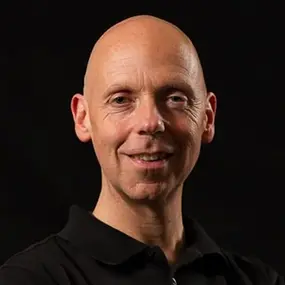
Long before the world knew him as “The Kaiser,” Ralf Souquet was a six-year-old boy standing on a Coca-Cola crate to reach the pool table in his parents' pub. Born November 29, 1968, in Eschweiler, West Germany, and raised in nearby Hoengen, he would become one of the most accomplished, consistent, and respected players in cue sports history. His journey from a modest German pub to the world's greatest pool arenas is a remarkable story of discipline, opportunity, perseverance, and an enduring love for the game.
Ralf's parents operated their pub from 1973 to 1980, while his father, Wolfgang, worked a second job paving roads. Young Ralf initially gravitated toward foosball, a game at which his father had excelled, before picking up a pool cue shortly after his sixth birthday in 1974. He practiced whenever possible, sometimes for eight hours while his parents cleaned the pub. His early equipment was hardly sophisticated: a heavy, multi-piece cue, an enormous tip, and red chalk. He also loved soccer, but an unhappy experience with his coach helped convince him that pool offered a more promising future.
By 1977, Souquet was competing in regional pool leagues. In 1983, he captured a German junior 8-ball championship, attracting the attention of Horst Vondenhoff, an influential figure in European billiards. Vondenhoff invited the 14-year-old to join BC Alsdorf in Germany's newly established Bundesliga. Competing against the country's strongest players, particularly in straight pool, proved invaluable in developing the strategic thinking… Read More