

 Apple Podcasts
 Spotify
 Shaun Murphy - Part 4 (The Crucible, the Comeback, and Life Beyond the Spotlight)
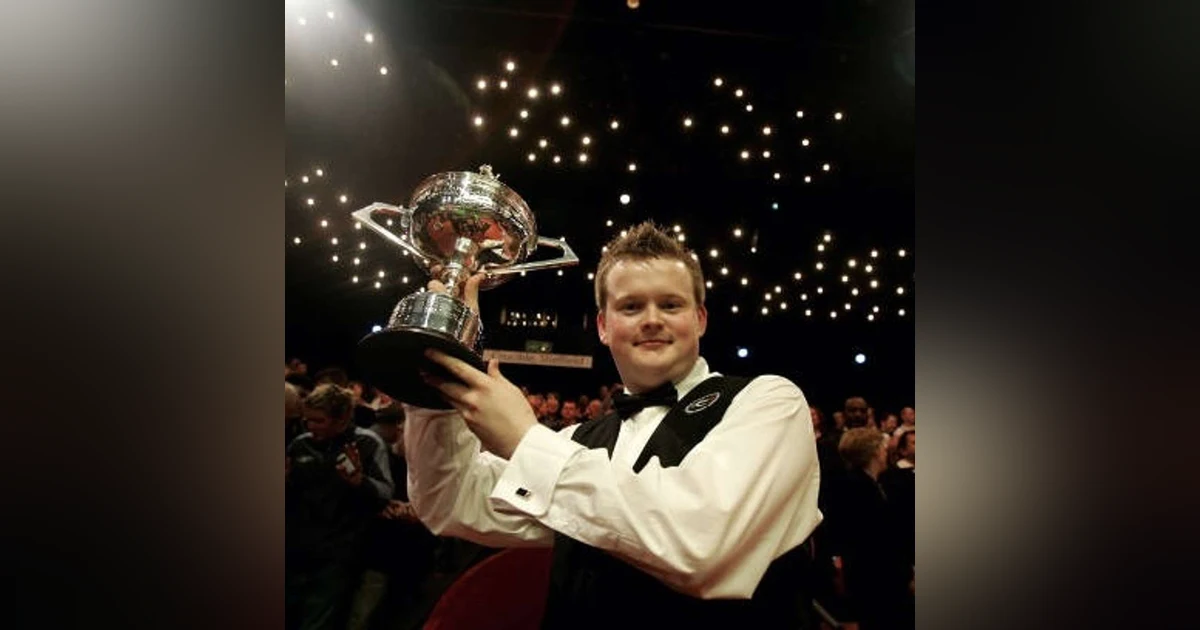

In Part 4 of our five-part conversation with snooker great Shaun Murphy, the story reaches one of its most dramatic and defining chapters: the 2005 World Championship. Shaun takes us inside the moment his career—and his life—changed forever, from the brink of walking away from the game to lifting the sport’s biggest trophy just weeks later. It is an extraordinary account of doubt, resilience, timing, and belief, made even more powerful by the role his mother played in convincing him to take one last chance.
Shaun vividly relives that unforgettable run at the Crucible, from qualifying and beating some of the sport’s biggest names to the tension, fear, and adrenaline of walking into snooker’s most iconic arena. His description of the Crucible Theatre is as personal as it is powerful: not just a venue, but a place of pilgrimage, pressure, memory, and meaning. For snooker fans, this episode offers a rare inside look at what that stage feels like when everything is on the line.
But this chapter is about more than trophies and turning points. Shaun also reflects on how the game has changed, the demands of a modern professional schedule, and the importance of having the right support around you. He speaks warmly and honestly about his fiancée Jo, the sacrifices she has made, the life they now share on the road, and the way relationships, content, sponsorship, and team dynamics have become part of a top player’s world.
There is humor here too, including a brilliant story about a mistimed fan interaction that derailed his planned proposal. Part 4 is funny, revealing, deeply human, and filled with the emotion of a life transformed—on the table, behind the scenes, and far beyond the spotlight.
Give Allison, Mark & Mike some feedback via Text.
Follow our show and/or leave a review/rating on:
Our website: https://www.legendsofthecue.com
Apple Podcasts: https://podcasts.apple.com/us/podcast/legends-of-the-cue/id1820520463
Spotify: https://open.spotify.com/show/4Za0IMh2SeNaWEGUHaVcy1
Music by Lyrium.
About
"Legends of the Cue" is a cue sports history podcast featuring interviews with Hall of Fame members, world champions, and influential figures from across the world of cue sports—including pocket billiards, snooker, and carom disciplines such as three-cushion billiards. We highlight the people, places, and moments that have shaped the game—celebrating iconic players, memorable events, historic venues, and the brands that helped define generations of play. With a focus on the positive spirit of the sport, our goal is to create a rich, engaging, and timeless archive of stories that fans can enjoy now and for years to come.
Co-hosted by WPA and BCA Hall of Fame member Allison Fisher and Mosconi Cup player and captain Mark Wilson, Legends of the Cue brings these stories to life—told in the voices of the game’s greatest figures.
Join Allison, Mark and Mike Gonzalez for “Legends of the Cu...
How do you feel about the schedule now that there's so many events? How do you cope with that? Because I think if you're a player of any Cue sport, you have to be totally dedicated. It's very difficult in relations for relationships, isn't it? Because now you're saying there's 30 events a year, 25, 30 events, that's on the road all the time, isn't it?
Shaun MurphyVery, very difficult. You know, so much so that Jo and I took the decision 18 months ago that she would take a step back from her career, career that she's chased for 25 years. And she's been a world leader in her, you know, world of music, traveling the world, performing on stages all over the world, you know, in different one form or another. You know, in her world, if you go into you know piano locations around the world and say her name, they'll know who you're talking about. You know, like she's very revered. But if she chased that and continued to do it at the pace she was doing it, and I'm traveling a w the world playing Snooky, you'd never see each other.
Allison FisherNo.
Shaun MurphySo nine times out of ten now we'll go to places together. And it's nice, you know, you're making memories and having good times. And Joe, one of her talents, she's extremely good with social media and content, and you know, it's a world that although although there's only a small age gap between us, she's a few years younger than I am. You know, I I think I'm a bit of a dinosaur where that's concerned.
Allison FisherWell, I've noticed that that everything changed when you two met, or certainly in the last year or so, that that's changed. The social media presence.
Shaun MurphyYeah, she's very good at that. She's very, you know, she's very good at it. I mean, during the pandemic, her TikTok went viral. She was she was performing through her TikTok page, and you know, she's very good at it. Um she's revolutionised my social media, and you know, it is it is a big part of it now, the corporate world and sponsorships and endorsements, and you know, it's part and parcel of a professional sports person's life, and you know it's not as black and white as you know when you speak to a sponsor or a potential partner that it's not just about how many followers you have or how many triple crown tournaments you've won or what your world ranking is, it's what you should what's your engagement like? What's your what's your when how many posts do you make and how many people watch your stories on Instagram and all it's crazy? These are the questions now, no? That didn't exist. When I won the world championship 20 years, that didn't exist. Yeah, right. Yeah, different world. It's a different world now. We do a lot of things together, you know. We've got the YouTube, we're on all platforms, we're we're really into it, and I say we. It's it's her, and and she does it all, and she's so good at it. But it's the sacrifice, you know, and she's made that sacrifice. She's walked away from an extremely successful career as a pianist.
Mike GonzalezClassical. Classical pianist, I assume.
Shaun MurphyClassically trained.
Mike GonzalezSo she would perform with orchestras around the world. Is that basically what she did?
Shaun MurphyEverything everything and everything. From, you know, there's a big thing in She was the she was one of the pianists in the ABBA show, which is in London. It's this CGI created ABBA show, the ABBA voyage. She was she was, you know, one of the lead pianists in that. She's she's done everything and she's you know, she had a life, you know, she started as a as a piano bar entertainer in the States. She worked through all the cruise ship industries, she's been on private islands around the world, she's worked in China, Australia, you know, the UK. If you if you as I say, if you go, if you say any, if you know anyone in her world and you say her name, it's goodness, right? She's you know. But funnily enough, when we find ourselves around a piano, which we do often, it's always me who jumps on first. And I and I'm like pub singer, you know, I I I'm awful. That's very bad.
Allison FisherI bet you have a wonderful relationship.
Shaun MurphyI think it's very, very funny. I mean, it's Christmas. It's great. Christmas just gone was hilarious because her very musical family, her sister's a music teacher, her father's a former music teacher, plays everything. Obviously, Joe is, you know, a professional pianist. And the wine was flowing, we were having a few drinks, and the first person on the piano was me.
Allison FisherOf course. Of course. Let me start the evening off, ladies and gentlemen. Of course. Yeah. Of course. That's lovely. But what we're saying now is that you have to really have somebody who supports you to have a good relationship, don't you, on the road? So it's worked out very well.
Shaun MurphyVery, very well. And I'm so lucky as well, because of her background as a self-employed musician travelling the world, she she totally gets it.
Allison FisherYeah.
Shaun MurphyYou know, and and the and the dedication that she had to put into learning piano and other instruments from being a four, five-year-old girl. When I say I'm going off practicing for four, five, six hours, whatever it might be, she gets it. Yeah. Yeah. Yeah. There's no, you know, rolling of the eyes or goodness, have you not done enough? You know, she just No, you need to.
Allison FisherShe knows that's what you need to do in order to be a top player.
Mark WilsonYeah.
Shaun MurphyAnd equally, if she had a big show coming up and she's like, I need to do them, I need I need to do this, you know, I'm going on the piano for you know, however long, you just totally get it. So to have that support is well, it's massive. Which is why I think nowadays, particularly it's become it's become the thing, hasn't it? When when you see somebody lifting that trophy at the end of a week, whatever sport it is, you hear them refer to their team. And they talk, people talk very openly now about the support network around them. That might be a wife, a partner, fiance, whatever, coaches, nutritionists, psychologists, agents. Everyone's playing a role. I know people they might see me out there playing snooker, but there's a lot more in it. There's a lot more that goes involved in it. And of course, this is all stuff I didn't know when I took the game up, you know, and you you you find in your feet, you don't know any of this. You think, well, if I'm good at snooker, I'll I'll do it. It's all the other things as well. And uh there's a lot, there's a lot that goes into it. Yeah.
Mike GonzalezYeah, you mentioned team. That's probably changed a lot in Snooker over the last 20 some years, much as it has in golf. How advanced is it having this team of nutritionists and mental coaches and things in Snooker? Is it is it less advanced than golf, more advanced than golf, or is it?
Shaun MurphyI would say it's behind golf. You know, it's not quite as advanced as golf. I think purely because it's, you know, Snooker's not as rich as golf. So, you know, the players can't afford to pay people and on their staff, you know, to have team members of five, six, seven deep going to every tournament. You know, it's just not that we're not we're not at that level yet. But, you know, there'd be there'd be plenty of players who have, you know, they've got a coach, they've got a psychologist, and they've got uh, you know, somebody who's with them as company and a driver. You know, there might be plenty of players who've got a team that might be three, four, five people deep every week. I've got a you know, a coach, I mean I call him a coach, he's a coach, mentor, mate, all of those things rolled up into one. Former world champion himself, Peter Ebden, he won the world championship in 2002. He's kind of he's in my corner. Is he? He is, yeah. We we we sort of joined forces 18 months ago.
Allison FisherYeah. Uh because he left world snooker, didn't he? He left playing snooker to be a helo.
Shaun MurphyHe's like massage therapist or yeah, he's um he I d I I always I always get the word in wrong. But yeah, he's he's very spiritual, he's very into energy and positivity, and you know, he's he's he's anyone who ever watched Peter play snooker can imagine what he's like. He's great company, you know, he always glasses always half full, he's very much about a can-do attitude, he's very old-fashioned in terms of you know, just practice more, just practice more, and it's he's great, he's great to have around. And of course, having somebody on your team who's done it makes a massive difference. It's the first I've had plenty of team members over the years. He's the first person I've ever had in my corner who's actually put a suit on and gone out and tried to do it too. And won a world championships, right? And done it. Yeah. When I look at my world trophy, which is in my snooker room, his name is on it as well. So, like when he when he has an idea, when he tells put it this way, if he tells me what shot he thinks I should have played, or Big John from the Snooker Club tells me what shot he should have played.
Allison FisherWho you gonna listen to?
Shaun MurphyI know who I'm listening to.
Allison FisherYeah. So so how did he come back into it? Because he went away for a while doing his other thing.
Shaun MurphyHe went away. I mean, he I'm sure he wouldn't mind saying he went away, it was a forced decision. He he he he went away, had a neck and a neck injury, he couldn't play. So he that forced his hand to retire. He went away, and I think he I sort of think he fell out with it for a bit. But he he found his niche helping other players. He's been working with a lot of players over the last maybe five years or so. He turned up, he was in Jack Lazowski's corner quite famously, prominently for a couple of seasons. Jack, again, for those who don't know, Jack's this, you know, effervescent, bubbly, young, attractive English guy who's got a great backstory, he was very ill as a kid, coulda, woulda, shoulda been, you know, down the track a lot further. Uh he's Judd Trump, who's our world number one, their best mates. He's kind of he was in Judd's shadow for a little while, never won an event, lost in six finals, and then earlier this season won his first tournament very late on in his career. But he's so likable and loved by everybody. One of the most naturally gifted people you've ever seen play snooker. Peter was in his corner for a couple of years. I think trying to bring a bit of that old fashioned spice to a young kid's game, like you know, trying to bring a bit of that grit, that you know, street fighter to you know get in the long grass and have a proper fight about it, you know. They had varied levels of success. He's worked with a lot of other players and he's still working with a few others. I've tied him up, I won't let him work with any other top 32 players.
Mike Gonzalez32.
Shaun MurphyI I I I won't let him I won't let him work with anyone who I might be running into because I've had that. The last time I was in the World Championship final in 2021 against my friend Mark Selby, we both have the same coach. Yeah. Which didn't work for anyone. So I uh the first thing I did with first thing I did with Peter was tie him up.
Allison FisherWhat did he do for you? Is it more of a mental help, physical help? How do you sort of assess what's going on?
Shaun MurphyDo you know I I I approached him because I just wanted somebody in my corner who'd been there and done it. And I was I was thinking, I I think, you know, if I'm if I'm lacking anything from my support group, it's having that somebody who at an interval with a match, uh pre-match, after a match, might just have that secret sentence to say that might help just at the right time. Yeah. I don't, you know, without coming across as an idiot, like I don't necessarily need to be told what shot to play anymore. I I probably did 20 years ago. I I know what shot to play now. But as I said, it you know, said it in a funny way. But like when Peter tells me, I take no, because he's a winner and he knows he he knows what to do. He's not he's not guessing, he knows. And I take his critique and his criticism and his when he pro when he gives praise, which is very infrequently, I have to say. But when he does give it, I know he means it. But it's it's become something else than that when we first teamed up. I thought it would be just that little mental sort of little kick every now and again, but it's become far more than that. And I've actually in the 18 months we've worked together, I've learned so much more about just you know, shot selections. No, he we would look at the same situation and he would see something totally different than I would see. And again, anyone who watched him play would they'd be like, Yeah, no, I get that. Because he did play a slightly unique style, he did go for the odd reckless shot, and you'd think, Oh, what was that? That was a that was a weird one. Then you'd come to the table and he would have tied you up in knots, and you'd think, hmm, that's it, right? I've got that. So he's he's he's brought that to my game a little bit. And as I say, I I can't give him enough credit. Having somebody in your corner who knows what it feels like and who knows as well, sometimes the right thing to say is nothing.
Allison FisherCorrect. Yeah, yeah.
Shaun MurphyHe know he can read that dressing room very well. Sometimes the right thing to do, you know, in the UK we call it the hairdryer treatment. You know, a a football manager will give his team the hairdryer treatment, which basically means throw the hairdryer around the room and have a tantrum to try and motivate your team. You know, Peter knows whether I need a good telling off or whether I need to just be left alone. Read the room.
Allison FisherYeah, read the room.
Shaun MurphyThat's worth its weight in gold.
Allison FisherYeah, definitely.
Mike GonzalezAll right, I'm gonna take you back in time. We're going halfway back into your life now. 2005. It's your first ranking event, I believe. What happened?
Shaun MurphyFirst ranking event win at the world championship.
Allison FisherJust the worlds.
Shaun MurphyI mean just qualify. I I had to qualify, I had to go through two rounds of qualification. I think I'd got I'd climbed the rankings up to something like 48, I think, at the time. I had to I had to win two qualifying matches to get to the Crucible to play at the famous Crucible Theatre. I'd played there twice before, never won a match. In previous years I'd I'd won five qualifying matches in 2002, 2003, never won a match at the Crucible. And in 2005, I won my pre-qualifiers. And yeah, I mean, I've told the story a couple of times, but it's worth I think it's a good story. The previous event to that, I think, was the qualifiers for the China Open, and I'd lost my qualifying match from a basically an unlosable position where I'd I'd snookered my opponent on three reds, on the last three reds of the game. So there's a possible 51 points available, and I was already 55 points ahead or something. So he the guy already needs two snookers, two foul shots from me to still be able to win. He came out of the snooker, fluked a red, potted the black, potted a red, potted the laid the snookers, got the snookers, and won the match. And I I remember going home after that match and basically quit. That's the top and bottom of it. I walked away from snookers and said, That's me done. I'm finished. It's cost me a lot of money, it's cost my family a lot of money, you know, was billed as being this next big thing, and it just hasn't happened. You know, hold my head high, I tried and I'm I'm gonna walk away. And my mum, my dear old mum, uh said to me at the time, because back in the day you had to pay entry fees to professional events. You don't have to do that now. We don't have to pay to to to enter these events. But back then you did. And the entry fee for the world championships back then was £750, which was a lot of money for me at the time. Didn't have any money and I was totally broke. And she said, £750 is a lot of money to waste on. Maybe you'll just play. You know, don't waste your money. If you want to, you know, go and play. And if if you know if things don't work out, well then at least you at least you've not just thrown the money away. I think she, you know, she comes from a very working class background in Manchester. 750 pound cash would have been a lot of money, like, you know, growing up to her. And she was just she couldn't see me throw it away, just waste it. So I did. I played in the qualifiers and I and I did, and I won my two qualifying matches, couldn't believe it, but I still, you know, had the every intention of walking away after it. I'd actually gone and got myself a job lined up selling cars. The manager of the dealership had said, Well, I know you're on this snooker journey, you know, go and go and do what you've got to do, and as and when you want to come and work here, start work, you know, your job will be waiting for you. And you look back, yeah. I don't know if it was the freedom that that gave me. I took the pressure off myself. Yeah. I don't know what it was, but three weeks later I had the trophy. And the next time I went in the garret, the next time I went to that dealership, I went to buy a car.
Allison FisherWhat what what a story. Your mother. She must have been so proud. I can't even imagine how she felt watching you in the final.
Shaun MurphyCannot imagine She's only been to one tournament in her life. She came to the Masters in 2015 when I won that. There's a quite a nice bit, actually, when I'm stood with the trophy, you know, live on the BBC with Hazel Irvin, the presenter. She gives me the trophy and she says, I believe your mother's here in the crowd and all this. And I looked to my mum and I said, My mum's been on this journey since I was eight years of age, you know. And I looked at my mother, and of course, I'd already won loads of tournaments. This wasn't new, but it was the first time she'd ever been. She was just so nervous. She found it too nerve-wracking, she couldn't do it. Yeah. I said, It doesn't always end like this, mum, I'm afraid. It doesn't always go this way. I think I went whatever the next tournament was, she came because she she she she talked herself into thinking she was my good luck charm. I lost in the next tournament and she was like, I'm never coming again. And she's never been since. Interesting.
Mike GonzalezInteresting. You beat some named players in your run to win the 2005 World Snooker Championship.
Shaun MurphyYeah, well, I played uh it was a sort of a the 16 qualifiers were picked out against the 16 seeds to make the last 32 round one, and I got I mean, I got a good draw in it. I got a guy called Chris Small who was coming to the end of his career. We didn't know this at the time, but he had a debilitating back disease, his his skeleton was basically like disintegrating around him. And I I don't remember the medical name for it. He's now coaching lots of players in Scotland, but he was a very hard player. But he remembered Chris. He literally couldn't stand up. He couldn't stand at the table. You could see he was in pain during the match. And you know, I I think I won 10-5 or 10-6 in the first round and got my first win at the crucible and was like, you know, dead happy with myself. But I it was all gonna come crashing down because I played my nemesis in the next round, in the second round. I played John Higgins, who had always been my every time I got to my personal best in a tournament, it always seemed to be him I was playing, and he always beat me. So I was like, well, I'll put up a good fight, I'll try my best, but I'm not gonna win. Anyway, I did. I won 13-8 or 13-9, something like that. I no one was more surprised than me. Quarter finals, could have played anyone, ended up playing Steve Davis, my hero.
Allison FisherWow.
Shaun MurphyWho I'd gone to watch not many years prior to that. As a boy, as a nine-year-old boy, I went to watch him play Peter Ebden, funnily enough. And it's funny how these things are cyclic, isn't it? You know, this circle of life, he's now working with me. My first trip to the Crucibles was to watch Peter make his debut against Steve. And here I am playing Steve in the quarterfinals. Now, in fairness, Steve was Steve wasn't the force he was then.
Allison FisherHe retired a few years later, right?
Shaun MurphyYeah. So to be to be like I was 22, unranked, really. To be installed as favourite to beat Steve Davis in the quarterfinals of the World Championship was that took some getting used to. But I did beat him. And then I had to play Peter Ebden in the semi-finals. Which was, you know, a mad twist of fate, especially as things have ended up. He had that very famous quarterfinal match that year where he took an inordinate amount of time to play some shots against Ronnie O'Sullivan, and he he got inside Ronnie O'Sullivan's brain and snipped all the wires. Like he just he just did a full job on him. And I I of course I'm sat there at home waiting to play the winner of this match. I'm thinking, oh my goodness, this is this is gonna be oh dear. And at the world championships, like some of the majors, the world champs, once you get to that the semis, it's the first time you see the trophy, they bring the trophy into the arena. You don't see it until then. And I remember walking out to play, you know, the famed one table setup at the Crucible, and the trophy was there, and I was I couldn't breathe. I was like totally gone. I think I lost the first session of four, six, two, so I was a long way behind. Somehow managed to crawl back into the match and ended up winning 17-12. It's funny how you remember the scores, isn't it? It's funny. Yeah, 21 years ago. Gosh. And then I played Matthew Stevens, who he'd he'd he'd been to the final a few years prior to that. You know, we'd grown up as juniors together. He was he was in the generation above me, a few years older than me. He would have been playing with Lee Spick, who we talked about earlier. Paul Hunter, who we lost very sadly to Cancer many years ago. Twenty years ago, I think, this year. Yeah. It was just a it was a match he should have won. He was favourite to win the match. He'd lost in the final to Mark Williams a few years before that. Uh he was a long way ahead. There was one moment in the final that turned on its head, he played a shot with his opposite hand, famously not good with the rest. And rather than pick the rest out, he switched to left-handed, which, you know, Ronnie was the first player we saw do that in Snooker. And everybody can do it. You know, uh there's lots of players who do it now, it's become a thing. It's it's very trendy now in Snooker. It's almost players do it ra almost as a protest at using the rest, they use their other hand, but he used his other hand and he missed the shot, and I managed to win that frame, and the final turned on that ball.
Allison FisherIt's amazing, isn't it? You can look back on matches and know that a certain ball turned the match.
Shaun MurphyYeah, one shot. One shot. Yeah, I won that final 18 frames to 16. So there was 34, 33 or 30 whatever of the 35 possible frames played in that match, and the match turned on one shot. You know, it's it's mad. That's and that's the you know, they're the fine lines, aren't they, between winning and losing.
Allison FisherYeah. So so I know Mark had these questions before, but the Crucible Theatre, how special is that place?
Shaun MurphyWell, I mean for snooker for snooker people it's it's you know almost a religious experience going to Crucible Theatre, and for many people who make that pilgrimage every year, they're not players, they just go, they come from all corners of the world, they take the same seats every year. They've been coming 30, 40 years, some of them. People have got engaged there, people have got married there, people have probably got divorced. I was gonna say, maybe it's probably ended the odd marriage, if I'm totally honest. But no, I mean, for a snooker people, I I go every year between sessions and find a quiet time and take myself off to the seat I sat in as a child when I first went to watch.
Mike GonzalezThat's neat.
Shaun MurphyI go and find the same seat that my father and I sat in when we went to watch Peter play Steve in 1992.
Allison FisherThat's amazing.
Shaun MurphyI just have a take a little coffee in there and sit there and just have a little like, you know, has this really happened? Is this you know, that boy who went there with all those dreams and you know, I can still remember it, I can still see it. You do have to pinch yourself every now and again and think, you know, did uh did that really happen? Has this all been a dream? You know, if I wake up tomorrow and it's all been a dream, I'll be really annoyed. Great dream though. Yeah, I know, yeah, great dream.
Allison FisherGreat dream. But the atmosphere in there, electric, especially that one table when it goes to that lifting up, when it slowly comes up, that curtain in between, yeah, and it goes into a one table.
Shaun MurphyYeah. It really is incredible. I think I think I think without getting too deep into it, you know, it 50 weeks of the year, it's a theatre, you know, it's a it's an active theatre, it's one of the sort of most iconic theatres in the UK. But because it's built for performing in, the acoustics are right. You know, the word crucible, if you look it up, means about pressure and it means like the cauldron of atmosphere and stuff like that. You know, it's been designed to have the effect on you that it does have. It's not it's not by chance. And when you walk in there, like it's very, very special. It's it's iconic for snooker people, it does funny things to you. Even when you go there, you know, I find myself in Sheffield quite a lot doing shows or with sponsors or whatever it might be, and you drive past the crucible and you see it just as an everyday theatre, you know, the snooker's not on. And you it does, you know, the hairs on the back of your neck stand up just seeing it. And those few minutes sat in your dressing room prior to walking out, those famous steps and going out to try and play, those few minutes prior are well, they're awful. Like they are the worst two minutes as a snooker player. I'd rather give you know, give me the final on the black ball any day over that, you know, that weight in backstage. Awful. I don't know what you were like, Alison, when you, you know, before when you were walking out to play.
Allison FisherThat is interesting for everyone to hear. You know, you just want to get on with it, don't you? Get out there, get on with it. And that build-up, is it like that for every match for you going into a tournament, or is it just a crucible, or what is it?
Shaun MurphyIt I it did used to be every game, you know, as a younger man, and now it's and now it's you know, I think now it's it's every match at the World Championship, for sure. And it would be the bigger matches, the semi-finals, the finals of the majors, the big tournaments, you know, you would get a similar buzz. I described it once as I mean, I've never jumped out of a plane, but if you were jumping out of a plane and you were last watching everybody go before you, you know, because they you they sit you in your dressing rooms, which are all individual, they then there's the famous knock at the door, you go and wait backstage, all in a line, and you listen to the MC introduce everybody out, and you watch everybody walk through these big double doors, and you're like, I do want to go, but I don't want to go, and I do want to go out there, but then you can just then you hear the roar of the crowd as the first player goes out, and then before you know it's your turn, you're like, It's too late to turn back now, we've got to go, gotta go.
Allison FisherGladiators going into the arena.
Shaun MurphyI know it's similar, as I say, and and and you know, if you could take that nine-year-old kid who went first in 1992 and tell him that what you know it'll all turn out okay, everything will be alright, you'll get to play here one day, and one day you'll win. I'm not sure he would have believed you. That's incredible.
Mike GonzalezJust that thought, yeah. Yeah. So how did things change in 2005? You come out of that world championship, you're still a fairly young lad. What changed for you?
Shaun MurphyI mean, literally the day after, you forget the power of BBC as a snooker player, you know. I, you know, it's a I'd only ever really watch snooker on BBC, but you're not really aware of its popularity, really, certainly not as a younger man. I went from total anonymity to it felt being recognized by everybody everywhere on the street, literally the day after, you know, filling the car up at the petrol station or in the shop down the road or whatever I was doing in the days, weeks, months that followed. And literally every day since that day, 21 years ago, there's been somebody come up to me either for an autograph or a picture or selfies now, isn't it? Everyone wants a selfie. And people want to tell you about it. They know where they were that day when they watched it. It was a it was a big moment in the UK, not least because it was the last ever World Championships that was sponsored by Embassy and the Tobacco Company, who'd had an iconic relationship with Snooker, and that was the end of their 30-year sponsorship in the sport. So the last ever embassy became a big deal. It was watched by the final peaked at I think it was nearly nine million live, which you know, in the UK, and this was before streaming and before any of that, like live sport to sort of towards midnight. That was a big, big number. And I remember hearing anecdotally again, there were reports of you know it nearly it was nearly 200 million in China at the time that were watching. Goodness me, I'm glad I knew that after. Don't think I wanted to know that before. But yeah, I think the biggest difference for me was it was it was just the recognition, you know, you literally go from being totally anonymous with whatever you're doing to people, you know, people think they know you.
Allison FisherYeah.
Shaun MurphyWhich of course they don't. But you know, and and to be honest, in 21 years the vast majority of encounters I've had with people in the public have been absolutely wonderful. Like people are very, very, very, you know, approachable and nice and pleasant. You do get the odd one, you know, you do get the odd person who should really think more before they speak, but sure we've all said things we regret, haven't we?
Allison FisherYou can't please them all, can you?
Shaun MurphyYou can't please everybody, no. Generally the snooker public are a lovely crowd.
Mike GonzalezSo the the fame thing's been okay for the most part, or do you find yourself on the odd occasion where you say, Boy, I wish it was 2004 again?
Shaun MurphyYeah, I'd I I I I suppose there have been moments where you know the recognition has happened at the just at the wrong moment, you know, you'd you'd be just doing something you'd just be doing something really important and you know you'll have to you'll have to think again. Jo and I, for instance, got engaged at the back end of last year and she obviously knew nothing about it, she didn't know it was gonna happen. Uh, we went out to our favourite restaurant and uh you know I had the nice table booked and all the rest. I've got the ring in my pocket and waiting for that right moment, and I was literally about to literally about to get off my chair and go down a one knee. And somebody tapped me on the shoulder, why'd you start talking about Snooger?
Allison FisherOh my god.
Shaun MurphyNo, the moment I literally couldn't have timed that any worse. And the moment had gone. And then, you know, we ended up back at home and over a glass of wine at the house later on that night. I asked her privately, you know, that was that was that was the story of our engage. But I had this big, like, you know, I'm gonna do it in the restaurant and all this, it's gonna be a great moment. We'll get a big round of applause, we'll probably get a free dessert. Who knows? You know, and then we ended up we ended up having to do it at home because somebody couldn't hold uh couldn't hold their water, but uh no, in general, I'd say in general, yeah. And and of course there's the other side of it, it's taking me to some amazing places. Snooker has opened doors for me that a kid from Earthlinburgh in Northamptonshire, where I was born and grew up, you know, they don't get to go. You know, I've I've seen some amazing places, been around the world, and it's all because of that little, you know, knocking that those balls around that table with a piece of wood, you know. Very lucky.
Allison FisherThe nice thing is nowadays you get to do it with somebody you love, which makes it even more special, right?
Shaun MurphyIt is special, and and yeah, we we're we're very we're very uh aware and we try and make the most of every trip, you know.
Allison FisherYeah. Thank you for listening to another episode of Legends of the Cube. If you like what you hear, wherever you listen to your podcast, including Apple and Spotify, please follow, subscribe, and spread the word. Give our podcast a five-star rating and stay at all. Visit our website and support our four history projects. And to our next golden break with more Legends of the Cube. So long, everybody.
Snooker Professional
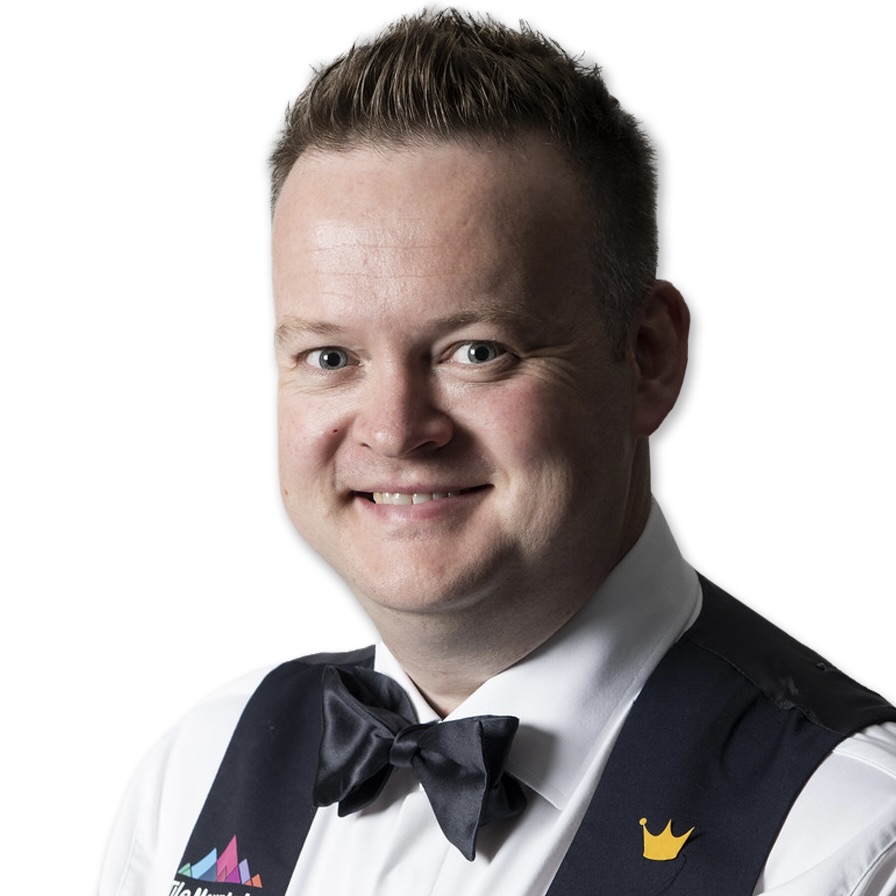
Shaun Murphy’s story is one of rare natural talent, fierce ambition, hardship, reinvention, and remarkable longevity at the highest level of cue sports. Born on August 10, 1982, in Harlow, Essex, and raised in Irthlingborough, Northamptonshire, Murphy grew into one of snooker’s most distinctive champions: a player admired for his pure cueing, fluent break-building, attacking instincts, and ability to rise to the occasion on the grandest stages. Nicknamed “The Magician,” he has built a career that places him among the modern game’s most accomplished and compelling figures.
Murphy’s relationship with snooker began early and with unusual intensity. Once the game took hold, it was never just a hobby. It became fascination, refuge, purpose, and future all at once. As a boy, he made a century break shortly after his 10th birthday and developed within a highly structured environment shaped by his father’s discipline, planning, and belief in accountability. Across his life story, Murphy describes a childhood marked by both obsession and instability: family financial collapse, eviction, emotional strain, and the school bullying that pushed him out of formal education at a young age. Through all of it, snooker became the place where order, ambition, and hope could live.
Those early years also reveal the roots of the adult competitor. Murphy has spoken about wanting trophies more than money, asking endless questions of stronger players, and learning from the colorful, often rough-edged culture of British snooker clubs. He remembers with particular affection Mark Wi… Read More