

 Apple Podcasts
 Spotify
 Shaun Murphy - Part 5 (Validation, Vulnerability, and the Legacy Still Being Written)
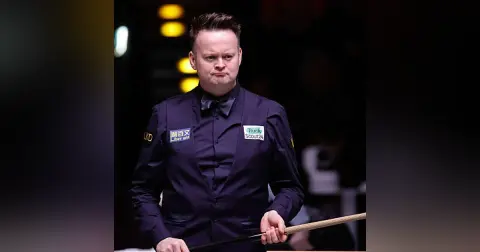
In the final installment of our five-part conversation with snooker great Shaun Murphy, the story turns deeply personal, powerfully honest, and wonderfully reflective. This is the chapter where victories, setbacks, self-doubt, and resilience all come into sharper focus as Shaun looks back on what it meant to validate that unforgettable first world title — and what it has cost, and taught, him to keep chasing greatness ever since.
Shaun speaks candidly about the pressure of avoiding the “one-hit wonder” label, the imposter syndrome that lingered long after his biggest breakthrough, and the relief that came with proving to himself that he belonged among the game’s elite. He shares the story of that dramatic 2008 UK Championship win, the strange mix of calm and chaos that can define the biggest moments, and the hard-earned confidence that only comes from surviving them.
But this episode goes far beyond trophies and titles. In one of the most revealing conversations of the entire series, Shaun opens up about the private struggles that fans rarely see — divorce, distance from his children, grief, emotional strain, therapy, and the challenge of performing at the highest level while life off the table is anything but settled. His reflections on mental health, masculinity, vulnerability, and the loneliness of individual sport are honest, compassionate, and deeply human.
There is perspective here, too. Shaun talks about finding help, learning to separate self-worth from results, and recognizing that the human being behind the cue matters more than any scoreboard ever will. He also looks ahead with the same belief that has always driven him, knowing that his story is still being written.
Part 5 is a fitting finale — insightful, moving, courageous, and the perfect closing chapter to the life story of one of snooker’s most gifted and compelling champions.
Give Allison, Mark & Mike some feedback via Text.
Follow our show and/or leave a review/rating on:
Our website: https://www.legendsofthecue.com
Apple Podcasts: https://podcasts.apple.com/us/podcast/legends-of-the-cue/id1820520463
Spotify: https://open.spotify.com/show/4Za0IMh2SeNaWEGUHaVcy1
Music by Lyrium.
About
"Legends of the Cue" is a cue sports history podcast featuring interviews with Hall of Fame members, world champions, and influential figures from across the world of cue sports—including pocket billiards, snooker, and carom disciplines such as three-cushion billiards. We highlight the people, places, and moments that have shaped the game—celebrating iconic players, memorable events, historic venues, and the brands that helped define generations of play. With a focus on the positive spirit of the sport, our goal is to create a rich, engaging, and timeless archive of stories that fans can enjoy now and for years to come.
Co-hosted by WPA and BCA Hall of Fame member Allison Fisher and Mosconi Cup player and captain Mark Wilson, Legends of the Cue brings these stories to life—told in the voices of the game’s greatest figures.
Join Allison, Mark and Mike Gonzalez for “Legends of the Cu...
How important was it for you to validate that first win with another?
Shaun MurphyYeah, it was massive. I mean, the last thing I wanted to be was a one-hit wonder, a flash in the pan, whatever you want to call it. I didn't want that at all. It's become a thing now, isn't it? You know, we always talk about first-time winners in any sport and how they're it's almost like their second year is more important. You know, you've right, you've got that first win. Now what's your second year going to be like? My my year as world champion, you know, wasn't great at all. I was very easily distracted. You know, I had an agent at the time, and I was under this belief that, you know, as world champion, you know, you should really make at least a million pounds off the table in endorsements and appearances. I didn't realise that was a total croc. Like that's just not true at all. But I went to every golf day and every invite in which meant, you know, I played a lot of great golf courses, I went to a lot of great events, I met a lot of very influential people, but my snooker performance went through the floor, and I didn't have a good year as champion, defending world champion. I think I got to the final of the Welsh Open that year, I lost to Stephen Lee. And that, you know, I look back at that as a missed opportunity. There was plenty of missed opportunities. I was very, very focused on trying to maximise that off-table opportunity, the commercial opportunities. You know, having grown up in a house with a very commercially minded father, that was the world I sort of half came from. You know, it was a case of when that happens, you'll be in a good position to maximize those opportunities. You know, I didn't have a Barry Hearn in my corner. I didn't have a Nean Doyle, who was a very famous Scottish snooker manager at the time. And, you know, I I made a lot of poor choices, you know. I went to a lot of things. Really, I should have just gone back to the snooker club and carried on practicing. But I was only 22. And I sort of look back now as a 43-year-old man. I give myself a bit more of a break. Yeah, because that's young.
Allison FisherYou know, I was young and weren't you a hundred and fifty to one outsider or some some ridiculous odds going into that?
Shaun MurphyI was. Yeah, no, I was. In fact, there was a group of guys, there was four guys from my snooker club where I grew up. Again, Allison, where you visited a few times.
Mike GonzalezYeah.
Shaun MurphyThey got odds from Ladbrooks, the bookies in the UK, of a thousand to one of me to win the world championship before I was 25. They got that when I was 11 or 12 years of age.
Mike GonzalezWow.
Shaun MurphyThousand pounds on between them. I think they're two hundred and fifty pounds each.
Mike GonzalezYeah.
Shaun MurphyA thousand to one. That's never never even bought me a beer. Can you believe that?
Allison FisherI hope they're listening. I hope they listen to this.
Shaun MurphyNot a sausage. That's pretty cool. Sausage. Not a sausage.
Allison FisherThat's funny. Wow.
Mike GonzalezSo validation came, I guess, in in the was it the 2007 Malta Cup? Was that the the next one?
Shaun MurphyI guess so. I guess so. You know, I had to wait a while for that second trophy, because you do get the old one-hit wonder, or maybe you were lucky, you know, the stars all aligned for that fortnight. So it was nice to win the Malta Cup. It was nice to get that second win and and to get that trophy, you know, and to go, hang on a minute. No, I I I do know how to win. I did a lot of it as a junior player. I can remember how to do it. And, you know, give me a give me a sniff and I'll and I'll and I'll and I'll you know settle into it. Took me a long time to to to sort of accept that I was a top player. I had imposter syndrome for a long time. I felt like I didn't. It took me a long time to accept that I deserved it and that I was there by right. I I had the feeling for a long time, many years after 2005, I had the feeling almost like at any minute someone's gonna tap me on the shoulder and say, Mr. Murphy, you're not meant to be here, you've got to leave. It felt like that for a long, long time.
Mike GonzalezYou're not the first guest of ours that used the have used that term, imposter syndrome.
Allison FisherIt's so interesting, isn't it?
Shaun MurphyYeah, and I don't know what it is. I don't I don't know whether it's something, you know, as a single sports person or you know, somebody doing it on your own, really. You've no teammates out there, you've no it's not like you've got, you know, your your other teammates who can take the blame or help in any situation. You're out there. I don't know whether I don't know what it is, but I definitely felt it. It took me a long time to feel like, no, hang on a minute, I'm I'm as deserving to be in this room as any of these players. You know, I deserve to be in this room. But yeah, it took me a long time to get used to that. It took me probably till I think 2008 I won the UK championship, which is the second of the three, and that was a massive moment, again, in its own right.
Mike GonzalezOver Marco Foo?
Shaun Murphy10 Marco Foo.
Allison FisherOh, 10-9 in the final.
Shaun Murphy10-9 and don't want to say I was lucky, but I did fluke match ball.
Allison FisherI was lucky. I was lucky. It was lucky.
Shaun MurphyYeah, we went we went nine each. The the the deciding frame was nip and tuck all the way. It was a very nervy affair. It was very late at night. I think the occasion had got to us both, and I got a chance with a handful of reds left on the table. I made a little 30 break or something, which felt like a felt like a climbed Everest, you know, a 30 break at that stage of the match felt massive. And I had there was one red left on the table, glued to the black, it was frozen to the black on the cushion out of play. I just needed the pink, and I was a I was a bit further from it than I wanted. I should never have missed it. And I remember standing there saying to myself, just breathe, run your routine, right? Pick your part of the pocket, part of the object ball, right? Choose the shot, which shot are we? You know, I was very calm and collected in my, you know, didn't rush it. I ran through my whole pre-shot routine, took a deep breath, and I missed it by an absolute mile. And it came off, it came off two cushions, and it went into the middle pocket like like at speed. It didn't, and it didn't touch the sides. And I yeah, I mean it was just it was ridiculous. Now the game went on for a few minutes after that. I think I think Marco needed a snooker at that point. He chased me round the table for a snooker for five minutes, but I eventually, well, I didn't run across the line, I fell across the line. But there's no what do they say in golf? There's no pictures on a scorecard. Scorecard said 10-9, so I'm taking it.
Mike GonzalezIt's just the way you drew it up.
Mark WilsonYeah. You have to get there to have any kind of chance for good luck, too. So correct, Mark.
Shaun MurphyThank you very much. Yeah, Mark's always good. Marco, in fairness, though, Marco always gives me that little knowing nod when we see each other at tournaments. She's always if you say, You lucky, you know. Yeah.
Mike GonzalezSo coming off that 2008 UK championship, next big win we've got on our list anyway, is 2011, the players' tour championship over Martin Gould 4-0.
Shaun MurphyYeah, well, that was a new event that had you know come out of the the the takeover from Match Room. The players' tour series went around Europe. There were lots of events that season, and then the the top players on that sort of individual rankings came to the the players' champs. It was in Dublin. Snooker hadn't been on on the island of Ireland for a long time. It was in a theatre in North Dublin, it was well attended. Yeah, it was a great little trip that. It was a funny little trip because away from the snooker table, my friends and I, we took a hire car and we went and visited uh the village where my family come from in Kildare, a place called Kilcock. And I remember it because it was Cheltenham was on. The racing was on, and it was Friday, so Gold Cut Friday, that's cool. And we went in this, we found my uncle had given me the address of where the family home used to be, and we went to see some, you know, where where some of the family were buried and this and that, and then we ended up in O'Keeffe's, which is a bar just in the centre of this little town, and it's where my grandfather used to drink as a young man. And we went in and we were sat there watching a bit of the racing, and I think I was playing snooker that night, or I was playing the semi-finals the next day. So there wasn't we might have had the odd pint of Guinness, but we weren't drinking drinking. And this old lady came over from the bar. She crept over to us and she put her hand on my shoulder and she said, I'm so sorry to interrupt you with your friends. She said, But you're the spitting image of a man I used to drink in this pub with 70 years ago. She said, You're not related to Thomas Murphy, are you? Oh my. And she was talking about my grandfather. Wow. It was unbelievable. Like as I'm telling you the story, now I can see this woman's face. She said, You're the spit in image of him. She said he went off to England. He, you know, he went off with his with his sweetheart, my grandmother. They went off to England, they moved to Manchester, and that's where they lived their life out. But she remembered it and she unbelievable. Anyway, that that was the best thing that happened that weekend. The snooker failed into insignificant.
Mike GonzalezYeah, what an experience though, huh? How cool was that?
Shaun MurphyYeah, it was cool. And then I mean the the worst bit about the snooker was the final. I mean, it was such a small length of match for a final, best of seven. But that was the whole thing, the nuance of that player series was that it was short, sharp, quick, went around Europe to new places, got people excited, it was a faster pace. You know, these matches weren't dragging on for hours and hours, they were quick done. And yeah, I was very pleased to win in the end. It was a, you know, because uh you was started sort of establishing yourself as a top player, and it was nice to win.
Mike GonzalezYeah. Yeah, if if you kind of look at uh at your career at in the late teens, I guess, let's start with 2014. I'll just tick off a few of these wins, uh just finishing the decade with a World Open win over Mark Selby in 14, World Grand Prix win over Stuart Bingham in 16, the next year the Gibraltar Open Open over Judd Trump, 2019 China Championship over Mark Williams, and then finishing the decade with a win at the Welsh Open over Kyron Wilson. So what was going on in your life? Talk about your game during that stretch of your career.
Shaun MurphyWell, I guess it was kind of, you know, going from different coaches and different people in your corners and taking what you could from different people and learning what you could from different places. You know, I worked with a lot of different people, they're adding things to your game. I think at one stage I got far too involved in the technique of how to play, you know, took my game apart and improved a little bit because of that, but also, you know, got a bit worse in certain areas, and and it, you know, you sometimes take two steps back to take one step forward, which is the wrong way around. And I think my game suffered a little bit with that. There were some losses along the way, you know. I've lost in plenty of finals as well, you know, which is something you kind of think, well, it's a pat on the back in one way, you got to the final, but you know, my trophy cabinet could be a lot fuller if I'd won a lot more of those tournaments. But I think as you know, to link it to what we were saying earlier on, I think you sort of kind of come out of it and think, well, you know, stood here today, talk, you know, sat here talking to you right now. I'm a much better player than I was then. You know, I'm a lot more better rounded player. I think I'm a better bloke as well, to be totally honest. I think I'm a nicer person. You know, it's taken me a lot of time, a lot of therapy to understand that what I went through as a kid, you know, my parents separated when I was very young, obviously the trauma of being evicted from our home and all of these other things, you know, that that that contributed to my young life, leaving school, being bullied in such a way, you know, it left a mark. They left their marks. And it took me a long time to unravel that. It took me a long time to unravel why I struggled in certain situations. I always used to put this face on of being able to sort of perform. Commentators would always say I looked confident and looked a certain way. They didn't know what was going on on the inside. I was struggling on the inside, and it was looking back now, you kind of go, well, actually, actually, going through all of that, I still managed to win. You know, there's a lot of positivity to be taken from that. But yeah, I think things catch up with you, and certainly a lot of the things I went through as a kid, you know, they caught up with me in later life. I struggled a lot in those lot of mid-teens, those mid-2000s. You know, I struggled with a lot of stuff. There was a lot going on in my life that the general snooker public would have been totally unaware of and that took its toll. You know, I've lost a lot of people, people who were very, very close, family members. My my best mate was my manager, agent, passed away. Obviously, COVID came and went, we all went through that, the effects that had on everybody. You know, it was it was a it was a tough time. And uh we all we all went through it, like you know, we all went through all of that together, but it was strange and it affected us all quite deeply, I think.
Mike GonzalezYeah, and Sean, we've talked about this a lot on the show, this idea that the average snooker fan, they have no idea what's going on outside the arena. And life is going on outside the arena, and all they're seeing is Sean Murphy in the arena competing and and blah, blah, blah, but but oblivious to what's going on in your life and how it might affect your psyche and your ability to perform at the highest level.
Shaun MurphyTotally. Yeah. And to some degree, things, private things stay private, don't they? We've all got we've all got lives away from what we do. We've all got things going on. But actually, Joe and I have spoken about this just recently, you know, because you know, Joe would deal with a lot of the social media side of things, comments people say. People say some awful things online. And you think, maybe, maybe if I'd been a little bit more open, not that I was I wasn't deceitful in any way, but I was very guarded, you know, in the sort of middle part of my career. I I did try to keep my private life private. And uh listen, I've got no idea what it must be like if you're properly famous, you know, if you're an actual real famous person, which snooker players aren't, you know, we might get recognised in the street most days, but you know, if you're a David Beckham or a movie star, you know, things are different, aren't they? But you know, people write about your private life. But even at my level, I've had things that have been pretty distasteful, written about me, said about me. Things were going on in my private life that people were totally unaware of. Maybe if I'd been a bit more open about that, people might have been a bit more sympathetic. I might have said less mean, hurtful things, and I don't know. I maybe people might have been a bit more gentle. I don't know. There was definitely, and there always has been, as there is for everyone, stuff going on in my life that I think would shock a lot of people if they knew what you were dealing with whilst trying to perform at the same time.
Mike GonzalezRight. Yeah, yeah. Yeah, definitely. So uh some of our listeners are aware that I do a podcast, a golf podcast with uh Bruce Devlin, a famous Australian golfer. And we do the same thing. We tell the life stories of golf greats. And uh when we come to a gap in performance in a player's career, Bruce will always jump in and say, Well, what happened? You know, you went three years without winning anything. What was going on? And I'm just looking at 2000 to what I see as the next win at the players' championship over Ali Carter in 2023. What was going on during that period?
Shaun MurphyYeah, I mean, to jump straight into it. I mean, I, you know, I'm 43, sat here talking to you now. I've got two children who live in a different country. Uh, I've I've been divorced twice. You know, anyone who's been through that once will have some inkling as to what it's like to go through twice. You know, living on a different island to where my children live is extremely difficult. And of course, these things take their toll, don't they? You know, mentally, emotionally, financially, and all of those things make a difference. It's all well and good saying, well, I don't play snooker because of money, and I certainly didn't and don't. But you know, these things are very expensive, they're very costly, they're not nice to go through, whilst also having to, you know, plough a hell of a lot of finance into a career that takes you around the world, which we pay for ourselves. I think most people are totally unaware of that. They see their football team or or whatever, somebody turn up to compete and it's all paid for and it's all finance. You know, it's not not like that for us. But yeah, things that go on uh away from the table, you know, relationships and all of those things, you know, they can have a massive impact on your performance just as a person, you know, just who you are, which then obviously affects what you're doing in your career. And that that's the same whether you drive a bus for work or whether you work in a school or you're a pilot or you're a snooker player. You know, what's going on in your life away from snooker can have a huge impact. I was my first marriage broke down in 2008. It took two years for that divorce to go through. That was an incredibly turbulent time. The the CV from 2007-8 to 2010-11's quite bad quite blank. You know, that's partly why. Again, you know, my second divorce took a long time to come through. It was an extremely hard-fought, unpleasant experience, again, with two children right in the middle of it. Again, and and and you know, the effects on fathers who are estranged from their children or who can't have regular contact with their children because of distance is you know, the the effects of that are starting to be seen now by medical professionals all around the world. The data on that is started to come through. I've had some very, very hard conversations with therapists, doctors, and all of that, you know, for the last few years. And as I say, I do I do take it as a little pat on the back for myself that whilst going through all of that, I've been able to maintain quite a high level of performance, you know, consistently throughout my career. That's not to say if all of that hadn't been going on, I might have done better at Snooker. I don't who knows. But you can only play the cards you're dealt in life, can't you?
Mike GonzalezYeah. Well what what would you say to to all the people out there listening, not listening, but uh you've you've met them that have gone through similar things to what you have and just haven't had perhaps the courage to go seek help?
Shaun MurphyStop what you're doing and go and seek help. It's the answer. If you if you need help with if there's electrical problems in your house, you will ring an electrician. If you if your plumbing needs work, you'll ring the plumber. And if you need help mentally, then you've got to go and get help. We're very lucky in Snooker, you know, the snooker circles, the snooker families come on a lot. Now, you know, if you're a professional player and you're needing help, you know, there are there are places you can go, there are people you can call, numbers to ring. It's all anonymous. It's all been set up by WPBSA players, which is a player-led body. You know, there's a lot of help out there now for players and their families, you know, because it, as we said earlier on, it takes its toll on everybody. It's difficult, and I think it's difficult for men, I think it's probably a bit more difficult for men, because certainly in my generation we were brought up to be, you know, the tough one. And, you know, men are we go make him fire and bring the kill home. Like that's that's the world I was that's the family I was brought up in, you know. We didn't speak about our feelings in my house as a kid. Wasn't wouldn't have been tolerated. So yeah, you have to sort of unravel all that mess, don't you, at some stage and go and get help and find out what the answers are. Why why do I keep reacting like that in that situation? Why do I keep doing that? Somebody's got the answers. I've been very lucky that you know I've been able to speak to a lot of people who've helped me over the years, but yeah, it's been been painful.
Allison FisherI think we've seen a few other players. Well, Ronnie being one, very vocal about mental stability, and also Mark Selby, he's struggled, hasn't he? And I'm sure there's more, but this is just what I've seen in recent years.
Shaun MurphyYeah, and you know, in one way it's a great it's great that two very prominent players speak so openly about it. I think, you know, uh Snooker's not unique, but it but it does have certain qualities that single it out from a lot of sports, you know, that that that you're on your own for vast amounts of time, there's a lot of you know, even it in play, you're on your own.
Mike GonzalezYeah.
Shaun MurphyYou know, you might have those team members and family and friends who travel with you or the support network with but once you're out there fighting, you're on your own. And you used the phrase of you used the word glad gladiatorial earlier on. It is gladiatorial, and there's nowhere to look in the mirror but straight at yourself. You know, I can I I can blame anyone I want, but when I'm out there playing, it's on me. And anything in your life that's not lined up properly, it can cause you problems, you know, it it can cause you issues and affect your performance. But I think you have to realise that as a snooker player, you know, it it might be it's near the top of the tree, but it's not the be all and end all it, you know, it's not there are far more important things, and you know, I think sometimes you've got to look look at the human behind the queue, you know, look at the person holding the queue. Are they okay? What are they going through? Because often it's not as it seems. Yeah.
Allison FisherAnd the other thing, it's very intense, isn't it? Competition is very intense. You're going through a lot out there. You know, it's it's a credit to you that you've you know sought help.
Shaun MurphyYeah, and you know, out there you win or lose. You know, my life's been about winning and losing, but life isn't about winning and losing. You know, life we're all we're all on this rock spinning around the sun. We're all we're all on it together. Life, life isn't about winning and losing. But mine has been. I think as a s again, as a single player sports person, life becomes about winning and losing. And I I said to a therapist many years ago, I'd really like my mental well-being and my mental health to be detached from whether I win or lose. Somehow those two things have become linked. And I wish I would like to unlink them. I don't I don't know, I don't know why they are, but I wish that wasn't the case. I don't like it.
Allison FisherIt's like your self-worth, isn't it?
Shaun MurphyYeah, self-worth, your self-esteem, what you think about yourself. Feel a lot better when you win. Well, why? Why? You know, it shouldn't be the way it is. But yeah, we live in a strange world. You know, I lose a match, you know, you you can you can predict what's going to be said to you on social media by a total stranger. I've had awful things written to me. Things that people in the public eye don't have to deal with. They don't have to deal with that. Things that people from years gone by, you know, they don't have to, they never had to deal with it. There are people in our world who, you know, previous players whose opinion on it's quite binary. Well, you know, just don't just ignore them. But they they didn't have to deal with it. Yeah. You know, that technology didn't exist when they were at the top of the game. So they've got no idea what that's like.
Mike GonzalezYeah. You know? Yeah. Well, you got back on the winning track as we talk about that that gap in your CV, but 23 was a pretty good year. I'll just tick off uh the I guess the the ranking wins, players' championship over Allie Carter, the tour championship over Karen Wilson, and the Championship League over Mark Williams. Those were three big wins that year.
Shaun MurphyYeah, yeah. I things were going really well at the time. I think you find this little purple patch, you know, you find this little for some reason all the stars align and your shot selections are all right, and most of the shots go in and your opponents have a bit of bad luck and things all go your way, and you're sort of the last man standing every week. You know, I went through that period of time, I won the players' champs, tour champs, I was favourite to win the world championships, lost first round, incidentally. And then the first tournament of the next season in 23-24, that was the Championship League, which I then won. So I was I think I was in four of five finals, you know, consecutively by the World Championships, just in a really good run of form, for instance. But in Snooker, almost almost unlike any other sport, certainly Q-sports, I would say, is similar. What your opponent does, you know, you need for you to be successful, you also need your opponent to have a bad day. You also need them to be either a little bit unlucky or to make a few mistakes. Because in snooker, and I'm sure the same's the same in in pool, like your next shot could be your last. It's not like that in other sports. Uh in golf, in golf, you know, if we play golf, what I do doesn't affect you. You hit your ball and you'll find it and you'll hit it again.
Mike GonzalezYou get to play all 18 holes.
Shaun MurphyYou get to do it all yourself. You see darts, for instance, you throw your three darts, in 30 seconds you'll throw another three. In snooker, your next shot could be your last. When you're play when you're in play, there's absolutely nothing I can do about it. That's makes it almost unique. Yeah. And the stresses and strains that that brings is quite demanding. And if you get a little run of time where everything goes your way, well then you've got to milk it for all you can get and hopefully take some trophies home, because that's the that's what it's all about.
Mike GonzalezYeah. So speaking of trophies, uh what is your current ranking wins number?
Shaun MurphyUh ranking tournament wins, I think, stands at 13 as it stands today. It's 13 or 14, I think.
Mike GonzalezSo that's if it's 14th, it's in the top ten of all time. That is heavy stuff.
Shaun MurphyYeah, I'll take that. I think uh I think the the nine-year-old Sean Murphy would have I think he would have taken that. I think he'd be very pleased with that.
Mike GonzalezYeah.
Shaun MurphyDespite, you know, as I say, all the near misses that I've lost in three world finals since 2005. You know, there are there aren't many people who've been to more world finals than me in the last 20 years. There are people who've done more, of course there are, but it's not a big number. I've been to multiple finals, enjoyed some successes and in and learned a lot from those failures. So yeah, no, it's been good.
Allison FisherBut you know, when you're sitting in your seat, because 20 minutes can go by, let's in a frame at snooker, it could be longer, could be shorter. What are you thinking for people who are tuning in listening to this? What sometimes are you thinking in that seat?
Shaun MurphyIt's very it's a fine balance because you want to stay focused but not too intense. Try and not sort of let myself get too distracted without getting too obsessive about what's going on. The last few years I've dabbled in a lot of commentary and TV presenting. So I've I actually get there now in my head, I sit there in my chair and sort of almost pretend I'm commentating to myself. Now, you know, what shot would I play here and what shots he played or she played. Uh just to try and keep interested in the frame without so your attention doesn't wander. A lot of our venues are multi-table setups, there's lots of things going on in the same. It's very easy to lose your concentration.
Mike GonzalezYeah.
Shaun MurphyAnd the most frustrating thing I find is that, you know, if you've made a mistake and you sit down, eventually when you stand up because your opponent's made a mistake, you're not ready. Right. That's incredibly frustrating. So I I'm always trying to do something in my chair to make sure that when that next chance does come, as it will come, I'm ready to take it.
Allison FisherYeah. Back to you, Mike. Doesn't always work that. Life, isn't it? And you know, getting older and stuff.
Mike GonzalezUnlike most of our guests, you're still writing your story, so we're all hopeful that uh there'll be more ranking titles to come, perhaps another world championship. As you said, you feel like you're playing as good as you've ever felt. So we hope your uh winning ways continue.
Shaun MurphyThank you very much. Well, listen, I I hope uh with everything I've got that you're right. I, you know, as I say, I've been trying to repeat the success of 2005 and that world championship victory as a 22-year-old, I've been trying to repeat it for 21 years and so far I haven't made it. I've been to the final three times, as I've mentioned, uh since, come very close to winning a second. But I do feel like, you know, when I go to the Crucible this year, when I go to that World Championships, I do feel like, you know, I'm in good shape. I feel like my game will be ready. And if you're listening to this in 10 years' time, you will already know what's happened. You know, you will you will know.
Allison FisherWell, you just make sure you get that cup of coffee in that seat where you were as a little kid.
Shaun MurphyThere you go.
Allison FisherYeah, I'll reminisce.
Mike GonzalezYeah, I think clear the mind, right? That's what we've heard. Clear the mind. Maybe it's a frontal lobotomy, I don't know, but yeah. Clear the mind. Don't think of anything, just go play, right? Just do it.
Shaun MurphyAbsolutely.
Mike GonzalezWell, look, uh, you may not know this, but we always like to finish with our guests with three final questions. Very good. And so I'm going to give the honor of the first question to Mr. Wilson. Okay.
Mark WilsonUh Sean, if you knew what when you were 20 years old, what you know now, what would you change?
Shaun MurphyI would keep my mouth shut. I was far too vocal as a young man and said some ridiculous things. Keep your mouth shut, young man, and just practice more.
Allison FisherWe haven't had that one yet, have we? Oh no, but that's fine. That works.
Mike GonzalezThat's where question number two, Sean. Uh, you're a golfer. I'm gonna give you one career mulligan, one shot to do over. Perhaps it would have made a difference. Where would it be?
Shaun MurphyI know exactly where it would be. It haunts me to this day. It was in the 2016 World Championship lineup against my friend Stuart Bingham, and the score was 15-0. First two eighteen, and I'm and I missed a routine yellow off its spot clearing up to steal the frame. And that was a pivotal moment, and I missed it. And Stuart won the frame, and he, you know, took the springboard of momentum and he won the next two to win the championship for the first time. I was very close with the m the way the momentum was going in the match, the way the atmosphere had turned. Everyone in the room, bar his family, wanted me to win, that's how it felt. And I just I think the moment got the better of me. I I just knit it was a routine shot and I missed it. Wow. That hurt. I'd love to have that again. Unfortunately for me, it's on YouTube. Yeah.
Allison FisherNo, of course not. Of course not. And then our last question, Sean, is how would you like to be remembered? How would Sean Murphy like to be remembered?
Shaun MurphyI think I'd like to be remembered as somebody who gave their all, who who never quit and never gave up, who tried their best. A fierce competitor. I think somebody who, you know, whenever you go up against him, you think, goodness me, I'm in for a I'm in for a match here. But actually, once you've shaken hands, was a nice bloke. And if you wanted to go for a beer or a glass of wine with, had a few good stories to tell and was good company. Fair enough. I think that would do. That would do me.
Allison FisherI think that'd be nice.
Shaun MurphyYeah.
Mike GonzalezWell, anyway, uh, thanks a million for coming on with us. I know Allie and Mark would have some things to say, but from my perspective, I've looked forward to this. And uh, you will always be our first snooker player on the show.
Shaun MurphyWell, I'm delighted with that. Uh it's always nice to be first. Yeah.
Allison FisherYeah, I it's been wonderful having you here. It's nice to reminisce and see you again. I'm so happy for your relationship with Joe. She sounds like a wonderful woman, and I hope to get a glass of wine with you both one day. Thank you so much for coming on, Sean.
Shaun MurphyThat would be our pleasure, be our pleasure. And if Joe lets me, I'll buy the wine.
Mark WilsonThere you go. You know, Sean, I speak maybe for more than just myself, but I say you've really won some big fans with this interview because it's refreshing to hear your candor and uh talk about your struggles and failures and then the resilience and the mental toughness that you portrayed to become who you are. And so you're my number one snugger player today.
Shaun MurphyWell, you're very kind, Mark. Thank you very much. Well, it's been a great privilege actually to come on and tour. I've enjoyed it immensely. Um, it's been really good fun. Thanks for having me. And sorry it was so difficult to narrow it down, guys. It you know, it's just it's hard to hit a moving target, and uh the tour has me all over the place.
Allison FisherSo we appreciate your time. Thank you for your time.
Mike GonzalezWe do. Thanks for adding your story to all the pool and snooker greats on Legends of the Q.
Allison FisherThank you for listening to another episode of Legends of the Q. If you like what you hear, wherever you listen to your podcast, including Apple and Spotify, please follow, subscribe, and spread the word. Give our podcast a five-star rating and share your thoughts. Visit our website and support our full history project. Until our next golden break with more Legends of the Cube. So long, everybody.
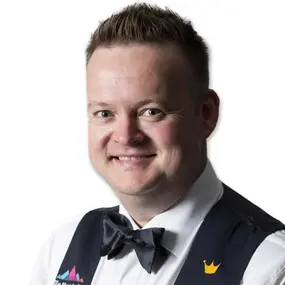
Snooker Professional
Shaun Murphy’s story is one of rare natural talent, fierce ambition, hardship, reinvention, and remarkable longevity at the highest level of cue sports. Born on August 10, 1982, in Harlow, Essex, and raised in Irthlingborough, Northamptonshire, Murphy grew into one of snooker’s most distinctive champions: a player admired for his pure cueing, fluent break-building, attacking instincts, and ability to rise to the occasion on the grandest stages. Nicknamed “The Magician,” he has built a career that places him among the modern game’s most accomplished and compelling figures.
Murphy’s relationship with snooker began early and with unusual intensity. Once the game took hold, it was never just a hobby. It became fascination, refuge, purpose, and future all at once. As a boy, he made a century break shortly after his 10th birthday and developed within a highly structured environment shaped by his father’s discipline, planning, and belief in accountability. Across his life story, Murphy describes a childhood marked by both obsession and instability: family financial collapse, eviction, emotional strain, and the school bullying that pushed him out of formal education at a young age. Through all of it, snooker became the place where order, ambition, and hope could live.
Those early years also reveal the roots of the adult competitor. Murphy has spoken about wanting trophies more than money, asking endless questions of stronger players, and learning from the colorful, often rough-edged culture of British snooker clubs. He remembers with particular affection Mark Wi… Read More