

 Apple Podcasts
 Spotify
 Alan McManus - Part 3 (Steve Davis, Jimmy White, Technique, Talent, and the Rise of “Angles”)
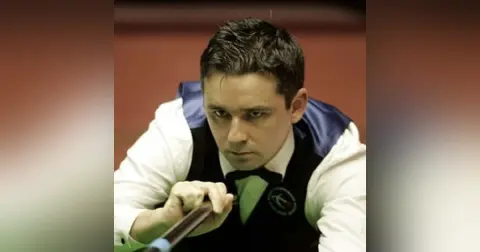
Key Takeaways
- Alan McManus modeled his early snooker technique after Steve Davis, even setting up imaginary tournaments at home to study different players' cue actions.
- The evolution of snooker technique saw a major shift from short, jabby 1980s cue actions to longer backswings that allow modern players to generate more fluid kinetic energy and control.
- Unlike pool players who often chat casually around the table, professional snooker players rarely discuss mechanics with one another.
- Alan McManus achieved a major early professional breakthrough by winning the Masters qualifying event just four months after turning pro.
- Despite maintaining a top-16 ranking for over a decade, McManus reflects that he lacked the absolute physical level and supreme confidence of snooker's serial winners.
Part 3 of our Legends of the Cue series with Alan “Angles” McManus explores the influences, techniques, rivalries, and self-awareness that helped define his rise in professional snooker.
Alan looks back on Steve Davis as the model player of his youth: the standard-bearer whose technique, discipline, and professionalism changed what young snooker players believed was possible. As a boy, Alan even staged imaginary tournaments at home, pretending to be Davis, Jimmy White, and other stars while studying their cue actions and trying to understand what made each player different.
That leads to a rich discussion of snooker technique, including stance, cue action, cue-ball striking, and why the game changed when players began to treat fundamentals as seriously as scoring. Alan, Allison Fisher, and Mark Wilson compare snooker and pool mechanics, discussing why a 12-foot snooker table exposes flaws and why elite cueing demands repeatability under pressure.
This episode also digs into the contrast between structure and genius. Alan reflects on Jimmy White’s incredible natural ability, his fearless shot-making, and the difference between being able to pot balls and knowing when not to attack. The conversation examines why some gifted players thrive on instinct while others build their careers through practice, method, and tactical judgment.
Mike, Mark, and Allison guide Alan through his early professional breakthrough, his first big win at the Masters qualifying event, the insecurity he felt before matches, and the confidence he often found once play began. Alan describes being afraid beforehand but comfortable at the table—a revealing insight into the psychology of competition.
For listeners interested in Steve Davis, Jimmy White, snooker technique, cue action, pressure, practice habits, and the mental architecture of a top professional, this episode is a deep dive into how Alan McManus became one of the game’s sharpest minds.
Give Allison, Mark & Mike some feedback via Text.
Follow our show and/or leave a review/rating on:
Our website: https://www.legendsofthecue.com
Apple Podcasts: https://podcasts.apple.com/us/podcast/legends-of-the-cue/id1820520463
Spotify: https://open.spotify.com/show/4Za0IMh2SeNaWEGUHaVcy1
Music by Lyrium.
About
"Legends of the Cue" is a cue sports history podcast featuring interviews with Hall of Fame members, world champions, and influential figures from across the world of cue sports—including pocket billiards, snooker, and carom disciplines such as three-cushion billiards. We highlight the people, places, and moments that have shaped the game—celebrating iconic players, memorable events, historic venues, and the brands that helped define generations of play. With a focus on the positive spirit of the sport, our goal is to create a rich, engaging, and timeless archive of stories that fans can enjoy now and for years to come.
Co-hosted by WPA and BCA Hall of Fame member Allison Fisher and Mosconi Cup player and captain Mark Wilson, Legends of the Cue brings these stories to life—told in the voices of the game’s greatest figures.
Join Allison, Mark and Mike Gonzalez for “Legends of the Cu...
Frequently Asked Questions
Who were Alan McManus's early snooker role models?
As a young player, Alan McManus heavily modeled his game after Steve Davis, often imitating the cue actions of Davis, Jimmy White, and other stars during imaginary home tournaments.
How has the cue action in professional snooker changed over time?
Players in the 1980s typically used short, jabby backswings of only three to four inches, whereas modern top professionals utilize much longer backswings for better energy distribution and cue-ball control.
What was Alan McManus's first major professional snooker win?
Alan McManus won the Benson & Hedges Masters qualifying event in Glasgow just four months after turning professional in 1990.
How long was Alan McManus ranked in the top 16?
Alan McManus maintained a consistent ranking in snooker's elite top 16 from 1992 until 2006.
Mike Gonzalez
I think we'll come back to this because uh we were all very enamored with the quality of play in the finals this year, but it it leads you then to think about uh what the game's gonna look like in the future. So I think we'll get to that as we talk about your commentating and your your observations of the game. If we go back again to your younger days and you can relate to this as a golfer, you know, oftentimes golfers are practicing and they'll be over a putt and they'll say, This is for the open championship, right? Yeah, I'm gonna be champion golfer of the world uh uh or champion golfer of the year for the gold medal. Um when you had that practice shot and you were playing it to win a championship, who were you pretending to be?
Alan McManus
Uh probably mostly Davis, Steve Davis, I would I would say, because he was the guy. Um I mean I and I'll again I'll be honest, I used to have a notepad or a large notepad when I was a kid in the table at home. I used to do tournaments and pretend I was each player that would, you know, I would uh yeah, it's the quarterfinals I'm playing today. It's best of nine. Jimmy White against Steve Davis. So I would pretend I was Steve Davis one that and then the next visit was and I would use I would try and imitate their coup action to see which one was the best.
Mike Gonzalez
Uh-huh. And that's funny.
Alan McManus
That's k that's kids play. That's what kids do, isn't it? You know, you try to uh how does Tiger swing the golf club? I'll try I'll try and do that, and or Freddie, I'll I'll drop it inside and you know yeah, I was into all that kind of thing, but yeah, I I Steve Davis was the guy, and so I always thought it's funny I I wonder actually with Steve Davis whether it was his dad Bill who said, Look, maybe we we can get a jump on everyone else in the game here because no one has a good technique, and actually pr before Davis, the techniques in Snooker were awful. True.
Allison Fisher
When you look back over in time, when you look back at the broadcast, because I was watching Pop Black then as a kid, and you had Terry Griffiths didn't you, Ray Reard and John Spencer, um and Fred Davis, wasn't it? In the way back, John Parrot. Um but um yeah, it was quite interesting.
Alan McManus
The strange thing that the do you know what I find quite fascinating in Snooker is that even throughout the 80s no player had a long backswing at all. Like no one, none. There was like if you watch it like John Spencer, Ray Reardon, even Steve Davis, Alex, any player, there was the backswing would be no more than three or four inches. Now the backswing on the top players before delivery is uh I mean you get the odd shorter one, but you look at someone like Ally Carter or Sean Murphy or Ronnie actually is a lot longer than he used to be. They come right back to the nibble here. So it's effectively ten inches a foot, something like that. Where back that the Q actions actually didn't exist. They actually just jabbed at the ball. There was no technique. So I think Steve Davis got a jump on everyone when he developed such a good technique. I d I wonder if it was his dad or if it was Frank.
Allison Fisher
They used um they used the Joe Davis book, didn't they? That was their Bible, as a lot of players have, with um his dad and him working with that. So I'm I've not actually I've probably got one here, but I haven't actually read through it. Maybe it comes from that too, you never know.
Alan McManus
I I actually think I mean in hindsight's a great thing, because you can only live in the moment that you're in. But I would love and it which isn't going to happen, I would love to an experiment to go back to the start of the 80s with someone and make them play with a long backswing, and I think they would clean up if they were a good player.
Allison Fisher
Yeah. If you can control a long backswing, you can do a lot more with the cue ball, can't you?
Alan McManus
Yeah, yeah. I and but no one had it. It was all jack. You know, the cloths maybe weren't conducive to because they were heavy and it would, you know, the slower?
Allison Fisher
Everything's was it slower or I mean what was it like in the way back?
Alan McManus
Definitely slower. Any footage that you watch from the 80s and 90s, isn't it? That the cloths are so slow. Um but I I just think that coup actions have developed so much in the last I'm trying to think, who would be the first snooker player or players to actually Stephen Henry, I think.
Allison Fisher
The long punching game.
Alan McManus
Wow. You know, but the long backswing, Henry Henry was short when he was in amongst the balls, he was quite short the back swing. But then as he I think in the mid-90s it started getting longer. I remember the first maybe maybe feel I mean I played Stephen a lot actually, but I remember in the mid-90s playing him and looking at him as he's playing, and I thought, God, his backswing's getting really long. And I don't know whether it was deliberate or whether it was I don't know, but it it he was able then to play so many a range of shots that previously you couldn't, you know.
Allison Fisher
You'd have to ask him that. It's something for you to ask him.
Alan McManus
Yeah, absolutely. And there's another funny thing with snooker players in general that I think people wouldn't imagine. They don't talk about techniques with one another almost ever. Isn't it? It's funny.
Allison Fisher
Did the pool players talk about I think they talk a bit more probably than the snooker players keep things to themselves, I think, anyway. But I think the pool players do talk, you know, like kids around a table chatting away. Some talk more with others and you know, like they're close-knit groups. But I didn't talk technically, actually, with my only maybe Kelly or somebody, we talk about it, but we're quite opposite in queuing and stuff. So we talk a little bit about stuff like that.
Mike Gonzalez
So talk a little bit more for for our non-Snooker players uh about this long cue action and and the kind of shots you're able to perhaps play better if you can perfect a longer backswing.
Alan McManus
Yeah, I I I I think I always go on the principle, and I've I've did this many times in studio um studio talking about I I kinda have this thing that I always cut the the bow and arrow. You got to shoot a bow and arrow. Is it gonna be more accurate with that backswing or that one? Well it's a long one, isn't it?
Allison Fisher
Yeah the energy, energy distribution, yeah.
Alan McManus
Kinetic energy, all that does you know, and and so I think actually in the modern game in Snooker, you wouldn't be able to be successful with a short backswing. I actually believe that. You know, I uh because players are now able to play and it doesn't it to me it doesn't even matter about something that's difficult or something that's easy or perceived to be easy. What I think certainly in the last fit ten or fifteen years, because most people have a long backswing or virtually all of the top players see when they get in close and amongst the balls and score in pink and black spot, that's the easy part because the length of backswing, the ball almost goes in itself because it's so long. One of the best is Ally Carter. It's just a brilliant thing to watch and see. It's could it's controlled but long. When does Ally ever miss anything easy? Like almost never, you know, because it's just so easy. It's the other stuff that you know that he's he's amazing at everything, but he's a good example. But then they're all like that. Woo Yeeza the world champion now. He's got a he's got a long backswing that's like it's just bizarre compared with years ago.
Allison Fisher
Um here's a question for you. Do you think do you remember Steve Davis in his prime? And then a bit later on, when he wasn't quite in his prime, he shortened everything down, he got more jabby. Do you agree with that?
Alan McManus
Yeah, I I think he was a great experimenter. I think he changed all the time. Because I played him so many times, and almost every time I played him, I would I I would always study to a degree. What's he doing right now? And I would all yeah, I would always look and you could get a clue as to how confident he was by his backswing for me. Yeah, I I thought if his back swing's longer or as long as it you or him would like it to be, it it would be he'd be confident. But if it was a if it was a bit like that. Yeah, then you alright, okay. Here we go. Right, here we go. So and so you you but you would never speak it, you would never say it, but you could see it. Observing it, yeah. Oh, you could see it. But that's where Stephen, I think, Stephen Henry, throughout that golden period of the nineties, once he got to about for me about 93, his backswing was like the perfect length, and it was just he made the he just made the game look ridiculously easy. Whether that was by design, I don't know, or maybe it was just confidence that his backswing got better or longer the more he was winning. And he was winning everything, so Yeah.
Allison Fisher
He was freed, wasn't he?
Alan McManus
He just he just felt free. It's there's a funny thing There's a funny thing about the golf, and and we're I think we're all golf fans to the great like when they play Augusta National in the golf um I was listening to someone fairly recently and they put it in a really good way. You know the 15th, the par five, with the water across the front of the green the the examination at Augusta, especially on the 15th hole from the top of the hill, hitting I mean Sergio hit five iron, didn't he? Rory hit that two iron a couple of years ago, didn't he? Uh or four iron, whatever it was, five iron maybe. The examination of Augusta it asks you to swing free and easy, but everything about the shot in front of you tells you that you can't do because it's it's that do you understand what I mean? So so you need to I I know it's maybe not a good analogy, but everything about your instinct is oh ooh, no, no tight tightness. But what it what you need to be is free and easy. If you're free and easy, you can do it. But it's hard to be free and easy because the pressure's biting you from everywhere, and so Stephen, I think through the early part of the 90s was winning so much, he played free and easy. It was like it was easy, yeah. And it I I just think that I mean that's maybe looking a bit deep into these things, I don't know, but it seemed that way to me, and that's when I also think people copy, you know, people look and people observe and they go, Whoa, that's long. That's maybe that's the way to go, and then all of a sudden every everyone's coming back like that.
Allison Fisher
Well you do, you try and emulate whoever the best is of that era, don't you? In any sense.
Alan McManus
Well when you look at Ronnie, Ronnie in his early years was short and jabby. I mean, even if you look at the maximum in the five minutes, eight seconds, it was short and jab, it was quick, but it was bum-bump done. Bub up hit da-da hit. Now it's it's all flow and then and it's like back and slow back and all the way to the biggest. Yeah. He he comes back and waits for it. He never waited for anything. He couldn't wait making a maximum five minutes, eight seconds. He don't have time to wait for anything. He physically wouldn't be able to do that now because he spends three, four, five, six seconds, whatever it is, a bit look, maybe sip six or seven seconds on the shot. It's like he's feeling it before he gets the back, and then bang, back he comes and go through you go. There's a process. Then there was no process, it was look at the ball and in it went.
Allison Fisher
But then he started critiquing, he critiques himself a lot, doesn't he? Say he's I'm not queuing well or I'm not doing this. Well I and I believe him.
Alan McManus
I I believe him. When he says he's used 17 different cue actions in a match, I believe him. Yeah, probably. I used to do it as I used to do it as well. We all do it, don't we? Yeah. And and so but when it when he was 20, 20 years of age or 17 when he won the when he won the UK, if you'd said to him then what what Q action were you using today, he probably wouldn't know what you were talking about. Yeah. And he'd probably because in it, ignorance is or innocence is bliss, innit? He was innocent. And he just yeah, I uh what? Yeah. What what do you what do you mean cue? I d I I don't know, I just pride, didn't I? I don't know. Free and easy, right? Confident, yeah, depression. So and I I don't even know if it's battle scars that when you're older. I don't know if it's that. I don't I think maybe if you're not winning as much, yeah. You question John Higgins used to be really long. You watch John, John was long. You know, on the bridge the back swing. Now it's that little bit shorter and he's his bridge hands up to the cue ball. Uh that's getting deep about technical things, but I I I think time dictates.
Allison Fisher
Yeah. I do too.
Mark Wilson
I don't think everyone I don't think that Jimmy White ever suffered any of that. He always had a long flowing swing, and then prior to that you had Alex Higgins, who had every kind of a flaw that you could imagine, yet made it work. And so and then when Davis came in, that everybody looked up to Alex, and then when Davis came in, then everybody kind of like, oh, maybe that's a better way.
Allison Fisher
He was so consistent. Absolutely consistent.
Mark Wilson
But with Higgins and uh White, uh, particularly, they never suffered lack of confidence. They committed to the shot. They didn't have ambiguity when they shot.
Alan McManus
Yeah, I I I think you're right in that. I w Jimmy, for example, in my opinion, got by purely on talent, nothing else. I I I mean I played him umpteen times, and he just could play. Yeah. He just knew how he knew how to hit the cue ball. Yeah. Simple as that. Yeah. And he was he was fearsome and he was he was powerful through it and and and when no one else really was. You know, when when Jimmy when Jimmy played like Kirk Stevens. He played brave, didn't he? Yeah, and he hit the ball hard but with control. No one else hit the ball anywhere near that hard. It was like Kirk Stevens, even if you watch Kirk Stevens maximum an 84 against Jimmy, it was it was all a bit he was guiding the the boy it was a bit guidy. It was it wasn't back and through and we like you know, it wasn't like that. But then no one was like that apart from Jimmy.
Allison Fisher
Yeah. True.
Alan McManus
But then Jimmy didn't know how to play safe.
Allison Fisher
Yeah. Didn't know when. Yeah.
Alan McManus
And and maybe, maybe even more importantly, didn't know when to play safe. Yeah. And probably because he didn't feel like he had to. Yeah. Or he he didn't want to.
Allison Fisher
He felt so confident, yeah, in going for everything.
Alan McManus
And he was insanely more gifted than everyone else, wasn't he? Yeah. You know, at that time. So yeah.
Mike Gonzalez
Well, let's get back to your career, your early career, Alan. Uh uh take us through your first big win. What are your memories from that? Uh you mean as an amateur or as a pro?
Alan McManus
As a pro, yeah.
Allison Fisher
You turn pro in 1990. Okay.
Alan McManus
Yeah, well, I I as a professional. I um I think so. What was the thing I I I actually won a professional tournament in my first season. Yeah, masters qualifying event, wasn't it? Yeah, that that's right. It was in Glasgow, strangely enough. It was it was the week after I had um so it was my first season. I had been a professional about four months, and I got to the semi-finals of the UK championship uh down in Preston. I lost to I lost to Stephen Henry 9-5, I think, anyway. So that the following week was the Benson Hedges um championship or whatever they called it, and the winner got in the Masters at Wembley, and so I played in that, and I remember I was kind of on a bit not a crest of a wave, because I didn't win, but I got to the semis, which was okay for the first year professional, semis of the UK, and so I got through two or three rounds, I think, of the Benson Hedges thing, and and as the tournament went on, I thought I I really should win this. Because Davis and Hendry and the top 16 weren't in it, they were at the Masters. I thought to myself, maybe I should probably win that. You know, I'm looking around Yeah, I I think I think I I think I probably should, but that doesn't really mean anything because it's about doing it. And so I remember I remember I got to the final and I played James Wattener, who obviously Alison will know well. And he to me he was a legend. I mean he he he could play. Good at him like he was like he he could play like unbelievable player. But I thought I I think I I think I should beat him. But I'm still I'm I've only been a pro for four months maybe five months, and I'm thinking I should beat him. I should and I I remember playing in the final and all through the final I felt I I I'm gonna win, but I sh I shouldn't have felt that way. I always said this thing but pretty much my whole career, and I've said this before, but I was always terrified before I played, but enjoyed it when I was playing. I was always terrified because you you you've got that you you've got hang-ups, don't you?
Allison Fisher
You don't know what's gonna happen, you can't predict anything, can you?
Alan McManus
Yeah, but and you've got insecurities, and I always had those off but once I was on the table I didn't have any, and so I kinda I always felt that that was a good thing, and and I I I thought I was quite fortunate to have that because of my maybe lack of ability, I don't know, but I was able to I was decent in other areas like belief and being able I wasn't frightened when I was on the table, and so I wasn't frightened, and I kind of won the tournament and I remember the night of it, I remember after the final, I think I won nine five or six against Jimmy Watana, and I I I I thought, well, that that's what was supposed to happen, and I shouldn't have thought that, but I did, and so I didn't think it was a great achievement or anything. I I thought I just thought that's that that was the that was what was supposed to happen. That was your plan. Well, yeah, but I but but not in a and I I genuinely mean that not in a not in an overconfident way or in a cocky way. I thought I just thought that within myself, I would never have said anything to anyone. I just thought within myself, yeah, you know, because I should have beat Steven in the semis last week at the UK, which is madness. Crazy, because you know. Um but I just thought it, I did think it. And um maybe that carried me to winning that week, I don't know. And then I got to play in the Masters the following uh uh January or February, and and then again you you you start you start getting more serious, I think, but I don't know if I was ever serious about it, really. I don't know. But like were you serious about your snooker of pool alley? I don't know.
Allison Fisher
Yeah, I mean, yeah and no, it's hard to say pinpoint things, but yeah, I mean you go into tournaments and you I used to think with my with my pool career that if if I do this, then I got a really good chance of winning. I never put uh absolute pressure on myself, but I thought if I just you know respect my opponents, play the game right, then I've got a really good chance of winning.
Alan McManus
Could I ask you, and I don't want to embarrass you, right? I d I don't genuinely. But you were so much better than everybody. Right, okay. So d did you uh uh uh take Winning for not for granted, but th you must have known that if I play in twenty tournaments I'm pro I'm gonna win about fourteen of them or sixteen of them.
Allison Fisher
Yeah, I would say so. I would say so. I felt com very confident. Once I got my Q action and worked on my game really hard, I felt that I couldn't miss sometimes. You know, like I shouldn't lose. I shouldn't lose.
Alan McManus
Yeah. See, to me, I remember watching you, right? Now you know, I would what I'd see the odd, whatever it was, you know, American pool thing, a tournament or whatever. I didn't even really have to watch it to be honest. But I remember what and I'm I just you you you there's no way that you can get beat.
Allison Fisher
That's what I mean on Paul. It was different because it's so much the pockets are bigger and anything can happen. It used to frustrate me when I first came over because you could cheat the pocket and create angles. But back then, if somebody was nervous and playing you and they'd cheat the pocket, they've missed the ball, let's say, that they make it. I've seen that a lot when they're making, I'm like the pockets are too big, you know, because in Snooker it'd never happen. So I would get a little frustrated because we were centre pocket players, right?
Alan McManus
Yeah. So so did you not enjoy the big pockets? No, I'd I not at all take it.
Allison Fisher
Smaller, the better for me, right? Yeah, the smaller they are, the better for me.
Alan McManus
Yeah, I I I always I always I I should get you on my podcast and ask you about I'm asking you I'm asking you too much about Pool. Because I'm fascinated by the the you know the great winners, the great winner at champions in whatever it's Pool or Snooker or whatever. I think they are they have a different I don't know what it is, because obviously I'm not one of them, but it's I I find that fascinating to what what do they think go what do they actually think going into a tournament? What's the truth?
Allison Fisher
Yeah, what's the real Yeah, Henry would be an interesting one for that, Hendry and Davis, because the proliferate winners.
Alan McManus
Yeah, what's gonna happen is I'm gonna pack my suitcase, I'm gonna drive down, check in the hotel, win the tournament, and come home.
Allison Fisher
Right, exactly. And if I don't win, that's not a good thing, you know, because I should win, that type of thing. Yeah, that must be bizarre.
Alan McManus
Yeah, that must be a bizarre thing to think, isn't it? Because normal people like you know, like myself, you know, you don't win hardly ever. So it's it must be very strange.
Allison Fisher
You you say that you might not have got over the winning line, but the consistency that you came with, you know, look at your your results, you stayed in the you're ranked in the top 16, it says here, from 1992 to 2006, right? That's a long time, the consistency.
Alan McManus
Yeah, but yeah, but I you know, you would like to you would like to win more, wouldn't you? That's of course, you know. Of course you of course you that's a silly, that's an obvious statement, but uh what do you think all right, Alan?
Allison Fisher
What do you think held you back? So let's say you've got to all these semi-finals, quarter finals, because there is a tier of players that you've got your winners, your prolific winners, the Federers and Nadals and what Djokovic in sport. And you were the in this tier here, right? You're saying it yourself and and your results. Why is it? What is it? What do you think it is?
Alan McManus
I I wasn't good enough.
Allison Fisher
But was it a psychological, mental thing?
Alan McManus
Partly that, but I also I also know that I wasn't anywhere near the level uh physically and belief-wise of the guys who were winning. I just wasn't that I you I think you have to face up to the truth of the matter. I I think if I had my time again I I would have I would have been able to win some things that I when I when I failed, I think I would have been able to turn those round. And the honest truth is as well I was a little bit frightened. No, I don't know if frightens the right word. I I didn't really want to be a serial winner. I don't think I've been.
Allison Fisher
I can understand that. I can understand what you're saying, because I've heard other players say that. Do you think another question for you then, and we'll go back to that, but do you think if you'd had somebody in your corner, like a mentor coach, it would have helped you back then? Possibly. Yeah. Like in other sports, there's a lot of that, isn't there? And some of those now.
Alan McManus
Yeah, I I think defin I I think it would improve at certain aspects, but I I don't think I would have uh here's a strange thing, and and this is I I'm trying to I'll be as honest as I can. Um see in some ways and and this is maybe partly an explanation of it in a lot of ways I'm glad that I was never world champion. I'm kinda glad about that. Because I I don't know if I want to be one of those people. Maybe maybe because I don't want my name in a book somewhere. I I don't know. I really don't want your name in a book. I just I I think it I no, I I I genuinely I I'm being as honest as I at the time it's your um I would love to be world champion and all those dream things. But actually, I don't know if it would have been a good thing. I don't know. I I'm I'm very content with everybody, you know, but I just don't know. I don't I just don't know. I don't know if I would like I'm quite I'm quite happy not to be in that club.
Allison Fisher
Yeah.
Alan McManus
You know, I see I see them all the time. They got, you know, Sean and Peter and Stephen and Davis and all these people all these world champions, JP and all these world champions, and Ken and I'm kinda that's okay. I yeah.
Allison Fisher
You like the fly on the wall?
Alan McManus
Yeah, yeah.
Allison Fisher
Thank you for listening to another episode of Legends of the Q. If you like what you hear, wherever you listen to your podcast, including Apple and Spotify, please follow, subscribe, and spread the word. Give our podcast a five-star rating and share your thoughts. Visit our website and support our poor history project. Until our next golden break with more Legends of the Cube, salon everybody.
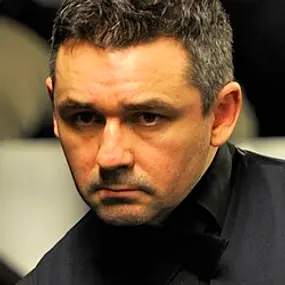
Snooker Professional and Commentator
Alan “Angles” McManus has spent a lifetime seeing things on a snooker table that others simply miss. Born in Glasgow, Scotland on January 21, 1971, McManus grew up in an era when snooker was not merely a game in Britain, but a national television obsession. Long before he became a Masters champion, World Championship semi-finalist, television commentator, and podcast host, he was a young boy fascinated by the sound, shape, and discipline of cue sports.
His earliest memories are wonderfully ordinary and revealing: a miniature snooker table at home, Cliff Thorburn winning the 1980 World Championship on television, football with his schoolmates, and the quiet realization that he had a natural relationship with a cue. As a child at a golf club, watching adults play pool while he sat with a Coke and a packet of crisps, Alan remembers thinking he was better than them—but being too polite, and too young, to say so.
That blend of confidence and restraint would become part of his cue-sports character. At school, lunchtime trips to Gus’s Pool Hall gave him his first taste of competitive action. By his early teens, he had moved from the small-table world of English pool into full-size snooker, made his first century break at 14, and found his way into local team play. His mother helped introduce him to structured coaching, including group lessons with Scottish professional Jim Donnelly. For Alan, coaching did more than refine technique; it opened “a world” he had not known existed.
McManus’s route to the professional game was shaped by discipline as much as… Read More