

 Apple Podcasts
 Spotify
 Alan McManus - Part 2 (Pool Rooms, Road Players, Turning Pro, and the Discipline of Safety)


Key Takeaways
- Alan McManus shares a memorable story of a spontaneous 1996 trip to New York City where he played nine-ball at Chelsea Billiards without knowing the rules.
- The conversation highlights the cultural differences between snooker and American pool, particularly regarding background noise, music, and cue ball feedback.
- Mark Wilson reflects on the romantic era of road players in America, detailing small-stakes matches, road atlases, and underground competition.
- McManus discusses his transition from a brief stint as a trainee car mechanic to committing entirely to professional snooker at age 16.
- The importance of discipline and rigorous practice is emphasized, notably when McManus spent the intermission of a national amateur final practicing safety shots exclusively.
In Part 2 of our Legends of the Cue interview with Alan McManus, the conversation moves from Glasgow snooker halls to New York pool rooms, from schoolboy promise to professional ambition, and from natural ability to the hard-earned craft of safety play.
Alan begins with a fascinating cue-sports crossover discussion, asking Allison Fisher about the open bridge, snooker technique, and how her move to American pool may have influenced the way pool players approached fundamentals. That opens the door to a broader conversation about equipment, discipline, practice structure, and the difference between snooker and pool culture.
One of the great stories in this segment is Alan’s unexpected visit to Chelsea Billiards in Manhattan during a spontaneous 1996 trip to New York. He describes walking into a 24-hour pool room, playing nine-ball without fully knowing the rules, losing money to a local player, and loving the atmosphere of American action pool. Mark Wilson then offers his own memories of the road-player era, where pool halls, road atlases, small-stakes matches, and local champions created a romantic and competitive underground cue-sports world.
The episode also returns to Alan’s own development as a snooker player: his first century break at 14, the Scottish amateur circuit, his decision to leave behind a short-lived job as a trainee car mechanic, and the moment he committed himself to trying to become a professional snooker player. Alan also shares a telling story from the Scottish amateur final, where he spent the break between sessions practicing safety shots instead of relaxing.
For fans of snooker, pool, road-player culture, nine-ball, safety play, and cue-sports development, this episode captures the moment ambition becomes discipline—and discipline becomes a career.
Give Allison, Mark & Mike some feedback via Text.
Follow our show and/or leave a review/rating on:
Our website: https://www.legendsofthecue.com
Apple Podcasts: https://podcasts.apple.com/us/podcast/legends-of-the-cue/id1820520463
Spotify: https://open.spotify.com/show/4Za0IMh2SeNaWEGUHaVcy1
Music by Lyrium.
About
"Legends of the Cue" is a cue sports history podcast featuring interviews with Hall of Fame members, world champions, and influential figures from across the world of cue sports—including pocket billiards, snooker, and carom disciplines such as three-cushion billiards. We highlight the people, places, and moments that have shaped the game—celebrating iconic players, memorable events, historic venues, and the brands that helped define generations of play. With a focus on the positive spirit of the sport, our goal is to create a rich, engaging, and timeless archive of stories that fans can enjoy now and for years to come.
Co-hosted by WPA and BCA Hall of Fame member Allison Fisher and Mosconi Cup player and captain Mark Wilson, Legends of the Cue brings these stories to life—told in the voices of the game’s greatest figures.
Join Allison, Mark and Mike Gonzalez for “Legends of the Cu...
Frequently Asked Questions
What is Legends of the Cue?
Legends of the Cue is a cue sports history podcast co-hosted by Allison Fisher, Mark Wilson, and Mike Gonzalez, featuring interviews with legendary players, administrators, and influential figures in the sport.
When did Alan McManus turn professional in snooker?
Alan McManus turned professional on June 1, 1990, after successfully getting through the pro ticket playoffs at Prestatyn.
What American pool hall did Alan McManus visit in 1996?
During a spontaneous trip to New York City in June 1996, Alan McManus visited Chelsea Billiards in Manhattan to play nine-ball.
Allison Fisher
It seems to me what we're hearing is that your friends kind of dragged you into the game, taking you down to the local pool club when you're in school. Yeah. And then going to the little kids' club, noticing with your mum while you were shopping. Do you remember the first ever time you went into a pool room and just the feeling and the what you noticed, the sensations, you know?
Alan McManus
A pool room would have been, I think, that that time at school when I went at lunchtime with the with the other fellas. And I remember it quite vividly, but I I remember as well I used to get the bus back from school in secondary school. And I remember that there was a pool, there was a pool slash snooker room at Club, small club, and I remember one of the bus stops, we used to stop, and it was on the left hand side, and I used to look in the you could there was big um glass paid the the window panes and there was blinds, but when the blinds were open, I I there was snooker tables and pooled and I thought I wish I could go in there, you know, I wish I could but I was only 11, tw maybe twelve, and I I so I never got the chance in there. But when I went to the one at school with the other guys, I I just loved it. Yeah. As as you do, innit? You and and Mike and Mark, you'll be the same. You j it you just love it, and and there's something about it, isn't there?
Allison Fisher
It's an atmosphere, isn't there?
Alan McManus
Yeah, you no mu don't want music. No music, please. Just the click of the balls, and it that's what it is, in it. And it you do you know what's a weird thing as well not weird, but it's just a normal thing. This would probably seem quite strange to non-players. Do you know what's a l do you know what's a really lovely thing in a snooker hall? Certainly. You know when you're playing and there's we're we're all playing one another, all you hear is 17, 24, 25. It's kinda nice, isn't it? Yeah. There's no conversation. There's no conversation going on.
Allison Fisher
No, somebody, your partner or whatever who you're playing will pick up the ball, put it back on the spot, say the score while you're at it. Yeah. You're right, but that's the difference in port. What threw me off when I first came over here was music in the background.
Alan McManus
Really?
Allison Fisher
Always always, unless we were on TV. If we were on TV, it went quiet, and that's when I knew I'd had the edge. Because that's what we grew up with, quiet. Yeah. And I knew everyone else would be more nervous than I would be.
Mike Gonzalez
Yeah.
Allison Fisher
But I knew they'd be more relaxed with music playing in the background. I'm like, hmm. Not like that.
Alan McManus
We we no, we didn't have that at all, didn't we? It was up almost like the least the the less the noise, yeah, that the louder it was, the pressure. Yes. Yeah. Silences.
Allison Fisher
So you get used to it, don't you, as a play? And you either love that or you don't love that at all, which we'll get into a little bit later in this podcast about the Cruzball Theatre.
Mike Gonzalez
I will say, I will say, though, as an elite league player, okay. Go on. You know, we're in a we're in a bar setting, right? Uh eight diamond, seven foot diamond tables. The music is just cranking, but I have to admit, I'll come off of a shot. I don't hear the music.
Allison Fisher
Yeah.
Mike Gonzalez
I don't even hear the music.
Allison Fisher
Yeah.
Mike Gonzalez
Which is kind of strange how focused you can get, you know.
Allison Fisher
Well, I'm funny. It depends on what type of music's playing too, as to how I feel. I don't know about you, but if it's if it's rap or something like that, I'm like, mm-mm.
Alan McManus
I I I I I I think as well, you you get that used to in snooker um clubs, you get that used to know music, and you need to hear the strike of the ball.
Allison Fisher
You do. That yeah.
Alan McManus
Yeah. And you that sounded good, didn't it?
Allison Fisher
You know that yeah, you know when you've hit it well is what you're saying, you can hear the difference.
Alan McManus
It sounds good and then it feels good, and then if there's music, it's like get all that that all that noise, that white noise, and um so I guess it's that I guess it's a culture. Although I don't know, at one state I I will say I have played nine ball in Manhattan in the States one time. So I'll maybe get to that story at some stage.
Allison Fisher
Yeah.
Alan McManus
Um yeah, that was uh it was a good experience.
Allison Fisher
You sneaked over, did you?
Alan McManus
I did, yeah. In 96, I'll I could tell it right now if you would. Wow, yeah, go on. So it's I'll try and keep this story short. But basically that and this is the truth. So this was the summer of 96. Um, it would have been very early June, and myself and two of my friends, Gary and Andy, uh, we were having lunch in at north side of Glasgow, and um we were sat, and you people don't do these things anymore. But anyway, cut a long story short. We're sat in this uh restaurant and we said, come on, we'll go, come on, we'll go somewhere. You know that why why don't we go? They were car dealers, so why don't we go somewhere? And we're like, Yeah, what do you fancy? So well, and being a matter of thirty Christ, 30 years ago almost exactly. So we thought, let's go round to the um travel agent round the corner on the high street. So we did. We went in and there was a girl at the computer, and we said, Send us somewhere, and we're gonna go tomorrow. You know, one of those randomly, we did. You know, you don't you know you think about these things and don't do them. Well, we did it, and this is true. So we said, you send us somewhere in the world, within reason, you know, not not new not New Zealand, but send us somewhere and we'll go. And she's looking at her thing for a couple of minutes, you know, our monitor. And she's gone, I've got flights tomorrow to New York, fancy that. And we've looked at one another, and we just all nodded and said, let let's let's do it, let's go. And so we did. We went the following day, and we had no plans, yeah, yeah. So we flew in, I think it was, I think it was GFK. So anyway, we got a hotel sorted just below the Chrysler building, anyway. Um, so we stayed there, three of us in the room, pizzas and all the thing. And so the usual thing, and a couple of bar Irish bars, as you do. So one of the days, myself and Gary, my little mate Gary, we've decided to go walk about in obviously one of the avenues, whichever one it was. So we're walking along through Manhattan, and we get to the flat iron building, which obviously we all know, and so well, yeah, it's lovely, and but I like architecture as most of us do. So we're like, oh yeah, lovely, blah, blah, blah. And it you feel like you're in a movie set, don't you? So we turned right along this street, and I think it was the Chelsea district of Manhattan. And so we came across there, there was this pool hall, and it was called Chelsea Billiards. And I Gary, Gary's not a player, he didn't play, you know, he just for fun. I said, Do you want to go in and we'll see if we can get a game? So we did. We went in, there was about 50 pool tables. There was about 25 up 25 upstairs, and there was a basement with about 25, but there was two snooker tables right at the window as you went in, and the sun was beating in, so you couldn't play snooker. But funny enough, there was a couple of people on the the snooker table anyway. So we sat around, and this was another thing I loved about the pool hall and and well I guess the states as you guys will know. You know those big chairs you sit up in the big uh we didn't get those in the UK, um, or certainly not in Glasgow. So I'm sat in a big chair and it was quiet. It was in the afternoon, it was really warm. The Bulls were playing in the finals of the NBA that week, I remember, because we went in Jordan and Pippin and uh whoever else. So this was in the afternoon, so we were sat around and the place was pretty much empty, and this guy came over to me and said, Do you want a game? And at nine ball, I said, Yeah, sure, fine. But I didn't know the rules, right? I didn't so I played him for uh 50 bucks, uh first of five, and I think I must have fouled three times, and he or or no, that's what it was. I didn't hit a cushion after contact, yeah, yeah. And he's picked the cue ball up and gone, I've gone what's going on here? And so obviously, so he um he beat me five, I think he beat me five too. But the the strange thing was uh it his cue action for a snooker player was not good. It was a bit like Yeah, yeah. Yeah, it was not good. And he's but he said I would just feather once and hit it because right and he said to me, Man, you got a weird cue action, man.
Mike Gonzalez
And I yeah, yeah, yeah.
Alan McManus
Honestly, and and I I I I didn't say what I thought. I I thought I've got a weird Q. You're funny, he's stirring a pot of soup. I love it. And so I so I'm like So he be I didn't know the rules, he's took 50 bucks off me. He said, Do you want double or quits? I said, Yeah, sure, let's go. We played again, he beat me again five three or something. Uh the cue was not good. I'm making I'll get the excuses in. I didn't know the rules, but I I did enjoy it. And and I thought that what I loved about it now. I I think I'm right in saying in the in the US you don't have bookmakers on the streets like we do in the UK, where you can have a bet on things. So it kind of felt to me like people were going in to have a bet. And play do you want a game and 20 bucks or 10 bucks or whatever, and it's an even game because whoever pots the nine wins. And I thought, what a good concept. You can go in and have a gamble at lunchtime, and and the the other thing I really liked about it was a big heavy guy, fine. I gave him his hundred bucks. But I got the feeling that if I had beaten him for a hundred bucks, it was easy come, easy go. I think he would have gone, yeah, well played man, and yeah, get good on you.
Allison Fisher
Yeah.
Alan McManus
And I liked that, you know. So that was my experience of New York, and then we obviously we went and watched the Bulls win the the playoffs uh in the evening. But we went for a week, and so that was my only real pool experience of uh uh in the States was was that week 30 years ago, it was brilliant. Yeah, um, but Chelsea, but I I've I I think it's closed down now because uh subsequently I've with Google Maps and stuff, I've looked for it and it doesn't, it's not there.
Allison Fisher
I never went there, Chelsea Bernards. I'm I've heard of it, but I never went to step foot in it.
Mike Gonzalez
Oh okay. Oh cool, yeah. It probably came up with Jeanette Lee, didn't it? Chelsea.
Allison Fisher
And I think maybe Jennifer Beretta played there too. Ah, okay.
Alan McManus
Yeah. It the other thing I liked about it was there was no there wasn't really a bar. It was just a a hatch to almost get a set of balls.
Allison Fisher
So it was a players' club.
Alan McManus
Yeah, well it felt that and it was also open 24 hours, I remember. And um yeah, I and I I did buy I bought a baseball jacket before I left, you know, with the the thing on the back, the Chelsea Billiards thing.
Mike Gonzalez
Oh, cool.
Alan McManus
And uh Yeah, yeah, yeah. Uh I I I liked the concept of the way that they played. Yeah it easy come, easy go. And I said to Gary, I said, Do you know what we could come back here and I could maybe win a few bob, you know? But obviously we we didn't we never did. But uh I really enjoyed it. It was really good.
Mike Gonzalez
Yeah. Well I think you'd you'd probably enjoy uh some of our episodes where we've talked to contemporaries of Mark because Mark, you know, Mark lived that that life, that that pool culture back in the day when it was much different than today, right? And and so you hear the stories from Billy in Cardona and Mary Keniston and others who who weren't necessarily tournament players, they were road players. They went from town to town, pool hall to pool hall, and did just what you talked about.
Alan McManus
Okay. Well, yeah, the the the big fella that I played, uh maybe he was hustling me. I don't know, because I get you know, but I just I felt like it if I know the rules and I've got a proper cue, I would have Yeah, definitely I would I would have taken him for a couple of bob. But um anyway that I I didn't, but uh yeah, I I'd really enjoyed it. I I remember as well who's it the guy is it Earl DePel? Strickland, yeah. Yeah, yeah. I remember him. He funny you mentioned guys playing on the road. I remember watching a thing and he called it a road agent or something. A road agent.
Allison Fisher
More familiar with all of that side of the sport, aren't you? Yeah. Well you grew up with in that area.
Mark Wilson
What happened, Alan, was that uh there wasn't organized tournaments uh early in our career. So the only way was to go town to town, and you would end up with the best player in that town and win or lose. But there was a lot of other guys that would lead up to that. So you could play virtually every day, and it was relatively small stakes, most often. And if you lost a couple hundred, then tomorrow you'd win 40, and then the next day you could win 80, and you know, but it was back and forth like that, and it was such a good, fun challenge, and like you're saying, there was a little bit more honor. Sometimes people get mixed up with the hustle part of it where it's a con and a scam. But back then it wasn't really so much like that. It was much more like uh two gunfighters and let's see who's faster. And it was uh it was a really fun, romantic time in my life. We would have a road atlas and go through America, and you would have places that you knew where there was action, and you would go there and you'd play somebody, and then when you'd meet another road player on uh you might trade a couple spots, so your road atlas would have all kinds of ink markings of go here and this is the guy and this is what he likes to play, and and then you would trade spots like that, so you always had a way to scratch up some money along the way or at least get a game.
Alan McManus
So it I I mean obviously we'll all be very familiar with the movie The Hustler, obviously. Um and it that that it so it was kind of a like that like the movie was where you know I and I love that movie. I've got it on, you know, I I watch it probably every year or two. You watch it, don't you? Because Jackie Gleason comes in with a and you know, gives the talc and the play and it and it was just a brick what was that, 1958 or 59 they made that movie? I think it was.
Mike Gonzalez
1960.
Alan McManus
60. Yeah. Um it was fantastic, wasn't it? And uh it I remember you know, I'm a bit of a geek with uh silly things, but I remember looking at um the uh filming locations for the hustler, and some of those some of those pool holes were actually pool holes and you know that obviously um it aims and in different places, but yeah, I d I I I see what you know, Mark, you obviously lived that and I I I thought it was a brilliant way of being able to play, just go around and easy come, easy go. Um and the thing about pool, as I say, whoever pots the nine wins. So you you don't snooker's a bit different, isn't it? But uh yeah, Pool was brilliant that way, I think.
Mike Gonzalez
So Alan, as you look back as a young man, uh obviously there was something that hooked you or got your attention to to play the game, but what kept you playing? What was it what what aspect was it? Was it the geometry, was it the sounds, was it the the the the the competition? What was it?
Alan McManus
I I think the competition, I I think because going on from what I was sort of talking about earlier when you know made my first century at 14, so then you know, like most people, I started writing down in a little book. Every time I made a hundred, I would write 116 against whoever, and you keep so I got to about 50 of those and I stopped anyway. But by that time I had no idea that there was a proper amateur circuit, a Scottish amateur. It was and it was vibrant, there was a lot of good players around, but I didn't get to see any of them. So someone in the club said to me about it, and I thought, right, okay, this is now getting a little bit more serious where I can go and play in national events, and so one of the guys in the club kind of sponsored me a little bit and helped me out because I didn't drive, so he would take me to some of these tournaments, and again a bit like going to the thing at your own school and then the pool hall, and then at every rung of the ladder you go up, you have no idea whether you're gonna be any good. I I I always was quite good from the start, whichever level it was, and and so I quickly got into when I was about 16, 17, I got into the Scottish junior team, which was which which was difficult. It was there was only four players in it, and there was maybe 150 maybe players who entered all these tournaments, so I got to that, and then you start wearing a waistcoat and you get a team waistcoat, and you it feels a bit more oh I'm am I am I supposed to you know am I supposed to be part of be decent at this or something? I don't know. And then it it becomes a little more serious, doesn't it? And then I the the other one was just when I was leaving school I it was this this would have been December or Janu maybe January 87 I I used to get the bus to work, I say work, I was a trainee car mechanic for about six weeks and I I remember I think it was January or February and I went I was playing snooker at this point, I was getting decent, and I got I was on the bus, it was freezing cold, the snow was about that deep, and so I jumped off the bus and I landed in snow and it but it was that deep, it was freezing cold, and I looked across the road at the place that I worked, it was a place called Lagta anyway. I look and I I looked across, you know what I suppose a bit of a sliding doors thing I looked across and I thought I'm either gonna go in there and carry on this car mechanic nonsense or I'm gonna go to the snooker hall this very morning and I thought yeah okay. I went across the road, got the bus home on the spot and I went to the snooker hall and that I I thought right okay I'm gonna try and be a snooker player. And I would have been 16 and I thought right okay I'll I I I didn't put a time limit, I didn't say right, I'll give it two years or three or five years. I just thought I'm gonna try and I and I did and then I started going around you know the national events and becoming decent and the other boys were good and Stephen Hendry at this point was he'd just not long-term professional and was doing some really good things, and I thought maybe maybe I could maybe try and get in amongst that kind of thing, although it seemed quite a long way off, but again, I quickly started doing really well in the national events, junior and senior, and it it again it goes from there without having a real plan. You you're governed by your results uh in a results-based industry, isn't it? Yeah, obviously. And I I almost eventually, I mean, this is now getting to turning professional. I I kind of turned pro almost by accident a little bit. Albeit I was a good player and I could play. I felt like I was, you know, I could hold my own, I could play. But I went to and Alison would have probably been there at the at Pontons Pristatin, the pro tickets. I I hadn't done anything in the first two. Remember Isla White and Camber Sands, I didn't do anything. So I went to the lat this the third one of the three, and I got to uh the semi-final when there was uh quite a few hundred players, and so then I got in the playoffs to to go in the pro ticket playoffs, which I had no real aspiration of being in, and so alright, well I'm in those, so I might as well go and play in them. So I went and played in them, and lo and behold, I got through. And so yesterday I was an amateur who could play, but today I'm a professional, and then yeah.
Allison Fisher
So you earned your spot basically through the points. I missed out by one point on one of those years. I had to beat Robert Marshall, and I didn't I lost to him. I'd I'd have got through on the points.
Alan McManus
Wow.
Allison Fisher
Which was really good.
Alan McManus
Really good. Yeah, it's really close. So would would that have got you, Alison, into the playoffs, or would you automatically have been playing?
Allison Fisher
I would have got my pro ticket from that.
Alan McManus
Really? Wow, I didn't even know that.
Allison Fisher
Like you were saying, Camber Sands, Prestatin, and so yeah. I was it the Isle of White or something.
Alan McManus
Well the the year I got in it was it was Isle of White, Cambersands, Prestatin. I know there was Breen Sands was one.
Allison Fisher
There was other ones.
Alan McManus
But um which I believe was down near Somerset somewhere. Anyway. But um yeah, I got in without really thinking that I could get in. And overnight I had to start thinking seriously. I had to start write okay I'm a professional so I always remember Billy Conley telling that story about becoming a welder. You know, he left school and he he he lived in a place just down a few miles from here, at Finiston in Glasgow. And he left school and he had to get a job, so everyone got a job as a welder down the shipyards. And he said he says he said this thing in one of his uh stand-up routines, that he said, I became a welder, but I did I didn't even know that I had I'd become a welder. It was like he he he says I'd become a welder and I didn't know how that worked or what he just became a welder. I thought, right, okay, I better learn because that's what's doing, yeah. That's what I'm doing.
Allison Fisher
Yeah.
Alan McManus
But people have told me that I'm a welder, so I better learn how to use the bloody thing. And so he he and then he you're a welder. So I yeah, I was a snooker player and I had no plan of that. So and and also then the pro ticket playoffs happened in the last day of May, and I got through, so then I I turned professional on June the 1st, 1990, and on June the 1st, 1990, I played in the Rothman's Grand Prix, which was a big event as Alison knows. And I all of a sudden I I'm I'm supposed to be a I I'm not supposed to be doing this, I'm supposed to be going home, I'm playing golf with my pals tomorrow, you know. And and so it just went from there and and then uh quickly I had a good first season or two. I got to the crucible my first season, I I got to I think a couple of quarter finals of of big ranking events, I think. And I it it just happened quickly and unexpectedly, you know. Yeah, it's amazing.
Allison Fisher
What were your mum and dad thinking when you said when you went to go and look at the car mechanic and come home, get your cue and say I'm going to the snooker club and gonna be a pro snooker player.
Mike Gonzalez
Yeah.
Allison Fisher
Were they supportive or were they like, Are you out of your mind? or I thought I I I don't really know.
Alan McManus
I I re I remember I remember you know, as you do, but I remember saying to my mum, because my parents were separated by this time anyway. But I remember saying to my mum, Look, I I I'll I'll figure out how to do this. Yeah Just don't don't worry about you know, just I'll you know, thanks for getting me to the coaching thing, the rest I'll take care of.
Mike Gonzalez
Yeah.
Alan McManus
So just let me just go and do whatever it is I do, and it'll it'll whatever it'll be, it'll be. You know, I used to get the bus into Glasgow for tournaments on my own. You know, stood in a bus stop at eight o'clock on a Sunday morning with a queue in my hand and going, I just kids go and do it.
Allison Fisher
So she trusted your decision making that you're mature enough to yeah.
Alan McManus
Well, yeah, I mean, and I wasn't mature at all. Um but we were faking it back then. Absolutely, yeah, you are, aren't you? And but I I kinda always had a thought that because every time I, as I say, stepped up the ladder, I could compete. And so I I guess I thought I'll just keep doing it until I find out I'm absolutely hopeless, and then I'll stop. But I kept being able to play, so I played, and eventually I'm like results happened. Yeah, but almost but not by accident, but unexpectedly, you know.
Mike Gonzalez
Yeah. Um Sean Murphy shared a memory with us. He had a moment where he's he's facing a match with a guy and and he and he's thinking he's pretty good, right? And he's looking at the guy across the room and thinking, yeah, I'm gonna take this guy down. He gets his head handed to him and comes the realization that, yeah, while I'm good, there's an aspect of the game here that's not very well developed, and that's safety play. Did you have moments in your career where you said, oh wait, I'm I'm good at this, but there's some things I still need to get better at? Oh yeah, many things. Yeah.
Alan McManus
Although I always had a good work ethic and I think a good understanding of how to practice and what to practice. And I think I got that from a couple of coaches, certainly one after uh Jim Donnelly. He kind of gave me that thing. He would like you know, I mean, uh again, as Alison knows, you you played snooker morning, noon and night, so you were never out of snooker hall. So when a pro am was going on, you were put and he would be we would be stood maybe watching a match if I wasn't playing, and he would say, See what that guy's did there. You don't do that, you don't do that, you don't play that shot, you don't and I I was a bit of a sponge, it did sink in and thought, alright, okay, oh yeah, oh yeah yeah yeah yeah. That's that thing that you don't do and so but and and that's it I don't do that and so I didn't and then results come on on the back of that and it but you would all I was always thinking and working now what what's the way, what's the best way, and even practice Yeah. I think I I had I had a really good work ethic. I mean I I'll tell you a story and this is true. I remember this would have been m uh March or April 1990. I was playing in the final of the Scottish Amateur Championship, which was a big deal. It was the national final and it was best of 17, and it was in Glasgow, uh two sessions, afternoon and evening. So I think I led 5-3 at half time, something like that. And I went to the club in between sessions and I I hit safety shots only for an hour. That's all I did. Yeah, I wasn't happy with coming up short and my safety playing, blah blah blah. So I thought, right, okay, I'm gonna iron that out. So I did that, came back for the match, and my safety was quite good.
Mike Gonzalez
Yeah.
Alan McManus
And and I won the final easily. So I I I could see things happen good right. So I knew the right thing. And meanwhile, the guy that I was playing in the final, he hung around uh the venue, I think, having a a laugh and a joke with his buddies or his pals or what and that's fine, no problem.
Mike Gonzalez
Yeah, yeah.
Alan McManus
But I I kind of went the other way. I was kind of I was I think I was well invested in what I thought I needed to do, you know. Yeah, yeah.
Allison Fisher
Safety play over the years in Snooker. I still watch Snooker and I it was fascinating watching the world championships this year. It was like, you know, with Sean Murphy, the break. How important now is that break off shot? He did something different, didn't he? He was breaking the balls up but covering everything.
Alan McManus
Yeah, he was breaking off hitting the third red, the middle one of the five, which is all which has just never been.
Allison Fisher
Nobody ever did, did they?
Alan McManus
No, you you can't. I mean, I think John Spencer did it in the the the first ever televised 147. Um, John Spencer and Steve Davis. I think John Spencer hit the second one and he got that double kiss thing, caught the jaws of the corner, Davis made a maximum. Um but y yeah, that then it died out and it never happened and until Sean this year. I mean, no one ever did that. It'll be interesting to see whether he continues with it. I suspect that he will, because it did work. Um actually uh during the crucible and the lead up to the I think the semi-finals. Uh yeah. When it so Sean's first three matches, I stupidly um look back at all of Sean's break off uh and every frame in the lead up. So I think he broke off I don't know, about thirty times, thirty-five times um uh in the first three matches, and not one player potted a ball off Sean's break in the first three matches. Strangely enough, in the semi-final, um John potted a few. Uh but so it did work, and it was it was a big part of the reason I think Sean got so deep in the in the tournament.
Allison Fisher
And do you think that was Peter Ebden, or do you think that was Sean? Peter Ebden works with Sean. He's a he's a former player, former great player, world champion, and he works mentally with and physically with Sean now.
Alan McManus
So that's a really good question that I don't I I mean, maybe Sean would say or Peter or but I I suspect that Peter would have had a lot of input into that. What I what I do I don't know, but I suspect also is that they would have worked so hard on that break off to figure out whether it's worth the risk. Yes, yeah that would have taken a long time and also a lot of guts. That would have taken a you know you know when you even when you think of getting deep in matches, which he was in the quarterfinally beat Sin Tong 13-10, didn't he? So it was you know, getting deep in those matches. Is he brave enough or silly enough or good enough or calm enough to to continue do and he did, he continued. It was amazing.
Allison Fisher
But he's such a straight cuist, such a great shot maker.
Alan McManus
Yeah.
Allison Fisher
And wow, didn't he play well? Fantastic. I he was never like more than a couple of games with somebody, was he? If he was behind, it was never more than a couple of games. That's right.
Alan McManus
You you I think you hit an amazing point there, Ali, is that because he's such a straight cuist, I I I've always been a believer that the balls do listen to how well you strike the cue ball, and Sean strikes it as well as anyone ever has, pretty much. And so I think he has an action that is unlikely to get that double kiss off the pack, which it's like a double kiss effect. Yeah. I think you really need to cue smoothly at those, and Sean is as smooth as you know, silky smooth, and and I think he I think a lot of players, if they tried it, they would come a crop, I think. Yeah. Because they don't queue the ball a smooth. I think that's a great point you make.
Allison Fisher
Thank you for listening to another episode of Legends of the Cue. If you like what you hear, wherever you listen to your podcast, including Apple and Spotify, please follow, subscribe, and spread the word. Give our podcast a five-star rating and share your thoughts. Visit our website and support our full history project. Until our next golden break with more Legends of the Cube. Salong everybody.
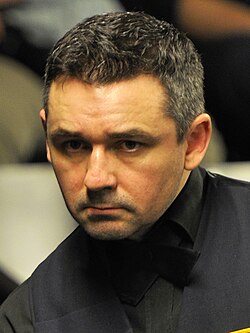
Snooker Professional and Commentator
Alan “Angles” McManus has spent a lifetime seeing things on a snooker table that others simply miss. Born in Glasgow, Scotland on January 21, 1971, McManus grew up in an era when snooker was not merely a game in Britain, but a national television obsession. Long before he became a Masters champion, World Championship semi-finalist, television commentator, and podcast host, he was a young boy fascinated by the sound, shape, and discipline of cue sports.
His earliest memories are wonderfully ordinary and revealing: a miniature snooker table at home, Cliff Thorburn winning the 1980 World Championship on television, football with his schoolmates, and the quiet realization that he had a natural relationship with a cue. As a child at a golf club, watching adults play pool while he sat with a Coke and a packet of crisps, Alan remembers thinking he was better than them—but being too polite, and too young, to say so.
That blend of confidence and restraint would become part of his cue-sports character. At school, lunchtime trips to Gus’s Pool Hall gave him his first taste of competitive action. By his early teens, he had moved from the small-table world of English pool into full-size snooker, made his first century break at 14, and found his way into local team play. His mother helped introduce him to structured coaching, including group lessons with Scottish professional Jim Donnelly. For Alan, coaching did more than refine technique; it opened “a world” he had not known existed.
McManus’s route to the professional game was shaped by discipline as much as… Read More