

 Apple Podcasts
 Spotify
 George Ashby - Part 3 (World Championships, Life Changes, and the Cost of Greatness)
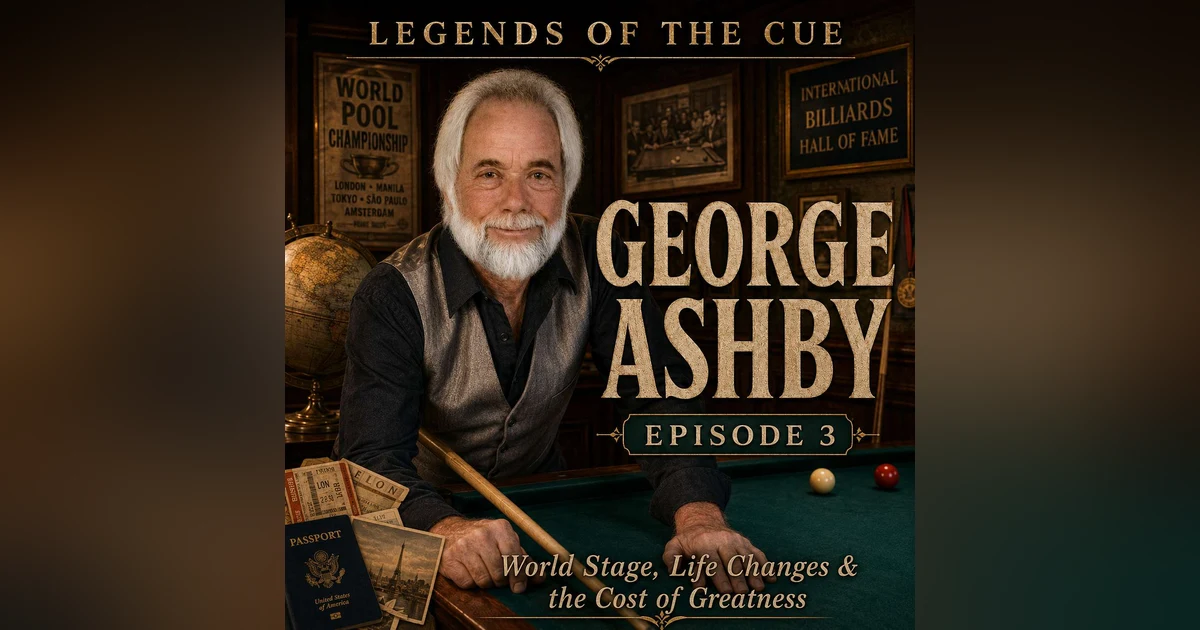

In Part 3, George Ashby takes us deeper into the realities of life at the top of three-cushion billiards — and the very human struggles that can come with it. This chapter of his story spans world championships, national titles, international travel, equipment changes, and the demands of balancing billiards with the responsibilities of owning and operating a family business.
George recalls the shock of his first world championship appearances, where the conditions, equipment, lighting, pace of play, and level of competition were unlike anything he had known in the Midwest. He talks about adapting on the fly, learning from the great international players, and returning home determined to rebuild his game for true world-class conditions. For students of cue sports history, these stories are gold: a firsthand account of how American players matched themselves against the European and Asian powers of the carom world.
But this episode also turns toward the personal. George reflects on what happened when downtown Jacksonville changed, Drexel Billiards could no longer survive, and the place that had shaped both his livelihood and his practice life was gone. He speaks openly about the difficult period that followed, including how losing the room affected his game and his life away from the table.
What emerges here is not just the story of a champion, but the story of resilience. George’s honesty gives this part of the conversation real weight. Greatness in cue sports is never only about titles and trophies — it is also about sacrifice, adaptation, heartbreak, and the ability to keep coming back when the game, and life, take away the familiar ground beneath your feet.
Give Allison, Mark & Mike some feedback via Text.
Follow our show and/or leave a review/rating on:
Our website: https://www.legendsofthecue.com
Apple Podcasts: https://podcasts.apple.com/us/podcast/legends-of-the-cue/id1820520463
Spotify: https://open.spotify.com/show/4Za0IMh2SeNaWEGUHaVcy1
Music by Lyrium.
About
"Legends of the Cue" is a cue sports history podcast featuring interviews with Hall of Fame members, world champions, and influential figures from across the world of cue sports—including pocket billiards, snooker, and carom disciplines such as three-cushion billiards. We highlight the people, places, and moments that have shaped the game—celebrating iconic players, memorable events, historic venues, and the brands that helped define generations of play. With a focus on the positive spirit of the sport, our goal is to create a rich, engaging, and timeless archive of stories that fans can enjoy now and for years to come.
Co-hosted by WPA and BCA Hall of Fame member Allison Fisher and Mosconi Cup player and captain Mark Wilson, Legends of the Cue brings these stories to life—told in the voices of the game’s greatest figures.
Join Allison, Mark and Mike Gonzalez for “Legends of the Cu...
Mike Gonzalez
So your equipment worked fine at the Drexel, but on world championship conditions uh required a little different deal, huh?
George Ashby
Yeah, I I immediately, when I came back, then I had a new queue made. Wood joint shorter, 55 and a half inch in Japan. For some reason, I can't think of his name.
Mike Gonzalez
Is that where a lot of the cues were made back then for billiards?
George Ashby
Yeah, Kulimans played with his cue too. Helmstedder. Richard Helmstedter. And then there was a time when uh Ray Schuler in Chicago made a cue for Kulimans. He played with a Schuler, which was a modified combination of a wood joint and a metal screw. Shuler professed it was wood to wood. Yeah. But it wasn't, it was a metal screw. So it was a different feel.
Mike Gonzalez
Somebody mentioned Brazilian rosewood earlier. Ray made me a cue with Brazilian rosewood back in the day. Nice. Yeah, but it was a pool cue. It wasn't a wasn't a proper billiard cue.
Allison Fisher
Now my snooker cue had had that cone shape. It was much like a, I would imagine, like a three-cushion cue, like a caram cue. Why is that? Why did they have that shape?
George Ashby
For the uh uh vibration of the hit and the strength of the shaft, where you know, in billiards you use more side side spins than in the other games, I think. So you're out more often out on the edge, so that comb shaped tape or strengthened and less vibration, so less deflection of the cue ball, side to side deflection left and right. And billiard balls are heavier. Yeah, billiard balls are heavier, yeah.
Allison Fisher
Is it always a closed bridge hand?
George Ashby
No, no, not necessarily. But uh a lot you know, m a lot of more a lot more than in pool, of course, but uh pool, I like to use a lot of open bridge for aiming purposes to get the to get your thumb and finger out of the way so you're I don't yeah. More like shooting it down. Yeah.
Allison Fisher
And then um what was the other question I had about that? Because uh because my friend Dino I talked about earlier. I remember him having a closed bridge most of the time. And you're always hitting s above center, right? You're always high balling it for the most part.
George Ashby
Well, yeah, because it it's a most part it's a forward game, you know. Right. You're going forward around the table. Yeah. If you're in the middle of the table and you're playing short angles off the right side or left side of your first object ball, then a lot of times the English comes down to the equator for more control. Of course, uh depends majority, but depends on where you're wanting to drive the first object ball, and the short angle is a chance to play wonderful position and drive the first object ball for a short angle before you carry them your cue ball for a short angle to the scoreboard, you know. So Yeah.
Mark Wilson
For those unaware of what a short angle is, it'd be off the object ball to the long rail, end rail, and the long rail and then to the end rail is your second rail, and then so it's like a short angle out of the corner for your object ball position.
George Ashby
Yeah. And then a lot of times after that, it's follow the leader. You know, you watch what the object, your object ball does, and then you've got a another shot for your cue ball to follow that same path, you know, which makes it nice. You can see the roll-off or whatever, softness of the second cushion, you know. Gabriel tables are notorious for having that soft second cushion angle. That second cushion doesn't kick out like um oh, like Soren Sogard or or um Sam Kim Steel, they kick off the second cushion, uh stiff end rail or whatever you want to call it, you know. But the Gabriels, and so if you're sending that that object ball into that corner first, and you get to see exactly what happens over there and makes it easier.
Mark Wilson
Talking about Ray Kuhlman's uh bridge hand, I always marveled at it because he kind of had it rolled under.
George Ashby
He used a lot of fist bridge, that's correct.
Mark Wilson
Yeah, yeah.
George Ashby
He liked the fist bridge.
Mark Wilson
Yeah, it always felt wobbly, I th I thought, when other people did it, but it looked very solid when he did it.
George Ashby
Yeah, he played like a tree trunk. He did. Yeah, as a matter of fact, his legs looked like two tree trunks.
Mark Wilson
Yeah. Yeah, very stable through the ball. I always marveled at that too.
George Ashby
Yeah. And Kobayashi, of course, Kobayashi stood different. He stood uh more square to the table. With his hips more square to the table, and he had to be careful on his uh on the butt of the cue, his butt hand, to not hit his hip when he followed through. You know, he had to stand just a little cock-eyed goofy or whatever to stands like me by the sounds of it.
Mike Gonzalez
A little cock-eyed goofy, huh?
Allison Fisher
My stance's never been explained like that. Cock-eyed goofy was it?
Mike Gonzalez
Yeah, it's it's it's a it's a small snooker-like stance, it sounds like, right? More sport of the table.
George Ashby
Yeah, and so I I liked it. I liked what Kobayashi was doing, so I came home and tried it for I played that way for about six months or eight months or so, you know, and I liked it. Uh it changes your peripheral vision. You have e more equal peripheral vision of the shot for your position play, you know.
Mike Gonzalez
Yeah.
George Ashby
Yeah. In pool, there's peripheral, maybe it's not uh as important in three cushion billiards it is to see the angles. And uh and I would it I would assume it's more important in snooker because you're playing on a larger table, and a lot of times you're you know, it's a kind of a variation of nine ball when you all the red balls are gone, I guess, to work your way down the table from two, three, four down to seven.
Allison Fisher
Why did it only last six months?
George Ashby
Pardon me?
Allison Fisher
Before you went back to your old ways of doing it. It lasted six months, you said I did it for six months.
George Ashby
Yeah, it's just sometimes I'd forget about my hip being there, you know, and I didn't I'd hit my thumb on my right hip. So I see.
Mike Gonzalez
Yeah. So Raymond Kuhlman's wins that uh that uh first world tournament you played in in '76. Kobiyashi finished second. I think Kamori was third, the fellow that gave you the shaft, right?
George Ashby
Yeah, right.
Mike Gonzalez
Yeah, so you come back from that, you you thought, well, I want to do this again. This is fun, huh?
George Ashby
My. Yeah.
Mike Gonzalez
Yeah, it was uh Did you come back and decide I'm gonna work even harder on my game to get back here?
George Ashby
Right, yeah, yeah. Of course, I you know, I ran a restaurant and pool and tobacco stores, so I I worked a hundred hours a week, uh, maybe a little bit less. But I had my time, some practice time. I even played, I even practiced in the dark sometimes. But uh there was but yeah, I came back with my 32 position play uh charts again and working more and more on that. But uh yeah, after being seeing what in Europe, billiards was huge, huge, popular. People came to the tournament to watch the spectators in formal evening gowns and sometimes a tuxedo. You'd see a few tuxedos in the in the crowd. It was a lot different than the United States.
Mike Gonzalez
Yeah. So was the 1981 World Championship? Was that your next one?
George Ashby
Uh 77 was Tokyo. The next year I finished second to Alan Gilbert.
Mike Gonzalez
Oh, gotcha. And of course, Alan is uh was a five-time winner, I think, of the uh of the uh USBA National Three Cushion Championship, wasn't he?
George Ashby
Yeah, he yeah, I think. And then he won uh several before I showed up on the scene, and I don't know what to governing. Well, that might have been U.S. United States Billiard Federation. The Federation was invented to produce a national champion to go to the UMB World Tournaments. And then we had the American Billiard Association. That was so that was Billiard Federation of the United States. That was the amateur to go play with Raymond Coolman's.
Mike Gonzalez
Yeah, so 77, you go back and this time to Tokyo, then I guess.
George Ashby
Yeah, so yeah, 76. I think I finished 11th out of 12. And uh I did 76, I did beat Rico in that tournament from Spain. And like 20 years later, Rico ran 15 and out against Raymond Coolemans in Las Vegas to be world champion. So I got that claim to fame. There you go. But then 77 was Tokyo, Japan, and uh in the big box seven-story building with a different sport with an in-house professional on every floor. Hmm. Skeet shooting, golf, you know, whatever you wanted to play, you could find it there with a pro to teach you. And billiards was on, you know, there with Kobayashi was the house pro to teach you. But um there, I think I finished eighth, maybe.
Mike Gonzalez
Okay. Still same number in the field? Same 12, yeah. It used to always be 12. Yeah, and guess what? It was Kulimans and Kobayashi.
George Ashby
Yeah, Kobayashi, he was funny. He said, I've been put on this earth to be second to Raymond Kulimans. That was his joke. We just lost him last year, the year before, I think.
Mike Gonzalez
Oh, is that right? Is that right? So, what was your next world then? Because I know you you you won the national championship in '81.
George Ashby
Yeah, so uh 1979 was Las Vegas, and we were gonna have five players qualif four, I guess it was four, yeah, four players qualified for that tournament because we were hosting from the U.S., yeah. From the U.S. And I think it might it might have been more of a different format. I don't know if you remember. I didn't get to go because I I lost two games in the one hole and I had two ties, I think it was, something like that. So I finished fifth. I was really lucky.
Mike Gonzalez
And and you probably would have really wanted to do it in your own home country, right?
George Ashby
Well, yeah, it would have been nice. Of course, uh my dream from third grade in grade school, we studied about the pyramids. And that was my dream to someday go see the pyramids and ride a camel. And the good Lord let me do that. That was wonderful. I rode camels in 1981. Well, I'm getting ahead of it, but we were there in 1981. I rode camels with Camori, who had given me the shaft. Literally. In uh, literally, in uh '76 in Austin, Belgium. So we became friends, and uh he also gave me a case that he'd had for 20 years, a cue case, with stickers on it, because he had gotten a new one.
Mike Gonzalez
So I still carry that case to this day. Yeah, so you're riding camels in Egypt that the world championship would have been contested that year in Cairo.
George Ashby
Yeah. So uh anyway, uh 80, 1980 is when uh we went to Buenos Aires, Argentina. And I had missed 79 by one point or whatever. So 1980 was uh Buenos Aires, the 400th anniversary of the city of Buenos Aires celebration. And we played in a gymnasium with South American tables, non-heated, six-legged reproductions of or knockoffs of Brunswick Klings. Brunswick Klang, six six bell bottom leg, and they played nice and uh no air conditioning. It got so hot in there that uh the final game, Coulombs and Kobayashi were allowed to take off their black sweaters and their white shirts and play in like an underwear shirt or a t-shirt type thing, you know. Yeah. It was so hot in there. And one night it was so cold in there, they brought in some kind of electric heaters and put under the grandstands for the people. We were all my wife, I had we brought blankets from the hotel. It was extreme playing conditions.
Mike Gonzalez
But sounds like the World Snooker Championship in Delhi, Allison.
Allison Fisher
Yeah, for me. Super hot, humid, wet cue, yeah, terrible. Yeah, in Delhi. I can relate to that, yeah.
Mike Gonzalez
Yeah. So you must have you must have been there in 81 then, because you won the the National Three Cushion Championship as well that year. Uh that was in Cairo.
George Ashby
81 was Cairo.
Mike Gonzalez
And Ludo, Ludo won that one, huh?
George Ashby
And Ludo won it, and Ludo we played a 60-point game, and he was ahead by 10 points at 30. And he was ahead at uh 10 points at about 55, and I lost the match 60 to 58, and he and then he went on to win against the final game against Kobayashi. And uh I had Kobayashi on the ropes in that in that tournament, but if I could have beat Ludo in that 60-58 loss, I could have jumped maybe from sixth place finish to maybe second. Everything gone right, you know.
Mike Gonzalez
But yeah, yeah. So at this point were were uh were nerves less of an issue for you having experienced this a few times?
George Ashby
Well, yeah, I think once you get used to the arena, you know, and the TV cameras or whatever, but it's just the enjoyment of the game playing at that level and with those people, those players, you know, there's so much respect for what they do. It was actually hard to difficult to concentrate on my game because I was constantly w trying to watch and learn what they were doing with their game. Yeah. So uh I can't remember uh if ever there was a world tournament that I concentrated solely on my game, you know, to try to to try to win it.
Mike Gonzalez
Yeah.
George Ashby
But I wasn't I just wasn't at their level, and I knew that.
Mike Gonzalez
George, back in your prime, why why don't you compare some of the the more popular countries where where the sport uh seemed to be fairly important relative to the U.S.? Because you go to some of these places like Belgium, it's a revered game uh that's probably perhaps even some governmental support in terms of youth development and so forth, much different than how you would have grown up here in the States, right? Sure.
George Ashby
Yeah. Like uh Torbjong Blomdaw. He was state sponsored in Sweden. Uh first time I played him was Chris's Billiards of Chicago in the billiard die just opened in 83, and he was 19 years old with pimples all over his face, you know, and playing about 1.1 or 1.0, 1.1 maybe. And uh I was able to beat him at that tournament in a playoff match, close game. We were pretty much on the same level. But he went home and got better, of course. But uh he was state sponsored in '86, I think. 86 I played world tournament in uh Copenhagen, Denmark, and that was our first kind of professional, semi-pro invitational type tournament, I guess. Which out of that came the Mr. Bear from Sweden or from Switzerland that s started that that tour. But in that tournament, the players sat down to sign a contract with Mr. Barr to go professional, all the UMB players, top 15, and I was at the table with them to sign that contract to become a pro player. It was a one-year contract, you're guaranteed expense money paid, I think, and all that. But anyway, Blum doll wouldn't sign the contract because he was afraid to go professional and lose his state sponsorship. This is the way I understood it anyway. I might be wrong. But he wouldn't sign, so nobody signed. They didn't actually, I think, sign that until about 89, but you guys may know the history more. But 89, then they signed it. Well, I was back home working, and Alan Gilbert was at the tournament, and he signed for that first year or two contract. And then I think after that, Billy Smith might have signed from Chicago. He might have been in it for a couple of years. But I lost I lost track of it.
Mike Gonzalez
Yeah. Well, how many world championships did you end up playing in?
George Ashby
Oh, it seemed like it was eight or ten, I can't remember. Um 8 after Cairo, 81 was 82, was Mexico, Frank Torres and I were World Cup team tournament, two-man teams in '82 at Toluca City, Mexico, just outside of Mexico City. So then uh 84 I won again national championship and went to Krayfeld Crayfeld, Germany, 84.
Mike Gonzalez
Yeah, Kobe Ashi won that year.
George Ashby
And uh that was a 12-man, that was a 12-man tournament.
Mike Gonzalez
Yeah. So you had the you had the pool uh place, uh Drexel Billiards in Jacksonville, up and through 85. So once you decide, I mean, what why don't you take us through what what what happened there and why did you decide to wind it down? And then more importantly, more importantly, what happened to your game as you lost that place of employment and that place of practice?
George Ashby
Well, unfortunately, yeah, we had a The downtown area kind of closed up. They closed off the Jacksonville Square and a lot of the businesses moved out on the strip. And of course, my main business was restaurant, so I lost a a lot of my clientele there that came in for lunch and coffee breaks. And they also closed down the uh the Farmer State Bank building, 11-story building or whatever, uh 10 or 7 stories, I guess.
Mike Gonzalez
Yeah, right across the street.
George Ashby
Yeah, they closed that down that had uh doctors and dentists, professional people, lawyers, uh offices in that building, and so they all moved out to the perimeter and new, built new offices. So a lot of the business then left downtown Jacksonville, so just wasn't uh wasn't a lucrative business anymore.
Mike Gonzalez
Yeah. And just a little history on the town, guys. I mean, we had a Capitol Records plant. They were actually producing platinum albums and then CDs. We had a Carnation uh uh plant there. It's a mobile oil, of course, uh Anderson Clayton, quite a few big employers that most of which ended up leaving town, right, George?
George Ashby
Right, yeah. Yeah, through uh a lot of them were consolidated into larger companies. We still have the plastic trash bag company is still there. Mobile chemical, which turned into Reynolds, Reynolds aluminum, and they're making uh hefty, hefty brand trash bags.
Mike Gonzalez
Yeah. So the town changes, you you you you end up did you sell the the uh the establishment or just close it down?
George Ashby
I sold the business, uh-huh. Gave it away. Okay.
Mike Gonzalez
So without a place to have access to three cushion, uh, what did you do in 1985?
George Ashby
Well there wasn't any place to play, and uh I kind of turned alcoholic. So that was kind of the end of my career for for uh for a while. But uh we didn't actually have a place to play until about 89, I think, there was a place to play on uh so and so guard tables. We had three of those from the world uh from the world tournament in Vegas. So and then that lasted that lasted till maybe 92-3 and uh close. Then I opened a place in '99 till 2008, we had a place to play.
Mike Gonzalez
And where was that at, George?
George Ashby
And that was on East State by Elliott, where Elliott State Bank, uh a half block off the square on East State in Jacksonville.
Mike Gonzalez
Okay. All right. And so take us a little bit through your career post-90 uh 84, let's say. You you win you won a third national championship in 1984, you you shut down your place of business, uh, you get away from the game, it sounds like for a while, and then when did you really get back to it and uh and sober up?
George Ashby
Yeah. I got semi-sober. I didn't stop drinking until '98. But uh Sang Lee was always uh patting my un my underarms because I'd sweat alcohol in New York City and at the tournaments, his tournaments, you know, and he said, Joe Georgie, you gotta stop drinking, you know. I said, Okay, saying Lee, you know, but he uh we all drank somewhat, you know, but I think he even liked his sake a little bit, but uh Well what what got you off of it? Well, I'd had a car accident for one thing, and then my mother was near death, and uh so that was another reason to stop drinking and lost my driver's license, so I had to pay people to take me to work and I couldn't go anywhere on the weekends, uh didn't have a ride, so I was stuck in a little town of five hundred people, you know. Yeah, right, right, yeah. Yeah, so no social life, no grocery stores or any of that convenience stuff, you know.
Mike Gonzalez
Yeah, so yeah, but you had a wake-up call at some point.
George Ashby
Yeah, yeah. Yeah, a car accident was the wake up.
Mike Gonzalez
You think the drinking sort of stemmed from the adversity of what you were going through with the business transition and everything?
George Ashby
Well, yeah, and losing uh and losing my chance in my dream then uh in uh late eighties. But uh then I kind of I re kind of revived my dream when I was when I opened that billiard club with two billiard tables and uh two pool tables in the basement to play on. And I was selling selling pool tables, home pool tables and delivering. And had the two billiard tables on the main floor with the and having small tournaments, small 12-man, three-day, and even an 18-man tournament for three days we could do. And so that was kind of my dream then. Revive was to travel around the world to tournaments. When I wasn't selling pool tables, I could be practicing my billiards right next to the pool table display, and uh, and I had the two Sam Kim Steel European heated tables there that played really nice. So, but then uh it just got too expensive. Pool table sales weren't that good. We started going through another recession in my hometown, and so I sold the tables up to Rushville, Illinois, which is closer to the Quad Cities, halfway between, and we started having tournaments up there, and uh 36-man tournaments with six tables.
Mike Gonzalez
Yeah, you you won a few of those Rushville opens, didn't you?
George Ashby
Yeah, yeah. I cheated. I used to before the tournament, I'd unlevel the tables, you know, so I knew where the roll-offs were.
Mike Gonzalez
When would you say you played your best three cushion? Even though you know you were you were winning the national championships, age 26, age 31, age 34, played in quite a few worlds, but but you know, a lot of times as you get more mature, you keep learning about the game, that that average just tends to go up a little bit, don't you well?
George Ashby
Yeah, I think my game, I think, kind of peaked about 86 when I my last my last world tournament in Copenhagen. And then a few years after that, then I turned to being a drunk, professional drunk.
Mike Gonzalez
So you're pretty good at that for a while then, too, huh?
George Ashby
Yeah, yeah. For for somebody that weighed a hundred pounds, you know, I could drink my share.
Mike Gonzalez
Well, uh during the warm-up, you talked a lot about some other experiences you've had around the country and doing various things around the game of pool and three cushion. Take us through some of your travels outside of the Jacksville area, experiences you had, Vegas and other places.
George Ashby
Well, of course, I lived in Vegas for a while, and I never was really impressed with Las Vegas, you know, with the glamour. I'm from uh town of 500, so I was always happy to get back home. But uh I don't know. Yearly trips to Boca Ratone, Florida, and Fort Lauderdale, Florida, and New York City, Queens, and New London, Connecticut, Sy and Dolly Xtat. Never forget them. They were gracious hosts out there. They promoted a lot of pool out there.
Mike Gonzalez
Where was Sang Li's uh billiard place?
George Ashby
His was originally was in the Columbian Columbian section of Queens. And then the second place Keram Cafe, it was on Long Island too. I I'm not sure if it was in Brooklyn or Queens. I can't remember, it was right on the border. Then we had Abel Calderon from Buenos Buenos Aires, Argentina. He he would promote billiards in New York City and Queens for uh quite a few years. That's where Michael Kang and I think Sonny Cho would hang out as 14-year-old boys learning how to play billiards. I don't know if you guys have heard of Abel Calderan or not, but I have who was he, Mark?
Mark Wilson
Well, a famous player that uh hailed from out that way. He played in all the tournaments.
George Ashby
Yeah, he was a good accomplished player and uh a good promoter of the game.
Mike Gonzalez
Yeah. Yeah. One thing we didn't cover, George, uh, I know on occasion back at the Drexel, we had a governor, big Jim Thompson, governor of Illinois for many years, and of course, big Republican, and Morgan County was a big Republican county, and so he liked to come over from time to time. He'd spend a little time at the Drexel, wouldn't he?
George Ashby
Yeah, he did. He was he'd maybe come to town once every two or three months for business as governor, and then he always stopped in the Drexel across the street from the county courthouse. He'd stop in for greasy chili for lunch. We were famous for greasy chili.
Mike Gonzalez
It was good food, by the way, guys. It was very good food.
George Ashby
Yeah, homemade. That's nice to have.
Mike Gonzalez
Yeah, yeah.
George Ashby
And then he would want to play a game of billiards. He liked playing billiards or a game pool with somebody while he was there. He'd play for a half hour, an hour before he went back to his governor office in Springfield. And uh I got to play with him a couple of times. I think we even made the newspaper in uh Springfield, Illinois, the State Register. But a nice man, of course, politician, of course.
Mike Gonzalez
Yeah, yeah. But he he was a pretty good guy.
George Ashby
Yeah.
Allison Fisher
Thank you for listening to another episode of Legends of the Cube. If you like what you hear, whatever you listen to, podcasting after five, five, five, and the same.
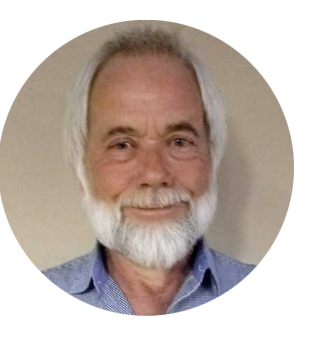
3-Cushion Billiard Player
George Ashby’s story belongs to a special chapter in American cue sports: the family-run room, the long counter, the old Brunswick tables, the smell of chalk and tobacco, and the kind of education that came not from formal instruction but from watching great players, listening closely, and learning one shot at a time. On Legends of the Cue, Ashby comes across as exactly what the finest figures in cue sports often are—part champion, part historian, part craftsman, and part keeper of a disappearing world. He was introduced on the program as an eight-time national champion and one of the greatest American three-cushion players of his era, a reputation he earned through decades of excellence and deep devotion to the game.
Ashby grew up in Jacksonville, Illinois, where his father first operated a grocery store across the street from the poolroom that would later shape George’s life. When competition from a new supermarket forced the family to move on from the grocery business, his father purchased Drexel Billiards, a combination pool hall, restaurant, and tobacco store near the Morgan County courthouse. George was still a little boy. His first jobs were simple and age-appropriate: stacking toilet paper in the grocery store, then washing Coke glasses and root beer mugs in the restaurant because the sink was low enough for him to reach.
What makes Ashby’s childhood so memorable is how naturally the room became his school. Drexel was more than a business. It was a living classroom. The restaurant made up most of the revenue, but in the back were the billiard and… Read More