Ashby, George
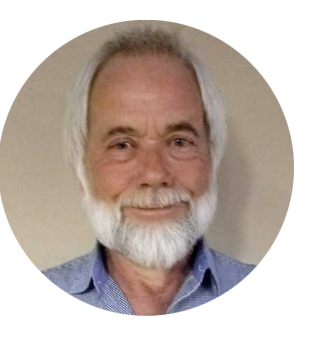
3-Cushion Billiard Player
George Ashby’s story belongs to a special chapter in American cue sports: the family-run room, the long counter, the old Brunswick tables, the smell of chalk and tobacco, and the kind of education that came not from formal instruction but from watching great players, listening closely, and learning one shot at a time. On Legends of the Cue, Ashby comes across as exactly what the finest figures in cue sports often are—part champion, part historian, part craftsman, and part keeper of a disappearing world. He was introduced on the program as an eight-time national champion and one of the greatest American three-cushion players of his era, a reputation he earned through decades of excellence and deep devotion to the game.
Ashby grew up in Jacksonville, Illinois, where his father first operated a grocery store across the street from the poolroom that would later shape George’s life. When competition from a new supermarket forced the family to move on from the grocery business, his father purchased Drexel Billiards, a combination pool hall, restaurant, and tobacco store near the Morgan County courthouse. George was still a little boy. His first jobs were simple and age-appropriate: stacking toilet paper in the grocery store, then washing Coke glasses and root beer mugs in the restaurant because the sink was low enough for him to reach.
What makes Ashby’s childhood so memorable is how naturally the room became his school. Drexel was more than a business. It was a living classroom. The restaurant made up most of the revenue, but in the back were the billiard and pool tables that captured George’s imagination. He remembered the room in vivid detail—the layout, the soda fountain, the tobacco cases, the candy counter, and especially the tables themselves. He spoke lovingly of the old Brunswick models, of rare woods, hand inlays, slate, rail construction, and the feel and sound of a properly built billiard table. Even as a child, he was absorbing not just the game, but the culture of the room.
Drexel also gave him a rare window into the larger world of cue sports. Jacksonville sat along a route traveled by many players heading toward major billiard action in Chicago, which at the time was one of the game’s great centers. International players, road men, and top American competitors passed through, and George got to watch them. He met Willie Hoppe as a child and remembered his soft hands. He also saw Willie Mosconi, whose exhibitions left a lasting impression. In George’s memory, these men were not distant legends; they were flesh-and-blood masters who appeared in his world and helped spark his fascination with greatness.
Like many young players of his generation, Ashby began with pool. But three-cushion drew him in early. What attracted him was not only the difficulty, but the artistry. He was captivated by the angles, the spin, the creativity, and the way the game allowed a player to express something personal. Pool, in his view, required exactness and mastery of familiar patterns. Three-cushion offered room for invention. He started entering tournaments around the age of twelve, playing first in the Midwest and then gradually measuring himself against stronger and stronger competition.
As his game developed, Ashby became one of the most important American three-cushion players of his time. He won eight national titles and represented the United States on the world stage. Those experiences exposed him to a different level of the game—faster tables, lighter equipment, deeper offensive systems, and a far more mature international style. He spoke about how much he learned from seeing the world’s best players up close. Watching champions from Europe and Asia changed the way he thought about three-cushion. He began to understand that true mastery involved not just making points, but controlling patterns, choosing precise scoring lines, and thinking well ahead in the run.
That realization shaped his identity as a player. Ashby believed that much of American billiards had been rooted in an older, more defensive style. He wanted to move toward a more offensive and imaginative form of play, one built around scoring, position, and flow. He studied his own matches carefully, reviewed innings, searched for weaknesses in concentration, and worked to become a player who could not merely outlast opponents but overwhelm them. He took pride in high runs, but perhaps even more in what he called controlled scoring—runs built with intention, where one shot naturally opened the next.
His account of the game shows why he mattered beyond titles alone. He was not simply a successful competitor. He was part of a generation that helped modernize American three-cushion thinking. He saw the sport as both technical and beautiful, and he believed its future depended on offensive brilliance, not just defensive survival. That outlook
made him an important bridge between the old room culture in which he was raised and the more progressive international game he later embraced.
Yet his life was never only about billiards. Ashby also carried the weight of work, family business, and responsibility. He ran the room, worked long hours, and lived through the decline of the downtown world that had formed him. When Drexel Billiards finally disappeared, it was not just the loss of a business. It was the loss of a place that had shaped his identity, his game, and his daily life. In the interview, he spoke candidly about the difficulty of that period, and that honesty gives his story its emotional force. He is not merely a champion recalling victories. He is a man remembering the rise and fall of a whole way of life.
That is what makes George Ashby such a compelling guest for Legends of the Cue. He embodies more than accomplishment. He carries memory. He can describe old rooms, forgotten equipment, legendary players, and the subtle differences in style that separated one era from another. He can explain three-cushion to a newcomer while still speaking to the deepest instincts of those who already love the game. He combines humility with authority, seriousness with warmth, and technical knowledge with vivid storytelling.
In the end, George Ashby should be remembered not only as an eight-time national champion, but as one of the important storytellers of American three-cushion billiards through the life he lived. He came out of a family room in Jacksonville, Illinois, learned from the old masters, competed with world champions, and helped carry the game from one era into the next. His story is about excellence, certainly, but it is also about continuity, resilience, and love for a beautiful, demanding art. That is why he belongs on Legends of the Cue—not just as a winner, but as a true guardian of cue sport history.

George Ashby - Part 4 (Still Playing, Still Remembering, Still George Ashby)

George Ashby - Part 3 (World Championships, Life Changes, and the Cost of Greatness)

George Ashby - Part 2 (High Runs, Hard Lessons, and Chasing the World’s Best)
