

 Apple Podcasts
 Spotify
 George Ashby - Part 1 (From Jacksonville’s Drexel Billiards to the Art of Three-Cushion)
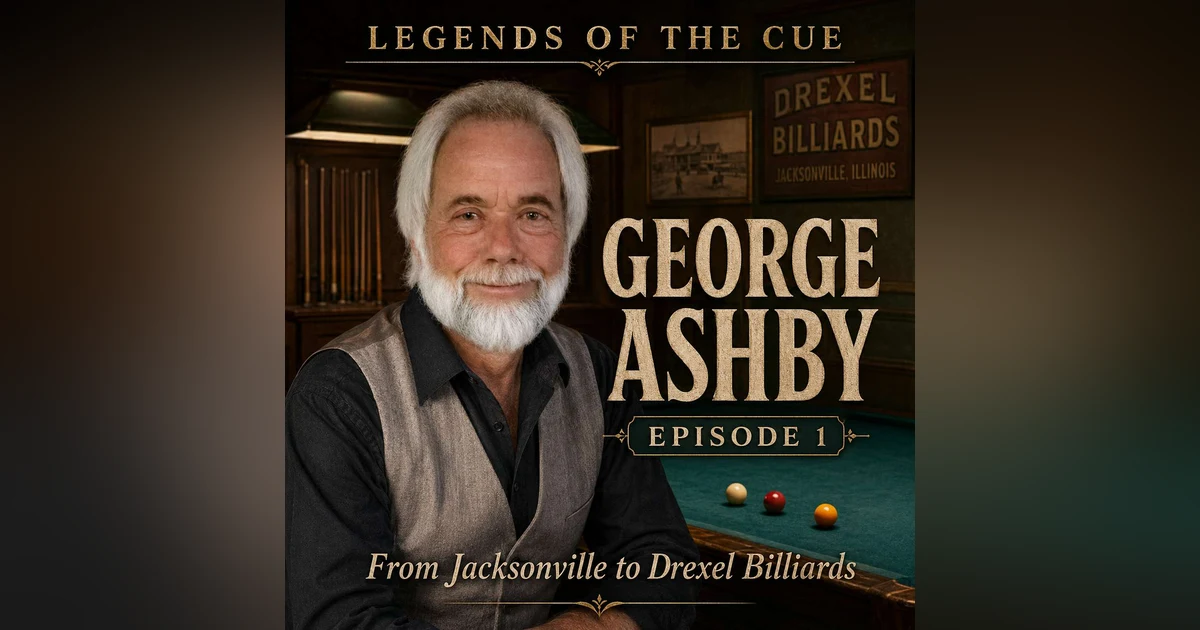

In Part 1 of our conversation with three-cushion billiard great George Ashby, we begin where all great cue sport stories begin: in the room. For George, that room was Drexel Billiards in Jacksonville, Illinois, the family business his father purchased after leaving the grocery trade. What followed was an upbringing unlike any other — washing glasses in the restaurant as a child, dragging an orange crate around the tables so he could stand high enough to play, and absorbing the culture of pool and billiards from the players who came through town.
This episode is a vivid journey into a vanished American billiard world. George brings Drexel Billiards to life in loving detail, from the soda fountain and tobacco counter to the beautiful Brunswick tables that defined the room. He shares memories of the nationally known players who passed through Jacksonville on their way to Chicago, then one of the great billiard capitals of the world, and explains how he first fell under the spell of three-cushion.
For listeners more familiar with pool than carom, George also delivers a wonderfully clear primer on the game itself — the equipment, the rules, the challenge, and the beauty that drew him away from pocket billiards and toward a discipline that rewards imagination, touch, and precision at the highest level.
This is the story of a small-town boy shaped by an extraordinary room, an extraordinary game, and an era of cue sports that has nearly disappeared. It is also the opening chapter in the making of one of America’s great three-cushion champions.
Give Allison, Mark & Mike some feedback via Text.
Follow our show and/or leave a review/rating on:
Our website: https://www.legendsofthecue.com
Apple Podcasts: https://podcasts.apple.com/us/podcast/legends-of-the-cue/id1820520463
Spotify: https://open.spotify.com/show/4Za0IMh2SeNaWEGUHaVcy1
Music by Lyrium.
About
"Legends of the Cue" is a cue sports history podcast featuring interviews with Hall of Fame members, world champions, and influential figures from across the world of cue sports—including pocket billiards, snooker, and carom disciplines such as three-cushion billiards. We highlight the people, places, and moments that have shaped the game—celebrating iconic players, memorable events, historic venues, and the brands that helped define generations of play. With a focus on the positive spirit of the sport, our goal is to create a rich, engaging, and timeless archive of stories that fans can enjoy now and for years to come.
Co-hosted by WPA and BCA Hall of Fame member Allison Fisher and Mosconi Cup player and captain Mark Wilson, Legends of the Cue brings these stories to life—told in the voices of the game’s greatest figures.
Join Allison, Mark and Mike Gonzalez for “Legends of the Cu...
Mike Gonzalez
Welcome to another edition of Legends of the Cue. And uh Alli and Mark, we've got a special guest today that's kind of near and dear to my heart because we grew up in the same town. But uh more importantly than that, the fellow we have today is arguably one of the maybe top ten three-cushion players that America's ever produced. Happens to be from my hometown, but he's traveled the world, eight-time national champion. And uh we're very anxious to talk to this fellow about uh life growing up in Jacksonville and learning the three-cushion game. But let's welcome George Ashby. George, welcome to the show.
George Ashby
Thank you for having me.
Allison Fisher
Welcome, George. It's lovely to have you here. Um this is something we haven't covered on chartered territories, but we're really looking forward to hearing your story.
Mike Gonzalez
And Mark, you've been around the game a little bit, right?
Mark Wilson
So you know you know George. George has uh properly thrashed me a number of times along the way. So I'm telling you, when you say top ten, I he's in my top five for sure, maybe higher American baby players.
Mike Gonzalez
Anxious to talk about the sport. Uh George, you'll educate our listeners, I think, who for the most part are probably more likely pool players on the finer points of three-cushion. And of course, we'll hear about your fine career. But take us back to life growing up, I guess for you in the 50s, early 60s in Jacksonville, Illinois.
George Ashby
Yeah. Well, I grew up, but my younger days before age five, were in a grocery store, my dad's grocery store across the street from the pool hall. My job was stacking toilet paper at age four and five. My brother was in charge of handling eggs because he was seven years older than me. They didn't trust me with the eggs. I don't blame them. And your brother's name was Bob? Yes, Bob. Yeah. Yeah. He's seven and a half years older than me. He's uh 84 now, so he I hired him yesterday to help me paint a house. So uh he doesn't do any ladder work. I I put uh saw horses up and uh let him paint the downspouts. There you go. And the shutters. That's his job. He works, he's ground man.
Mike Gonzalez
Yeah.
George Ashby
I'm ladder man.
Mike Gonzalez
You were on toilet paper, he was on eggs, and uh your dad had that had that store and uh what until he uh came to be part owner of Drexel Billiards?
George Ashby
Yeah, the uh the Kroger store came to town and put him out of business, and uh his their prices were cheaper than his, so he uh sold out the grocery store and bought the Pool Hall restaurant tobacco store across the street and from the Morgan County Courthouse, where we're close to that now, right across the street. So same area. And uh he bought that in April of 55, so I was almost five and a half years old when he bought it. And uh so I got thrust into working in the restaurant, washing coke glasses and root beer mugs, was my job. Because the sink was low enough.
Allison Fisher
It's a lot of responsibility on a little kid, isn't it? Yeah. I like this put to work by mom and dad.
George Ashby
It's a family ordeal, you know, in the restaurant business. That was 75% of the business, and then the pool and billiards was 25% of the business. So interesting. But uh I was there about a year, maybe before I took an interest in pool, and uh the local carpenter modified an orange crate uh with a rope and a knot on the end so that I could drag the orange crate around the table and stand up on it to play billiards and pool. Yeah. Of course, I started with pool and and uh played Willie Hoppy style stroke with the sidearm because I wasn't tall enough to let my arm dangle down, you know, vertical. So I had to play sidearm. And as I got taller, my arm naturally came down into the correct position, which Willy Hoppy, I guess, started the same way, but he never changed. He played sidearm his whole life.
Mike Gonzalez
Yeah, I'm not sure Greenleaf or uh Buccreed changed either. Yeah.
George Ashby
So uh, but I played pool uh till I was 10 and uh great game. We played straight pool, 14-1 lineup and eight ball, not much nine ball until I got older, and we had the every Saturday gambling game with uh with the locals, maybe eight to ten-handed nine ball game, and we'd play um five dollar, five dollar, ten dollar, and double out a turn, and and so you could wasn't anything to lose eighty or a hundred dollars before you finally got a shot, you know. So if you got a shot, then you really shouldn't miss for a while. So it encouraged you to concentrate and try to run the table, you know.
Mike Gonzalez
Yeah. Take us, take our listeners into that room. Just walk us in the front door and kind of describe as you remember it as a kid, describe that room, the tables, the environment, the the the counter, the long counter you had, and so forth.
George Ashby
Yeah, and you remember it being in there. But it was uh L-shaped room, and in the front, as you come down the skinny part was the soda fountain on the left and the restaurant with the about 25 round stools, pedestal stools you could sit up to the counter, and then on the right was the the long glass cases with cigars and tobacco and pipes and uh and then a huge candy counter with fifty different kinds of candy and gum. So, and then the pool hall was in the in the back part of the L and around the corner, and there was three billiard tables and seven pool tables. All nine-footers? Yes, all the pool tables and nine-foot.
Mike Gonzalez
What were the pool table brands that you had back then? Did you have A. E. Schmidt or what'd you have?
George Ashby
We had one A.E. Schmidt snooker table that was added in the late 60s, five by ten snooker. But the rest were Brunswick's. And of course, originally when the room opened, it was uh 190 1903, and all the tables were Brunswick Kling.
Allison Fisher
That was their I used to love those tables. I've seen those before. Beautiful tables.
George Ashby
Six-legged Brunswick Klings with uh they were married made with a rare wood from the south of Russia. Most were made with uh mahogany for uh whatever uh from around Cuba, I think, in South America. But these were, I think, called Circassian walnut from Russia. Very rare and more expensive model because where the wood came from, but the the coloration in them was more like a Bengal tiger. Yellow and dark brown walnut, beautiful, beautiful green. And uh, of course, the inlays 500 inlays of mother of pearl and uh black and white Hollywood holly, I think they called it from Africa, and then Mother of Pearl and uh there then of course thin white lines. I'm not sure what they had made that out of. It all hand inlaid. But there was a fire nineteen forty-seven. Some of the tables fell through the floor into the basement, so the insurance company replaced them all with the modern then, the flat rail Brunswick Centennial with the chrome sides and the two legs.
Mike Gonzalez
Yeah.
George Ashby
And the flat rail, and of course, then the rail bolts were different. Rail bolts came up through the bottom of the slate where the original T-rails had the rail bolts come in from the sides, which was we all believed was a stronger construction with less vibration. We thought that the rail bolts coming through the bottom of the table up into the rail produced a tuning fork type vibration so that you didn't have quite the solid hit on the rail. Looks like that table behind Mark is gonna say Yeah, there's a there you go.
Mike Gonzalez
That's a 10-footer, George anniversary.
George Ashby
That's the anniversary with the wood sides and dress panels, and we had the centennial with the aluminum chrome sides. Same one.
Mark Wilson
The centennial was the model up from this one, and it's uh kind of the Art Deco. It's it's a pretty famous table. This one is uh Brazilian rosewood, which would be a common wood that was used back then that's unavailable today. Right. And what George's talking about with the pool rooms, Allie, is that uh back in those days, those places were designed as pool rooms, and sometimes they would have cork underlayment. And the Kling table that he described is one of the most sought-after collectible tables today because it was all hand-done, it was inch and a half slate, and the slate construction they talk about when the rail is uh on a T-rail, it goes into a hole in the slate through the side that has a lead lead lug in there to anchor it. But as time goes on, the lead is soft, and then the rail starts to work loose, and then you would get, unlike when it was brand new, it would start to wobble and vibrate a little bit there, where they found out they had better luck going through the bottom. But I do think he's probably right about talking about if it does come through the side, it's better because it doesn't provide the tuning fork type of thing.
Allison Fisher
Wow, it sounds beautiful. Sounds like a beautiful room. That's when they really made pool tables, wasn't it?
Mark Wilson
Mm-hmm. Yeah, remarkably, with an inch and a half slate, the ball is faster and it jumps easier, far easier, and the table's super quiet.
Allison Fisher
Yeah, that's nice.
Mark Wilson
I always love it.
Allison Fisher
Sounds lovely.
George Ashby
And for the Kling, they used the slate from Vermont, which was a green colored slate with uh more plants and animals, I guess, and less impurities in the slate, so it was supposedly more consistent for PK, caram billiards type masse, PK shots, than the slate from the Carolinas, which had more impurity in it and uh, you know, more stone or whatever. I guess there were more dinosaurs and more marshes in Vermont than there was in South Carolina. But then, of course, we had uh Italian slate. When all those slate quarries ran out, exhausted, then we started importing uh Italian slate, which is a really dark gray color and uh and less impurities in that than the than the Carolina slates. But of course, it added to the price of the table to bring the slate from Italy.
Mark Wilson
Yeah.
Mike Gonzalez
So, George, back in that day, as you described that pool room, did you have some nationally renowned players come through town every once in a while that you recall?
George Ashby
Yes. Uh back then, uh Chicago, Illinois was uh was a hub for billiards in the world, and players from Mexico and South America would come to Chicago to play tournaments, and the world tournaments were held there. And my little town, 220 miles south of Chicago in Illinois, they would stop through my town and play billiards as a or pool as billiards, especially was their warmups stop after making a long trip from Argentina or wherever. And so they'd come through as a warm-up place before they went to competition in Chicago.
Mike Gonzalez
Yeah, what would they do? Fly into St. Louis? Is that why they're driving up 55 or Old 66 to stop there or what?
George Ashby
Old 66 would get them close, yeah.
Mike Gonzalez
Yeah.
George Ashby
And uh Yeah, they would fly, probably fly into St. Louis, yeah.
Mike Gonzalez
Yeah.
George Ashby
And then uh they could travel by bus or train to get to Chicago.
Mike Gonzalez
Yeah. So who was teaching you the finer points of, I guess you started with pool before you got to Three Cushion? Uh were there some fine players in town or was your dad a player?
George Ashby
Well, not really pool players in our town. Uh we were mostly a town of twenty thousand, twenty-five thousand people. We we had uh sixty above average billiard players. But our pool players it wasn't you had to go to Springfield, Illinois to find uh a teacher for pool.
Mike Gonzalez
Okay.
George Ashby
Yeah.
Mike Gonzalez
Yeah. So did you have a teacher early on, either in pool or in billiards?
George Ashby
Not in pool, but in in billiards we had uh I had some billiard players that, you know, taught me how to make a bridge and and uh of course we everybody played different and they weren't really professionals. I think uh I didn't really study about how to stand at the table until until I met the Japanese, but uh I think I was just had uh natural talent and then I was fortunate I my parents would take me to my first tournament when I was twelve years old in St. Louis at uh Grand and Olive Billiards across from the Fox Theater on the second floor. That was the big billiard pool room in St. Louis at the time. I they must have had about thirty or forty antique tables in there. I don't know if, Mark, if you've heard about that place or not.
Mark Wilson
Oh, a hundred times, yeah. It's uh classic Fats and Moscone, and they would all come through there and compete and train. It was a real pool room.
George Ashby
Yeah, the original name for it was Aratus A-R-A-T-A-S. It was in leaded glass above one of the there was two entrances, but one above one of the doors, I remember the leaded glass name above the door, and then later it was called Grand and Ollie Billiards. Charlie Peterson was world champion from St. Louis. He was he hung out there, I guess, every day playing.
Mike Gonzalez
So now the game Three Cushion uh purportedly had it start in St. Louis. Is that right, is that correct, history?
George Ashby
Well, I'm not sure. Uh everybody has a different account of history, you know. I th uh originally I think it started in France. But where it started in the United States, I don't know, but the the word uh billiards in Latin comes from two words balls yard or yard ball. So originally it was played on grass, more like croquet. And then it was moved to a table and they they wrapped cloth around socks, I think, for cushions.
Mike Gonzalez
Yeah, sounds like the the the history of the game probably is cloudy as the as the origins of golf, but at least if you go to the wiki page for Three Cushion, it talks about uh a guy named Wayman Crow McCreary, the internal revenue collector of the Port of St. Louis, as a guy that was born in 1851, popularized the game, and at least one publication categorically states he invented the game as well. So uh who knows? But it certainly had a a lot of history there and a lot of uh you know big time, big time uh matches. They talk about Hoppe and Greenleaf playing a match back uh oh in 1924. Hoppe wins 600 to 527, which tells me Greenleaf could play.
George Ashby
Yes, he could. Yes, he could. He was excellent. Now, what did you ever meet either of those guys? I met Willie Hoppe uh when I was five, five years old. I remember his soft hands, and uh he came to the Jacksonville to play exhibition and Moscone. Now I remember Moscone more because he played uh later in life. I think uh I'm pretty sure it was Hoppe that I met. They say he retired in '53.
Mike Gonzalez
Yeah, he l he lived in 1959, so that would have been 10 years old when he passed. Or nine, you know, yeah.
George Ashby
Yeah. So uh but for some reason, of course, they say he wasn't a friendly person, you know. He was kind of an elite or whatever. Uh of course he was the king. He was the king of billiards. He won his first tournament when he was 18 or 16. And well, you probably know the history of him better than I do, but.
Mike Gonzalez
Well, and then the game kind of went quiet after he passed for a while, didn't it?
George Ashby
Yes. Oh, I wanted to tell you Charlie Peterson, that centennial billiard table that you have behind you. Yours is not the centennial. Which one's anniversary?
Allison Fisher
Anniversary.
George Ashby
Anniversary? Yeah, the anniversary. They but they built a centennial for uh Charlie Peterson that was oval. It had rounded corners. I don't know if you've seen that on the internet, but they built it specially for him so he could make a different variety of masse shouts around the table, and it was a more entertaining, new new type of entertainment for billiards. But he uh he also came out of uh Grand and Olive Billiards one day after playing billiards and got hit by a streetcar. Oops. And it almost killed him. He was right-handed player, I guess. So when he got out of the hospital, he had to learn how to play left-handed. Of course, he's the only one that I think known now that won the world championship right-handed and won it left-handed. Little trivia on Charlie Peterson.
Allison Fisher
That's incredible.
Mark Wilson
He was a trick shot artist, and his byline was this show me a shot that I can't make, type of thing. And he would work at it till he could. That was I didn't meet him. I was maybe too young. And as far as Greenleaf goes, he died in 1950, so you would have been about two years old, George. Yeah. Yeah.
Mike Gonzalez
So so growing up, you're you said you played pool first before you kind of got to three cushion. At what age did you say you kind of picked up the three-cushion?
George Ashby
Well, I think it was maybe around 10 years old that we started playing a little bit of three cushion, and I really didn't get serious about it until I was playing pool and billiards at that time. And uh so it was about 12 years old when I started playing tournaments, and I went to my parents took me to St. Louis to play a tournament. And uh I really enjoyed uh Straight Pool, really. Even when I took over my dad's billiard room, we still I continued that prize. You could get a free lunch, daily free lunch for whoever had the highest run in Straight Pool for that day. Then the next day they would get a uh free lunch uh Plate lunch dinner, meat, potatoes, and vegetable, you know, healthy meal.
Mark Wilson
What a great promotion.
George Ashby
Yeah. But I never could get more than 75 balls. Uh but like I say, I pretty much went to three cushion at age twelve, so I didn't pursue any more the the high run in the straight pool, but I've I really enjoy seeing those hundred and fifty ball runs and uh What was the high run of the room, as you recall? Well, uh it was probably about that. Yeah, maybe 80, I think. Somebody had an 80. But yeah, like I say, we just didn't have the the level of pool players that we had the level of three cushion players for local because pretty much it always of course the high run for exhibition was Moscone. He came to town and and he would play a local player, a game of 50 points or whatever, and and then uh he'd do his exhibition. Part of it was uh he'd tell the audience he would run a hundred balls for them. And so he'd proceed and run a hundred balls, and then he'd say, now that you you people have been so nice to me, he said, I'll just run another hundred balls for you. And he would do it again. So that's pretty nice when uh when you can say you're gonna run a hundred balls in a row and do it, and then especially twice in a row.
Mike Gonzalez
Yeah, yeah, that's pretty impressive. So what was it about three cushion that kind of got you?
George Ashby
Well, it was I thought more artistic or you can more personalize the game. In what way? With shot selection or though I was intrigued by the angles and the English spin, you know, and how you could distort things by elevating the cue or using a different stroke on, you know, a down through or an up through stroke on the cue ball. And uh pool seemed to me to be very good at pool. You had to be very good at the at the basics to make the shots you're supposed to make and the position you're supposed to make, you know, to get online in line for your next shot. Mike Siegel kind of changed my idea of position play and straight pool. He had a a different way of achieving an angle, a lot of two-rail cue ball, two-rail position. Where I was I learned to play it with middle of the table, down through, check stroke, smoke short squeeze the butt of the cue, and then a down through check stroke on the cue ball to minimize the travel in the middle of the table of the cue ball. But Mike Siegel came down, did exhibition, and I learned a lot of his techniques on this score the object ball and then go two rails for position with you had uh more margin for error on speed control. As long as he would get in that line for the next ball and and he had more margin for error. If he hit it a little too soft or too hard, he was still perfectly in line, you know, on the next ball. I don't know, Allison, if you It makes sense.
Allison Fisher
It certainly makes sense. You can let your stroke out more, maybe hit it like most of your strokes at the same type of speed.
Mike Gonzalez
Mm-hmm. I seem to remember you talking in one show about an important shot you had early on when you were just learning nine ball, where you you played sort of off the end rail, one rail position rather than what George was talking about, two rails and stand in line.
Allison Fisher
Yeah, because I was came over as a snooker player and sometimes we'd play two rails in and out, but the three with the snook with the pool playing, it's more like three rails was a specific shot. Instead of drifting down the middle of a table across my path, the right way to play it would have been using three rails instead of two. So I learned a lot when I came over as a snooker player, becoming a pool player. So I get what you're saying where you let the stroke out more, play more of the 80% shots with stroke control. Speed control.
George Ashby
Play more freely that way.
Mike Gonzalez
Yeah.
George Ashby
To let your stroke out, yeah.
Mike Gonzalez
Yeah. So George, for for our listeners who are probably pool players for the most part and really haven't perhaps haven't played or even played much, three cushioned billiards. Describe the game to us, the equipment, the the uh the table, the balls, the the rules, uh, the objective, and so forth. Okay.
George Ashby
Yeah, the the table regulations five foot by ten foot with no pockets, of course, and three balls. Originally there was two white balls and a red ball. One of the white balls had a black dot on it. Difficult to tell which ball was which if the black dot was against the cloth, but uh then they went with a couple of red circles. Aramis came out with uh red circle cue ball. And they put two or three of them, I think it was two of them on there to avoid that problem where the red circle would get hidden at the bottom of the ball. Now we're playing with colored balls, red, mustard color, and white. So the mustard colored ball, yellow, they call it, became the black dot ball or the red circle ball.
Mike Gonzalez
Yeah. Looks like an old aged ivory ball or something.
George Ashby
Right, yeah. So then the object of the game is uh at the beginning of the game, you're assigned a cue ball and you play with that the whole game, whether it be yellow or white, and the object is to play your yellow ball to either the red ball or the opponent's cue ball, and then continue around the table three cushions and strike the final object ball. And you can strike three cushions or more to score one point, and you play to a designated uh point count. World tournament it used to be sixty points, took about two hours to play a match. And the better players usually took even uh two hours. It might be a thirty inning game or a forty inning game. Uh so they were very slow and deliberate. But nah, then they went in World Tournament, they went to short sets, race to three out of five, fifteen-point matches, which uh supposedly was to create interest for the spectators. Sometimes the spectators might get bored watching a two-hour match to 60, but race to three out of five is more excitement. And I think there's still uh there still are tournaments that are short matches like that.
Mike Gonzalez
Did you and and other players prefer the longer races or do you like the current format?
George Ashby
Well, uh there's more luck involved in the shorter matches, the shorter point matches, of course. I think I prefer the 60 point uh 60 point match. Less chance for uh luck being involved.
Allison Fisher
Allows you probably to get into a rhythm, doesn't it? I think more you can relax, you know, at some point.
George Ashby
Yes, and uh of course to maintain concentration for two hours is difficult, but I used to have my wife keep my inning innings on the BCA scorechart, and then when I would come home, I would study my games and find where I wasn't scoring, whether the beginning or the middle or the end where I wasn't scoring as much, looking for weak spots in my concentration level or whatever, you know, and then I would focus on that in my next tournament matches to try to improve. And I think it helped me a lot to do that.
Allison Fisher
Thank you for listening to another episode of Legends of the Cube. If you like what you hear, wherever you listen to a podcast, including Apple and Spotify, Five Subscribe, and Spotify, Spotify, Spotify, and the French.
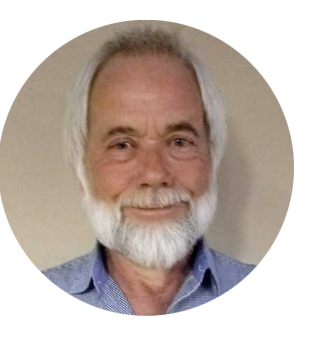
3-Cushion Billiard Player
George Ashby’s story belongs to a special chapter in American cue sports: the family-run room, the long counter, the old Brunswick tables, the smell of chalk and tobacco, and the kind of education that came not from formal instruction but from watching great players, listening closely, and learning one shot at a time. On Legends of the Cue, Ashby comes across as exactly what the finest figures in cue sports often are—part champion, part historian, part craftsman, and part keeper of a disappearing world. He was introduced on the program as an eight-time national champion and one of the greatest American three-cushion players of his era, a reputation he earned through decades of excellence and deep devotion to the game.
Ashby grew up in Jacksonville, Illinois, where his father first operated a grocery store across the street from the poolroom that would later shape George’s life. When competition from a new supermarket forced the family to move on from the grocery business, his father purchased Drexel Billiards, a combination pool hall, restaurant, and tobacco store near the Morgan County courthouse. George was still a little boy. His first jobs were simple and age-appropriate: stacking toilet paper in the grocery store, then washing Coke glasses and root beer mugs in the restaurant because the sink was low enough for him to reach.
What makes Ashby’s childhood so memorable is how naturally the room became his school. Drexel was more than a business. It was a living classroom. The restaurant made up most of the revenue, but in the back were the billiard and… Read More