

 Apple Podcasts
 Spotify
 George Ashby - Part 4 (Still Playing, Still Remembering, Still George Ashby)
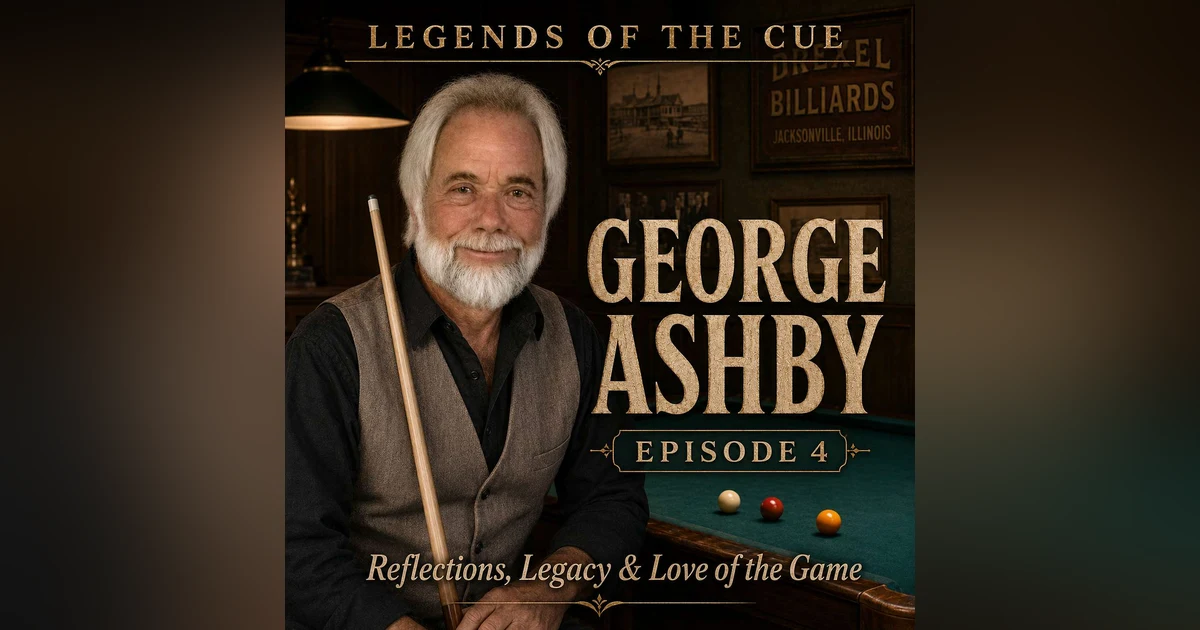

Part 4 brings our remarkable conversation with George Ashby to a thoughtful and deeply satisfying close. In this final episode, George reflects on the later chapters of his billiard life: returning to the game, staying connected to three-cushion, remembering the great players and rooms of the past, and considering what it all meant.
There is something especially moving in hearing a master look back. George speaks with humility, humor, and honesty about still playing, still thinking about the game, and still carrying with him the lessons learned from a lifetime in cue sports. He shares memories of legendary players, unforgettable matches, and the extraordinary personalities who shaped the carom world in America and beyond. These recollections are more than anecdotes — they are oral history, preserved in exactly the spirit Legends of the Cue was created to honor.
This episode also reveals the character behind the champion. George’s warmth comes through in every answer. He is reflective without being sentimental, proud without ever sounding boastful, and generous in the way he credits others who influenced his life and game. As the conversation winds down, what remains is a portrait of a man who helped carry American three-cushion from one era into another while never losing sight of the joy, beauty, and mystery that drew him to the game in the first place.
If the earlier episodes tell us how George Ashby became a great player, this final chapter tells us why his story matters. It is about memory, legacy, and the enduring value of hearing these stories while the voices are still here to tell them.
Give Allison, Mark & Mike some feedback via Text.
Follow our show and/or leave a review/rating on:
Our website: https://www.legendsofthecue.com
Apple Podcasts: https://podcasts.apple.com/us/podcast/legends-of-the-cue/id1820520463
Spotify: https://open.spotify.com/show/4Za0IMh2SeNaWEGUHaVcy1
Music by Lyrium.
About
"Legends of the Cue" is a cue sports history podcast featuring interviews with Hall of Fame members, world champions, and influential figures from across the world of cue sports—including pocket billiards, snooker, and carom disciplines such as three-cushion billiards. We highlight the people, places, and moments that have shaped the game—celebrating iconic players, memorable events, historic venues, and the brands that helped define generations of play. With a focus on the positive spirit of the sport, our goal is to create a rich, engaging, and timeless archive of stories that fans can enjoy now and for years to come.
Co-hosted by WPA and BCA Hall of Fame member Allison Fisher and Mosconi Cup player and captain Mark Wilson, Legends of the Cue brings these stories to life—told in the voices of the game’s greatest figures.
Join Allison, Mark and Mike Gonzalez for “Legends of the Cu...
Mike Gonzalez
So are are you still playing?
George Ashby
Yes, we play. I have a friend that has a table in his garage. It's a 45-minute drive in Pittsfield, Illinois.
Mike Gonzalez
Mm-hmm. Okay.
George Ashby
It's north of St. Louis, about uh about an hour. And uh the room used the room we have the table in used to be a beauty shop. So we have an air conditioner and a furnace and uh a restroom and all the comforts of home.
Mike Gonzalez
Are there there's still any tables in Rushville to play on? No, it's closed.
George Ashby
And the tables were sold at auction. And uh the only bad thing about where we're playing is uh the table mechanic that set the table uh uh put the bedcloth on upside down. So it plays very strange.
Mike Gonzalez
Well, you've been around a lot of tables and and running a pool hull like you did, you became pretty adept at working on tables.
George Ashby
Yeah. Problem is it takes to work on a Gabriel's, it takes four football players or weightlifters, you know, to to disassemble it and uh reassemble it. And so I haven't undertaken that job yet.
Mike Gonzalez
Yeah, yeah. So you're playing a little bit. So what else are you doing these days?
George Ashby
Well, I still paint houses, yeah. Yeah. My brother and I are started on one yesterday. He's eighty-four and I'm seventy-six, so uh he's the ground man painting the painting the downspouts on sawhorses and the shutters, and I'm the ladder man, and it's a one-story house, so we can get on everything with a pretty much with a six-foot ladder.
Mike Gonzalez
Okay.
Mark Wilson
That that's about my maximum these days. Yeah. Hey George, talk a little bit about uh State and Madison billiards in uh Rockford, Illinois.
George Ashby
It was uh State and Madison was open, downtown Rockford, it was open to the same era as my Drexel billiards in Jacksonville. I had the same Brunswick furniture, display cases, same restaurant equipment and and uh benches for the spectators to sit on, wooden benches. So everything could have been bought out of the uh Brunswick catalogue. Um and uh they had all matching tables, uh five billiard tables, I think, and about thirty pool tables, if I remember right. Uh and they were all a Brunswick six-legged, built about 1917, called uh The Medalist, I believe it was. Or it had a big uh kind of gold medallion wood inlay on each leg. Beautiful tables, not quite as solidly built as the Brunswick Kling, but they played they played excellent. When you played the tournament at State and Madison on the five tables in a row, you it was easy to forget which table you were playing on because they played so identical. They'd been in that position since 1902. Never moved, you know, and perfect, perfect condition.
Mike Gonzalez
Is that where Dallas West would have played, Mark?
Mark Wilson
Yes, that's his boyhood pool room home. But before that, it was Joe Deal and Charlie Kashapalia and a number of great, great players that all played everybody. Moscone would come for a week per year. The pool room was built specifically as a pool room so it had cork underlayment in the floor so that you could play all day and not pound out your knees. And then just like with George's place on the left side when you came in the front door, there was a lunch counter that was marble-topped, and the right side had uh it seems like magazines and tobacco and uh assortment of things, and they always provided a nice lunch, you know, if you wanted like a tuna sandwich and soup or something, and and like George is saying the furniture in there, super heavy duty, you know, it was old school, and like and it was all matched the furnishings of the pool tables. And so it was really interesting to go there, and you know, there was kind of like an awe or an irreverence. The lighting of it was interesting, the whole thing. And so, and naturally there was always great players around there, so there would have been guys there that were, you know, George's sequel, skill-wise, or near equal anyway, to compete with. Moscone would lose games there training, you know, games of straight pool. Yeah, I mean, you gotta be good to compete with that. And one time I was in there and I was talking, a guy can make a living as the houseman of this pool room. And there was guys that that was their career, and they would hang up your coat and brush it off with a wisp room, and they would get the balls out, and every day vigorous business. And I said to him one time, I go, Oh, I bet you saw Dallas West run a hundred balls a lot of times, probably, right? And he just he kind of got uh like, of course. I mean, I saw him run a hundred balls on every one of these tables out here, and I said, Oh, okay. And then the next thing I said, he thought about it a little bit and he goes, I saw him run over 200 on half of these tables. But he wasn't exaggerating. It was kind of a fun thing. But then then would you have been around benzingers, George?
George Ashby
I played tournaments there maybe twice. I was came in right at the end, right before they closed when water was flooding part of the basement.
Mark Wilson
Okay.
George Ashby
The south side of it or whatever, and then all the tables were soaking wet, and we were on the north side of the basement playing on the billiard tables. But I think the pool tables and snooker tables had all been possibly pretty much ruined by the time I made it there.
Mark Wilson
That was the second Ben Singers then. That was the Clark and DeVersi downstairs. Clark DeVersy downstairs. Yeah. Yeah. I I was too young for the one in the loop to have 100 tables. This one still had about 50 tables.
Mike Gonzalez
Right. Yeah. And uh Brunswick happens to be one of Allie's sponsors, so she's uh been with them for a while. And and uh uh, you know, important uh historic note about Bensinger is it was owned and run by the family that founded Brunswick at one point.
George Ashby
Um huge portrait hanging on the wall behind the counter where you check out the balls of Mrs. Bensinger, grandma Bensinger hanging there. It's a huge portrait. Must have been paint oil painting, 12 foot tall and six foot wide, you know. Really cool. Wow.
Mark Wilson
That was a classic place.
Allison Fisher
Sounds like it.
Mark Wilson
Yeah. Talk a little bit about Ernie Presto. He was a billiard aficionado from the Chicago area, and that had, like you said, had you know the most vigorous billiards in the United States. Ernie was just a cool guy, and and he told me firsthand stories that when Greenleaf visited his boyhood home, his father would bring him there and play pool. And then you had, you know, you ran in his circle more than I did.
George Ashby
So yeah, Ernie was like he was like a second father to me. He was uh just a wonderful, wonderful, kind man and in his day, and I still witnessed some some of what he could do, you know, in his age, but he had by the time I came along, he had pretty much developed Parkinson's shaking disease that made it hard for him to play, but he could still play in uh uh an encyclopedia of billiards, of knowledge, history, and like I say, just a wonderful human being. He had he would come to my billiard room for tournaments. He loved coming there because he loved my ice cream. I would I would buy ice cream.
Allison Fisher
One lobster chili, one lump the ice cream.
Mike Gonzalez
Wait, wait, where did the ice cream come from? I'm trying to think of the ice cream places.
George Ashby
It's Prairie Farms Ice Cream, which is a company in South Central Illinois. Yeah, yeah. Farmer-owned, fresh milk, fresh ice cream, you know. Whenever he would come for the tournament, I would buy an extra five-gallon bucket of ice cream, bulk ice cream came in a cardboard bucket with a cardboard lid, you know. And I'd have an extra carton of ice cream just for Ernie because he would eat ice cream three times a day or more. If you wanted to find Ernie at the tournament, you know, you just look at the lunch counter and he'd be up there somewhere having ice cream.
Mike Gonzalez
Well, George, before we wrap up with you, I thought I might ask you to just sort of reflect on how the game has changed in the 50 years since you won your first national title.
George Ashby
Well, I think like I say, the I think the Asians have the South Koreans have changed it with the approach of position play. I think that's mainly it. But what I see on my telephone is the only way I can get it. There are you know, you can watch uh Five and Six and some of the other websites that carry tournament games and I watch uh Coudrone and Semi and Blum Doll, those guys. You're on my phone also, but the change in the game it seems to me is this in the middle of the table position play and they're more about just cinching, scoring the billiard rather than, you know, I I enjoyed playing position, offensive position to get the result I wanted, you know, just it made me feel so good inside. But if I don't make the next shot, at least I had the the shot I wanted to play. But they don't it doesn't seem to matter to them. They just try to score the in the middle of the table with soft speed to keep the balls in the middle. And I don't think it's as pretty a game to watch. But I think it's more efficient. I think that's why the top players are scoring higher averages with higher high runs. Yeah. But I'd like to hear somebody's opinion on that.
Mike Gonzalez
Just as you say, the the beauty of the game, at least in your eyes, maybe has changed based upon the style of play. But anything about equipment or other advances in technology that's really changed the game dramatically in the last 50 years?
George Ashby
Well, of course, the equipment. I I started out playing. We did have tournaments, so we did have I won Simonis Claws, and back then it was called Super Roulant, R-O-U-L-A-N-T. And then they came with Super Extra Roulant, which uh was supposed to be even faster, maybe sheared closer in the shears, but it was directional cloth. So we we started out learning the head of the table and the foot of the table, and with the way the cloth was woven from head to foot, that's the way you applied the cloth head to foot, and that's the way you brushed the table when you cleaned it head to foot. So the angles were different head to foot. If you were playing from the head to the foot, there was a diamond or half a diamond longer angle than playing from foot to head. And you had to remember that when you were playing in the game, which end of the table you were at, you know, so you could allow for that shortness or longness, and then they came out with the non-directional cloth. Um let's see the company out of Barcelona, excuse me. Barcelona, Spain. Granito. Granito, yeah. He came to my house and I cooked him ribeye steak and fresh broccoli one night and one afternoon on the grill outside and on his way from Chicago to St. Louis or St. Louis, Chicago. But Granito came along and non-directional cloth at a cheaper price also. So it became our our cloth of choice for uh the American Billiard Association. And if you schedule if a room owner would schedule a tournament, they would get the closet at our cost. We'd buy it by the bolt, and uh we, I was on the board of directors and uh Bob Leatherby would keep it at his shop in Muskegon, Michigan, I think it was, and he would cut it, ship it out for us. And then we went to we started using new balls. The Secretary Treasurer, Gail Johnson from Elgin, Illinois, he would carry a bag of new balls that were donated by Arima to the association, and he he would bring 'em and uh he would clean them with ball polish in between each game so the balls played consistent. And we had the consistent cloth. Now that didn't always guarantee the speed of the rubber or the angle of the rubber, depending on if it was a antique uh arcade or a Brunswick Centennial or the worst table, of course, was uh Brunswick uh gold crown. Ray Abrams had one in uh Detroit. And uh Billy Smith from Chicago hated it.
Mike Gonzalez
And this was the gold crown three cushion.
George Ashby
So we've seen uh different equipment, but standardization was what was important, I think, on the cloth and the balls and the conditions, you know.
Mike Gonzalez
Yeah. Allie and Mark, does it sound like maybe George would have been making more table-to-table adjustments with his game than what you guys faced on pool tables, or not necessarily?
Allison Fisher
I could relate to the snooker table being directional cloth. That's what I grew up on. And then coming into pool, it was very different. So you didn't have to make any changes there. But I certainly in snooker had that. And then if you played in a pro tournament, it was non-directional because they shaved it down. So that was different. You'd have to aim outside the centre pocket if you were going against the nap. You know, a couple of inches, the board drifting. Yeah, it's quite interesting.
Mike Gonzalez
Is it fair to say that the conditions you generally played on Alley were probably a bit more consistent table to table than?
Allison Fisher
I think in pool it is. But in pro-level pool, it's always new cloth. So pretty much. You're not playing on old cloth. So it's definitely much more consistent. New boards, new cloth, always the same.
George Ashby
Yeah. The advantages of of playing the professional circuit.
Allison Fisher
Yes, absolutely, definitely.
Mike Gonzalez
Yeah.
Allison Fisher
It's a totally different game on old cloth and old boards.
Mark Wilson
Yeah. For me, I grew up on directional cloth, and so we were taught to always go head to foot with the brushing for uniformity's sake. So even though I have non-directional cloth on my table, I still do it exactly the same way.
Outro Music
Yeah.
Allison Fisher
I used to with my snooker table do that, brush it down the table and then iron it every day. Had a big old iron.
Mark Wilson
Yeah. It's interesting when you clean the cloth well and then you cold iron it, uh, it really keeps and then you polish the balls and you can revive the cloth to almost new-like condition.
Allison Fisher
Yeah.
Mark Wilson
The uh as far as switching for um see, billiard players did not like the gold crown because it's it played much shorter than the older tables. And so, um, and limited some of the shots that you could play. So they always inherently uh grumbled about ah, this play is so short. I grew up on the gold crown billiard table, so that's what we had. But nevertheless, I can see the difference. And nowadays, you know, I've got to play on a lot of professional billiard tables. Uh George, one uh last question for me. Do you do you uh have a background in balk line billiards?
George Ashby
No, I don't. I had was rummaging through the basement of my dad's pool hole and found a the balk line wooden box or whatever you call it to mark the table. So I brought it up and cleaned it up and we looked it up in the rule book and we tried it a little bit, but uh really needed to have a I had one older man about 90 years old to teach me a little bit about straight rail carum. Yeah. He was a he shooed horses all of his life, that's how he made his living, putting horseshoes on. And uh so he taught me a little. I got to where I could run 70 or 80 straight rail billiards, but I never could get over a hundred, just like my pitiful uh straight pool game. But remarkable, you know. Anyway, uh we just you know, and then it got to the point where I wanted to spend my time on three cushion. I really working 75 to 100 hours a week. You don't if you're gonna play I needed to play three cushion. I I never could have the luxury of what Kuliman said, go back to kindergarten.
Mike Gonzalez
Yeah.
George Ashby
And I I understood that, you know, you start with the basic game and build the building blocks, you know, like building a pyramid or a wall.
Mark Wilson
The background, all these cue sports have carryover skills. And when I was young, I was reluctant because I felt like I just wanted the pocketballs. So I felt a little bit like George did about three-cushion. And then as time progressed, I got involved with serious billiard players, and you might have competed against them at one time or another, but so I found out I was wrong. And you know, this is what separates Ephraim Reyes from other pool players in the world, is that he has a background in billiards. And so the first game is Carams, where you just have the cue ball hit the other two balls any way you can. And then just like was recommended to George, one cushion billiards, two cushion buyards, three cushion billiards, and then balk line. And there was there was 18-1 and 18-2 balk line billiards. And for those that don't know what that means, it means 18 inches from each rail is a line drawn down the table and across the table. And then there's a box. And so, unlike with straight cameras, where you can just get the balls nursed over to the corner and pepper them and score, you know, literally hundreds of points before they leave that corner. That's the skill, and uh, but that's also what killed the game. Guys were capable of running a thousand points, and this all died along, you know, like the information for this would have been what's uh George and my great-grandfather that otherwise is dead. Nobody even knows what it is. But I was in Chicago and Ernie Presto's talking to me, and I'm always curious. And he said, Mark, 18-2 block line was the most uh skillful game ever devised by a man. And what the two refers to is the amount of billiards you can score in one box. So you can never just pepper them in one box and it creates, you know, I guess it would be one, one, two, six boxes. Is that right? Or eight one, two, three, one, two, yes, eight boxes. And so anytime you got the billiards in the middle of the table, you can score as many as you can, but the balls leave the middle of the table. Where if you nurse them up against the rail, you can kind of pepper them there. Well, anyway, in 18-1, you can only score one point in any one box. And then the object ball has to leave the box. It can come back in. And so these are called gather shots. But in 18-2, you score two per box, and which gives you one chance to play position on the two balls in that box to make a drive shot that goes down and brings them back. And the objective is to have all three balls fit underneath your hands at the end of the stroke, and then you know you made a great shot where you don't have that separation in there. So it's a very ingenious, skillful game, and that's and much like what George was saying earlier about elevating the cue and hitting downward, so you get uh little uh little movement on the object ball, yet the cue ball can move, or hitting flat to drive it and get it back, engage that speed of secondary and tertiary balls in there. Highly skillful. And but it wouldn't be entertaining for most people, but I love it because it's such a challenge. And so, but it wouldn't be something that you'd enjoy observing. But it would be super fun to play. That's all I know about it, but I don't have much background. It is quite a lot. But it was a fascinating. So now I try to play it sometimes on my own. I really enjoyed them. I'm absolutely horrible. And when George says he's, oh, he can only run 70 or 80 carams. That's fantastic. Go ahead and try it. I'll bet anybody here can't get a third of that.
Mike Gonzalez
Well, George, before we wrap up, we always like to ask our guests three final questions. And so uh who would like to take the first question? Any volunteers?
Mark Wilson
I'll happily do it.
Mike Gonzalez
Go on, Nico.
Mark Wilson
Go ahead, Mark. Yeah. Okay, George, if you knew when you were 20 years old what you know now, what would you have done differently?
Allison Fisher
Wow. It's a good one, isn't it?
George Ashby
Well I I don't think I'd change anything. Other than uh um the addiction the addiction part of my life through uh through AA and God helping me, I was able to kick that now twenty-five plus years back to a a normal life, enjoyable life. So to change that part of my life I would. But I I chased a dream all my life of being a professional billiard player. I had a dream to ride a camel in third grade and that because of billiards, that dream came true. Right. With my Japanese friend, Yunichi Kimori. And my beautiful wife and two beautiful camels that spit on you. So I wouldn't change it. I mean, it's I've had a wonderful life. I never became a millionaire because I did have a dream in a in a sport that in the United States didn't pay anything. No way to really make a living at it. But uh but yeah, I wouldn't change anything.
Mark Wilson
The passion that got you around the world is worth a a lot more than money, all your experiences and all the people you competed against with your household names much as yourself. So that's a that's a cool thing for a boy from Jacksonville.
George Ashby
I live uh in a double wide trailer, which is I've bought new in 1977, so I've been there fifty years. One room is my trophy room, one bedroom, a little small. The trophies are lined up around the walls and but on one wall is a huge photograph of Nobuaki Kobayashi. It's about three foot wide and six foot tall, framed. So whenever I go in to get my Q stick for Saturday morning billiard or Saturday afternoon billiards, uh, you know, I always say hi to Kobayashi. And it's that picture advertisement. He's holding a Q stick, he's dressed in that samurai outfit with the big sword, you know, and it's a great picture. I mean, he was a wonderful friend, you know, and uh and uh billiard players uh around the world are you know they're special. Uh uh that's one of my things that I cherish forever is the friendships that I have uh around the world. Uh and uh you can't put a price tag on that.
Mike Gonzalez
Yeah, amen to that. So George, question number two. Uh I don't know if you played much golf. I did, but uh, we're gonna give you one career mulligan, one shot to do over in a competition, maybe where it would have made a difference. Can you think of one you would have liked to have done over?
George Ashby
Well once I went to a tournament, I would go every year at the Denver Athletic Club. Wonderful tournament run by Jerry Carsh, a member of the Denver Athletic Club and a billiard player, and became president of our organization for years. I went there to play a tournament one year, and they were still just finishing the putting on the new cloth on one of the last tables. So we waited, delayed a little 15 minutes for the tournament to start, and then they gave me the balls to test the table. And I went over to shoot a little PK three cushion in the corner of the table, and I ripped the cloth.
Outro Music
That was a good one.
George Ashby
Yeah, I forgot to put, I'd just take my cue out of my case, forgot to put chalk on it, and so it bounced off and ripped in the cloth. So that's the one shot probably I would change.
Outro Music
Living in the one-hole, one-hole to go to the world championship, right? That's our best one ever, I think. That is good.
Allison Fisher
All right. George, the final question is how would you like to be remembered?
George Ashby
As a friend, as a good sport. I've always respected everybody's game, no matter at what level they play, because I profess that you can learn something from every player. Every player has a little special shot that they know how to make and always make it, you know. But I'd like to be remembered as a friend. And maybe the person that changed billiards in the United States from defensive ivory ball style to offensive scoring.
Mike Gonzalez
So Fair enough. George, it's been an absolute delight to reconnect with you, uh longtime uh Jacksonville friend, and we sure appreciate you joining us. I know Allison and Mark uh joined me in uh in their thanks as well. Allison?
Allison Fisher
Yeah, thank you, George. It's really been wonderful to hear your story of all your travels and all your tournament plan, all the wonderful people that you've met along the way. So thank you.
George Ashby
It's just wonderful to spend this time with you. And now if I have the desire now to interview you, you find out. Anytime. I'd like to know what makes you tick and what made what has made you so successful in life and a joy. A joy to watch you play, also.
Allison Fisher
Oh, it's much appreciated. I appreciate it. Thank you.
Mark Wilson
It's been great having you on here, George, and get to hear your humble opinions and honor, honesty about your life and all the experiences that many things most of us wouldn't know. And this is now captured forever. So generations from now, people will know George Ashby.
George Ashby
Well, when you called me. When you called me, I thought, why didn't he call 20 years ago when I had a memory?
Mike Gonzalez
You did pretty darn good. I think you did just fine. Yeah. That's perfect. George, it's been an absolute pleasure. Thank you for adding your story to all of cool and three cushioned greats on Legends of the Q. We appreciate it. Thank you so much.
Allison Fisher
Thank you for listening to another episode of Legends of the Cue. If you like what you hear, wherever you listen to a podcast including Apple and Spotify, please follow, subscribe, and spread the word.
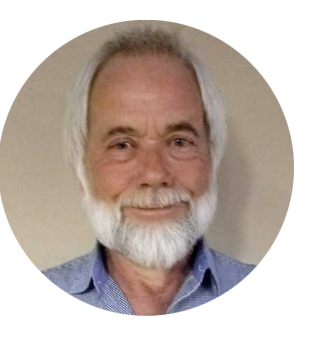
3-Cushion Billiard Player
George Ashby’s story belongs to a special chapter in American cue sports: the family-run room, the long counter, the old Brunswick tables, the smell of chalk and tobacco, and the kind of education that came not from formal instruction but from watching great players, listening closely, and learning one shot at a time. On Legends of the Cue, Ashby comes across as exactly what the finest figures in cue sports often are—part champion, part historian, part craftsman, and part keeper of a disappearing world. He was introduced on the program as an eight-time national champion and one of the greatest American three-cushion players of his era, a reputation he earned through decades of excellence and deep devotion to the game.
Ashby grew up in Jacksonville, Illinois, where his father first operated a grocery store across the street from the poolroom that would later shape George’s life. When competition from a new supermarket forced the family to move on from the grocery business, his father purchased Drexel Billiards, a combination pool hall, restaurant, and tobacco store near the Morgan County courthouse. George was still a little boy. His first jobs were simple and age-appropriate: stacking toilet paper in the grocery store, then washing Coke glasses and root beer mugs in the restaurant because the sink was low enough for him to reach.
What makes Ashby’s childhood so memorable is how naturally the room became his school. Drexel was more than a business. It was a living classroom. The restaurant made up most of the revenue, but in the back were the billiard and… Read More